Inspiration
Consumers increasingly want to make sustainable purchasing decisions, but sustainability information is fragmented, difficult to verify, and often hidden behind marketing language. Most shoppers do not have the time or expertise to research certifications, carbon footprints, supply chains, or environmental claims before every purchase.
At the same time, companies frequently use vague terms such as "eco-friendly," "green," or "sustainable" without providing clear evidence, creating a trust gap between consumers and brands.
Our inspiration came from a simple question:
"If consumers can instantly compare prices online, why can't they instantly compare sustainability?"
We set out to build a tool that empowers consumers with transparent, evidence-based sustainability information at the exact moment they make purchasing decisions.
What it does
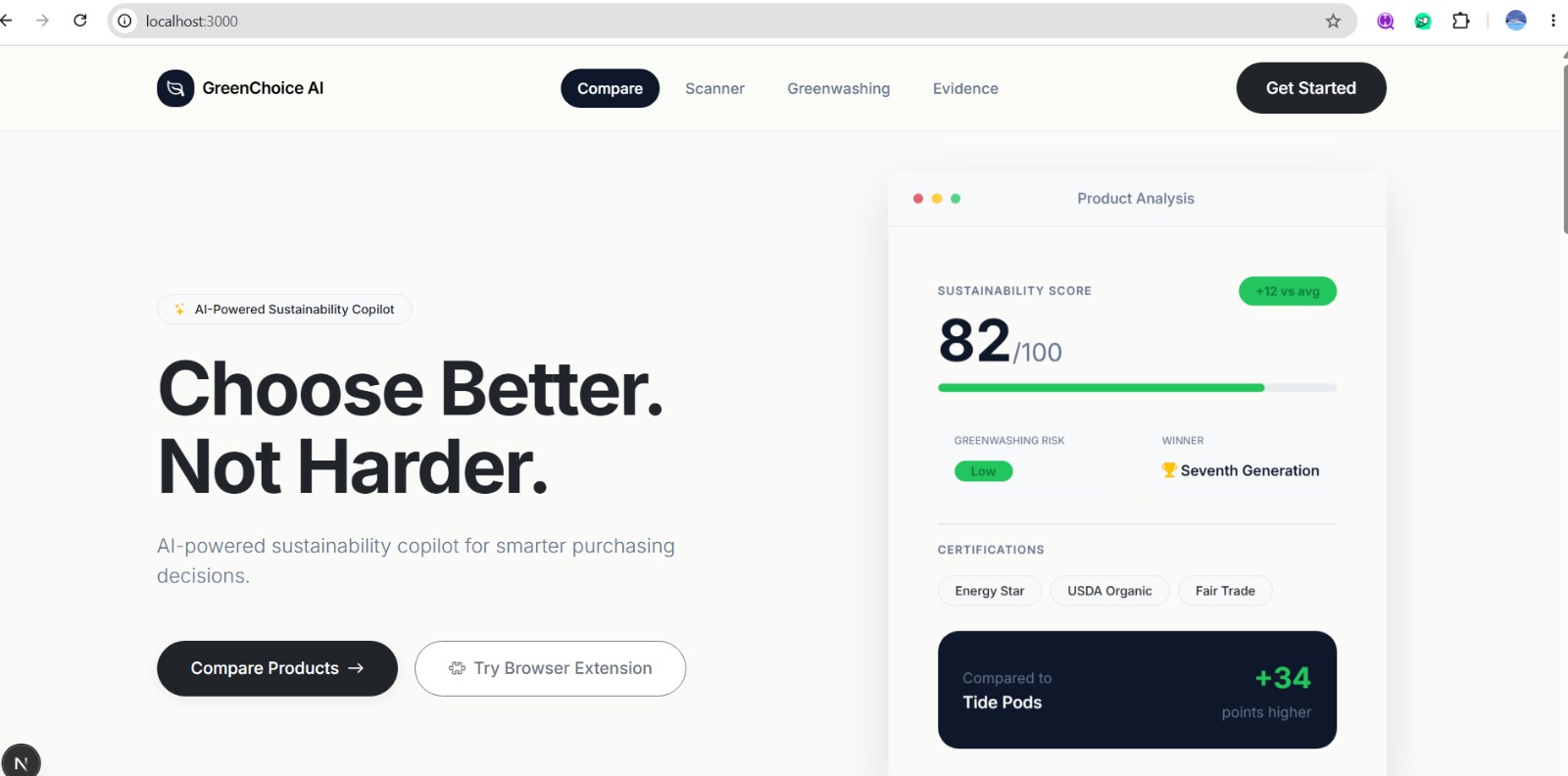
GreenChoice AI acts as a sustainability intelligence layer for both online and in-store shopping.
Browser Extension
- Sustainability score
- Environmental certifications
- Packaging impact
- Greenwashing risk assessment
- Recommended alternatives
Barcode Scanner
- Scan product barcodes for instant sustainability insights
- AI-generated product analysis in real time
Product Comparison Engine
- Side-by-side sustainability scores
- Environmental tradeoffs
- Certification analysis
- AI-generated recommendations
Greenwashing Detector
- Detects claims such as "Eco-Friendly," "Carbon Neutral," "Climate Positive"
- Classifies claims as:
- Verified
- Partially Verified
- Unverified
- Likely Greenwashing
Evidence-Based Fact Checking
- Uses Retrieval-Augmented Generation (RAG)
- Provides source-backed explanations instead of black-box scores
How we built it
Frontend
- Next.js 15
- TypeScript
- Tailwind CSS
- shadcn/ui
AI Layer
- OpenAI GPT-5
- Prompt engineering for sustainability analysis
- Product comparison workflows
- Greenwashing detection pipelines
Browser Extension
- Plasmo Framework
- Chrome Extension APIs
- Dynamic content injection
Data Sources
- Open Food Facts
- Public sustainability datasets
- Environmental certification databases
- Product metadata sources
Backend
- Next.js API Routes
- Supabase
- Pinecone Vector Database
- Retrieval-Augmented Generation (RAG)
Barcode Scanning
- html5-qrcode
- Open Food Facts API
Challenges we ran into
- Fragmented Data: No single source of truth for sustainability information
- Greenwashing Complexity: Difficult to evaluate vague claims reliably
- Trustworthy AI: Needed explainable, evidence-backed outputs
- Product Matching: Inconsistent product identities across datasets
- Speed vs Accuracy: Real-time performance vs reliability tradeoff
- Browser Extension Complexity: Handling dynamic retail DOM structures
Accomplishments that we're proud of
- Built an end-to-end sustainability copilot
- Developed a real-time greenwashing detection system
- Enabled barcode-based in-store analysis
- Created an AI-powered product comparison engine
- Implemented RAG-based fact-checking
- Delivered insights directly inside shopping workflows
- Unified AI, sustainability, and consumer decision-making
What we learned
- Sustainability decisions are fundamentally information problems
- Explainability builds trust in AI systems
- Simplicity drives adoption
- Greenwashing is widespread and non-trivial to detect
- Timing (point-of-decision) strongly influences behavior
What's next for GreenChoiceAI
Short-Term
- Support Amazon, Walmart, Target, Costco, Best Buy
- Expand product coverage
- Improve scoring models
- Add personalized sustainability preferences
Medium-Term
- Integrate more certification datasets
- Add lifecycle carbon footprint calculations
- Retailer-level sustainability benchmarking
- Launch iOS and Android apps
Long-Term Vision
GreenChoice AI becomes the default sustainability layer for commerce, making sustainability as accessible as price and driving both consumer awareness and corporate accountability.
Built With
- nextjs
- tailwind

Log in or sign up for Devpost to join the conversation.