-
-
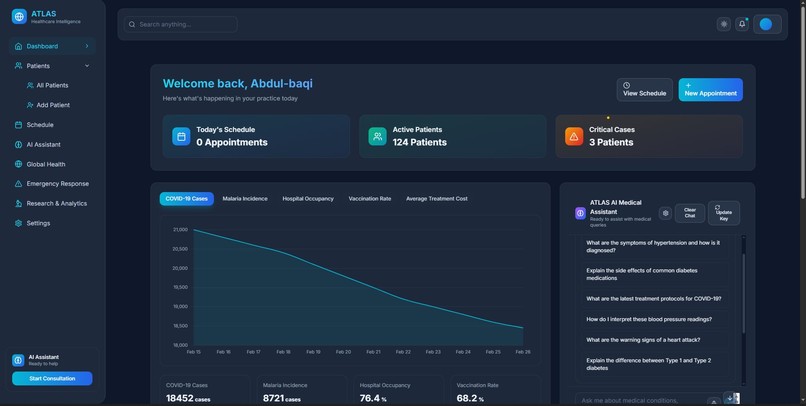
Doctor Dashboard
-
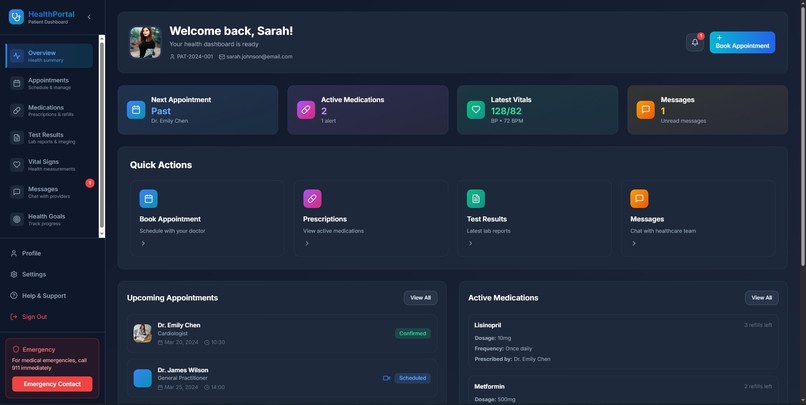
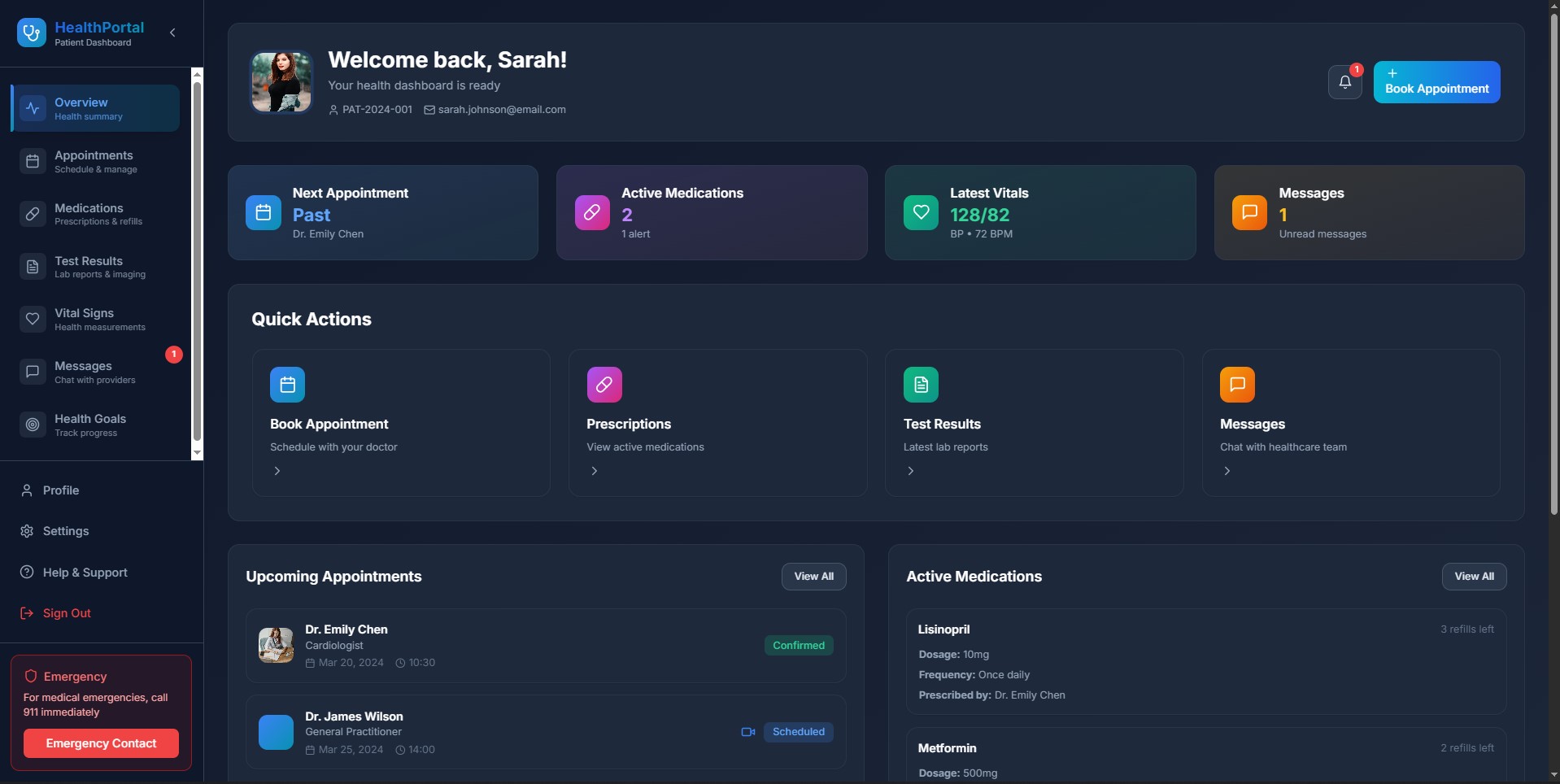
Patient Dashboard
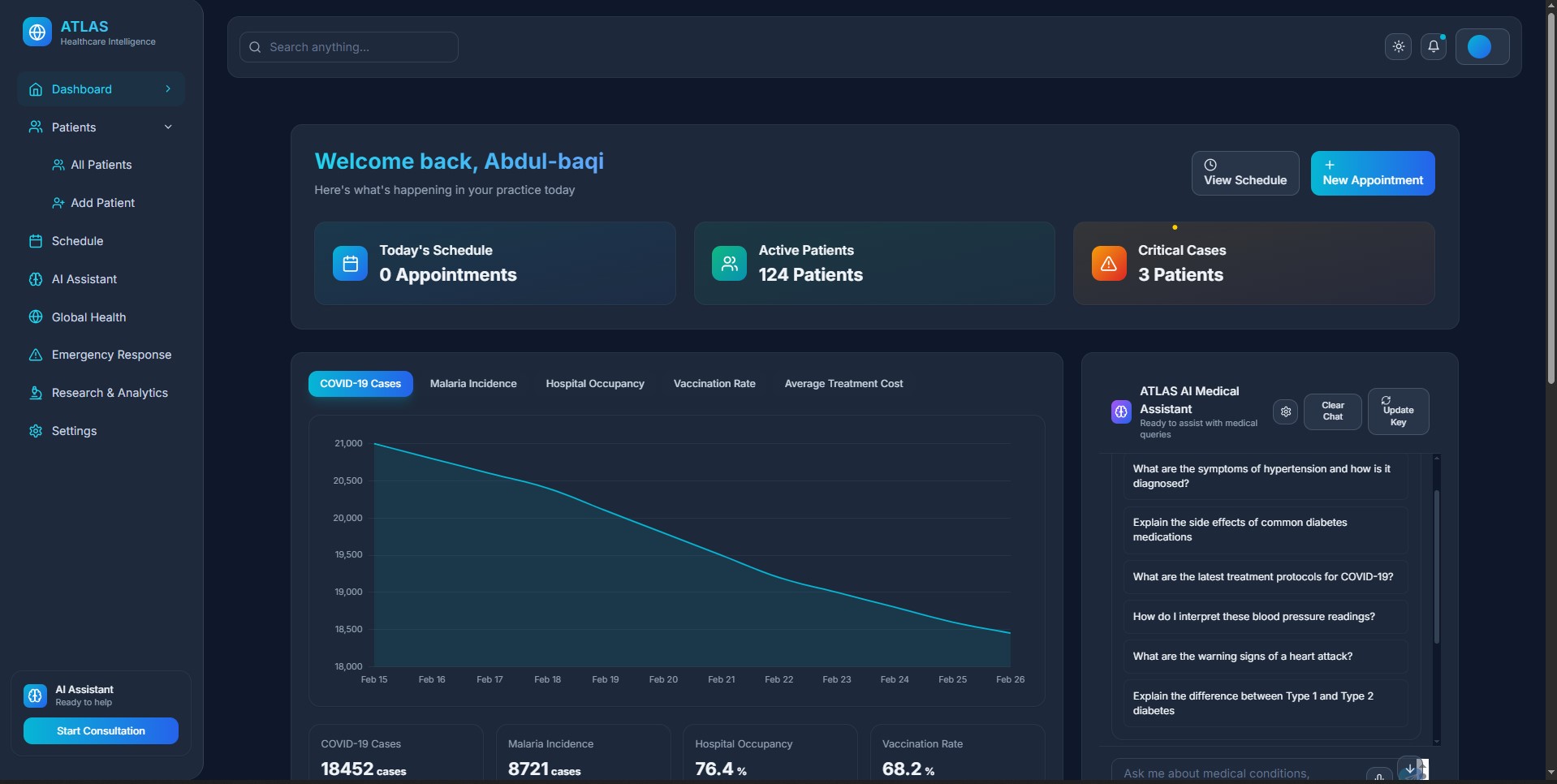
ATLAS - Universal Healthcare Intelligence Platform
What Inspired This Project
Growing up in Nigeria, I've seen too many preventable deaths happen simply because medical information couldn't follow patients between hospitals. A child rushed from a rural clinic to the city arrives as a complete stranger to the doctors who could save their life. Previous treatments, known allergies, ongoing conditions - all of that critical information disappears because healthcare systems can't communicate with each other.
This problem goes far beyond Nigeria. Across Africa and other developing regions, people die every day because their medical history gets trapped in isolated systems that don't talk to each other. I knew there had to be a way to connect these systems globally, making every patient's complete medical story available wherever they seek care.
What I Learned
Building ATLAS opened my eyes to just how complex healthcare data really is. Medical information isn't just numbers and text - it's deeply tied to cultural practices and local healthcare approaches. I discovered that translating medical concepts between systems requires understanding not just different languages, but different ways of practicing medicine.
The technical side taught me about the intricate world of healthcare standards like HL7 FHIR and DICOM, and how federated learning can enable global medical research while keeping sensitive patient data secure and local.
How I Built It
I started with a React-based web platform that could handle multiple languages and adapt to different cultural healthcare contexts. The backend uses Node.js to process various healthcare data formats in real time, with AI systems that can understand and normalize medical concepts across different terminologies.
The core innovation is the universal data ingestion engine that can connect to over 200 different healthcare system types, from modern electronic health records to handwritten notes from rural clinics. I built real-time clinical decision support and global health monitoring capabilities that can detect patterns and outbreaks across connected facilities worldwide.
Challenges Faced
The biggest technical hurdle was handling the sheer variety of healthcare data formats. Every hospital system seems to store information differently, and building something that could understand all of them required diving deep into medical terminologies and data structures.
Making everything work in real time was crucial but difficult. Medical decisions happen in seconds, so the system had to respond instantly even when pulling information from multiple sources across different continents.
Privacy presented another major challenge. Healthcare data is incredibly sensitive, so I had to design federated learning systems that could enable global medical research and collaboration without ever moving patient data from its original location.
Beyond the technical aspects, I had to consider the realities of healthcare in resource-limited settings. The system needed to work reliably even with poor internet connections and limited computing power.
The Impact Vision
ATLAS represents a future where a patient's location doesn't determine the quality of care they receive. When medical knowledge and patient history can flow freely across borders while staying secure, when disease outbreaks can be spotted and contained before they spread, when breakthrough treatments discovered anywhere can benefit patients everywhere - that's the world I'm building toward.
This isn't just about connecting computer systems. It's about connecting the global medical community to serve patients better, no matter where they are.
Built With
- elevenlabs
- node.js
- openai
- supabase
- tailwind
- typescript

Log in or sign up for Devpost to join the conversation.