-
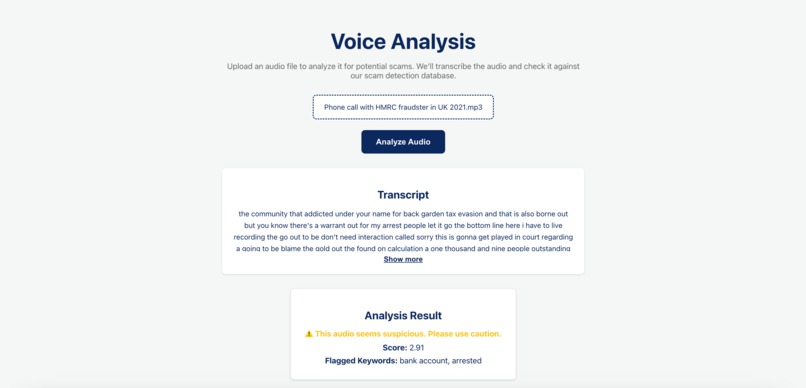
Voice Analysis
-
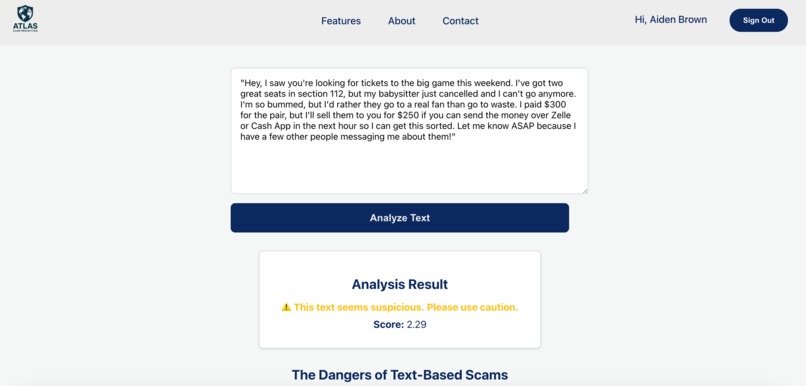
Text Analysis
-
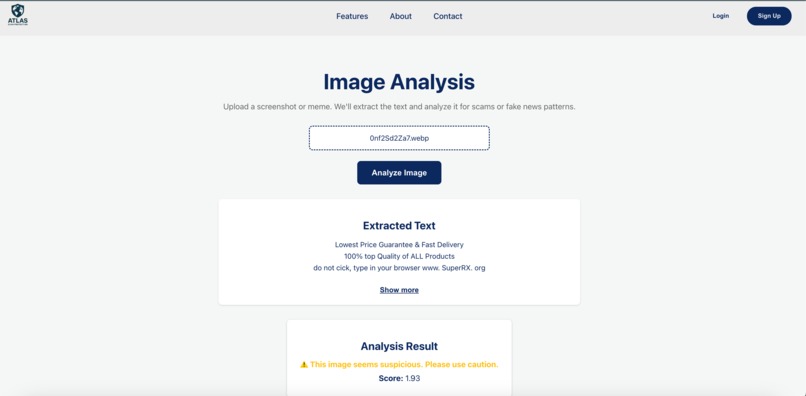
Image Analysis
-
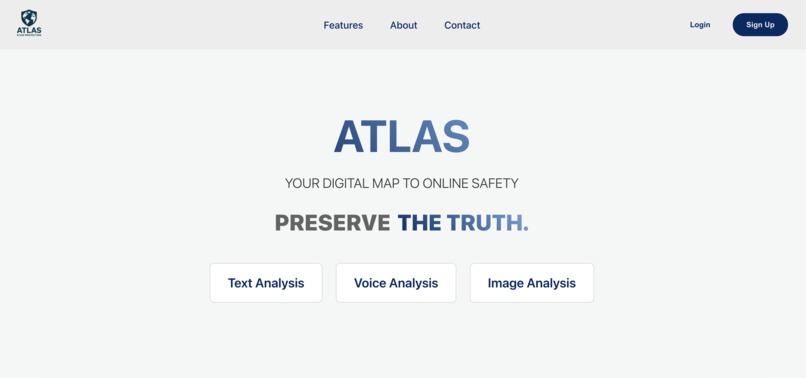
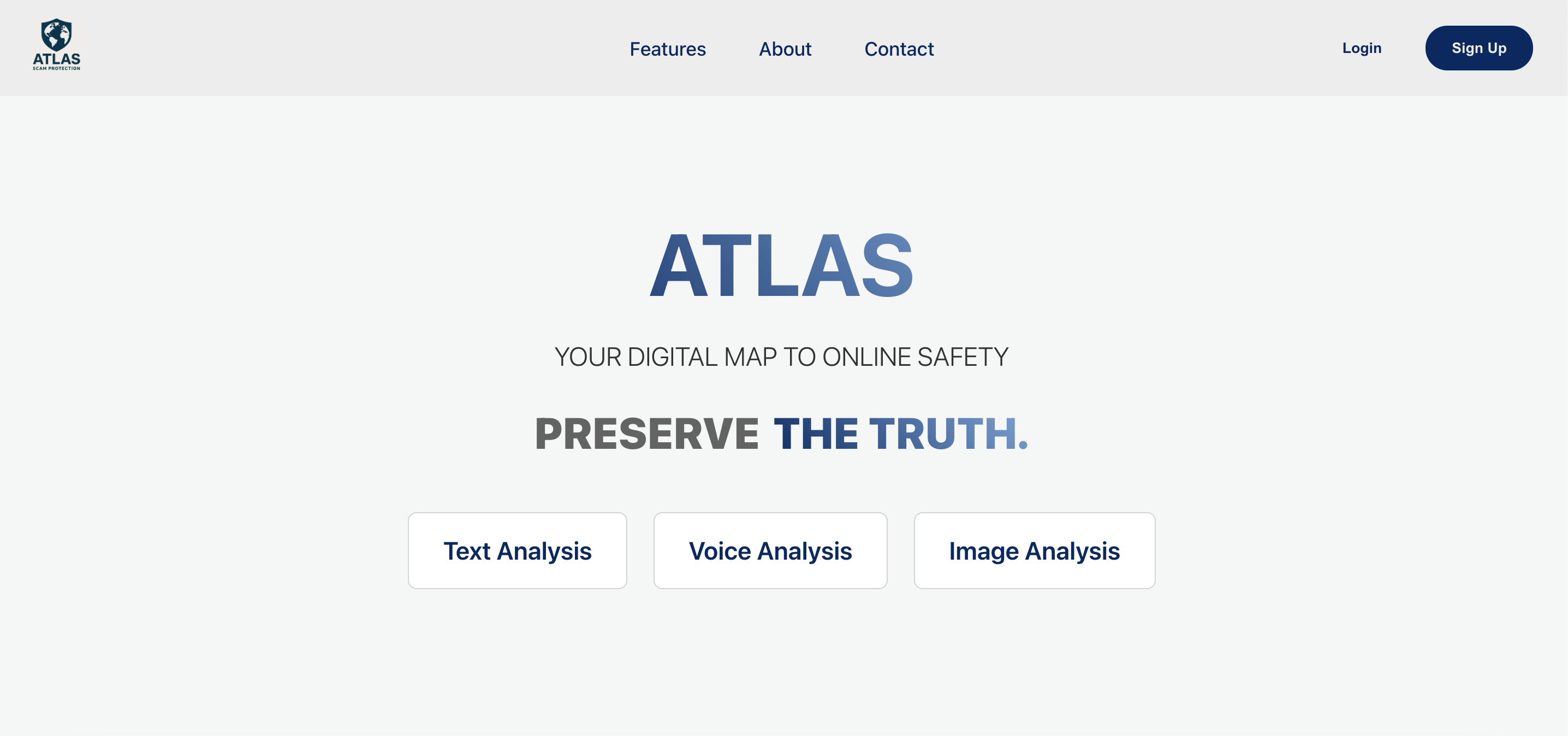
Landing Page

Inspiration
Our inspiration came from the alarming increase in sophisticated online scams and the spread of misinformation. Every day, people are targeted by fraudulent emails, deceptive text messages, and even AI-generated voice or image scams. We wanted to empower the average internet user with a simple yet powerful tool to fight back, providing them with a reliable way to verify information and protect themselves from digital threats before they fall victim.
What it does
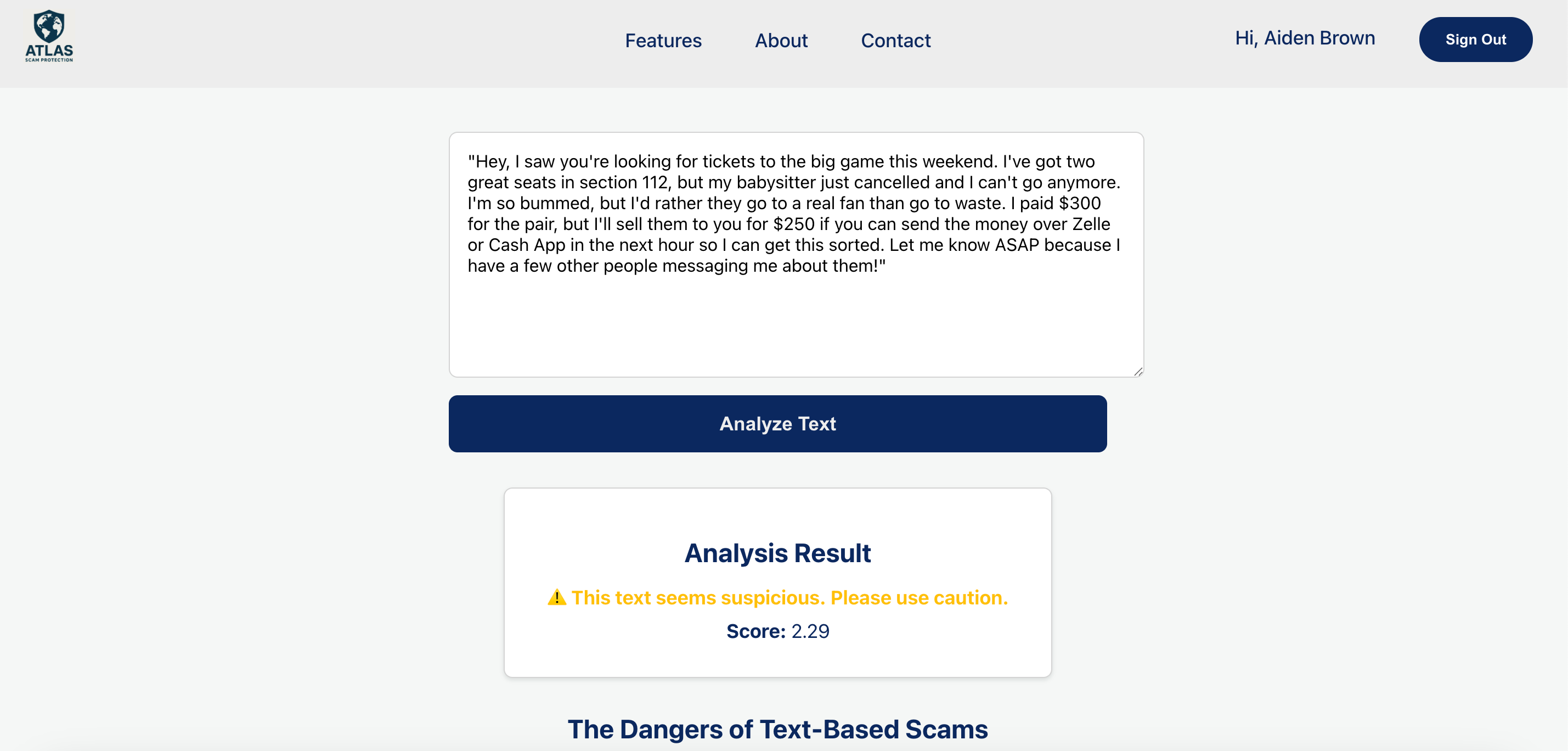
ATLAS Scam Protection is a smart, all-in-one analysis tool that detects scams and fake news across multiple formats. Users can create an account and sign in to our web platform to:
- Analyze Text: Paste any text, from suspicious emails to questionable news articles, to get an instant risk assessment.
- Analyze Audio: Upload an audio file (like a voicemail) to check for signs of voice phishing or AI-generated speech.
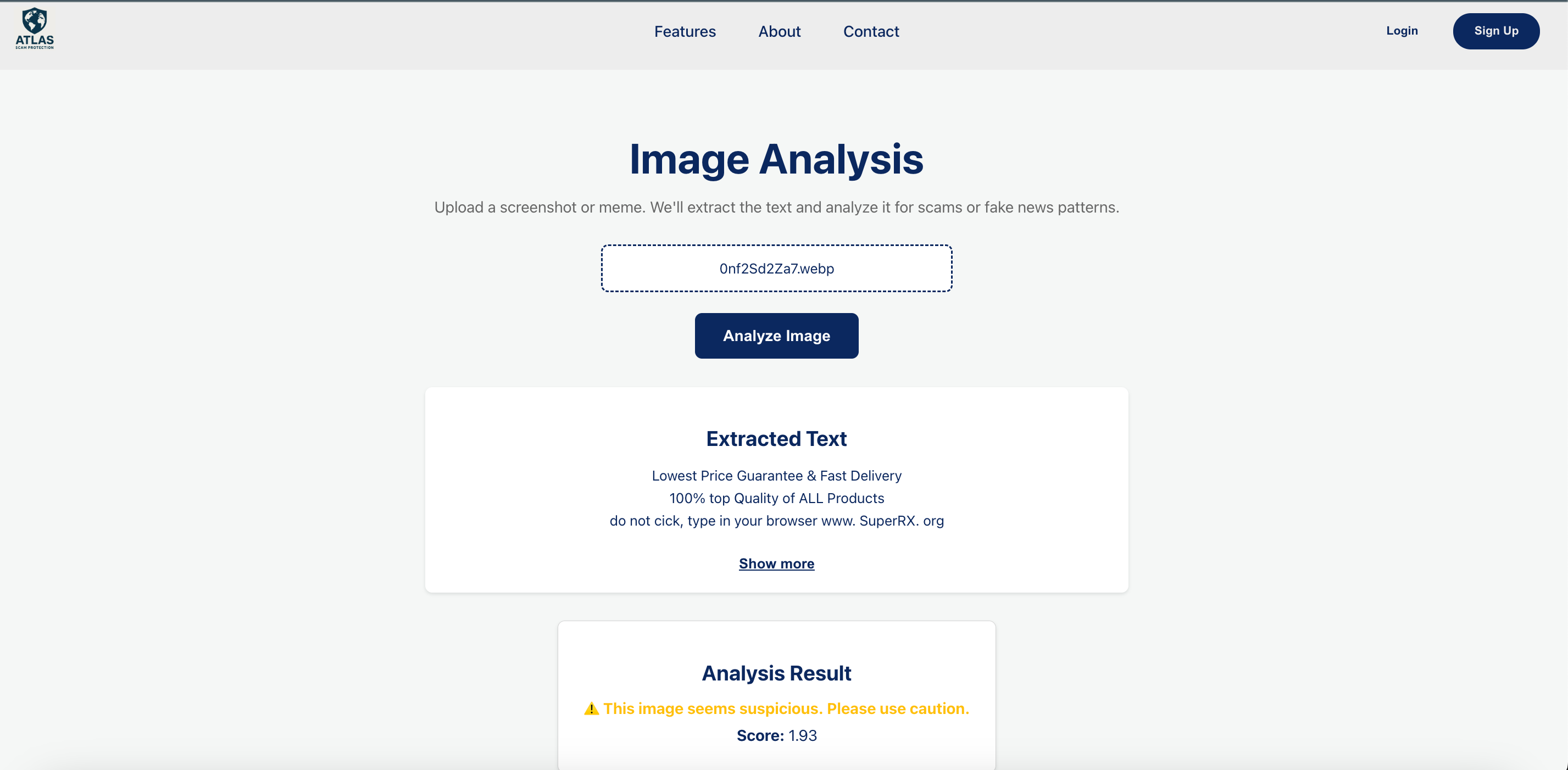
- Analyze Images: Submit an image to detect signs of manipulation or text-based misinformation within the picture.
The platform provides a clear verdict, helping users make informed decisions about the content they encounter daily.
How we built it
We built ATLAS as a full-stack web application with a clear separation between the user interface and the backend analysis engine.
- Frontend: The client-side was developed using React, creating a responsive and interactive user experience. We used React Router for navigation and Axios to communicate with our backend API.
- Backend: The server is powered by Python and the Flask web framework, which exposes a RESTful API for the frontend to consume.
- Machine Learning: The core of our project lies in its analysis capabilities.
- For text analysis, we trained a machine learning model using Scikit-learn and NLTK on the UCI SMS Spam Collection dataset.
- For audio analysis, we integrated the Vosk speech recognition library to transcribe audio to text for further evaluation.
- For image analysis, we used Pytesseract (a wrapper for Google's Tesseract OCR engine) to extract and analyze any text found in images.
- Database: We used MongoDB as our NoSQL database to manage user accounts and store analysis data efficiently.
Challenges we ran into
One of our biggest challenges was integrating the different machine learning models for each data type into a single, cohesive backend. Ensuring the analysis was both accurate and fast enough for a real-time user experience required significant optimization. We also faced the challenge of sourcing and cleaning diverse datasets to train our models effectively against a wide variety of modern scams. Finally, architecting the full-stack communication pipeline between the React frontend and Flask backend was a complex task that required careful API design.
Accomplishments that we're proud of
We are incredibly proud of creating a functional, end-to-end application that addresses a real and pressing issue. Successfully building a multi-modal analysis engine that can process text, audio, and images is a major accomplishment. We are also proud of engineering a full-stack solution from the ground up, demonstrating our ability to connect a modern frontend with a powerful machine learning backend. Most importantly, we've built a tool that has the potential to help people stay safe online.
What we learned
This project was a tremendous learning experience. We deepened our skills in full-stack development, specifically in connecting a React frontend to a Python/Flask backend. We gained hands-on experience in the practical application of machine learning, moving from theoretical knowledge to implementing and integrating NLP, speech-to-text, and OCR libraries. We also learned a great deal about API design, database management with MongoDB, and the complete development lifecycle from concept to deployment.
What's next for ATLAS Scam Protection
We have many exciting plans for the future of ATLAS! Our immediate goal is to expand our training datasets to improve the accuracy and scope of our detection models. We plan to add support for new formats, such as URL scanning and eventually video analysis. A key feature on our roadmap is to develop a browser extension that can provide real-time scam protection directly on web pages and social media feeds. Finally, we want to enhance the user experience by providing more detailed explanations of why a piece of content was flagged as suspicious, further educating users on how to spot scams themselves.
Built With
- c++
- javascript
- mongodb
- pytesseract
- python
- react
- rest


Log in or sign up for Devpost to join the conversation.