-
-
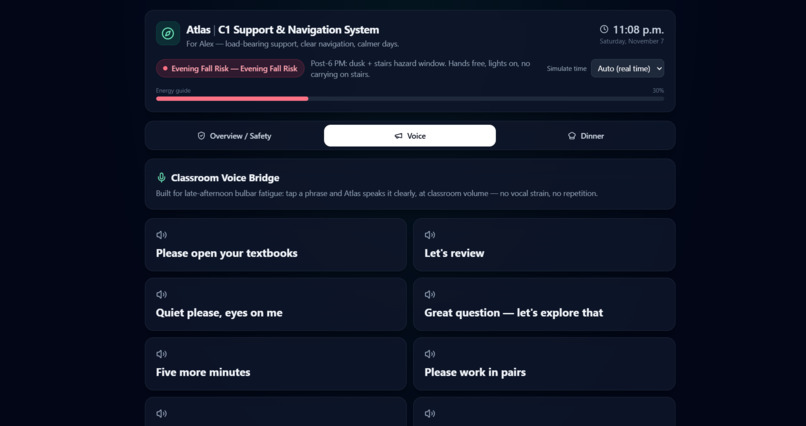
Speech Interface
-
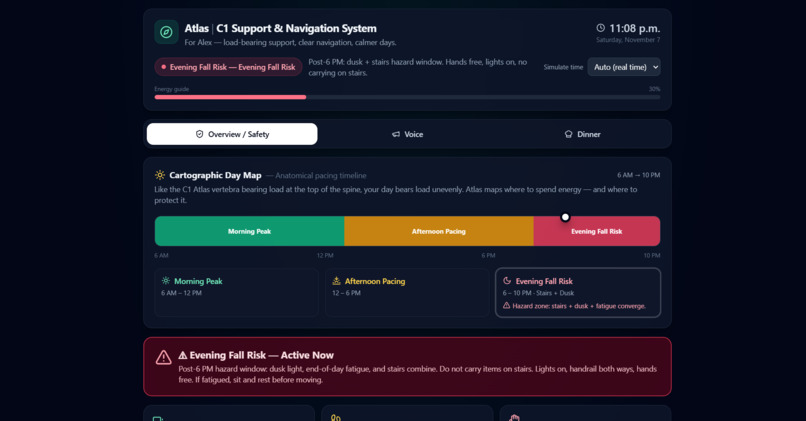
Overview
-
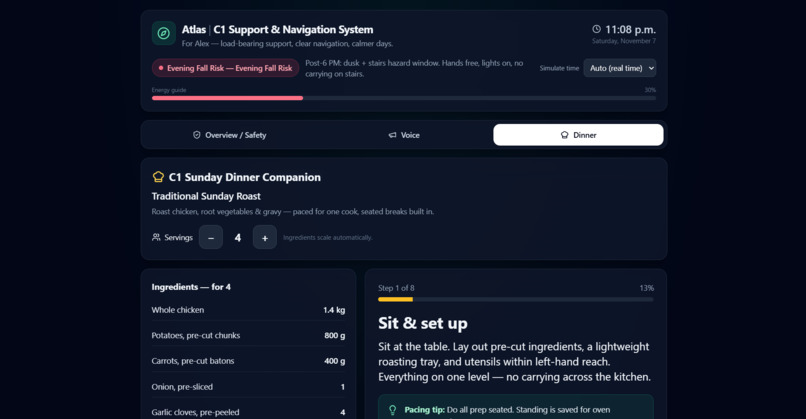
Dinner Interface
-
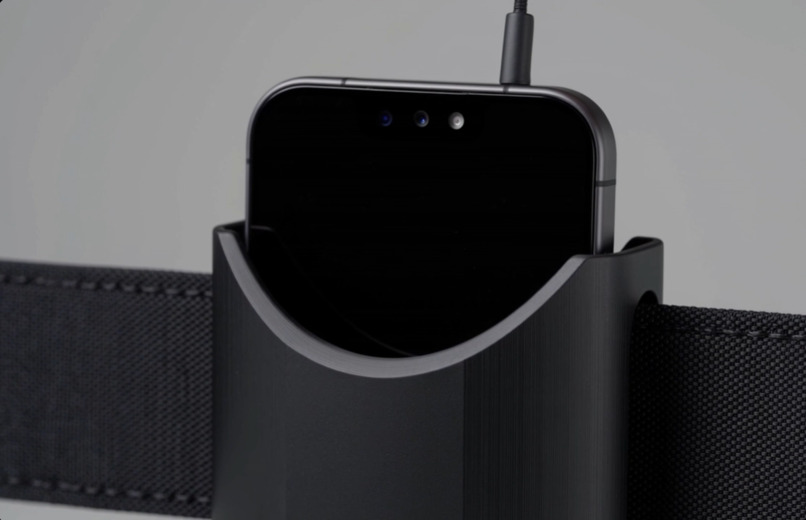
AtlasBelt
-
AtlasPhoneHolster
Inspiration
When I first started shaping this project, I kept thinking about the immense physical and cognitive load carrying a smartphone or teaching tools creates for someone with a 3/5 right-hand grip weakness and cumulative afternoon fatigue. That core worry—that the phone would simply be physically too heavy to hold and keep dropping down—sparked the entire mechanical side of my design.
That thought process directly inspired the name Atlas, which bridges two distinct worlds:
The Anatomical Definition (C1 Vertebra): The atlas vertebra sits at the very top of the spinal column, quietly bearing the heavy weight of the head and allowing us to navigate movement. I wanted my app and hardware to act as that foundational, load-bearing support system.
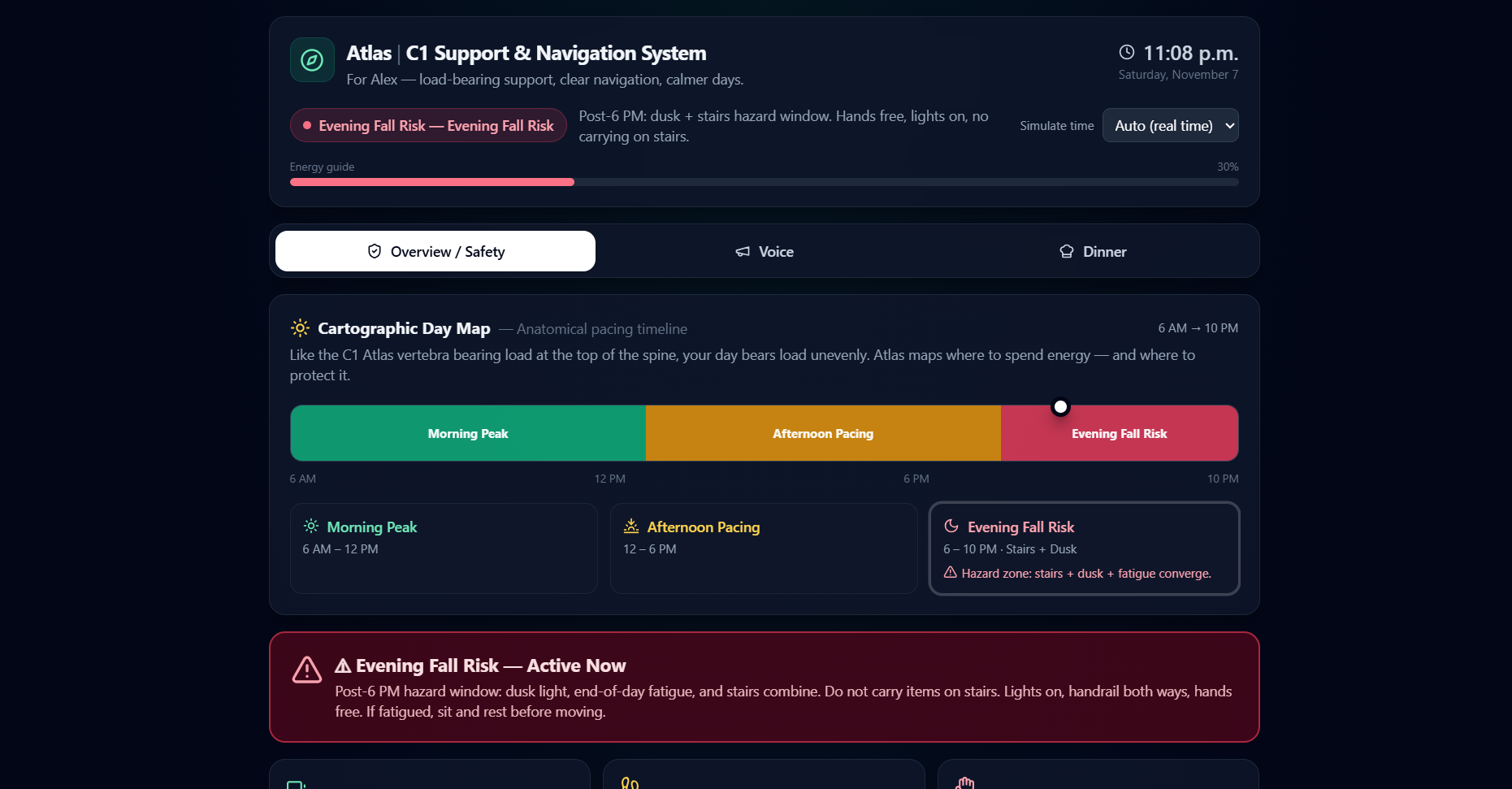
The Cartographic Definition (A Map): A structured atlas used to navigate daily pacing, safety hazards, and transition windows.
How I Built It
To bring Project Atlas to life, I focused on creating a seamless blend of software engineering and physical hardware:
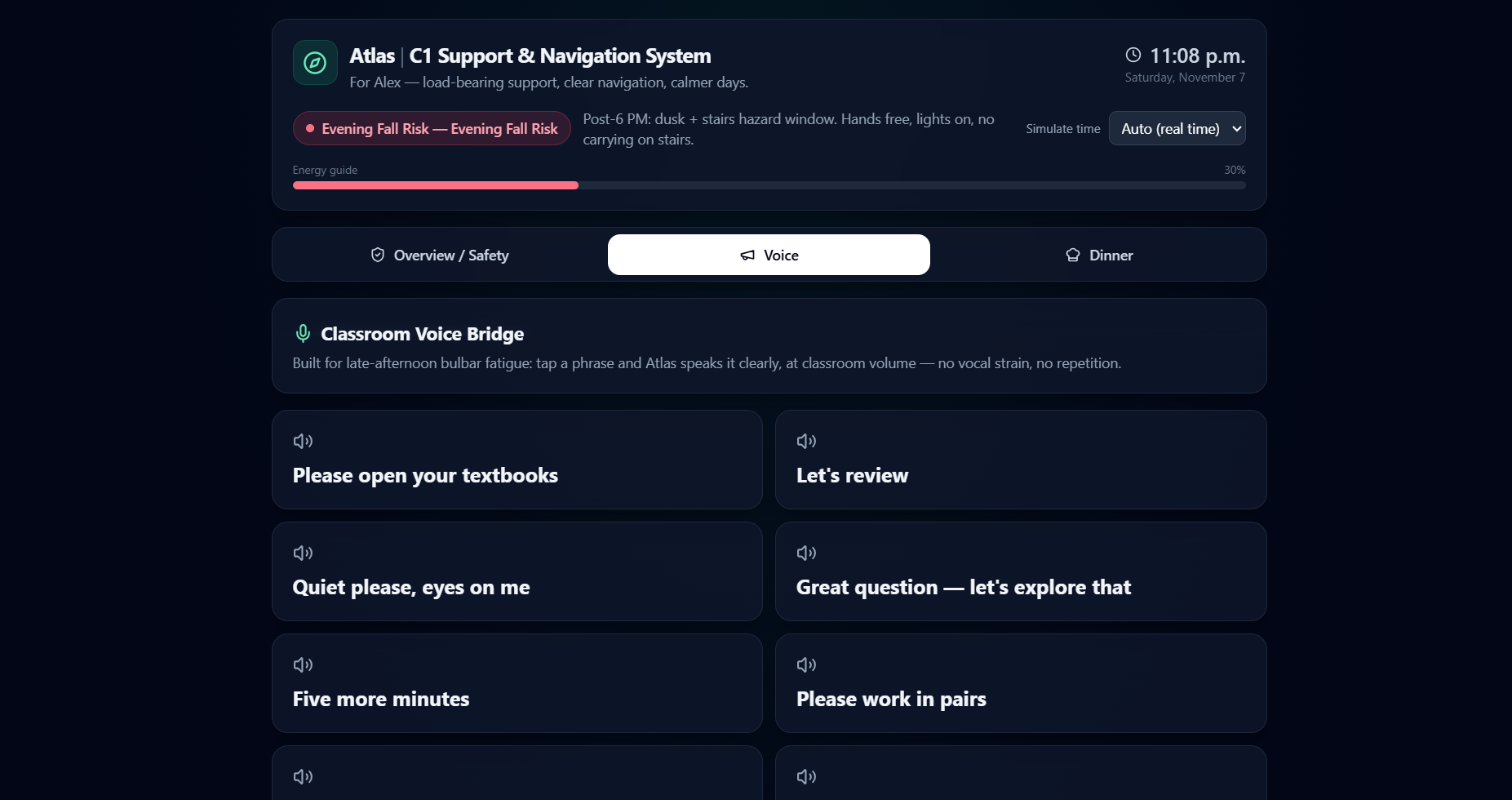
Frontend Stack: Developed as a responsive Progressive Web App (PWA) using React, Vite, and Tailwind CSS, featuring modular components and local state management for real-time safety toggles like the 6 PM evening fall-risk window.
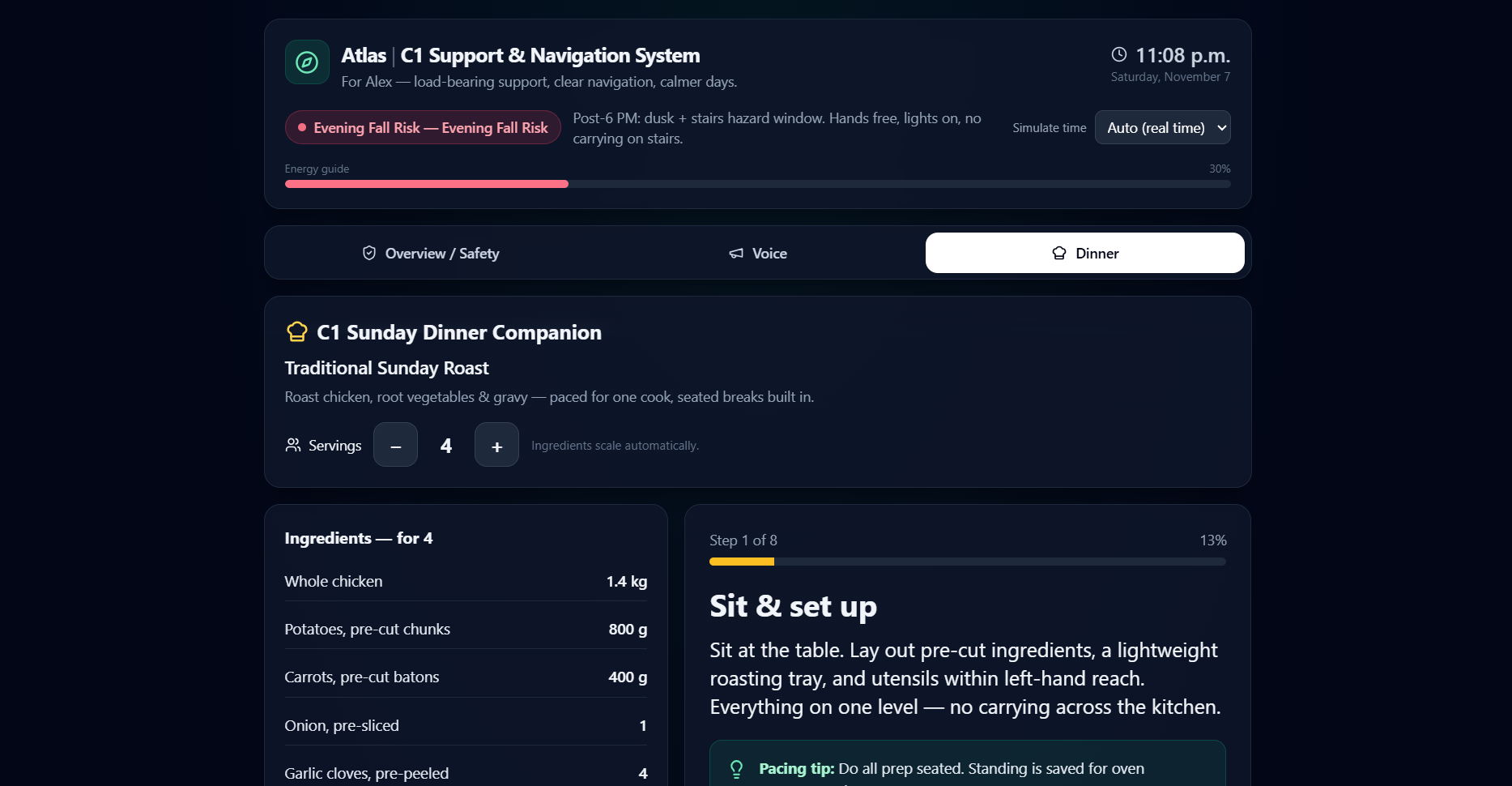
AI & API Integrations: Learned how to securely integrate and manage API keys for ElevenLabs to deliver natural, expressive voice synthesis (with a robust local browser speech fallback) and utilized the Gemini API for adaptive cooking guidance and step-by-step recipe pacing.
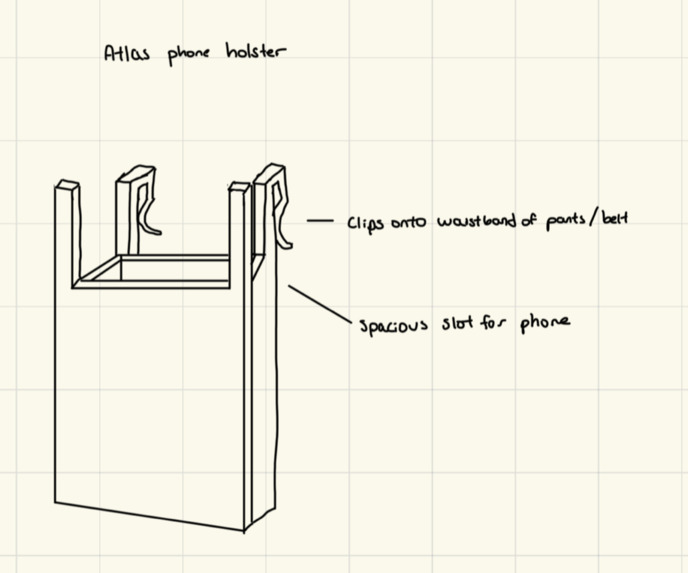
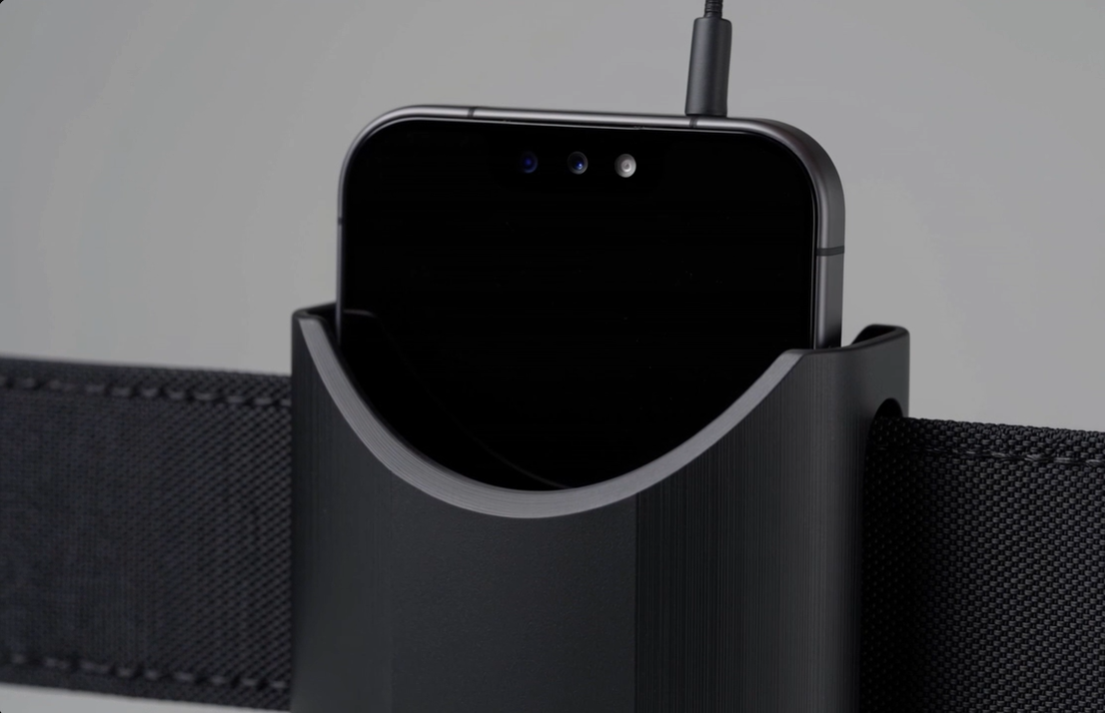
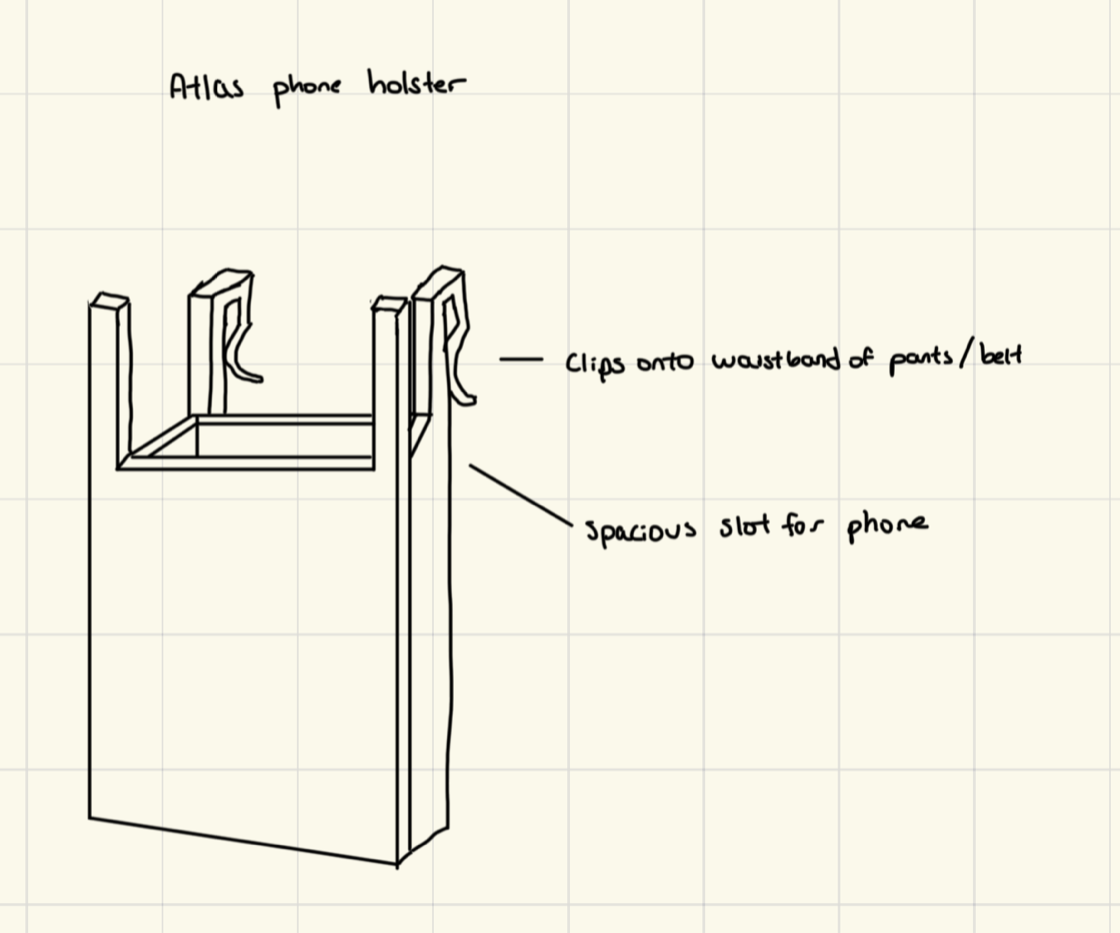
Hardware & 3D Printing: Because I was specifically worried about phone weight and drop hazards, I designed a parametric 3D-printable TPU tactical waist holster and slot. Inspired by police duty gear, it transfers device weight entirely to the hips (completely bypassing upper-limb weakness), features a flared open-top guiding slot for effortless one-handed docking, and integrates a retractable tether to ensure the phone never hits the floor.
Challenges I Faced
My biggest challenge throughout this build was making sure I could integrate an idea that was genuinely thoughtful and helpful to our client, Alex. Balancing the technical complexities of real-time API integrations and mechanical tolerances with the deeply personal, practical needs of a high school biology teacher living with limb-onset ALS meant constantly refining every feature to ensure it brought real value rather than just technical complexity.
What I Learned
This project taught me a tremendous amount about ALS symptom progression, assistive technology design, and the intricacies of integrating cloud APIs like ElevenLabs and Gemini. Most importantly, it showed me that true accessibility tech requires solving both sides of the coin: software can handle cognitive pacing and voice projection, but physical environment safety requires thoughtful mechanical engineering.
Built With
- css3
- elevenlabs
- generative-ai
- google-gemini-api
- html5
- javascript
- progressive-web-app
- react
- tailwind-css
- text-to-speech
- vite
