Inspiration
For people living with Amyotrophic Lateral Sclerosis (ALS), time matters.
ALS is a progressive neurodegenerative disease, but its early symptoms can be difficult to recognize. Weakness, changes in speech, and difficulties with everyday movements may initially be attributed to other conditions. By the time someone reaches an ALS specialist, valuable time may have passed.
But the challenges don't end with diagnosis.
Patients and caregivers must continuously monitor changes in mobility, speech, breathing, and daily functioning, often across disconnected appointments, documents, and healthcare systems. Meanwhile, researchers need access to meaningful longitudinal data to better understand disease progression.
We started The Atlas Network with one question:
What if the entire ALS journey, from the first concerning symptom to long-term monitoring and research participation, could be connected in one platform?
At BioHacks 2026, we spoke with a representative from the ALS Society of Canada, who encouraged us to use their ReferALS Early Referral Tool as the clinical foundation for our project.
That conversation helped shape The Atlas Network into something more than another AI healthcare chatbot.
What it does
The Atlas Network is an accessibility-first platform connecting three major stages of the ALS journey: early recognition, ongoing care, and patient-powered research.
1. Early recognition and referral support
Our early-recognition workflow is built around ReferALS, the ALS Society of Canada's established early-referral guidance.
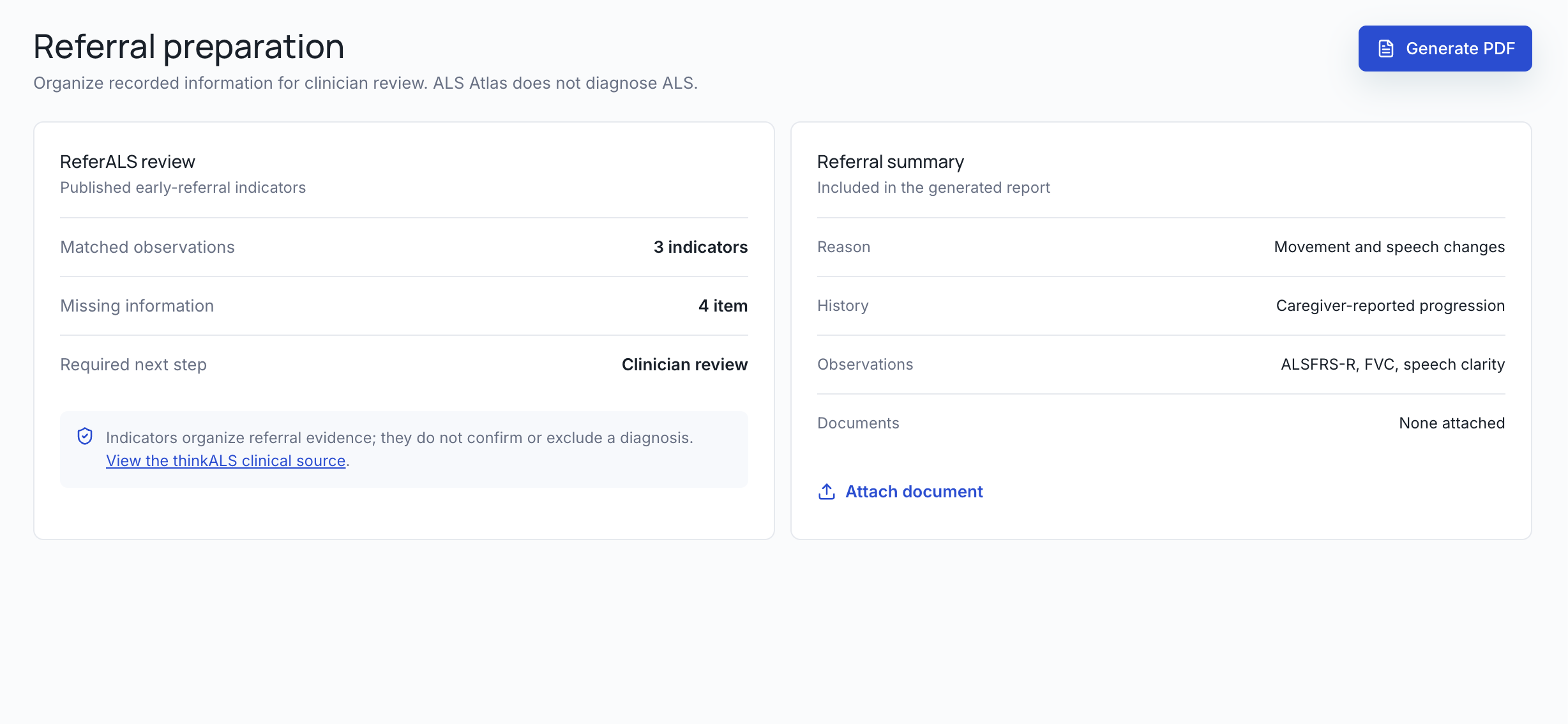
Patients can document concerning symptoms, their progression, and how they affect daily activities. The Atlas Network organizes these observations into a structured history that can support conversations with healthcare professionals.
The referral-support workflow is designed to map documented information against ReferALS indicators, distinguish patient-reported observations from clinician-confirmed findings, and prepare clinician-readable summaries.
Rather than attempting to diagnose ALS through an opaque AI model, The Atlas Network focuses on helping patients and clinicians recognize, organize, and communicate relevant information.
2. Continuous patient monitoring
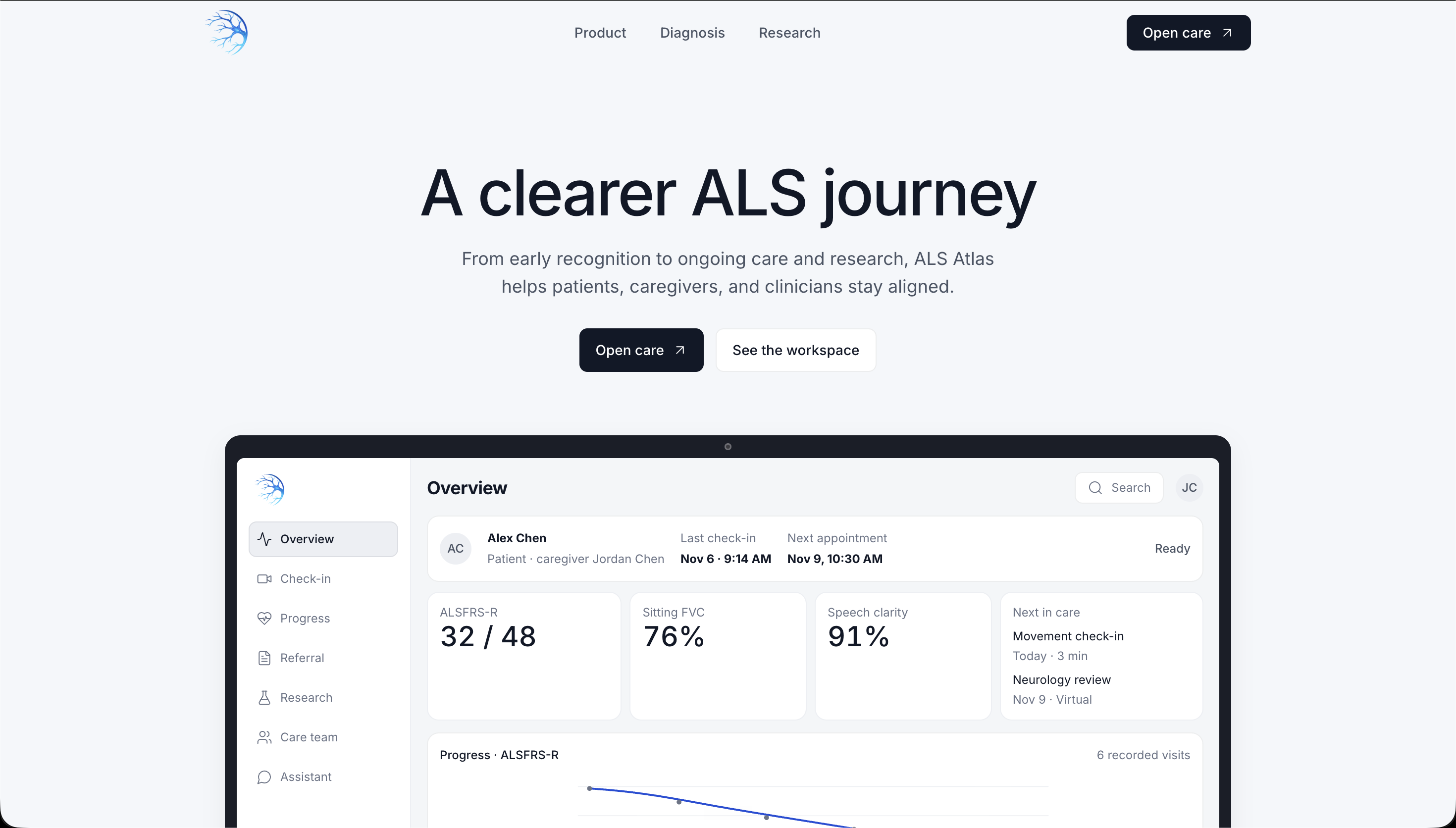
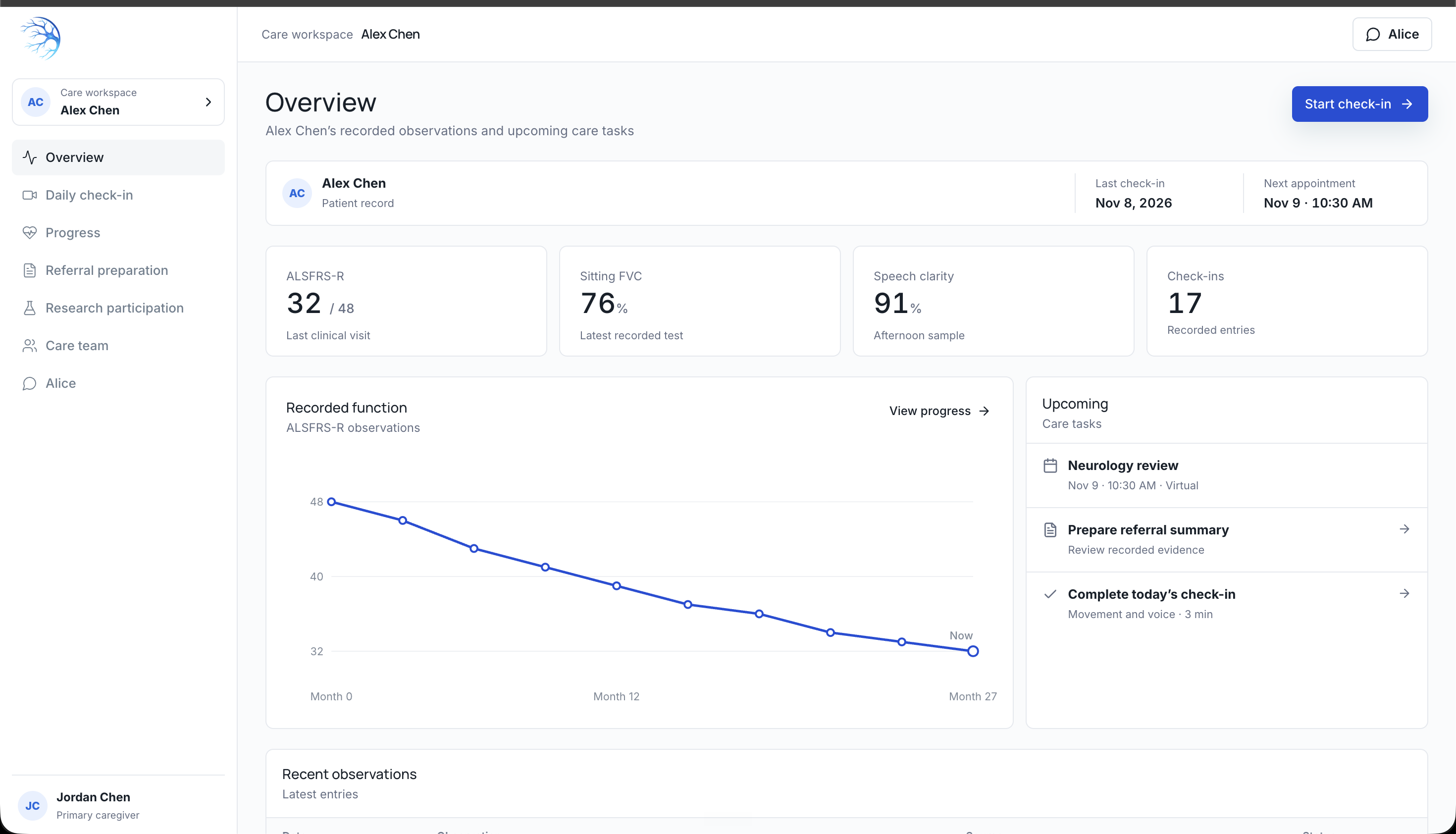
The Atlas Network provides a centralized care workspace for patients and caregivers to track changes between appointments.
The platform includes workflows for:
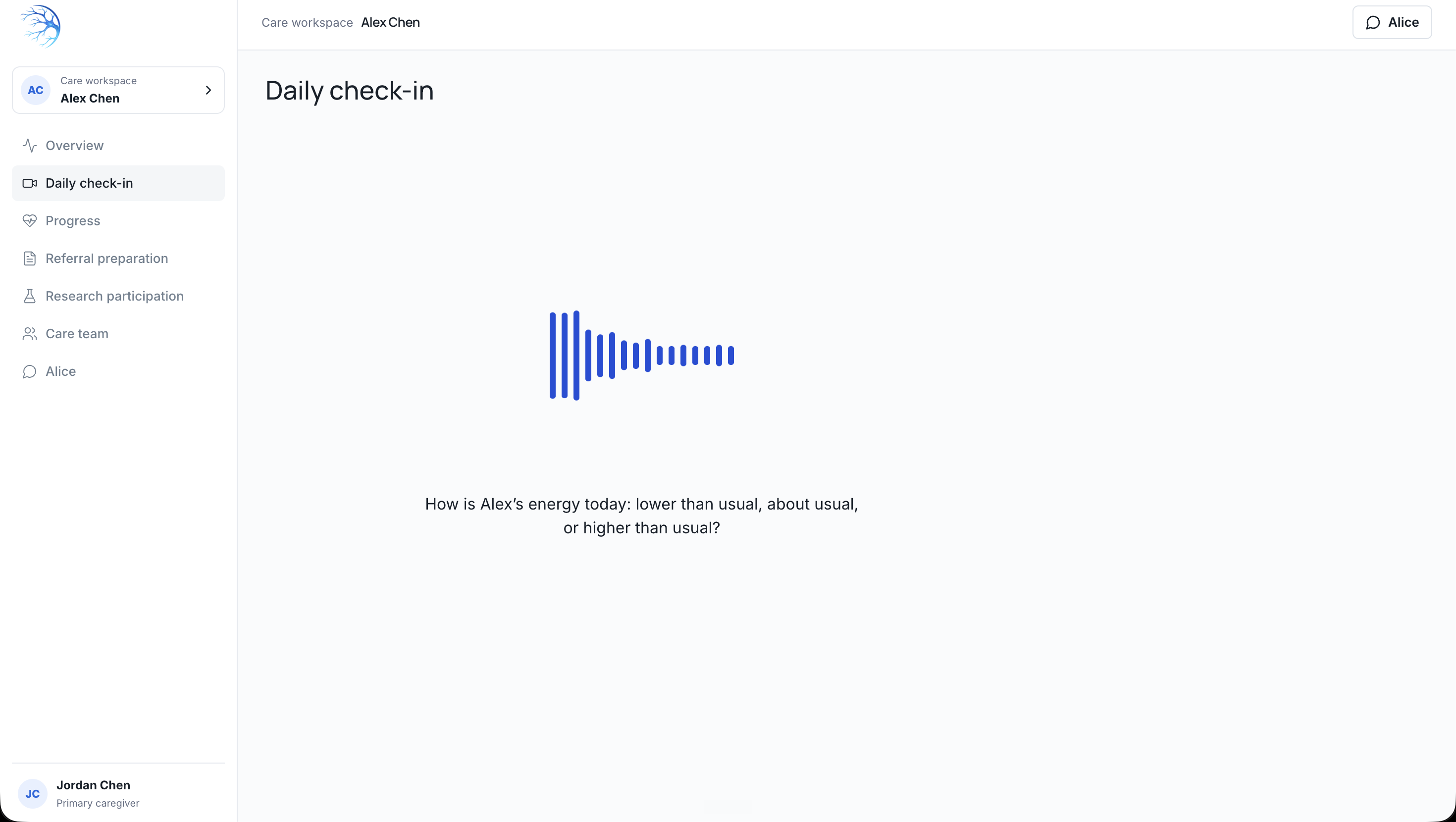
- Daily movement and voice check-ins
- ALSFRS-R functional assessments
- Respiratory measurements such as FVC
- Speech-related observations
- Longitudinal progression charts
- Caregiver notes and symptom timelines
- Clinical report preparation
- Care-team coordination
Our fictional demonstration patient, Alex Chen, illustrates how observations recorded across months can become a structured, accessible patient history.
Instead of relying on memory during an appointment, patients and caregivers can bring a clearer picture of what changed and when.
3. Patient-powered ALS research
We also wanted to rethink the relationship between patients and medical research.
Patients generate valuable longitudinal information through everyday care, yet contributing that information to research is not always straightforward.
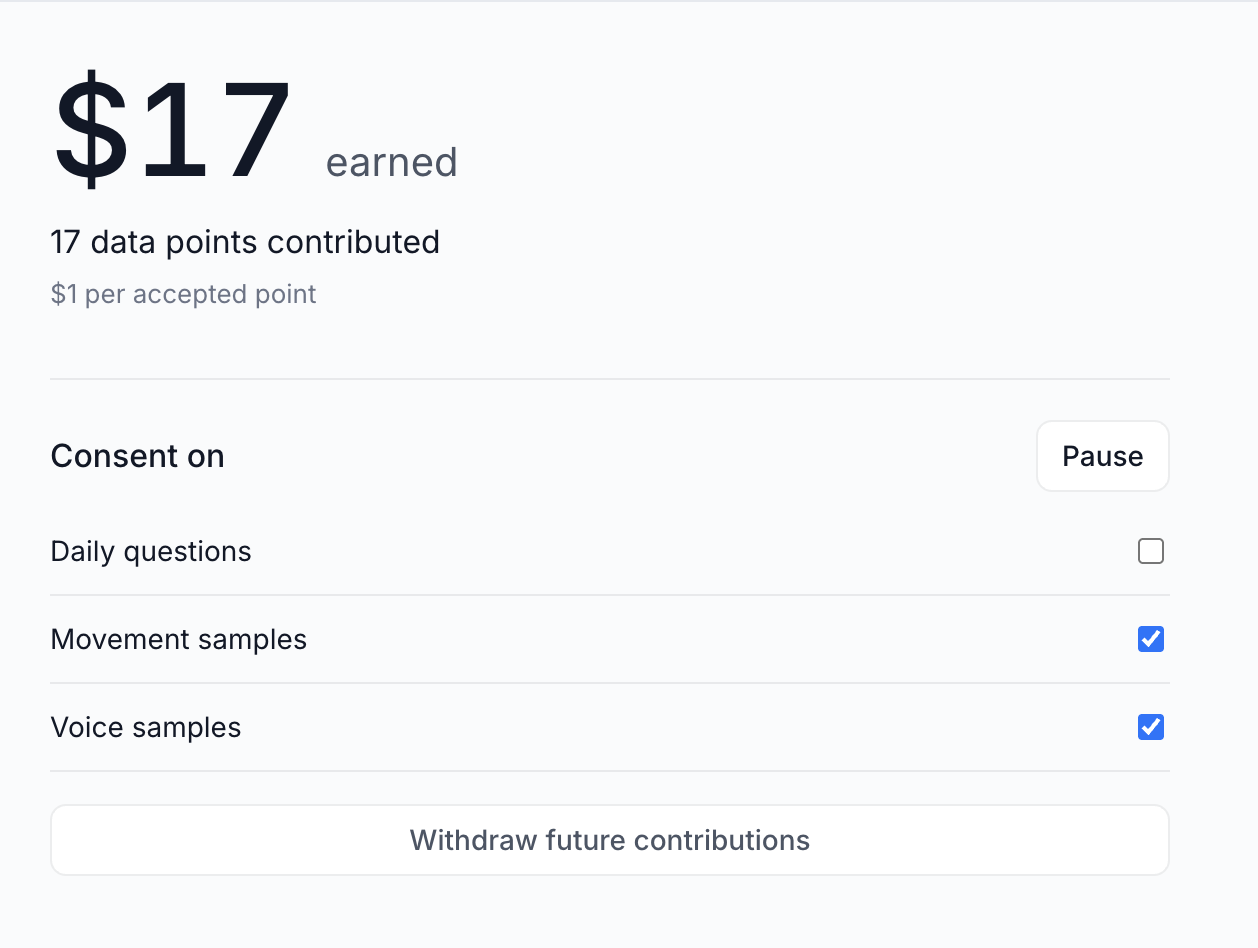
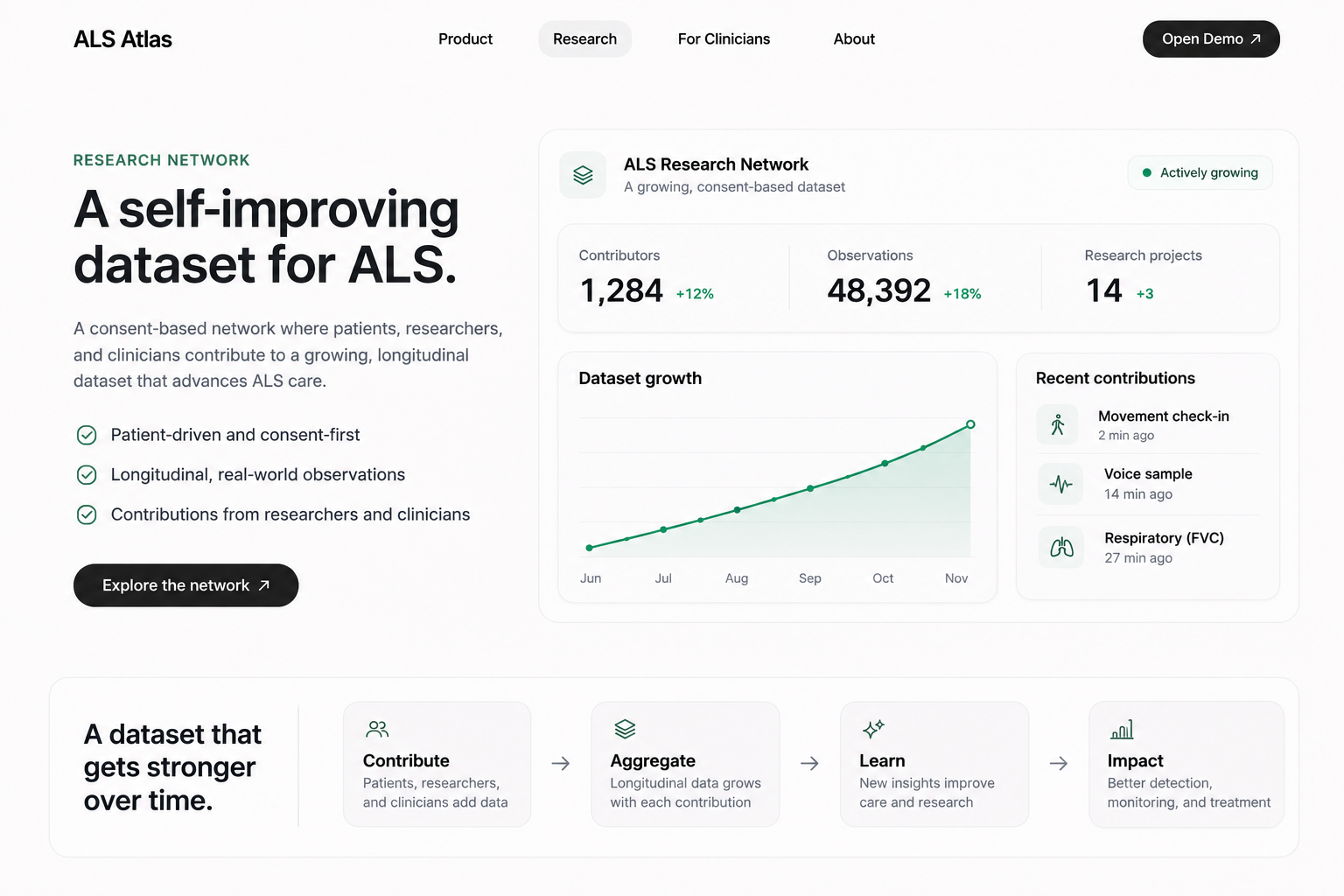
The Atlas Network explores a consent-first research model where patients can choose which categories of eligible information they want to contribute.
The platform separates two experiences:
Patient workspace: Manage research participation, data-sharing preferences, and contribution history.
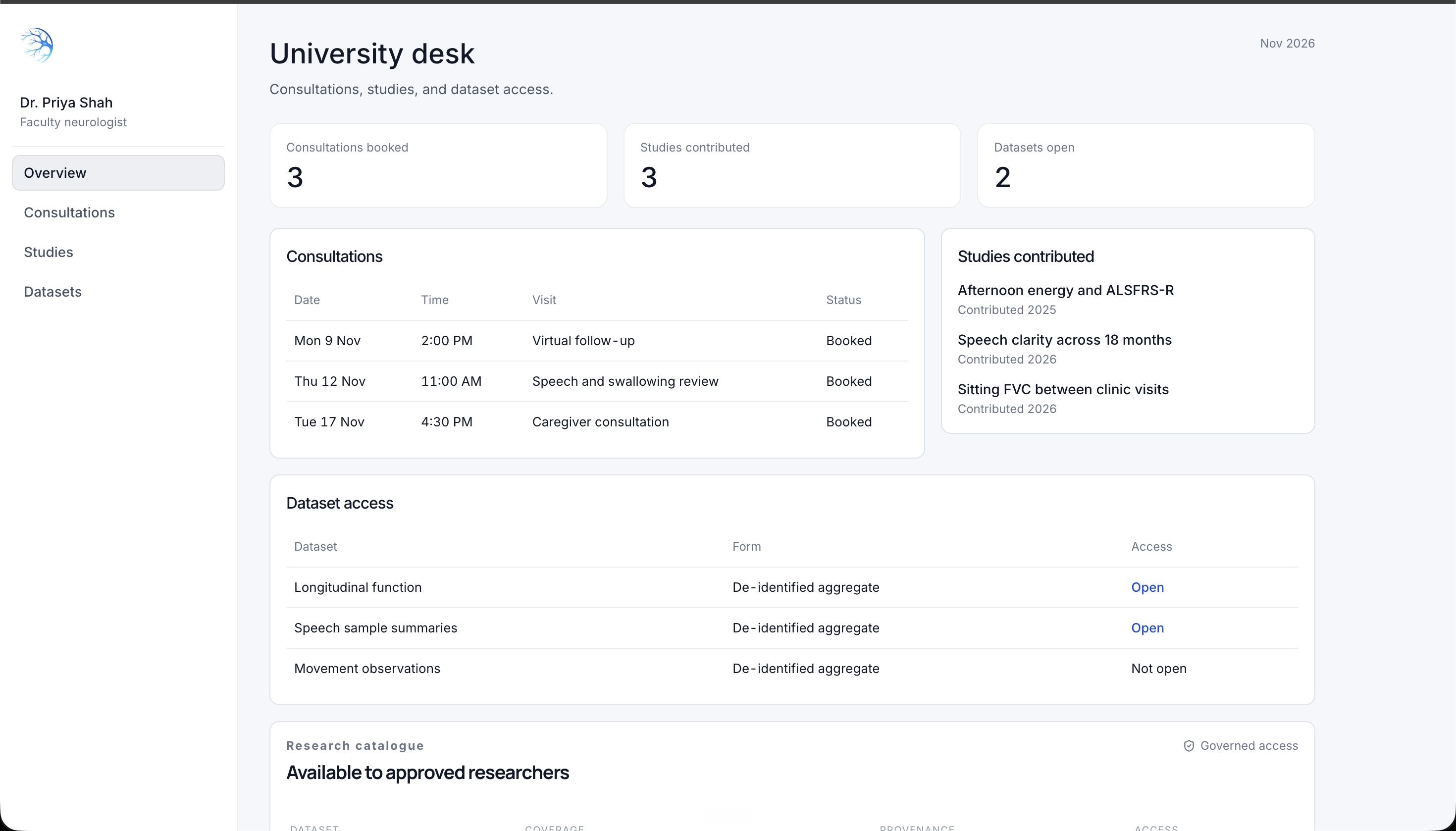
Researcher workspace: Explore approved datasets, manage research access, review cohort-level information, and coordinate research contributions.
Our prototype also explores a consultation-based participation model, where researchers can contribute expertise and time as part of a governed research ecosystem.
The goal is to make research more collaborative while preserving patient choice and appropriate data governance.
How we built it
The Atlas Network combines clinical referral guidance, AI, accessible interaction, longitudinal data infrastructure, and blockchain experimentation.
ReferALS — Clinical referral foundation
We use the ALS Society of Canada's ReferALS Early Referral Tool as the foundation for structured symptom documentation and explainable referral-support logic.
Solana — Research participation
The Atlas Network uses Solana devnet as a transparent receipt layer for governed research contributions. Patients can see submitted, accepted, pending, and reward-eligible contributions, while health data itself never goes on-chain. The application verifies live Solana connectivity through devnet RPC and is designed to issue de-identified contribution receipts once a reward wallet is configured.
Sensitive medical records are not intended to be stored on-chain.
Google Gemini — AI assistance
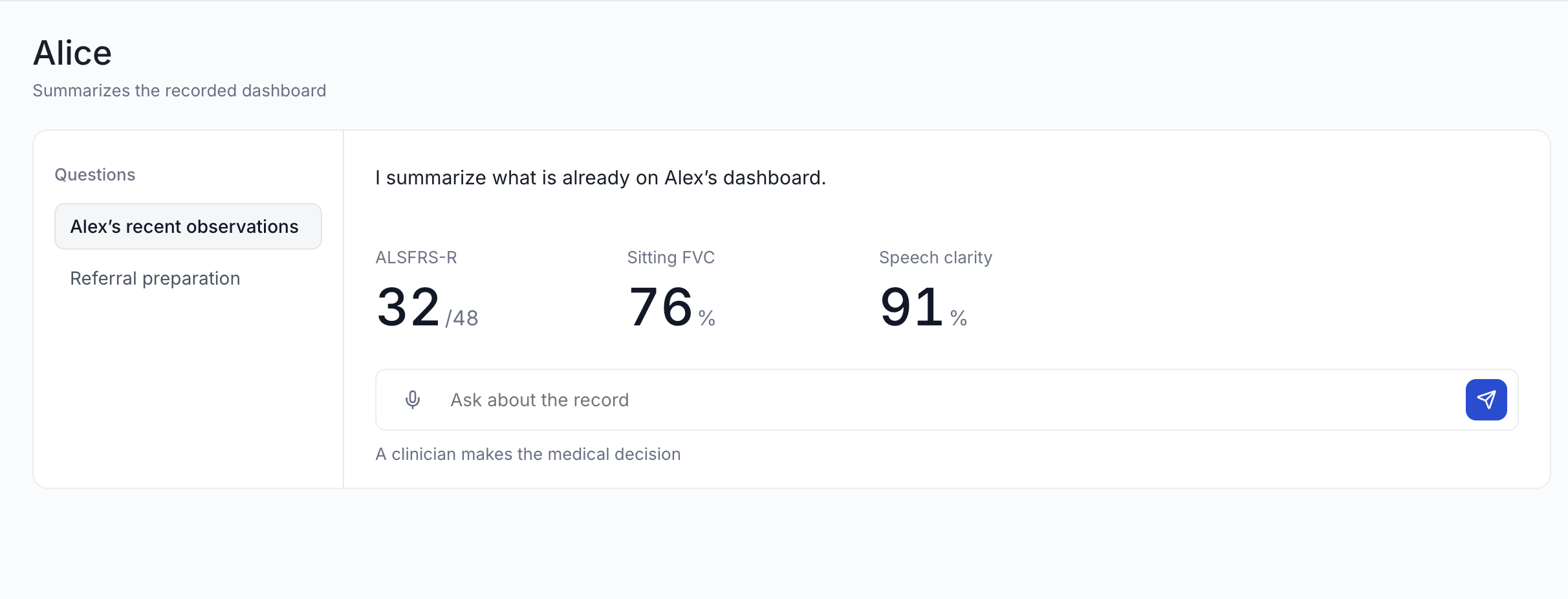
Gemini supports the AI layer for conversational interactions, symptom narrative organization, document understanding, and summarization.
Importantly, AI-generated interpretations are kept separate from deterministic clinical referral rules.
ElevenLabs — Voice accessibility
ElevenLabs powers our intended natural-language voice experience, allowing patients to interact with The Atlas Network with less dependence on typing.
This is particularly important for a platform designed around a disease that can progressively affect motor function.
Tiger Data — Longitudinal records
The Atlas Network uses Tiger Data/PostgreSQL for longitudinal observations, caregiver check-ins, research consent, media metadata, and time-series progress charts. We implemented read-after-write verification so records can be written and immediately queried back before being reflected in the dashboard. This allows the platform to combine relational patient context with longitudinal health observations and real-time analytics.
Challenges we ran into
Building clinically responsible AI
One of our biggest challenges was deciding what AI should and shouldn't do in a medical context.
A generative model can summarize symptoms, but it shouldn't independently decide whether someone has ALS.
We approached this by separating the AI assistance layer from ReferALS-based referral logic, emphasizing traceable evidence, uncertainty, and clinician review.
Designing for accessibility
A conventional dashboard assumes users can comfortably type, click small buttons, and navigate complicated forms.
For ALS, those assumptions don't always hold.
We explored voice interactions, simplified check-ins, readable progression displays, and caregiver-supported workflows to reduce interaction friction.
Connecting multiple technologies
Integrating Gemini, ElevenLabs, Tiger Data, and Solana into one coherent product required thinking carefully about how information moves between systems.
We also had to distinguish genuine backend functionality from features that only appeared complete in the interface.
Making research participation meaningful
We wanted research participation to be more than a data-sharing toggle.
Designing separate patient and researcher experiences raised important questions about consent, access permissions, researcher contributions, and responsible handling of sensitive information.
Accomplishments that we're proud of
We're especially proud of the scope and coherence of The Atlas Network prototype.
Rather than focusing on one isolated feature, we designed an experience connecting early symptom documentation, longitudinal monitoring, referral preparation, and optional research participation.
Some of our key accomplishments include:
- Building a unified patient and caregiver dashboard around a longitudinal care timeline.
- Using an established Canadian ALS referral resource as the clinical foundation instead of inventing an AI diagnostic score.
- Designing daily check-in workflows for movement and voice observations.
- Presenting functional, respiratory, and speech-related measurements in a longitudinal record.
- Creating clinician-oriented referral preparation and document-upload workflows.
- Exploring patient-controlled research consent and a distinct researcher access model.
- Bringing accessibility into the product architecture rather than treating it as an afterthought.
What we learned
We learned that the most valuable application of AI in healthcare isn't always making predictions.
Sometimes it's helping people collect the right information, understand what has changed, and communicate more effectively with the professionals responsible for their care.
We also learned that designing around ALS requires a different perspective on accessibility. Features that seem optional in conventional applications, such as voice interaction and caregiver-supported workflows, can become central to the experience.
Finally, we learned that patient-generated health data has potential value beyond individual appointments, but research participation must be built around consent, transparency, and governance.
What's next for The Atlas Network
Our next steps focus on moving from a hackathon prototype toward a technically and clinically evaluated platform.
We want to:
- Complete and test the full ReferALS-informed referral-support workflow.
- Validate our implementation against the published guidance with qualified clinical reviewers.
- Strengthen movement and voice capture, accessibility, and longitudinal monitoring.
- Complete backend integration and end-to-end testing.
- Develop the separate researcher dashboard with proper authorization and dataset governance.
- Explore partnerships with ALS clinics, researchers, and patient organizations.
- Evaluate usability, feasibility, and potential clinical value before making any effectiveness claims.
Our long-term vision is a platform that helps patients communicate earlier, supports more informed care, and makes responsible participation in ALS research easier.
The Atlas Network isn't about replacing clinicians. It's about connecting the information, people, and research that support the ALS journey.
Built With
- elevenlabs
- gemini
- solana
- tigerdata
- vultr
