-
-
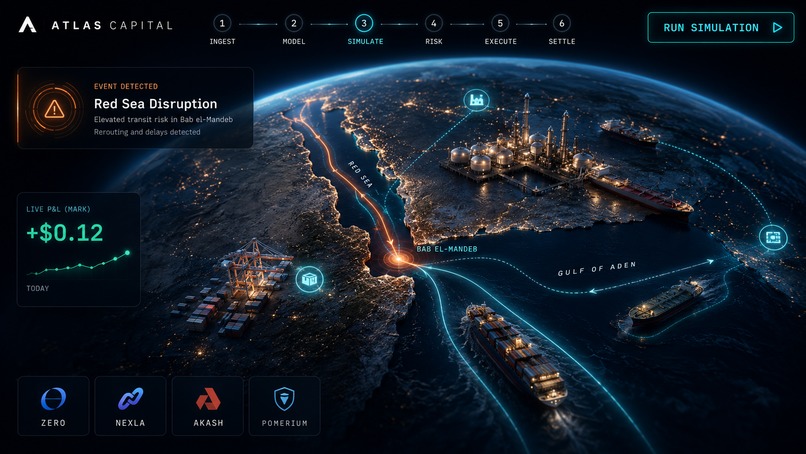
screen
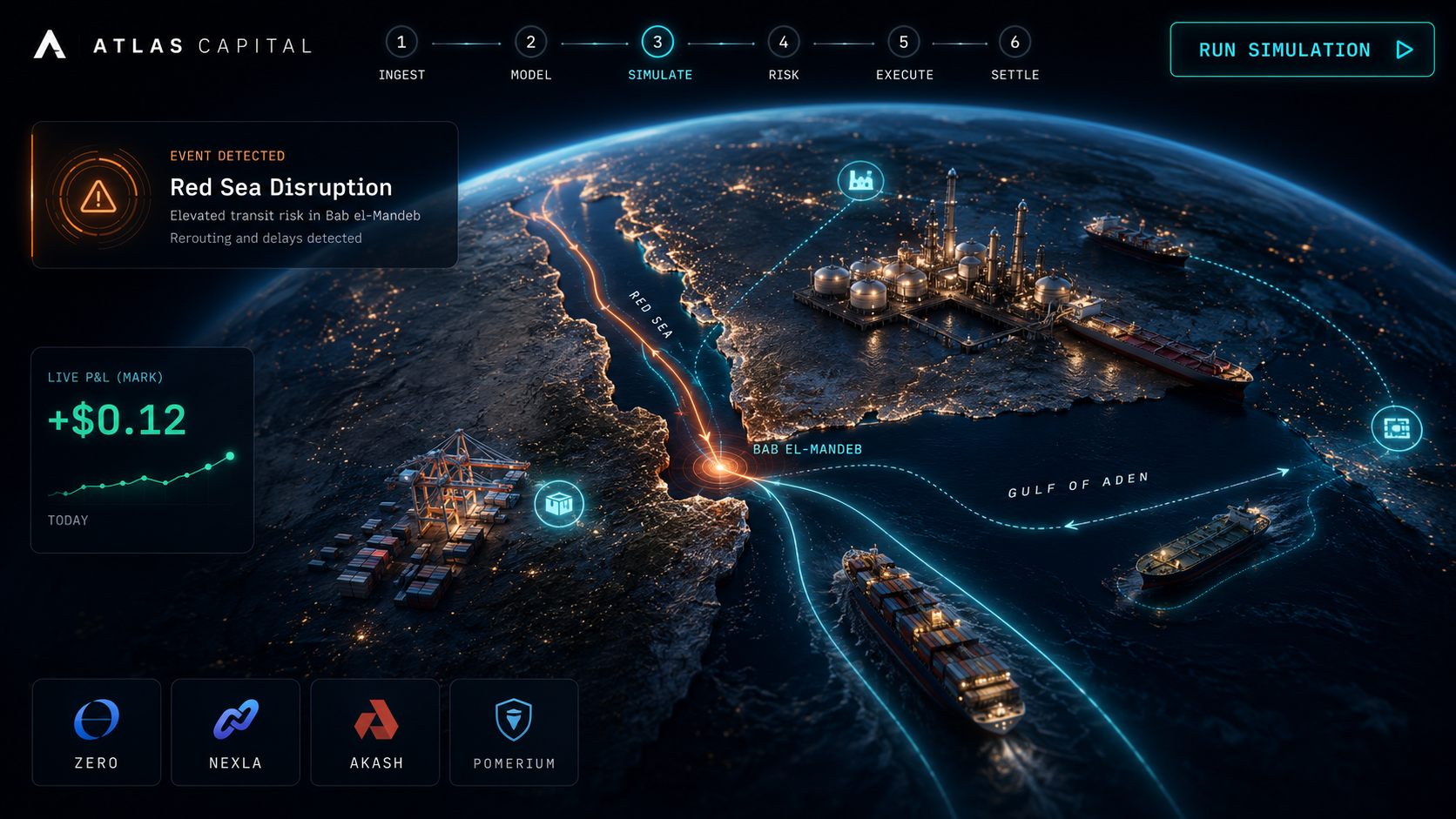
Inspiration
We initially thought about building a platform to help San Francisco manage emergency-response resources. While looking for UI inspiration, especially interfaces using interactive maps, we realized that the same concept could be applied to financial markets. We decided to build a platform that helps hedge funds understand how events happening around the world could affect supply chains, companies, and investments
What it does
Atlas Capital transforms a real-world disruption into an explainable operational and financial scenario. Users can describe an event, such as an earthquake, a port closure, or an export restriction. Atlas Capital then models how the event could affect global supply chains, transportation routes, companies, and financial markets. It allows users to simulate possible futures before they happen.
How we built it
Atlas Capital is built with Next.js, React, TypeScript, and Python. We created a real-time, event-driven architecture connected to an interactive 3D globe. Nexla manages and structures the data used by the agents. Akash runs the simulations. Pomerium verifies and controls sensitive actions. Zero.xyz connects the system to external services and handles the paper-trading execution workflow.
Challenges we ran into
One of our biggest challenges was connecting several tools and data sources into one clear workflow. We also had to distinguish real observed data from simulated data and make the demo reliable even when external services were unavailable. Another challenge was coordinating the development between three team members working on different parts of the project.
Accomplishments that we're proud of
We are especially proud of our teamwork. We were able to divide the project into several parts, work in parallel, and combine our ideas into one working product. We are also proud that Atlas Capital can react to a new disruption, invalidate its previous strategy, and generate a revised plan.
What we learned
We learned how to use the powerful tools provided by the hackathon sponsors. We also learned how to combine AI agents, real-time data, simulations, authorization policies, and human approval into one complete workflow. Most importantly, we learned how important communication and clear responsibilities are when building an ambitious project in a short amount of time.
What's next for Atlas capital
The next step is to connect Atlas Capital to more real-time data sources and improve the accuracy of its simulations. We would also like to support more industries, such as energy, pharmaceuticals, agriculture, automotive, and defense. In the future, analysts could save scenarios, compare simulations, adjust assumptions, and collaborate with their teams before making an investment decision.
Built With
- akash
- css
- nexla
- next.js
- node.js
- pomerium
- react
- tailwind
- three.js
- typescript
- websockets
- zero.xyz
