-
Landing
-
About 1
-
About 2
-
Missions
-
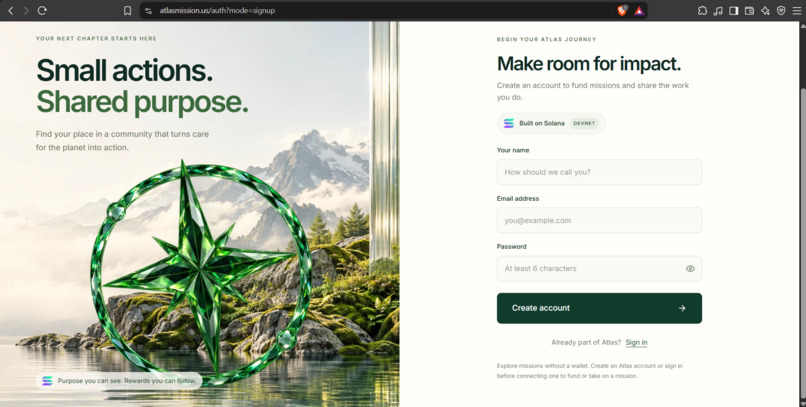
Sign Up
-
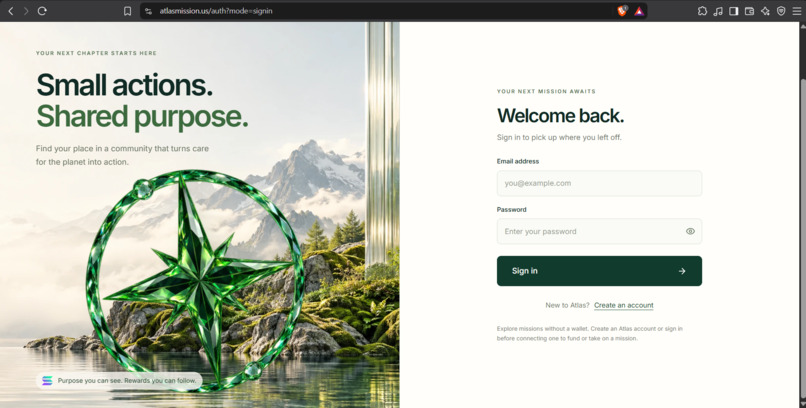
Login
Inspiration
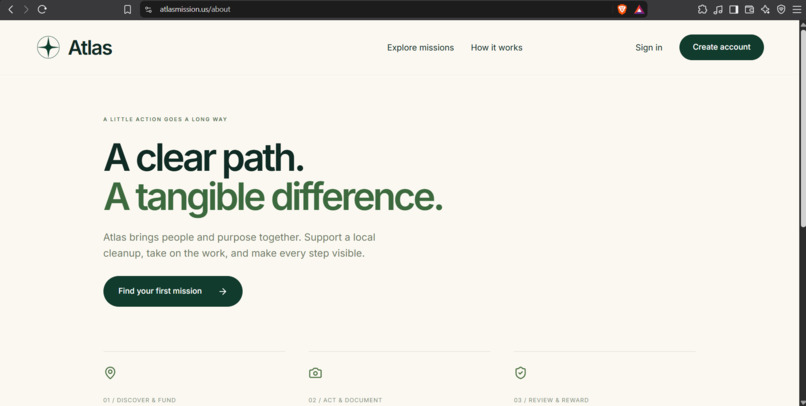
Atlas started with a question: how can someone turn a local environmental need into a clear task that another person can complete and get rewarded for?
A litter hotspot, an overflowing recycling station, or a trail without clear directions can be easy to notice but difficult to organize action around. I wanted to connect those observations with people willing to help, while making the funding and review process transparent.
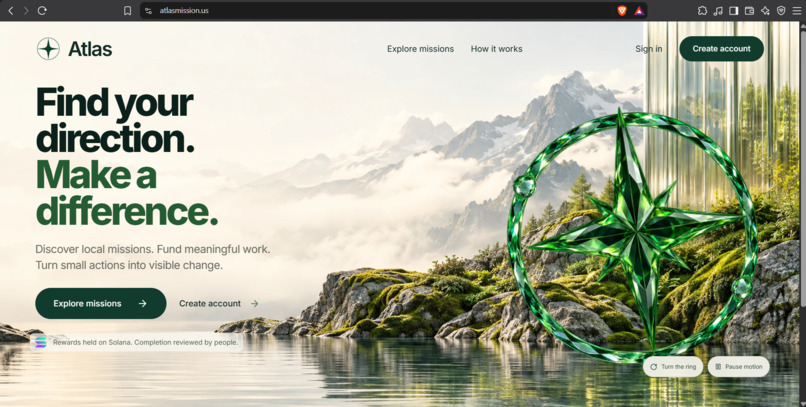
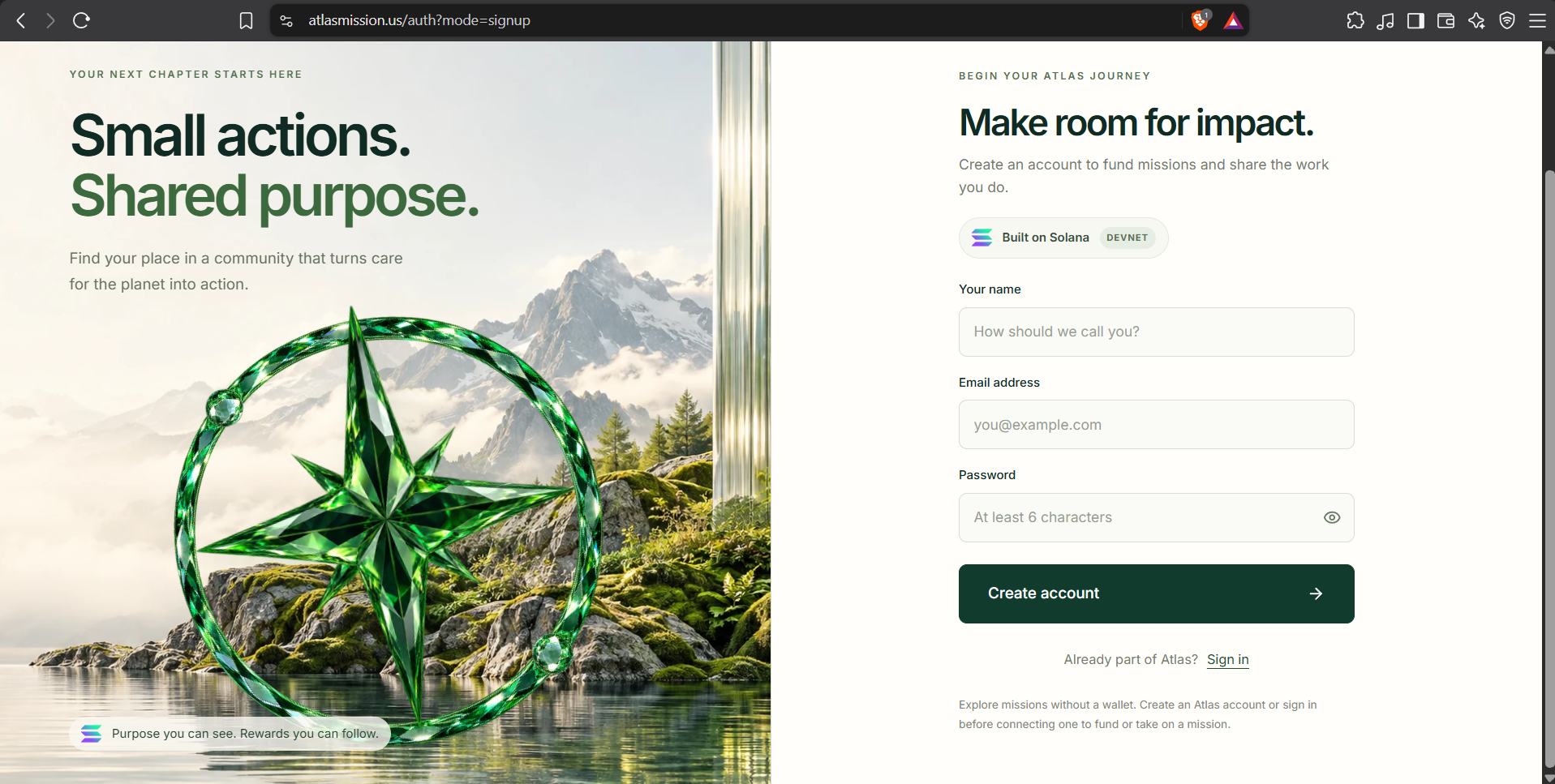
The compass became the visual identity of Atlas: finding direction, discovering opportunities nearby, and turning care for a place into action.
What it does
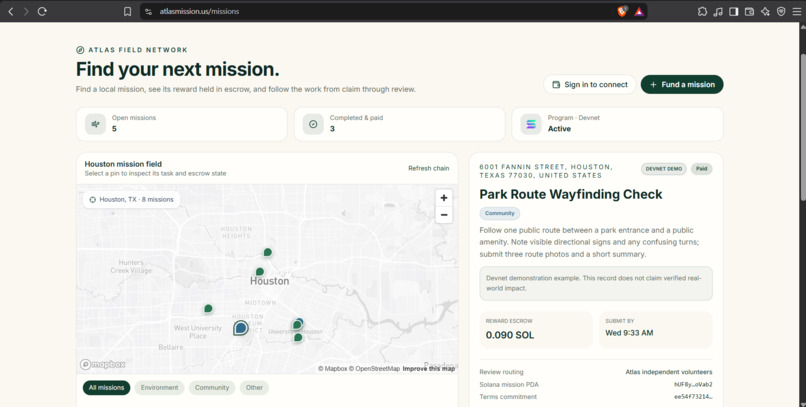
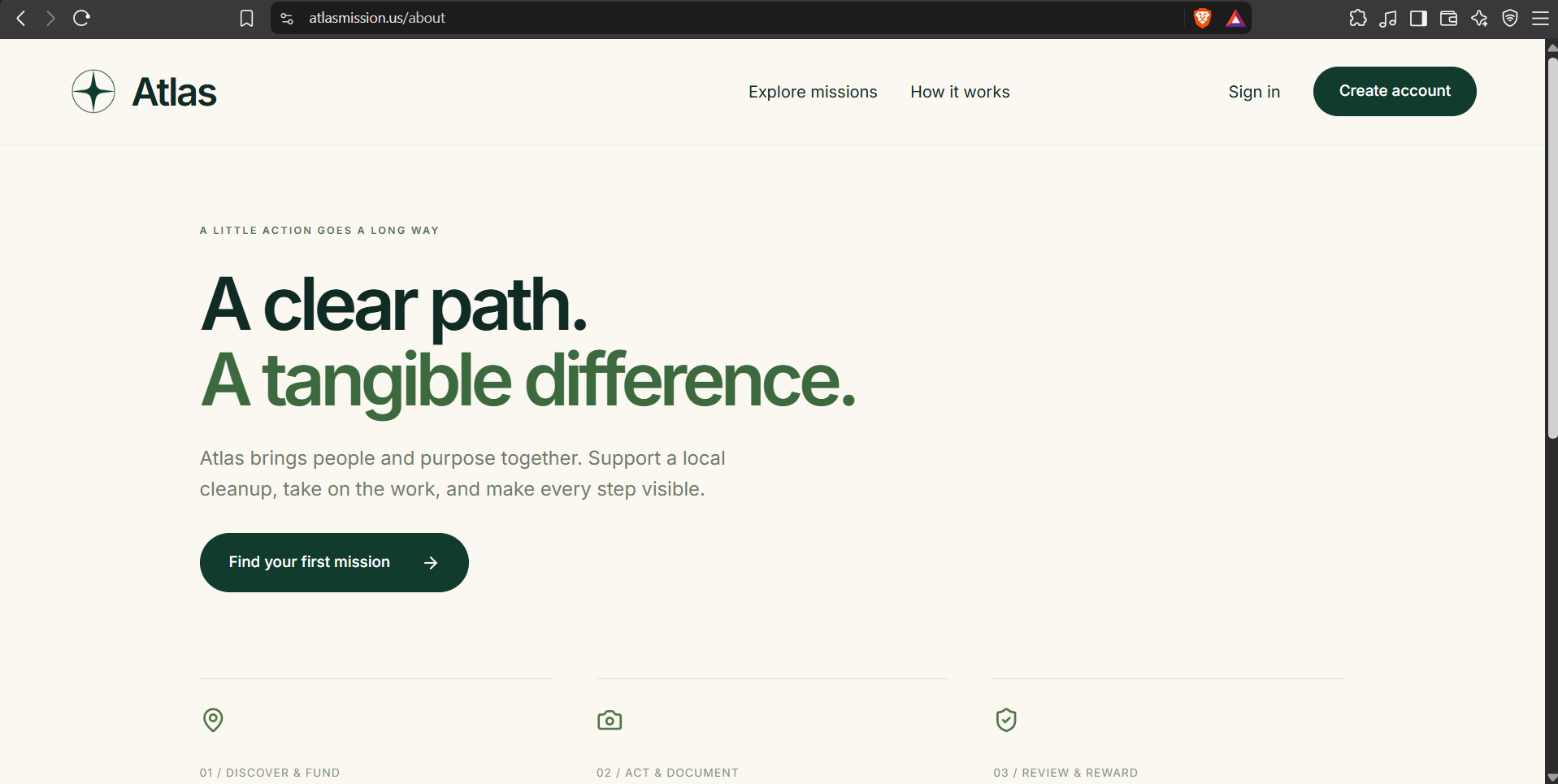
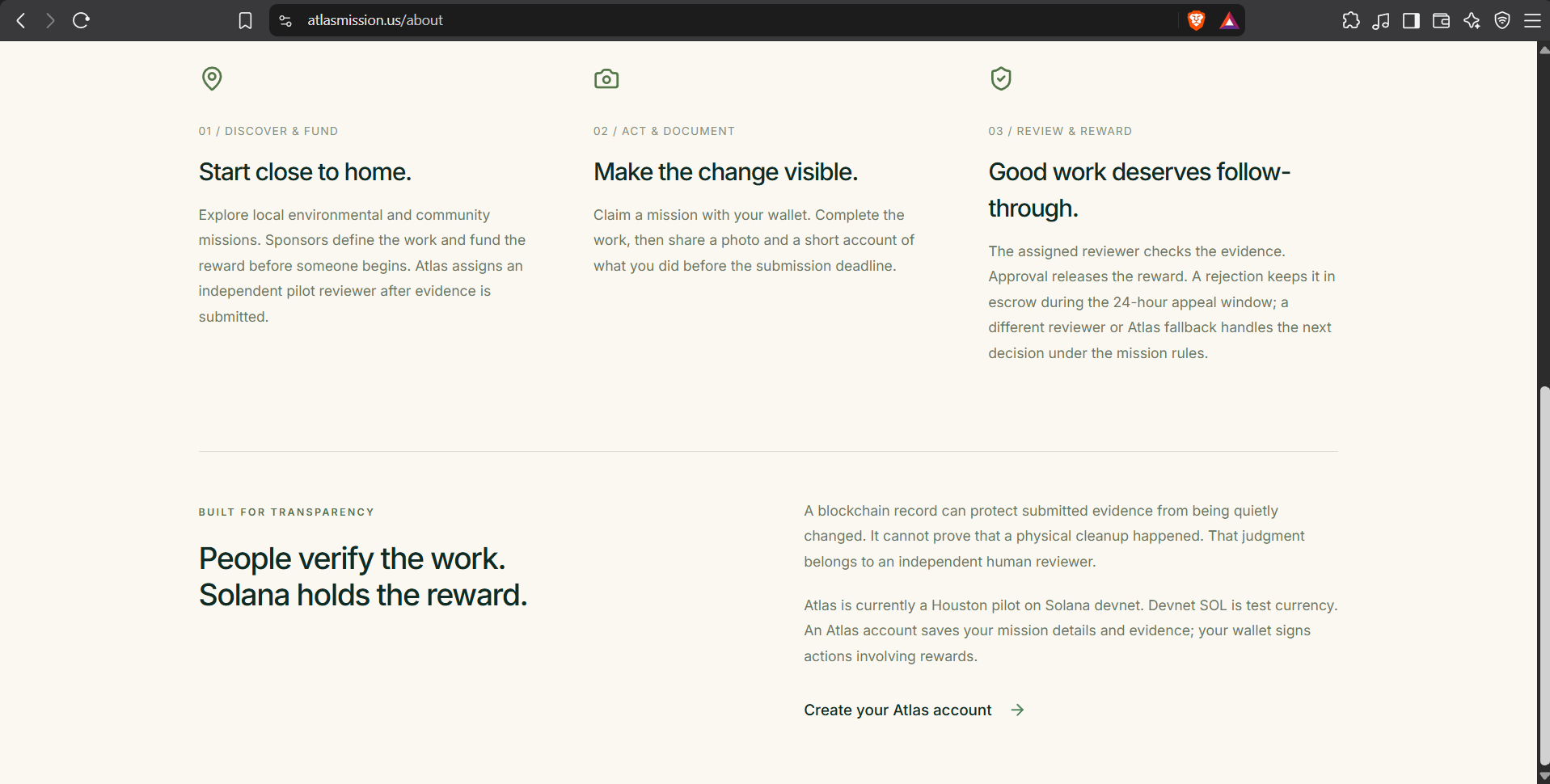
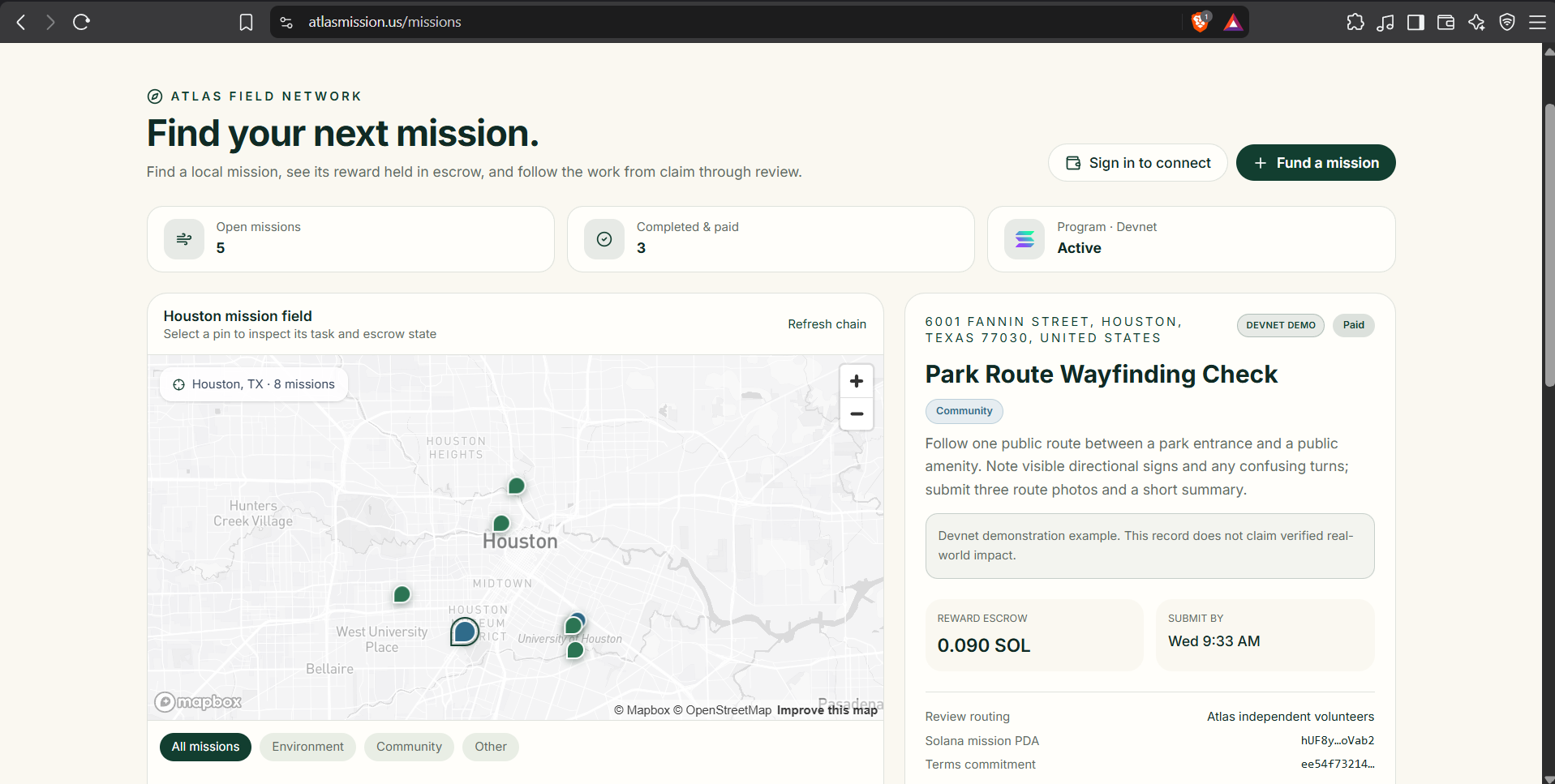
Atlas is a map-based platform for funding and completing local missions.
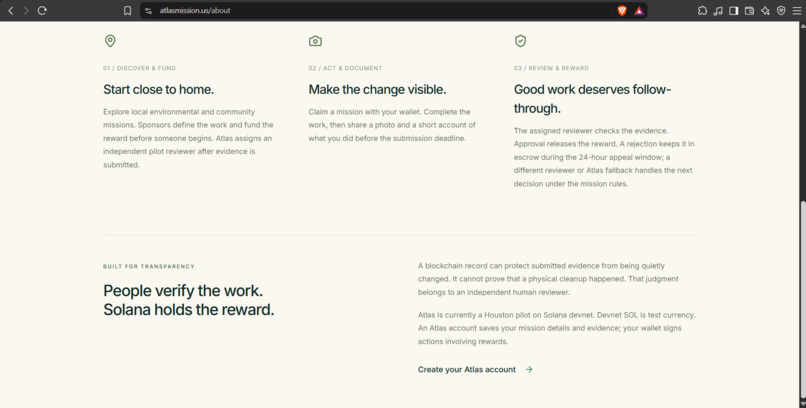
Sponsors create a mission, describe what counts as completion, choose a location, and deposit a SOL reward into escrow. Participants claim the mission and submit a written account of their work with photo evidence. Atlas then assigns a human reviewer from an approved pilot pool.
An approval releases the reward to the participant. A rejection gives the participant an opportunity to appeal, with a separate reviewer or an Atlas fallback handling eligible escalated cases.
My Houston demo includes environmental observations, tree-condition snapshots, recycling-station checks, and community wayfinding tasks. The same workflow can support other local needs with clear, observable outcomes.
How I built it
I built the interface with React, TypeScript, TanStack Start, and Tailwind CSS. Mapbox powers the mission map and location selection. Sponsors can search for an address, place or adjust a pin, use their device location, or extract available GPS coordinates from a photo.
Supabase handles accounts, mission details, evidence storage, and private reviewer-pool records. Authenticated server functions coordinate reviewer assignments.
A custom Solana program built with Rust and Anchor manages mission escrow and enforces permissions for claiming, submitting, reviewing, and settling missions. I deployed the program to Solana Devnet through Solana Playground and hosted the application on Vercel.
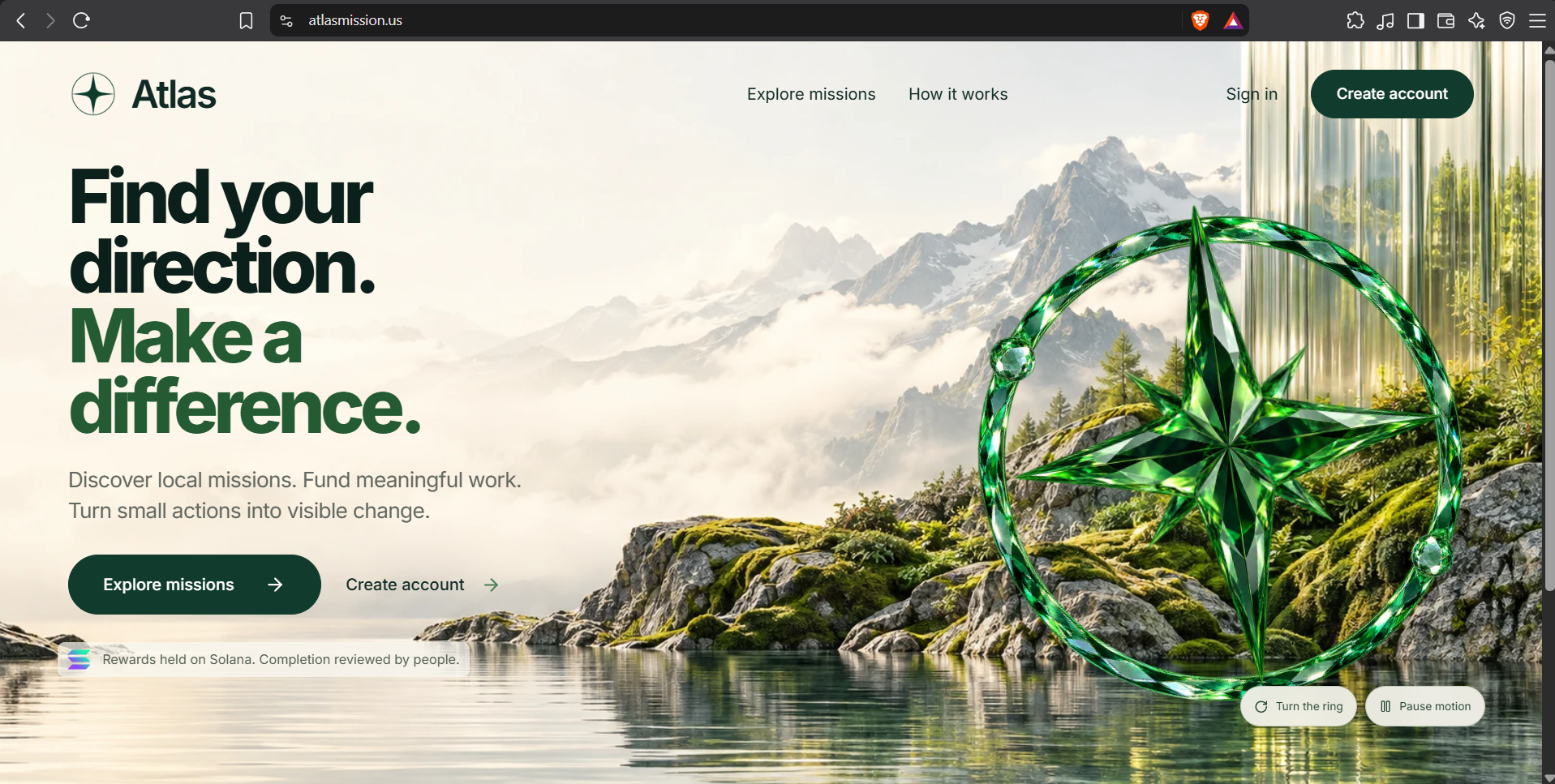
The landing page combines an environmental landscape with an interactive emerald compass. Layered artwork, pointer-responsive movement, and an animated ring give it depth while keeping the experience lightweight and respecting reduced-motion preferences.
Why Solana matters
Solana is part of the mission workflow itself. A sponsor deposits the reward before the work begins, and the program controls when that escrow can be released.
The blockchain records the financial commitment and enforces which wallets can perform each action. The restricted assignment authority can authorize reviewer selection, but it cannot approve work or move the escrow.
Human reviewers evaluate the submitted evidence. An on-chain evidence hash provides a commitment to the submission; it does not prove that physical work happened or that it produced lasting environmental impact.
Challenges I faced
One of the biggest challenges was designing a review process that made sense. Letting sponsors choose their own reviewers weakened the independence of the system. I replaced that approach with random assignment from an invite-only pilot pool, excluding conflicting wallets and reviewers from earlier rounds.
I also worked through browser-wallet compatibility, transaction simulation errors, expired blockhashes, RPC reliability, and keeping the displayed mission status accurate after settlement closed its on-chain account.
Setting up the local Solana toolchain on Windows became another obstacle. Moving deployment to Solana Playground let me continue building and testing the actual Devnet workflow.
Building solo also meant balancing the interface, backend, smart contract, and demo preparation. I focused on getting a complete mission lifecycle working before expanding the feature set.
What I learned
I learned that transparent payments and trustworthy evidence are different problems. Solana can enforce escrow rules, but a person still needs to assess whether the evidence supports the mission’s completion.
I also learned how much the surrounding experience matters: accurate map pins, readable submissions, understandable wallet prompts, and clear status updates make a technical workflow usable.
Accomplishments I’m proud of
I created eight clearly labeled Devnet demo missions across the Houston area and successfully completed the claim, evidence submission, review, and payout flow for three of them.
I also built account settings, profile-photo upload and camera capture with cropping, reviewer enrollment and operator approval, and a responsive interface with a distinctive Atlas identity.
These are demonstration records using test SOL, not claims of verified real-world environmental work.
What’s next for Atlas
My next priority is stronger evidence review: structured completion criteria, a recorded decision and short reason for each criterion, and a clearer audit trail for appeals and fallback decisions.
I also want to expand wallet compatibility, improve discovery as the mission map grows, and build an Expo mobile experience so participants can capture and submit evidence directly from the field.
Try Atlas
Built With
- anchor
- codex
- css
- github
- mapbox
- postgresql
- react
- rust
- solana
- solanaplayground
- supabase
- tailwind
- tanstack
- typescript
- vercel
- vite

Log in or sign up for Devpost to join the conversation.