-
-
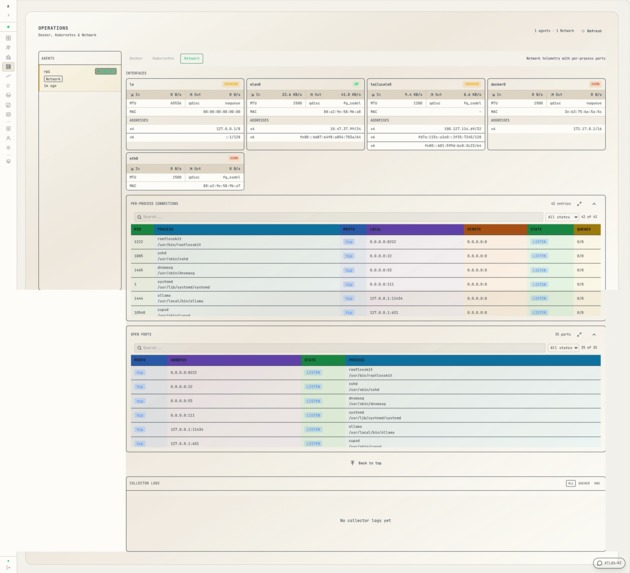
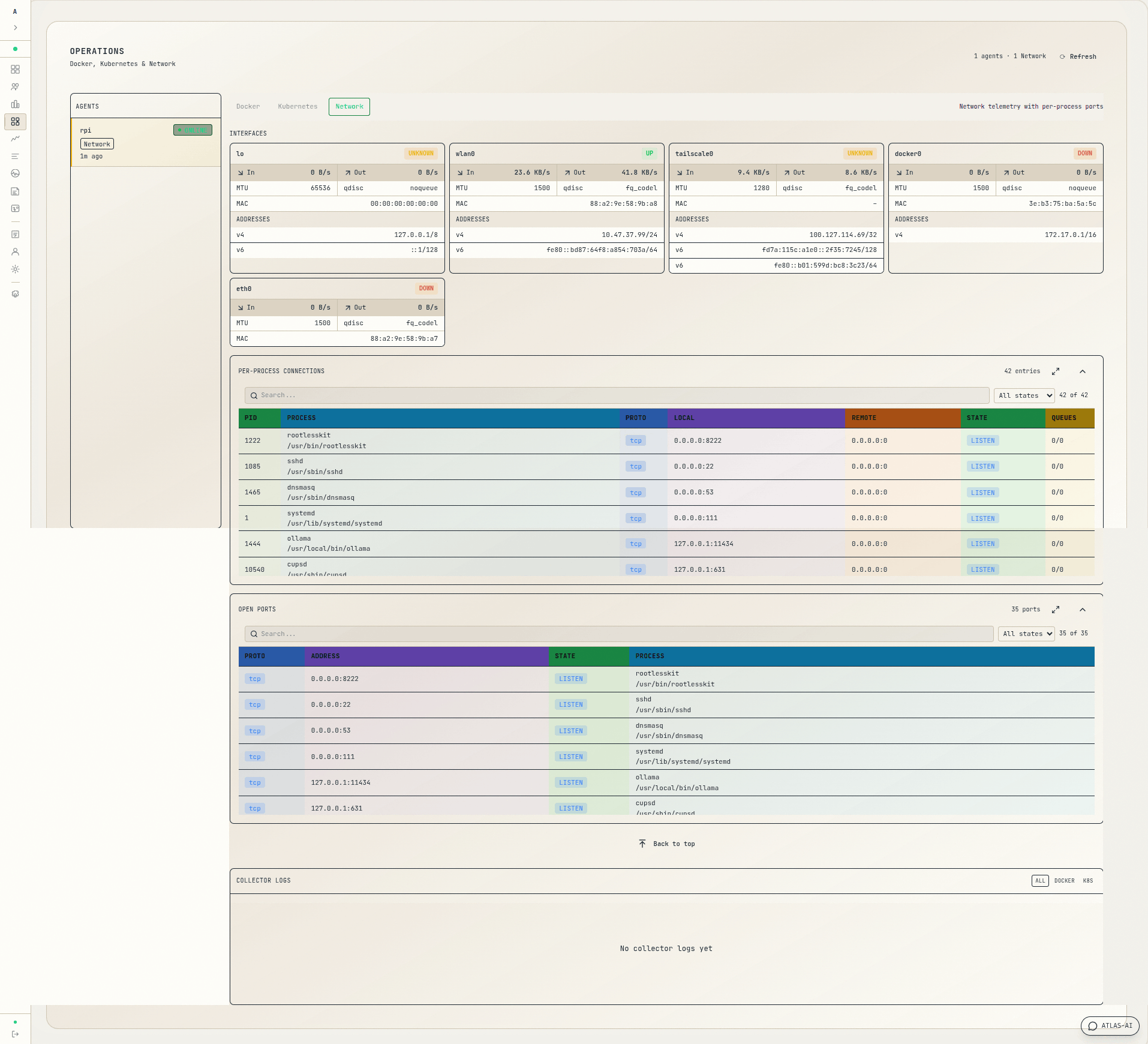
A complete details of all networking operations with all processes using which ports and destinations along with network usage per process
-
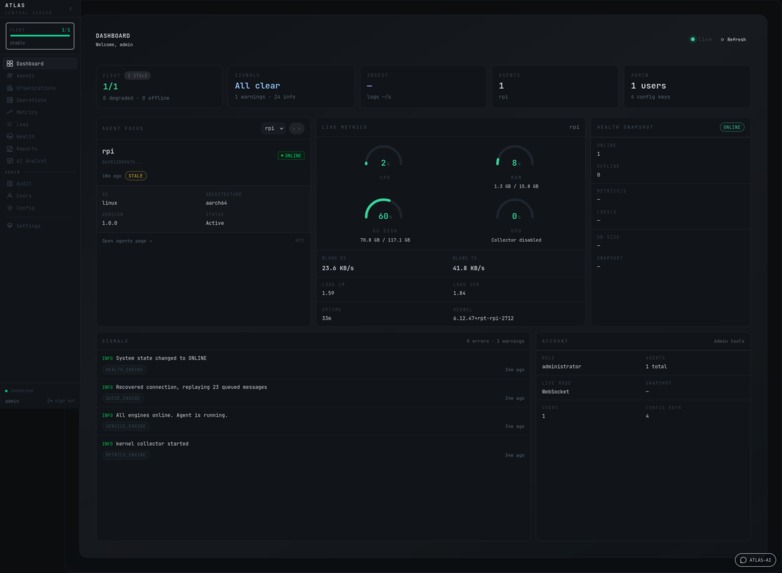
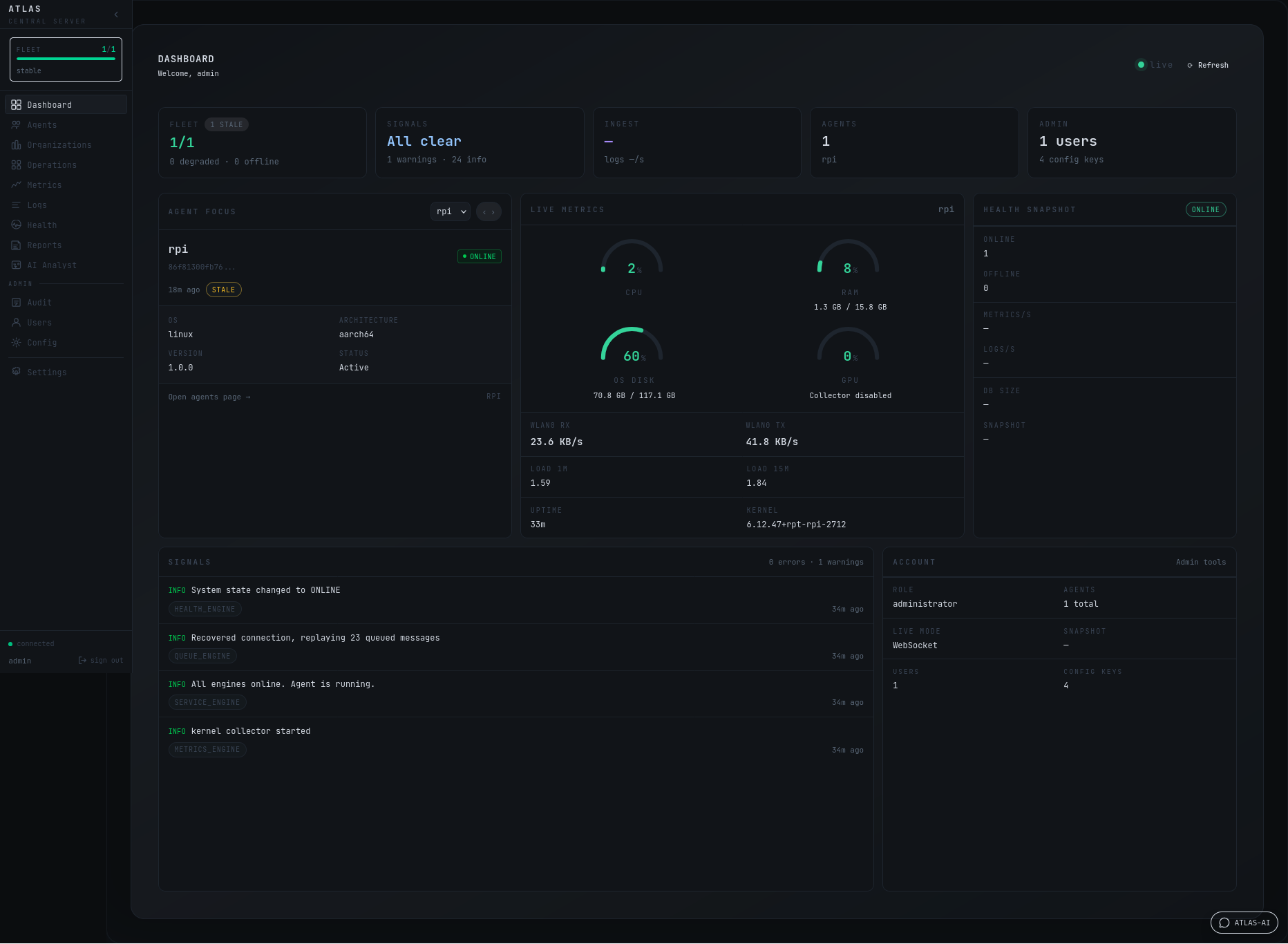
the dashboard with an overview of the agent with docker , kubernetes , CPU GPU RAM , network ,logs etc details
-
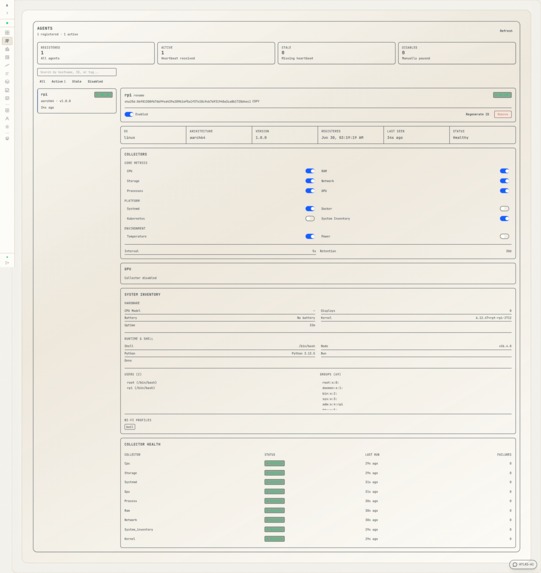
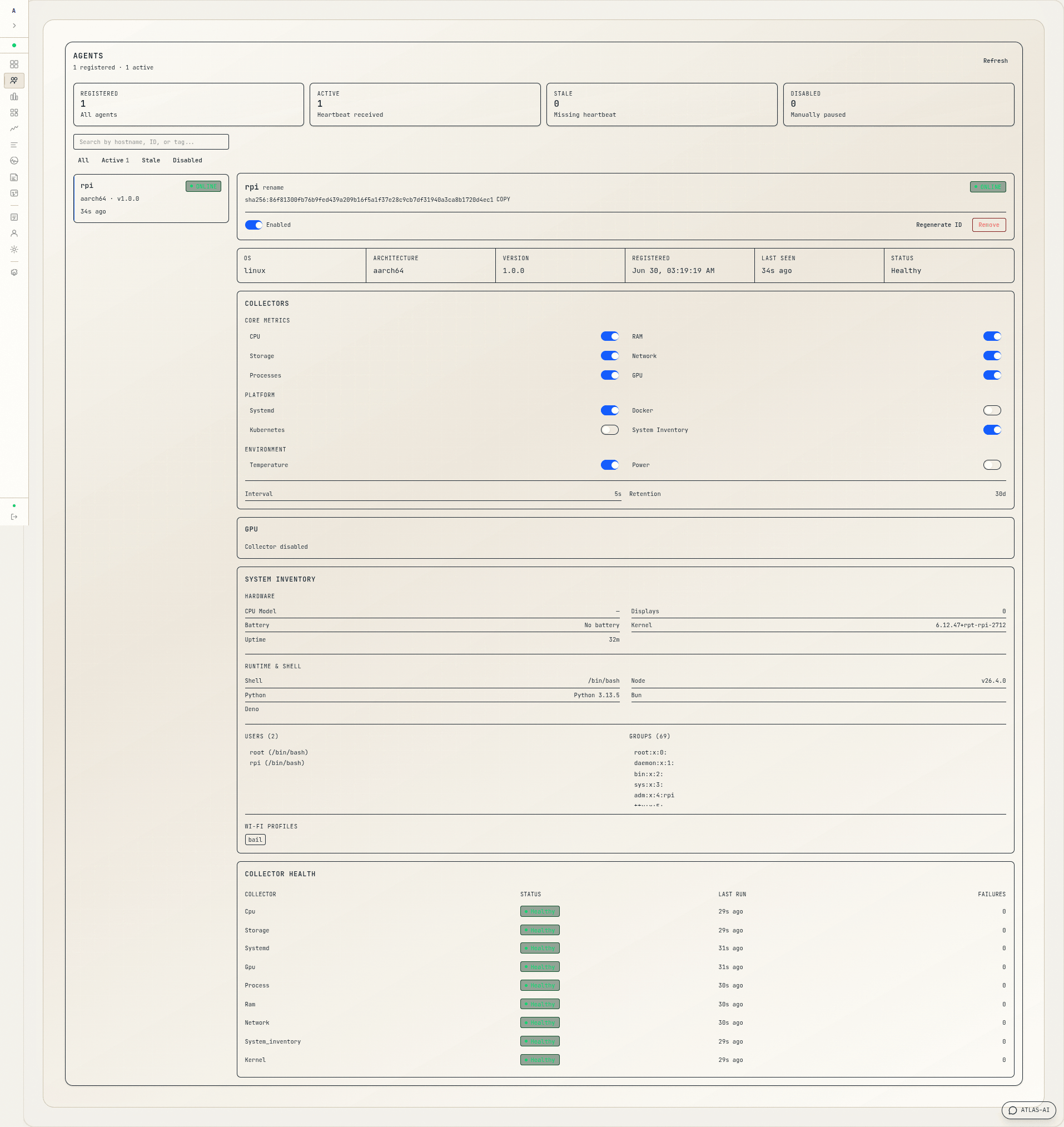
complete information about the host for all the users , python node versions ,users logged in ,netwroks connected , CPU RAM GPU details
-
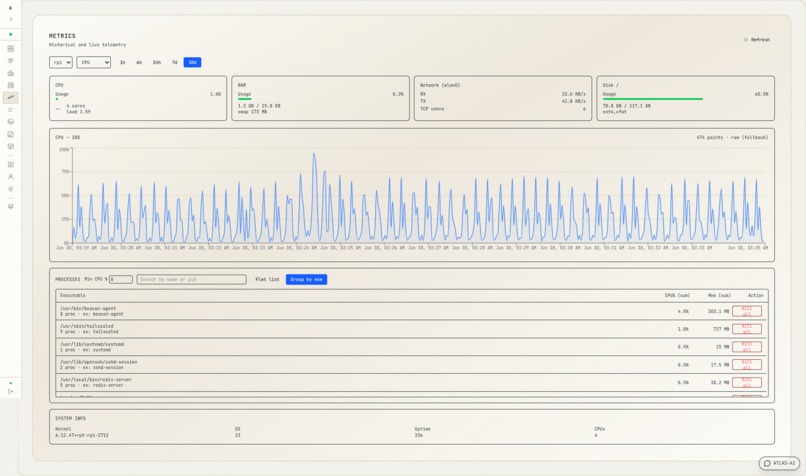
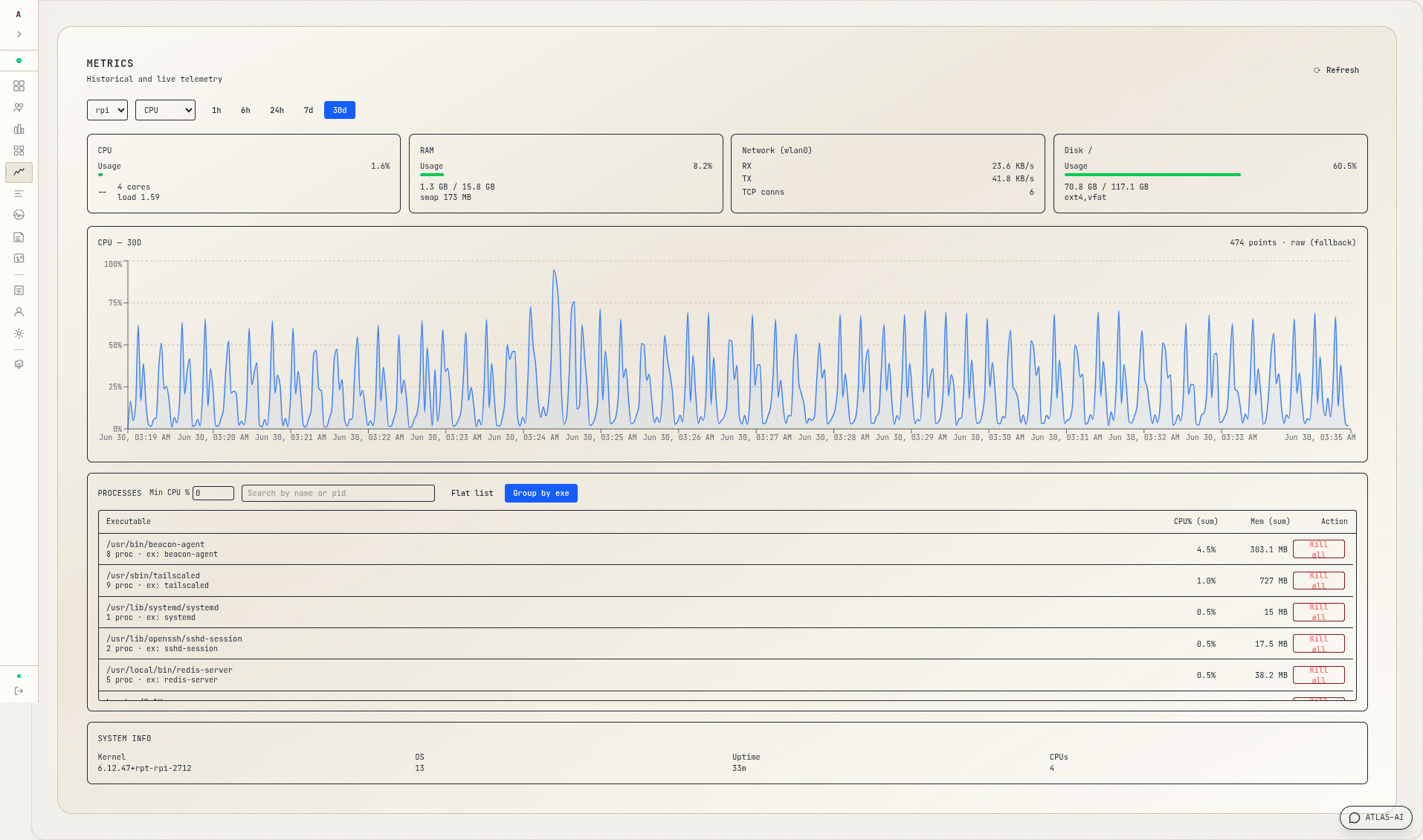
graph of CPU usage with filters to see by hrs or days and option to kill processes remotely from the frontend
-
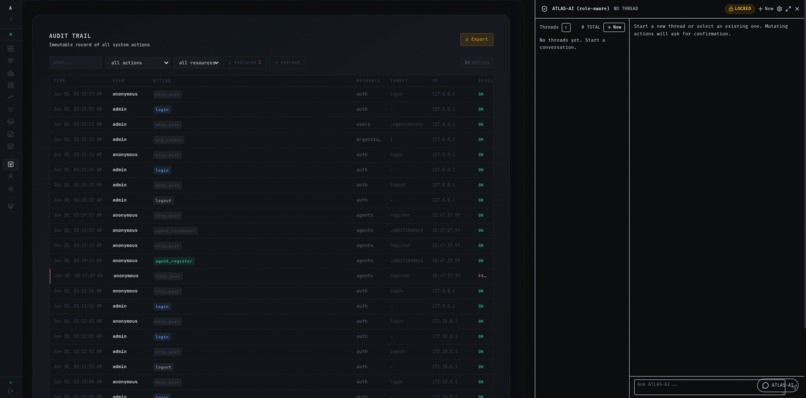
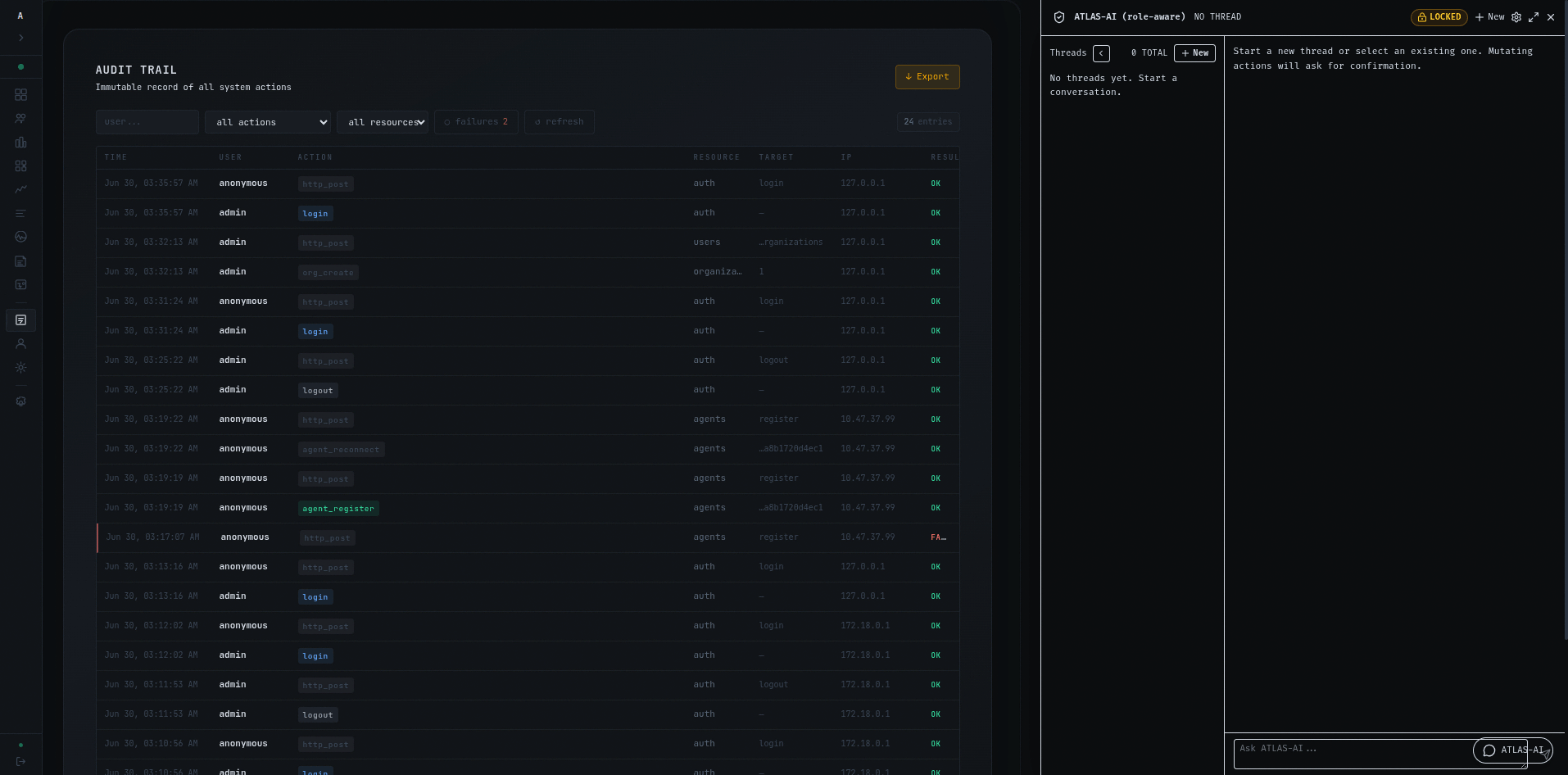
A non editable log of all actions take by the agent and the users with all the details needed to perform thorough investigations
-
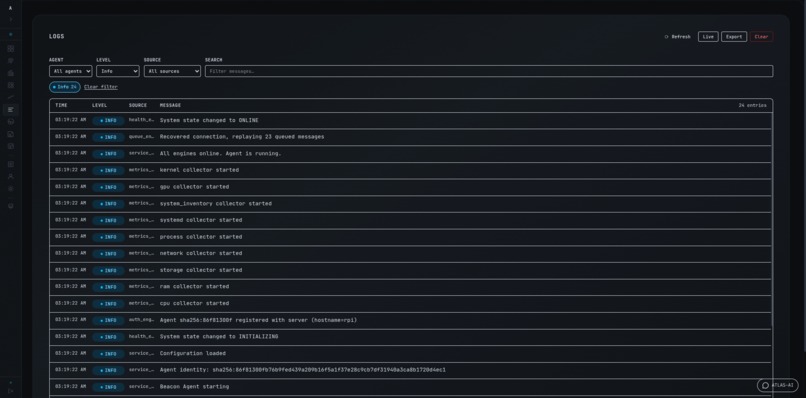
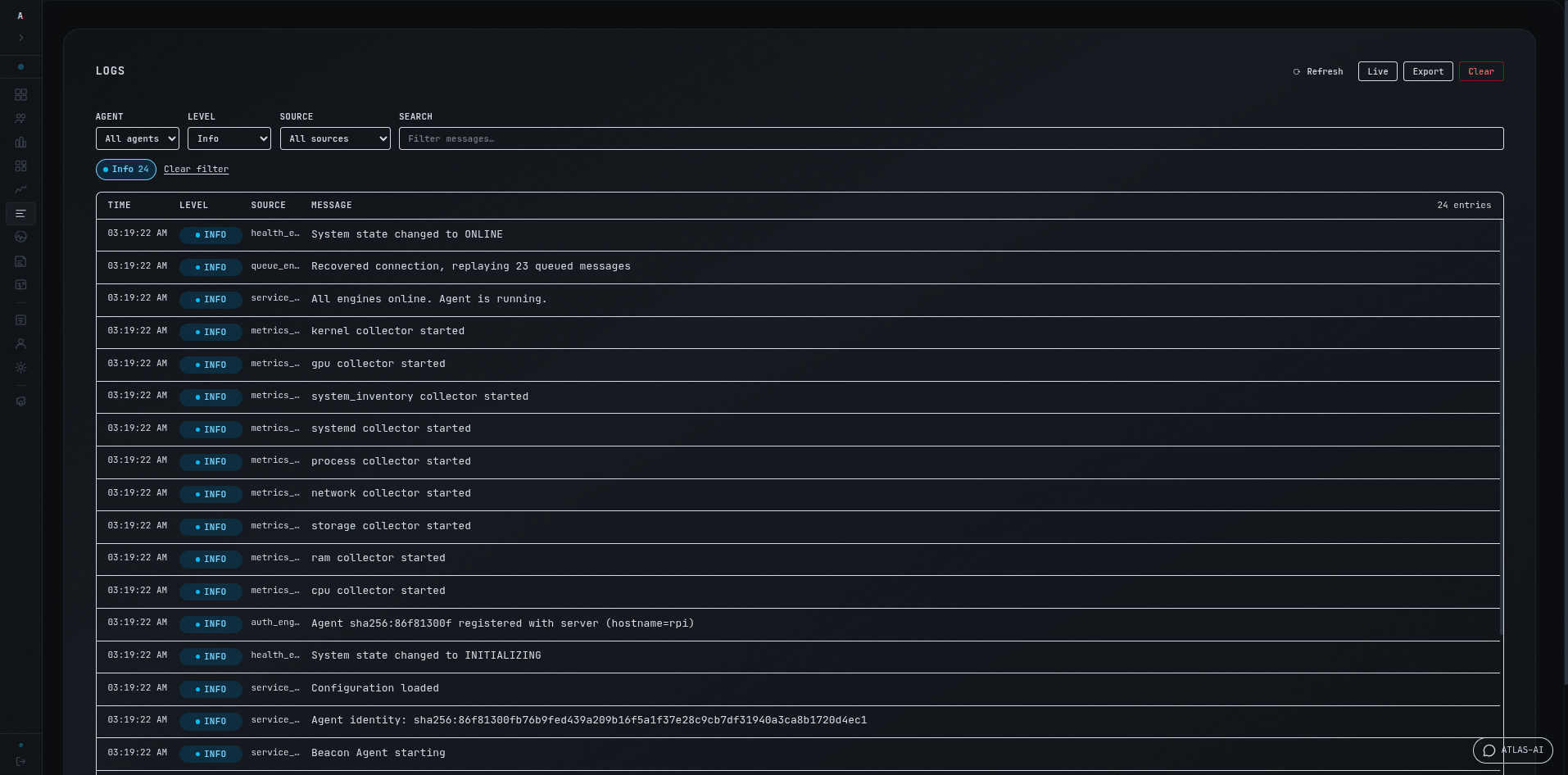
A log of all the things happening in the agent and the frontend with filters to find errors or investigate issues
-
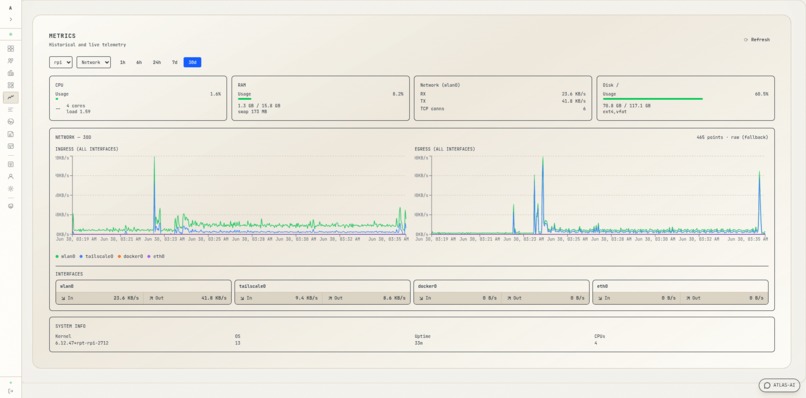
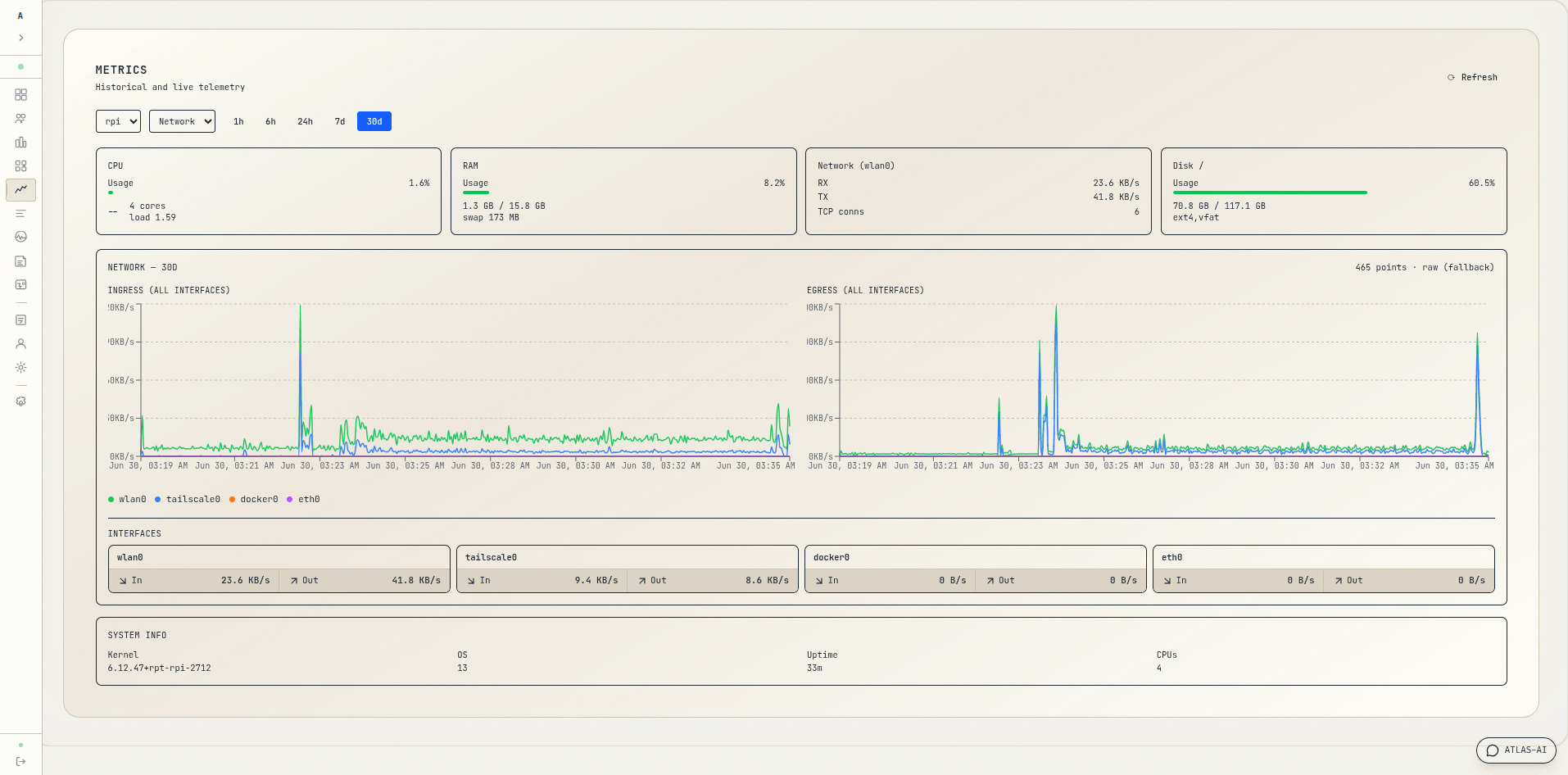
data ingress and egress on all network interfaces with graphs and timeline filters for identifying spikes
-
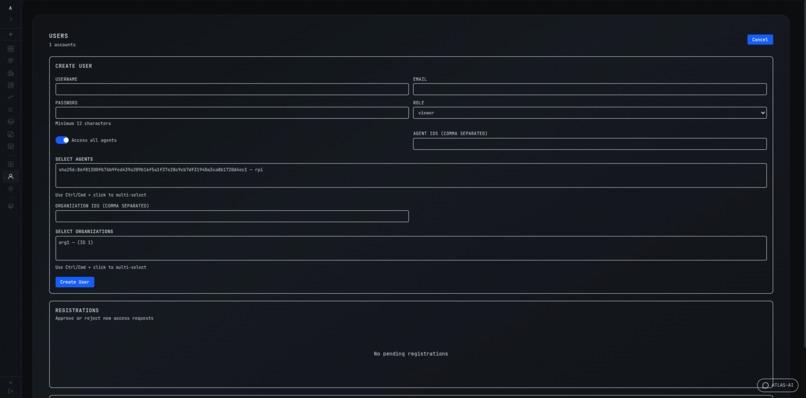
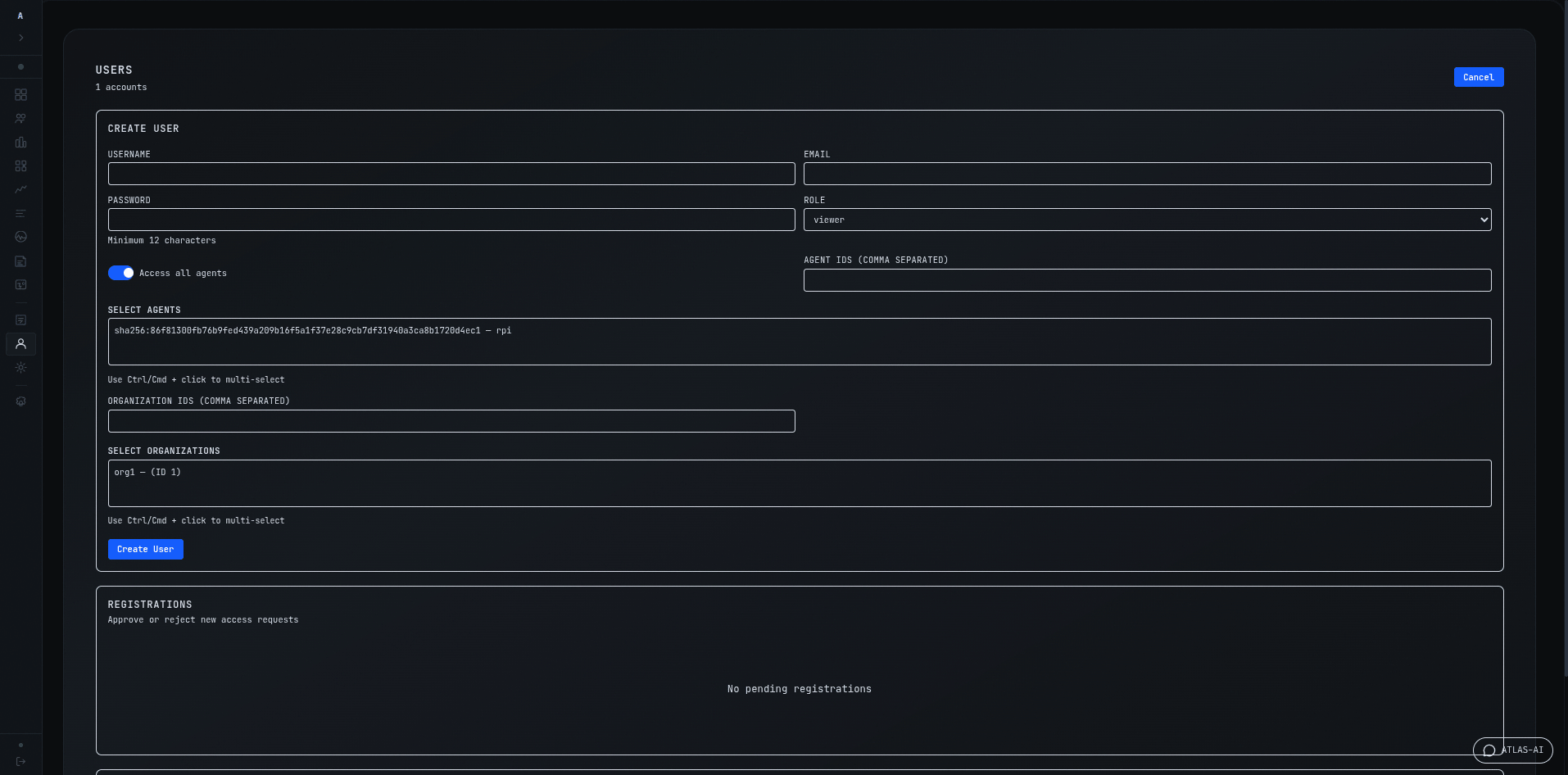
create organisations of users and agents to make Role Based Access Control
Inspiration
Managing distributed systems often requires multiple tools for monitoring, logging, automation, and auditing. We wanted to build a unified platform that could provide complete visibility and control over infrastructure from a single interface while remaining lightweight, secure, and scalable.
What it does
ATLAS (Autonomous Telemetry, Logging, Analysis, and Surveillance) is a remote operations and observability platform. Its Beacon agent collects telemetry, logs, system metrics, and health data from Linux servers and edge devices, then securely streams the data to a centralized platform. Through web and mobile dashboards, users can monitor infrastructure, analyze performance, automate operations, schedule tasks, and maintain complete audit visibility across their fleet.
How we built it
We built Beacon in Rust using the Tokio async runtime for performance and reliability. Data is transported through NATS and JetStream for real-time messaging and offline resilience. The backend is powered by Django and PostgreSQL, while the agent uses SQLite for local storage and buffering. Real-time updates are delivered through WebSockets, and security is enforced using RBAC, TLS 1.3, Argon2id password hashing, and AES-256-GCM encryption.
Challenges we ran into
One of the biggest challenges was designing a reliable architecture that could continue operating during network interruptions. We also had to balance real-time telemetry collection with low resource consumption on edge devices. Building secure multi-tenant access controls, audit systems, scheduling engines, and scalable message transport added significant architectural complexity.
Accomplishments that we're proud of
- Built a lightweight cross-platform Rust agent capable of running on servers and Raspberry Pi devices.
- Implemented reliable offline buffering and synchronization.
- Created a unified platform combining monitoring, logging, auditing, and automation.
- Developed secure namespace-based multi-tenancy and RBAC.
- Achieved real-time communication using NATS, JetStream, and WebSockets.
- Designed a scalable architecture that can manage large fleets of devices.
What we learned
Through ATLAS, we gained deeper experience in distributed systems, event-driven architectures, asynchronous Rust development, secure infrastructure design, and large-scale telemetry processing. We also learned the importance of observability, resilience, and operational simplicity when managing modern infrastructure.
What's next for ATLAS
Our next goals include expanding the plugin ecosystem, adding AI-assisted anomaly detection and predictive analytics, supporting additional operating systems, improving automation workflows, enhancing visualization capabilities, and scaling the platform to manage larger enterprise and edge deployments.


Log in or sign up for Devpost to join the conversation.