-
-
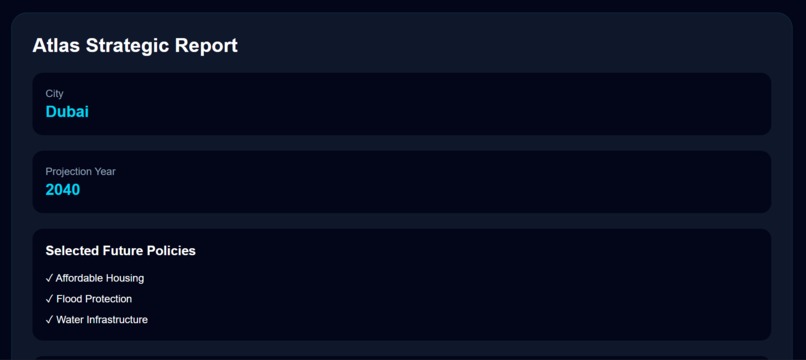
Atlas Strategic Report
-
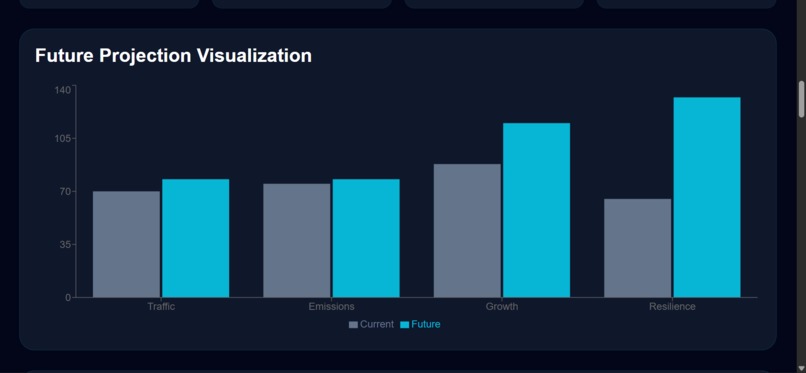
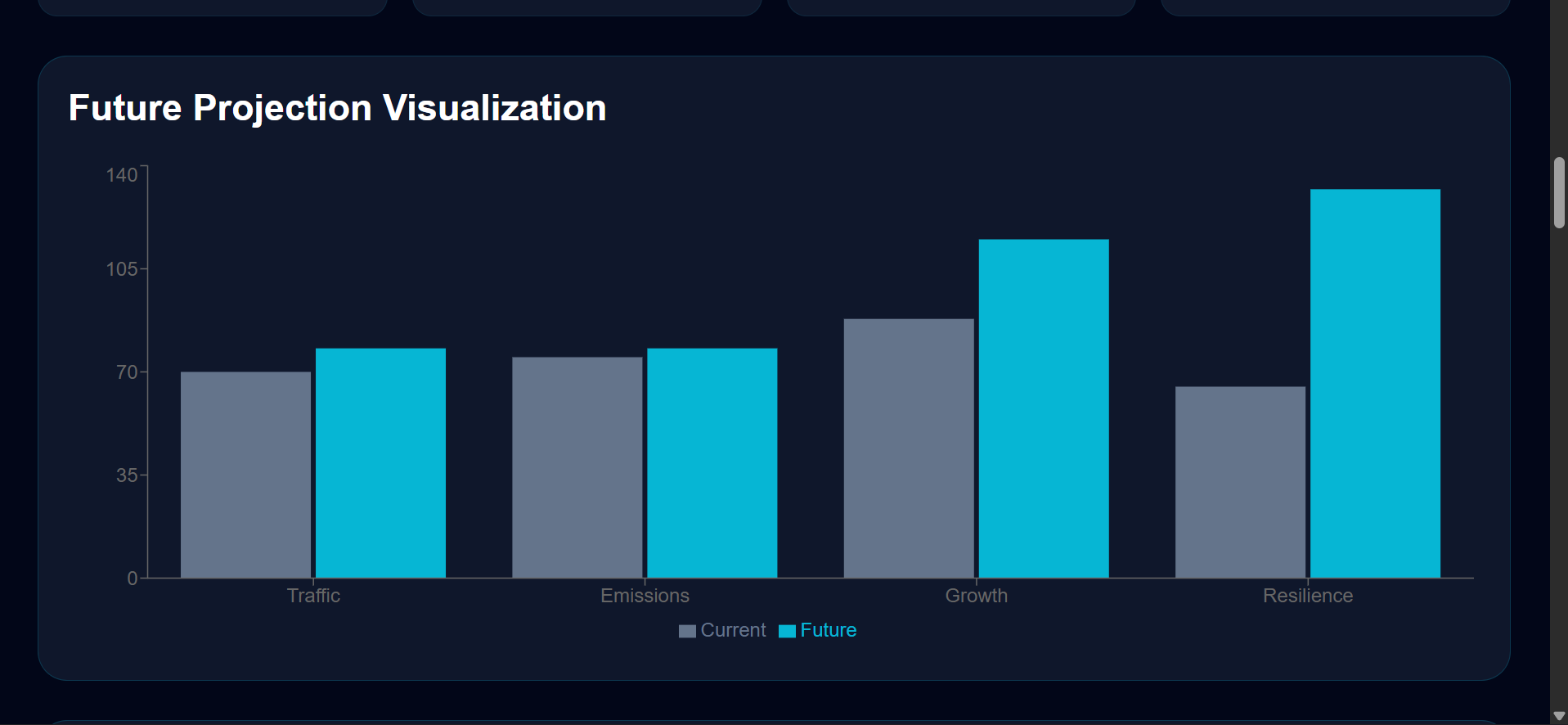
Graphical representation
-
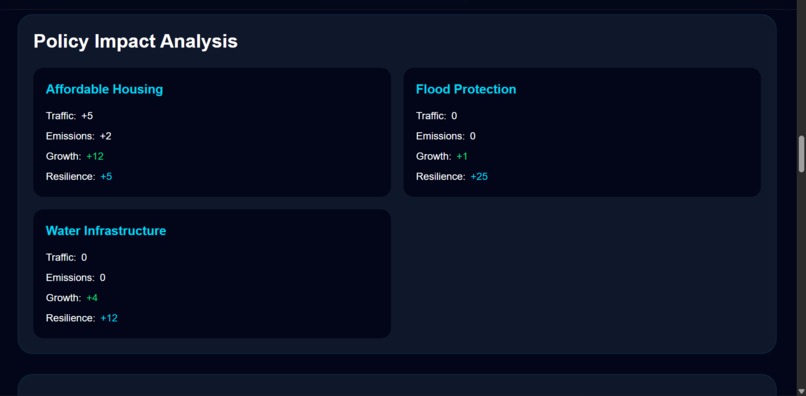
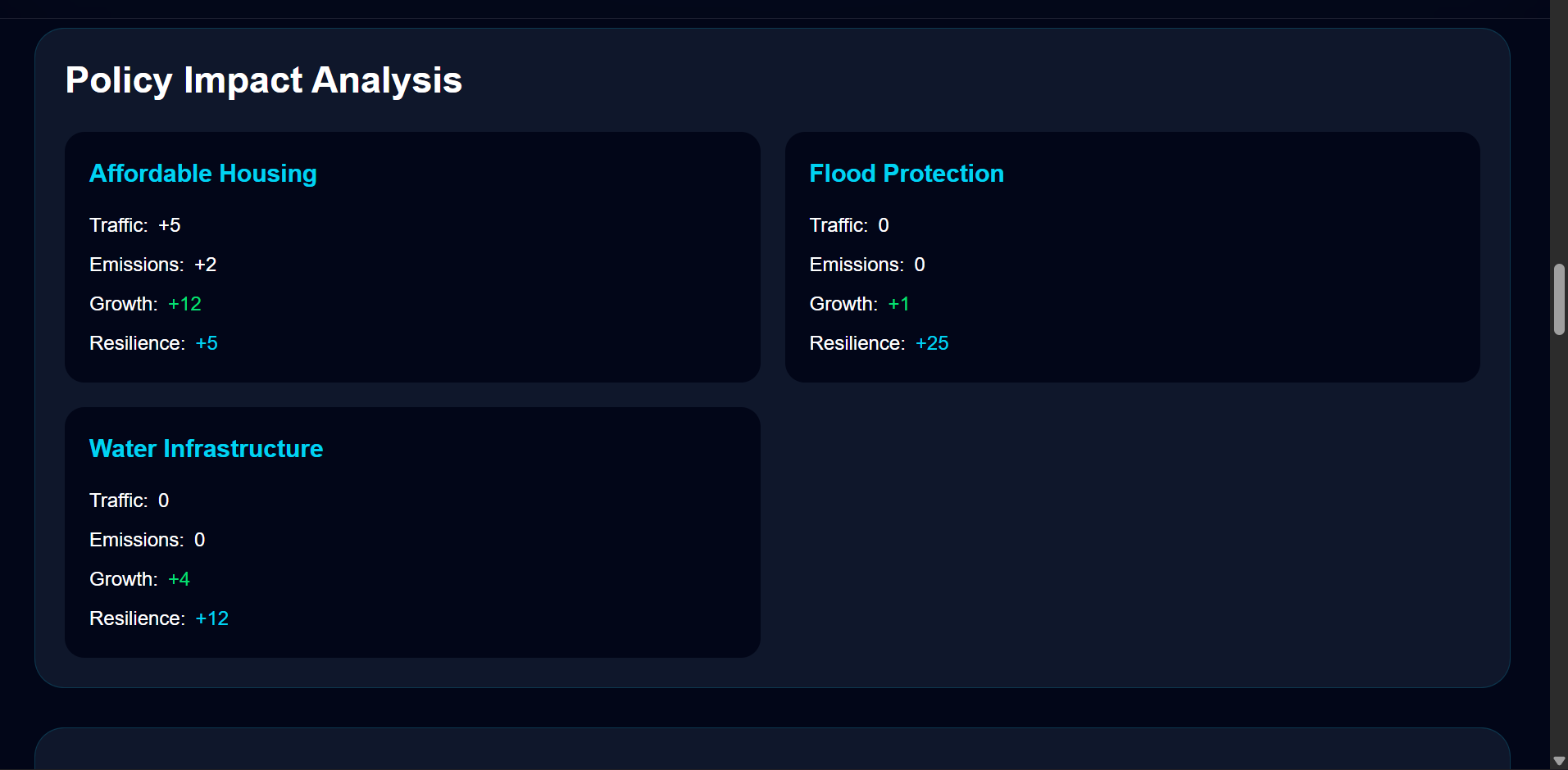
Policy Impact Analysis
-
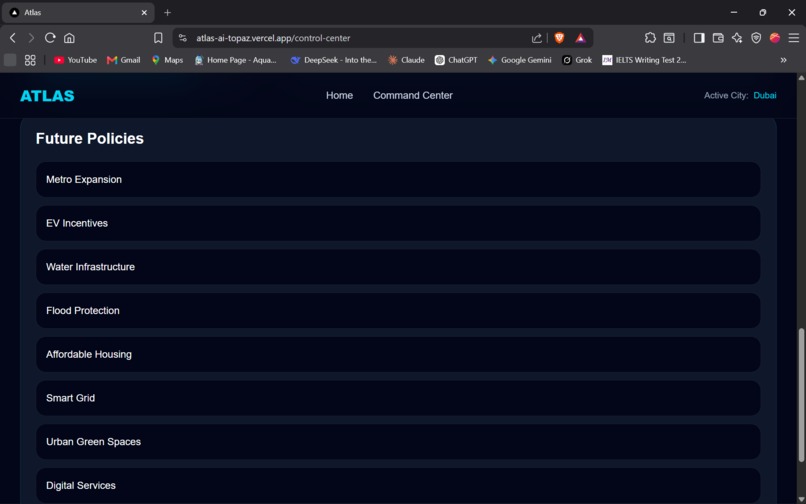
Policies selector
-
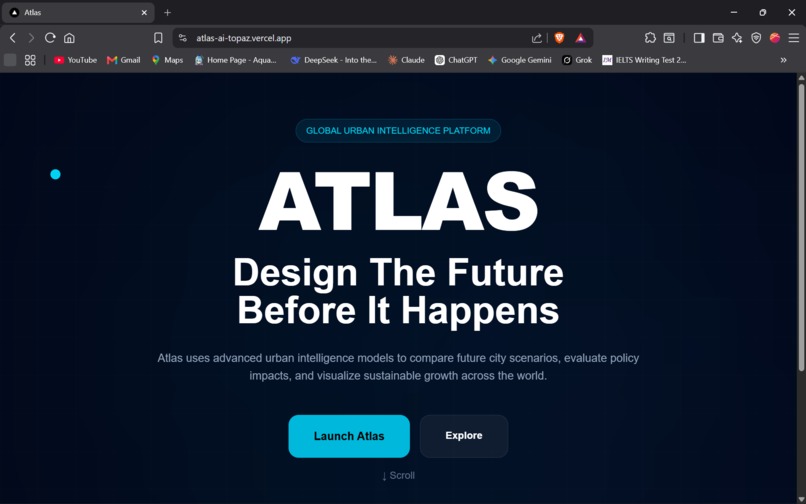
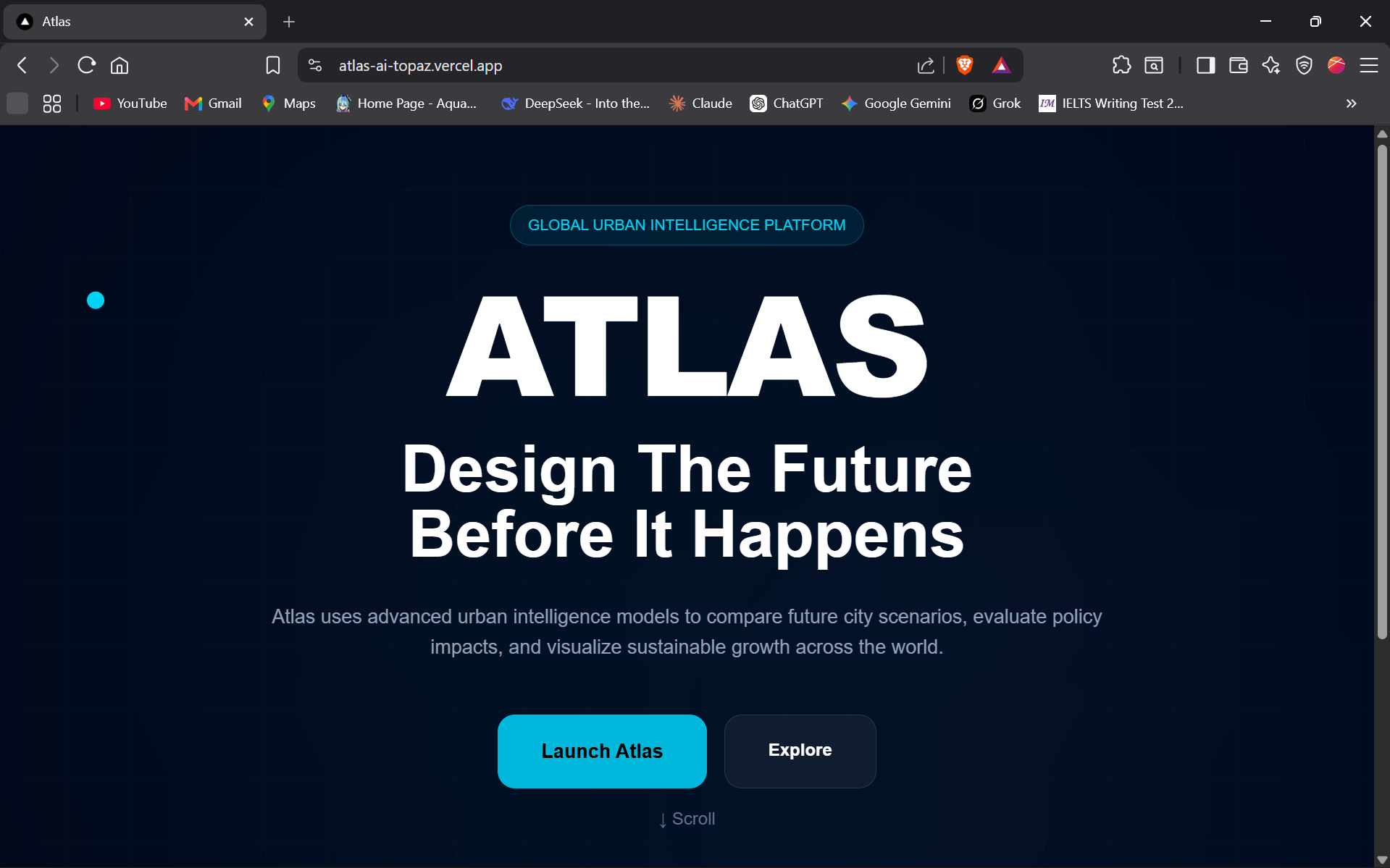
Atlas home page
-
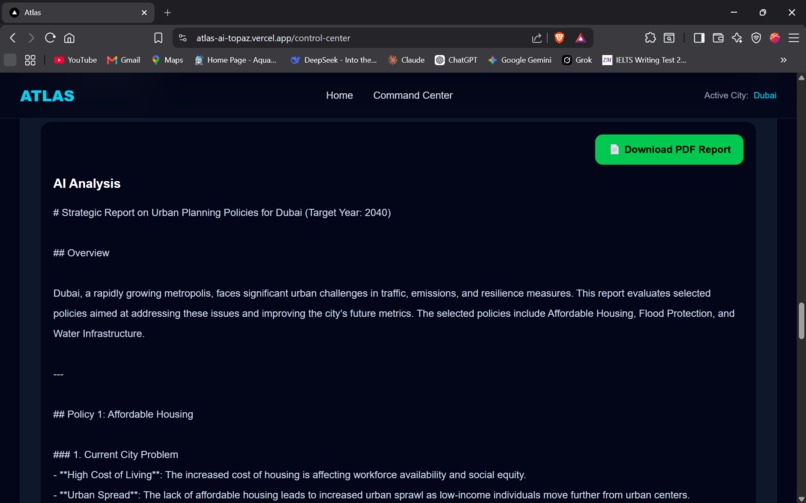
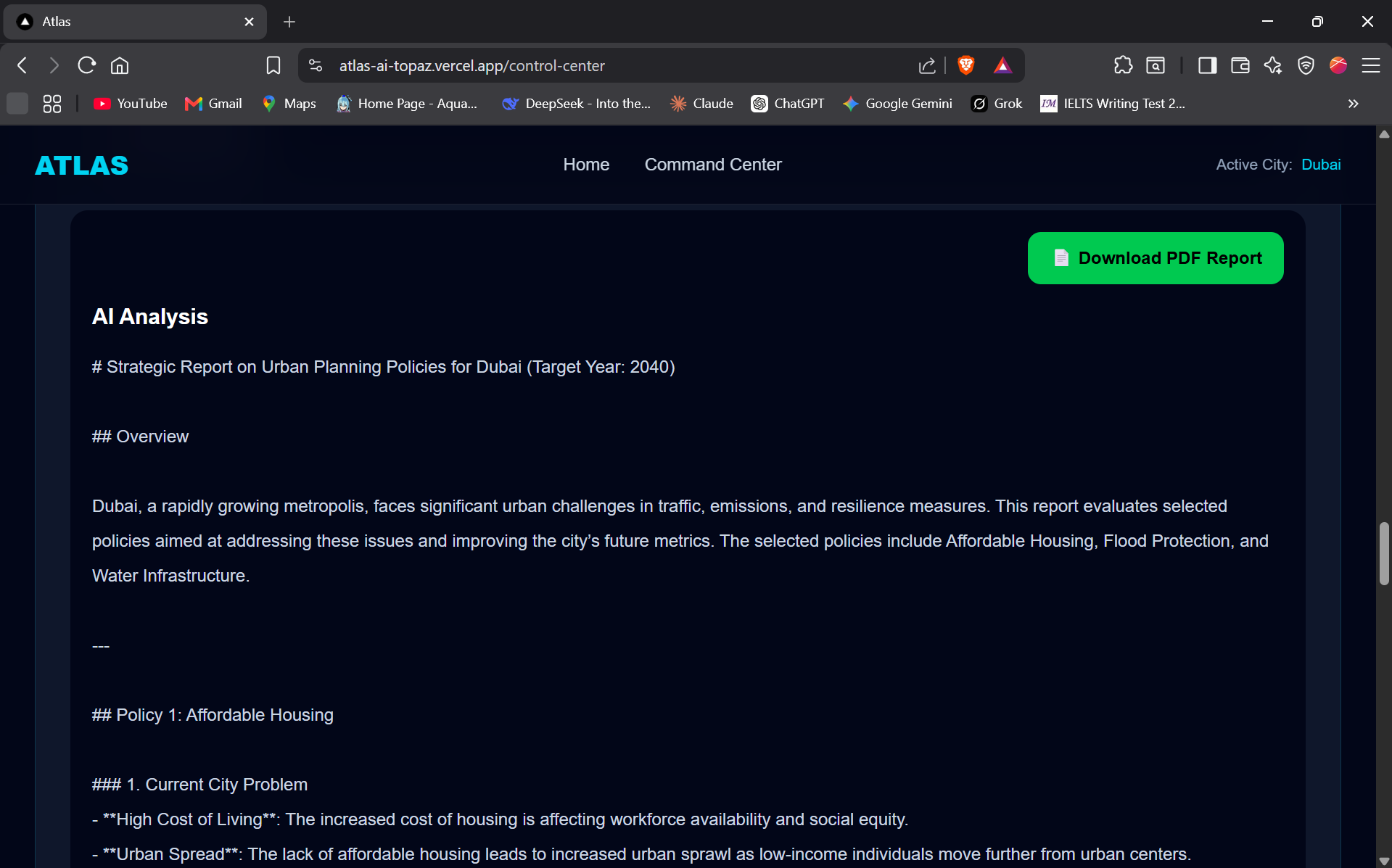
AI Analysis
-
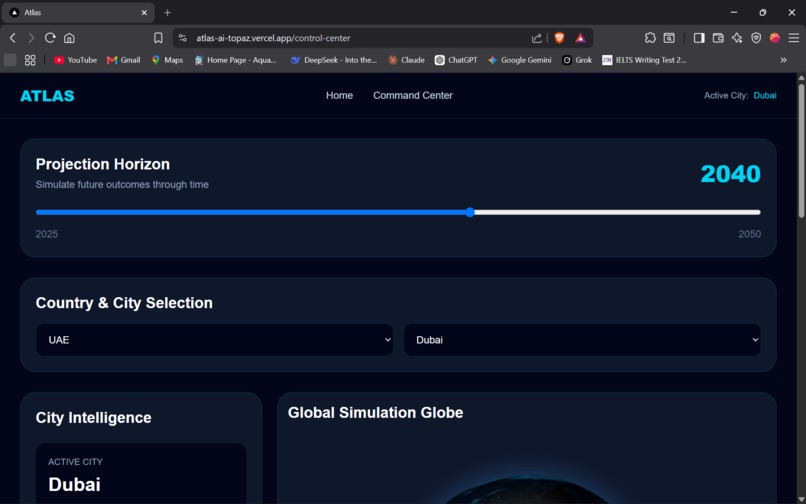
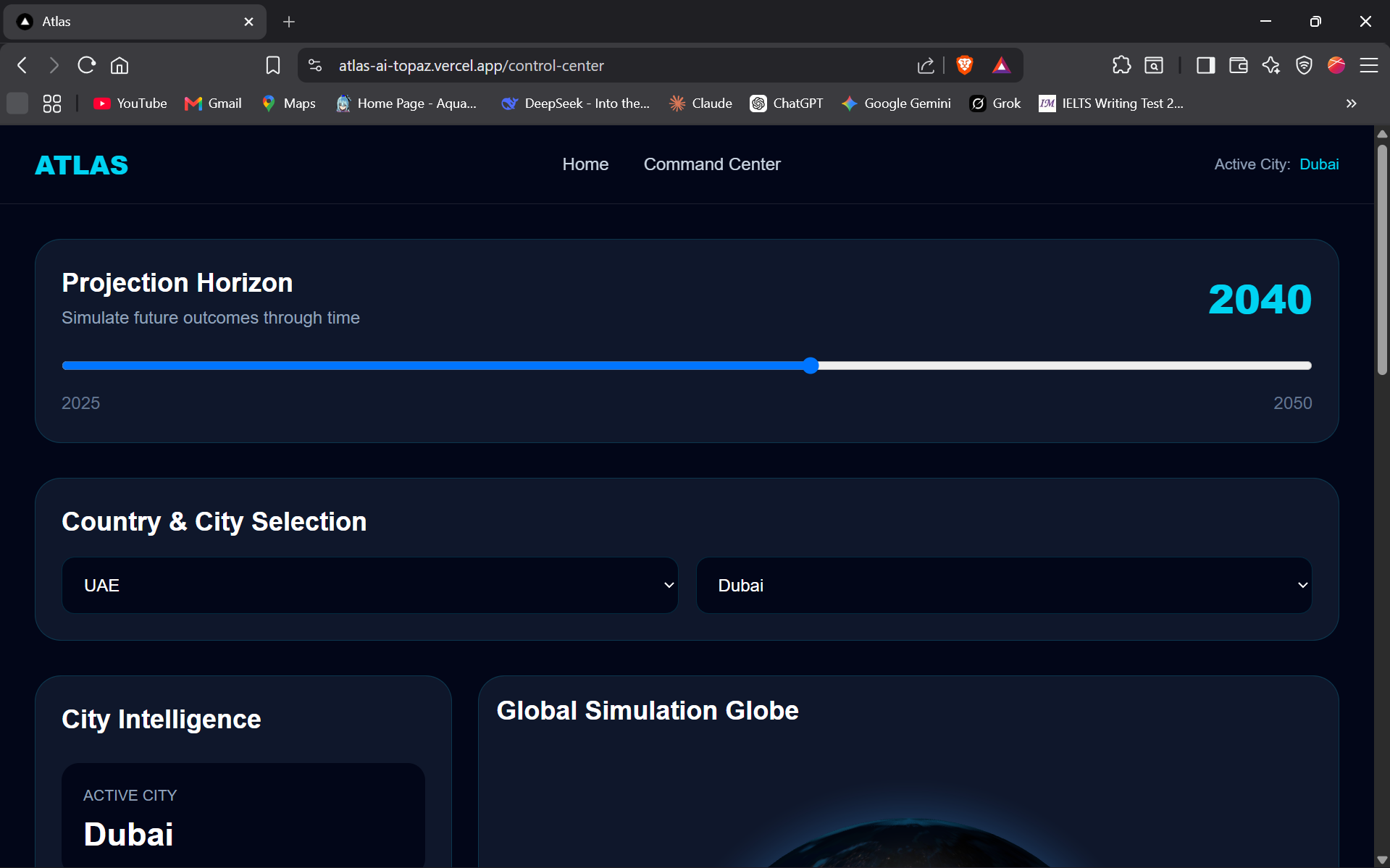
command center
-
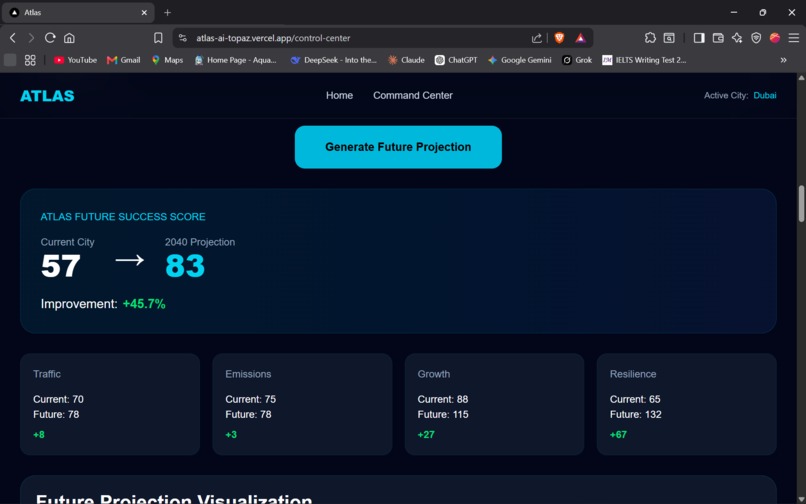
Generated report
-
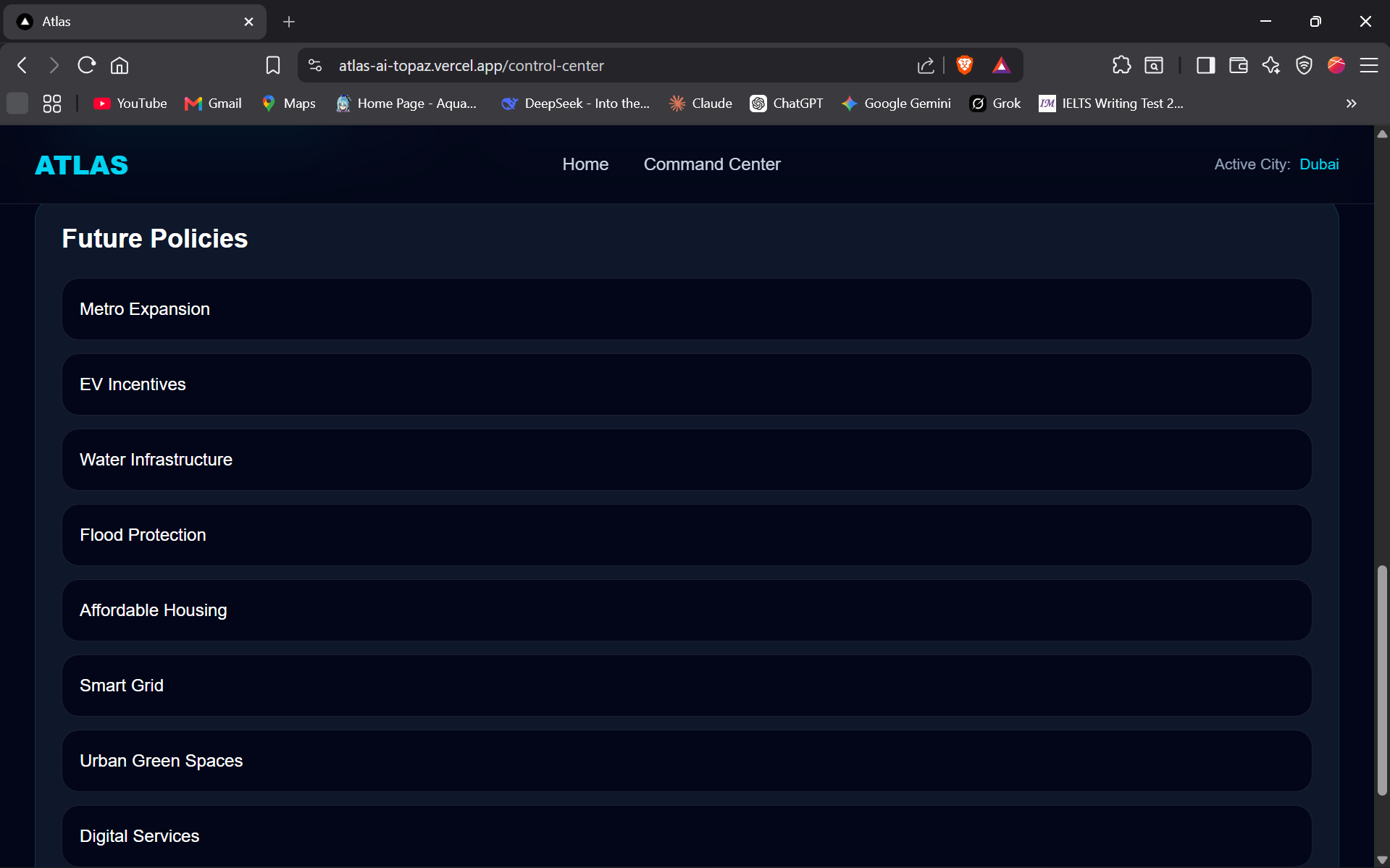
policies
-
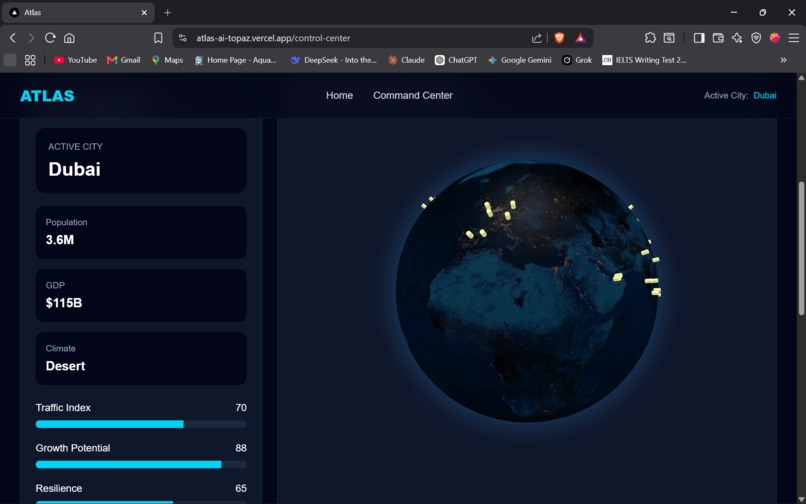
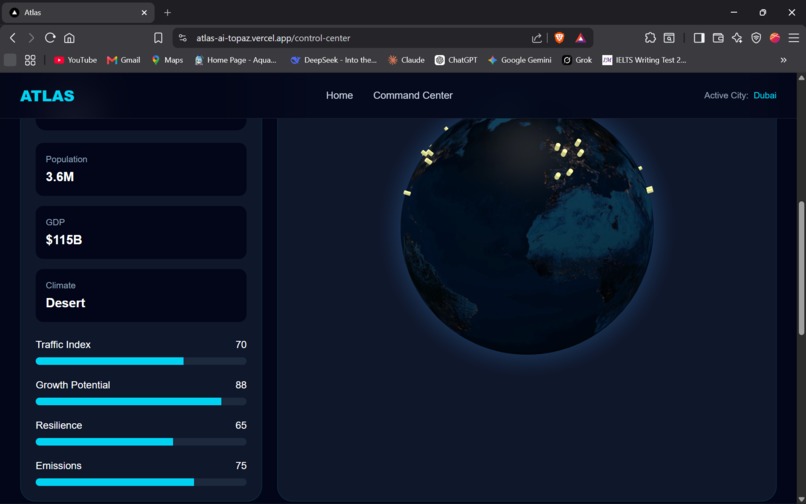
Interface

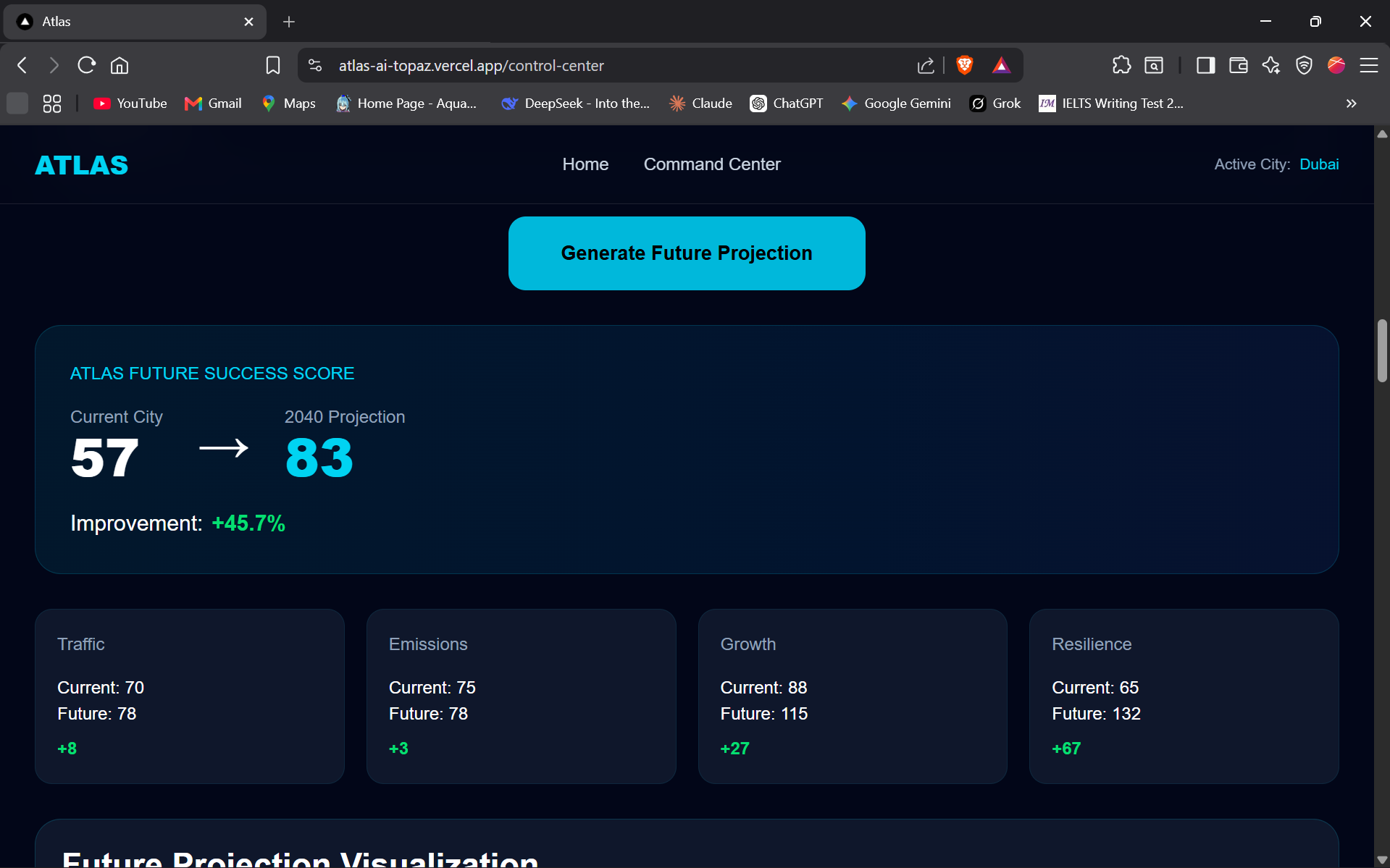
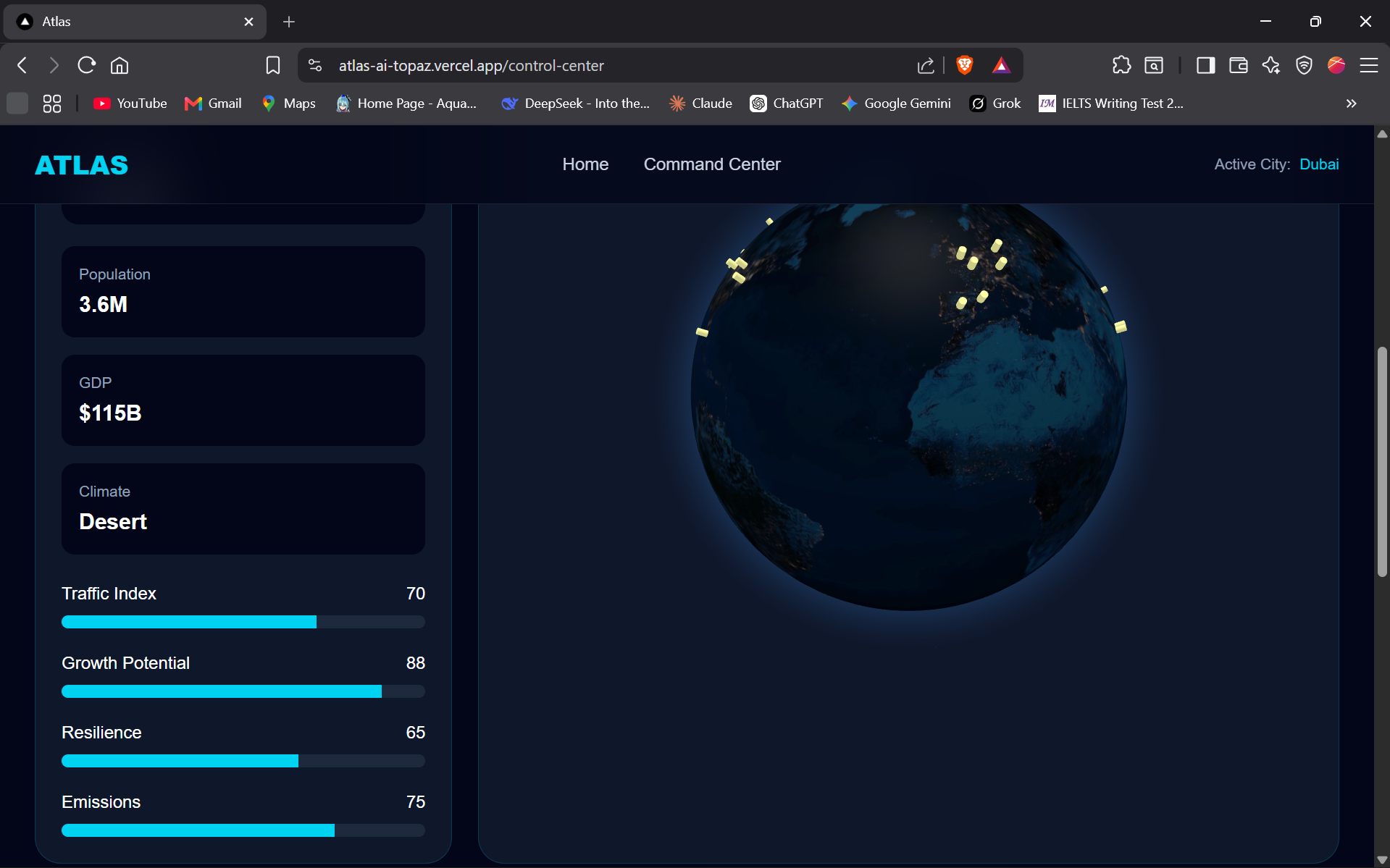
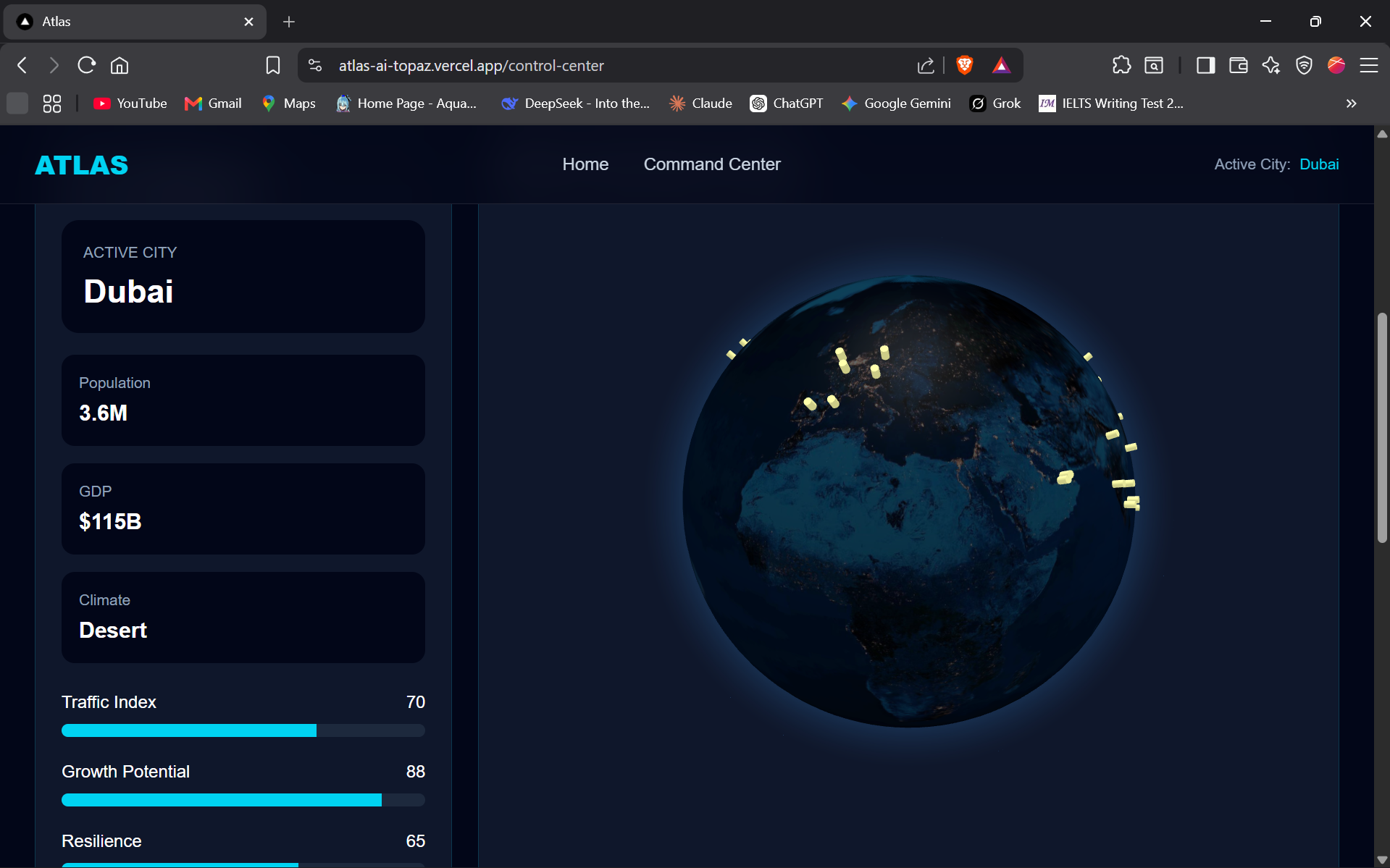
Inspiration
🌍 Atlas AI
🚀 Inspiration
Modern cities face increasingly complex challenges such as traffic congestion, rising carbon emissions, rapid urban expansion, and climate resilience. Evaluating the long-term effects of infrastructure policies often requires significant time, expertise, and resources.
We wanted to create an AI-powered platform that allows planners, governments, businesses, and researchers to simulate policy decisions, visualize projected outcomes, and receive strategic recommendations within minutes.
Atlas AI demonstrates how Artificial Intelligence and cloud computing can improve data-driven urban planning.
💡 What it does
Atlas AI enables users to:
- 🌎 Explore cities through an interactive 3D globe.
- 🏙️ Select cities from multiple countries.
- 📈 Simulate future city conditions.
- 🚇 Apply infrastructure and sustainability policies.
- 🤖 Generate AI-powered strategic reports.
- ☁️ Store simulation history securely in AWS DynamoDB.
The platform provides planners with immediate insights into how different policies may influence traffic, emissions, economic growth, and urban resilience.
🛠️ How we built it
Frontend
- Next.js
- React
- TypeScript
- Tailwind CSS
- React Globe GL
Backend
- Next.js API Routes
- OpenRouter AI API
Cloud Infrastructure
- AWS DynamoDB
- AWS IAM
Deployment
- Vercel
- GitHub
⚡ Features
- Interactive 3D Earth Visualization
- Multi-Country City Selection
- Future Policy Simulation
- AI Strategic Report Generation
- Comparative Urban Metrics
- AWS Cloud Data Storage
- Responsive Dashboard UI
⚙️ How the simulation works
Atlas estimates future city performance by combining baseline city metrics with policy-specific impacts and a time-based projection factor.
The projection is calculated as:
$$ FutureMetric = CurrentMetric + PolicyImpact \times \left(1+\frac{TargetYear-2025}{25}\right) $$
This allows policy effects to scale as the selected projection year moves further into the future.
🚧 Challenges we faced
During development we encountered several technical challenges:
- Integrating AI-generated reports using OpenRouter.
- Deploying a full-stack application with Vercel.
- Configuring AWS IAM permissions.
- Connecting AWS DynamoDB.
- Resolving AWS region configuration issues.
- Designing an intuitive simulation workflow.
Each challenge strengthened our understanding of cloud infrastructure and full-stack development.
📚 What we learned
This project gave us practical experience in:
- Building production-ready Next.js applications.
- AI API integration.
- Cloud database management using AWS DynamoDB.
- REST API development.
- Cloud deployment.
- Interactive data visualization.
- Designing scalable software architecture.
🔮 Future Improvements
Future versions of Atlas AI will include:
- Live government city datasets.
- Machine learning prediction models.
- Historical simulation analytics.
- User authentication.
- Collaborative planning workspaces.
- Integration with additional AWS services.
🌟 Why Atlas AI?
Atlas AI transforms complex urban planning into an interactive, AI-assisted decision-support platform.
By combining artificial intelligence, cloud computing, and interactive visualization, Atlas helps users explore future city scenarios and make more informed infrastructure decisions.
Built With
- ai
- amazon-web-services
- cloud-computing
- data-visualization
- github
- javascript
- next.js
- node.js
- react
- restapi
- typescript
- vercel


Log in or sign up for Devpost to join the conversation.