-
-
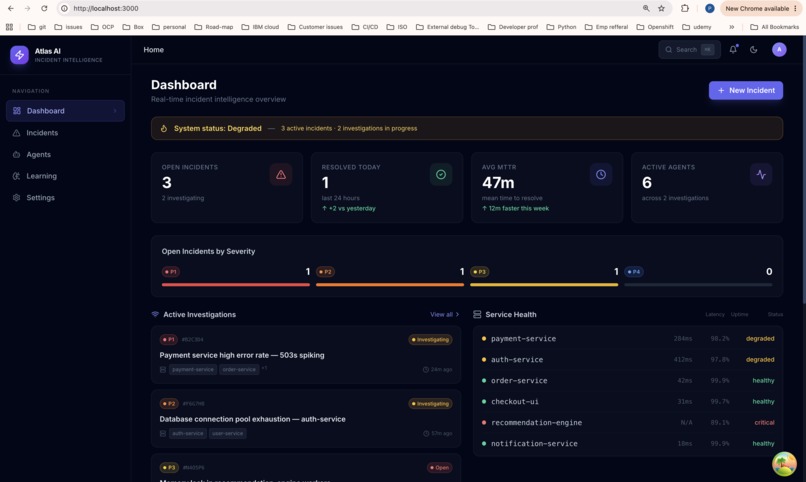
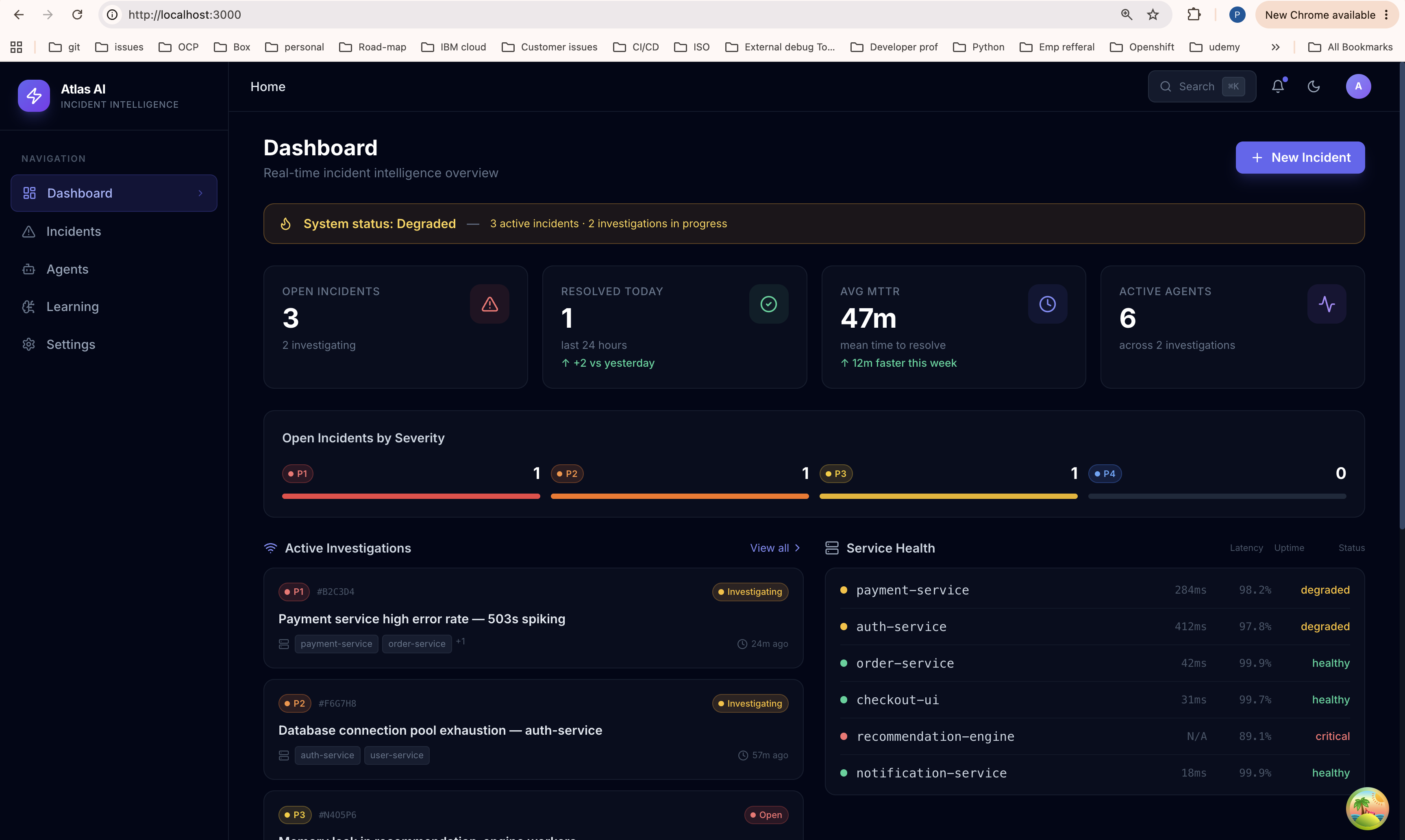
UI
-
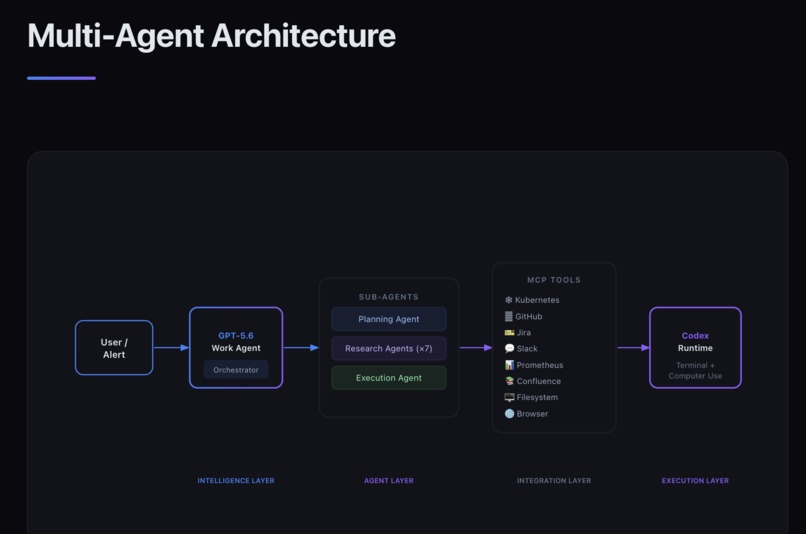
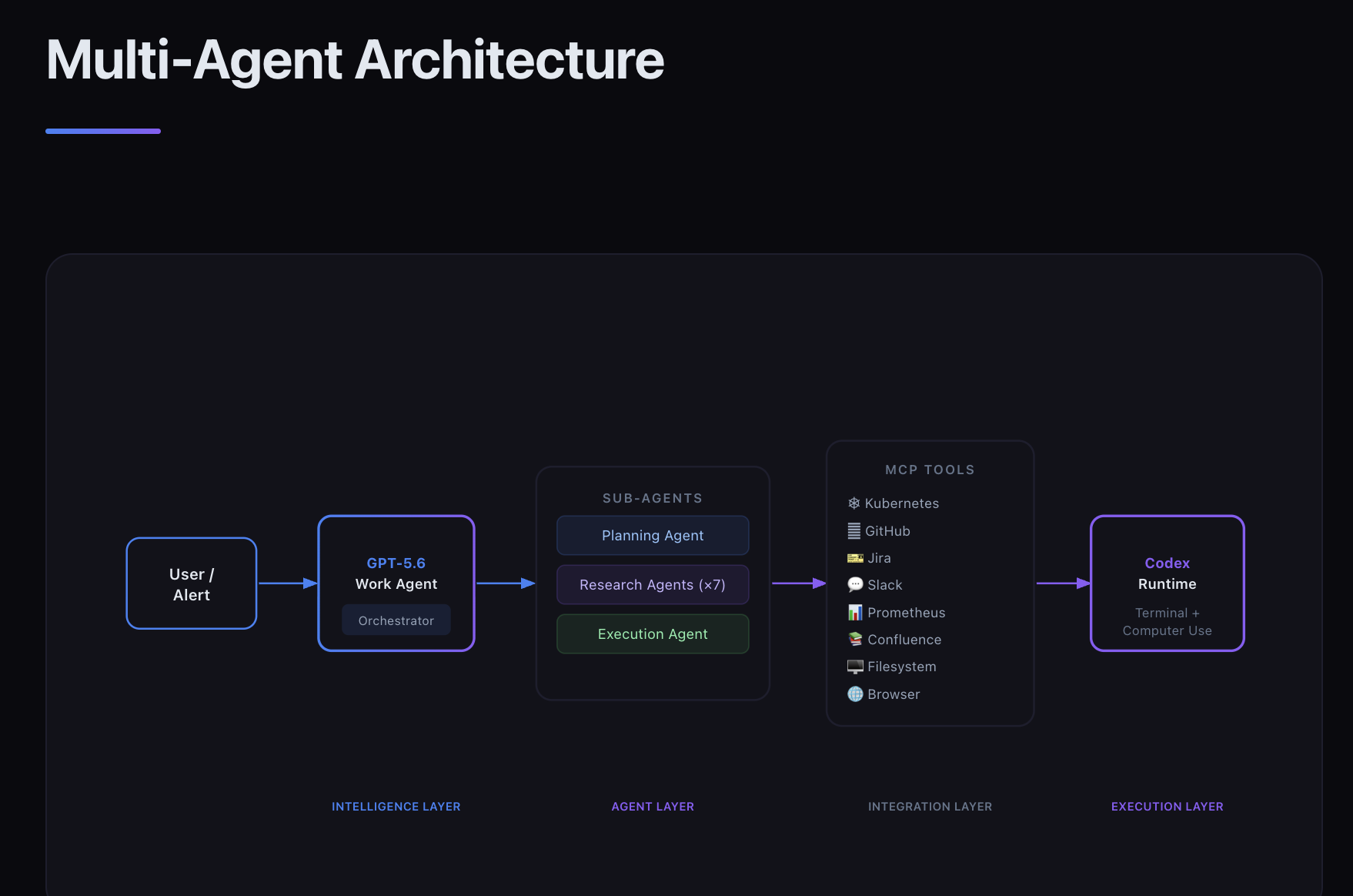
Multi-agent architecture
Atlas AI – The Autonomous Enterprise Engineer
Inspiration
Modern cloud infrastructure has become incredibly powerful—but also incredibly complex. When a production incident occurs, engineers often spend hours switching between Kubernetes dashboards, logs, monitoring tools, GitHub, documentation, Slack, and ticketing systems just to identify the root cause.
The problem isn't a lack of information—it's that the information is fragmented across dozens of tools.
We wanted to explore a different future: What if AI could act like an experienced Site Reliability Engineer (SRE)? Instead of simply answering questions, it could investigate problems, reason across multiple systems, execute diagnostic steps, validate solutions, and generate documentation automatically.
Atlas AI is our vision of an autonomous enterprise engineer.
What it does
Atlas AI is a multi-agent AI platform that helps engineering teams investigate and resolve production incidents.
Given a natural language request such as:
"The Kubernetes deployment is failing after today's release."
Atlas AI automatically:
- Collects Kubernetes events, pod status, and logs
- Analyzes monitoring metrics and alerts
- Searches engineering documentation and runbooks
- Reviews recent GitHub commits and pull requests
- Correlates findings across enterprise systems
- Identifies the most likely root cause
- Suggests or executes remediation steps
- Validates that the issue has been resolved
- Generates a complete Root Cause Analysis (RCA)
- Creates incident summaries for engineering and leadership
Instead of manually jumping between ten different tools, engineers interact with a single AI teammate capable of planning, reasoning, and acting.
How we built it
Atlas AI follows a multi-agent architecture.
A central orchestration agent receives the user's request and decomposes it into specialized tasks. Multiple expert agents execute these tasks in parallel, each responsible for a specific domain.
Examples include:
- Kubernetes Agent
- Monitoring Agent
- Documentation Agent
- GitHub Agent
- Security Agent
- Storage Agent
- Networking Agent
Each agent uses dedicated tools through secure API integrations, while GPT-5.6 provides reasoning, planning, and decision-making capabilities.
The system combines:
- GPT-5.6 for planning and reasoning
- Codex for engineering workflows
- FastAPI backend services
- Next.js frontend
- PostgreSQL for operational data
- pgvector for semantic search
- Kubernetes as the execution environment
- OpenTelemetry for observability
The result is an AI workflow capable of moving beyond chat into autonomous engineering operations.
Challenges we faced
One of the biggest challenges was coordinating multiple AI agents while maintaining a coherent investigation.
Rather than allowing every agent to make independent decisions, we designed an orchestration layer that assigns responsibilities, merges findings, resolves conflicting evidence, and determines the next actions.
Another challenge was balancing automation with trust. Enterprise systems require transparency, so every recommendation includes supporting evidence, confidence scores, and links to the underlying logs or documentation. This allows engineers to verify the AI's reasoning before approving any automated action.
Designing reliable tool orchestration was also a key focus. The platform must safely interact with infrastructure, developer tools, and enterprise applications without sacrificing security or auditability.
What we learned
Building Atlas AI reinforced an important lesson:
The future of AI is not just better chat—it is intelligent systems that can reason, collaborate, and execute real work.
We learned how multi-agent orchestration can break down complex engineering problems into specialized tasks while maintaining a coordinated workflow.
We also discovered that combining reasoning models with structured tools produces significantly more reliable outcomes than relying on free-form prompting alone.
Most importantly, we saw how AI can augment experienced engineers by reducing repetitive operational work while keeping humans in control of critical decisions.
What's next
Our long-term vision is an autonomous engineering platform that continuously learns from production incidents.
Future capabilities include:
- Predictive incident prevention
- Automated change risk analysis
- Intelligent deployment validation
- Continuous infrastructure optimization
- Self-improving engineering agents that learn from approved resolutions
- Support for hybrid and multi-cloud environments
We believe enterprise AI should move beyond answering questions and become an active engineering teammate capable of planning, investigating, executing, and continuously improving.
Atlas AI is our first step toward that future.
Built With
- docker
- fastapi
- github-api
- gpt-4o
- grafana
- jira-api
- kubernetes
- model-context-protocol
- multi-agent-systems
- next.js
- openai-api
- openai-codex
- opentelemetry
- pgvector
- postgresql
- prometheus
- python
- rag
- react
- redis
- slack-api
- sqlalchemy
- tailwind-css
- typescript
- websockets

Log in or sign up for Devpost to join the conversation.