Inspiration
Learning programming today is harder than it should be. When I started learning, I found myself switching between YouTube playlists, documentation, blogs, GitHub repositories, and online courses without knowing what to learn next. I wanted one place that could organize this journey and help learners focus on learning instead of searching.
That's why I built Atlas.
What it does
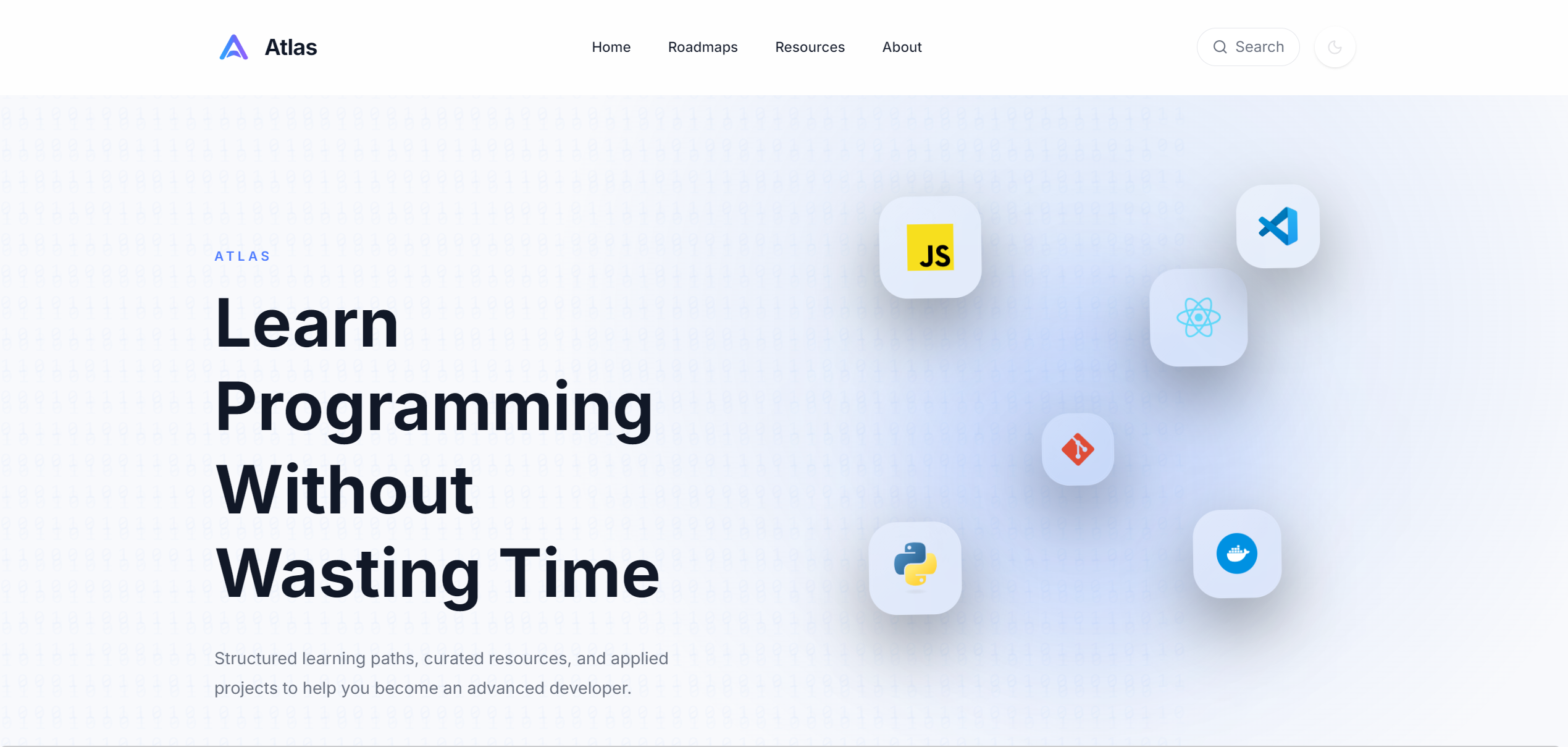
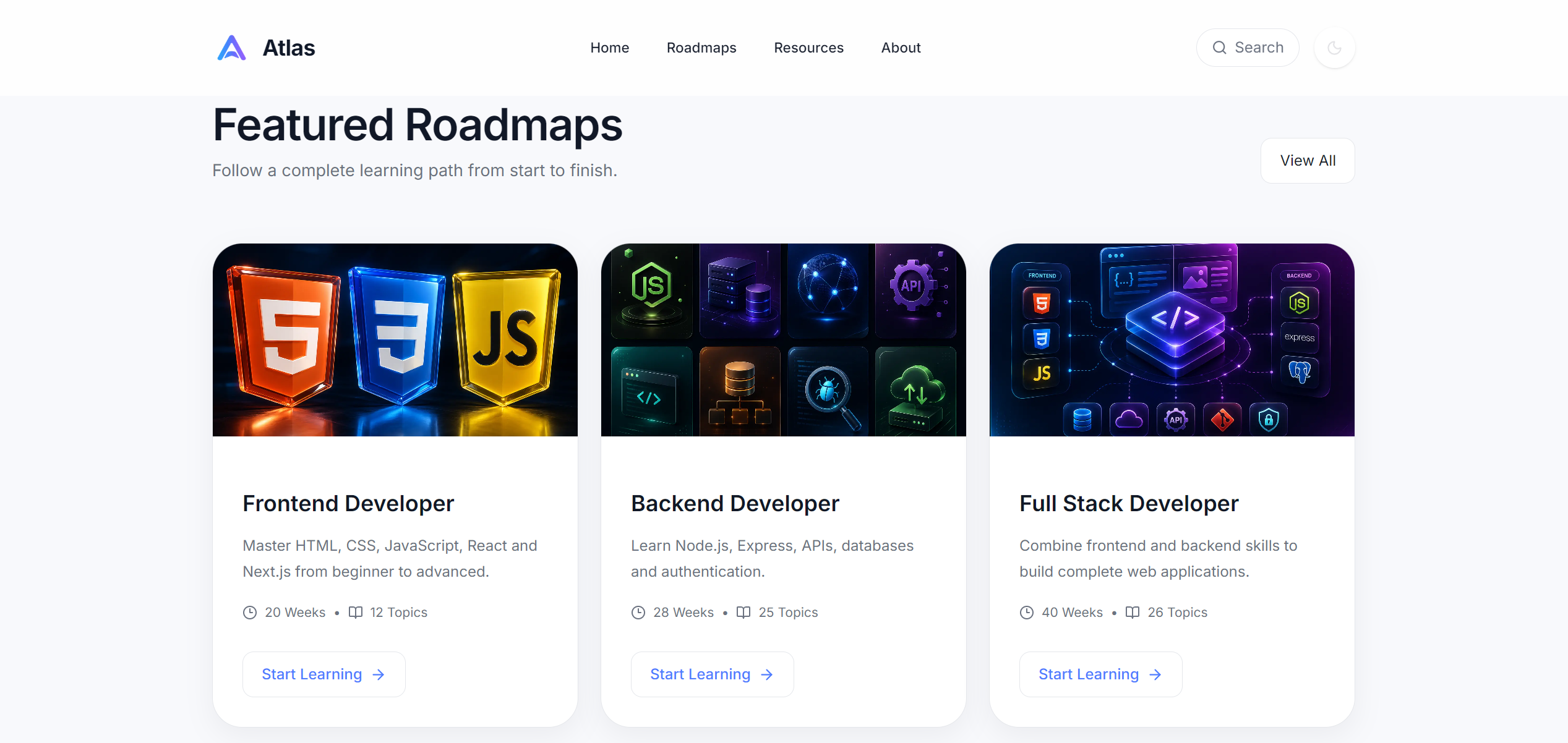
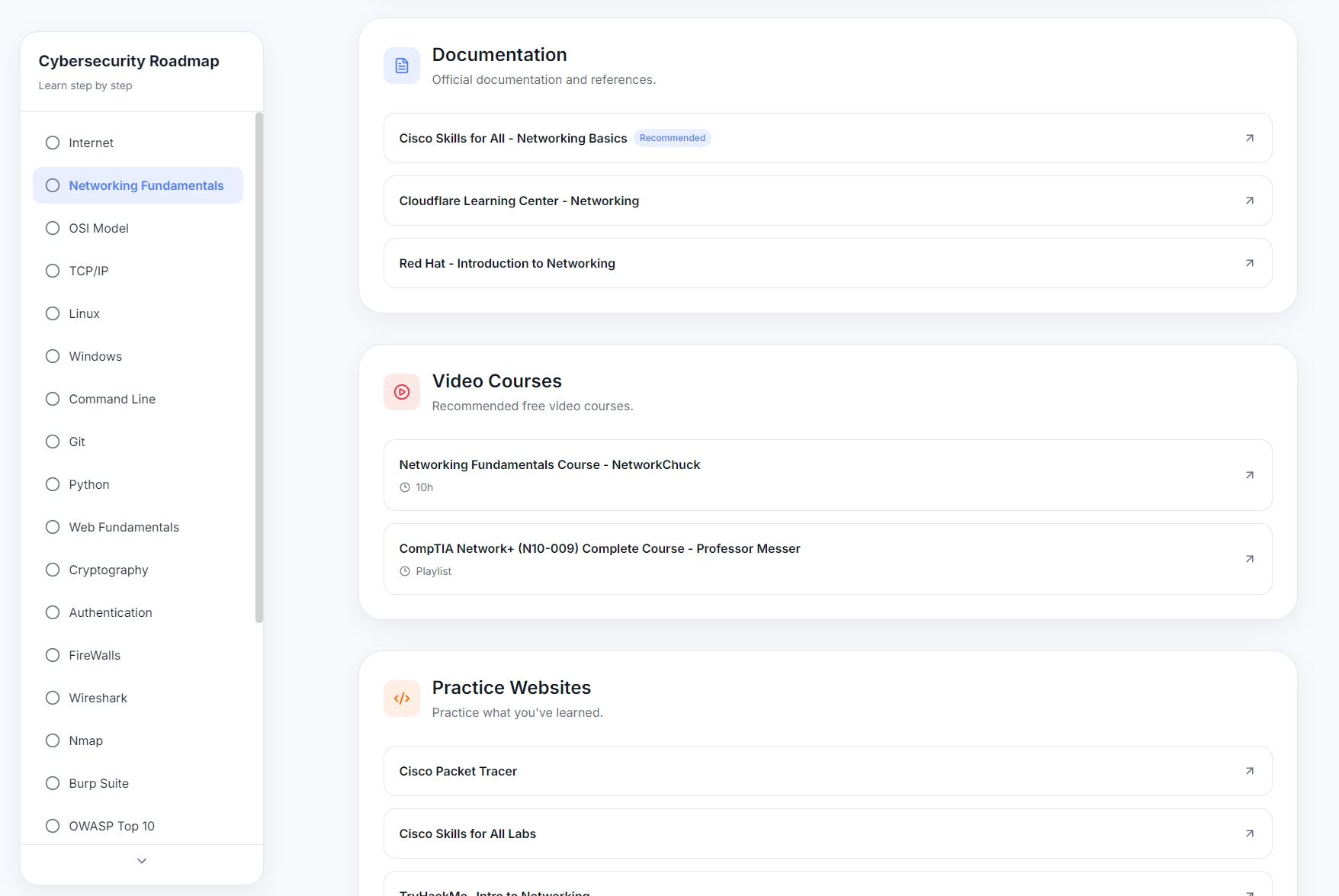
Atlas is a programming learning platform that combines structured roadmaps, curated learning resources, and progress tracking in one place.
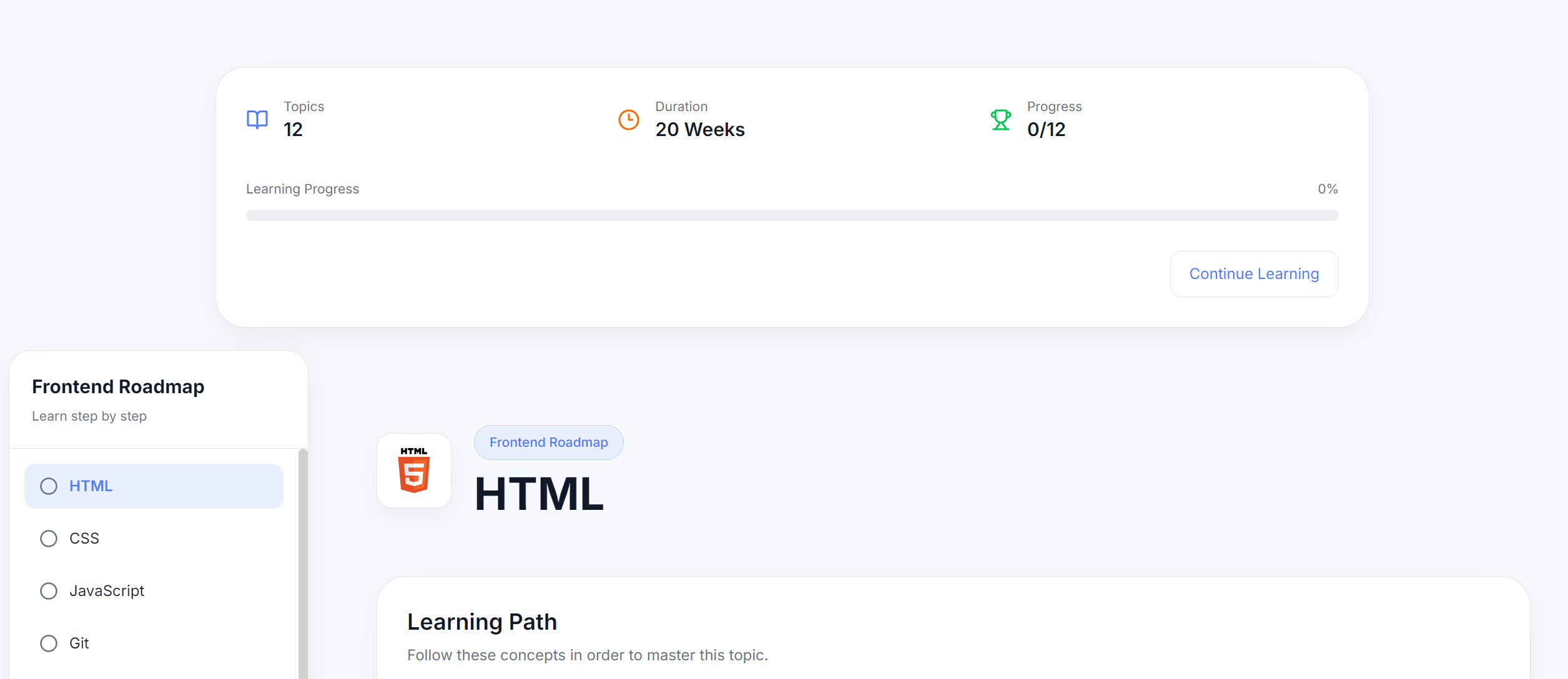
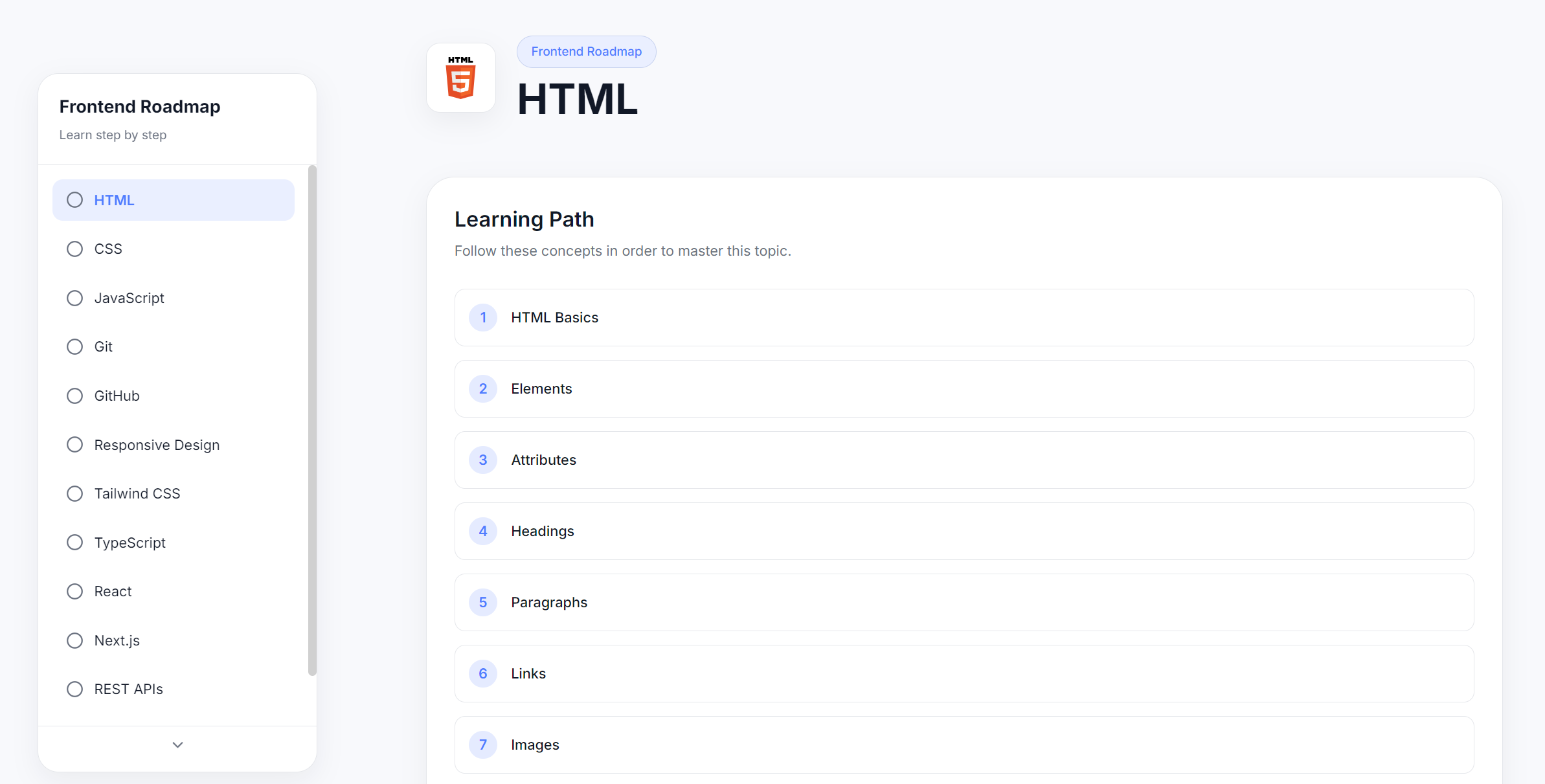
Users can choose a programming field, follow a clear learning path, access carefully selected resources for every topic, and track their progress as they learn. The goal is not to replace existing educational content but to organize the best resources into a single platform.
How we built it
Atlas was built with Next.js, React, TypeScript, and Tailwind CSS.
One of my main goals was to keep the project scalable. Instead of creating every page individually, I built reusable components and a shared design system so new roadmaps, resources, and features can be added without redesigning the application.
The interface went through several redesigns before reaching its current version. I also focused on performance by replacing heavy animations with lightweight GPU-accelerated CSS animations whenever possible, keeping the experience smooth across different devices.
Challenges we ran into
The biggest challenge wasn't writing the code—it was designing a platform that stays simple while managing a large amount of learning content.
Another challenge was balancing visual quality with performance. Some early animation ideas looked great but introduced noticeable lag, so I redesigned them using lighter techniques to keep the website responsive.
Organizing programming resources into structured roadmaps also required a lot of planning to make sure learners could easily understand what to learn next.
Accomplishments that we're proud of
I'm proud that Atlas grew from an idea into a complete platform instead of just another portfolio project.
Some achievements I'm especially proud of include:
- Building a fully responsive interface.
- Designing a reusable component system.
- Creating structured programming roadmaps.
- Organizing high-quality learning resources.
- Developing a clean UI that feels modern without sacrificing performance.
What we learned
Building Atlas taught me much more than writing code.
I learned how important good UI and UX are for educational platforms, how to organize large projects using reusable components, and how small performance optimizations can make a big difference in the final user experience.
Most importantly, I learned that building a useful product requires many iterations, constant testing, and paying attention to details.
What's next for Atlas
Atlas is still growing.
Some features planned for future versions include:
- User accounts and cloud progress synchronization.
- Interactive coding challenges.
- AI-powered learning recommendations.
- Community features for sharing projects and resources.
- More roadmaps covering additional programming fields and technologies.
The long-term goal is to make Atlas a complete platform where learners can plan, study, practice, and track their programming journey from beginner to advanced.


Log in or sign up for Devpost to join the conversation.