-
-
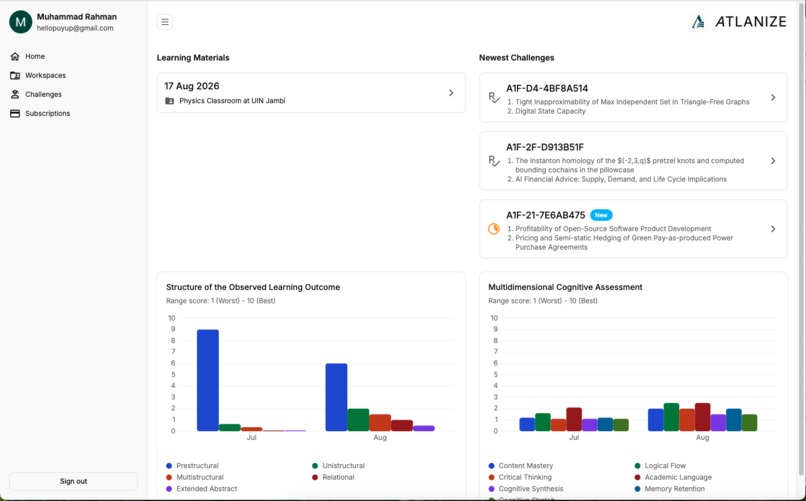
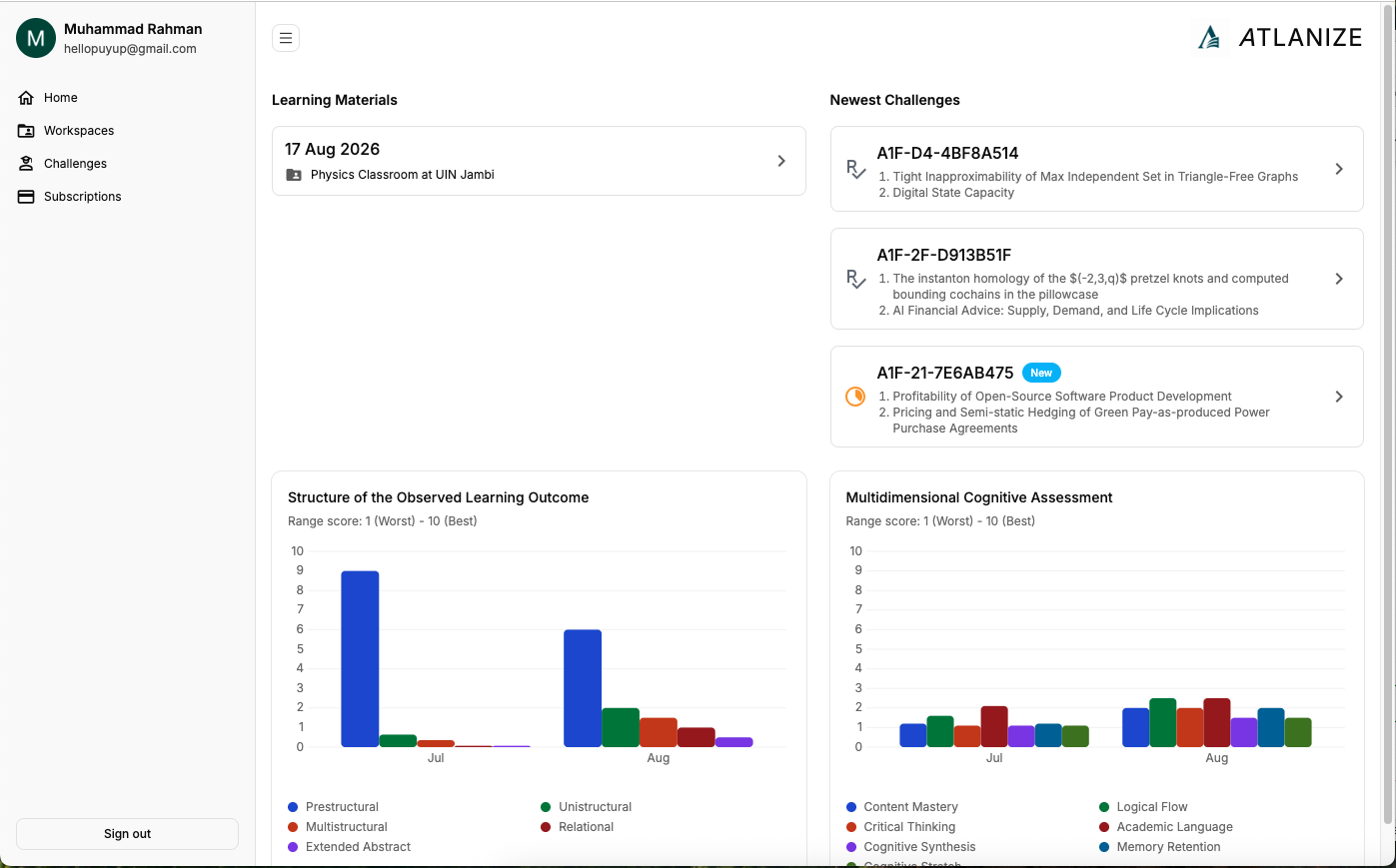
Main dashboard of Atlanize
-
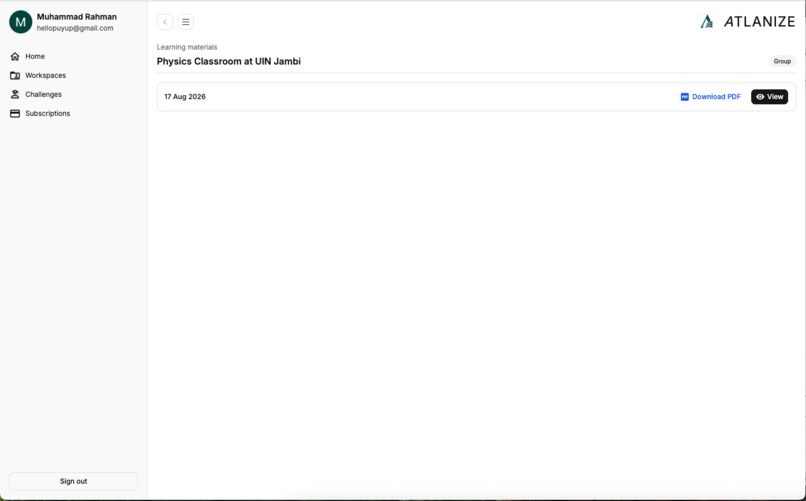
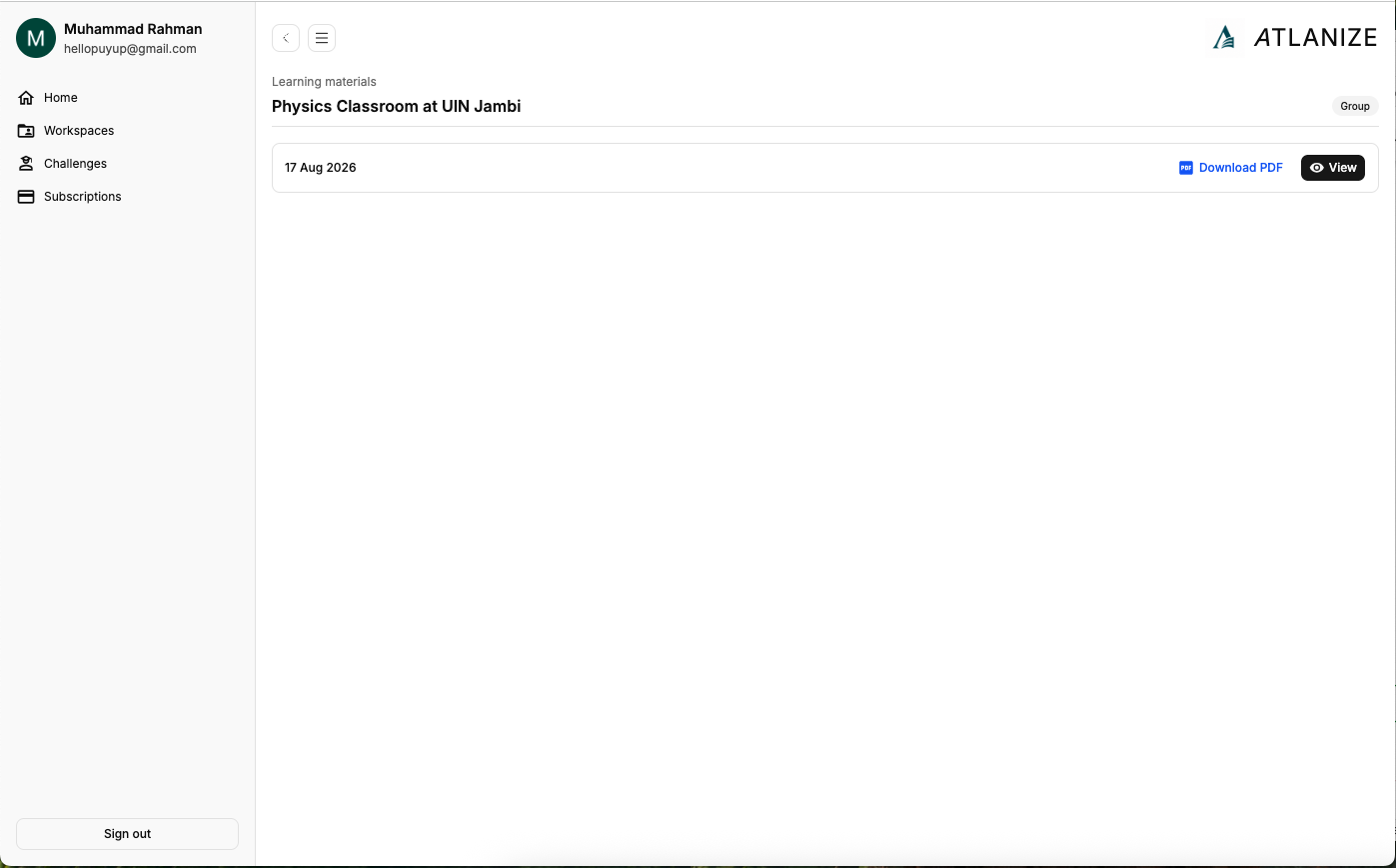
Learning materials build from daily notes collection
-
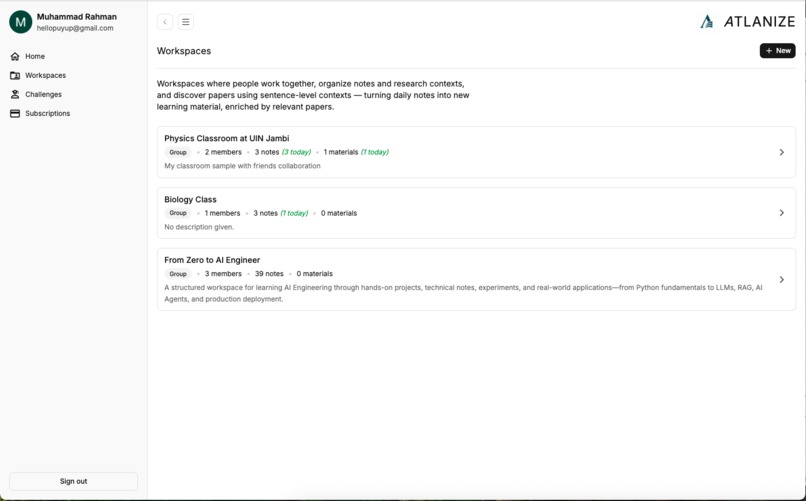
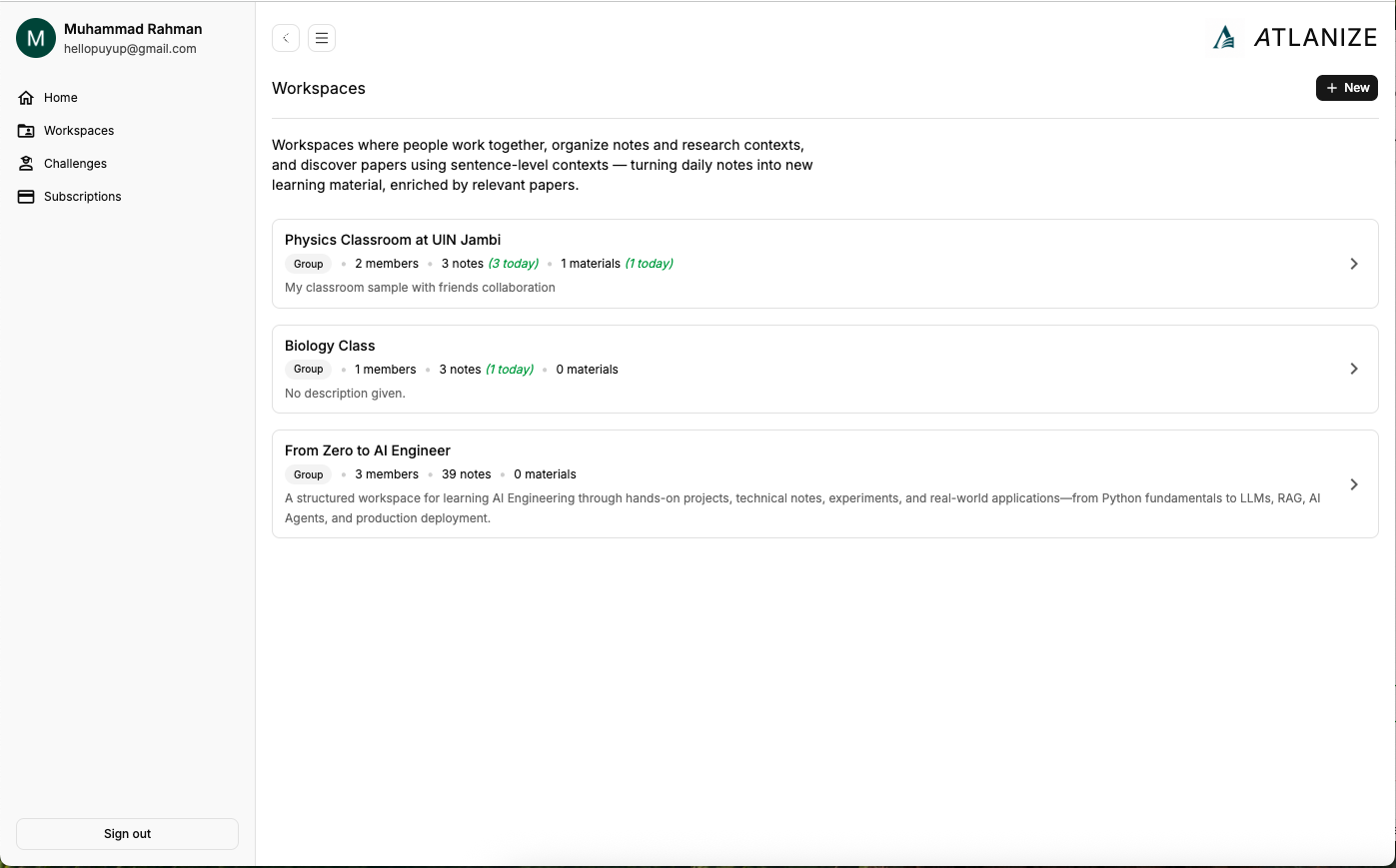
Workspaces collection
-
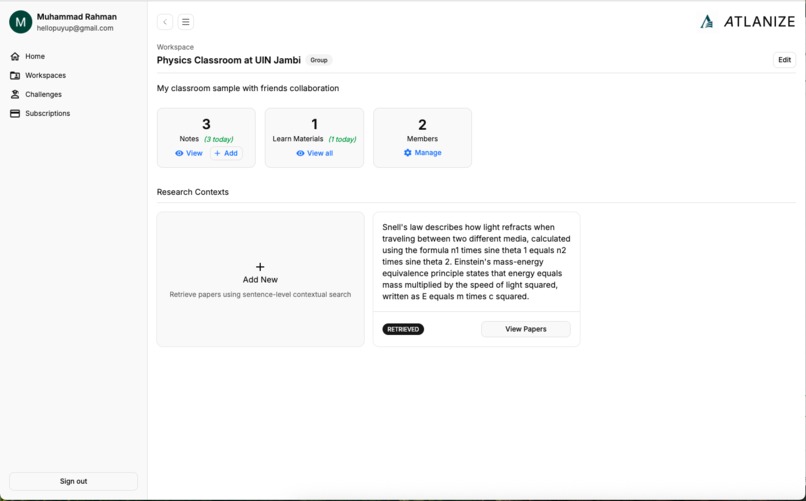
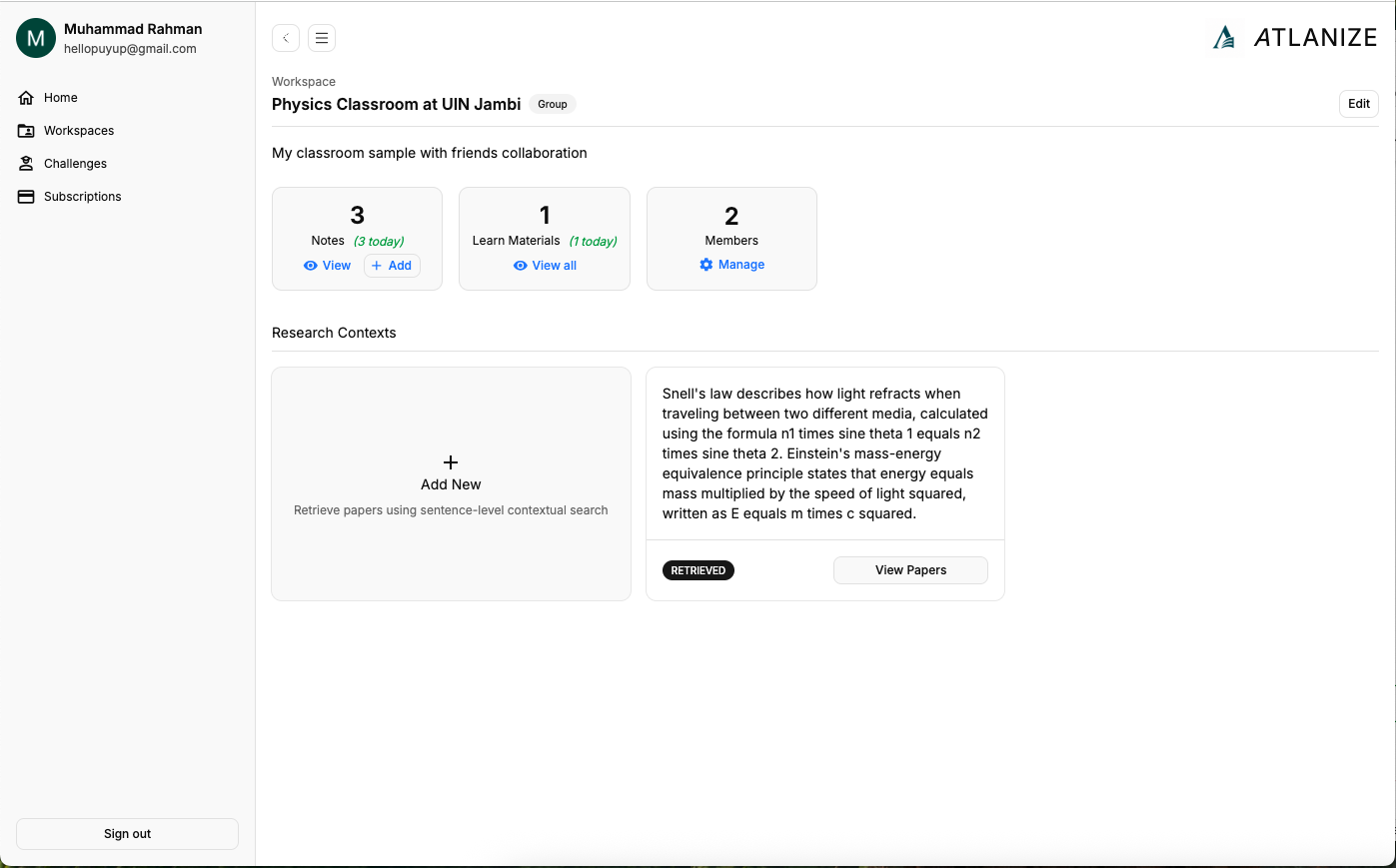
Workspace home
-
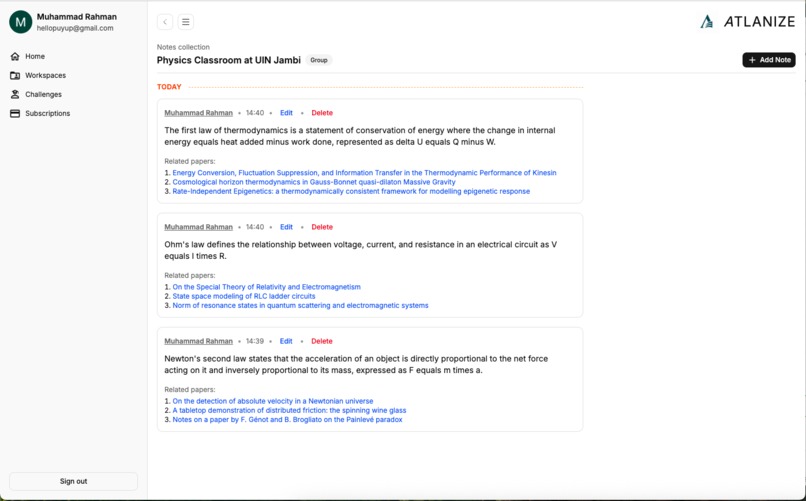
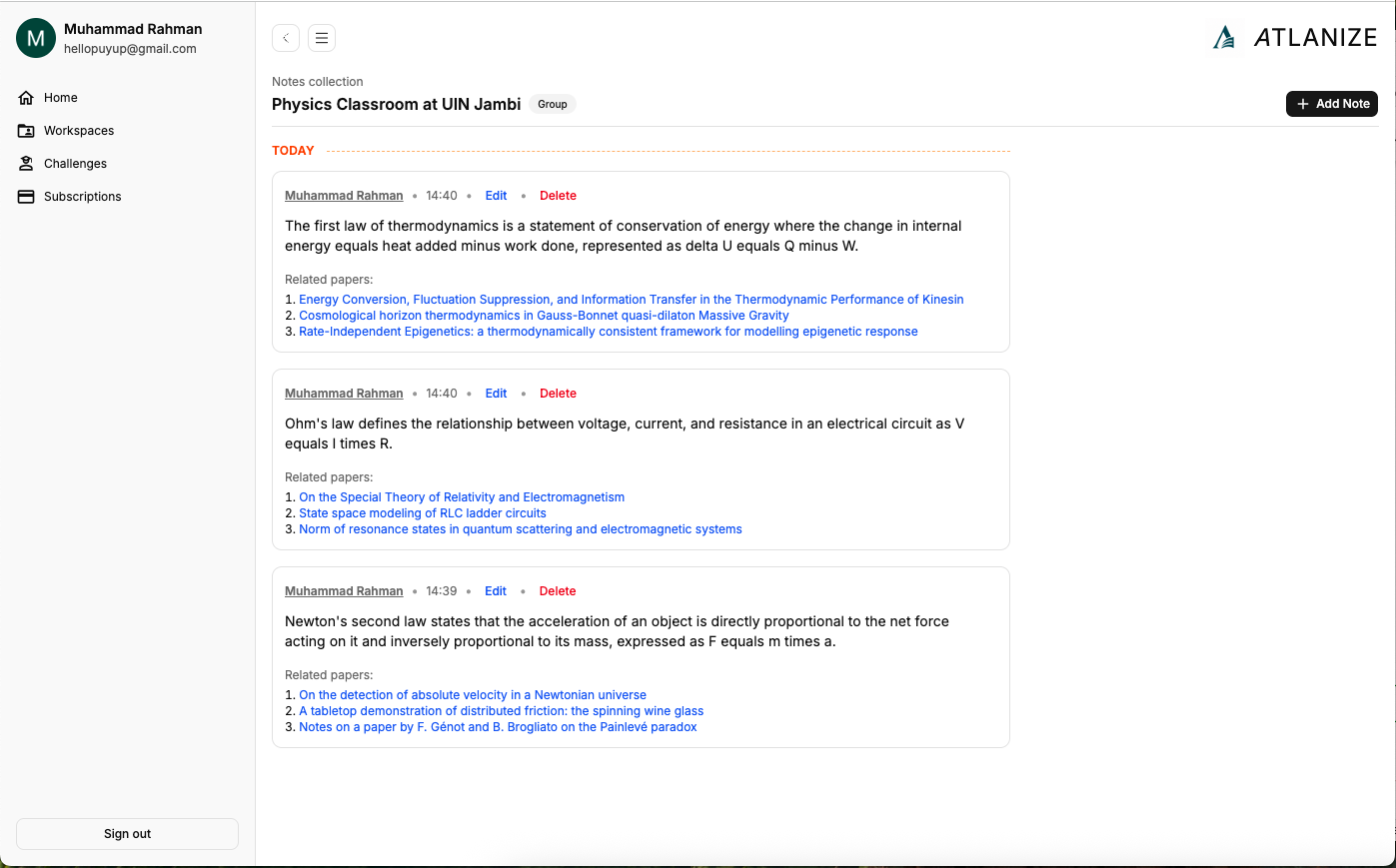
Workspace notes with related papers
-
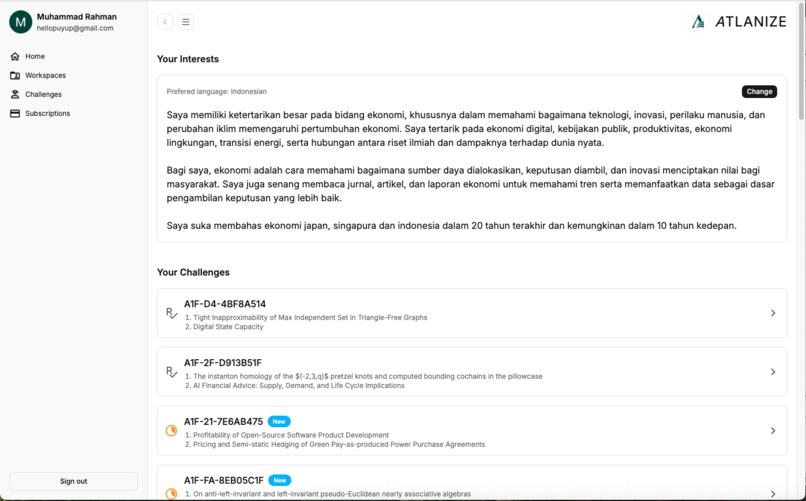
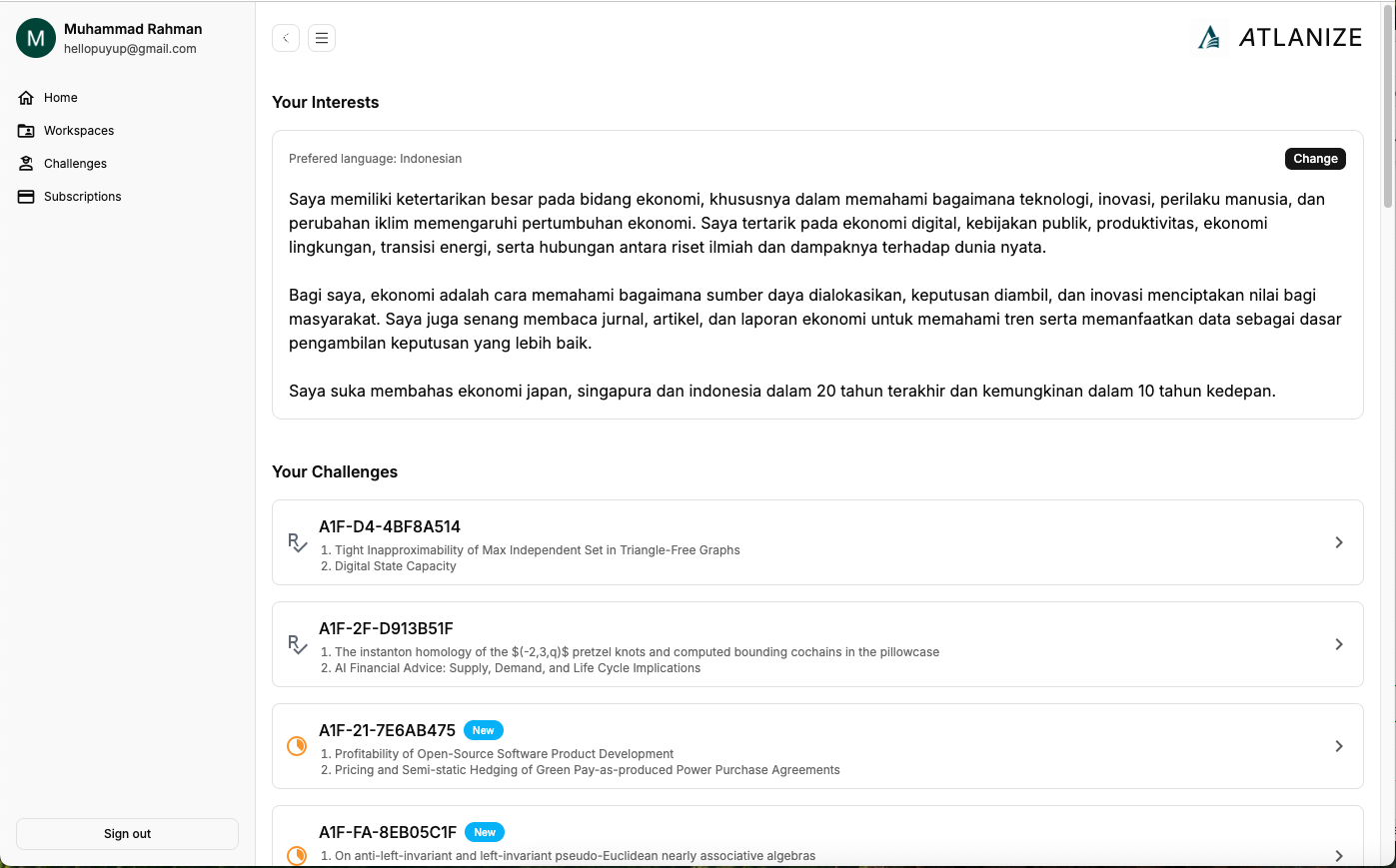
Challenges to measure critical thinking with paper
-
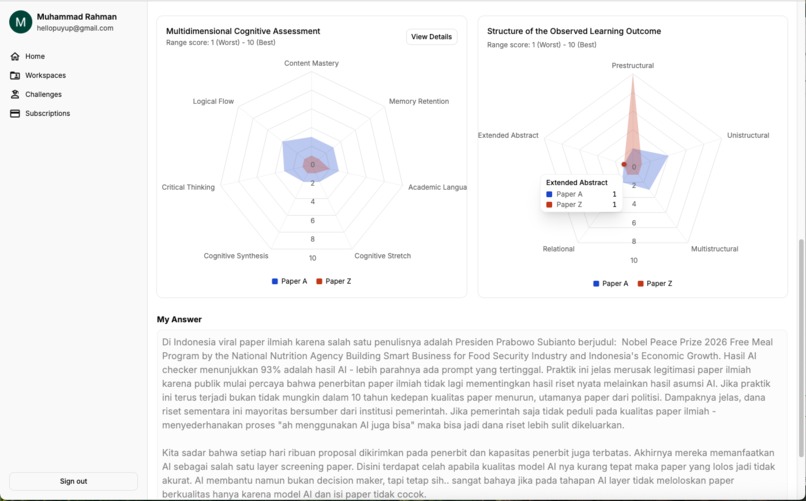
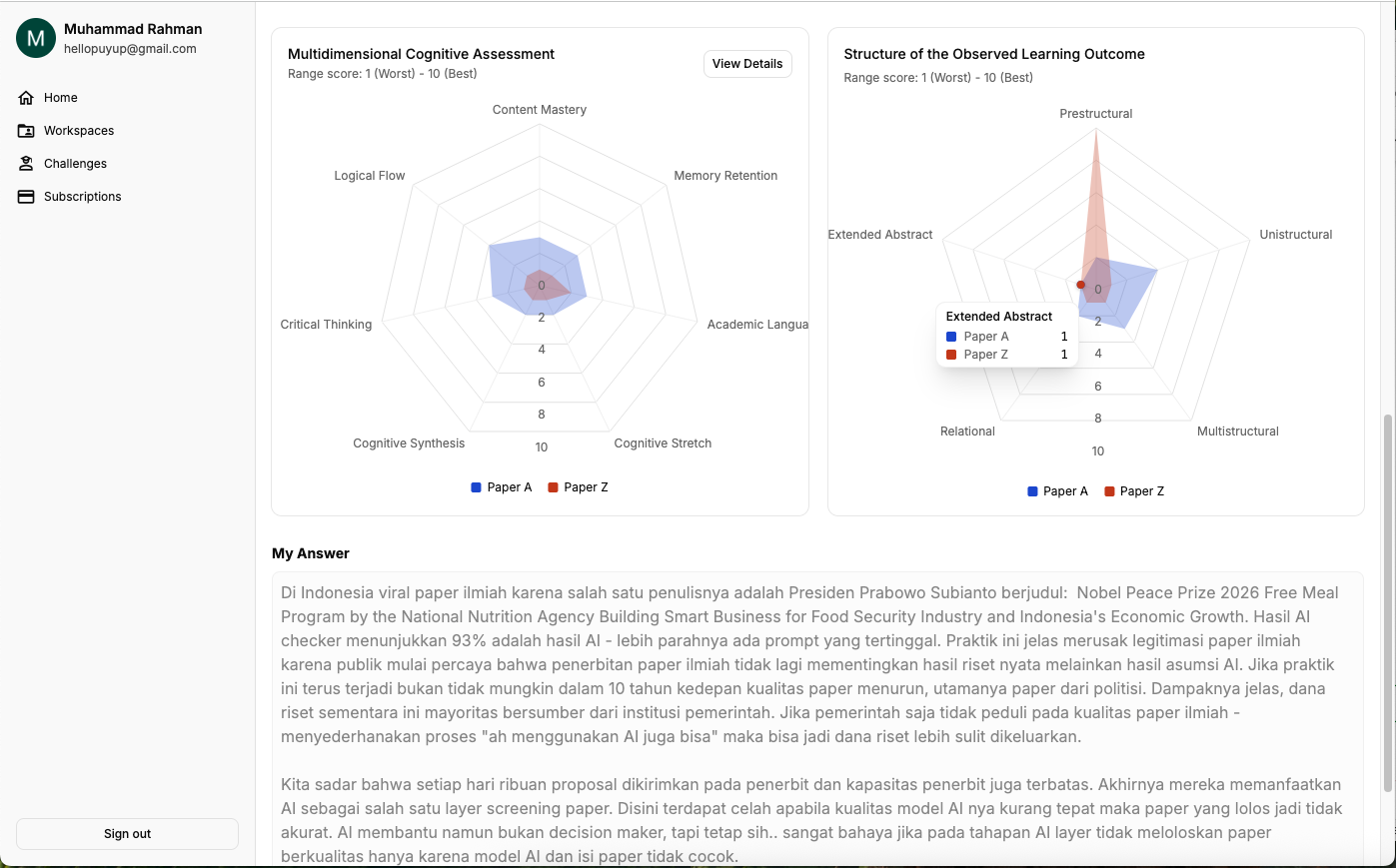
The result of challenge
-
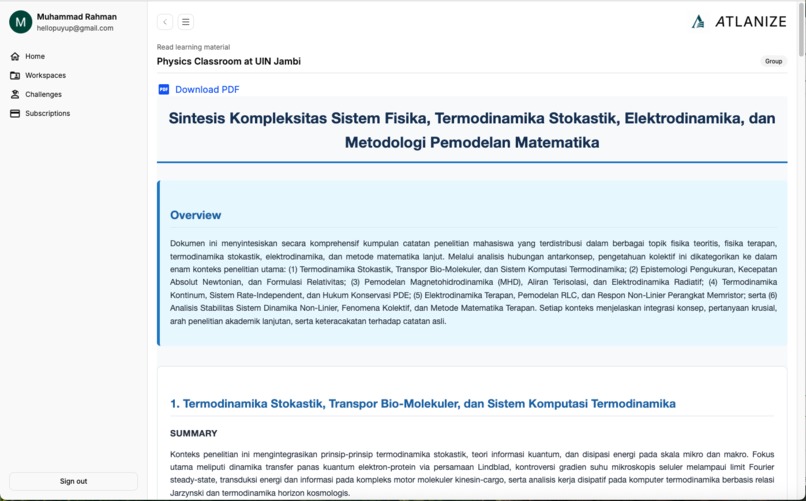
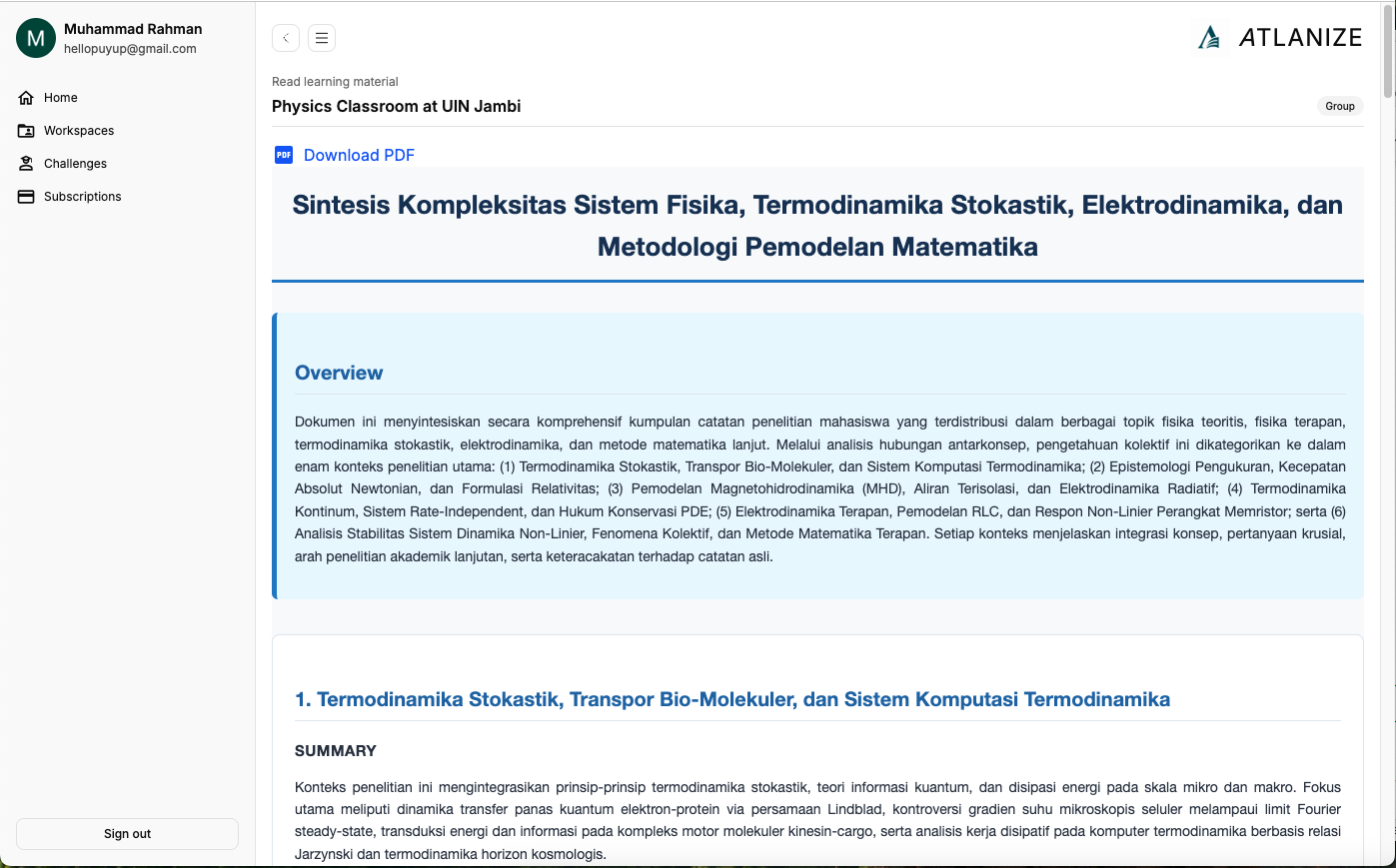
View of materials builded by notes
-
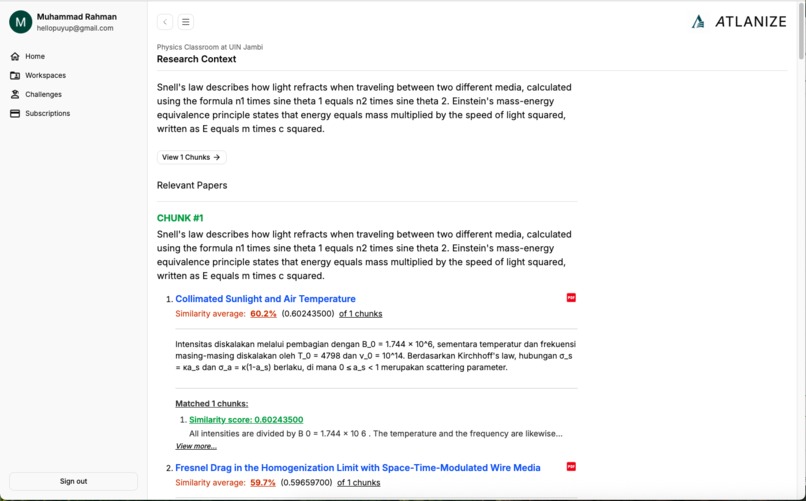
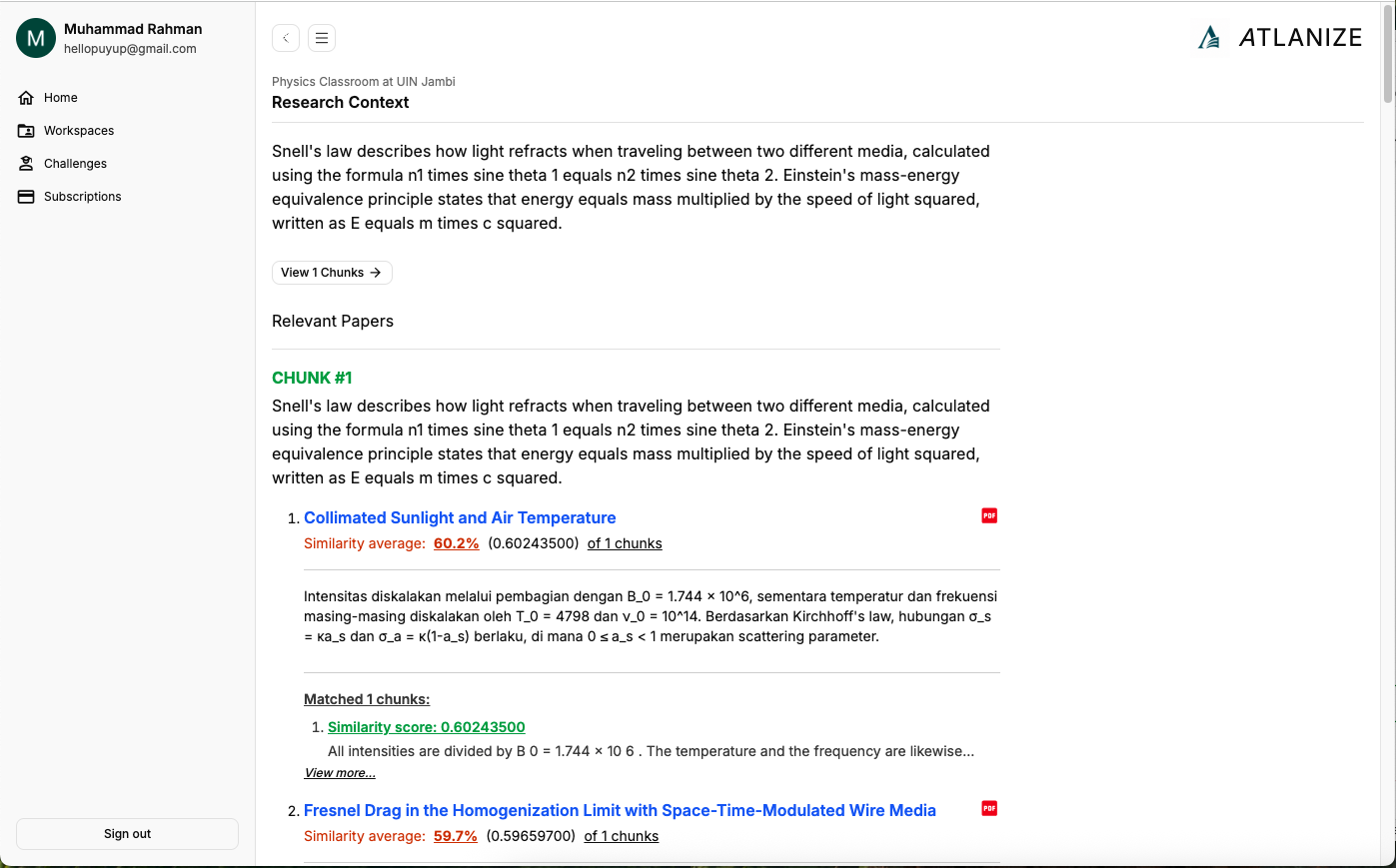
Find paper by research contexts
Inspiration
Most lecture notes are trapped in notebooks or note-taking app as passive assets. Every student has a unique perspective on the learning material. Why not combine all students notes into a single collaborative workspace where everyone can contribute and build their knowledge together?
Even when a student is sick and misses a lecture, they don't have to miss the learning. Their classmates' notes are already there, ready to fill the gap.
Here is the best part: connect these combined notes directly to the university's journal repository (or external Open Access research papers). Generates new, enriched study materials by merging student notes with research papers. Write notes today, and receive a comprehensive PDF tomorrow. Print, read, and collect everyday.
Existing tools like NotebookLM and Obsidian it's to complicated for students. Their time is limited with all the complexities of university studies.
What it does
For students:
Open Atlanize. Add notes—text, images, or voice—to a workspace. That's it. AI does the rest in the background. No prompting. No complexity.
Oh shit! A single note-taking app can be expensive. With Atlanize, a shared workspace can start at just $0.25 per student per month.
For universities:
Finding relevant papers in university journals is still challenging. Traditional search relies mainly on titles, abstracts, keywords, authors, and citations, making it difficult to discover research based on the actual context of an idea. We collaborate with universities to add a RAG layer to their existing journal platforms, enabling deeper, context-aware paper discovery. (see INSPIRATION section).
For Open Access journal publishers:
The problem is similar: valuable research is publicly available, but difficult to discover beyond traditional metadata-based search. Atlanize adds a context-aware RAG layer that helps readers discover relevant research based on the actual meaning of their notes and ideas.
Paper banks for the next level of education.
From day one of using Atlanize, every student can take notes that are connected to academic papers through semantic, context-aware search.
Take notes → embedding → full-paper similarity search → paper bank.
Imagine doing this for one year. By the time a student starts their thesis or PhD, they could already have a collection of relevant papers built from their own learning journey.
It's a snowball effect: small notes every day gradually become a valuable research collection. This could also reduce the time students spend searching for and ingesting papers when they begin serious research.
How we built it
Atlanize is not a chatbot. It doesn't wait for students to ask questions. It's a learning assistant that works while they sleep.
Paper Ingestion:
Retrieve full papers from journal repositories → extract full content → semantic chunking → BGE-M3 embeddings → vector database.
Notes Ingestion:
Student takes messy notes—text, images, or voice → BGE-M3 embeddings → vector database → every midnight, collect the day's notes from each workspace → deduplication → Google Gemini multimodal AI enrichment → semantic chunking → BGE-M3 embeddings → store enriched contexts in the vector database.
Paper–Notes Matcher:
Enriched note contexts → similarity search against the paper vector database → relevant research contexts → deduplication → Google Gemini AI enrichment → PDF study material.
Human & AI in this project
Human copies the code from Antigravity into Gemini Web or Claude.ai. The AI analyzes and fixes the error, optimizing the code when needed. The human then copies the updated code back into Antigravity. Humans define entire system workflow; AI makes it more powerful.
Challenges we ran into
No GPU. No fancy server. Just an old laptop running 24/7.
We didn't have the budget to rent or buy a server with a proper GPU, so our entire RAG pipeline—including paper processing and note embeddings—currently runs on an HP ProBook 8470p with 16 GB RAM and a 3rd-generation 4-core Intel Core i5.
Watch our embedding server: https://youtube.com/shorts/wNUAO8sUXhs, that's insane!
It forced us to optimize every stage of the pipeline for CPU-based processing. And using BGE-M3 on a 3rd-generation i5? You know, that's not exactly easy. But it works.
Large Context Window Notes Enrichment
Notes from a workspace can vary significantly in size. Assembling large contexts directly into an LLM can quickly become expensive. For education, we don't want to compromise on model quality. To keep the cost manageable, we use the Google Gemini Batch API for our entire LLM enrichment pipeline.
Started Late. Built From Scratch
We started a little late—on July 25, 2026—and had to build everything from scratch. We didn't have a proper AI coding-agent setup, so most of the code and UI were built by hand.
We did use AI to help solve complex algorithms and implementation challenges—but no fancy coding agent. Just open gemini.google.com or claude.ai, copy and paste code, and keep building. The architecture may be a little messy. But again, it works.
Accomplishments that we're proud of
We built the entire thing from scratch.
From full-paper ingestion and semantic indexing to student note enrichment, research matching, and AI-generated study materials.
It actually runs.
The entire RAG pipeline, including BGE-M3 embeddings, runs 24/7 on an old CPU-only laptop with no GPU.
AI works without prompting.
Students simply take notes. The system processes, enriches, matches, and generates new learning materials in the background.
We turned individual notes into collective knowledge.
Students can contribute to the same workspace, making sure that missing one lecture doesn't mean missing the learning.
What we learned
AI as assistant.
We learned that AI can be more useful when it works proactively in the background. Imagine waking up in the morning and finding new study material already prepared by AI—grounded in what you actually learned yesterday, enriched with trusted research, not just AI hallucinations.
Simple is not weakness.
Students want to take notes and get something useful back with minimal effort. Even as we keep adding more features, we learned that one feature that solves a real problem is more valuable than ten features that add complexity.
Collective knowledge is powerful.
A student's notes become much more valuable when combined with classmates' perspectives and trusted research papers.
Constraints force better engineering.
Running BGE-M3 and our RAG pipeline on an old CPU-only laptop pushed us to optimize every stage instead of simply throwing more hardware at the problem.
What's next for ATLANIZE
Bring Atlanize to real universities journal
For this prototype, our main source of research papers comes from arXiv. But even arXiv primarily relies on traditional search based on metadata such as titles, abstracts, and keywords.
Many university journals face the same problem, especially repositories powered by OJS (Open Journal Systems).
Our next step is to collaborate with universities and add a context-aware RAG layer to their existing journal platforms—without replacing the system they already have.
Expand Journal Repository
Connect more independent Open Access repositories so students can discover relevant research papers across multiple sources, with cross-repository references and context-aware retrieval.
This helps students expand their perspective instead of relying on a single source. For example, one paper might conclude that “this method is the best,” while another finds that “that method is more effective in practice.”
Atlanize helps students discover contrasting findings, compare evidence, and understand the real-world context behind different research claims.
Because in the AI era, the most valuable skill isn't knowing everything. It's knowing how to think critically.
Built With
- bge-m3
- claude
- gemini
- grobid
- postgresql
- python
- scikit-learn
- stanza
- supabase
- sveltekit
- tei
- vercel


Log in or sign up for Devpost to join the conversation.