-
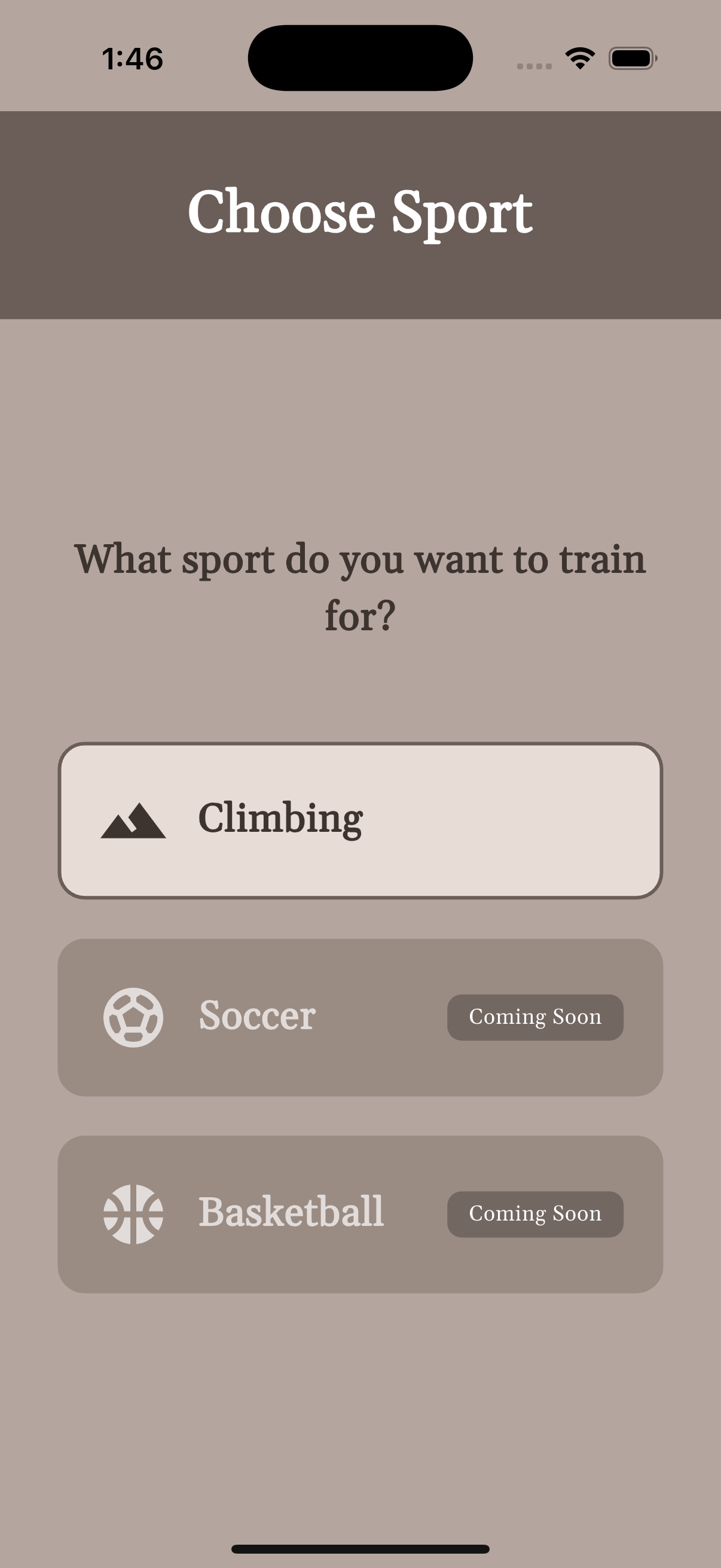
Choose Sport
-
building plan
-
AI Coach
-
Schedule
-
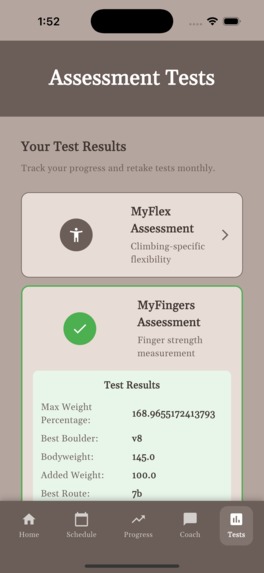
Tests
-
HomeScreen 2
-
Rest and Recovery
-
HomeScreen
-
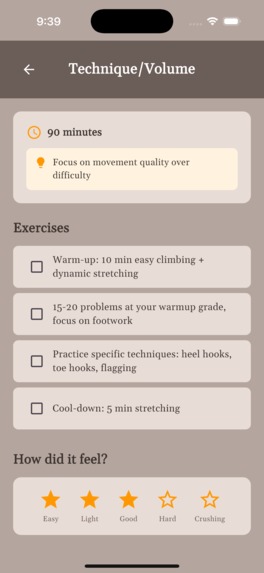
Schedule 2
-
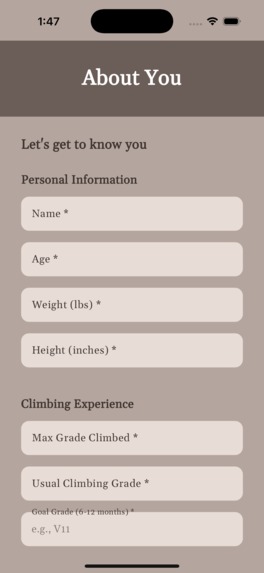
Important Info
-
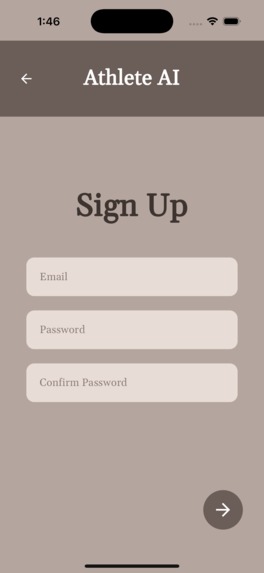
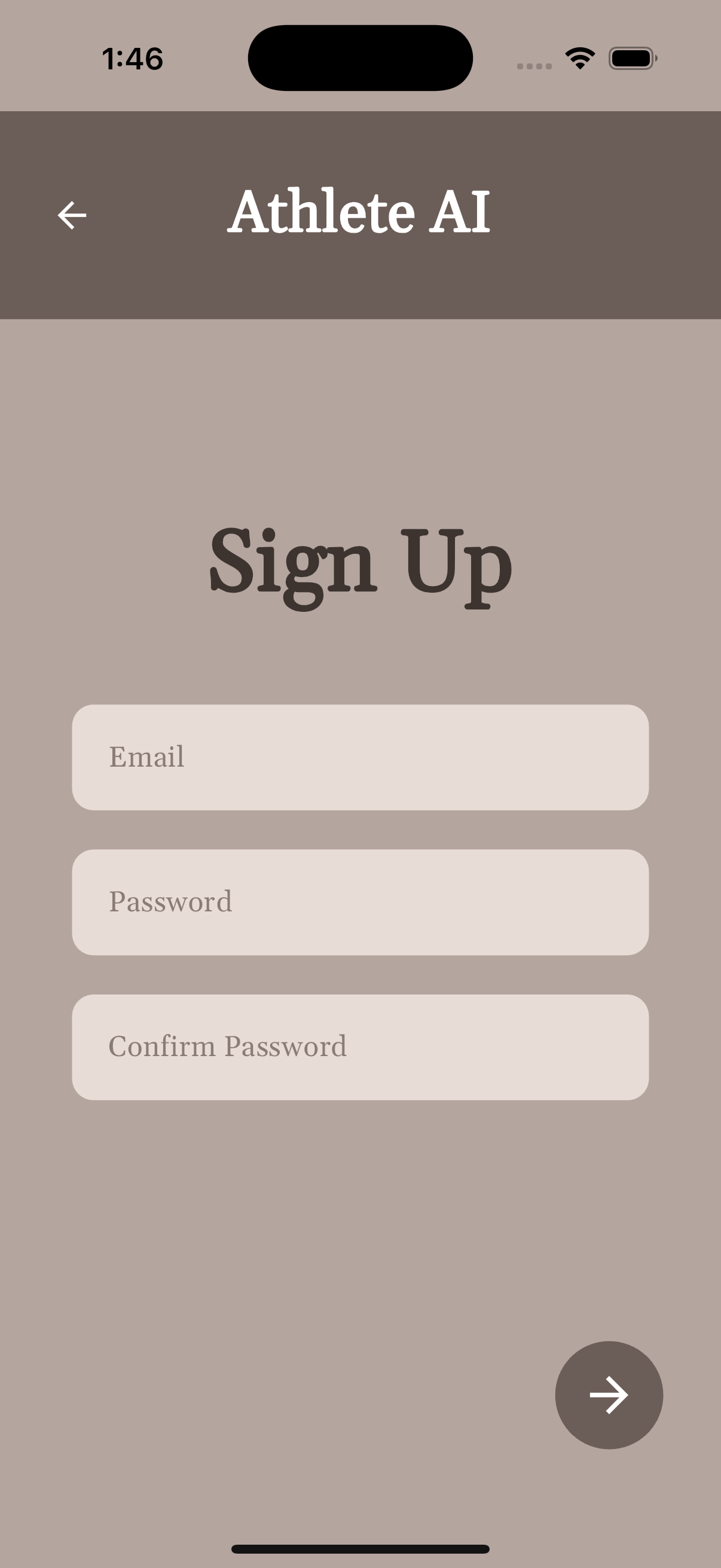
Sign Up Page
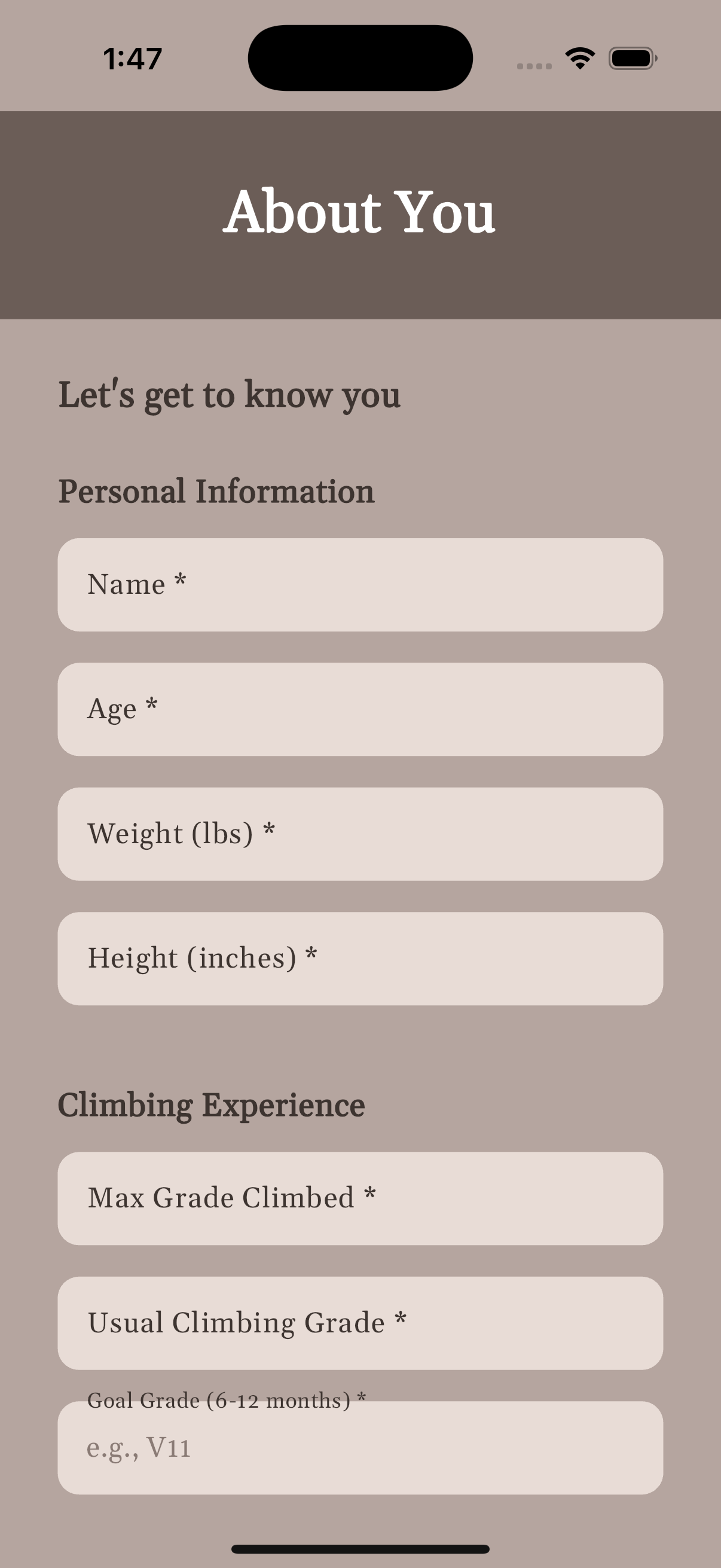
Inspiration
As a CS major passionate about both technology and climbing, I've experienced firsthand the gap between amateur training and professional coaching. Quality coaching costs $100-300/session, putting elite-level training out of reach for most athletes. I wanted to democratize access to sport-specific training that's not just motivational fluff, but based on real assessment data, proven training methodologies, and personalized to each athlete's strengths, weaknesses, and goals.
What it does
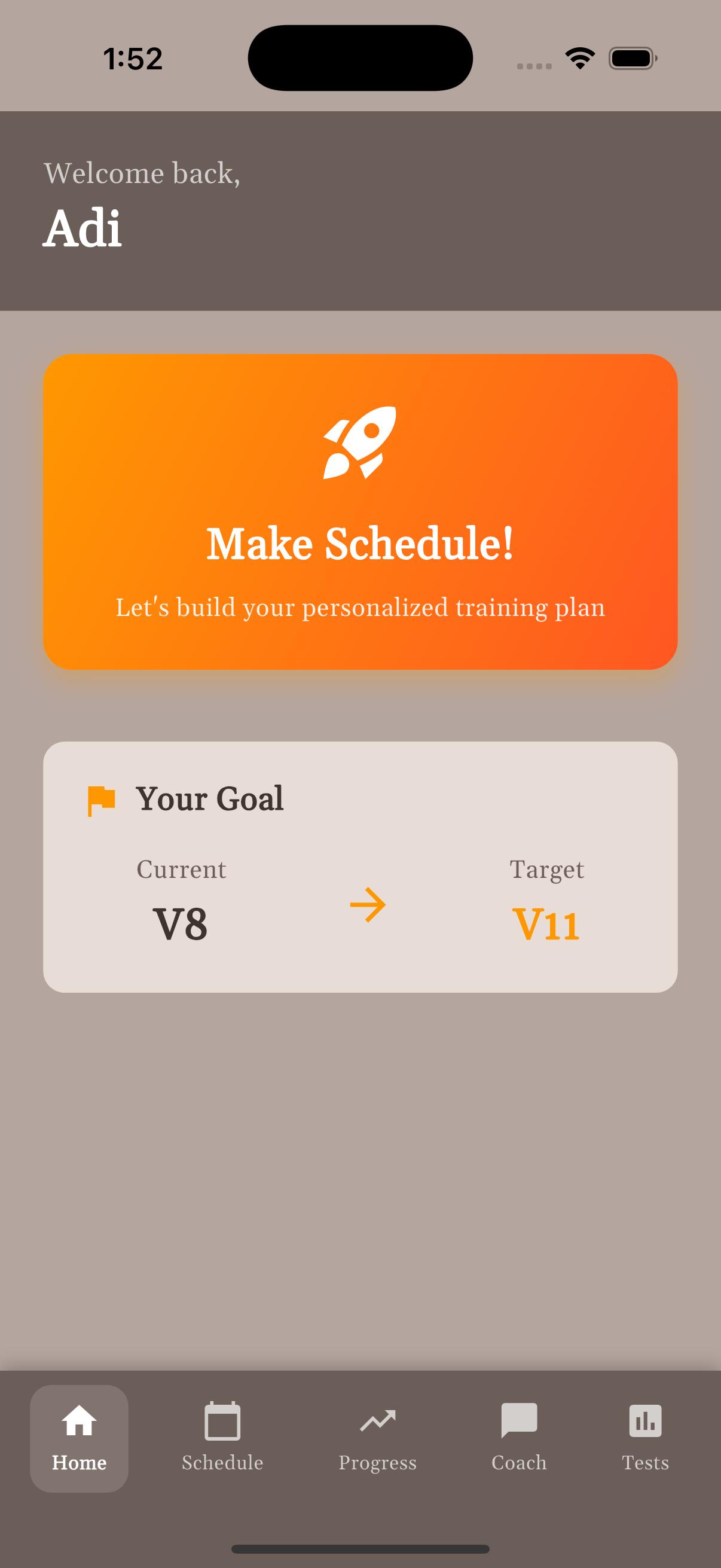
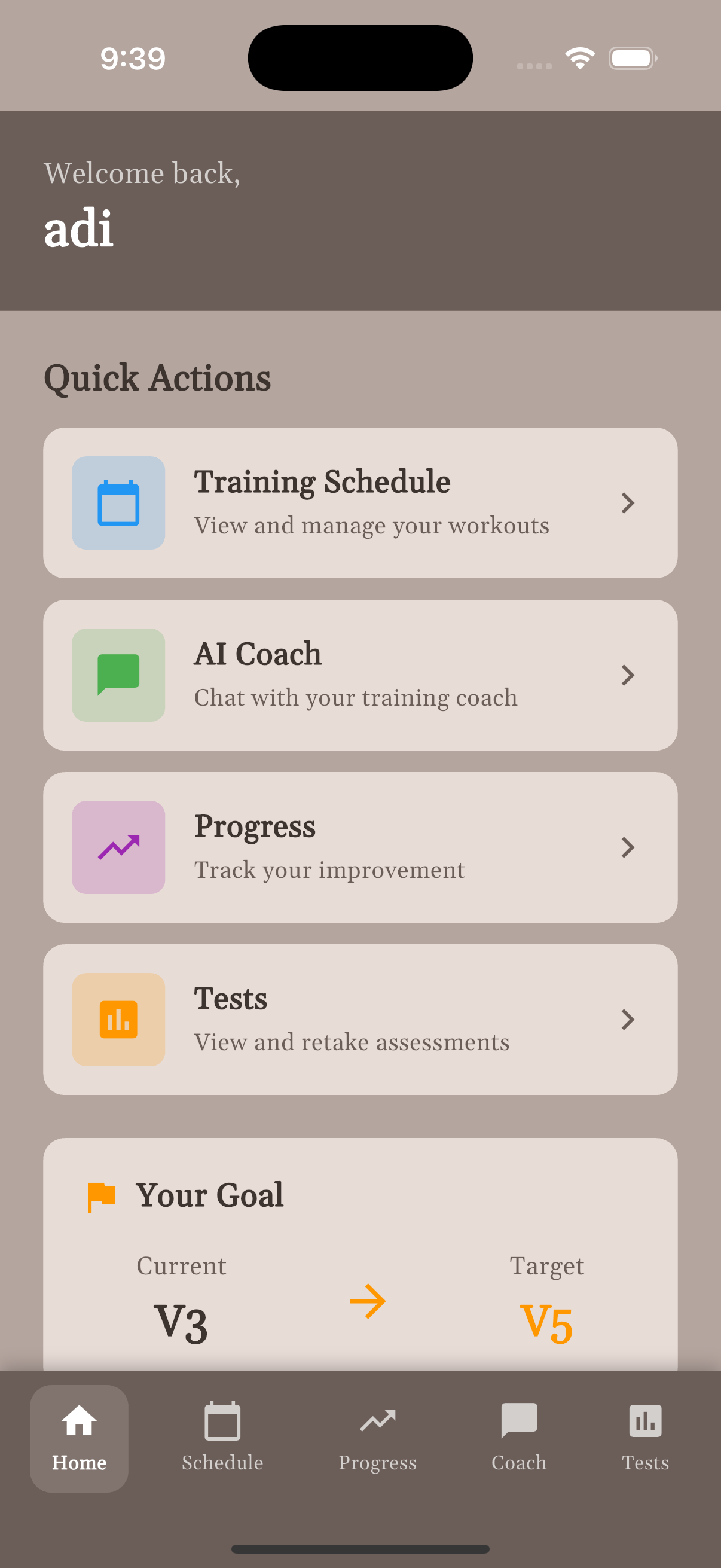
AthleteAI provides professional-grade, sport-specific training programs powered by AI. Currently focused on rock climbing, it:
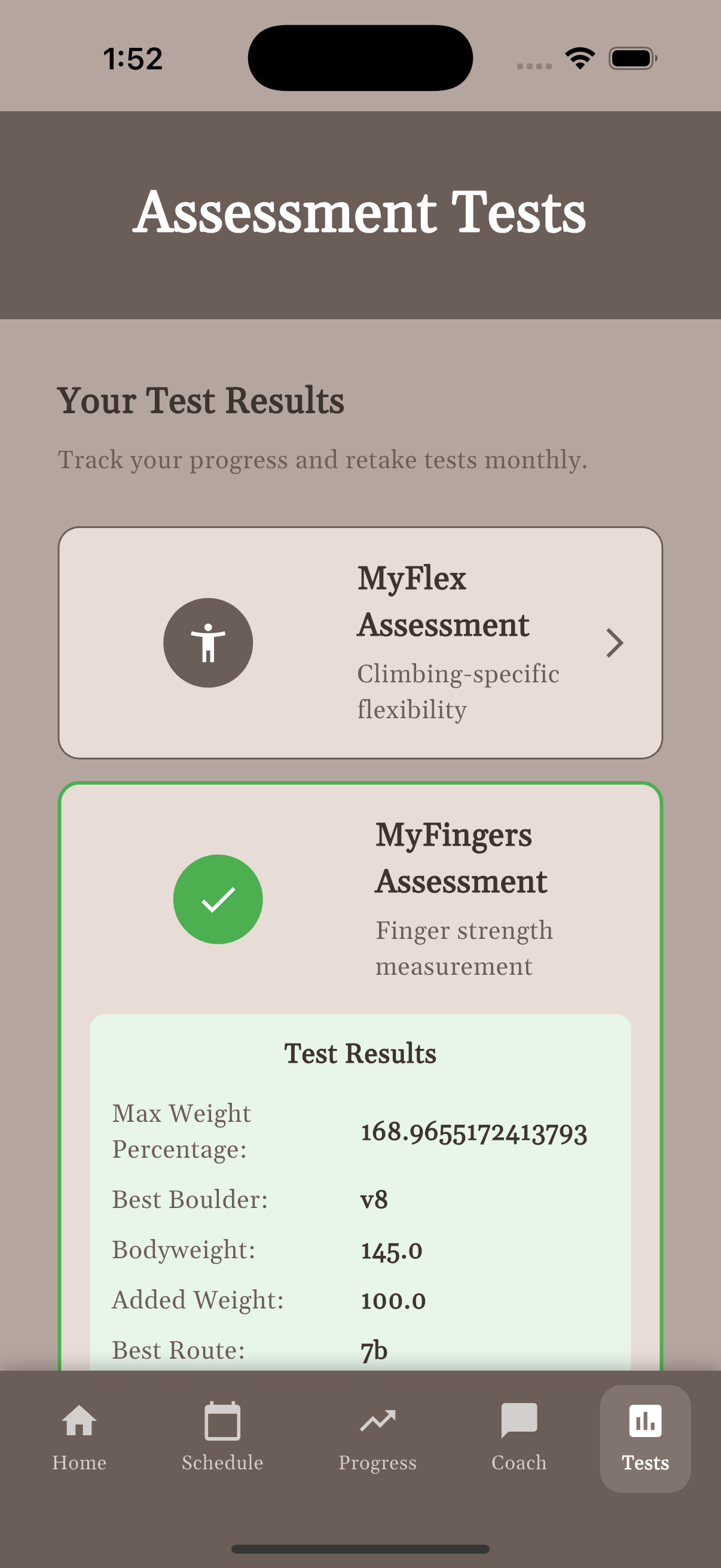
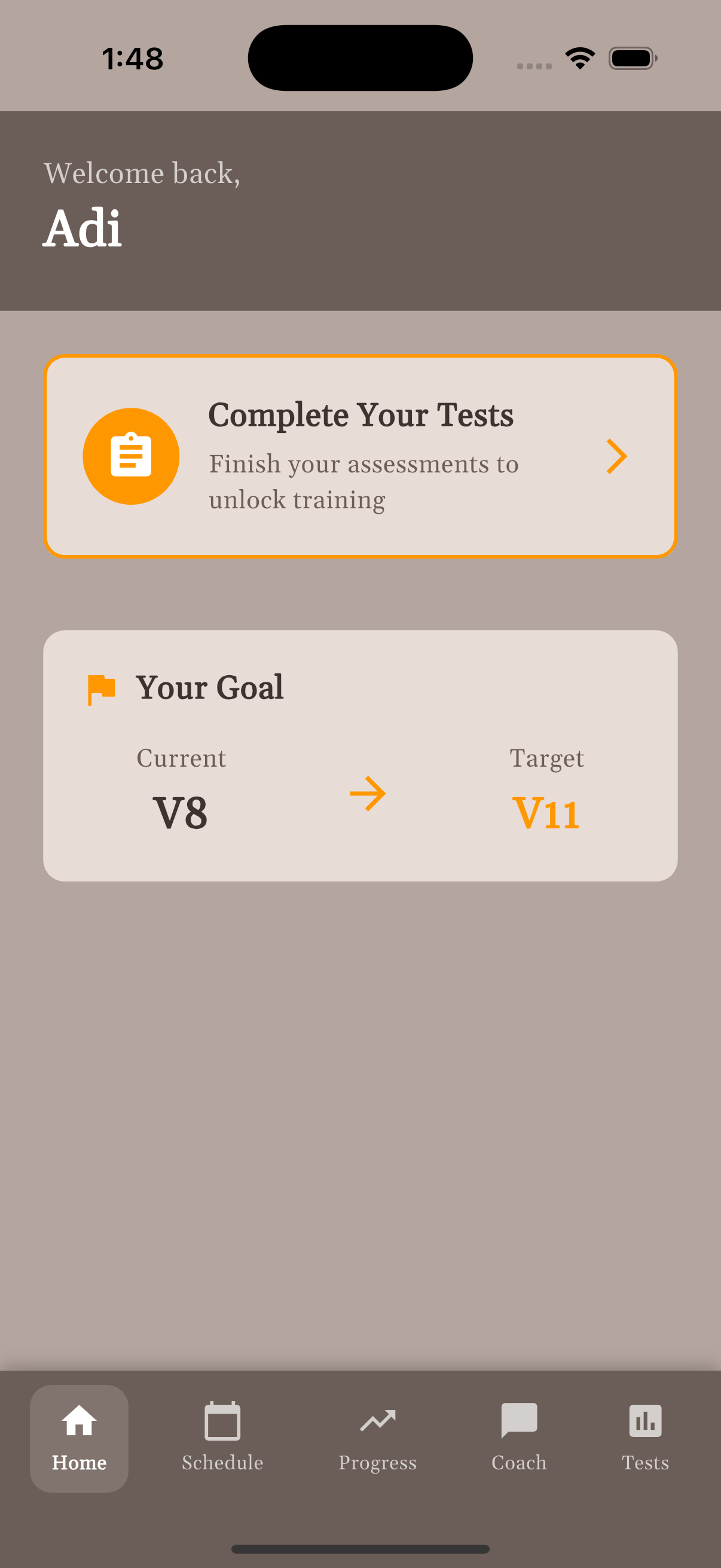
- Assesses athletes using validated protocols (flexibility, finger strength, pinch grip) adapted from professional training facilities
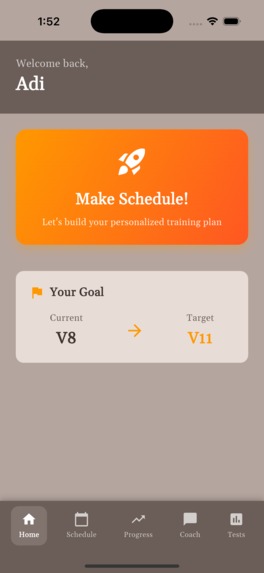
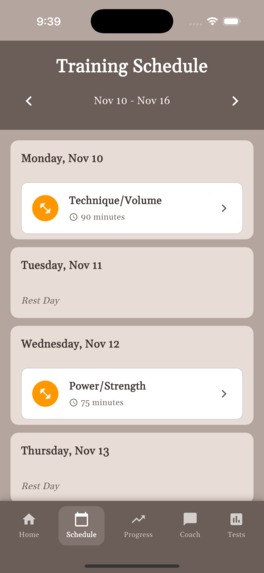
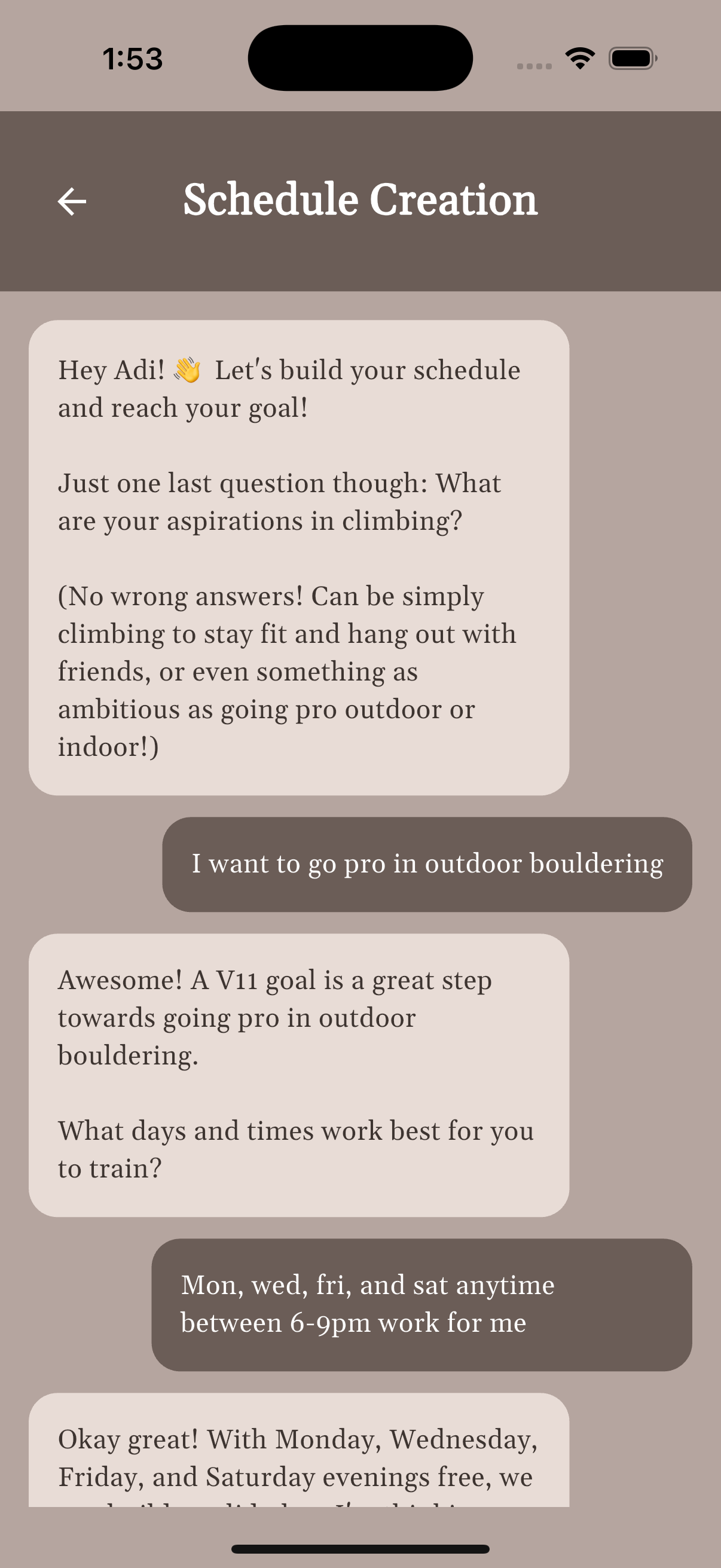
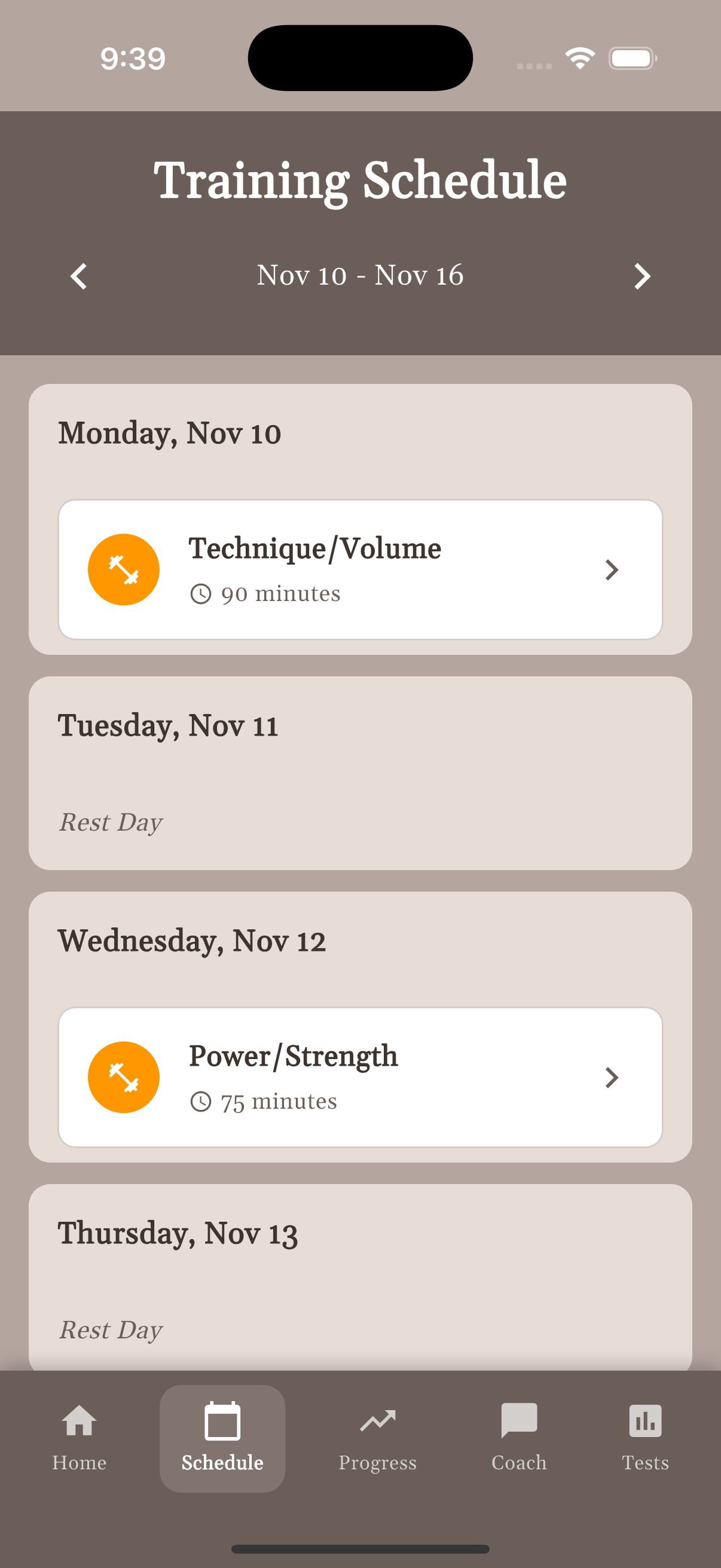
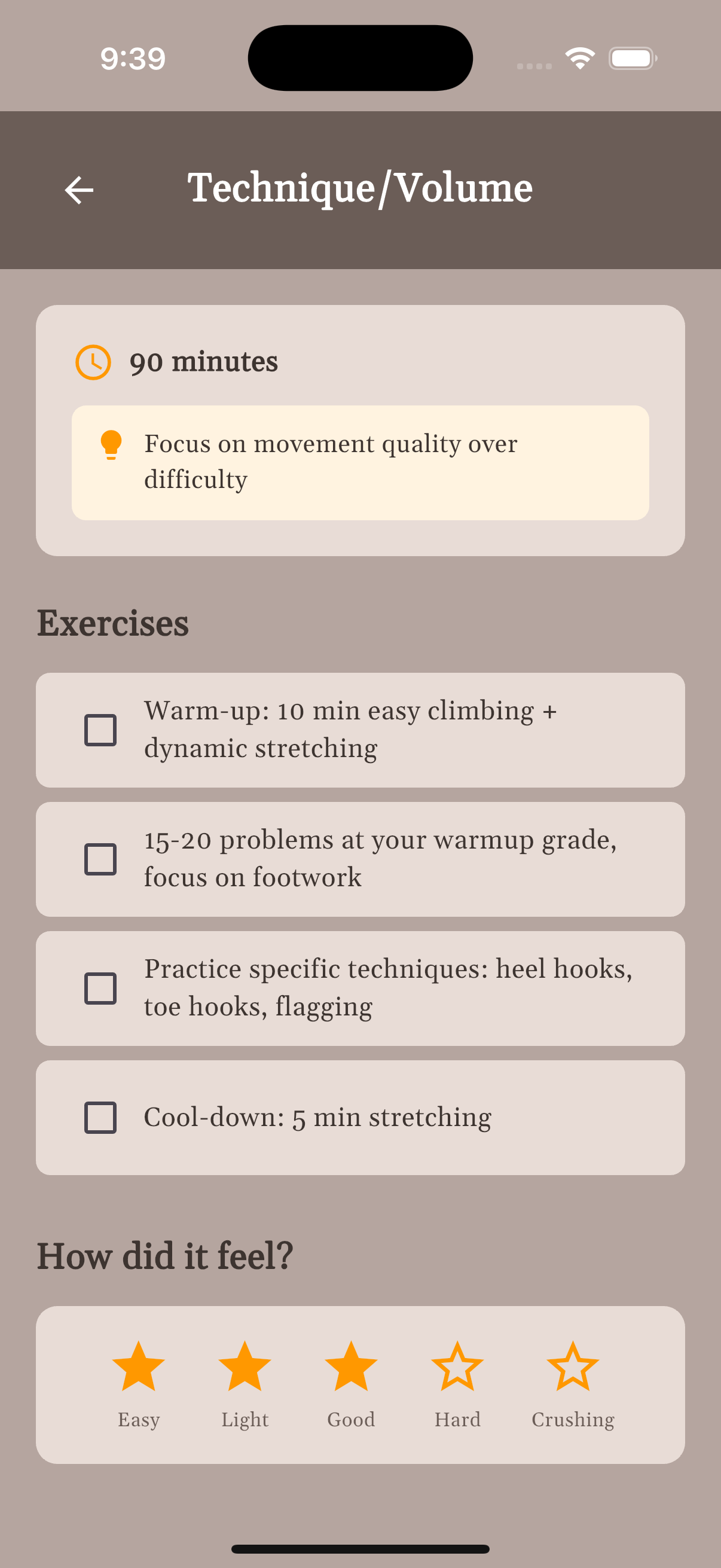
- Generates personalized schedules based on comprehensive data: current ability, goals, injury history, test results, availability, and personal aspirations
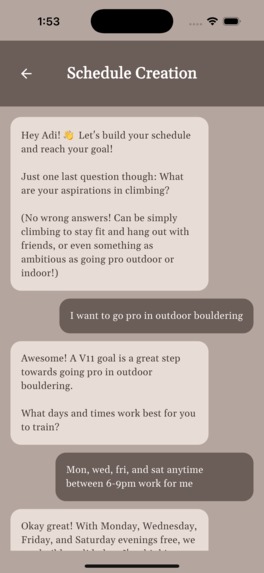
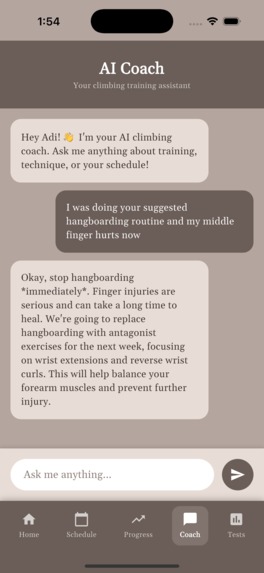
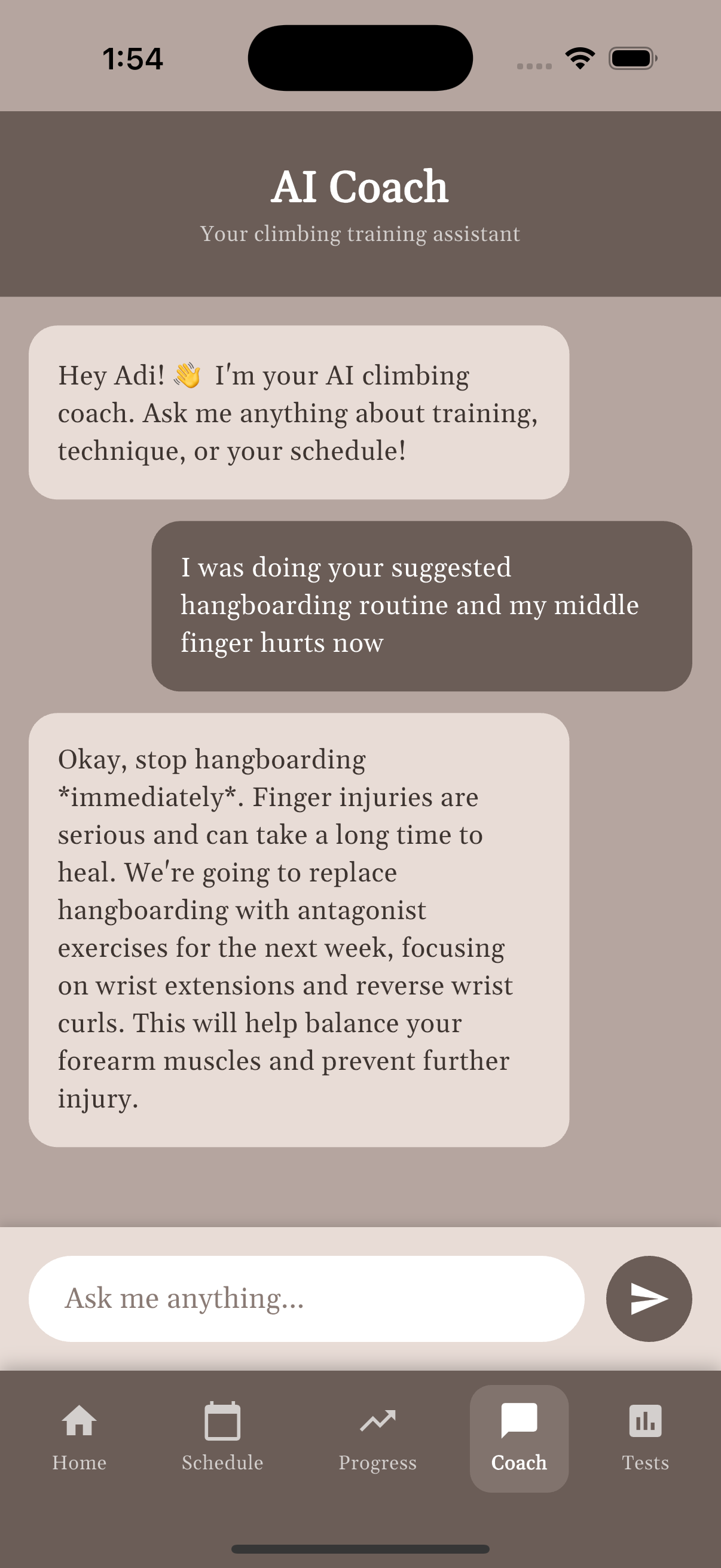
- Provides AI coaching that's contextually aware - not generic advice, but specific guidance based on the athlete's profile and progress
- Adapts dynamically - users can reschedule sessions and the AI automatically adjusts the program to maintain training goals
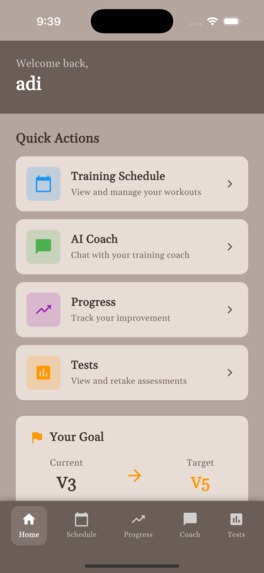
- Tracks progress through interactive dashboards and session completion metrics
The app guides users through validated assessment tests, builds their athlete profile, and uses AI to create periodized training plans that would normally require an expensive personal coach.
How we built it
Frontend: Built with Flutter for cross-platform mobile deployment, using GetX for state management and a carefully designed brown/taupe UI aesthetic for the climbing community. Backend: Firebase ecosystem for authentication (Firebase Auth) and real-time data storage (Cloud Firestore), enabling seamless sync across devices and robust user management. AI Integration: Integrated Google's Gemini API to power the intelligent coaching system. The AI receives comprehensive context including:
User's physical stats and climbing grades Detailed test results (8+ measurements from flexibility tests, grip strength data) Injury history and limitations Training aspirations and availability Historical progress data
Assessment Protocols: Researched and implemented industry-standard climbing assessments inspired by facilities like Lattice Training, adapting professional testing protocols into a mobile-friendly format. Data Architecture: Designed a flexible Firestore schema that handles:
User profiles with nested test data Dynamic schedule generation and modification Session tracking with completion status Progress analytics over time
Challenges we ran into
- Making AI advice non-generic and case-specific: The biggest challenge was preventing the AI from giving generic "climb more" advice. Solution: Built a comprehensive context system that feeds the AI with 15+ data points including specific test scores, injury patterns, and climbing-specific constraints. The AI now provides targeted recommendations.
- Realistic and accessible training plans: Balancing effectiveness with accessibility was crucial. We couldn't create plans requiring specialized equipment or 4-hour sessions.
- Complex state management: Managing the flow from onboarding → testing → schedule generation → training required careful state orchestration. Used Firebase listeners and GetX reactive state to keep everything in sync.
- Assessment accuracy: Converting professional testing protocols to self-administered mobile tests while maintaining validity.
- Schedule adaptability: Allowing users to skip sessions without breaking their training progression required implementing a smart rescheduling algorithm that redistributes training volume while respecting recovery principles.
Accomplishments that we're proud of
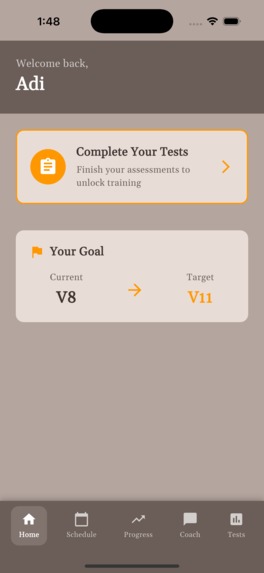
Real assessment integration: Successfully adapted professional testing protocols into an accessible mobile format Intelligent AI coaching: Built a context-aware AI system that provides legitimately useful, specific advice rather than generic motivational content Complete user flow: From zero to trained athlete - authentication, onboarding, testing, schedule generation, and progress tracking all work seamlessly Production-ready code: Clean architecture, proper error handling, and scalable Firestore schema Smart feature locking: Implemented grade-based requirements (beginners vs. advanced athletes get different test requirements) Dynamic scheduling: Users can reschedule sessions and the system intelligently adapts
What we learned
AI prompt engineering matters: The difference between generic and useful AI coaching comes down to context structure and prompt design User flow is crucial: Tested multiple onboarding flows before landing on the current seamless experience Sports science is complex: Learned about periodization, training loads, recovery principles, and sport-specific adaptations Firebase is powerful but nuanced: Learned to optimize Firestore queries and structure data for real-time updates Flutter for production: Deepened understanding of state management, navigation, and building responsive UIs
What's next for AthleteAi
Immediate future:
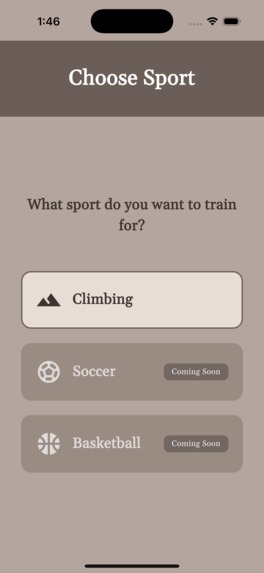
Expand to more sports: Soccer, basketball, boxing, swimming, running, weightlifting Partner with professional coaches to create AI "coach personalities" - imagine training with an AI version of your favorite pro athlete coach Implement video analysis using computer vision to check exercise form Add social features - training buddies, shared goals, community challenges

Log in or sign up for Devpost to join the conversation.