Inspiration
Many of the biggest innovations in tech happened because the right people met at the right time. But for most students, these opportunities are rare and often left to chance. The problem? Finding the right collaborators is difficult. Regardless, Athenid aims to make these connections intentional, ensuring that students with shared interests and complementary skills find each other.
Working alone can be rewarding, but it's not how the real world works. In every tech company, in every startup, in every breakthrough, there was a team. Whether they’re looking to collaborate on structured challenges or launch their own projects, Athenid provides the space, tools, and network to turn their ideas into reality.
Ultimately, Athenid empowers students to not only build for themselves but also to create solutions that impact their communities and the wider world. By turning ambition into action and collaboration into meaningful change, the platform paves the way for the next generation of innovators, problem-solvers, and leaders.
What it does
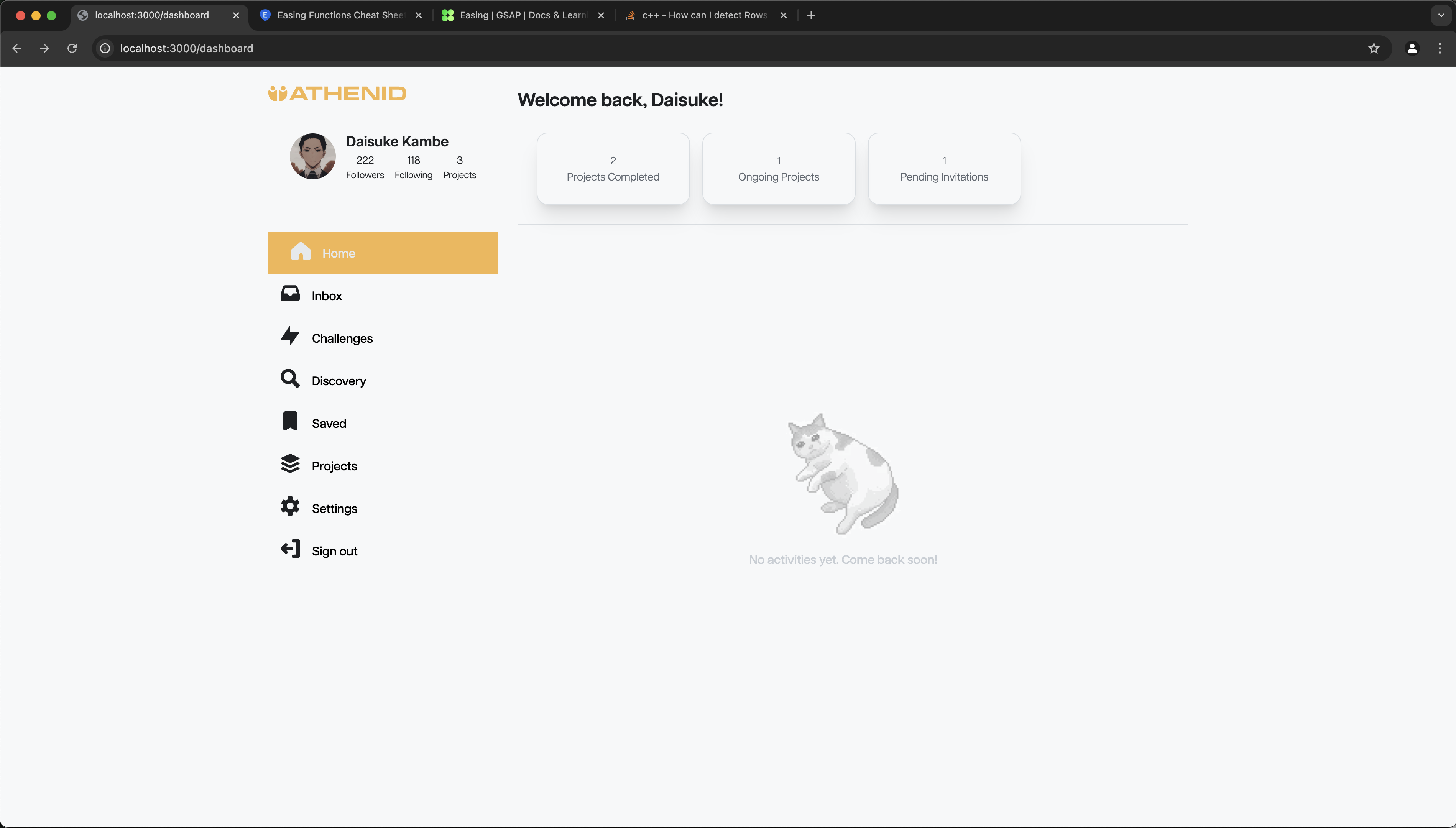
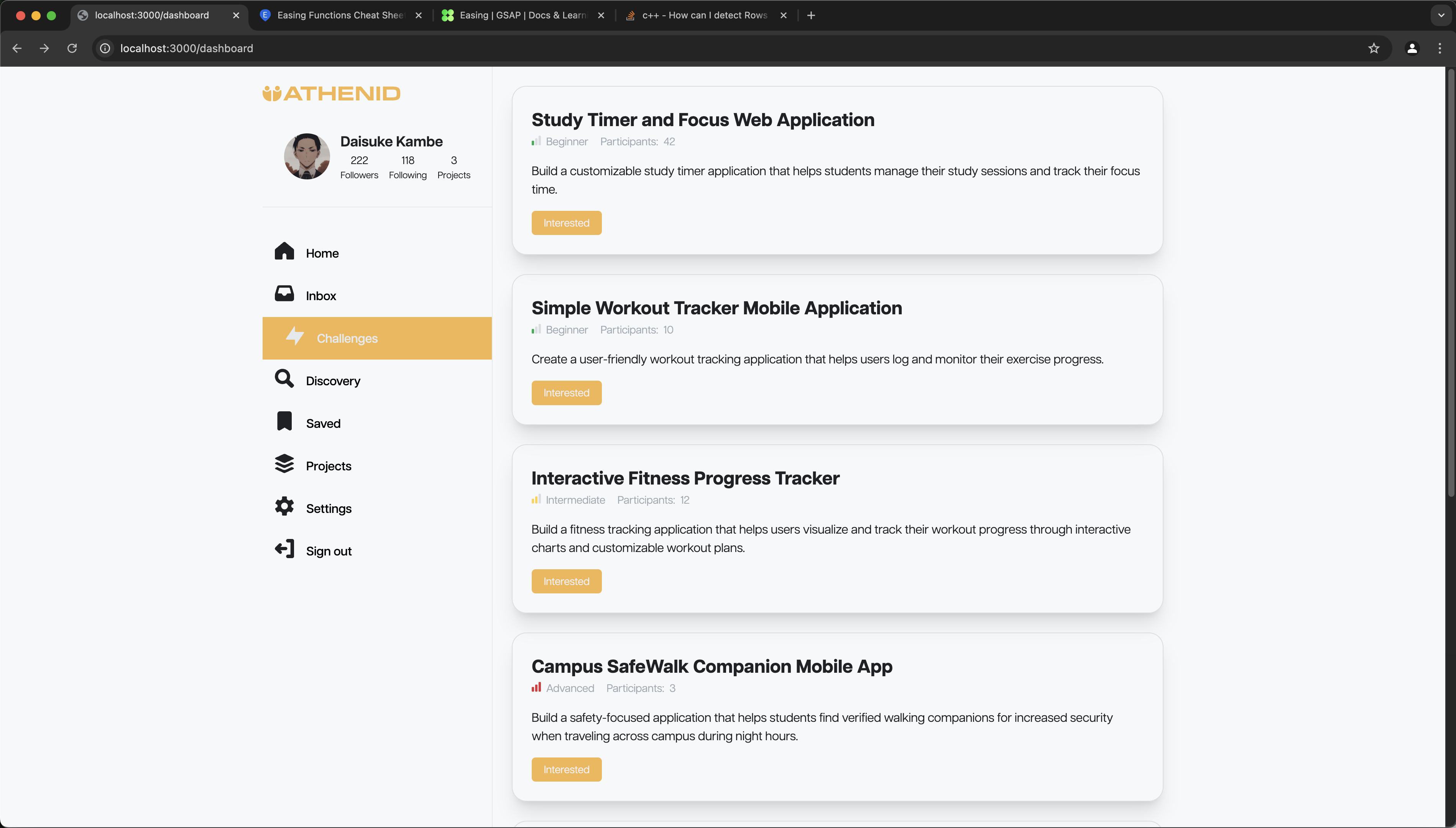
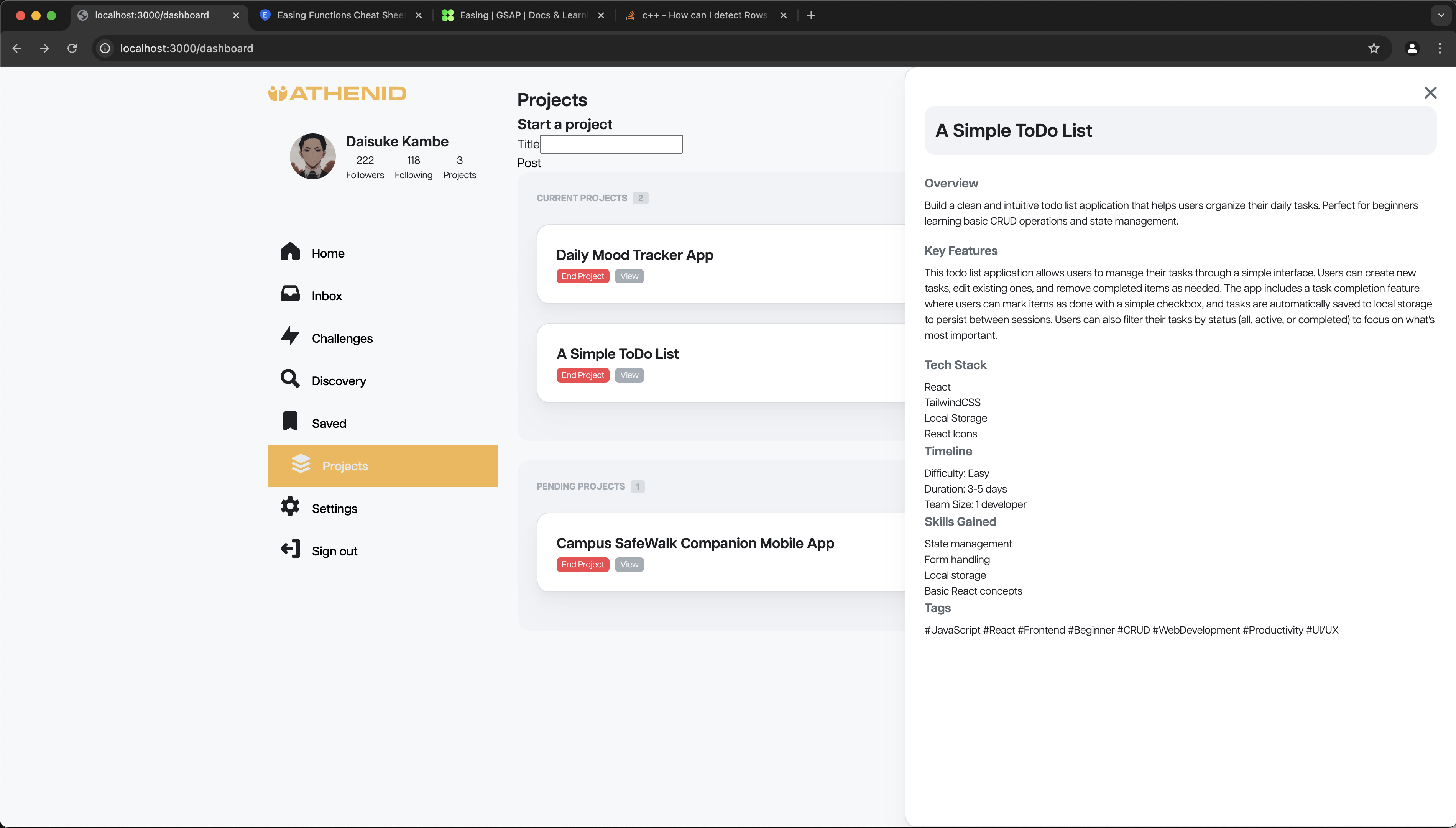
Students in different universities register with their school email address (ie @ualberta.ca) and a link is sent before they can register successfully. Students can then login and participate in completing challenge projects with a clear outcome curated by Athenid. These are ideal for students that are just starting out in creating projects collaboratively. Although projects can be complete solo, Athenid encourages students to complete them collaboratively as the core of the app is to catalyze interactions and meetings that are otherwise unlikely to have occurred. Athenid's matching algorithm helps pair students with similar skill level while allowing some flexibility. This will be achieved through opencv to parse images and tesseract for OCR to analyze student's uploaded information such as resume and class schedule. A student will receive a notification in their inbox about a match in which case they will be able to communicate with the potential collaborator to further ascertain their compatibility. Additionally, students can post their own projects or startup ideas to find co-founders and collaborators in a community of vibrant and passionate fellow thinkers, creating opportunities to connect with like-minded individuals who share their interests and goals.
How we built it
The designs and mockups were done by hand and the majority of the UI just came together as I coded. The frontend was done through Nextjs and React. There are two backend services one is the node express server and the other is done in python with fastapi. The fast api service is mainly for computer vision and OCR functionalities. The node server were for more with communicating with the database which was Supabase.
Challenges we ran into
The part that took the longest to debug was connecting my client between my backend services ie making sure that files passed around are in the correct format so they can be parsed and analyzed appropriately. I also had a hard time working with opencv and tesseract as I've never done it in this capacity before. Working with Supabase was tricky as I wasn't exactly sure why I couldn't get any data from it. It turns out I needed to create policies and determine which kind of user can query data. It was a lot of time wasted for a very minor issue.
Accomplishments that we're proud of
Being able to have a login and signout process and allowing users to create and join projects. I was also to connect the client and the two backend services (node and python) to receive user uploaded files such as resume and an image of their schedule which are then parsed by the python service through opencv and tesseract for OCR. Although none of these features is perfect, a lot of the overhead has been started and with enough time a viable version isn't far away. Additionally, I was also able to design a clean and intuitive UI.
What we learned
I learned the importance of planning the higher level components of an application. How I need to plan how data is stored in the database and how they are connected with each other through foreign keys. Ultimately, I learned that better is done than perfect. Now that I have this initial starting point for Athenid, it's just a matter of polishing and improving on top of it.
What's next for Athenid: Your Breakthrough Starts Here
There's a lot of potential for Athenid. With the foundation set for student registration, project challenges, and whatnot, the next phase of development would be polishing and improving on what's already been done. There is a lot of feature that weren't implemented in this hacked version such as allowing users to chat within the app. Integrating with OAuth authentication with the university would simplify signups and ensure data security and future version can support other students from different universities. I would also like to add gamified elements such as badges and ranks to increase engagement. I envision Athenid to evolve into a vibrant hub for student innovation and startup culture and to be the first point of contact for young innovators who are filled with ideas and are ready to bring them to life.
Built With
- axios
- express.js
- fastapi
- javascript
- nextjs
- opencv-python
- python
- react
- supabase
- tesseract
- zustand

Log in or sign up for Devpost to join the conversation.