-
-
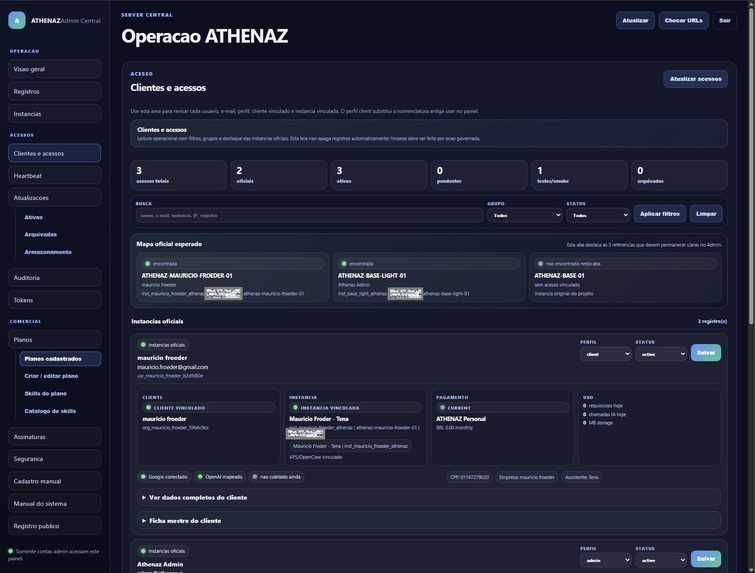
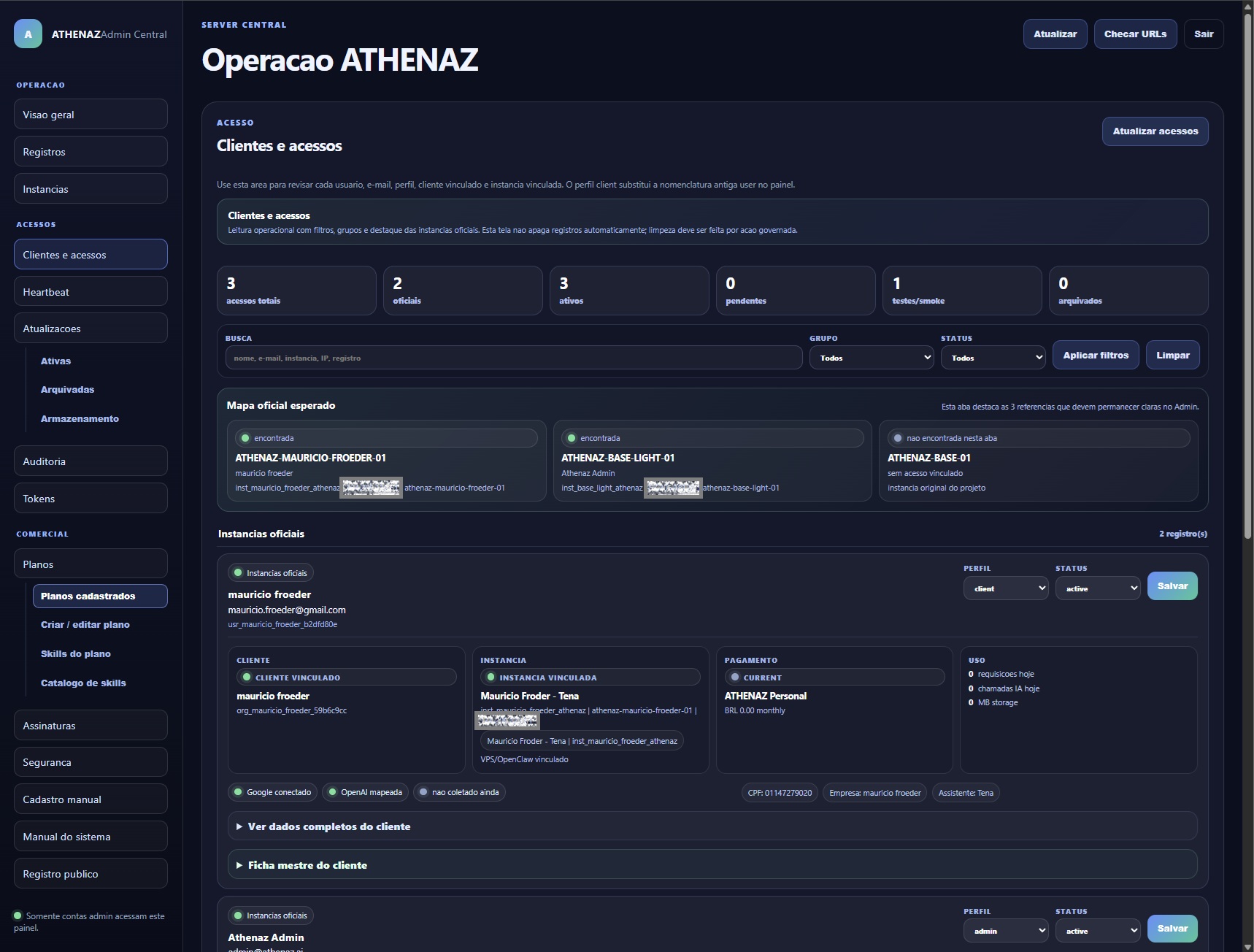
Administration Page Customers Manager
-
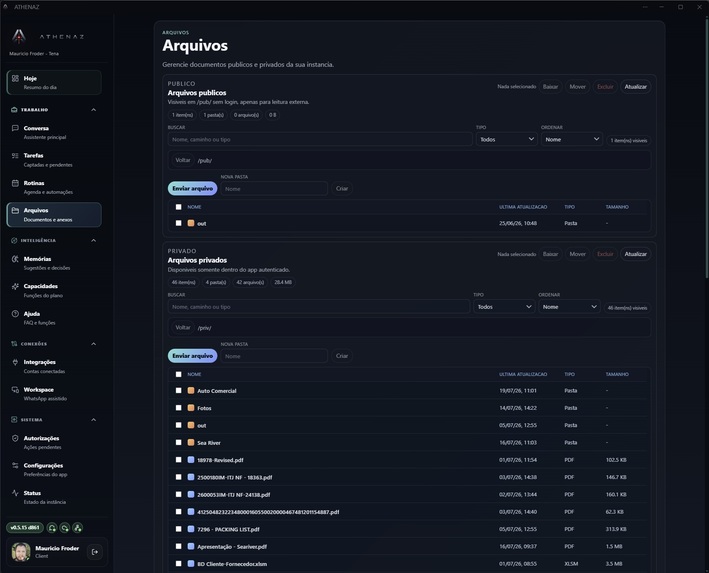
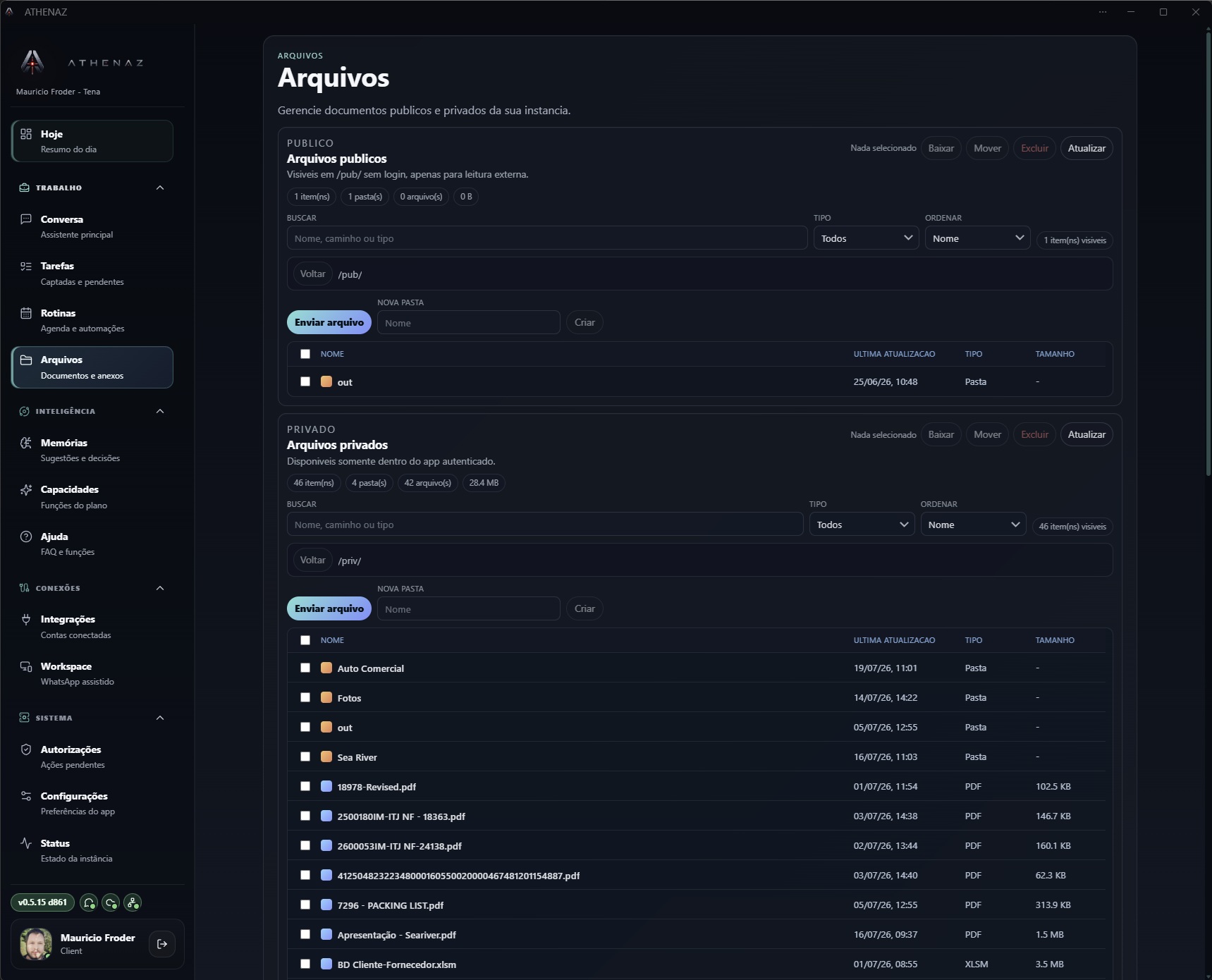
APP Page - User File Manager
-
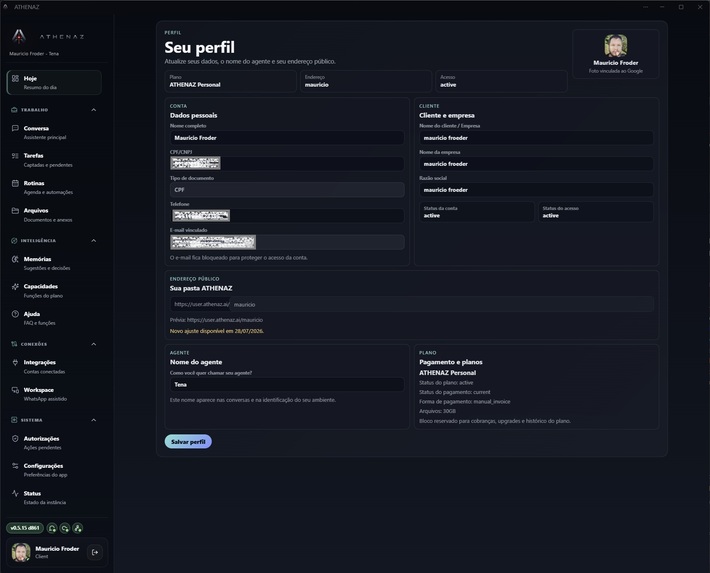
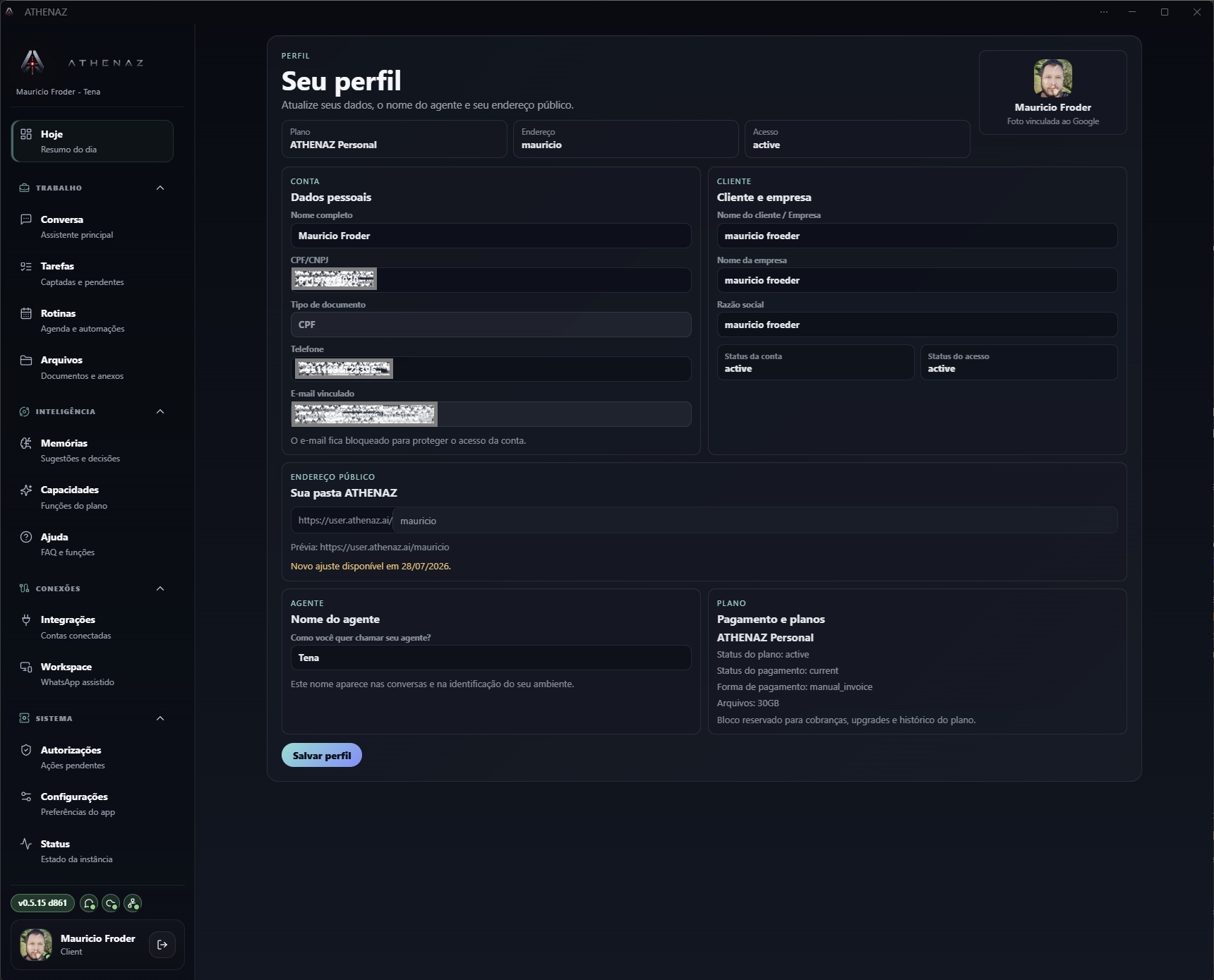
APP Page - User Profile
-
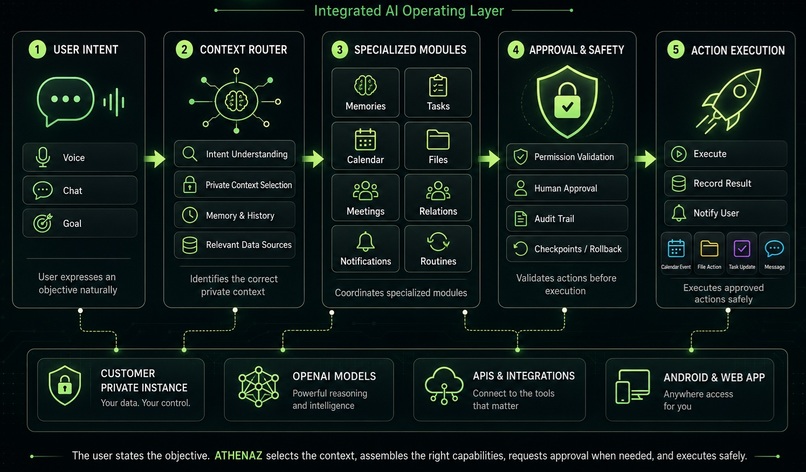
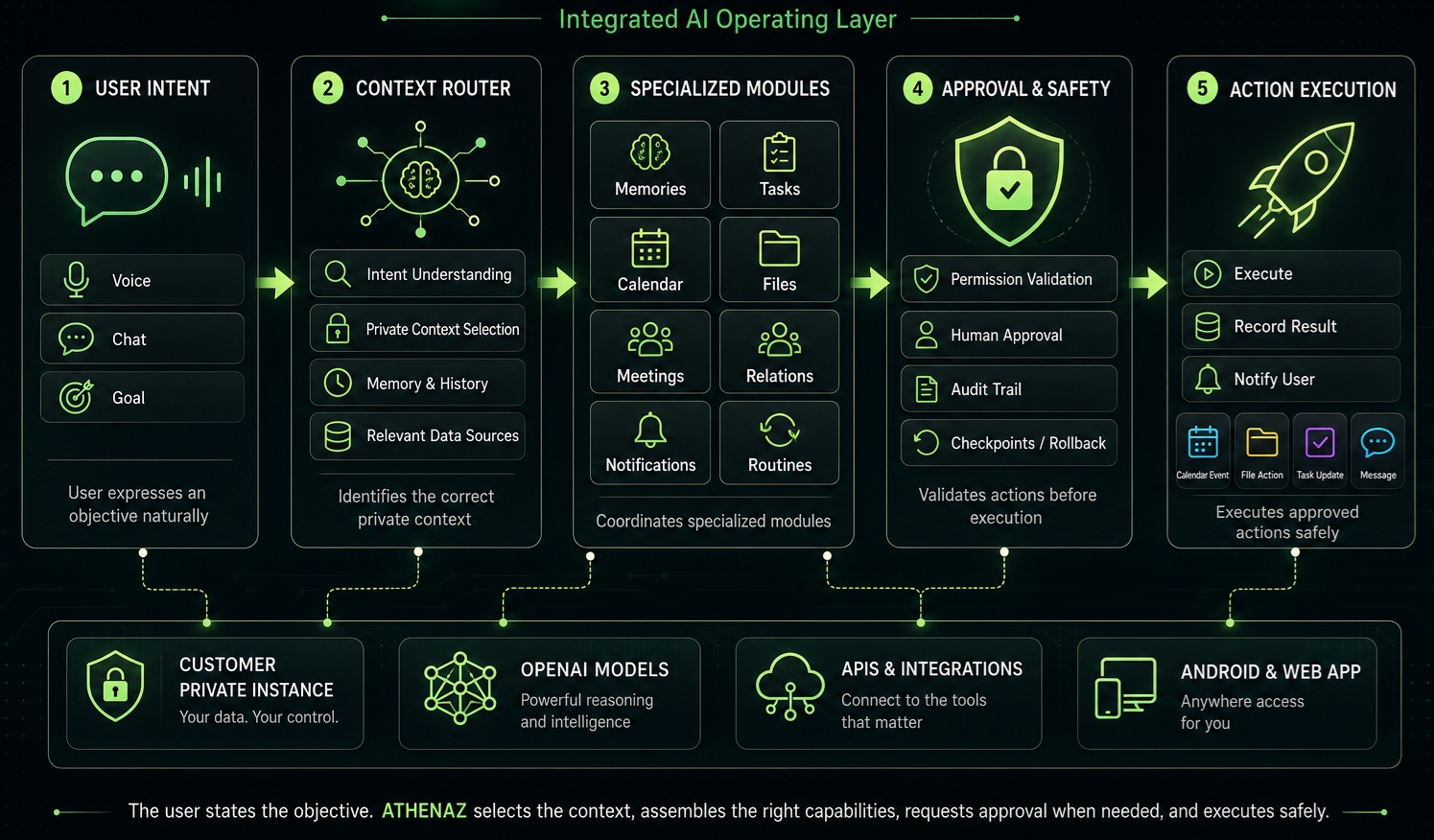
Full Diagram to understanding Athenaz
-
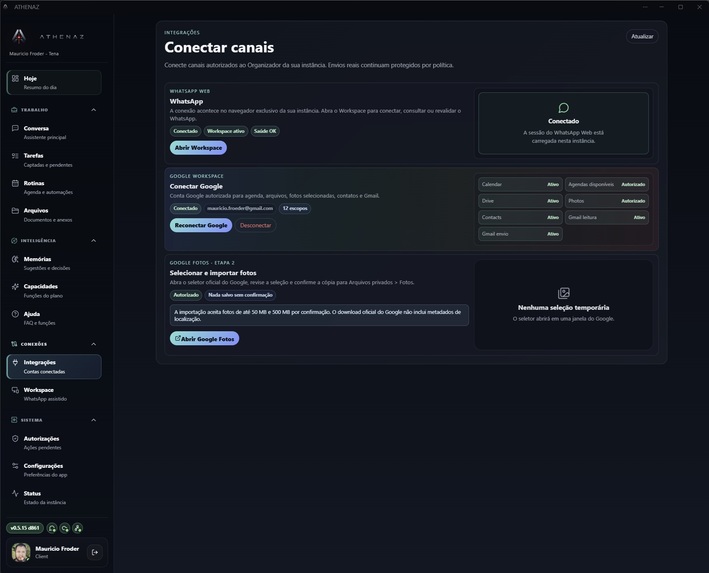
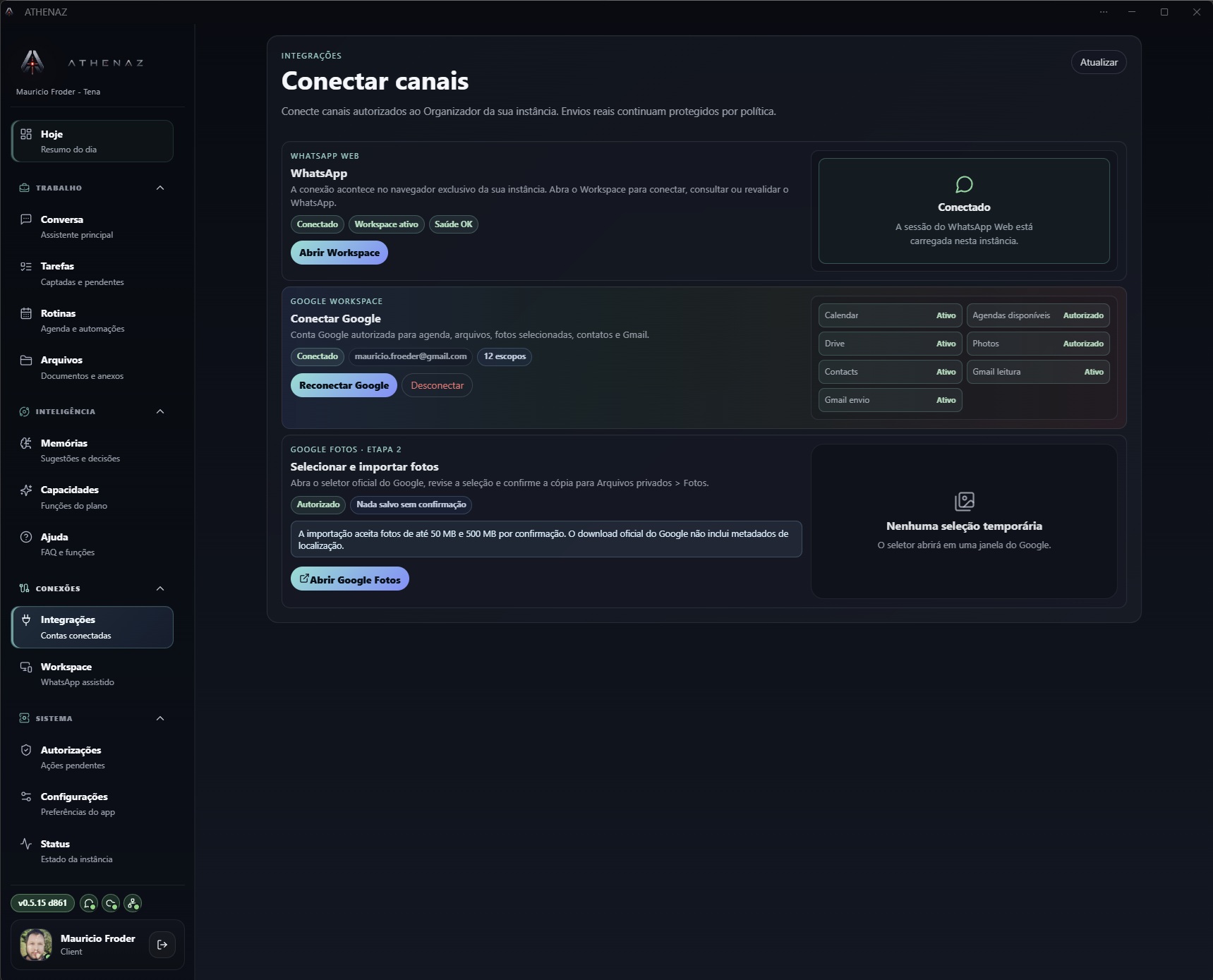
APP Page - Integration Page
-
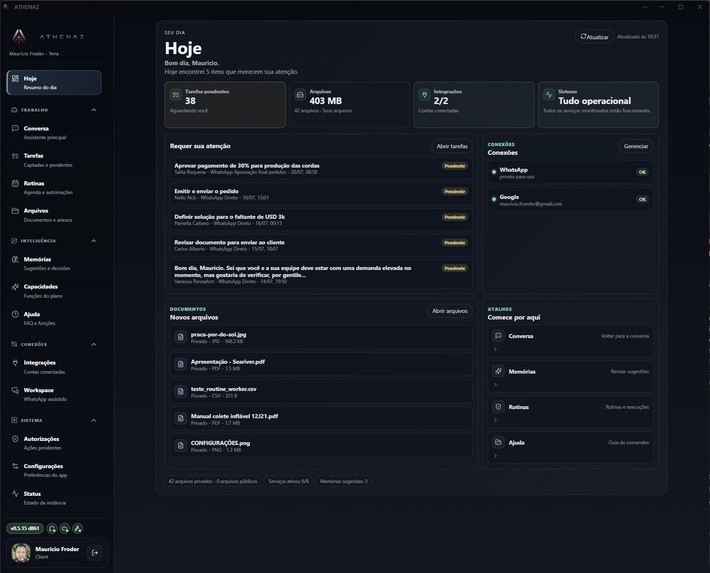
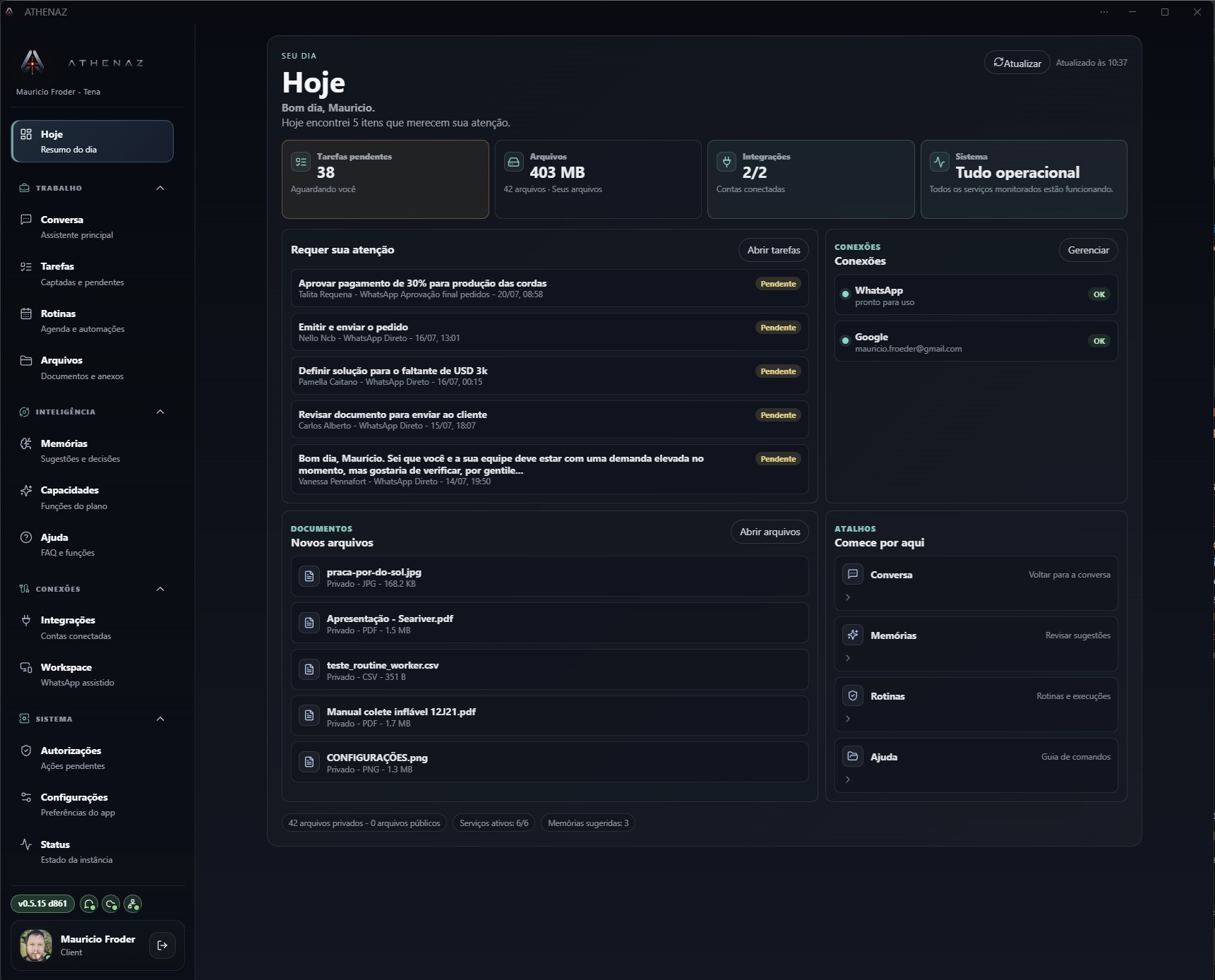
APP Page - Quick today's page
-
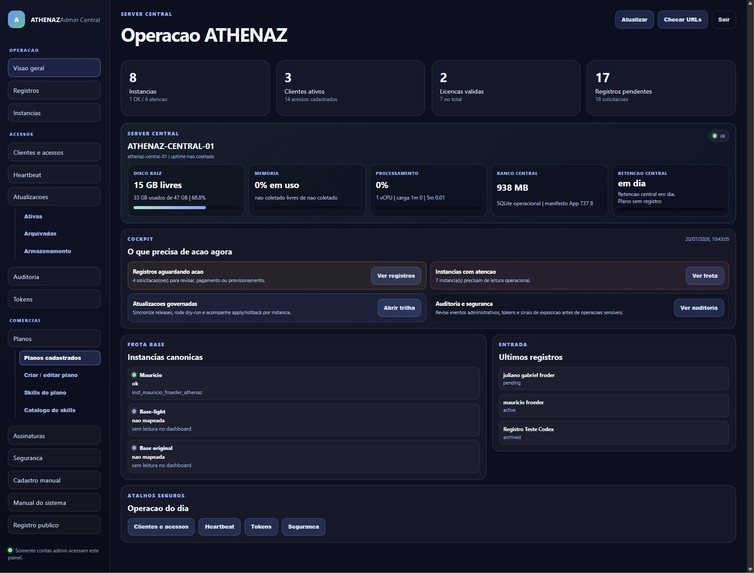
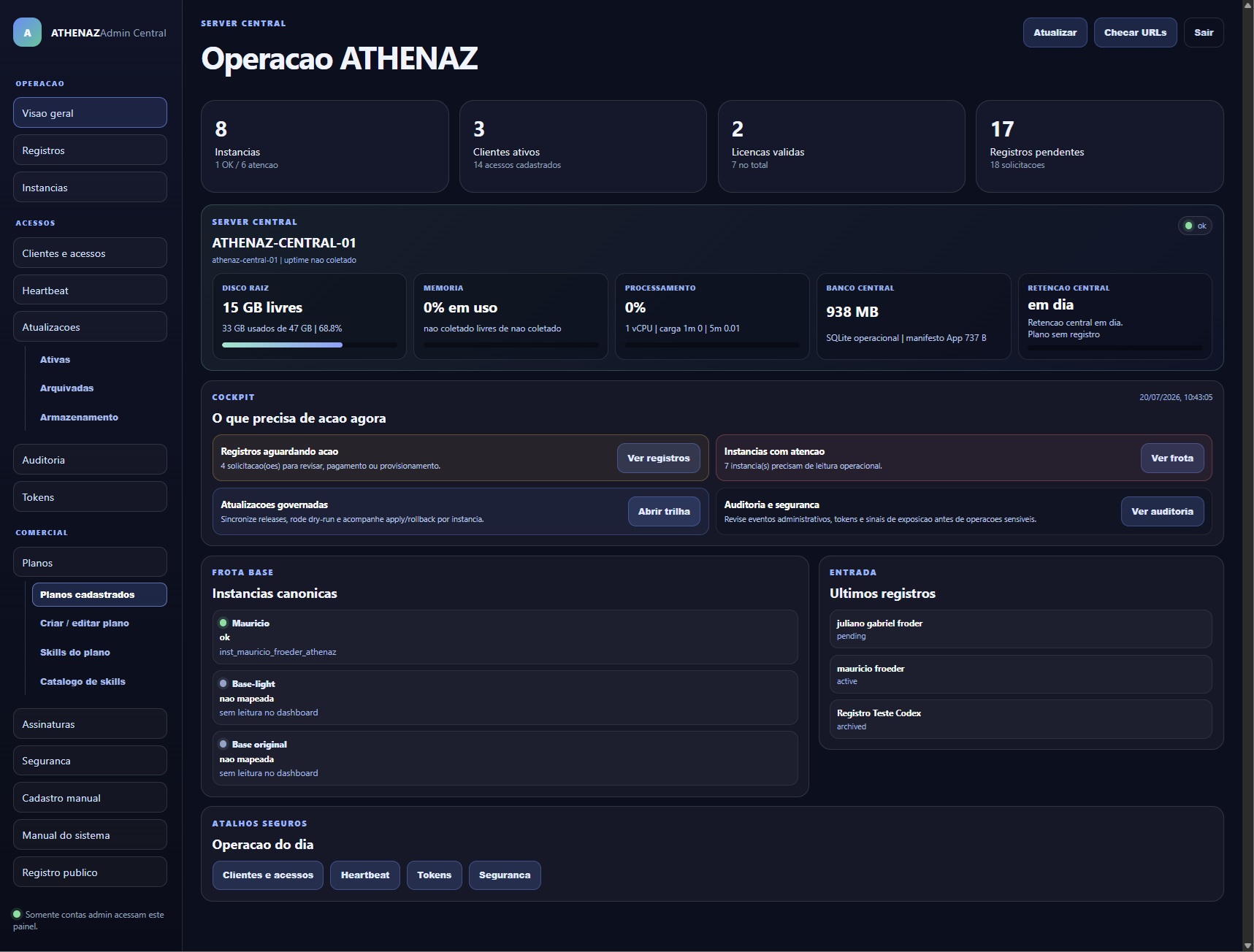
Adminsitration Page - Overview
-
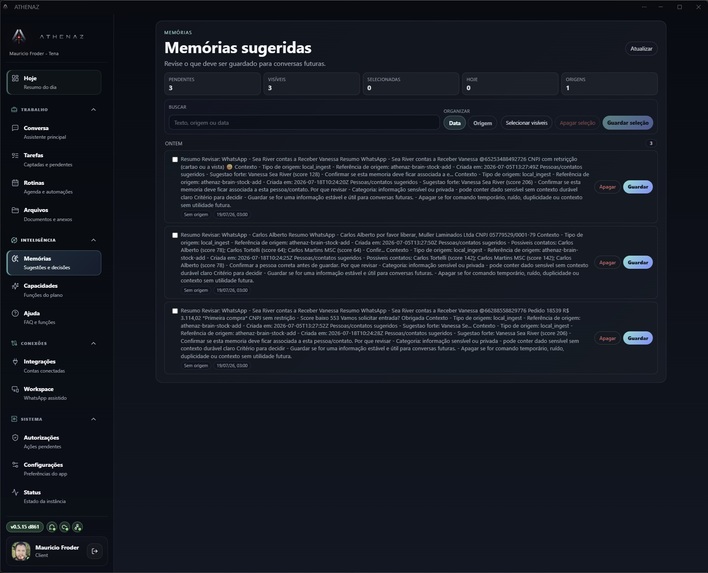
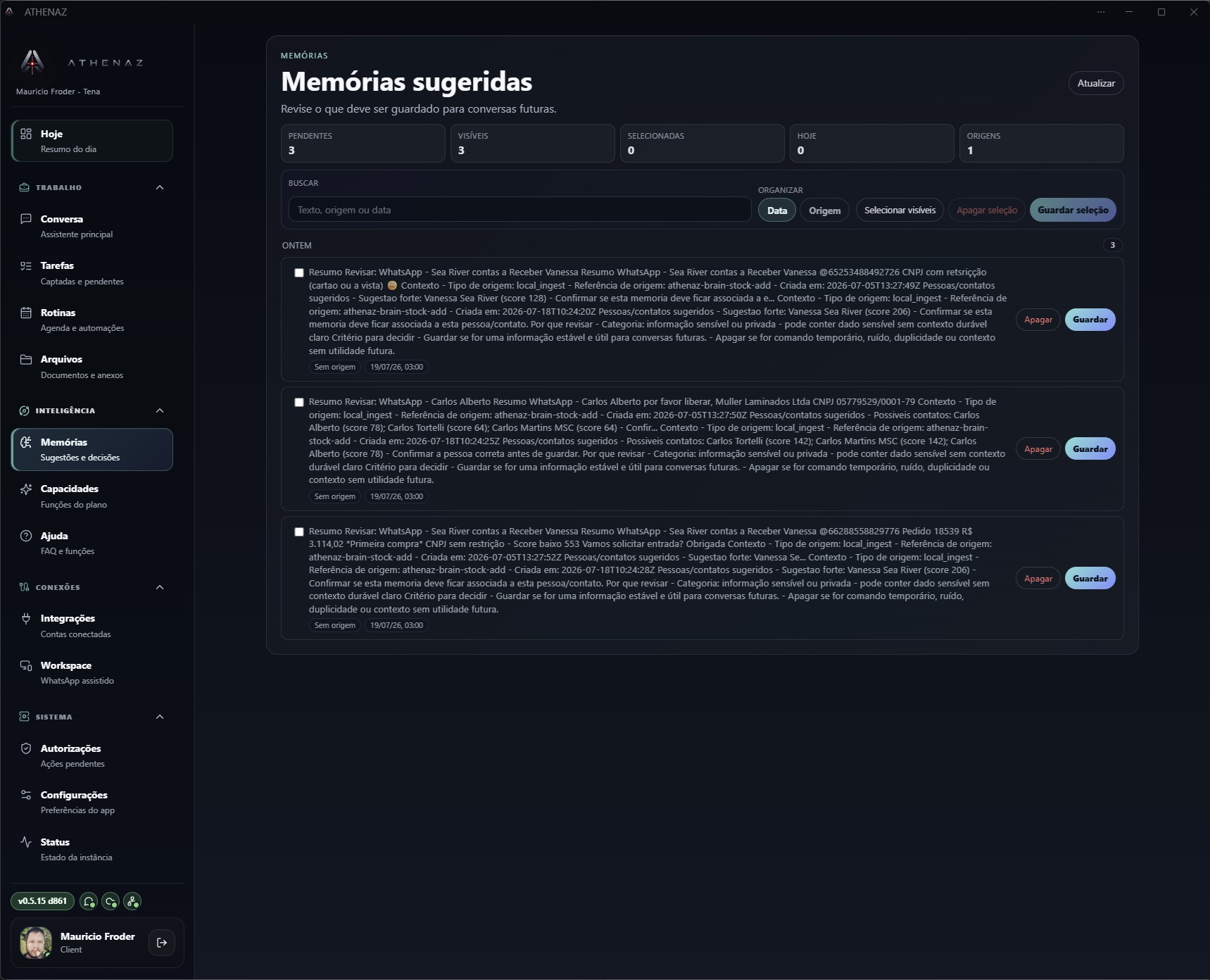
APP Page - Memories manager
-
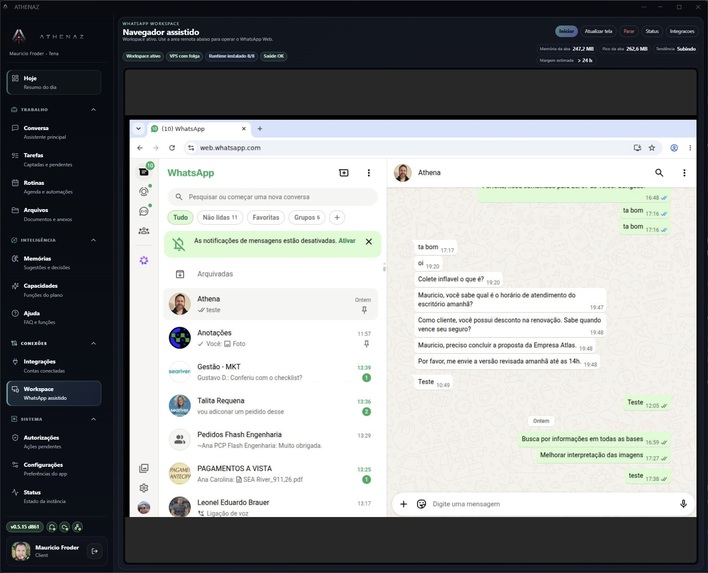
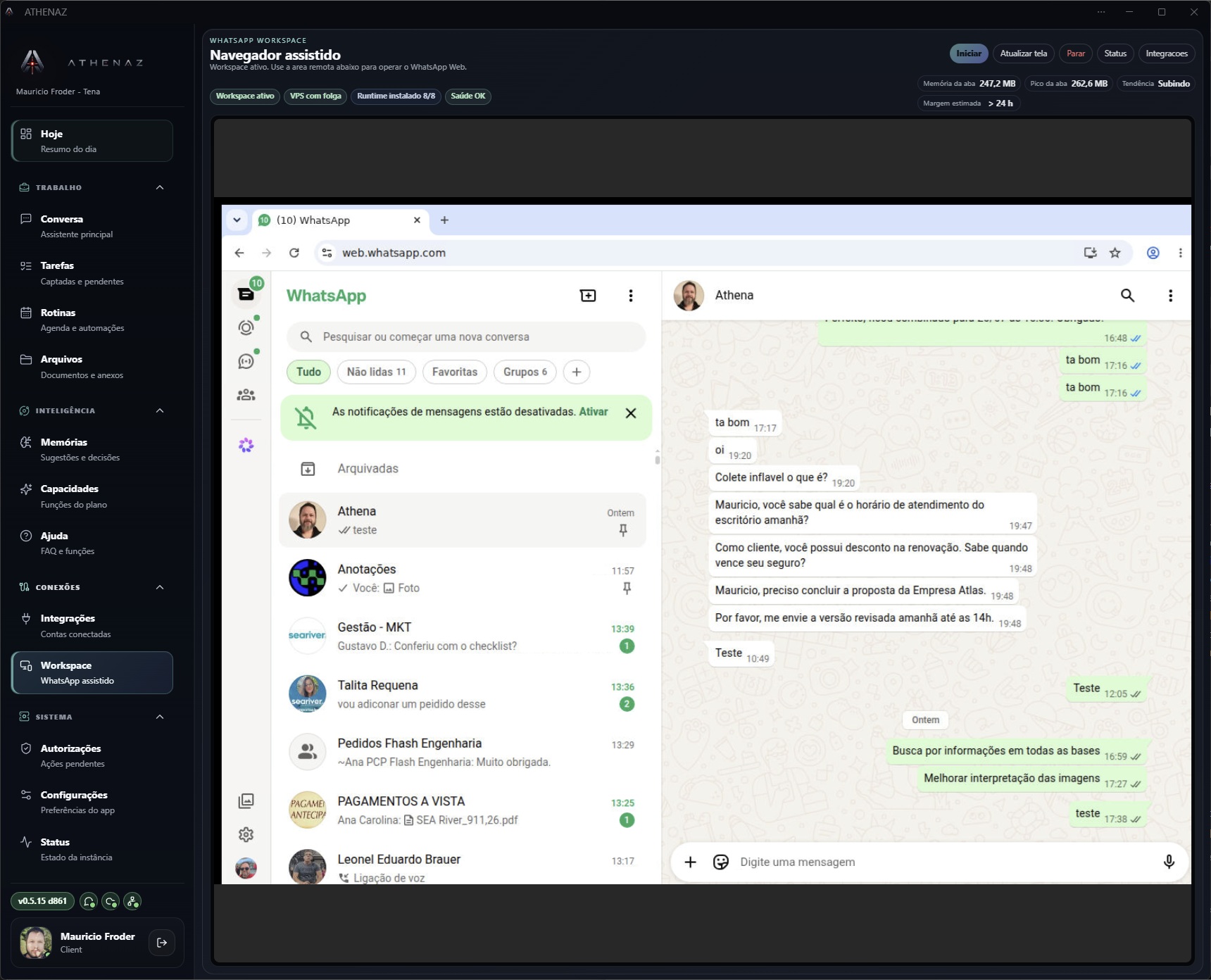
APP Page - Workspace (ATHENAZ can work in websites at customer VPS)
-
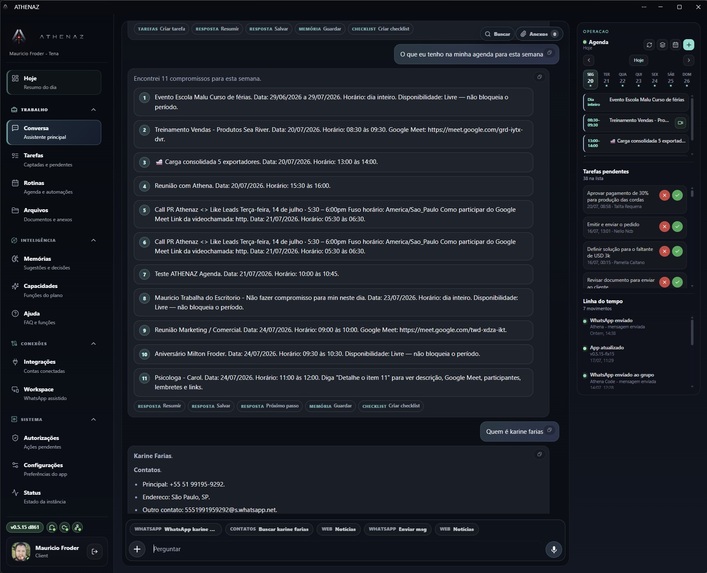
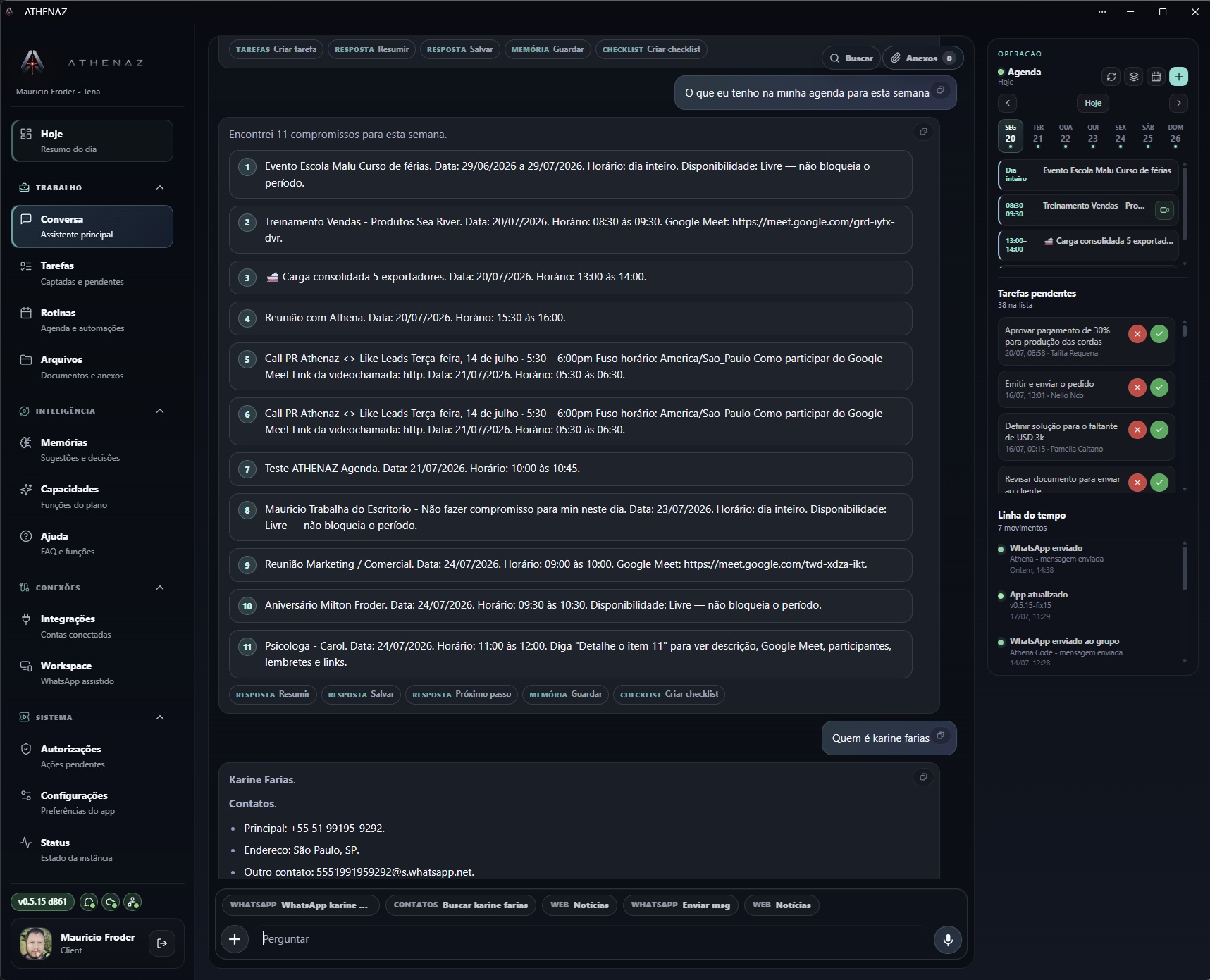
APP Page - First page chat
-
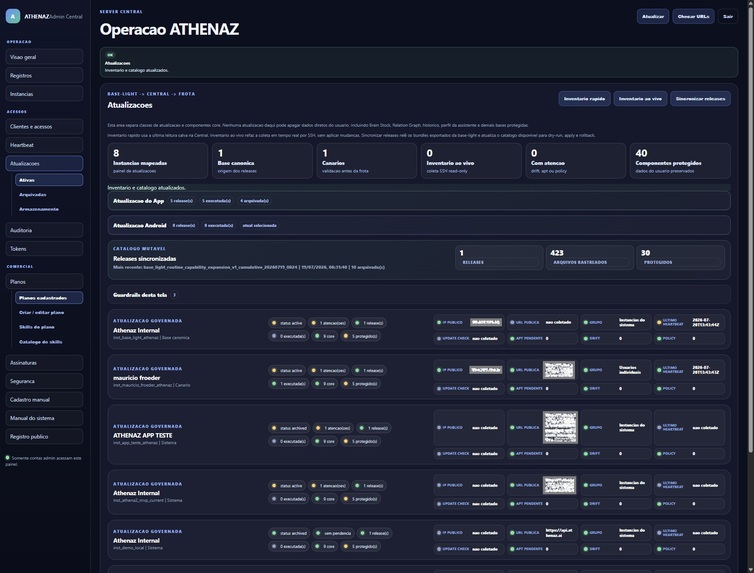
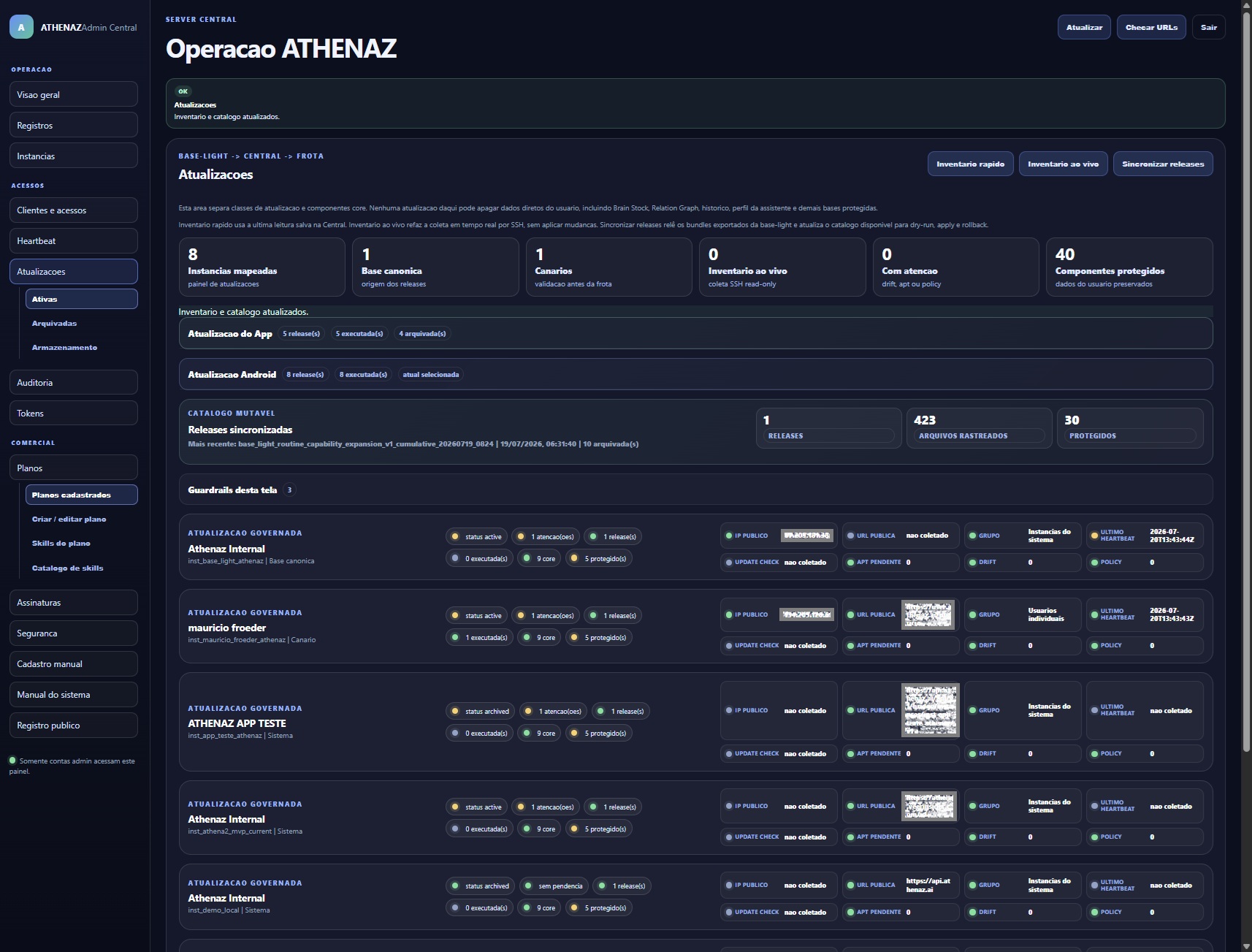
Administration Pago - Release and updated customers vps
-
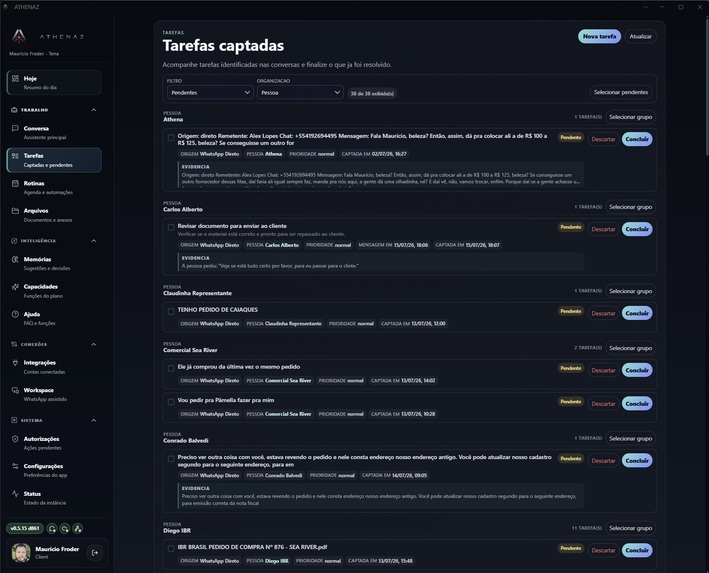
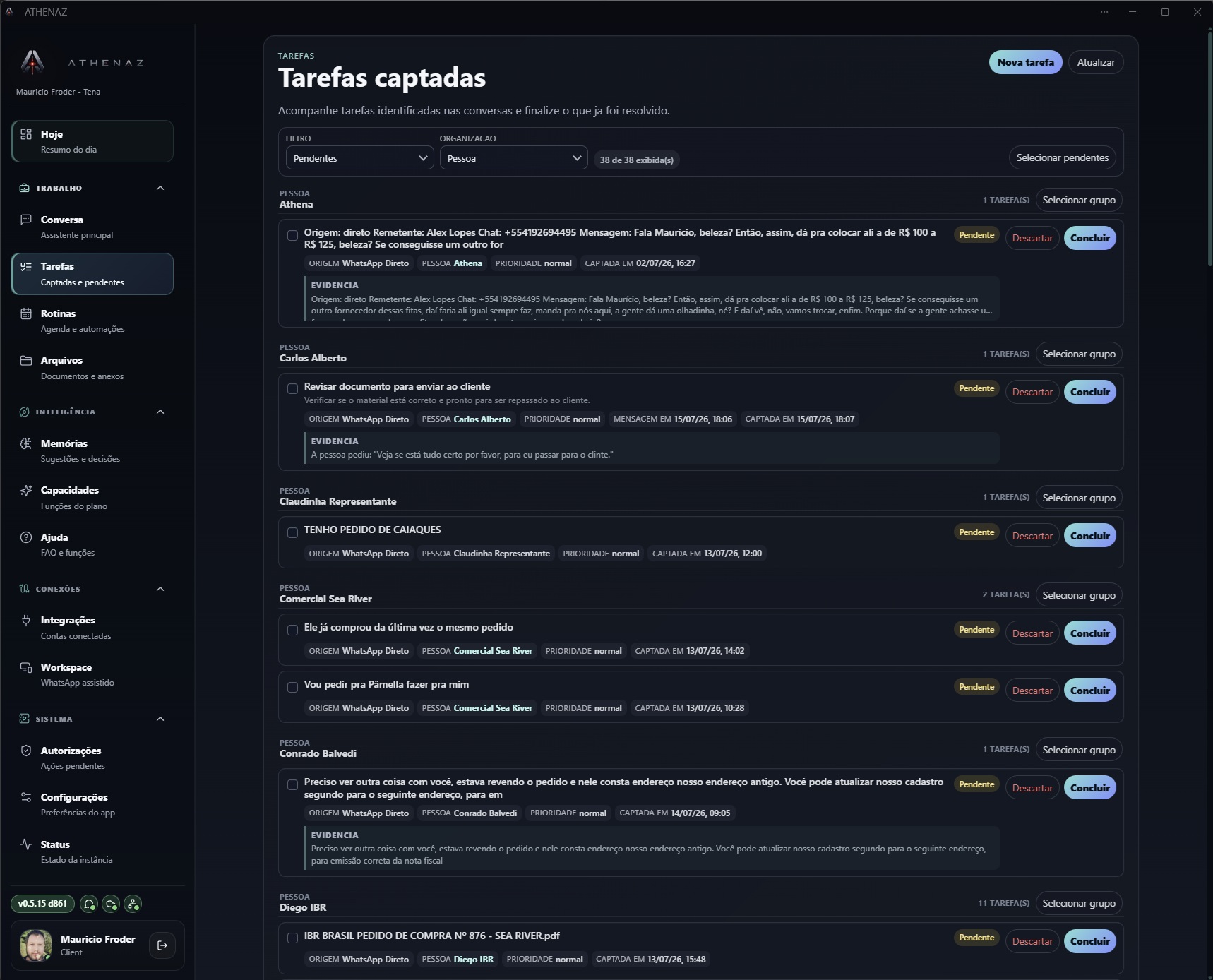
APP Page - Task manager
Inspiration
Most AI assistants can answer questions, but they still struggle to understand the full context of a person’s digital life and safely act across different systems.
Information is fragmented across conversations, files, calendars, tasks, contacts, messaging platforms, cloud services, and private infrastructure. Users must repeatedly explain where information is stored, which tool should be used, and what the assistant is allowed to do.
ATHENAZ was created to solve that fragmentation.
The goal is not to build another chatbot. The goal is to build an integrated intelligence layer that can understand natural-language intent, identify the correct private context, coordinate specialized modules, request approval when needed, and execute real actions safely.
What ATHENAZ does
ATHENAZ is a multimodal AI operating layer designed around a simple interaction model: the user describes an objective naturally, and the system determines which capabilities, data sources, and execution steps are required.
Instead of sending every request to one large generic context, ATHENAZ separates the process into layers:
- Understand the user’s intent.
- Identify the relevant private context.
- Select the appropriate specialized modules.
- Build a controlled execution plan.
- Validate permissions, resources, and dependencies.
- Request human approval for sensitive actions.
- Execute the action and record the result.
The current platform includes or is integrating capabilities for:
- conversational interaction through web and Android interfaces;
- local speech recognition and text-to-speech;
- contextual memory and user-approved long-term memories;
- tasks, routines, calendar suggestions, and notifications;
- contact and relationship intelligence;
- private file management and cloud integrations;
- meeting capture and processing;
- modular agents and specialized execution tools;
- audit trails, checkpoints, and human approval flows.
ATHENAZ is designed so that the Central service authenticates the user, while each customer’s isolated instance controls their private data, integrations, context, and operational events.
How we built it
ATHENAZ has been developed as a modular system rather than a single monolithic assistant.
The user experience is built with React and Vite and is packaged for Android with Capacitor. The backend uses Python services, isolated databases, modular workers, and a per-customer infrastructure model. OpenAI models are used for reasoning, classification, context selection, and orchestration, while some voice and data-processing functions run locally or inside the customer’s private environment.
Codex has been a central part of the development process.
It has been used to:
- inspect and understand a large multi-module codebase;
- implement new features across frontend and backend services;
- diagnose integration and infrastructure problems;
- create automated tests and audit reports;
- perform security and architecture reviews;
- reconcile contracts between independent modules;
- design reusable execution primitives;
- validate releases before deployment.
One of the most important architectural changes developed with Codex is the transition from scenario-specific routines to composable operations.
Instead of creating a unique executor for every command, ATHENAZ is being structured around reusable operations such as:
- locate a resource;
- list content;
- compare states;
- copy or replace data;
- validate results;
- register a checkpoint;
- recover safely when an operation fails.
This allows different user objectives—such as synchronization, backup, organization, selective copying, or auditing—to be assembled from the same governed building blocks.
The main technical challenge
The greatest challenge has been context routing across a growing number of interconnected modules.
As ATHENAZ expanded, different modules developed their own fast context-retrieval paths. This made individual operations efficient, but also created a risk: a broad command could be captured by the first available retrieval path instead of the module that truly understood the request.
Solving this required more than adding another classifier.
We began consolidating the architecture into three distinct layers:
- User intent: what the person is trying to accomplish.
- Operation composition: which reusable actions are required.
- Provider adapters: which external service or private resource will perform each action.
This separation prevents concepts such as “Google Drive backup” or “calendar organization” from becoming hard-coded capabilities. They become compositions of generic operations executed through controlled adapters.
Another major challenge has been maintaining privacy and safety while allowing real actions. ATHENAZ must preserve resource ownership, authorization, provider identity, rollback behavior, and auditability across every execution step.
What we learned
Building ATHENAZ changed how we think about AI assistants.
The quality of the model is important, but reliable action depends equally on:
- selecting the correct context;
- defining clear module responsibilities;
- using explicit contracts between components;
- keeping user intent separate from execution logic;
- validating permissions before action;
- maintaining human approval for consequential changes;
- designing for recovery instead of assuming every operation succeeds.
We also learned that documentation for a large AI-assisted project must become executable project knowledge. Architecture maps, module manifests, dependency graphs, decision records, tests, and machine-readable contracts are more useful than repeatedly loading one enormous project manual.
Codex helped reveal architectural problems that were difficult to see when each module was evaluated independently. It also made it possible to review the same implementation from multiple perspectives: functionality, security, concurrency, authorization, deployment, and user experience.
What we are proud of
ATHENAZ has evolved from an experimental voice assistant into a functioning modular platform with a web application, Android integration, private infrastructure, real service connections, specialized workers, and approval-driven actions.
We are especially proud that the project is not designed around replacing human control.
ATHENAZ is designed to reduce operational friction while keeping the user informed and in command. It distinguishes between suggestions, approvals, and actions, and it records what happened so that the system remains understandable and auditable.
What’s next
The next phase is focused on completing the unified context router and reusable operation graph, then expanding the same architecture to additional integrations.
Our priorities include:
- completing end-to-end context selection across all modules;
- improving the visual explanation of why a module or action was selected;
- expanding notification and approval workflows;
- strengthening the meeting and file-management capabilities;
- improving presence-aware and proactive assistance;
- reducing infrastructure requirements for individual customer instances;
- preparing the platform for broader controlled testing.
The long-term vision is for ATHENAZ to become a private, integrated intelligence layer that works across a user’s digital environment without forcing the user to understand the systems underneath it.
The user should only need to express the objective.
ATHENAZ should understand the context, assemble the right capabilities, ask when a decision matters, and execute safely.
Built With
- android
- api
- calendar
- capacitor
- cloudflare
- codex
- digitalocean
- docker
- fastapi
- git
- gpt-5
- linux
- oauth
- openai
- piper
- postgresql
- python
- react
- sqlite
- tts
- typescript
- vite
- vosk
- websockets


Log in or sign up for Devpost to join the conversation.