Athenaeum — Project Writeup
Inspiration
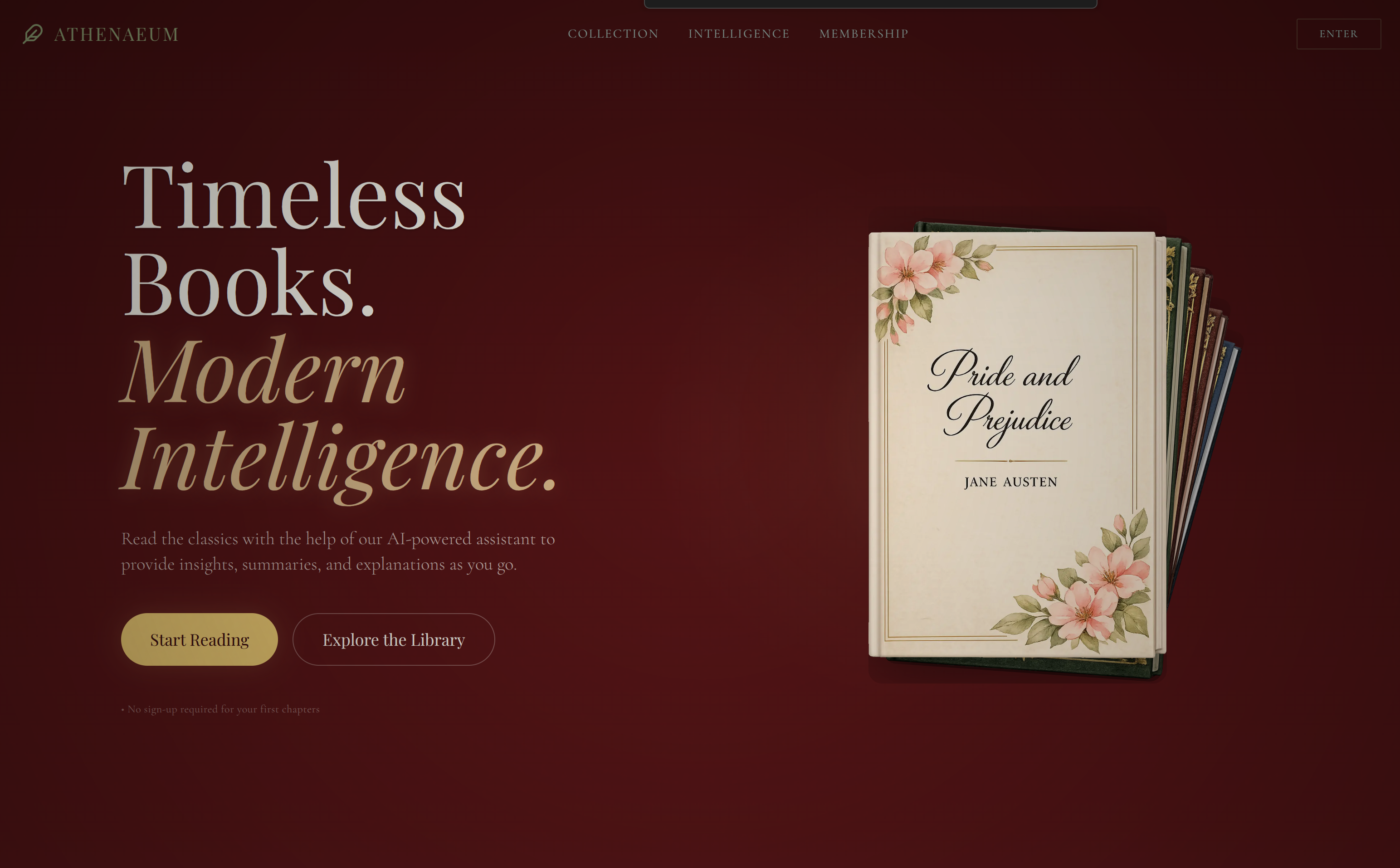
Most AI reading tools help people get around books faster. We wanted to build the opposite: a system that helps people go deeper into books. Athenaeum came from the idea that readers do not struggle to access text, they struggle to understand, retain, and articulate it. We saw an opportunity to use Amazon Nova not for summary shortcuts, but for serious reading, discussion, and intellectual mastery.
What it does
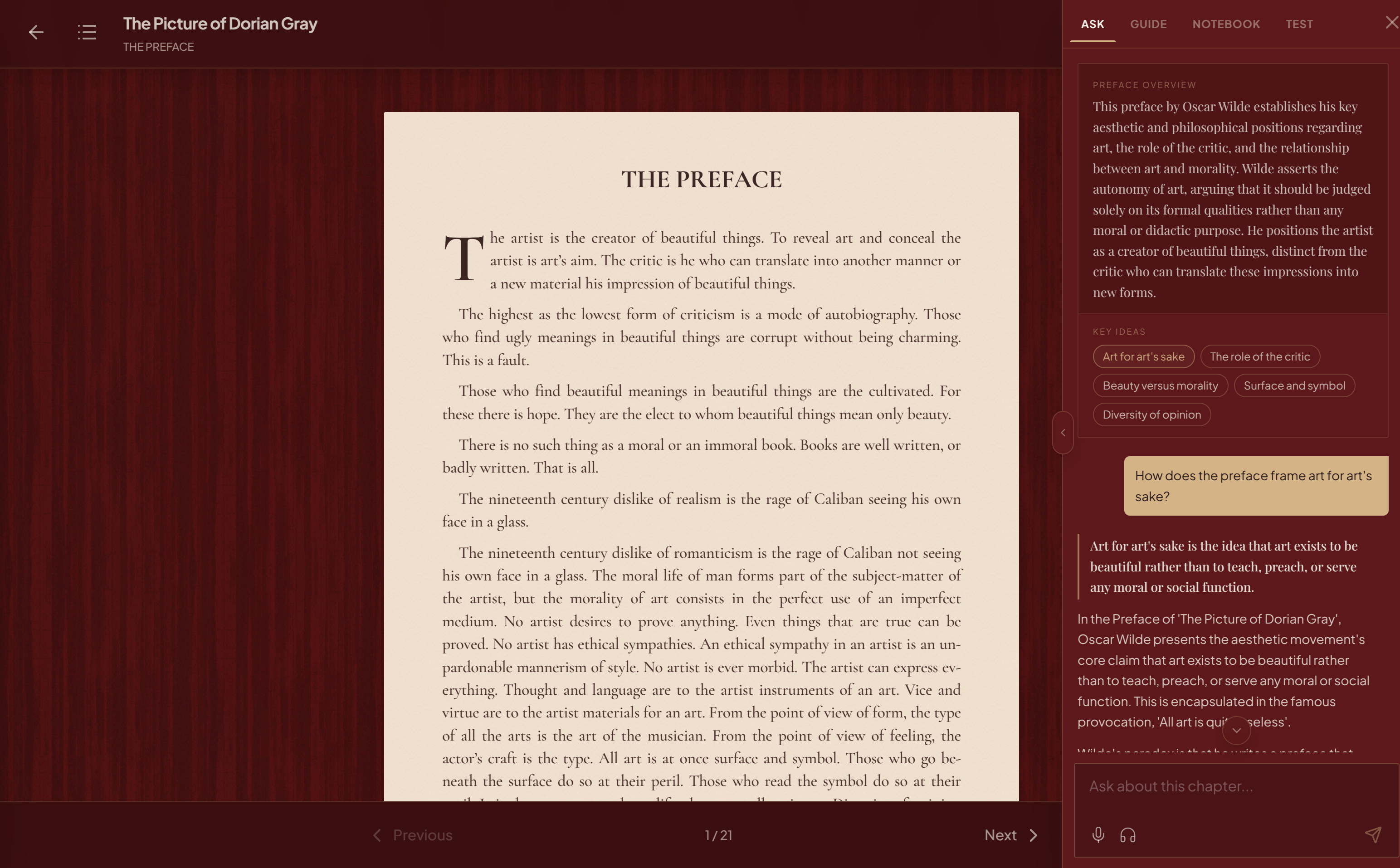
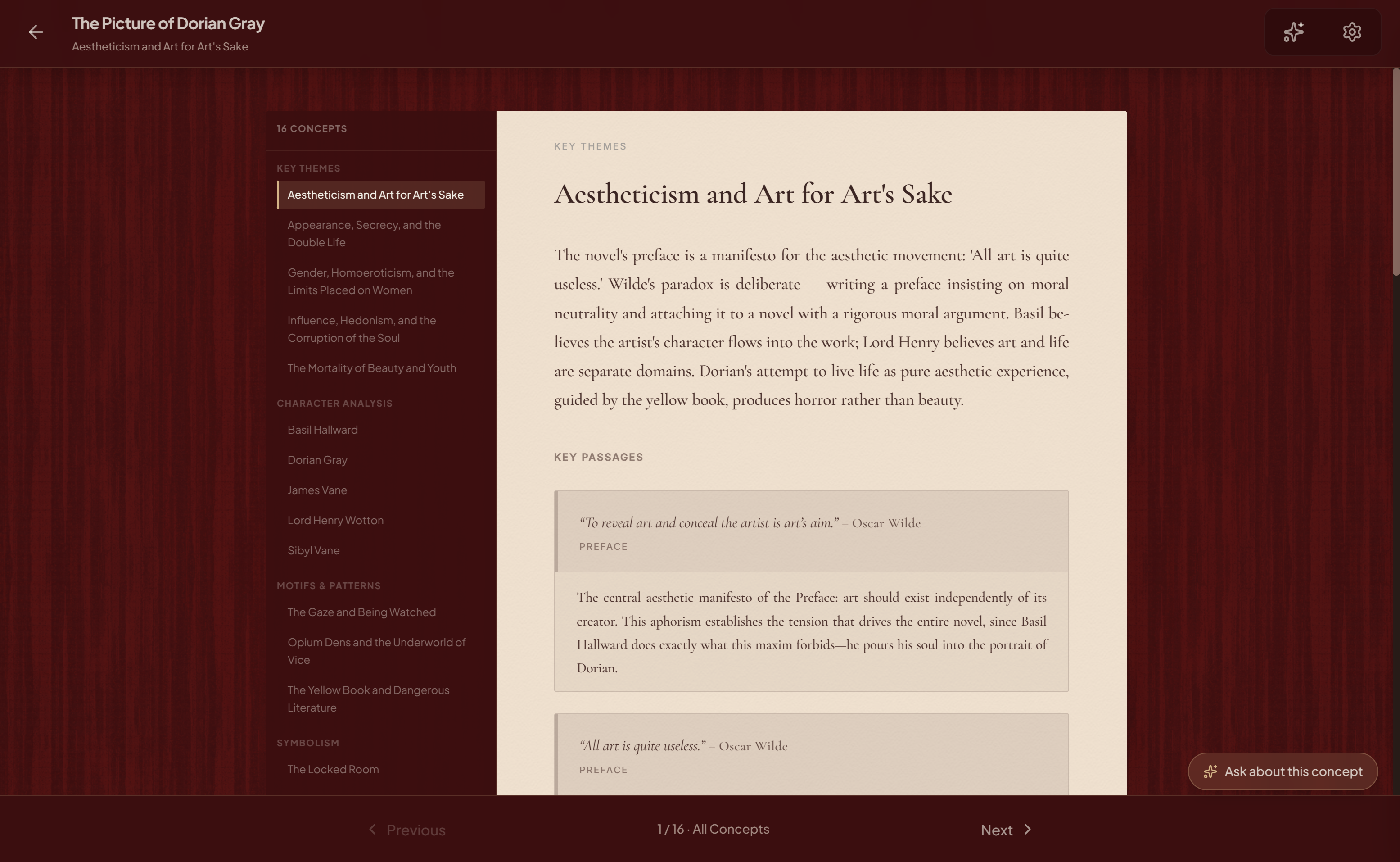
Athenaeum turns every book into its own AI knowledge system. A reader can open a book, highlight a passage, ask for an explanation, speak a question aloud, or hold a real-time voice conversation about the text. The platform also generates study guides, chapter checks, and mastery-oriented assessment tools, all grounded in the specific book being read.
How we built it
We built Athenaeum as a serverless AWS application with a React frontend. Books are processed into chapters, indexed into a per-book Bedrock Knowledge Base, and paired with a Bedrock Agent powered by Nova 2 Lite for grounded reasoning and literary analysis. For voice, we integrated Nova 2 Sonic to enable real-time speech-to-speech conversation. Around that core, we built the reader, AI companion sidebar, study guide flows, and assessment experiences.
Challenges we ran into
The hardest part was making the experience feel seamless while coordinating multiple systems: book ingestion, retrieval, structured agent responses, and real-time voice. We also had to ensure answers stayed grounded in the correct book, avoid brittle response formatting, and make the voice interaction feel natural rather than like push-to-talk transcription glued onto a reader.
Accomplishments that we're proud of
We are proud that Athenaeum is not just a hackathon demo stitched together for video. It is a working, production-deployed reading experience with real-time voice conversation, grounded passage explanation, generated study guides, and mastery features. The strongest outcome is that the AI feels meaningfully tied to the book itself rather than acting like a generic chatbot.
What we learned
We learned that the quality of the user experience depends as much on structure and grounding as on model capability. Voice becomes much more compelling when it is connected to real context, and agentic systems become much more useful when they are scoped tightly to a specific domain. We also learned that small reliability issues in response formatting or audio handling can quickly break the illusion of intelligence if they are not handled carefully.
What's next for Athenaeum
Next, we want to deepen the voice experience, strengthen mastery tracking over time, and expand the content pipeline so every book arrives with richer concept maps, better assessments, and more adaptive study support. Beyond individual readers, we also see a path toward publisher partnerships, educational pilots, and a broader platform for serious reading and intellectual development.

Log in or sign up for Devpost to join the conversation.