-
-
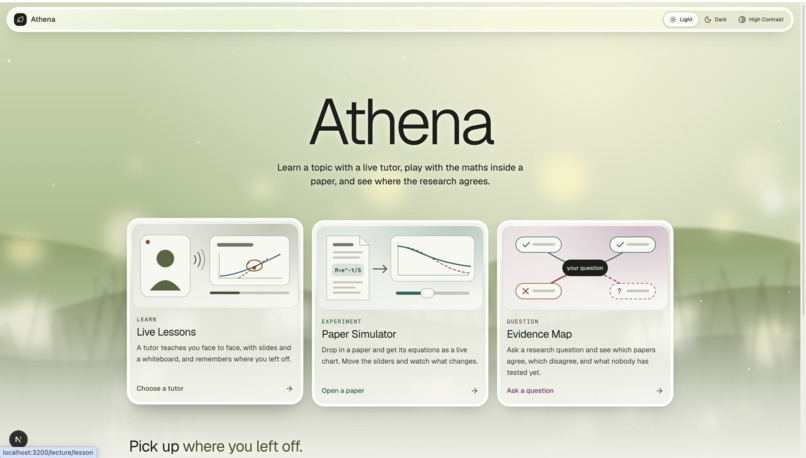
Landing page
-
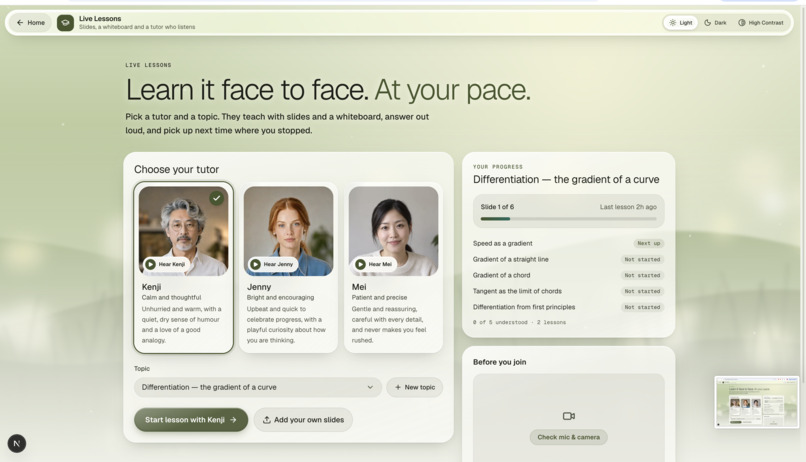
Tutor Page
-
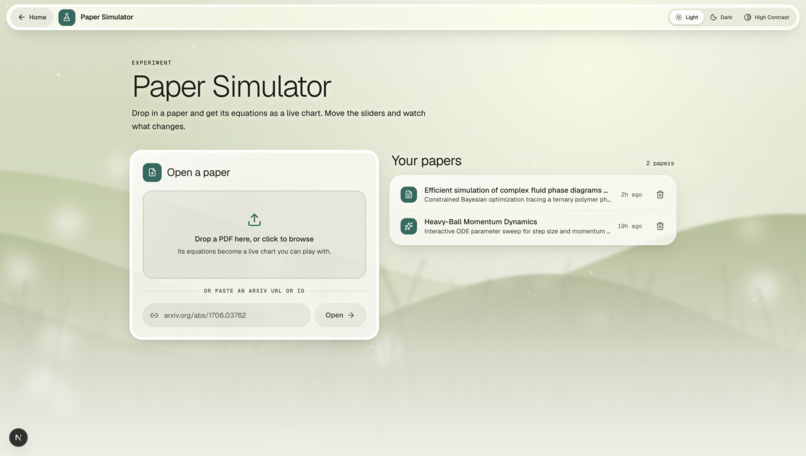
Paper Simulator
-
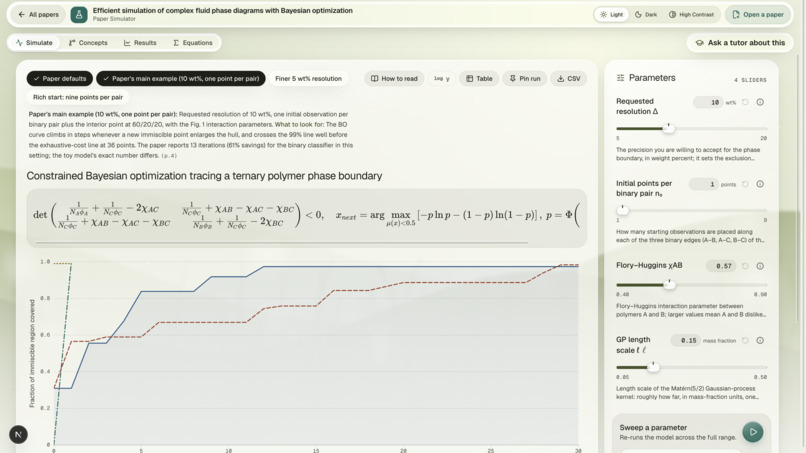
Paper Simulator content
-
Hypothesis graph
Inspiration
Most AI study tools are a chat box: you type, it answers, and when you still don't get it, it says the same thing louder. A good human tutor is different. They look at you, draw on a board, notice when you're lost, explain it another way, mark your work, and remember you next week. Once you understand a topic, the next question is "what does the research actually say, and what hasn't anyone tested yet?" We wanted one place that does both: learn it, then go to the frontier.
What it does
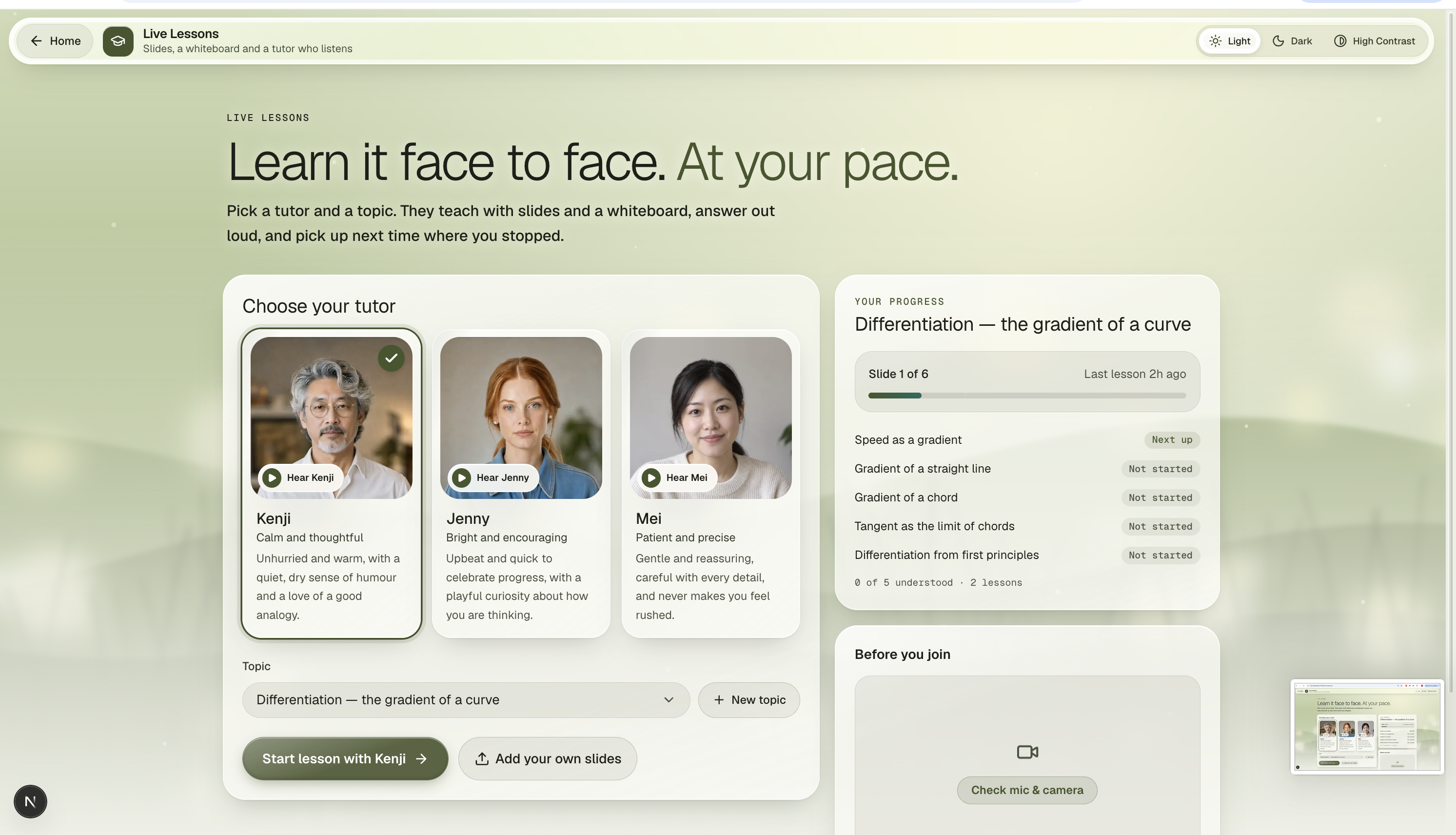
Learn with a tutor you meet. Pick one of three tutors: Kenji the visual explainer, Jenny the Socratic coach, or Mei who teaches through worked examples. Each has their own lip-synced Synthesia avatar, ElevenLabs voice and teaching style. You join a Zoom-style lesson and just talk.
- The tutor writes equations and draws graphs on a shared whiteboard and steps through animated slides while it speaks.
- Interrupt any time. Talk over it and it stops, like a person would, then answers what you said.
- Circle-to-Ask. Draw around anything on the board and say "I don't get this". The tutor sees exactly what you circled and explains it a different way.
- Live captions, screen share and an "I'm lost" button.
Learning tracks. Each topic is a track. Upload lecture slides, a PDF or an arXiv link, and Athena turns it into knowledge points and a lesson plan. Your progress is drawn as a trail. The tutor remembers what you covered, where you struggled and which explanations worked.
Homework that closes the loop. Hand in a photo, PDF or typed working. Claude marks it against the track's knowledge points and circles your first mistake. Your next lesson opens with it.
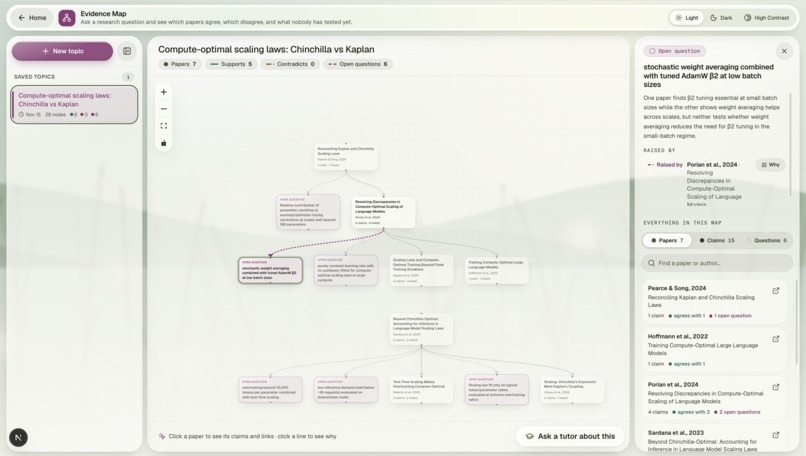
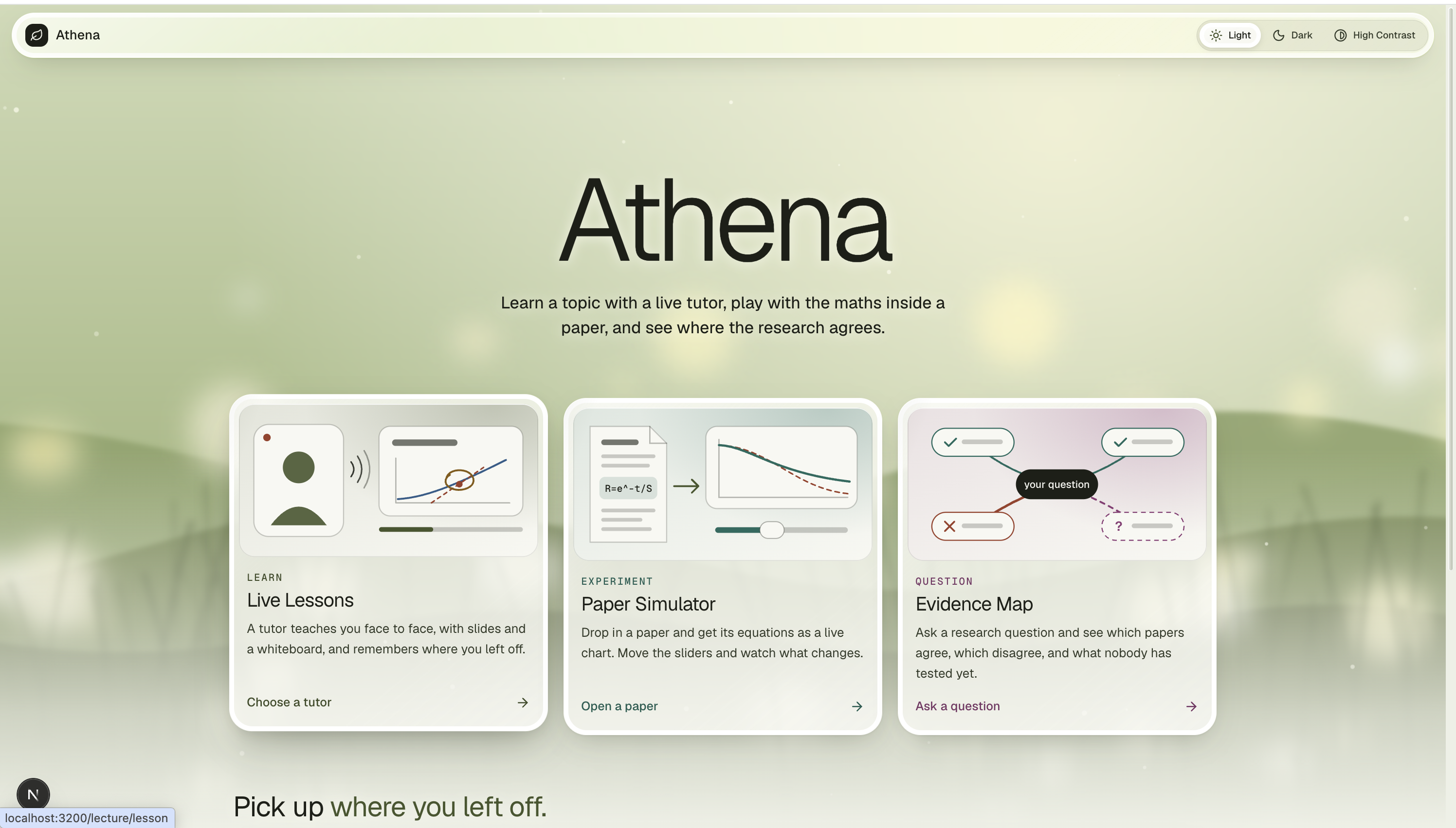
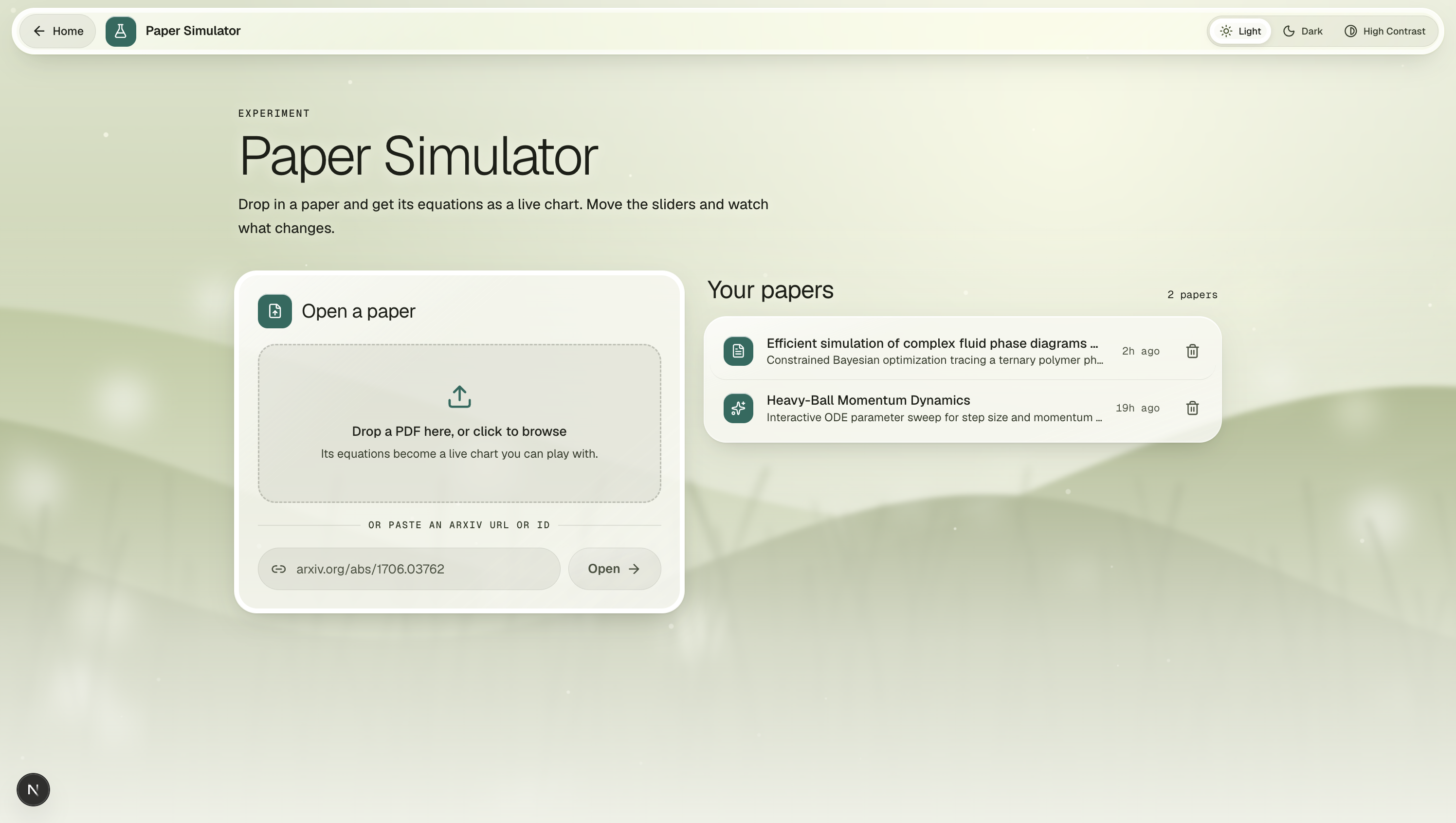
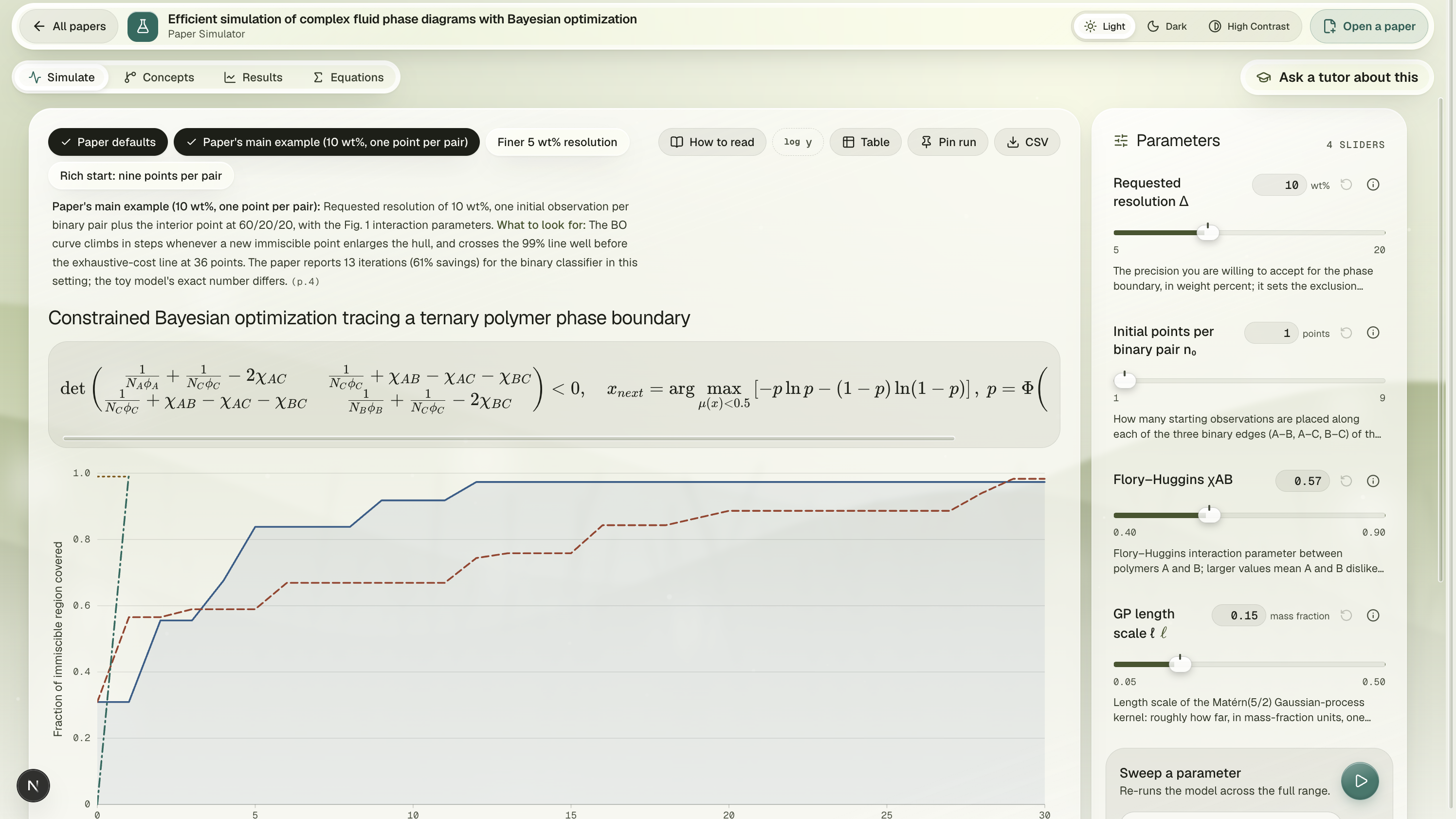
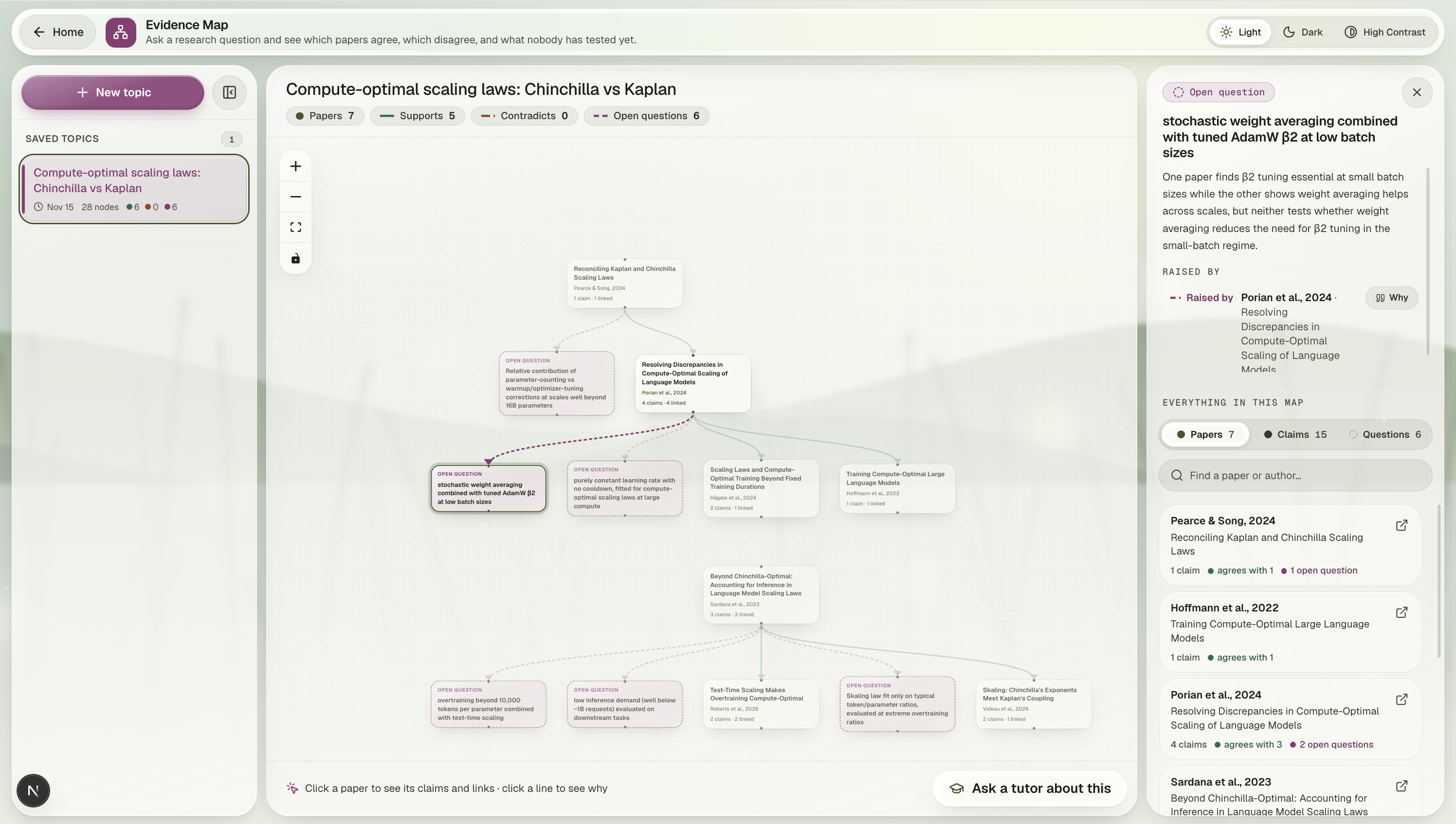
Research. Enter a topic and Athena gathers the papers. It maps their claims as a graph of what supports and contradicts what, and highlights gaps nobody has tested. Papers can also be turned into runnable simulations with live sliders.
How we built it
- Live lesson: LiveKit Agents (Python), ElevenLabs speech-to-text and text-to-speech, Claude as the tutor's brain, Silero voice activity detection for interruptions, and Synthesia Interactive Avatars for the face.
- Board and slides: a tldraw whiteboard plus our own animated slide engine. The agent drives both through tool calls. Circle-to-Ask sends the circled region, and the items inside it, to the model.
- Backend: FastAPI and Pydantic, storing tutors, tracks, lessons, learner profiles and assignments in JSON or MongoDB. PyMuPDF reads PDFs. Claude extracts knowledge points, generates slides and marks homework.
- Research: paper search across arXiv, Semantic Scholar and OpenAlex. Claude pulls out claims and evidence, shown as a supports/contradicts graph in React Flow. Paper equations become Python simulations.
- Frontend: Next.js 16, React 19 and Tailwind 4, designed in Figma first.
Challenges we ran into
- Making interruptions feel human: the tutor has to stop speaking within a few hundred milliseconds and know exactly where it was cut off.
- Keeping the avatar's lips, the voice, the captions and the board in sync.
- Telling the model precisely what the student circled, so it explains that one thing rather than the whole slide.
- Running several parallel workstreams in a three-person team without breaking each other's code.
Accomplishments that we're proud of
- A tutor you can actually interrupt, that draws while it talks and re-explains whatever you point at.
- Homework marked against the actual lesson plan, with the first mistake circled in the whiteboard's own handwriting.
- Three distinct tutors, each with their own face, voice and teaching style.
- Getting from "I don't understand this" to "here's what research hasn't tested yet" in one app.
What we learned
In voice, latency is the whole product: every extra second makes the tutor feel like a chatbot again. And tutoring is mostly memory. Remembering what didn't work is what makes the second explanation better than the first.
Built With
- anthropic-claude
- arxiv
- elevenlabs
- fastapi
- figma
- livekit
- mongodb
- next.js
- openalex
- pydantic
- pymupdf
- python
- react
- react-flow
- semantic-scholar
- silero
- synthesia
- tailwindcss
- tldraw
- typescript
