-
-
Home
-
Chatbot
-
Ideas
-
Resources

Inspiration
It's widely acknowledged that students who identify with marginalized genders in STEM confront unique challenges, including gender bias and stereotypes, lack of representation, and intersectional struggles. These difficulties can take a toll on their mental health, leading to lower retention rates compared to their male counterparts. Our inspiration draws from witnessing and experiencing these struggles, along with AthenaHacks' mission and the symbolic strength of the Greek goddess Athena. Motivated by a desire to combat these challenges, our project aims to foster the mental well-being of students from underrepresented genders in STEM 💫
What it does
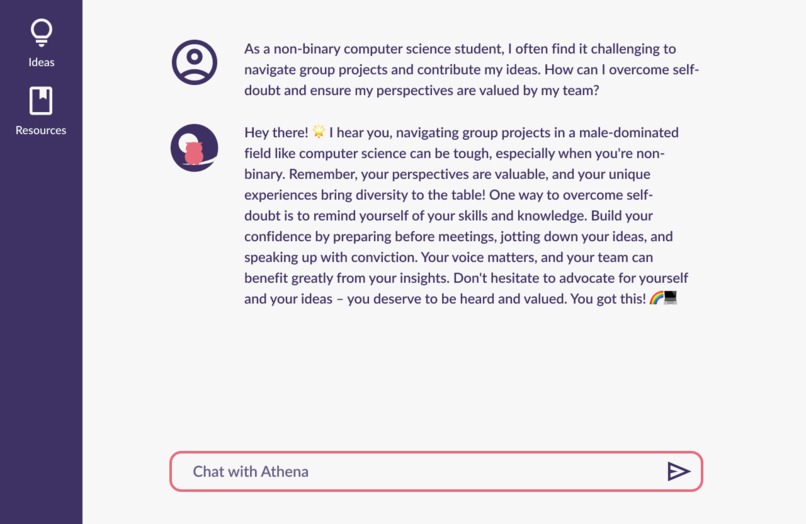
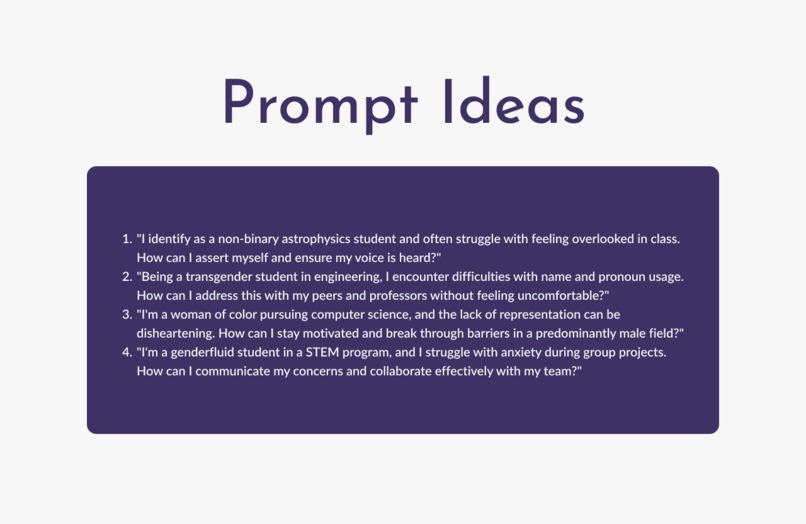
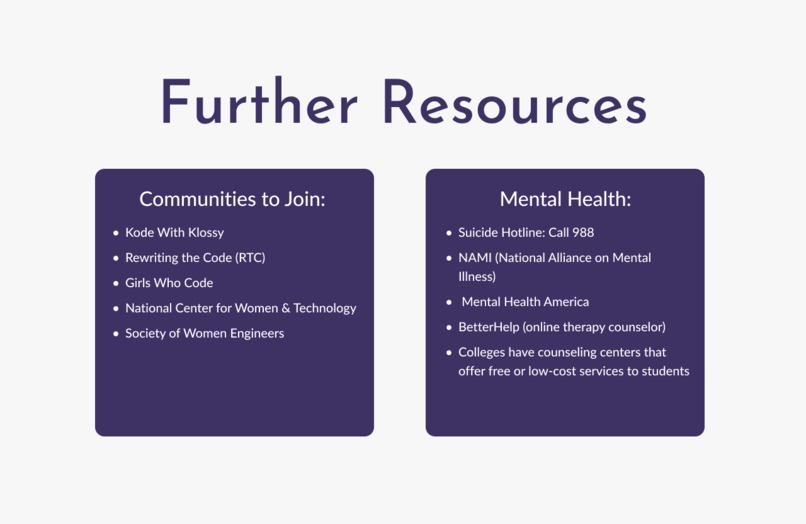
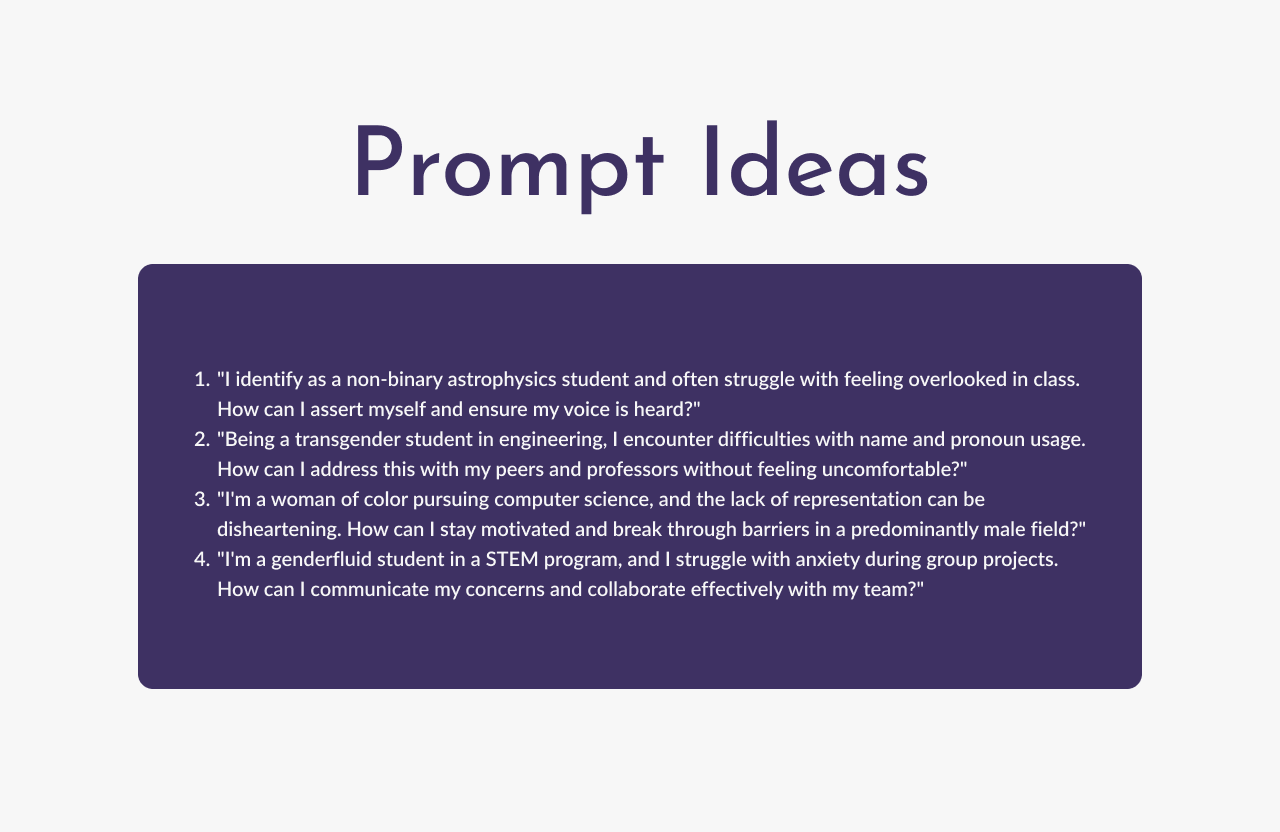
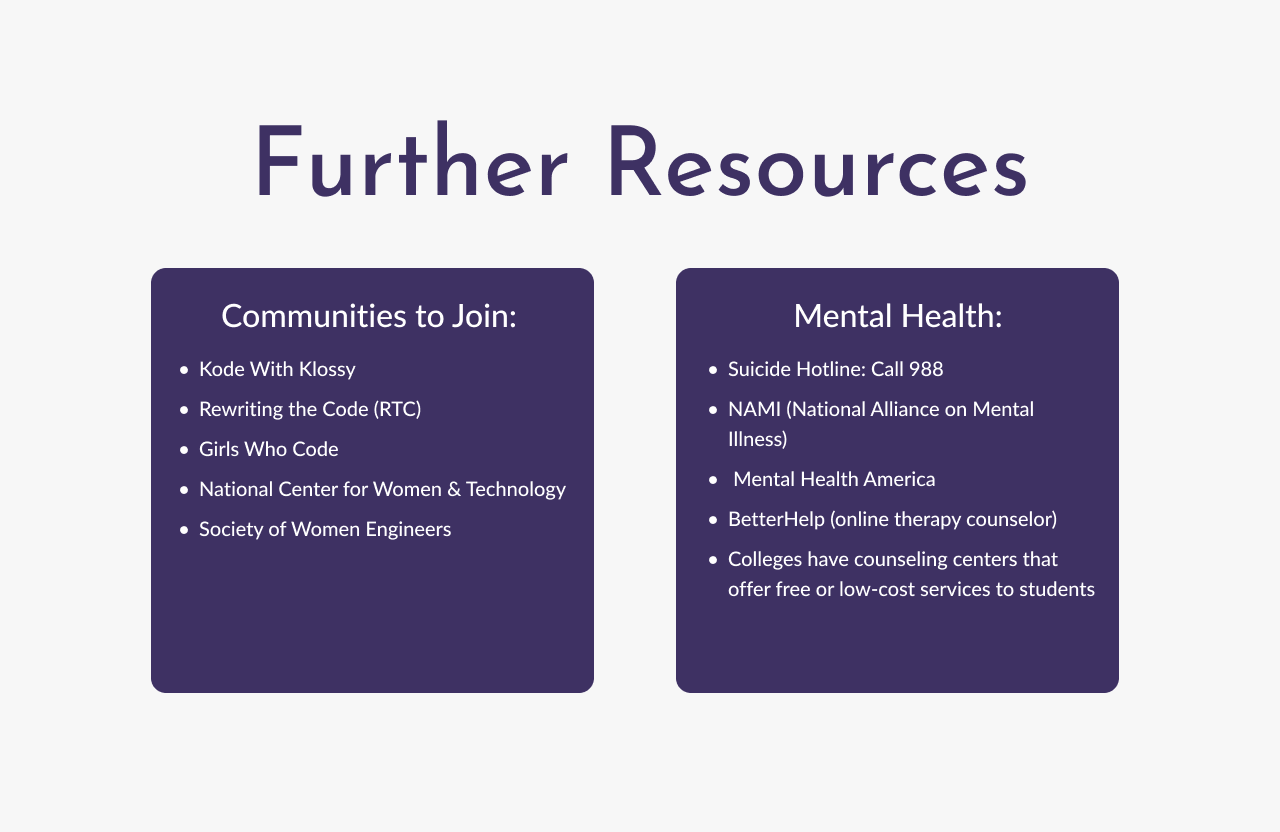
As a mental health companion, Athena is a chatbot who acts as an ally for college students in STEM, particularly those identifying with marginalized genders—women, trans, nonbinary, and gender-nonconforming individuals. She is equipped to address the unique mental health challenges they face, including imposter syndrome and burnout, by offering empathetic interactions and providing valuable resources and coping strategies. Our website also contains pages for prompt ideas and further resources. Blending the qualities of a wise therapist and a caring friend, Athena helps foster a sense of belonging in the tech world and empower students of underrepresented genders in STEM 🫂
How we built it
- We designed a high-fidelity prototype of our product with Figma.
- We built an interactive website using HTML, CSS, and Javascript.
- We utilized OpenAI’s API along with Node.js, Axios, and Insomnia to engineer a chatbot to support and empower college students who identify with underrepresented genders in STEM.
- We learned about Flask and ngrok, and used Python to implement our backend.
Challenges we ran into
- At first, we were going to execute our idea by making a Google Chat app, so we spent half of the first day working on that. However, this turned out to be unrealistic because we had to deal with differing Google Workspaces (@usc.edu and @ucla.edu) and Google Chat apps must be approved by Google reviewers to be publicly accessible. We had to pivot and start anew.
- Dealing with OpenAI’s API proved to be difficult, as the key had to remain secret, but we were implementing Athena using frontend and pushing the code to GitHub, effectively revealing the key. We had to learn about backend implementation and find a different way to host our website.
Accomplishments that we're proud of
- Guided by one of the amazing mentors, we implemented a backend using new networking knowledge to host our website.
- We engineered a fully functioning chatbot, which no one on our team has done before.
- Despite the 24-hour time crunch, we managed to implement all the key features that we wanted to include in this project.
- This is the very first hackathon for half of our team, so we’re proud of making it through and submitting!
What we learned
We learned how to:
- Utilize Figma to make a prototype of our product
- Use HTML, CSS, and Javascript to incorporate animations on our website
- Work with OpenAI’s API
- Create a server using Flask and host a website using ngrok
What's next for Athena
In the future, we can:
- Revamp design and enhance frontend for a more engaging user experience
- Implement thread creation functionality for diverse conversational paths
- Introduce user authentication and profile management features
- Conduct user experience surveys to gather valuable insights and feedback
- Explore public hosting options to extend accessibility
With more time and resources, Athena has the potential to make a lasting impact on the mental well-being of underrepresented students in STEM 🧠💪💌


Log in or sign up for Devpost to join the conversation.