-
-
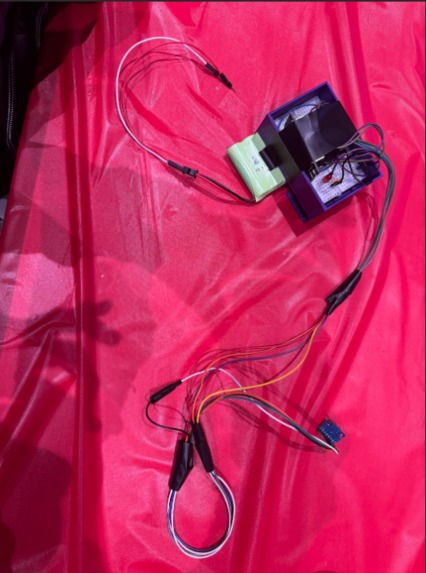
Athena Brain and sensor
-
The Athena Guard "In soccer, women are 2.8x more likely to tear their ACL. Research shows these tears happen in just 70 milliseconds—faster than a human coach can see. We built the Athena-Guard.
Inspiration:
ACL tears are among the most devastating injuries a professional athlete can have. It is a severe tear to the knee ligament caused primarily by high-stress movements to the knee joint, and recovery typically takes 6 to 9 months. What is more worrying is the prevalence of these types of injuries in women’s sports. Research published in the National Library of Medicine states that in soccer, women are 2.8x more likely to tear their ACL. Despite the serious nature of these injuries and higher occurrence in women’s sports, the field is significantly underfunded and under-researched, so we decided to create a project to tackle this.
What it does:
Research shows these tears happen in just 70 milliseconds—faster than a human coach can see. Our device is built on a fundamental understanding of the nature of these injuries, which are caused by high stress over a short period of time to the knee joint. Using the MPU6050 (accelerometer and gyroscope) and ESP32 (microcontroller), we detect the "Stiff Landing" patterns identified in medical literature. The main principle of the device is to prevent injury by training athletes to land with better control. Our system flags bad jumps and reports in real-time to the coach on the maximum G-force and jerk to enable specific advice on how to re-train. To address the "Neuromuscular Stiffening" problem, our device works as a neuromuscular trainer to alert the bearer with a sound and red LED when her jumping form is wrong. Our device acts as an "External Nervous System" to help the athlete develop the knee control they may lack compared to male counterparts.
How we built it:
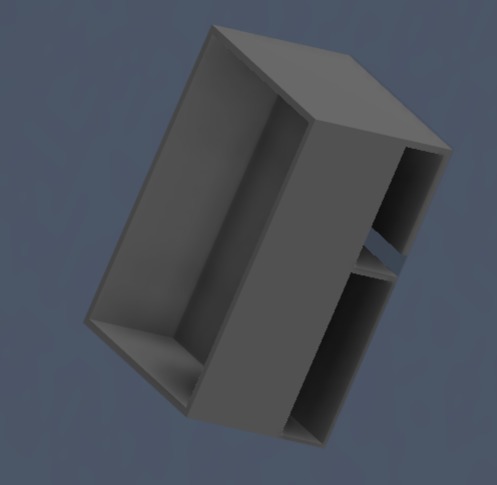
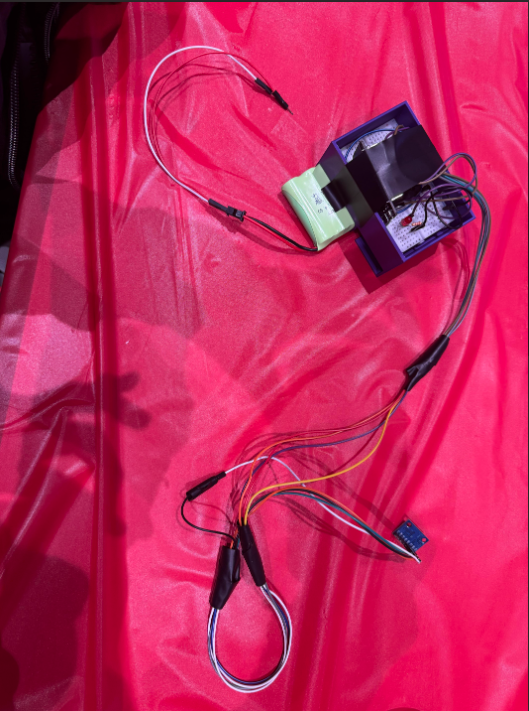
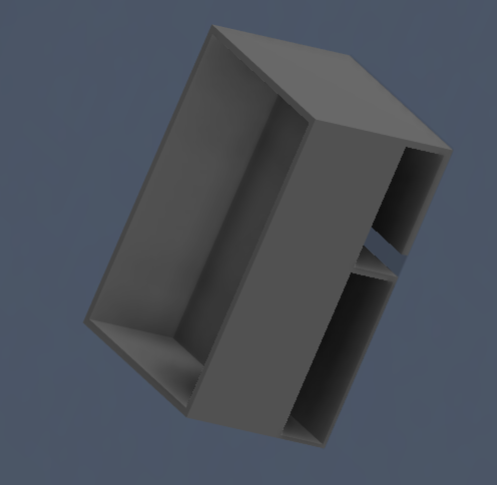
To build it, we connected an led, resistor, buzzer, and esp 32 to a small breadboard which was fitted into a 3-D printed case we designed. We connected each component appropriately to the respective logic pins of the esp 32 board, power supply and ground. We wrote the code based on our logic of flagging high-risk jumps by determining high jerk, and added a web page designed to display peak jerk and G force values using the esp board wifi functionality. Our ESP32 board connects to its own Wi-Fi SSID and sends real-time data to a minimally designed website displaying peak G-force and jerk values for external observation by a coach. The website has a color sensitivity to bad jumps; it will display “Stiff Landing” and illuminate red. These functionalities help the player self-assess, as the website can be displayed on a big screen while she hears the buzzer on her stiff landings. We determined these threshold values empirically through several "bad" and "good" test jumps to find a decent boundary value.
Challenges we ran into:
We met a variety of bugs throughout the process. The most significant was the absence of a vibration sensor. Our initial design was contingent on the logic of High G-force + High Vibration = Bad Jump. Without that sensor, we had to be resourceful. We changed the code logic to not just measure total G-force, but to divide it by time to calculate the jerk. We also had issues with 3D printing a well-designed case, installing the right drivers to ensure our Arduino IDE connected properly, minor wiring mistakes, and finding a portable power source. Additionally, the LED and buzzer output behavior is not perfectly time-synced, which presents some limitations for real-time applications.
Accomplishments we are Proud of:
We are very proud of our creative and biomedically informed solutions. As people who play and watch soccer, we saw an issue that was not only personal but very timely, and we worked hard to tackle challenges resourcefully. From a technical perspective, we are proud of the code logic; it was simple but captured the major cause of these ACL injuries. We are also proud of the coach-assessment website, figuring out the housing for components, and determining our thresholds empirically through testing.
What we learned:
We learned a lot about the practical aspects of making projects, the constant debugging and the need to get creative when finding solutions to unexpected problems. This was also each member of our teams’ first hackathon experience so we learnt a lot about thinking clearly, and making decisions, under relatively stressful situations with resource constraints.
Next Steps for the project:
Looking toward the future, we aim to refine the Athena Guard by evolving its core technology and physical design to be more field-ready. Currently, the device uses simplified logic, but the biomedical signature we assess through our code could be made more complex to capture a wider range of high-risk movements. We can also significantly improve the form factor by focusing on low-profile, wearable designs that are less intrusive for athletes during high-intensity play. A major priority is AI integration; by utilizing machine learning, the device could move beyond simple thresholds to detect "stiff landings" with higher accuracy and provide personalized improvement suggestions for each player. Finally, we intend to use 3D printing to create a more suitable, professional, and safer housing for the components, allowing for specific device placement that enhances sensor functionality and reduces data error.
Reference Paper The female ACL: Why is it more prone to injury? J Orthop. 2016 Mar 24;13(2):A1-4. doi: 10.1016/S0972-978X(16)00023-4. PMID: 27053841; PMCID: PMC4805849.

Log in or sign up for Devpost to join the conversation.