-
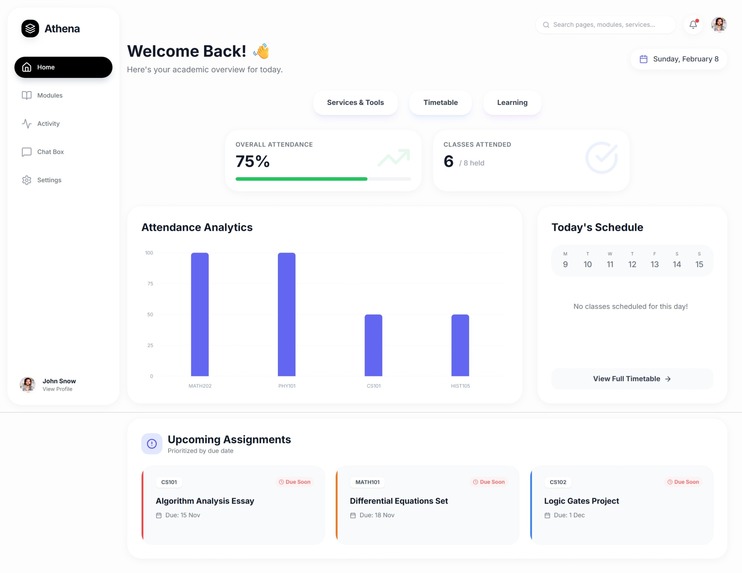
Home Dashboard
-
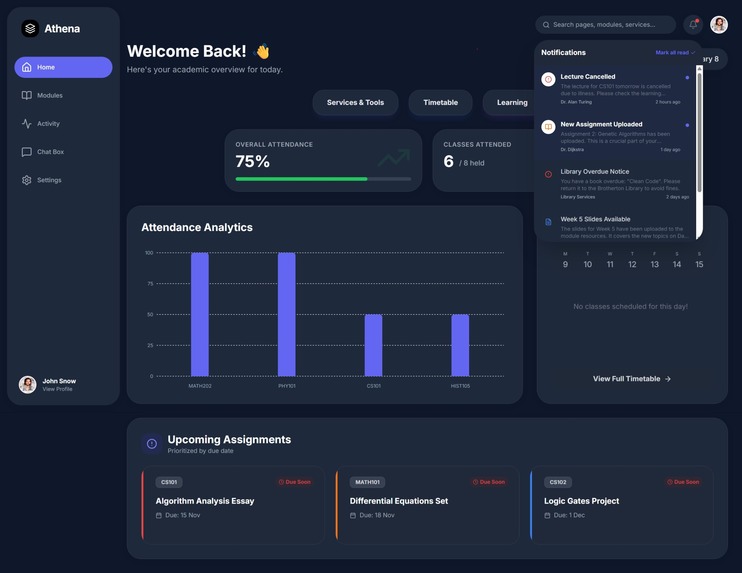
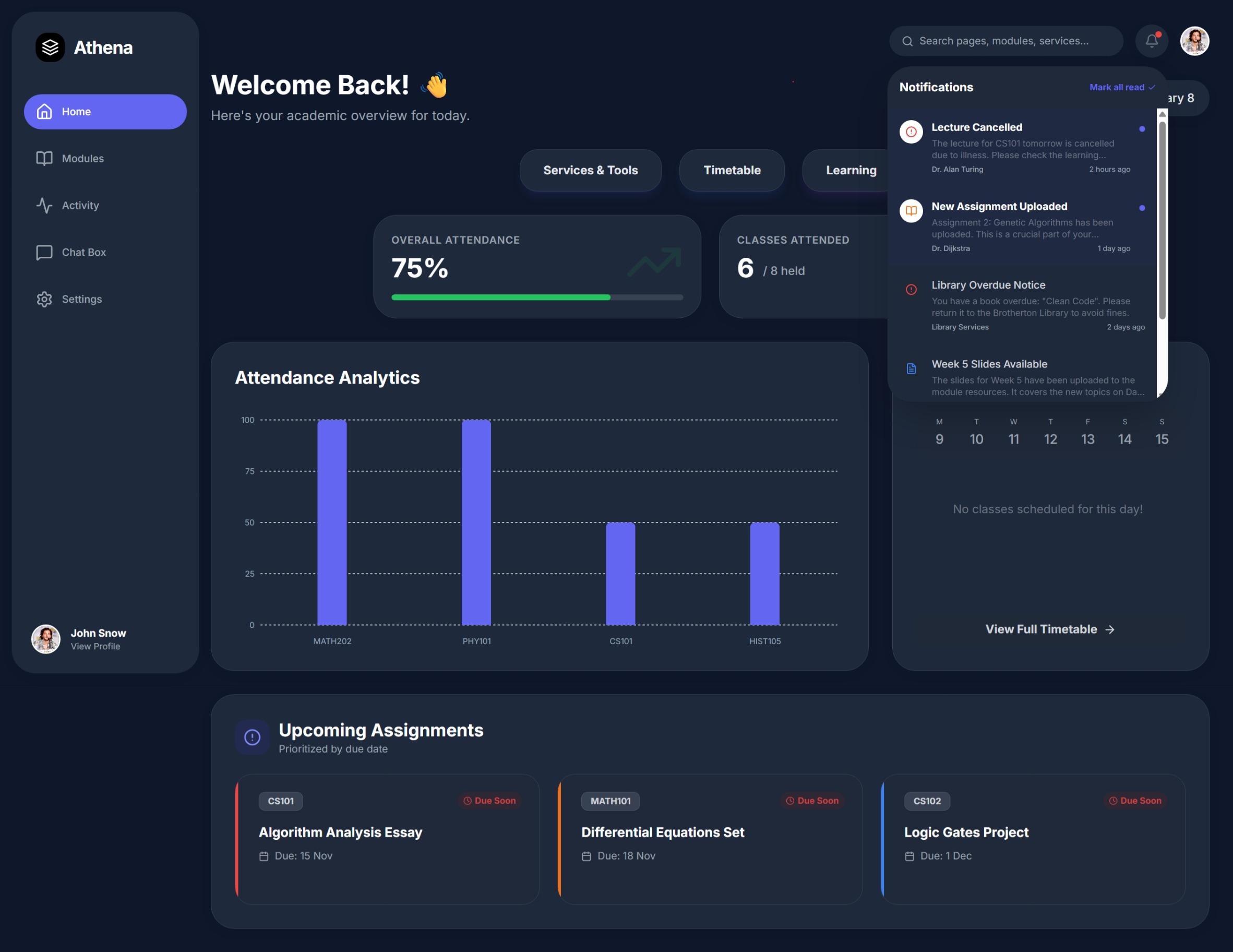
Notification Bell
-
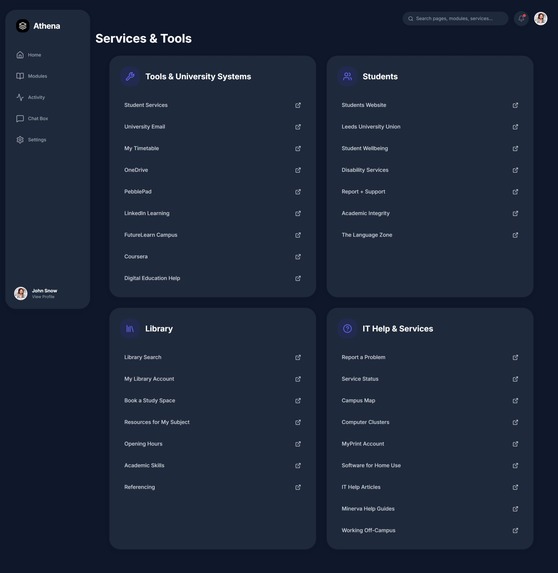
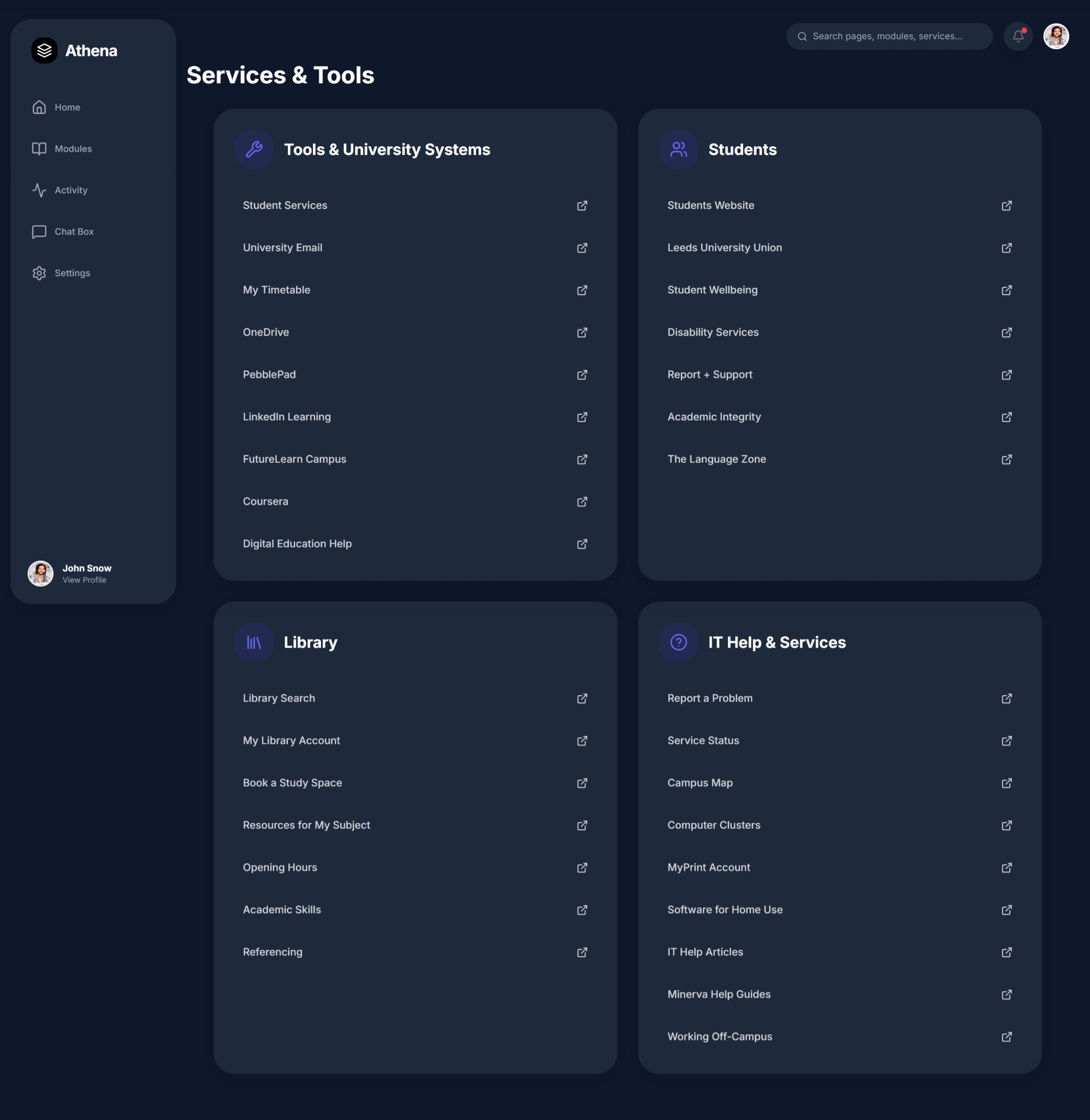
Services and Tools Page ( Working Links )
-
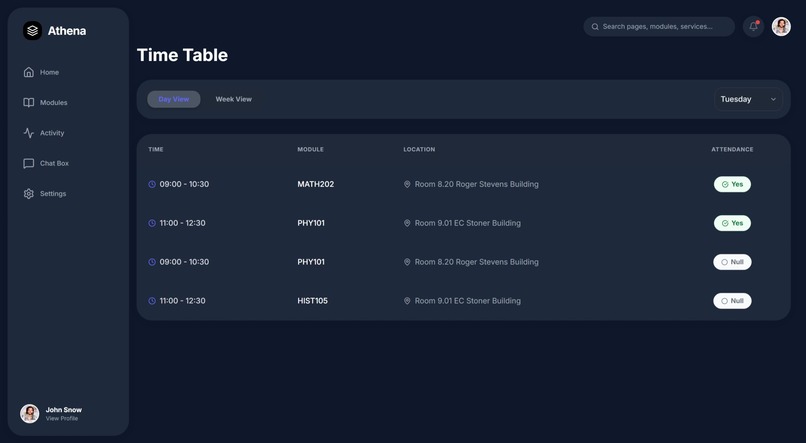
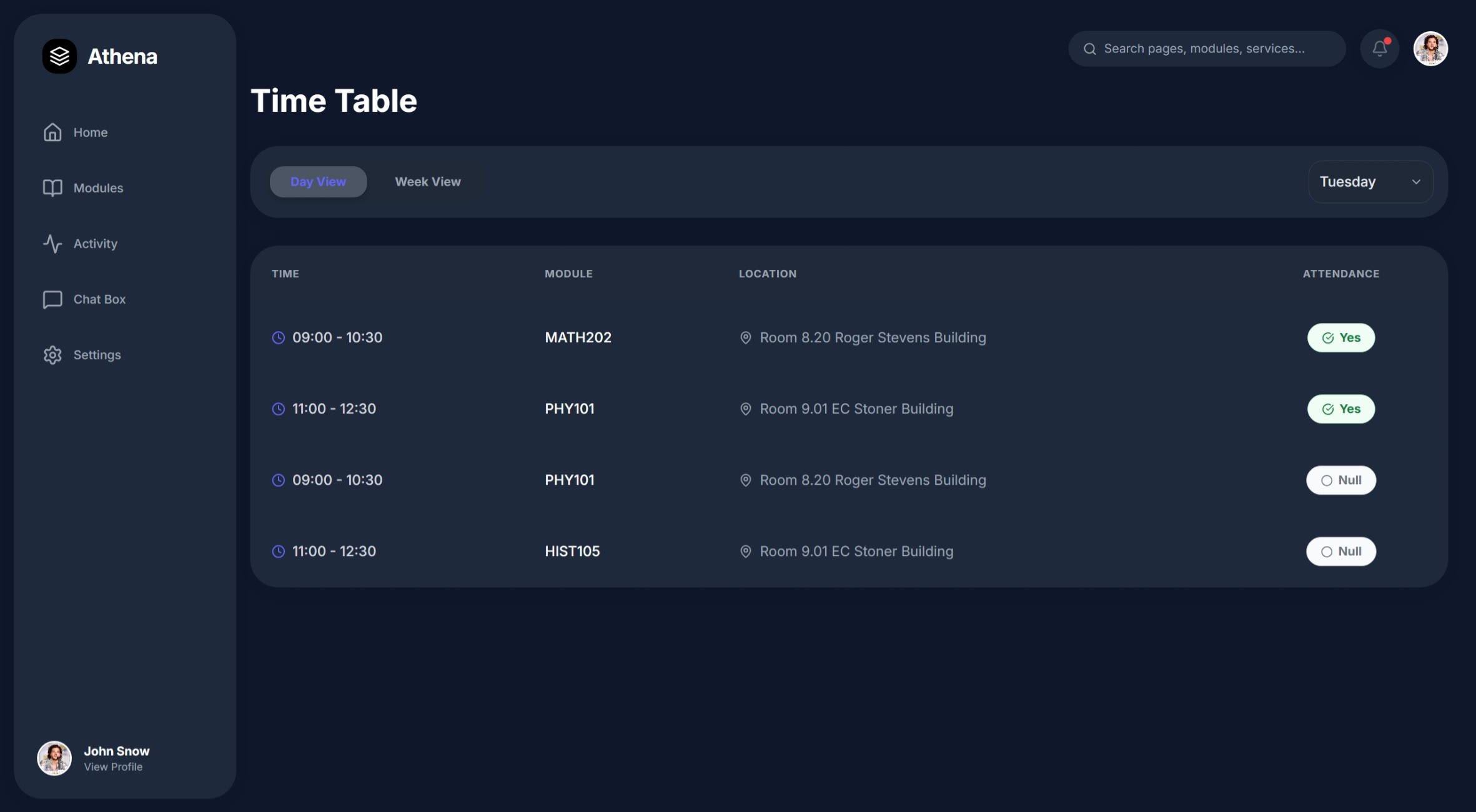
Day wise Time Table View
-
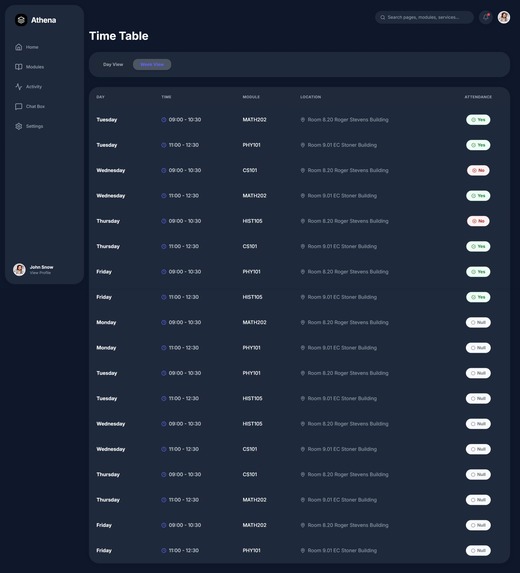
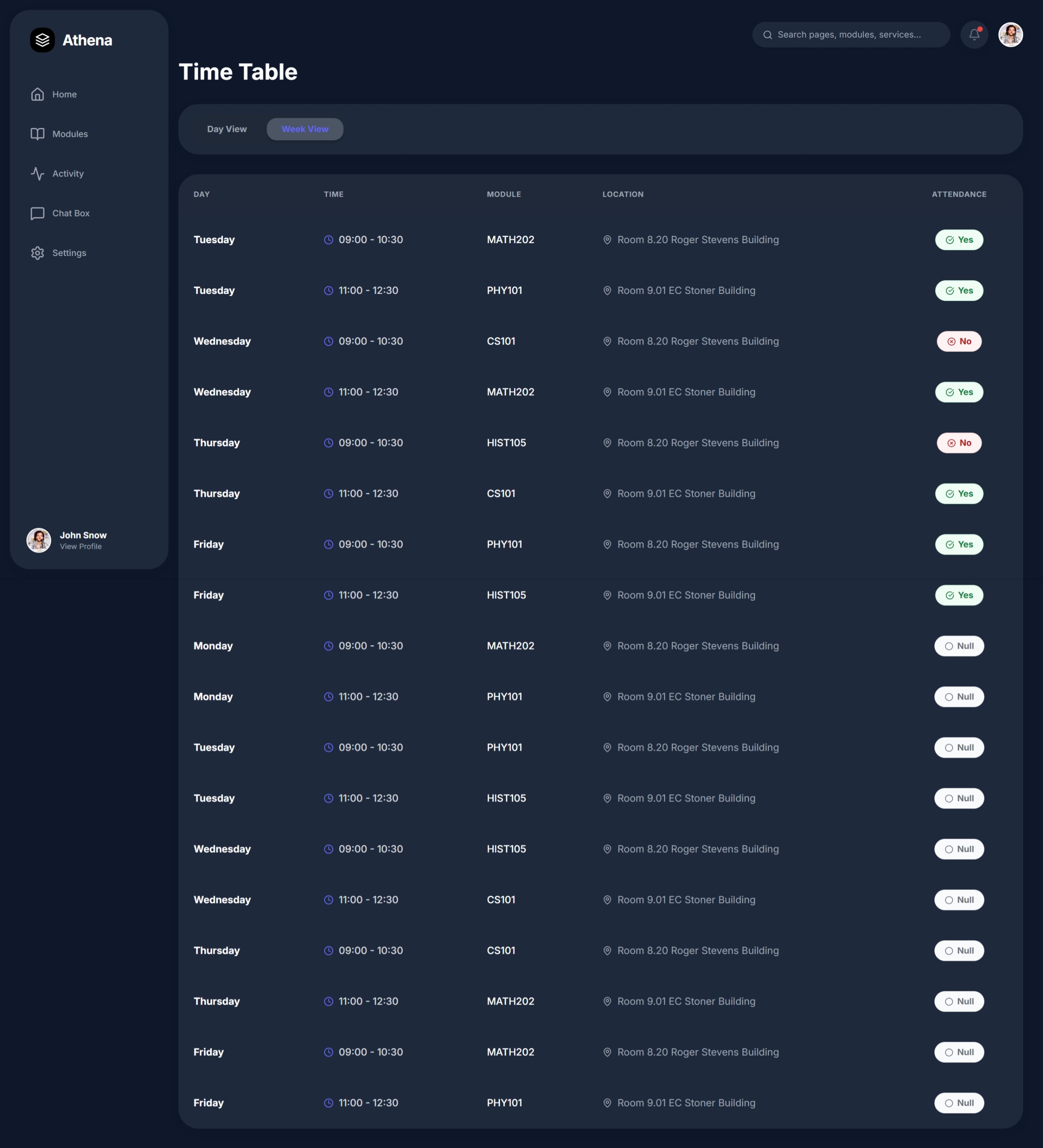
Week Wise Time Table
-
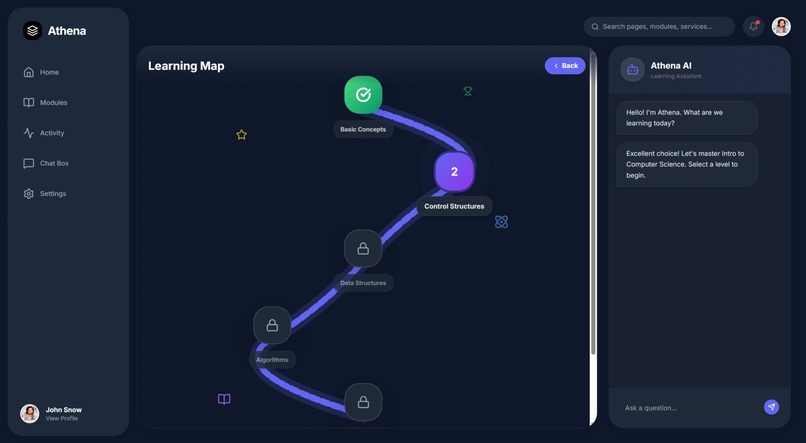
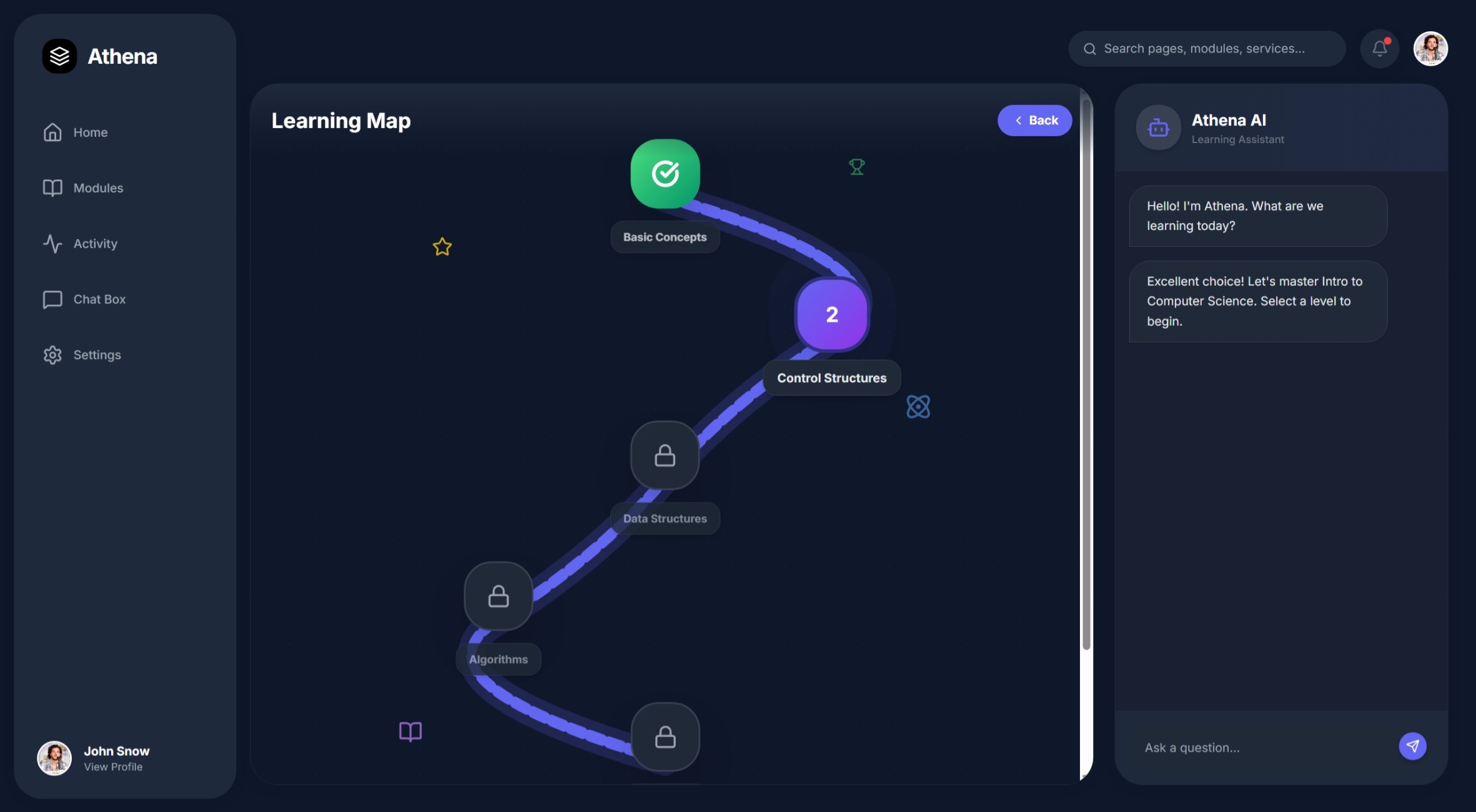
The Learning Map
-
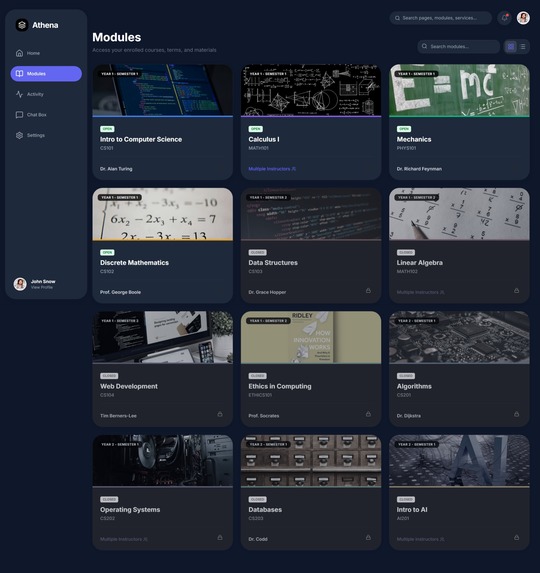
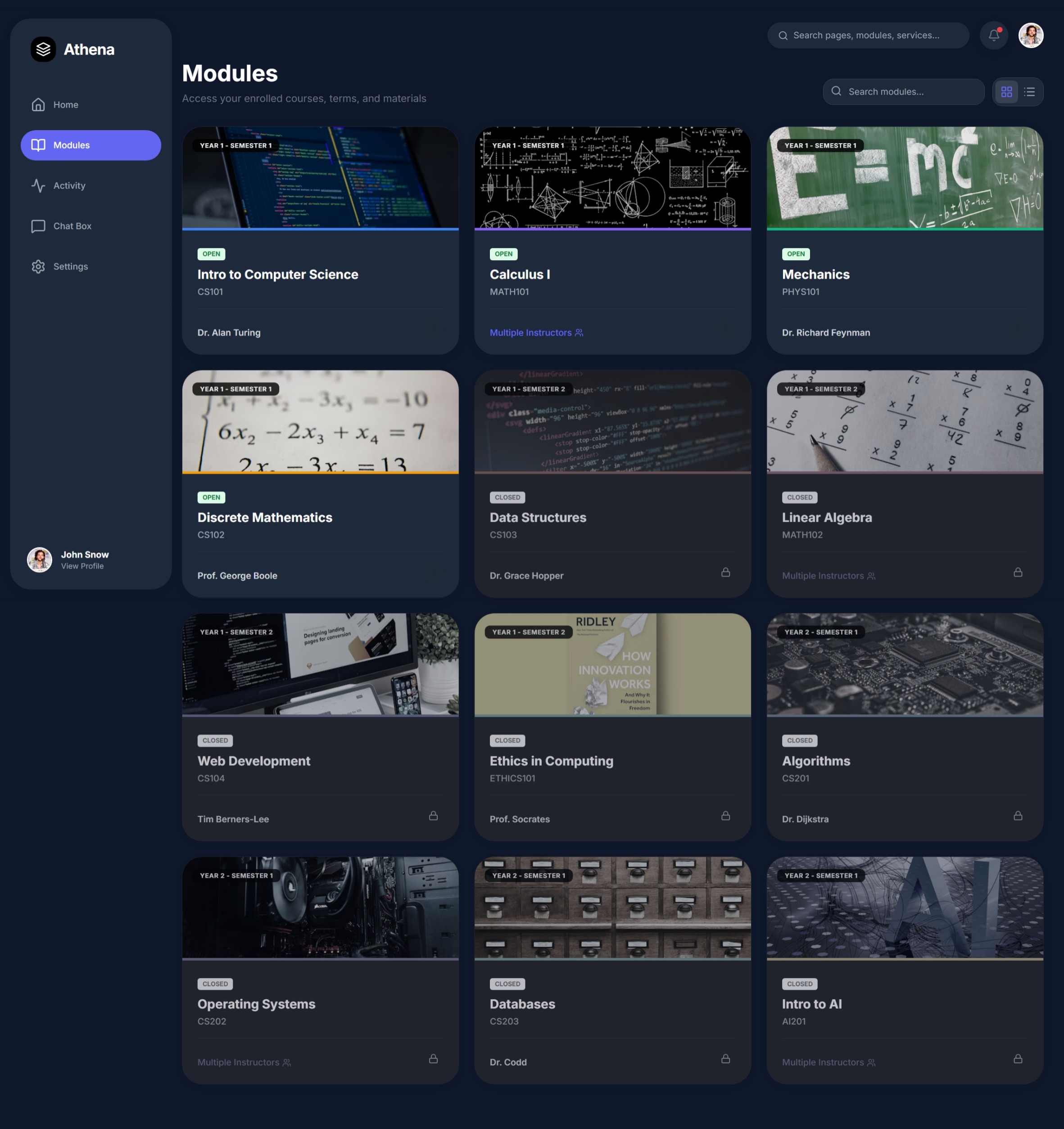
Modules Page
-
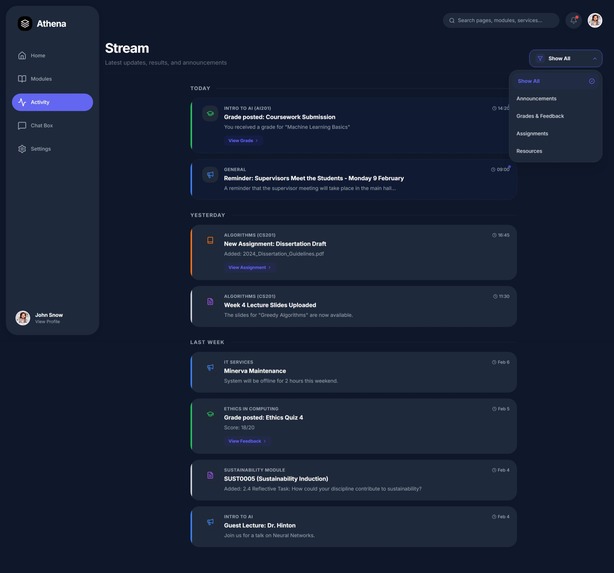
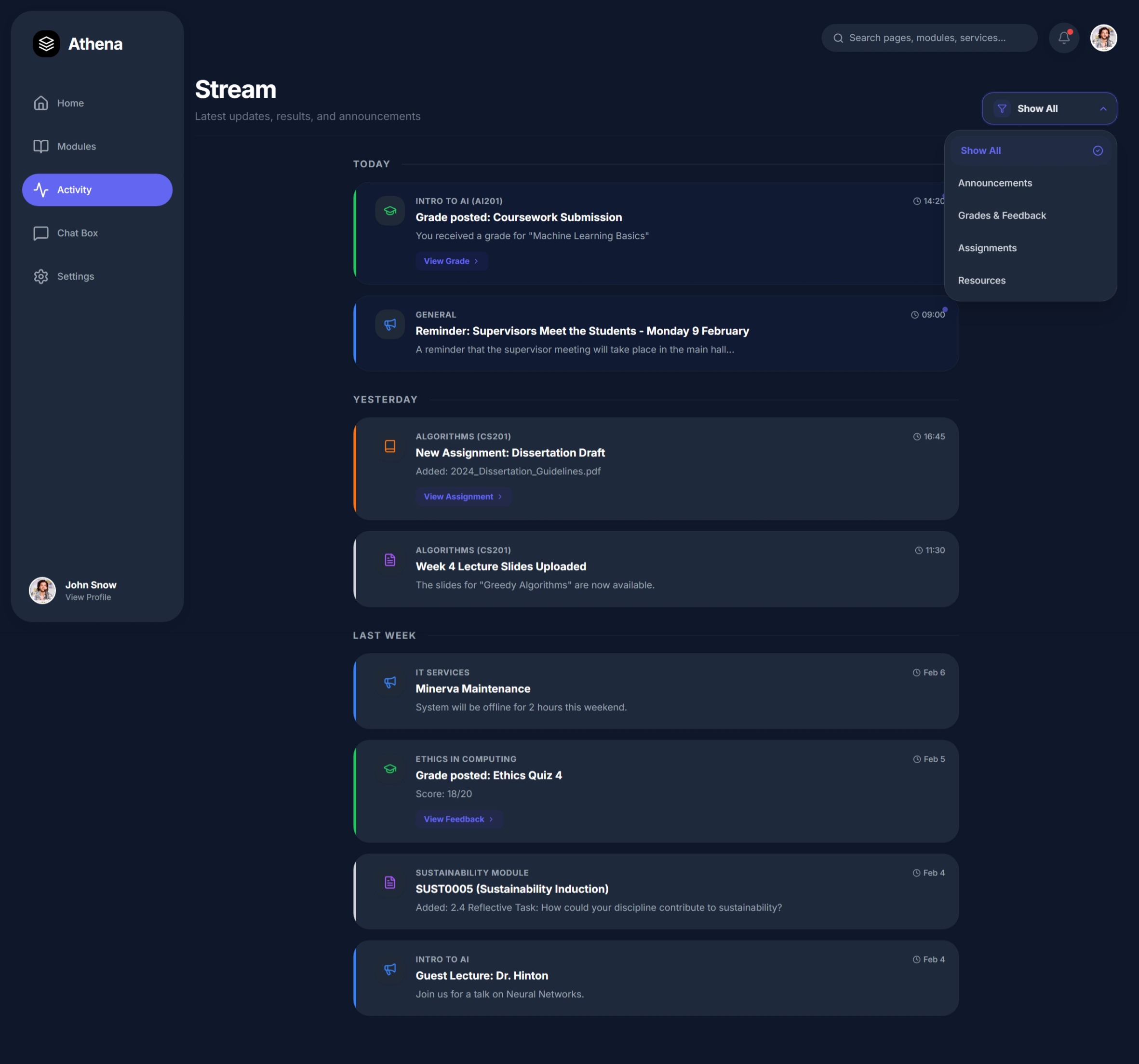
Activity Stream
-
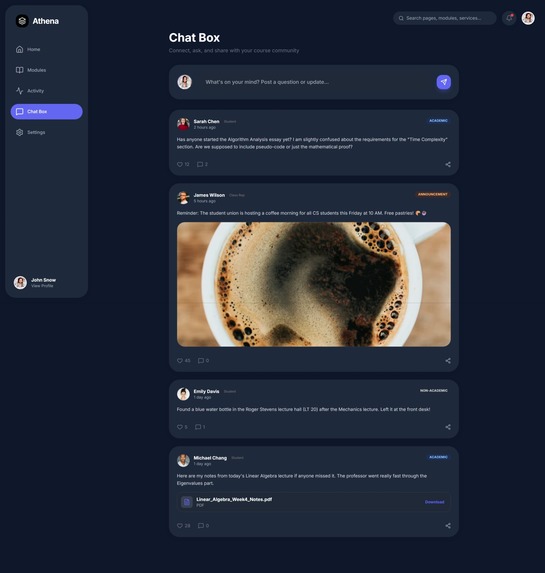
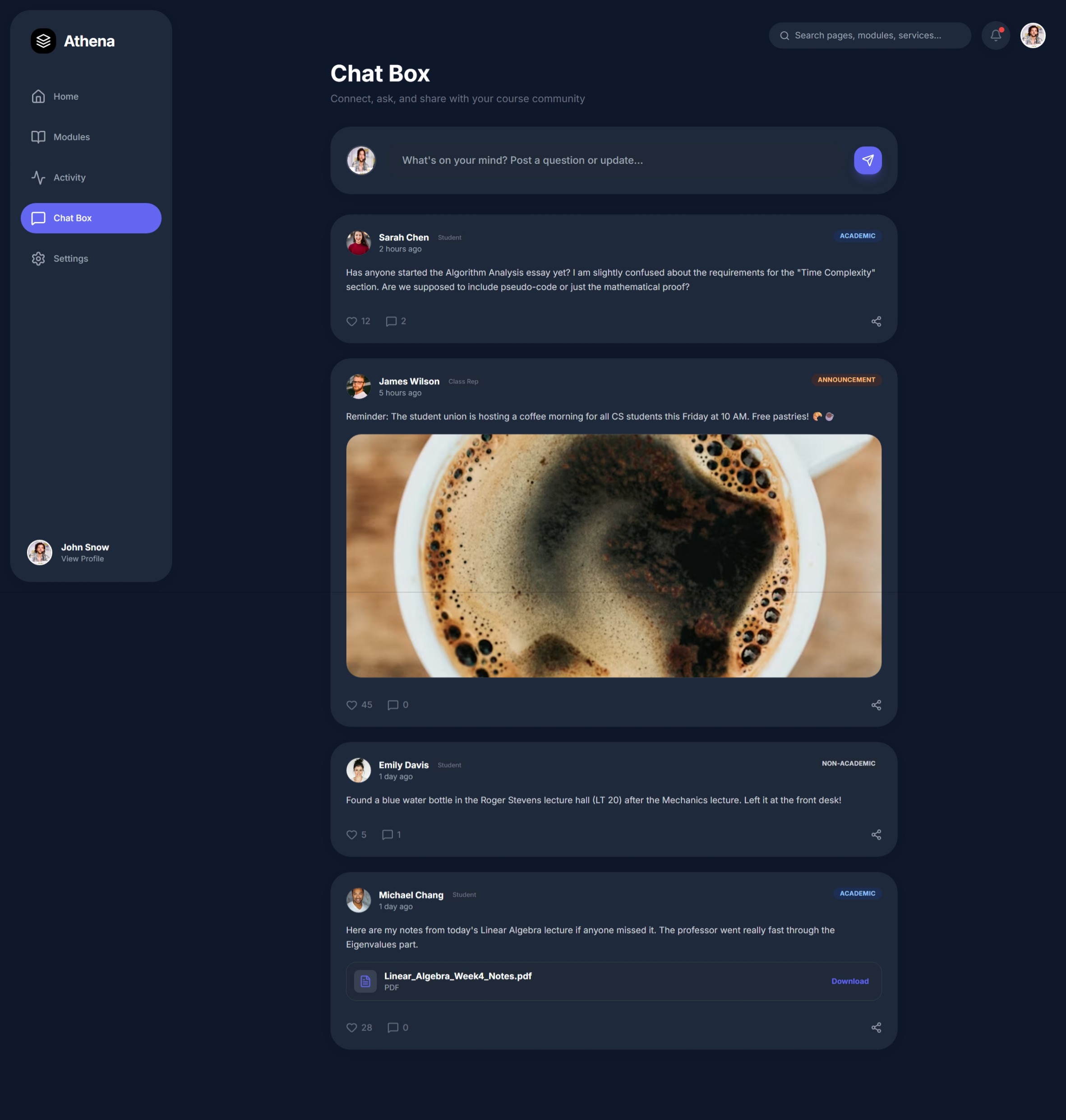
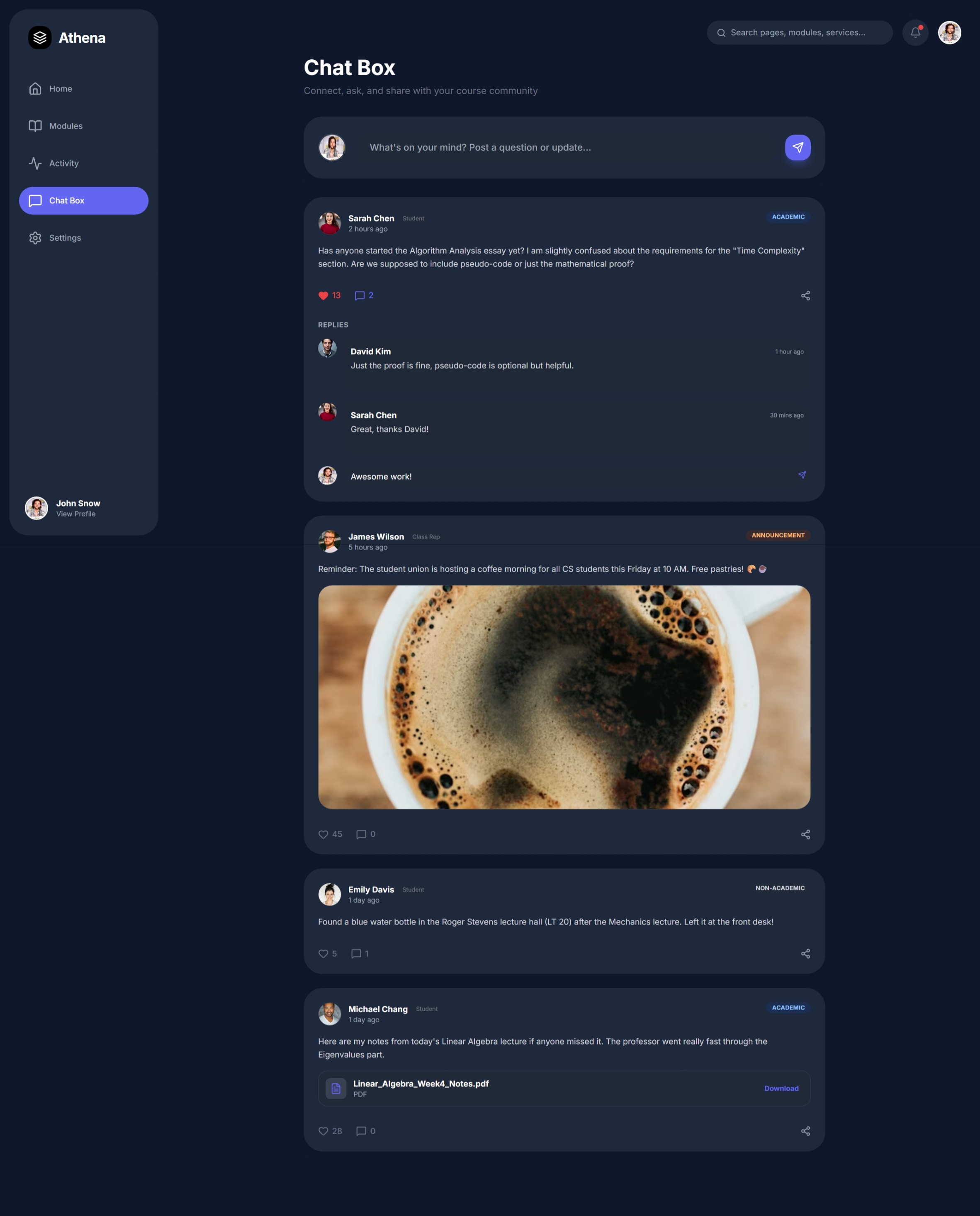
The Course Community Area
-
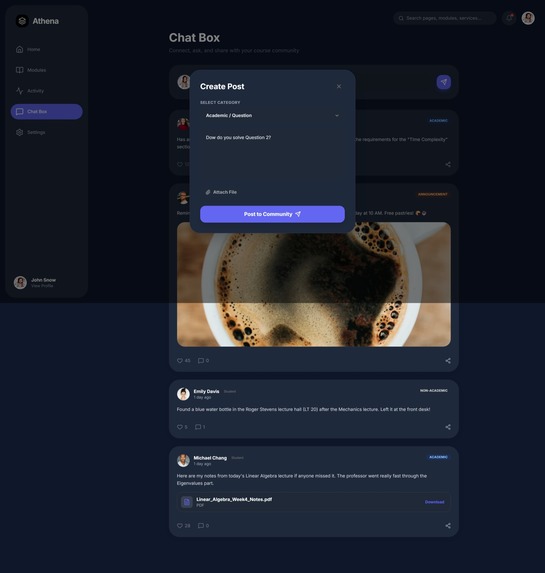
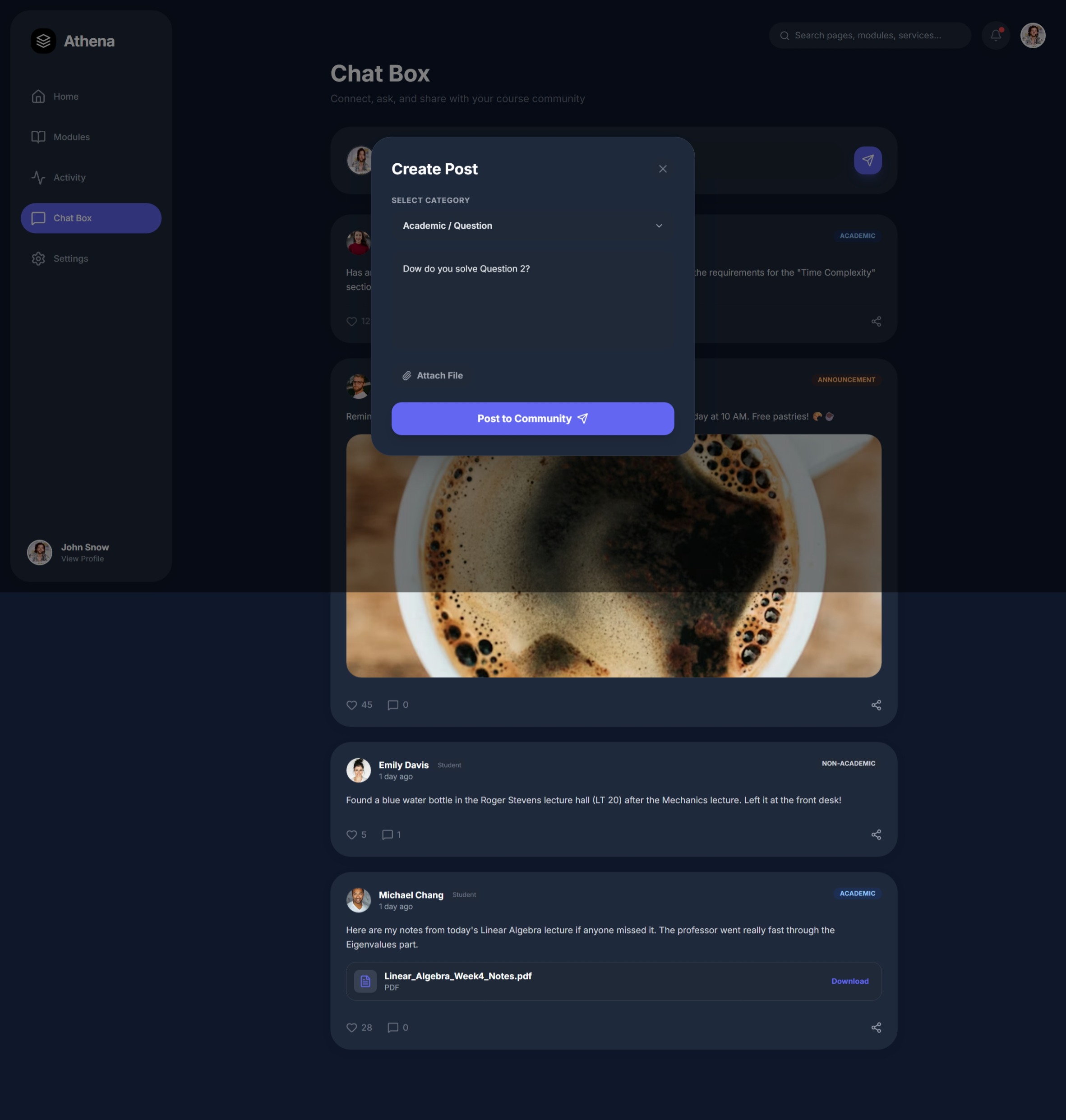
Posting in the Community
-
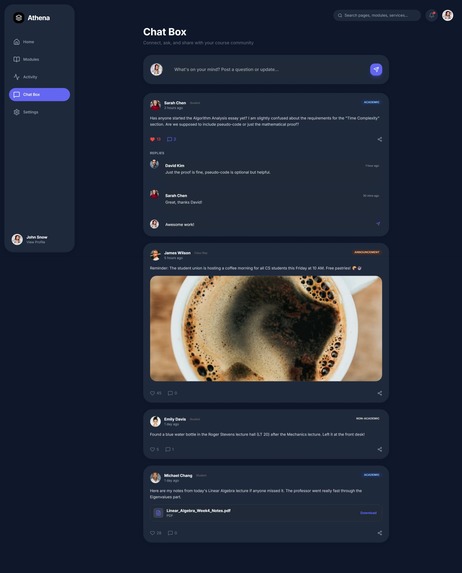
Replying in the Community
-
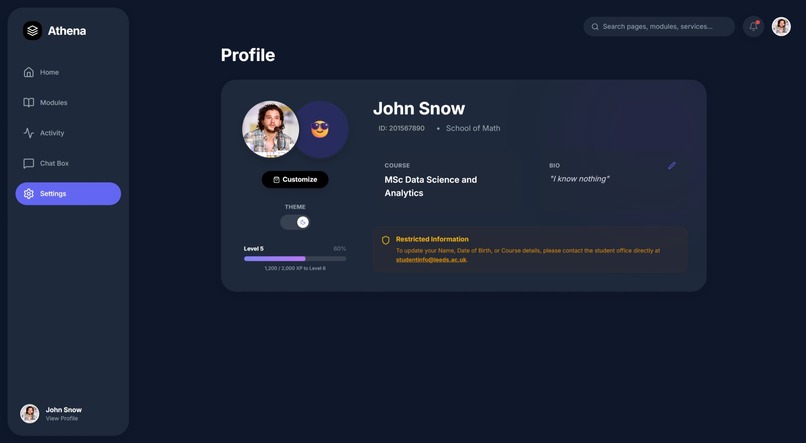
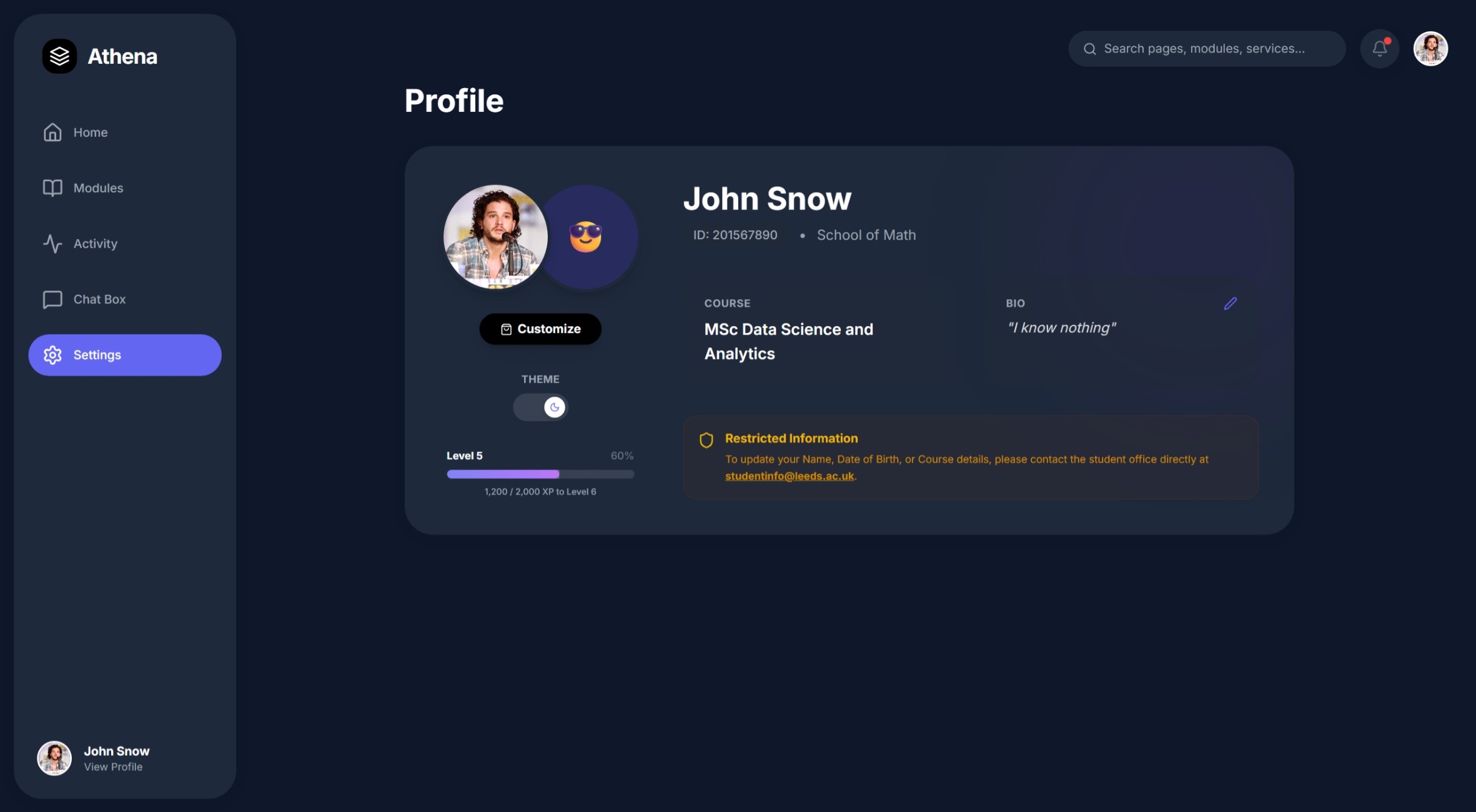
Profile Section
-
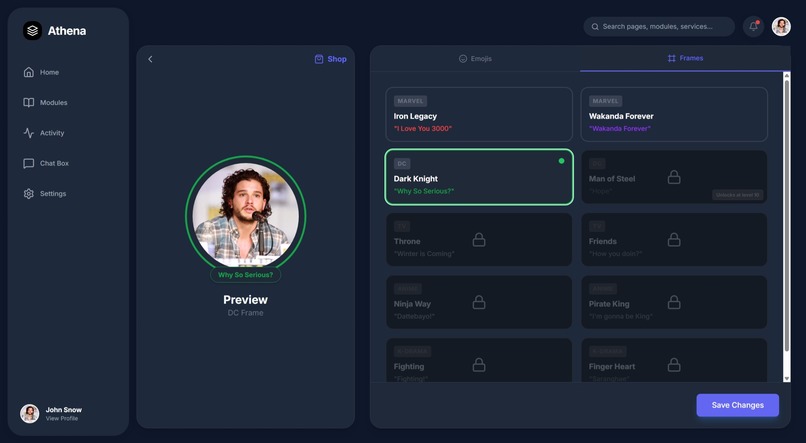
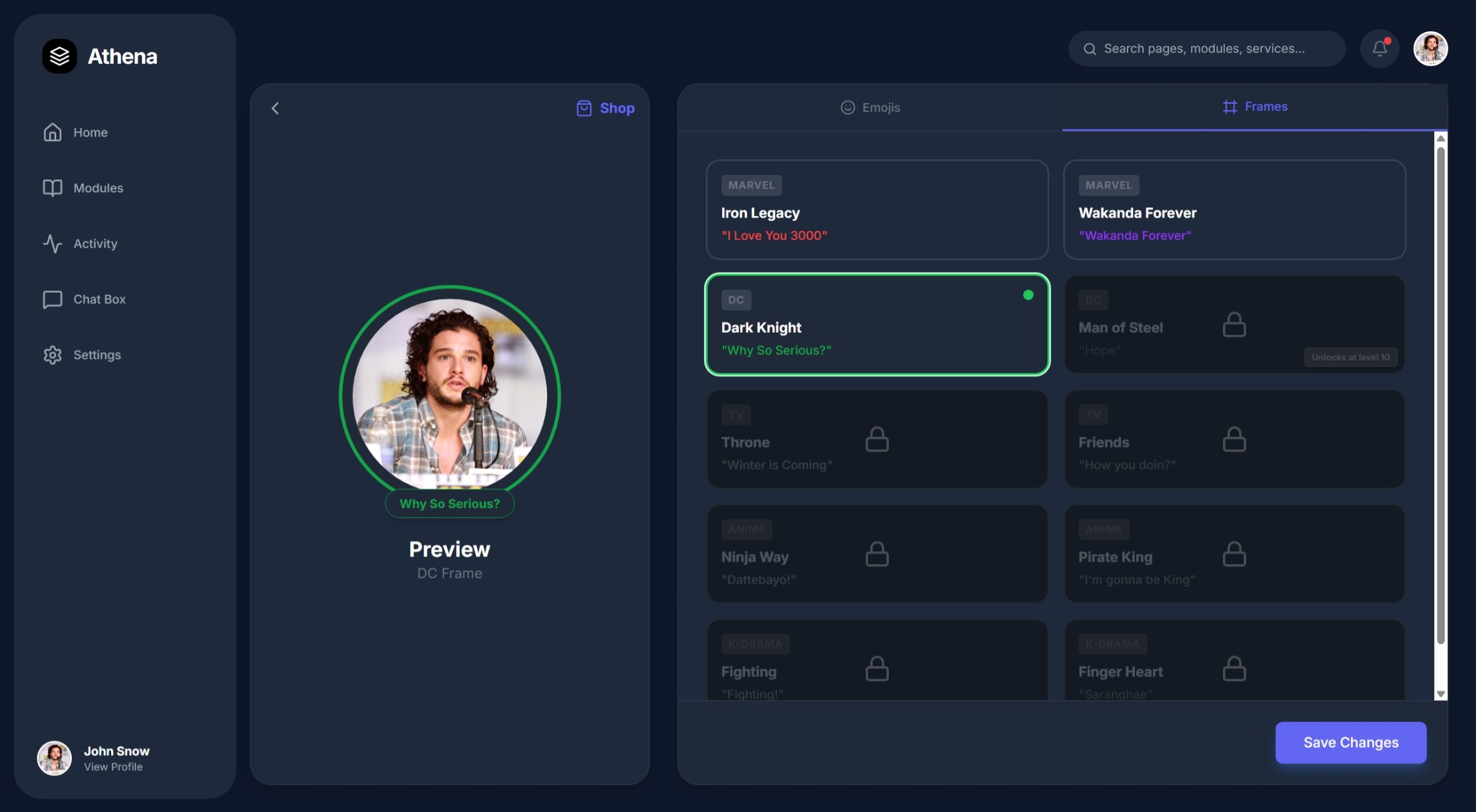
Frame Selection
-
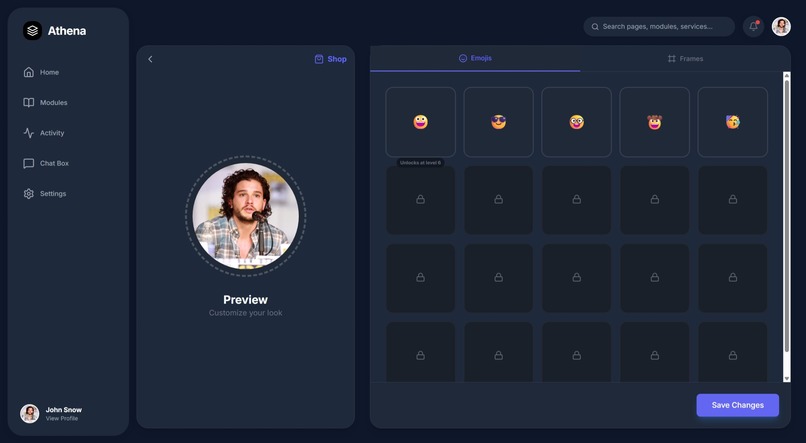
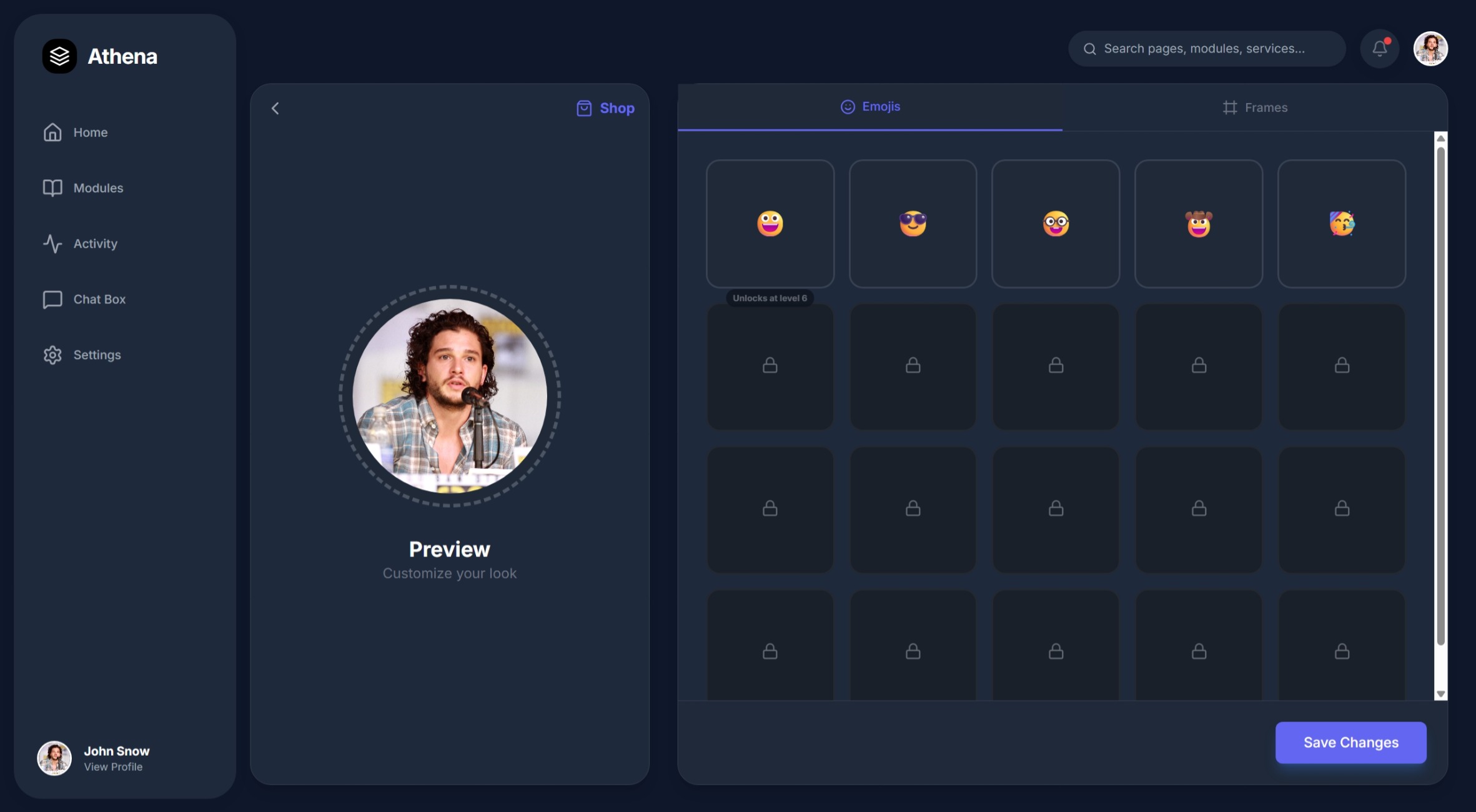
Emoji Selection
Inspiration
The inspiration for Athena came from the everyday frustrations students face with fragmented university systems. Attendance tracking, learning materials, student services, and engagement tools exist—but they are siloed, reactive, and often discouraging.
Attendance systems, in particular, tend to feel punitive: they track absence without motivating presence. Learning platforms deliver content but rarely inspire progress or understanding. Students increasingly expect mobile-first, intuitive experiences, while core academic systems remain web-heavy and outdated.
Athena was inspired by a simple idea: what if attendance, learning, and engagement were part of the same intelligent loop, rather than disconnected tools? By combining motivation, interactivity, and transparency, we aimed to create a platform that actively supports students.
What it does
Athena is a conceptual reboot of a university digital platform that unifies attendance, learning, and engagement in a web and mobile ecosystem.
Key features include:
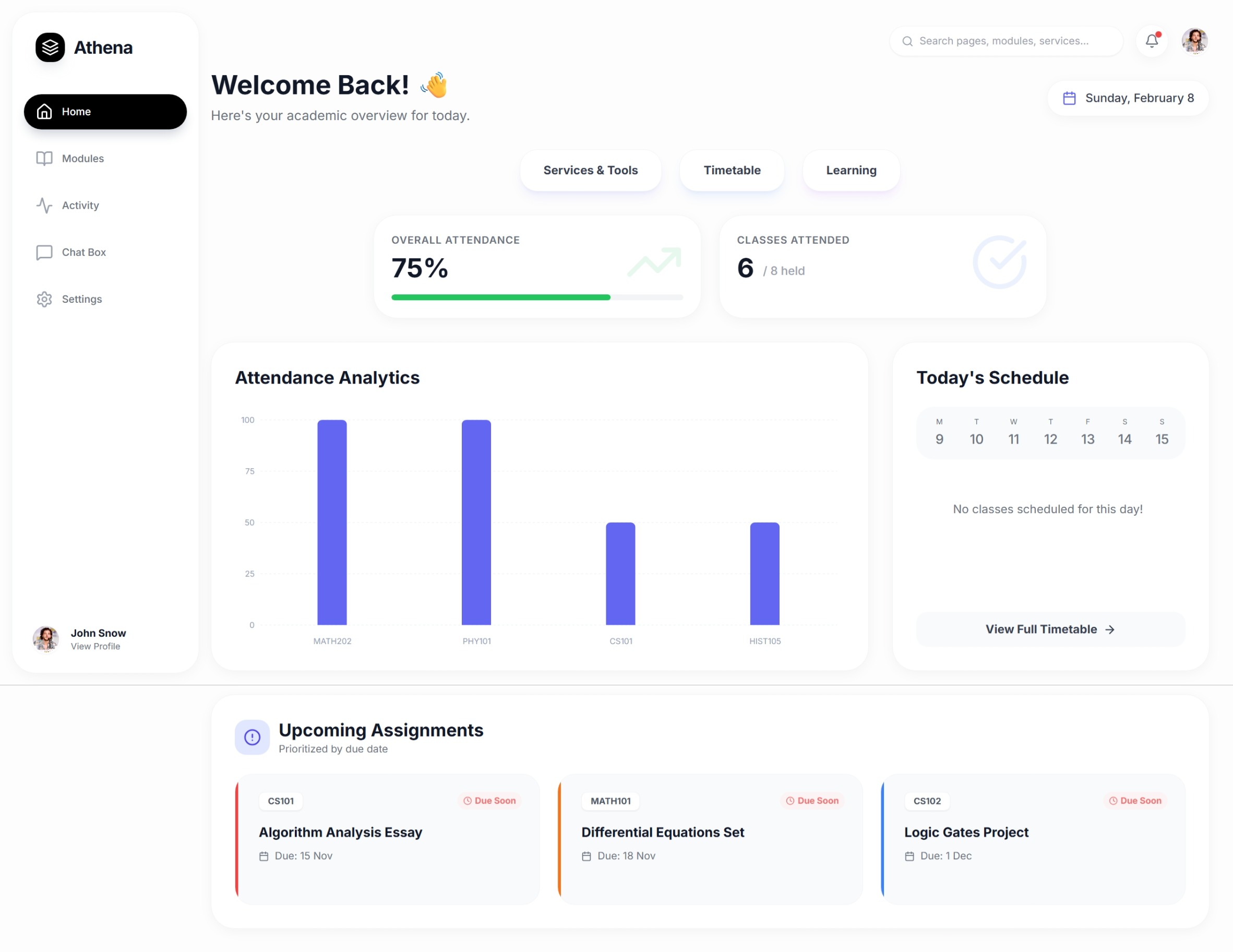
- Centralised student dashboard – Tracks attendance, assignments, and learning progress at a glance.
- Multi-factor attendance system – Combines QR scanning, physical location validation, and campus WiFi to ensure integrity.
- Gamified learning interface – Students earn coins for completing levels, engaging with content, and performing well on quizzes. Levels unlock progressively, reinforcing structured learning.
- AI-assisted learning companion (Google Gemini Chatbox) – Guides students, explains mistakes, offers hints, and interacts throughout the gamified learning journey without giving direct answers.
- Community chatbox – Lets students ask peers questions, share tips, and collaborate in a moderated, supportive environment.
- Customizable Bitmoji-style student profiles – Personalized avatars that reflect achievements and gamification status.
- Bi-directional data synchronisation – Updates both web and mobile platforms in real time, with offline support.
- Modern UI with light/dark mode – Clean, distraction-free design with a slider under the profile picture to switch modes.
Challenges addressed in this section:
- Fragmented experience – Solved by unifying attendance, learning, and engagement into a single dashboard.
- Student motivation – Solved via gamification, coins, and unlockable levels to encourage active participation.
- Mobile accessibility – Solved by designing a responsive mobile-first interface with offline support.
How we built it
Athena uses a bi-directional architecture with a single source of truth:
- Central backend – Manages attendance, modules, assignments, and learning progress.
- Web platform – Provides a dashboard-first experience for overview, planning, and engagement.
- Mobile app – Focuses on presence-based interactions like attendance validation.
- Real-time sync with offline tolerance – Ensures updates propagate between web and mobile seamlessly.
Attendance logic:
Valid_Attendance = QR_Scan AND Physical_Location AND University_WiFi
This strict logic ensures attendance is only recorded when the student is genuinely present.
Learning system mechanics:
- Gamified, level-based progression with unlockable topics.
- Coin rewards for completing lessons, exercises, and assessments.
- Multiple-choice quizzes to validate understanding; next level unlocks only after scoring at least 50%.
- AI assistant provides explanations, guidance, and hints but never direct answers.
Challenges and solutions in this section:
- Attendance integrity vs. privacy – Balanced security with transparency, explaining logic to students to build trust.
- Engaging learning – Solved by gamifying content, coin rewards, and levels to maintain motivation.
- AI assistance – Solved by limiting guidance to hints and explanations rather than answers.
- Data sync reliability – Solved with offline-tolerant bi-directional syncing to prevent lost progress.
Course Community & AI Moderation Snippet
Athena addresses the challenge of rewiring student communities through a built-in Course Community layer that promotes belonging, healthy communication, and peer-to-peer learning.
Each module includes a moderated community space that unlocks after successful attendance validation. Students can ask questions, share resources, upload files (PDFs, JPGs), and collaborate with peers in a safe, supportive environment.
All messages and posts are analyzed by AI before publishing to detect offensive, abusive, or inappropriate language. If flagged, students are prompted to rephrase, ensuring respectful discourse without heavy-handed censorship. The AI also encourages constructive responses and de-escalation when discussions become heated.
By embedding community engagement directly into attendance and learning flows, Athena reframes attendance as a gateway to participation, connection, and academic belonging, rather than a punitive obligation.
Challenges we ran into
Scope management
- Problem: Too many feature ideas initially.
- Solution: Prioritized features that demonstrate core functionality: attendance, gamified learning, AI support, and unified dashboard.
- Problem: Too many feature ideas initially.
Incorporating user feedback
- Problem: Some feedback conflicted with our original plan.
- Solution: Adopted suggestions that aligned with goals, like gamifying learning and adding community chat, while keeping core concepts intact.
- Problem: Some feedback conflicted with our original plan.
Balancing security and trust
- Problem: Multi-factor attendance could feel invasive.
- Solution: Transparent logic (QR + location + WiFi), clear explanations, and user-facing validation messages.
- Problem: Multi-factor attendance could feel invasive.
Maintaining engagement without trivializing content
- Problem: Gamification can feel superficial.
- Solution: Coin rewards tied to real learning progress, structured unlockable levels, and quizzes for accountability.
- Problem: Gamification can feel superficial.
AI guidance design
- Problem: Risk of replacing student reasoning.
- Solution: AI limited to hints, explanations, and support without giving answers.
- Problem: Risk of replacing student reasoning.
Integrating multiple systems
- Problem: Attendance, learning, assignments, and services were siloed.
- Solution: Centralized dashboard with bi-directional sync, plus a mobile companion app for presence-based tasks.
- Problem: Attendance, learning, assignments, and services were siloed.
Accomplishments that we're proud of
- Secure multi-factor attendance – Discourages fraud without feeling invasive.
- Gamified, coin-based learning system – Motivates progress while maintaining academic rigor.
- Web–mobile ecosystem – Unified platform instead of isolated apps.
- AI assistant (Gemini Chatbox) – Supports learning responsibly and interactively.
- Customizable student avatars – Bitmoji-style personalization for engagement and identity.
- Community chatbox – Encourages peer interaction and collaboration.
- User-centric design – Modern UI, light/dark mode, and offline tolerance.
Most importantly, Athena treats students as participants, not just data points.
What we learned
- Centralized, well-structured systems reduce complexity and improve engagement.
- Security and trust go hand-in-hand; transparency builds confidence.
- Gamification works best when tied to real progress, not superficial rewards.
- AI is most effective when it augments reasoning, not replaces it.
- Constraints and focused scope often create better experiences than unlimited flexibility.
What's next for Athena
Future iterations could include:
- Predictive engagement/disengagement indicators for personalized support
- Staff-facing dashboards with explainable insights
- Enhanced accessibility features and inclusive design testing
- Optional integration with existing LMS and assessment platforms
- Longitudinal analytics to track learning outcomes over time
- Expanded gamification with leaderboards, badges, and social learning elements
Athena is a working theory of how university platforms can evolve to be secure, engaging, and human-centered.
Built With
- accessible
- api
- compose
- jetpack
- jwt
- kotlin
- rest
- scanning
- superbase
- typescript
- ui

Log in or sign up for Devpost to join the conversation.