-
-

Hero image
-
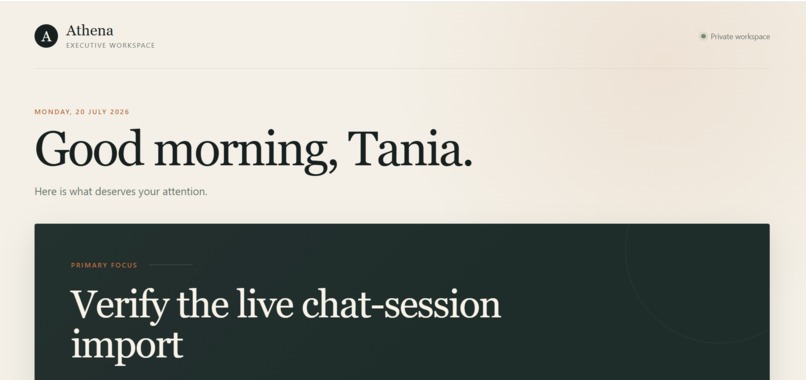
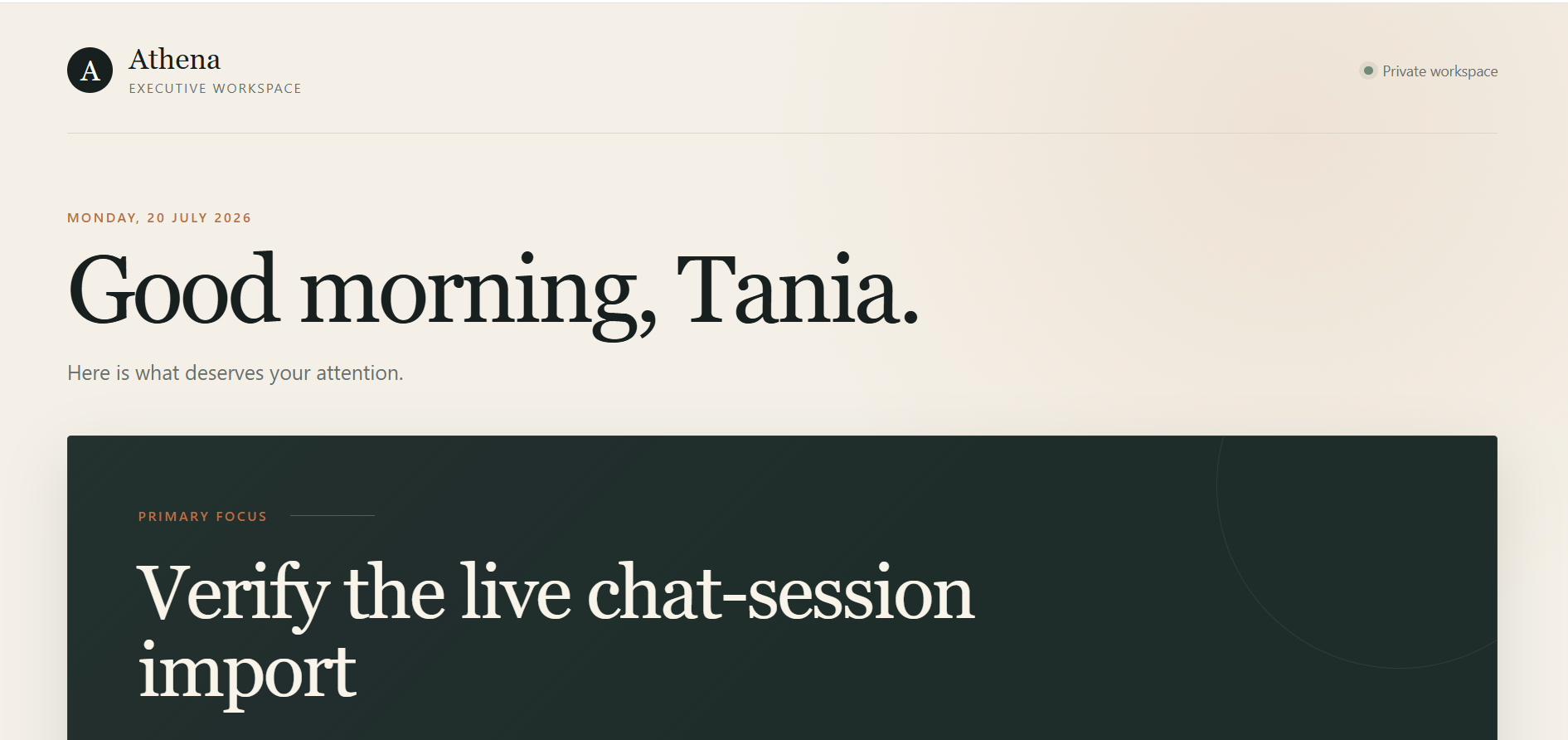
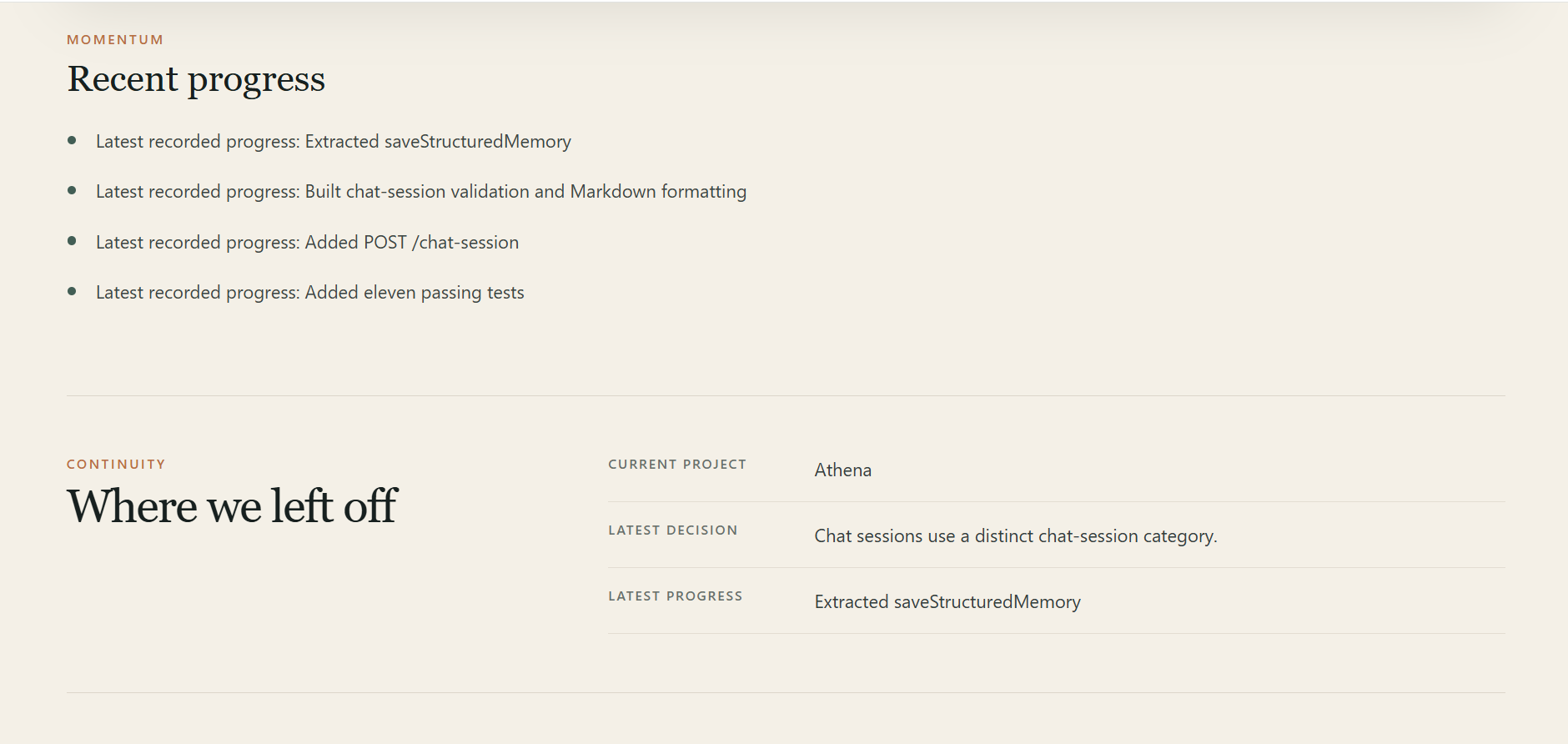
CEO Morning Brief
-
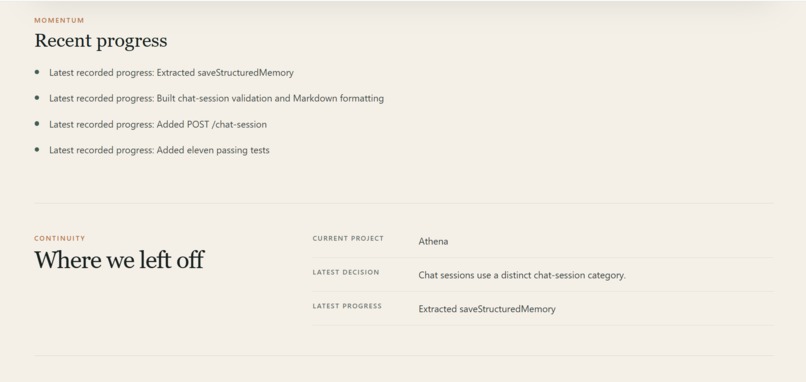
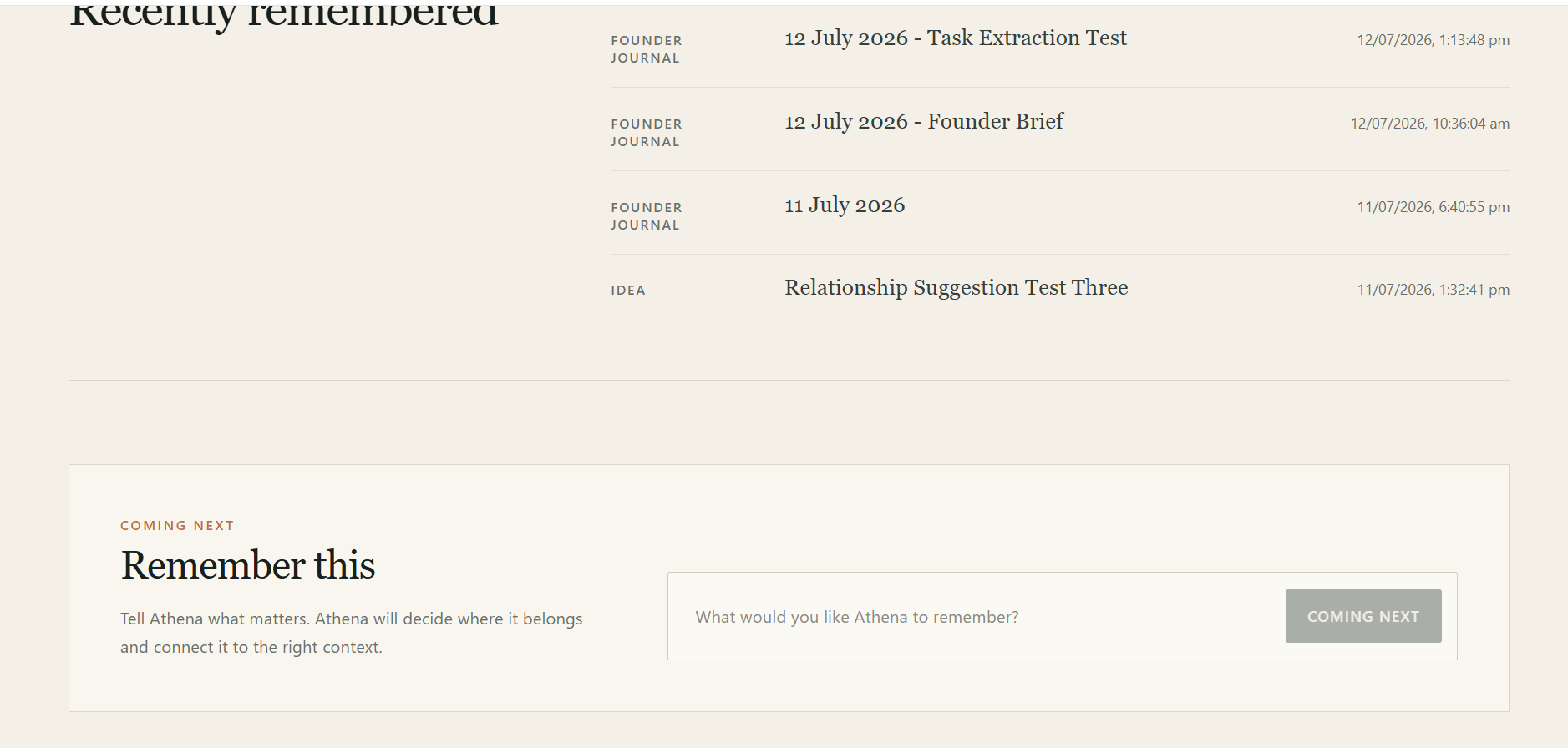
Founder Workspace
-
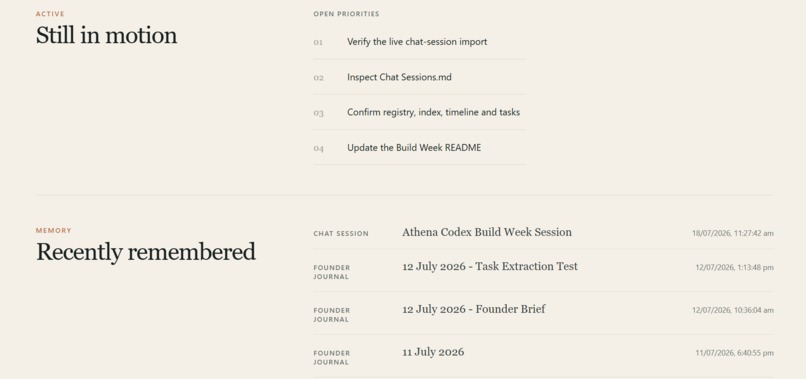
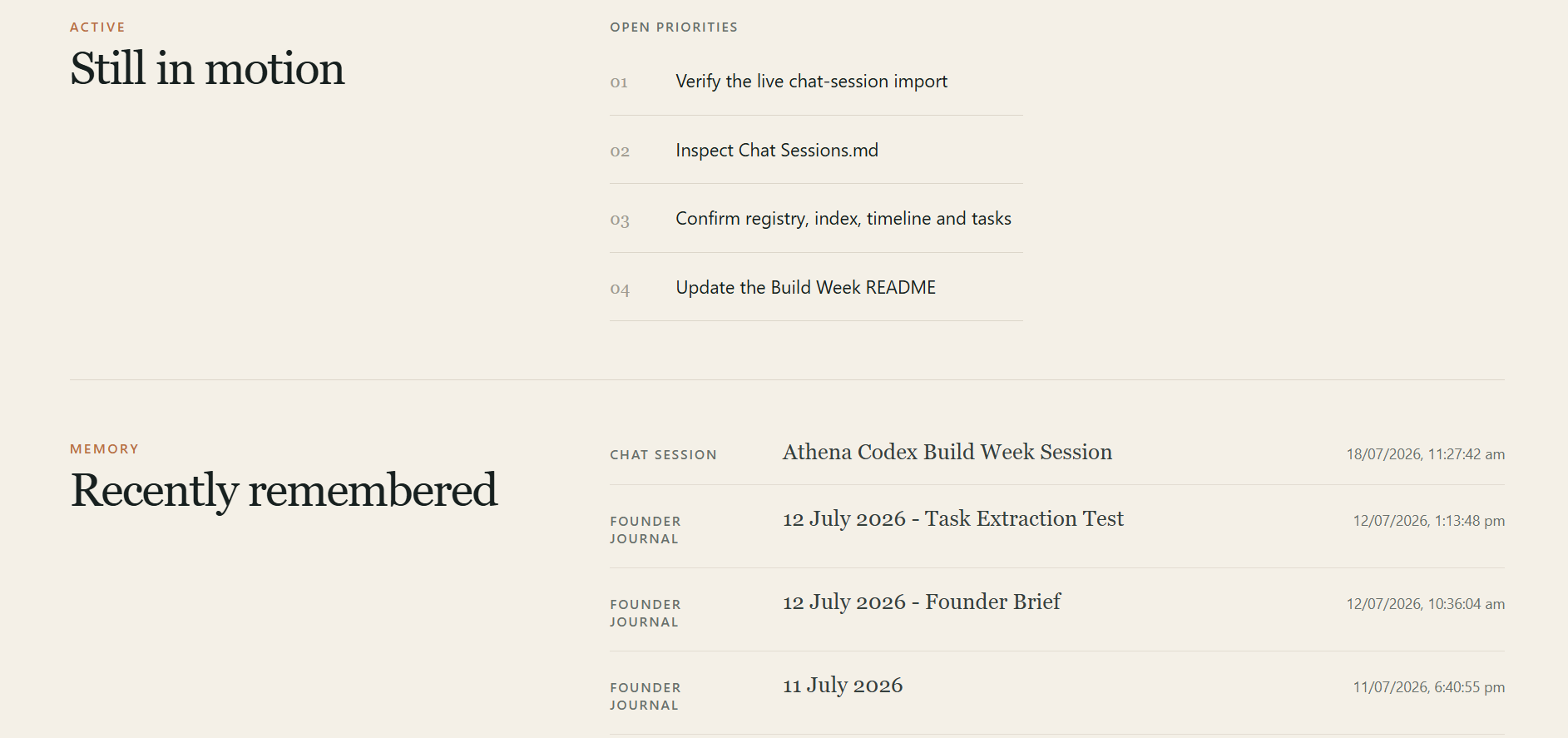
Memory Timeline
-
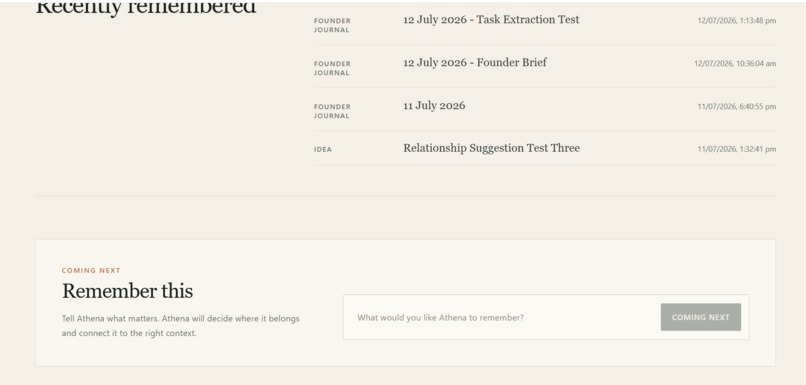
Memory Timeline
-
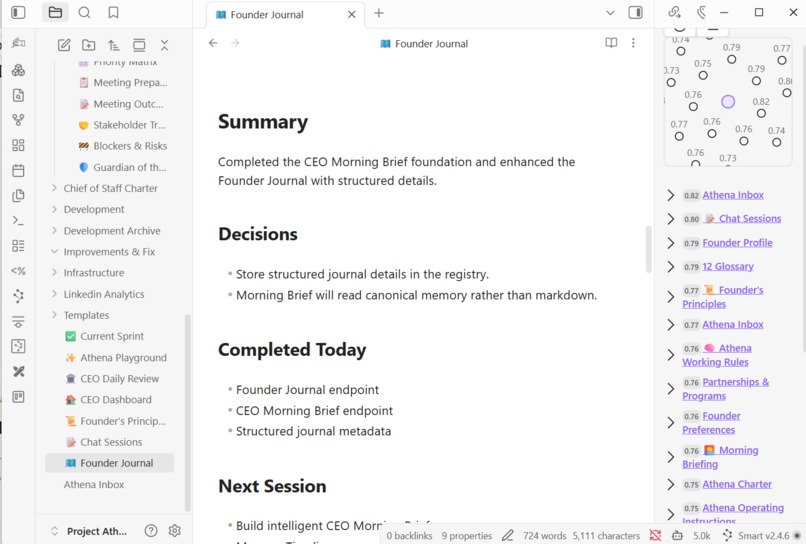
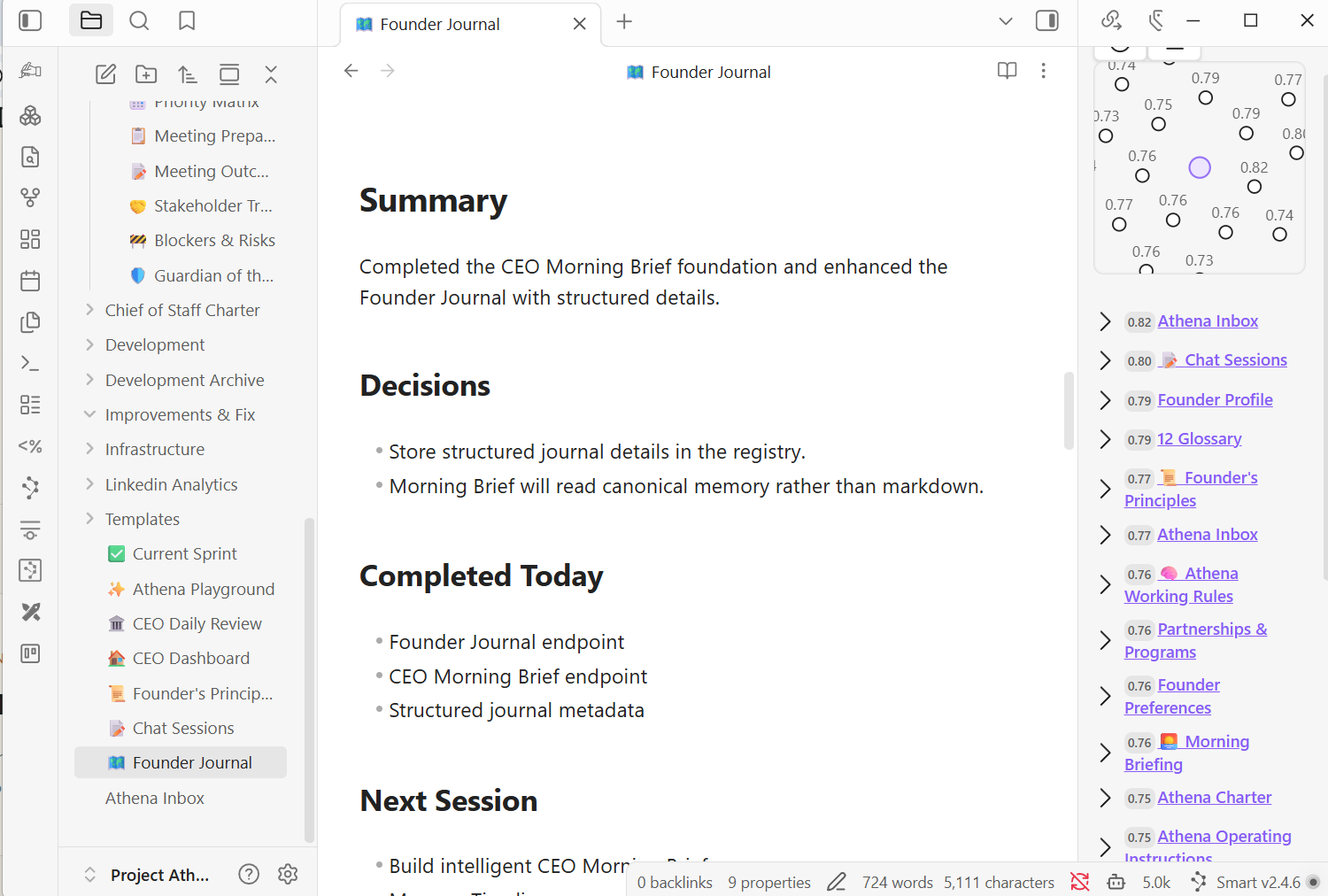
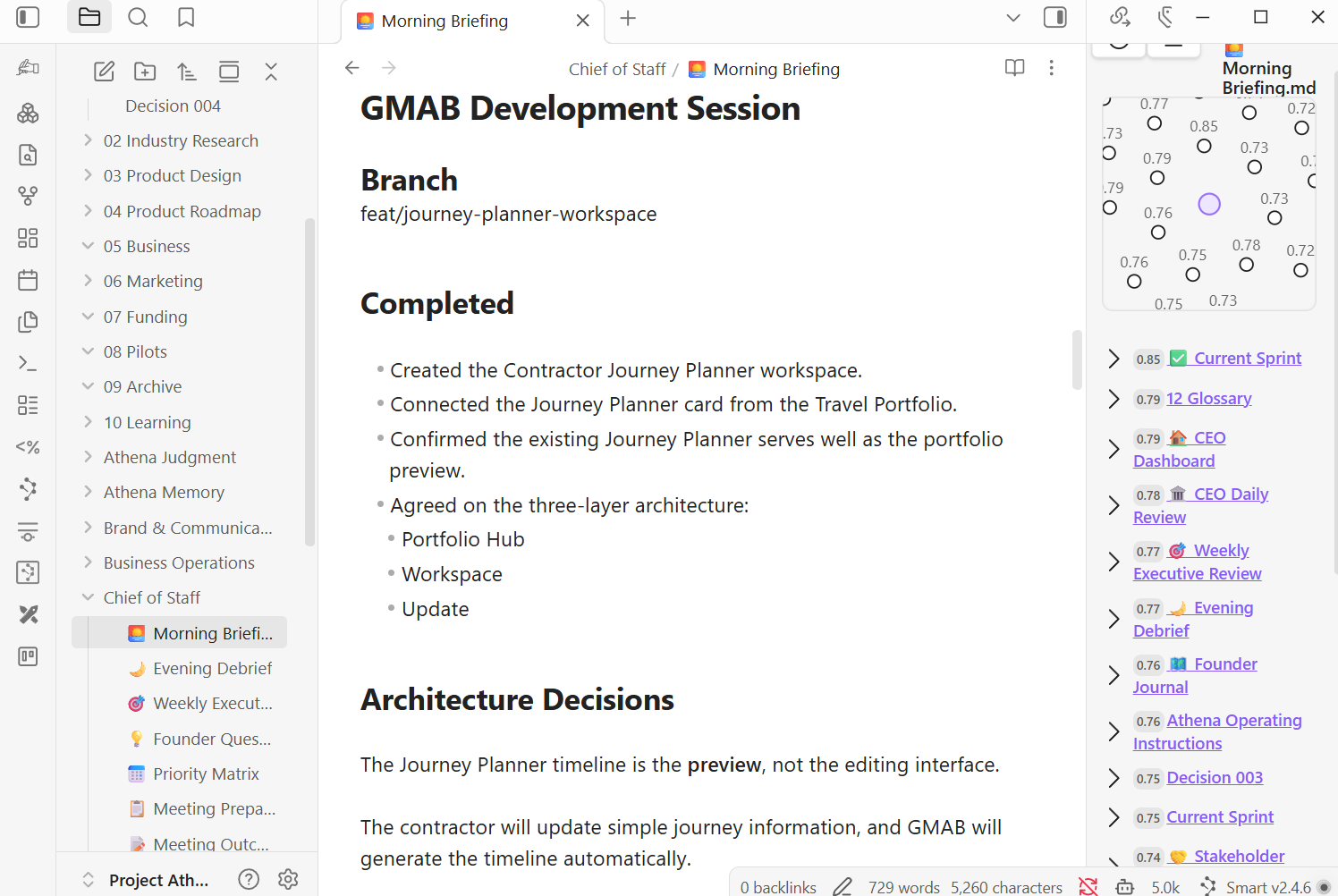
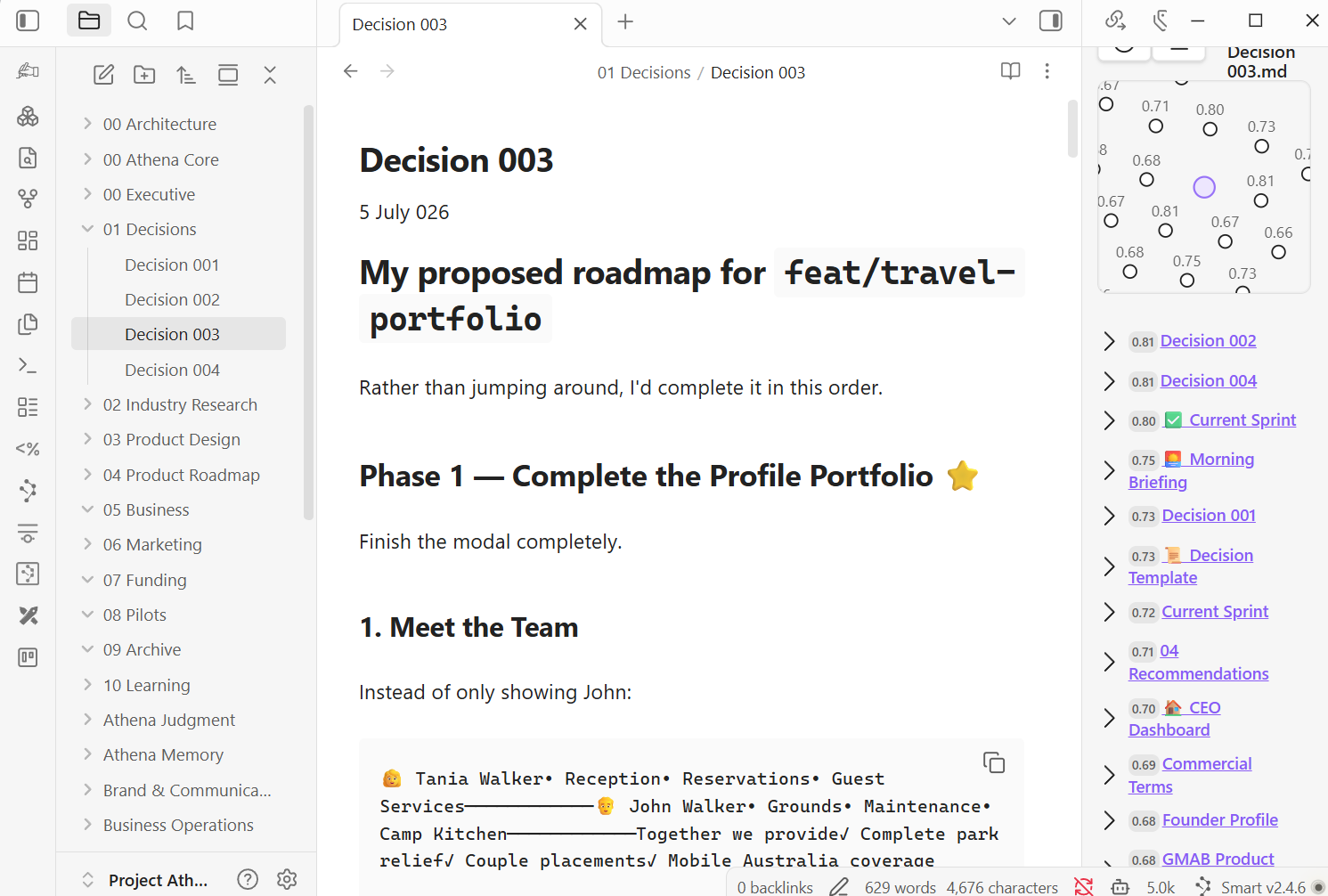
Obsidian Knowledge Vault
-
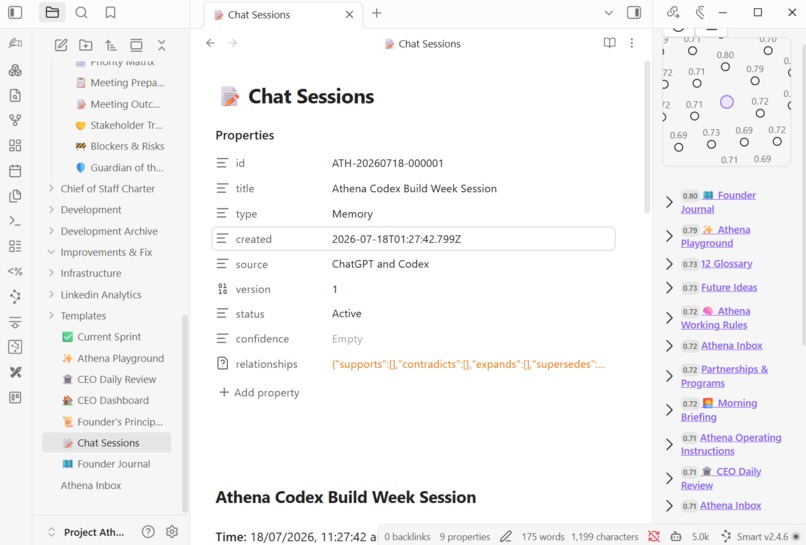
Obsidian Knowledge Vault
-
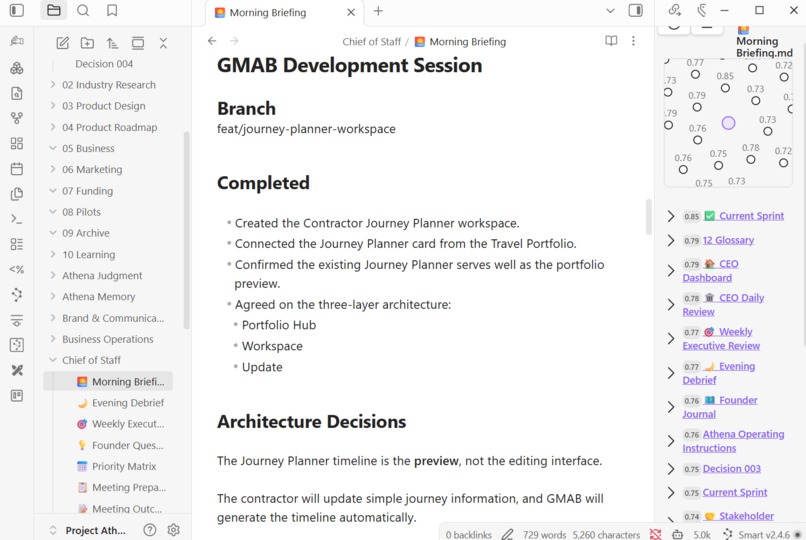
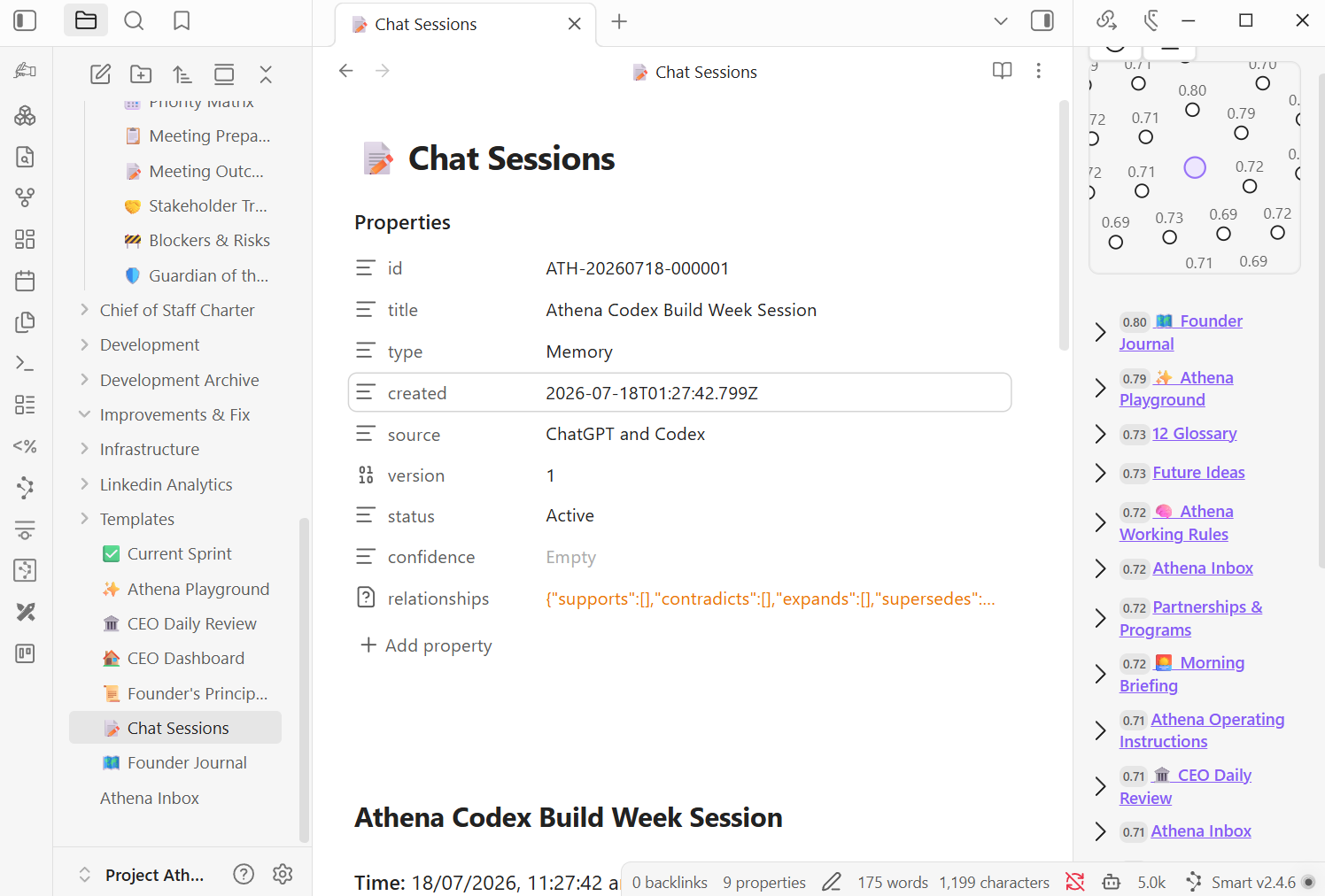
Obsidian Knowledge Vault
-
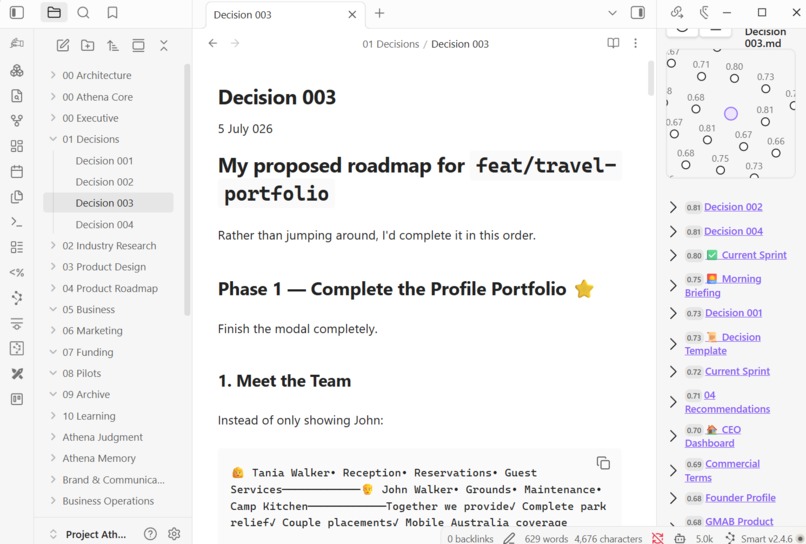
Obsidian Knowledge Vault
-
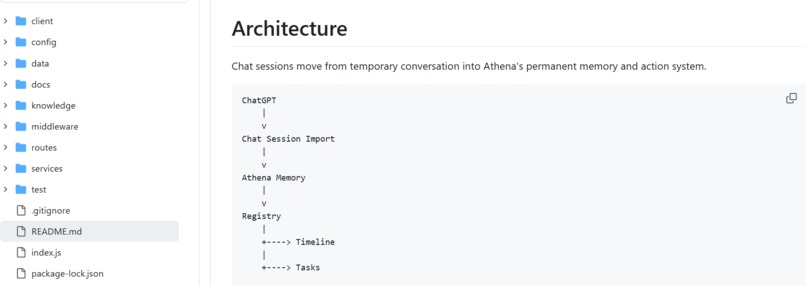
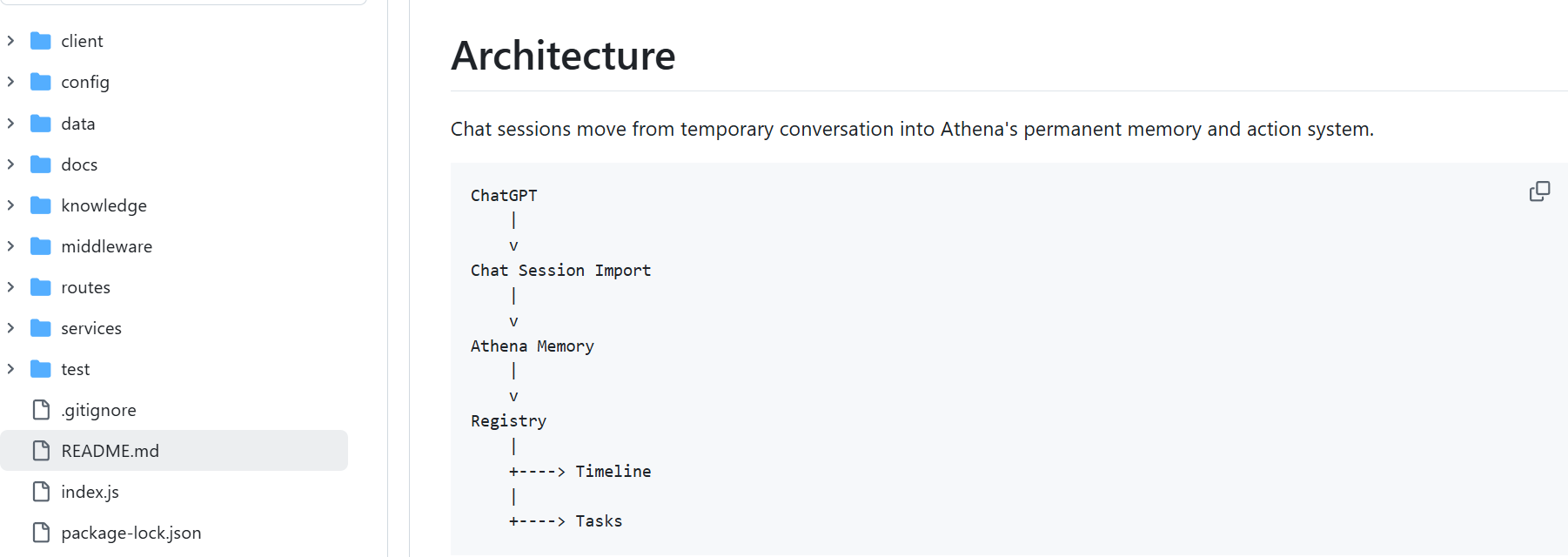
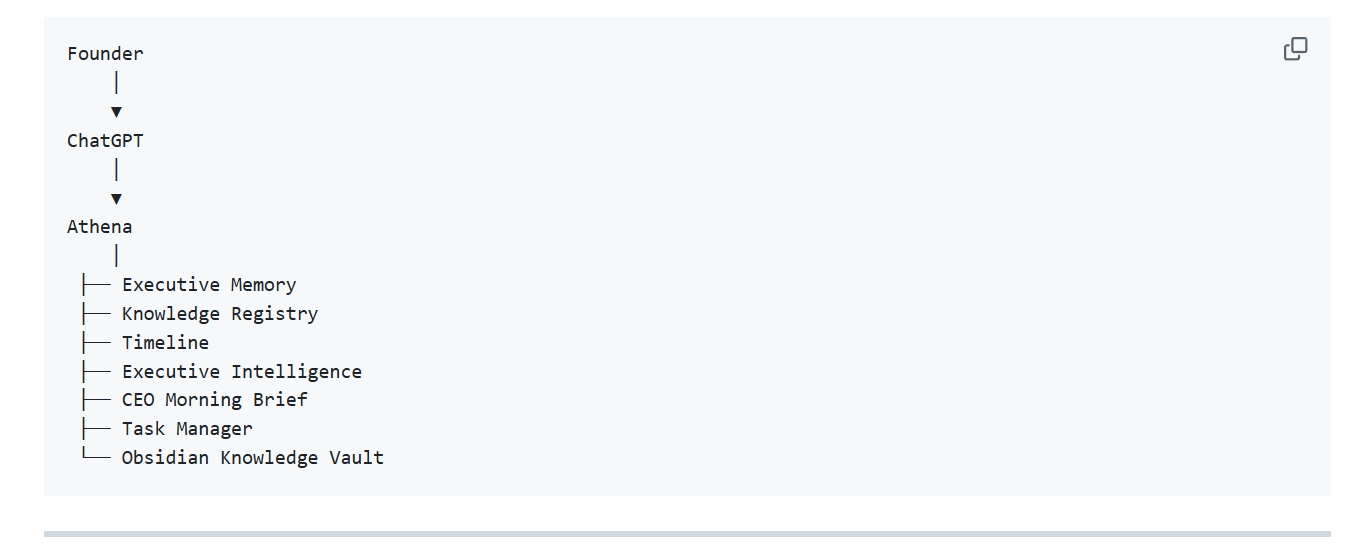
Architecture diagram
-
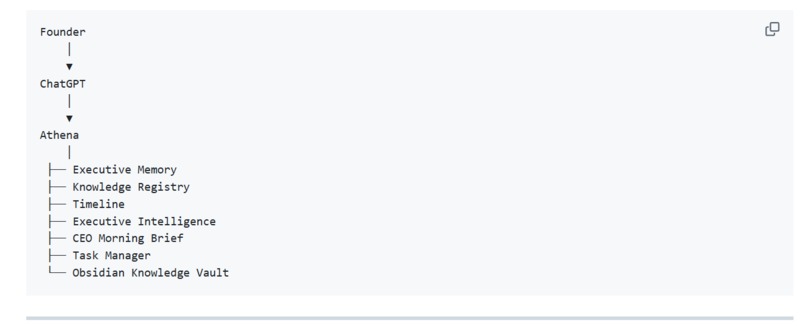
Architecture diagram

Inspiration "AI conversations are temporary. Athena makes them cumulative."
As a solo founder building multiple products with ChatGPT, I found myself repeatedly losing valuable architectural decisions, business insights and progress between conversations.
I didn't want another chatbot.
I wanted an AI operating system that could remember everything, organise knowledge over time, understand project history and become a long-term partner rather than a temporary assistant.
During OpenAI Build Week, that vision became a working prototype. By combining GPT-5.6 for architecture and reasoning with Codex for implementation, Athena began preserving not only conversations but also the engineering work that created it.
That idea became Athena.
What it does. Athena is an AI operating system that gives founders persistent organisational memory.
Instead of conversations disappearing after each chat, Athena transforms them into structured, searchable organisational knowledge.
Athena currently provides:
- Persistent Memory Registry
- Founder Journal
- CEO Morning Brief
- Memory Timeline
- Automatic Task Extraction
- Task Completion Workflow
- Canonical Memory IDs
- Chat Session Import
- Structured business knowledge
Athena is designed to work alongside AI assistants rather than replace them, giving multiple AI systems a shared long-term memory they can build upon.
How we built it. Athena was built using Node.js, Express and a modular service architecture.
Memory is stored in structured JSON registries alongside Markdown files inside an Obsidian knowledge vault. Every memory receives a permanent canonical identifier, allowing relationships between founder journals, decisions, tasks and future AI reasoning.
REST APIs expose founder journals, timelines, CEO briefings, task management and chat-session import, creating a foundation that future AI agents can interact with through a shared persistence layer.
During Build Week I used:
GPT-5.6 to design Athena's architecture, executive workflows and long-term product direction. Codex to implement production code, refactor services, write automated tests, improve documentation and safely manage Git commits under review.
Rather than replacing software engineering, Codex became my implementation partner while I remained responsible for product vision, architecture and technical decisions.
Challenges we ran into. The biggest challenge was moving beyond simple note taking.
We wanted Athena to become a true long-term organisational memory system rather than another document store.
This required designing canonical memory IDs, structured metadata, memory relationships, automatic task extraction and a persistence layer that both humans and AI systems could understand.
Another challenge was creating a clean architecture that allowed multiple interfaces-such as REST today and MCP in the future-to share the same business logic without duplication.
Balancing human-readable markdown with machine-readable structured data was another major design challenge.
Accomplishments that we're proud of. During Build Week Athena evolved from a simple memory experiment into the foundations of an AI operating system.
We're especially proud that Athena can now:
- Remember founder progress across days
- Generate CEO Morning Briefs
- Build chronological timelines
- Automatically import structured chat sessions
- Extract actionable tasks automatically
- Track task completion
- Maintain persistent organisational memory independent of any single AI conversation
This creates an evolving business brain rather than isolated AI chats.
What we learned. We learned that memory is just as important as intelligence.
Large language models are incredibly capable, but long-term collaboration requires persistent context.
Separating reasoning from memory allows different AI systems to collaborate over shared organisational knowledge instead of starting from scratch every conversation.
We also learned that AI-assisted software development works best when responsibilities are shared: GPT-5.6 helped shape the architecture, Codex implemented and validated the engineering work, while I remained responsible for the product vision and technical direction.
What's next for Athena: AI Operating System for Founders .
The Road Ahead: Athena is still at the beginning of its journey.
Today's prototype proves that AI conversations can become persistent organisational memory. The next stage is transforming that memory into an intelligent operating system that helps founders think, decide and build over the lifetime of their businesses.
Our roadmap includes:
- Secure MCP integration with ChatGPT and future AI systems
- Rich memory relationships and knowledge graphs
- Semantic search across organisational memory
- Executive dashboards and founder workspaces
- Autonomous planning and proactive assistance
- Multi-project organisational support
- Collaboration between specialised AI agents sharing the same persistent knowledge
But these are milestones-not the destination.
The long-term vision is an AI operating system that grows alongside its founder, preserving decisions, connecting knowledge across years, and providing continuity regardless of which AI model or interface is being used.
The future of AI isn't bigger conversations.
It's continuous understanding.
Most AI assistants remember a conversation. Athena remembers the business.
Built With
- ai
- api
- chatgpt
- code
- codex
- express.js
- founder
- git
- github
- javascript
- json
- knowledge
- management
- markdown
- memory
- node.js
- obsidian
- openai
- powershell
- rest
- systems
- tools
- vs

Log in or sign up for Devpost to join the conversation.