
Inspiration
Data transparency and ownership have been significant global challenges, with most patient health records controlled by healthcare providers. This centralized control often limits patients’ access to their own medical information and can hinder the seamless sharing of data across different healthcare systems.
To address these issues, there is a crucial need for a distributed, reliable, and transparent storage system. Such a system would not only enhance data accessibility and security but also empower patients by giving them greater control over their health records. By leveraging blockchain technology, we can create a decentralized network that ensures data integrity and transparency, reducing the risk of data breaches and unauthorized access.
Moreover, this innovative storage solution can seamlessly integrate with existing health platforms like EPIC and Cerner. This integration would facilitate the smooth exchange of information between different healthcare providers, improving the efficiency and quality of patient care. In essence, a distributed storage system represents a transformative approach to managing health data, fostering a more patient-centric and secure healthcare ecosystem.
What it does
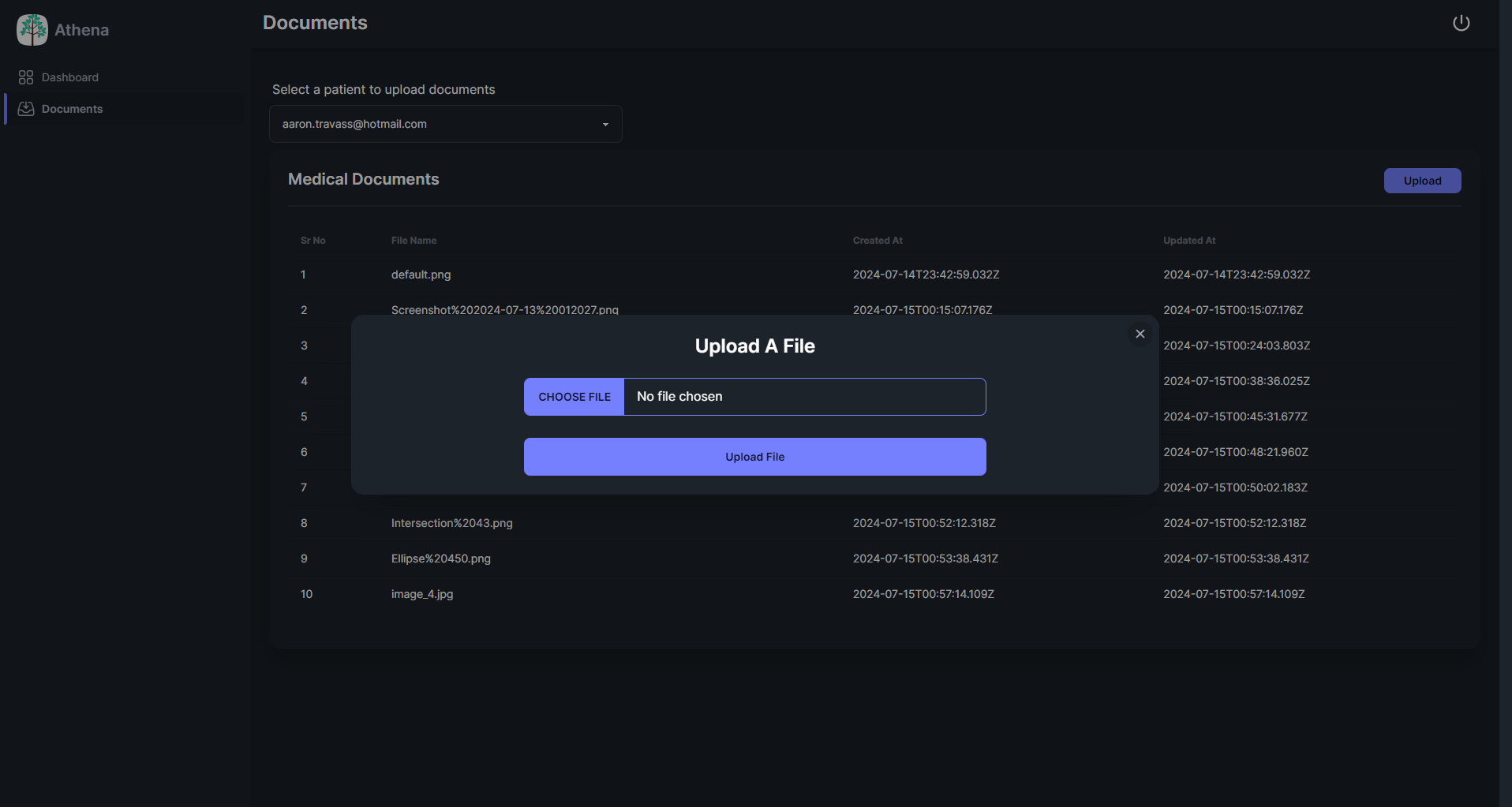
Athena is the modern storage solution to this problem. Based on IPFS technology, it can store vast amounts of data in a distributed manner. IPFS is a decentralized, peer-to-peer network designed for distributed file storage and sharing. Instead of using traditional location-based addressing (like URLs), IPFS uses content-based addressing. Each file is broken down into smaller pieces called “blocks,” and each block is given a unique identifier called a Content Identifier (CID) based on its content. Thus, no single entity owns the files. Moreover, the protect data, each file is encrypted using AES-256 and then stored in filebase. Thus, the files cannot be directly viewed.
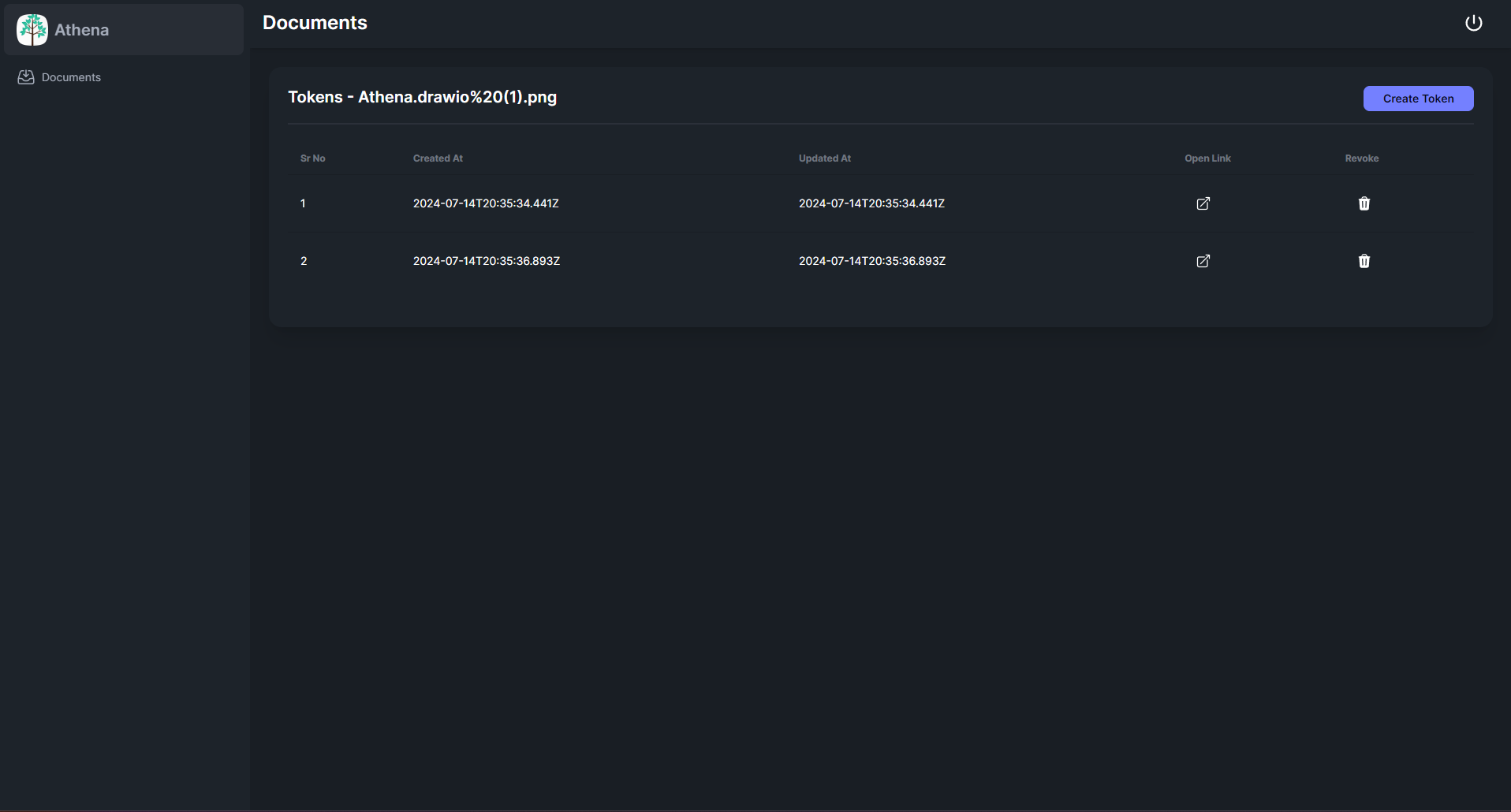
Athena also makes use of UCAN tokens. Each token has certain capabilities which allow certain actions.
The project aims to tackle healthcare disparities by empowering patients with greater control over their medical data through a decentralized, transparent storage system based on blockchain technology. This initiative not only enhances data accessibility and security but also promotes interoperability across healthcare systems, thereby improving overall healthcare equity.
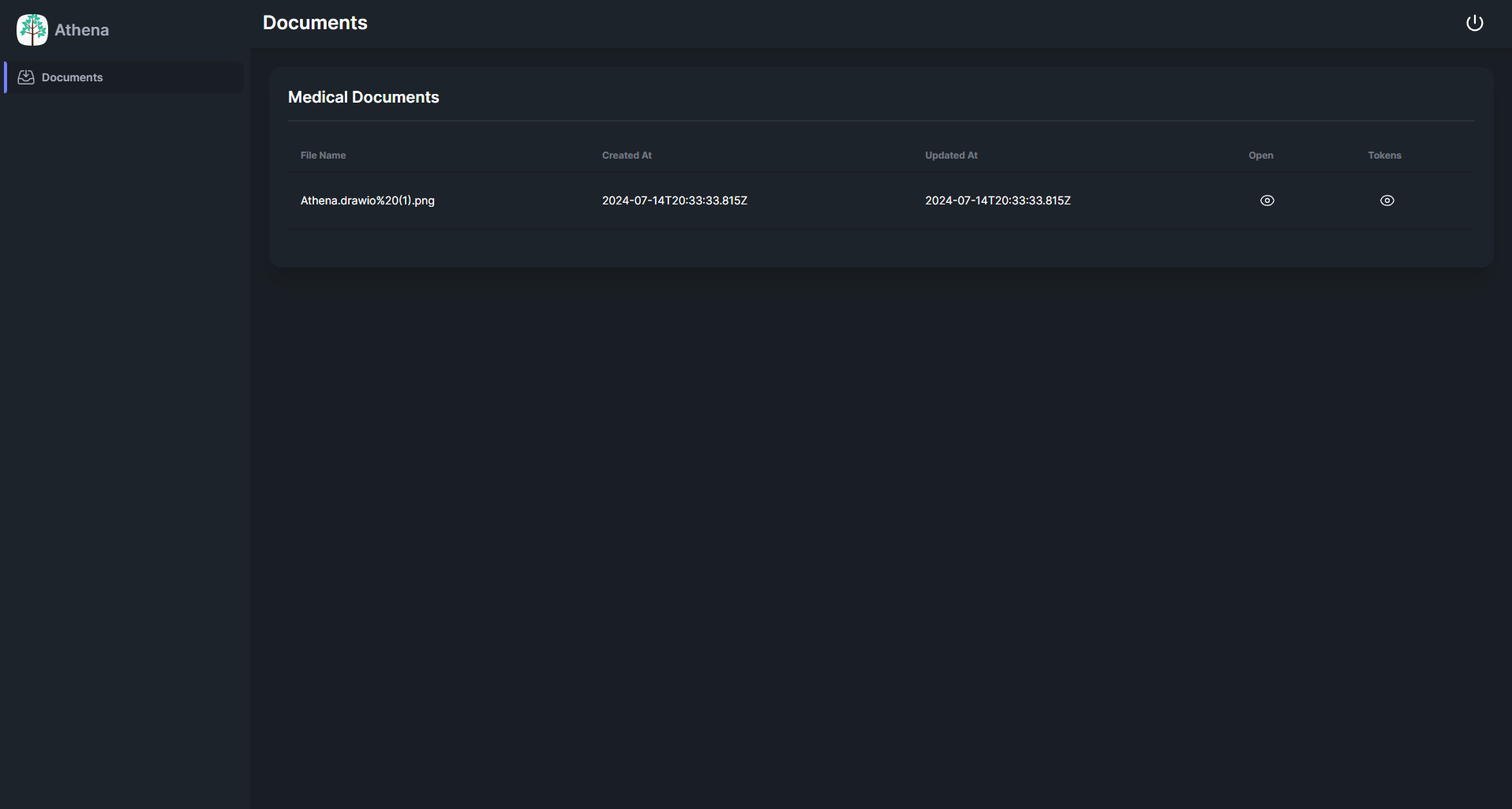
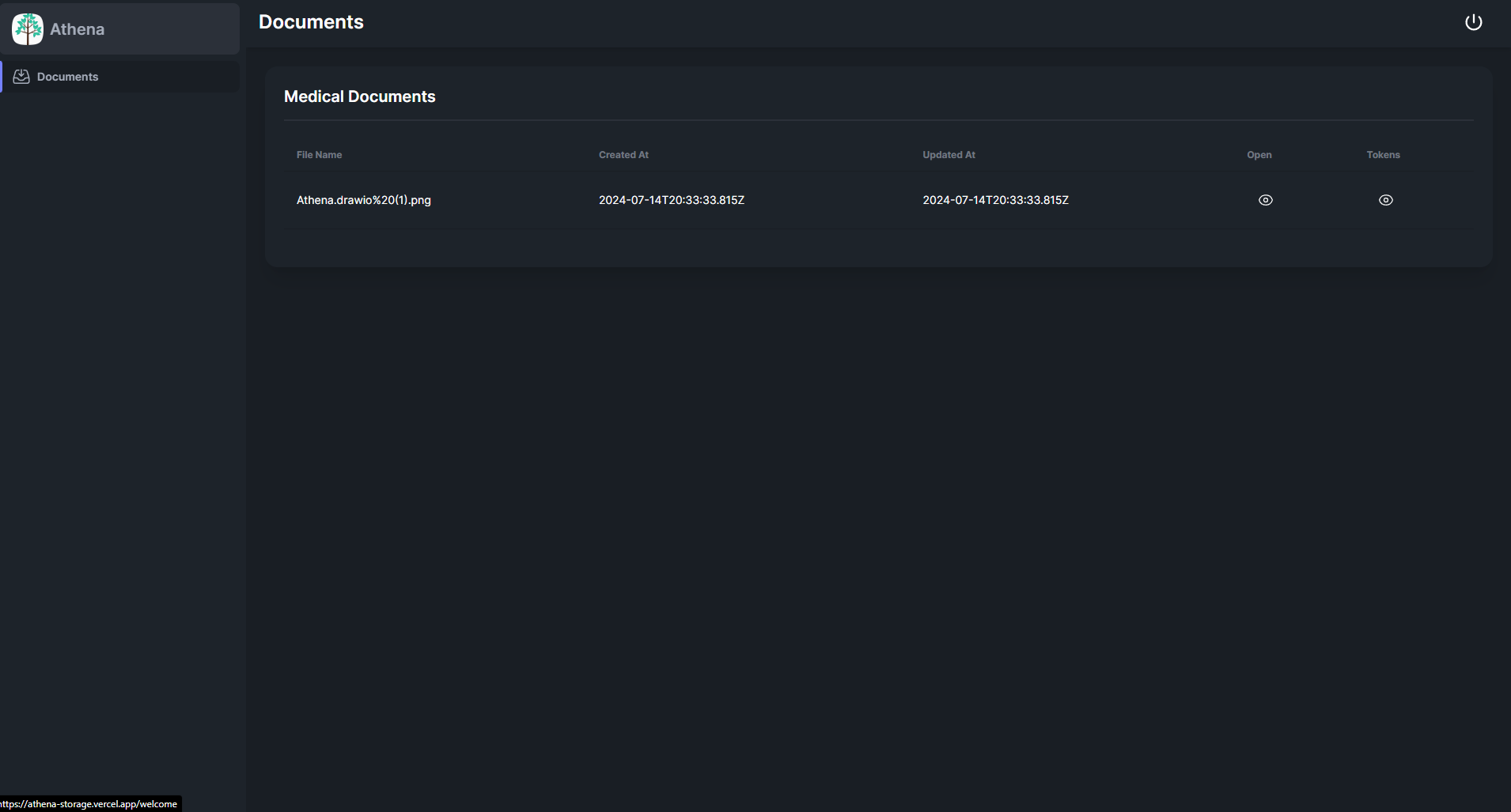
To preserve ownership and control, documents can only be viewed if the patient chooses to share them. These documents can be shared by using signed URLs which are unique.
How we built it
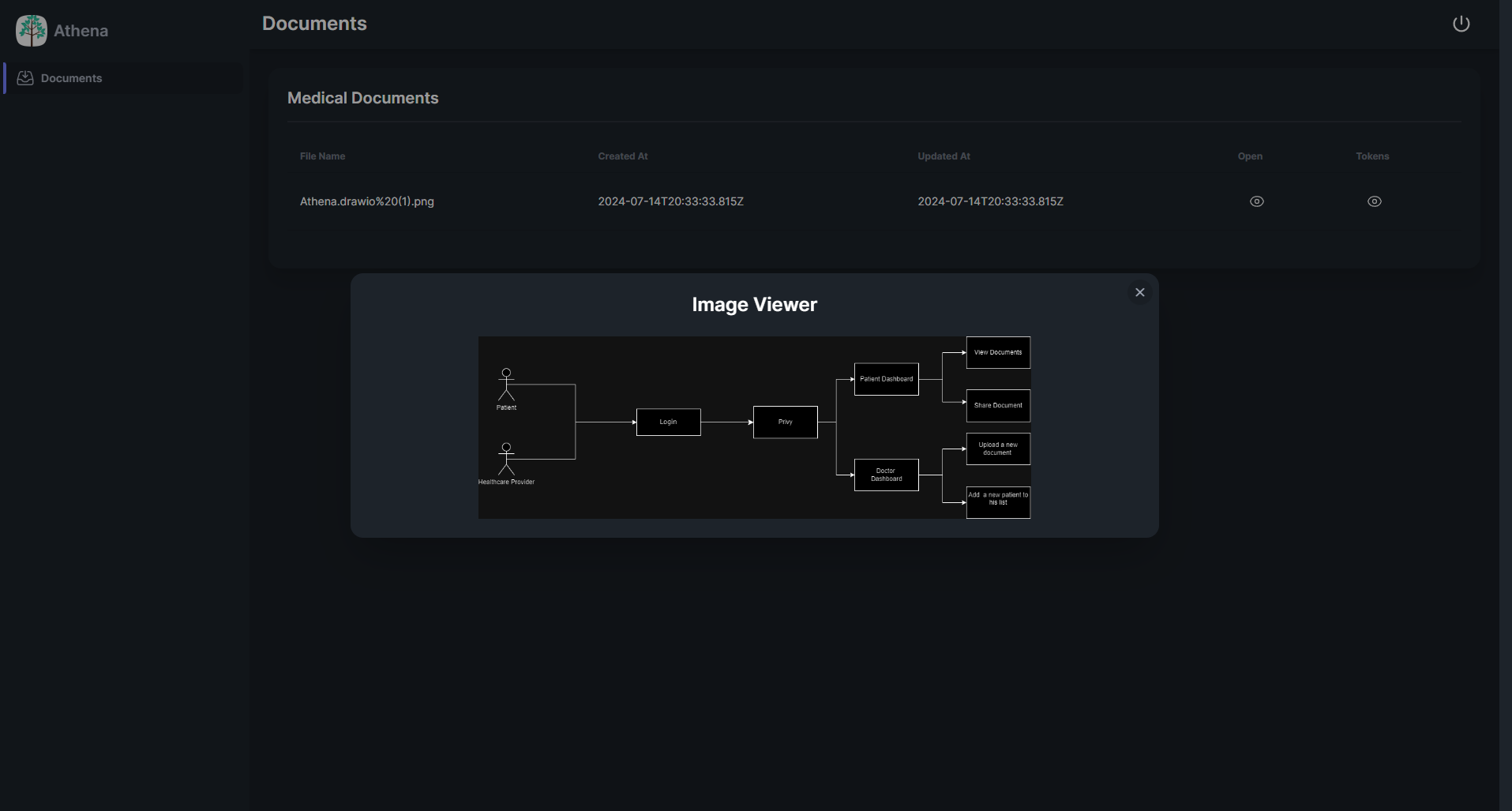
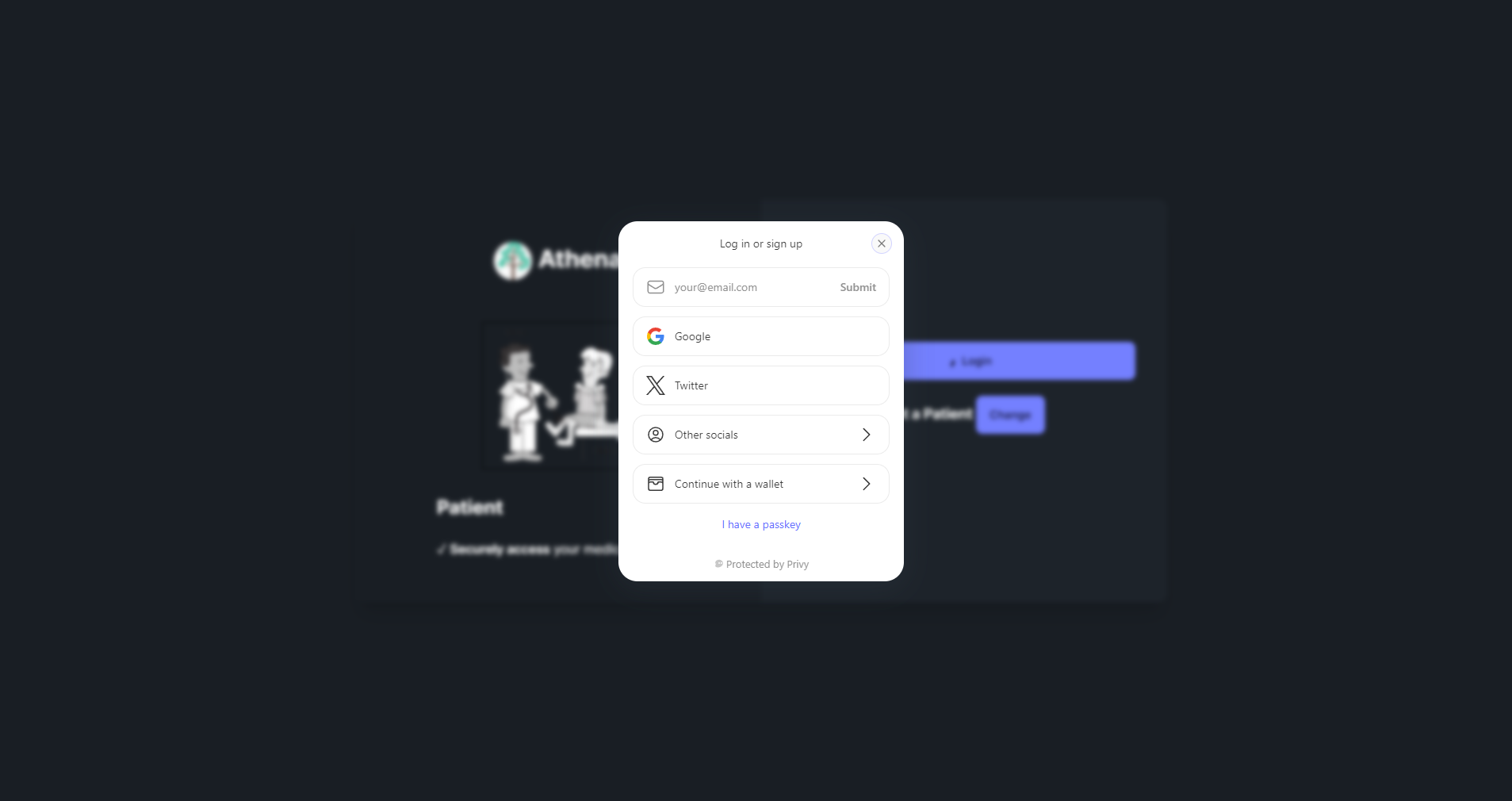
The frontend was built using NextJS and deployed on Vercel. The backend makes use of 2 packages: platform and upload server. The platform runs on GraphQL and uses Prisma as the ORM. For our database, we chose Vercel PostgreSQL which is serverless version of PostgreSQL that has the ability to scale dynamically in response to load. We decided to make use of Privy to login and sign up. Privy has various options such as Google, Github, Crypto Wallet sign-ins. The upload server makes use of Fastify as the server side framework and encrypts the file before uploading it to Filebase. The platform and upload server are containerized with Docker and uploaded to GitHub Container Registry via GitHub actions. These containers are then run in Heroku. Secrets are managed via Hashicorp Vault. Logo was created using Figma.
Challenges we ran into
Data Privacy and Compliance: Ensuring data privacy and compliance with regulations like HIPAA and GDPR is a significant challenge. Using Filebase, which is not HIPAA compliant, requires careful planning to transition to compliant IPFS nodes.
User Experience: Creating a seamless and user-friendly interface for patients and healthcare providers, ensuring easy access and control over health records, required significant design and development efforts.
Accomplishments that we're proud of
Successful Integration of IPFS: Successfully leveraging IPFS for decentralized storage, ensuring data is stored securely and reliably in a distributed manner, was a major achievement.
Robust Security Implementation: Implementing strong encryption (AES-256) and secure access control mechanisms (UCAN tokens, signed URLs) to ensure data privacy and ownership was a significant accomplishment.
Scalable Backend Infrastructure: Building a scalable backend using NextJS, Fastify, GraphQL, Prisma, and Vercel PostgreSQL, and deploying it on Heroku with dynamic scaling capabilities, was a notable success.
Seamless Login and Signup with Privy: Integrating Privy for flexible login and signup options, including Google, Github, and Crypto Wallet sign-ins, provided a convenient and secure authentication mechanism.
Automated CI/CD Pipeline: Setting up a robust CI/CD pipeline using GitHub Actions, Docker, and GitHub Container Registry ensured efficient and reliable deployment and updates.
What we learned
Importance of Data Privacy and Compliance: Ensuring compliance with regulations like HIPAA and GDPR is crucial when dealing with sensitive health data. Using Filebase initially highlighted the need to plan for transitioning to HIPAA-compliant IPFS nodes, underscoring the importance of regulatory adherence in health tech.
User Experience in Healthcare Tech: Designing a user-friendly interface for both patients and healthcare providers is critical. We learned the importance of creating a seamless and intuitive user experience to ensure easy access and control over health records.
Authentication and Security Integration: Integrating Privy for flexible and secure login options, including Google, Github, and Crypto Wallet sign-ins, taught us the value of offering diverse authentication methods. Ensuring secure and convenient access for users is paramount in building trust and reliability.
Challenges of Healthcare Integration: Planning for integration with existing EMR/EHR systems like EPIC and Oracle Cerner revealed the complexities involved in healthcare interoperability. We learned that seamless data exchange between different healthcare platforms is essential for improving patient care quality and efficiency.
What's next for Athena
- Since we are using Filebase, which is not HIPAA compliant, we plan on using custom IPFS HIPAA and GDPR compliant nodes to ensure privacy and data security
- Convert the frontend to a dapp
- Use a blockchain based database
- Set up a subscription based revenue model using Stripe
- Integrate with existing EMR/EHR and healthcare software such as EPIC and Oracle Cerner
Credits
This project utilizes the admin-dashboard-nextjs-typescript-daisyui-template created by robbins23. https://github.com/robbins23/admin-dashboard-nextjs-typescript-daisyui-template
Built With
- ci/cd
- docker
- encryption
- fastify
- git
- github
- graphql
- hashicorp-vault
- heroku
- ipfs
- jwt
- lerna
- nextjs
- node.js
- postgresql
- prisma
- privy
- privy.io
- render
- serverless
- typescript
- vercel


Log in or sign up for Devpost to join the conversation.