Inspiration
Fashion retailers are increasingly looking at social media and cultural trends to decide what to stock next. But attention is not always intent. Something can be everywhere online and still fail when a real customer actually tries it on.
At the same time, the most interesting part of a fashion purchase often happens before the purchase: trying, rejecting, saving, comparing, changing your mind, or combining pieces.
We wondered what would happen if those decisions were not lost.
That became Atelier, a fashion experience designed to become more useful as people use it. The consumer experience is intentionally sticky because every meaningful decision can become a signal about what people actually want.
What it does
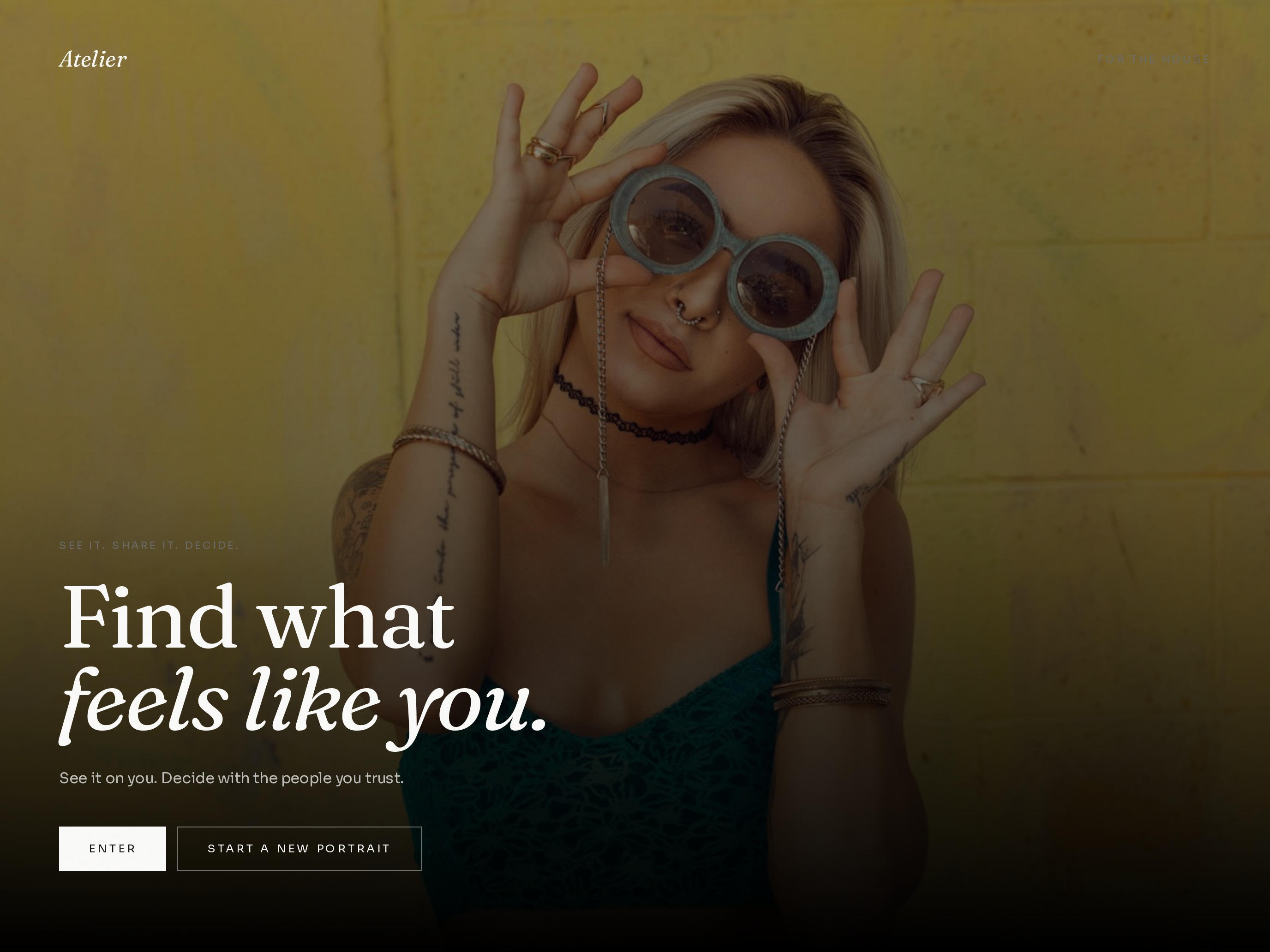
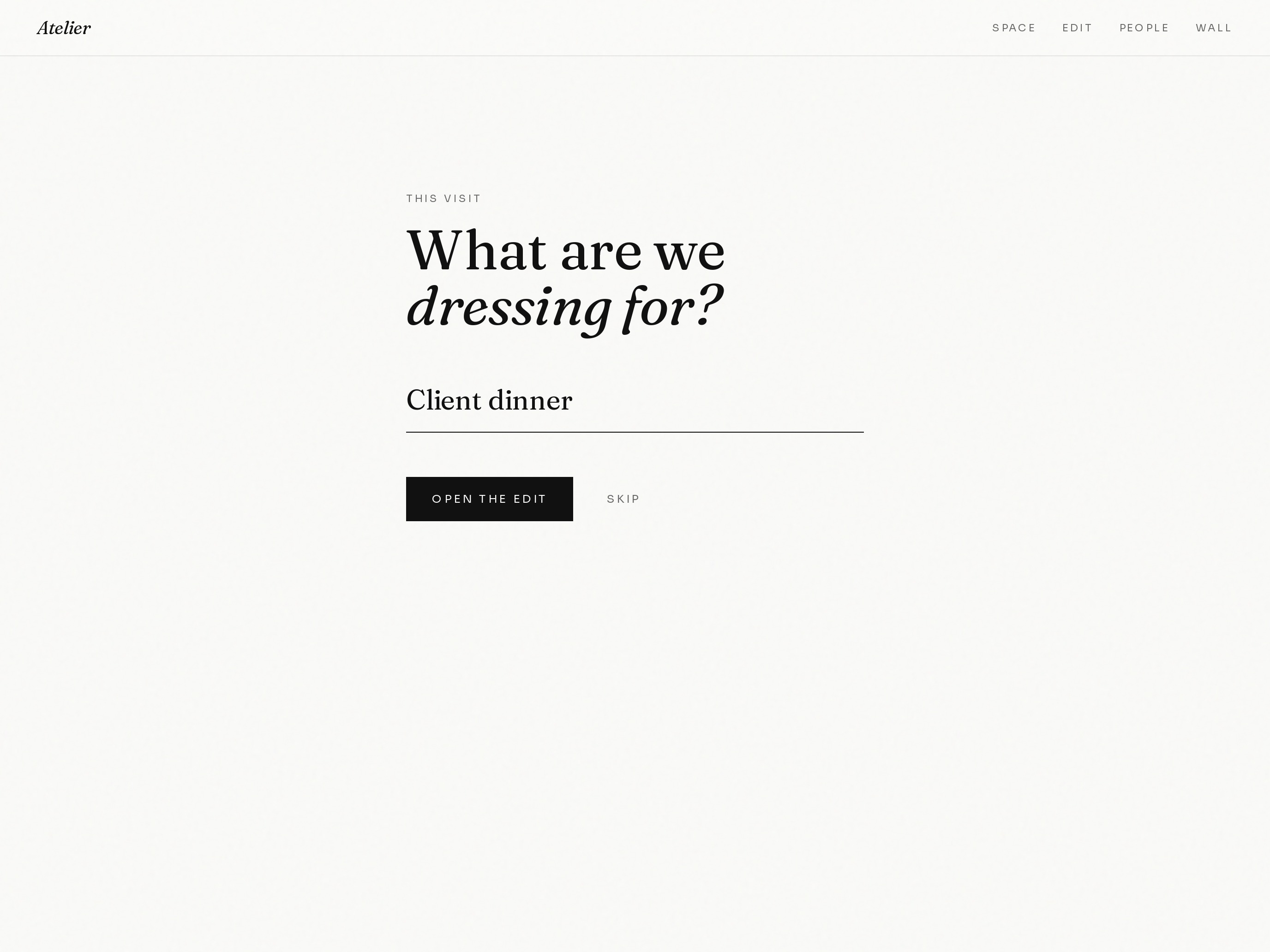
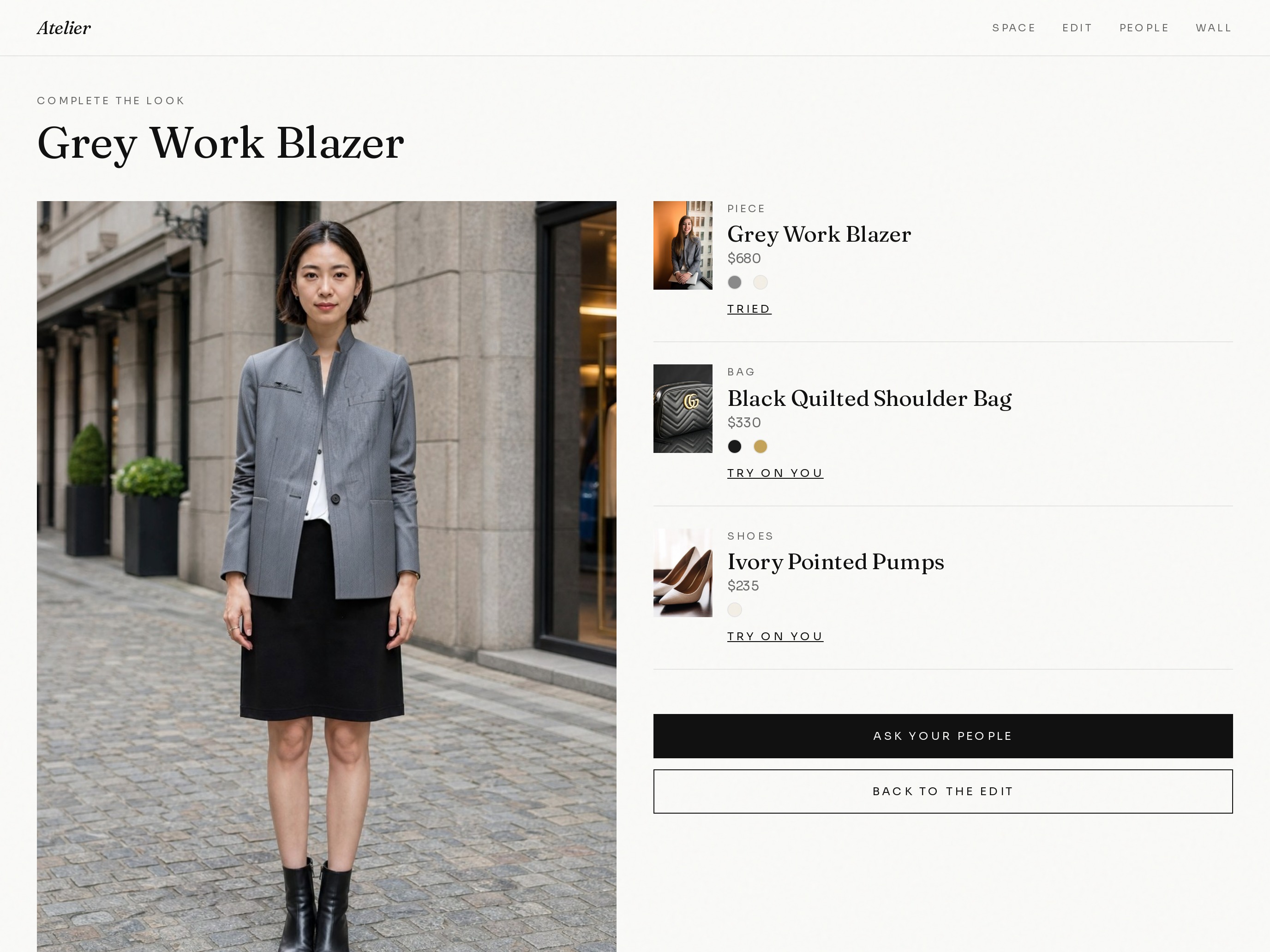
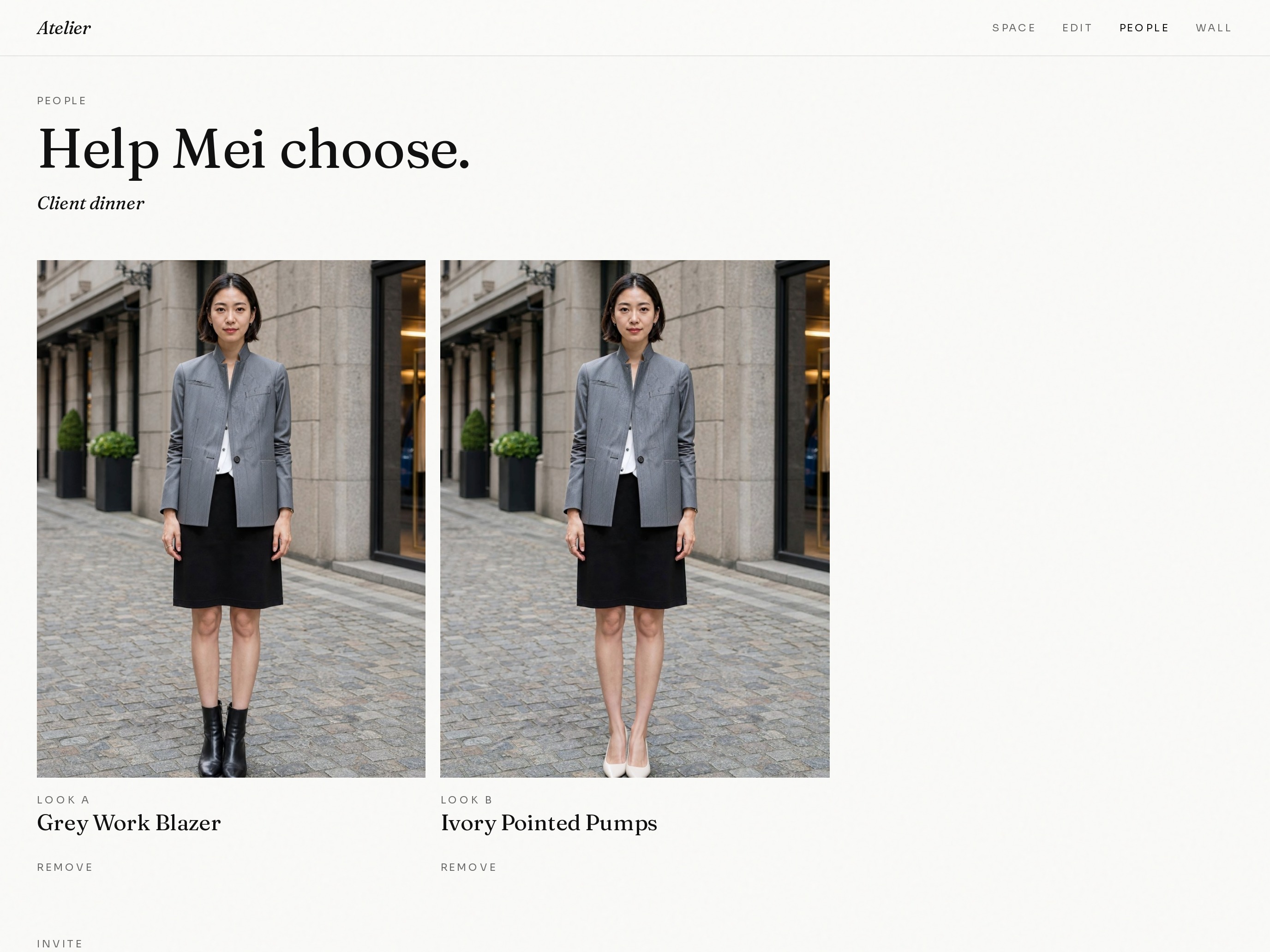
Atelier lets people explore fashion, build looks, compare pieces and see garments on themselves through YouCam Apparel Virtual Try-On.
The important part is what happens around the try-on.
Atelier looks across actions such as try-ons, saves, rejections, repeated combinations and changes of mind to understand patterns in customer intent.
That creates a retail intelligence layer with two key ideas.
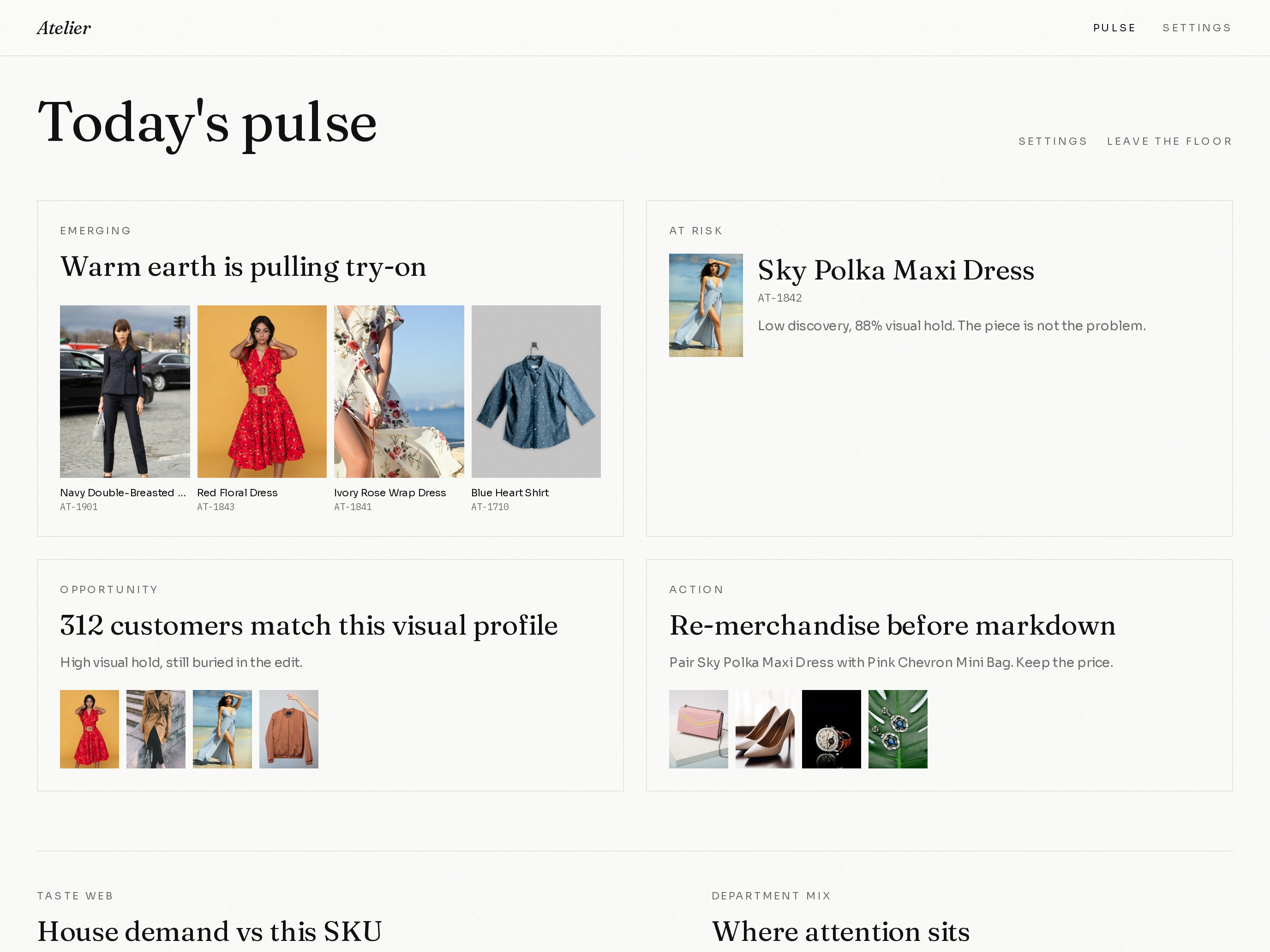
Trend Intelligence looks for changes in demand across colors, silhouettes, categories and product combinations. Instead of simply following what is trending on social media, it looks at what customers are actually doing with real products. This can help retailers notice a style gaining or losing momentum earlier.
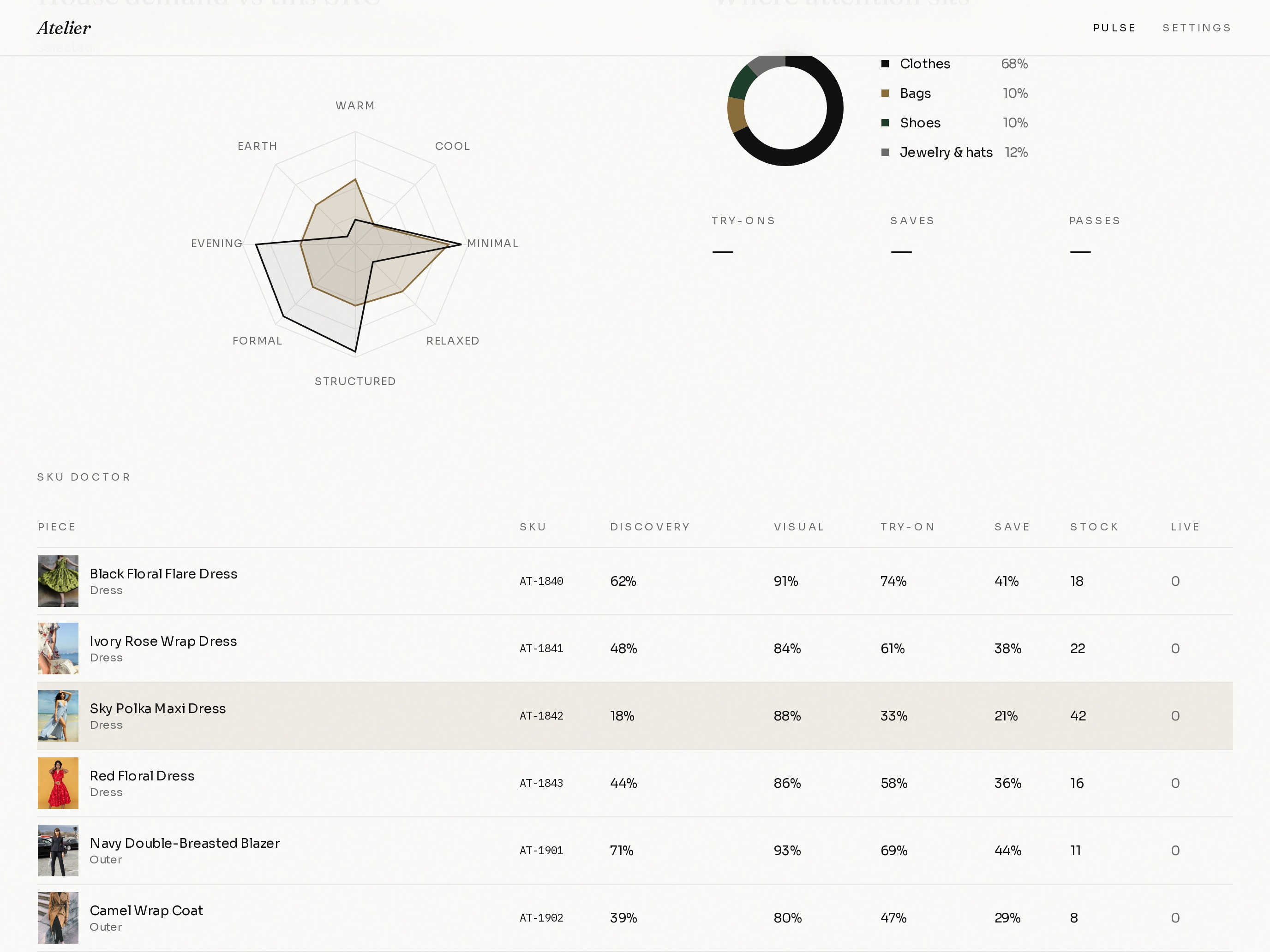
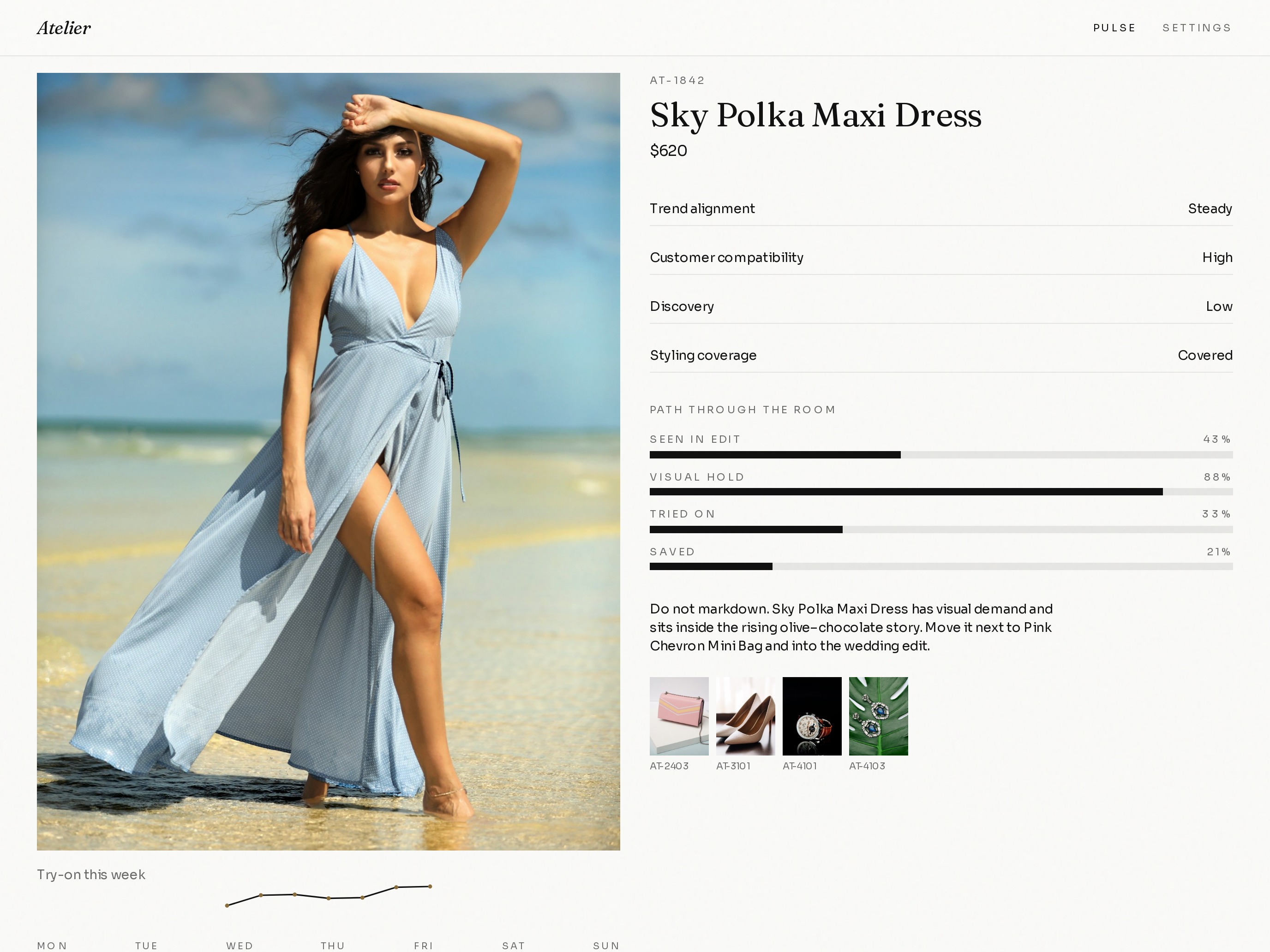
SKU Doctor asks a more useful question than “Is this SKU underperforming?”
It asks “Why?”
A product with high views and low try-ons has a different problem from one with strong try-ons and saves but weak purchase intent. A product that repeatedly appears alongside another product may have a merchandising problem rather than a product problem.
This matters because a weak line of SKUs can affect an entire collection and ultimately the reputation of the designer or brand.
The goal is to move from signal → reason → action.
How we built it
We built the consumer experience first because the intelligence is only valuable if people actually want to use the product.
YouCam Apparel Virtual Try-On is the key decision moment, allowing customers to evaluate a garment on themselves instead of imagining it from a catalogue image.
Around that, we built the interaction layer and aggregated those decisions into product and trend signals. Multimodal intelligence helps interpret products, looks and behavior and turn those signals into explanations rather than another wall of metrics.
The complexity stays underneath the interface. Customers should feel understood without having to understand the system, and retailers should be able to act without becoming data scientists.
Challenges we ran into
One of the biggest discoveries was that YouCam's capabilities do not all behave like composable visual layers.
Some try-on flows could modify an individual garment while preserving the existing look and environment. Other accessory flows could regenerate the entire scene. We had to test the actual behavior of each capability and design around it.
We also found that apparel try-on could work surprisingly well with imperfect editorial and catalogue imagery, while face-based capabilities were much more particular about input photos.
Generative try-on is also asynchronous, so the waiting period had to feel like part of a fitting-room experience rather than a broken loading state.
These constraints taught us to design around the real behavior of the models, not just their descriptions in documentation.
Accomplishments that we're proud of
We are proud that Atelier became more than a virtual try-on demo.
The interesting part is the connection between the two sides of the product. The customer gets a reason to return, and those repeated decisions create a richer understanding of demand.
We are particularly proud of SKU Doctor because it moves retail intelligence from reporting to diagnosis. Instead of giving a retailer another number, it tries to explain what may be happening and what could be worth doing about it.
What we learned
We learned that the final purchase is only one piece of customer intent.
A rejection can be useful. A second try-on can be useful. A repeated combination can be useful.
The challenge is not collecting more data. It is recognizing which decisions contain meaningful intent and turning them into something useful.
We also learned that personalization and retail intelligence can be part of the same loop. The consumer experience creates the signals, and those signals can help improve the retail experience.
What's next for Atelier: The Mirror That Learns
We want Atelier to become better at recognizing both personal preference and collective change.
For customers, that means a fashion space that becomes more relevant over time.
For retailers and designers, it means earlier visibility into changing demand, better diagnosis of struggling products, and a clearer understanding of why customers are responding to certain products and combinations.
The goal is not to predict what everyone will buy.
It is to understand what people are actually responding to while they are making decisions.
The mirror learns from the person.
The store learns from the mirror.
Built With
- api
- motion
- next.js
- react
- typescript
- youcam


Log in or sign up for Devpost to join the conversation.