
Inspiration
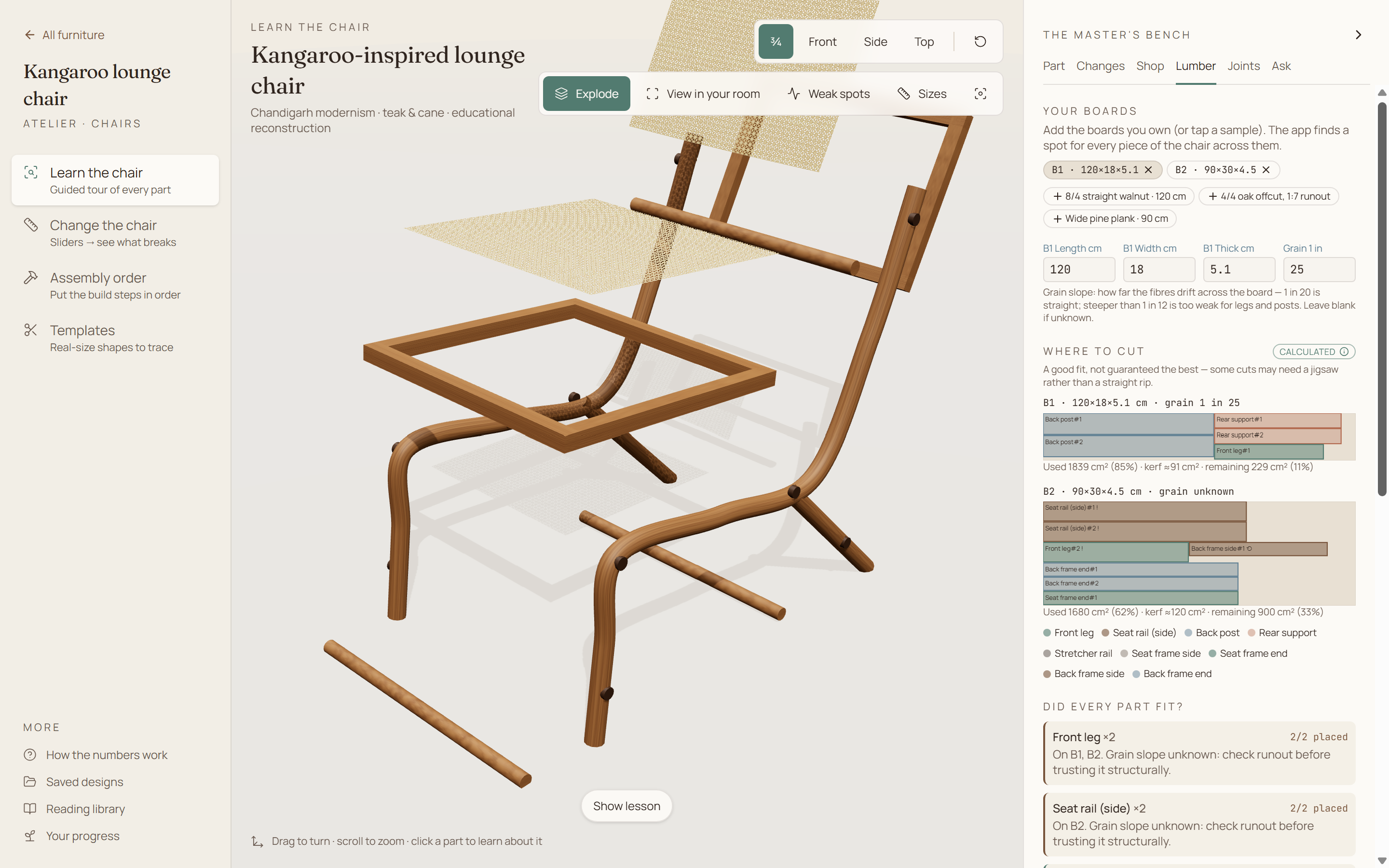
In the Good Place, one of the characters is on a quest to master every skill. One of the skills she encounters is specifically chair making. She then spent 10 years mastering every single detail and aspect of just chair making. We took this idea and decided to incorporate all the factors needed to build a chair, or any furniture, into one app.
What it does
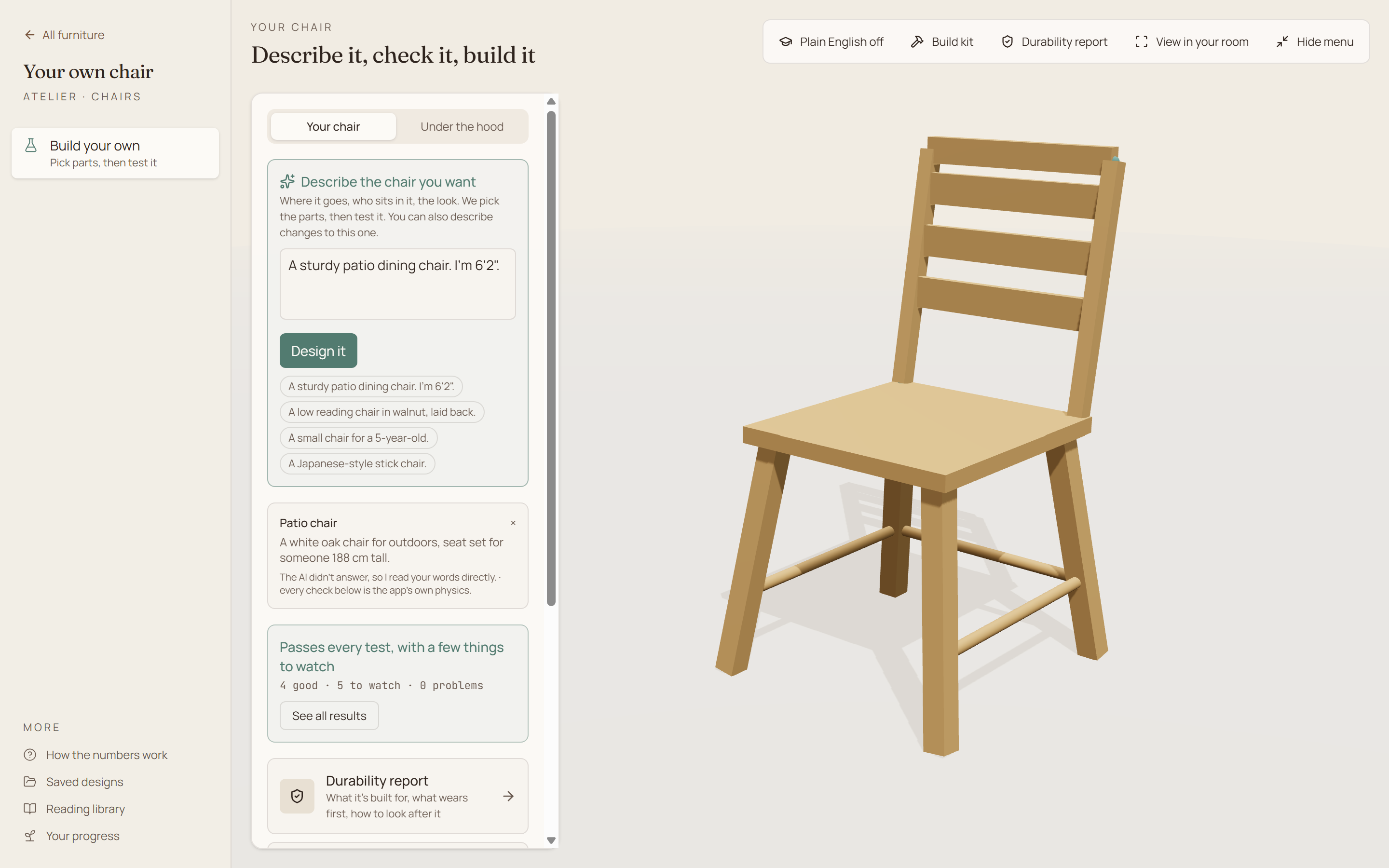
Today, Atelier turns woodworking ideas into buildable designs using our custom physics and mathematics engine. Tomorrow, creators and domain experts will be able to upload their own datasets, engineering rules, and knowledge bases, allowing Atelier to generate specialized design engines for entirely new fields, from guitars and furniture to architecture and beyond.
Our vision is to make engineering extensible: AI understands what you want to create, while domain-specific engines determine how to actually build it. future platform would also need equations, geometric relationships, validation tests, and expert review. AI can help construct these engines, but their results must be independently verified.
How we built it
We built Atelier with React, TypeScript, and TanStack Start, using Three.js through React Three Fiber for the interactive models.
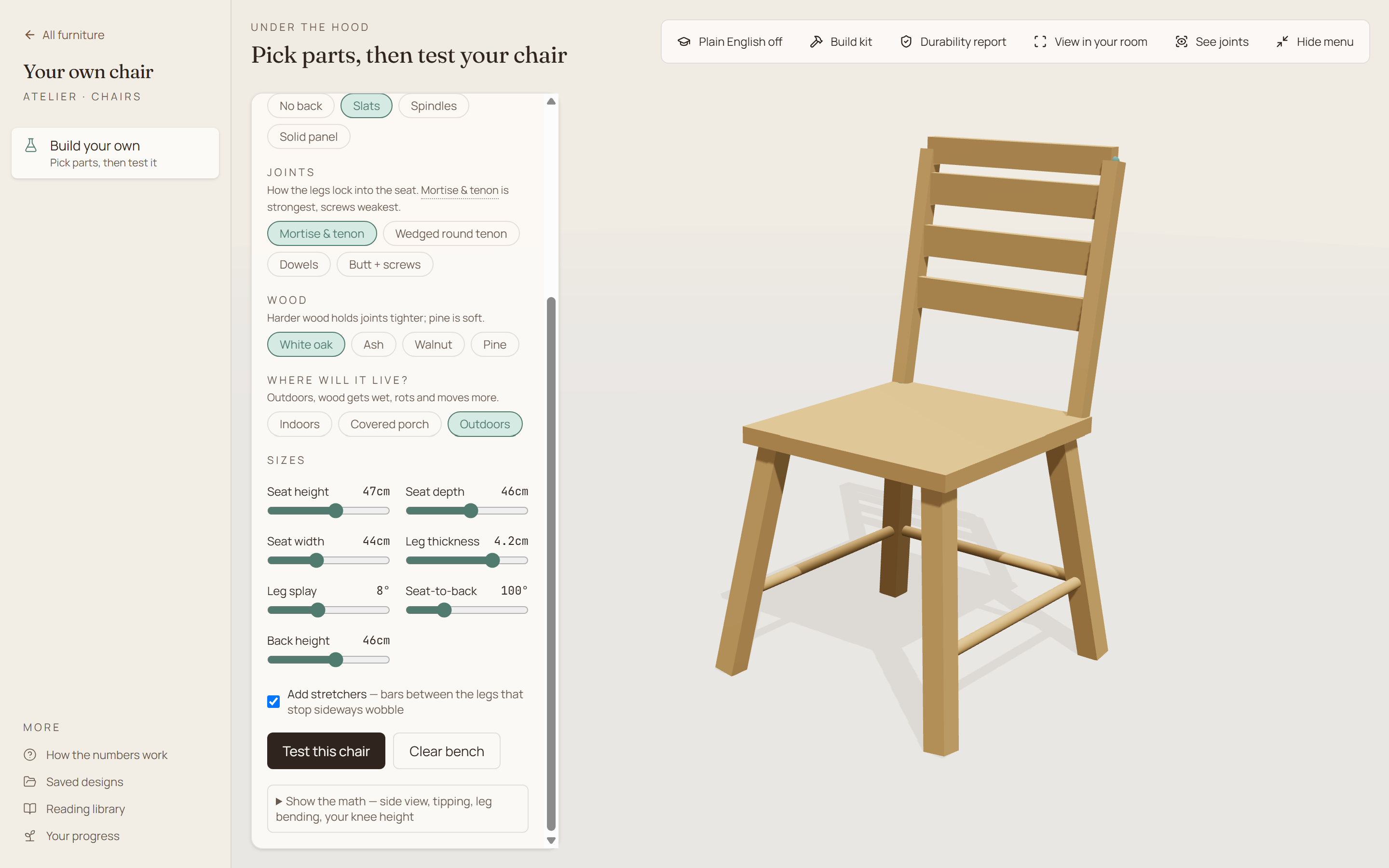
AI interprets natural-language requests and maps them into supported design parameters. A deterministic engine handles geometry, calculations, and build outputs. This keeps the numerical results grounded in explicit formulas and material data.
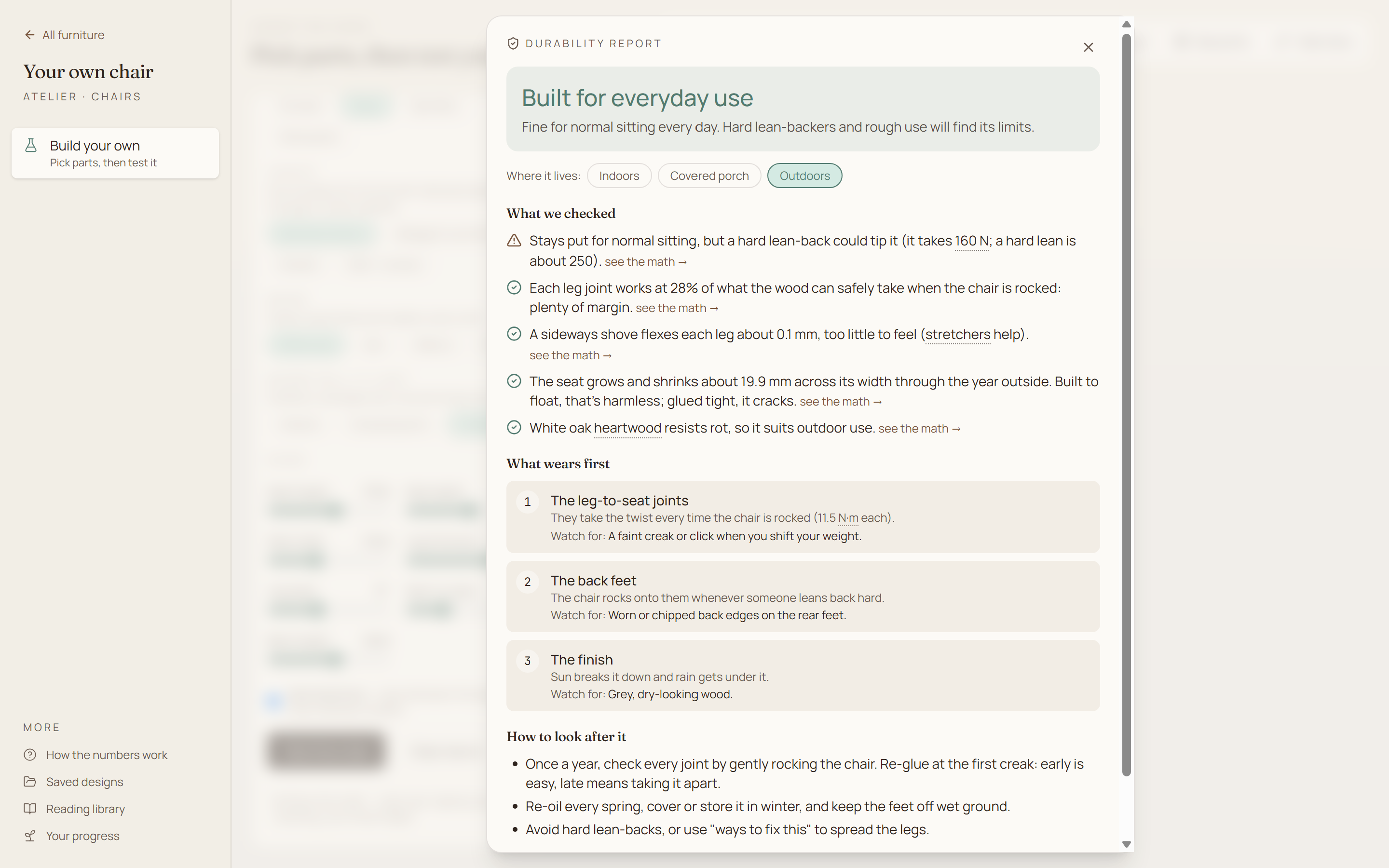
The 3D model, design checks, and planning tools share underlying design data. Changing a dimension updates the associated geometry and outputs. Wood properties come from the USDA Wood Handbook, and the interface explains which results are calculated, assumed, or based on woodworking rules.
We also built a structured furniture format that describes parts and assembly dependencies, allowing a shared engine to generate additional chair experiences.
Challenges we ran into
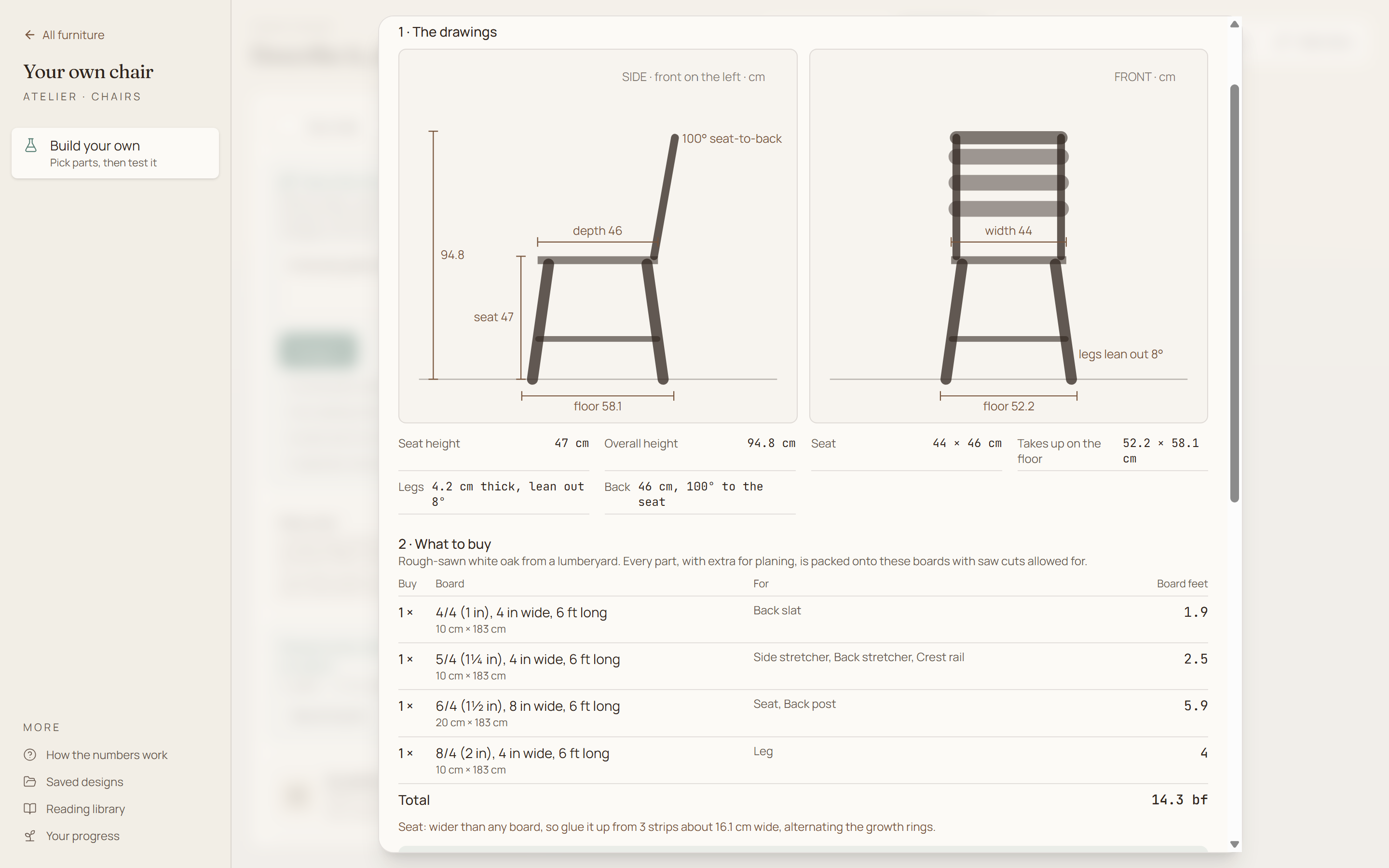
Connecting a visual design to practical construction required more than drawing a convincing chair. Dimensions, joint proportions, board layouts, and assembly steps all needed to agree as the design changed.
We also had to communicate engineering results responsibly. A simplified bending or tipping calculation can explain an important design consequence, but it cannot establish the safety of a finished chair. Making assumptions and limitations understandable became part of the product design.
Accomplishments that we're proud of
We connected the journey from describing an idea to exploring it in 3D, evaluating it, improving it, and preparing build materials.
The design-fix system is a particular highlight. Users can preserve preferences and explore alternatives that address failed checks, making the tradeoffs visible.
We’re also proud that the physics is accessible without requiring users to study it first. Someone can focus on making their chair, then open an explanation whenever they want to understand a result.
What we learned
AI is most useful here when it connects a person’s intent to a dependable design system. The engine gives that interaction consistent geometry, repeatable calculations, and concrete outputs.
We learned that feedback becomes more useful when it offers a next step. Explaining a problem helps; showing possible changes and their tradeoffs helps someone keep building.
We also learned that learning can emerge naturally from making. People have a reason to understand leverage, grain, or joinery when those concepts affect something they want to create.
What's next for Atelier
Our next priority is expanding our engine to all kinds of furniture and then wood working in general. validating the digital workflow through physical builds and feedback from furniture makers, then improving the calculations and instructions around those results.
From there, we want to expand the supported designs and construction methods, improve how AI handles individual requirements, and extend Atelier beyond chairs.
We also want to make projects easier to save, share, and hand off to a maker—so more people can take an idea all the way into the workshop.
Built With
- drei
- google-gemini
- google-model-viewer
- react
- tailwind
- three.js
- typescript

Log in or sign up for Devpost to join the conversation.