-
-
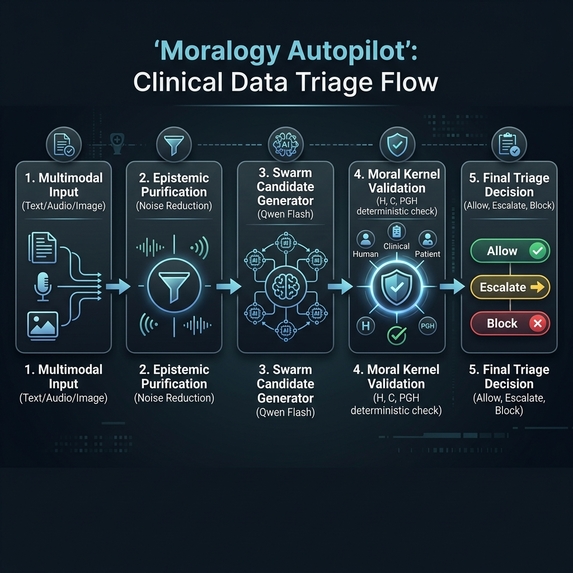
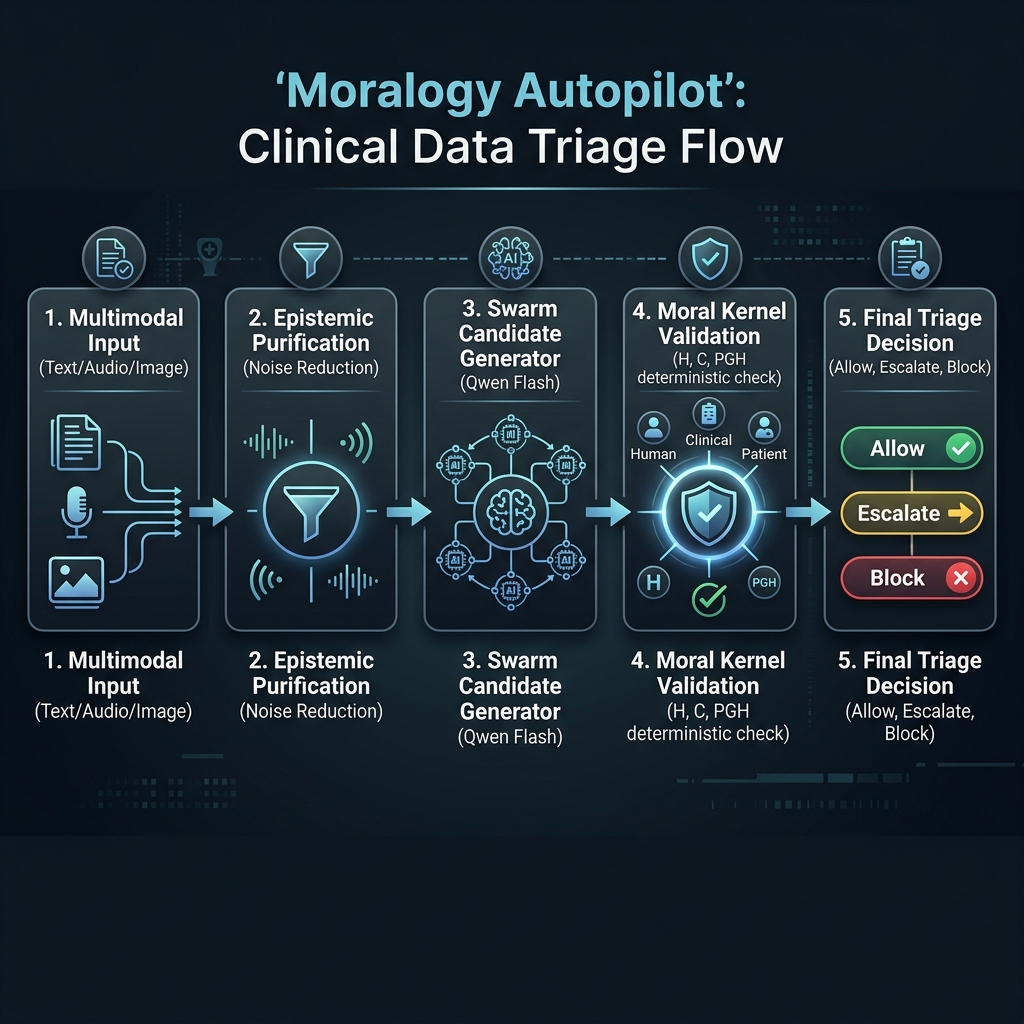
Axiomatic train of thought
-
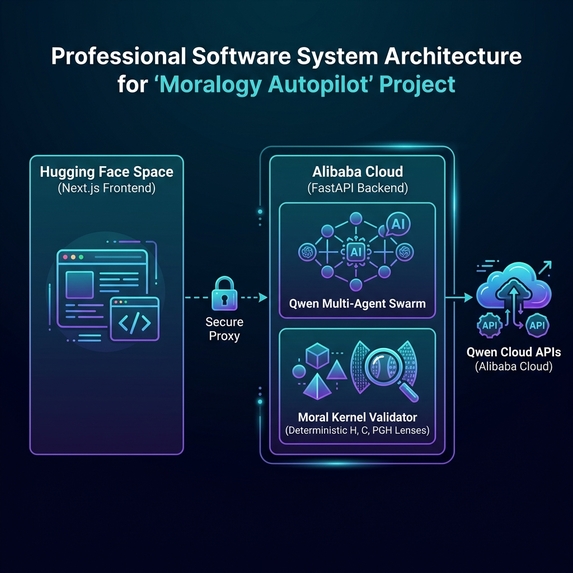
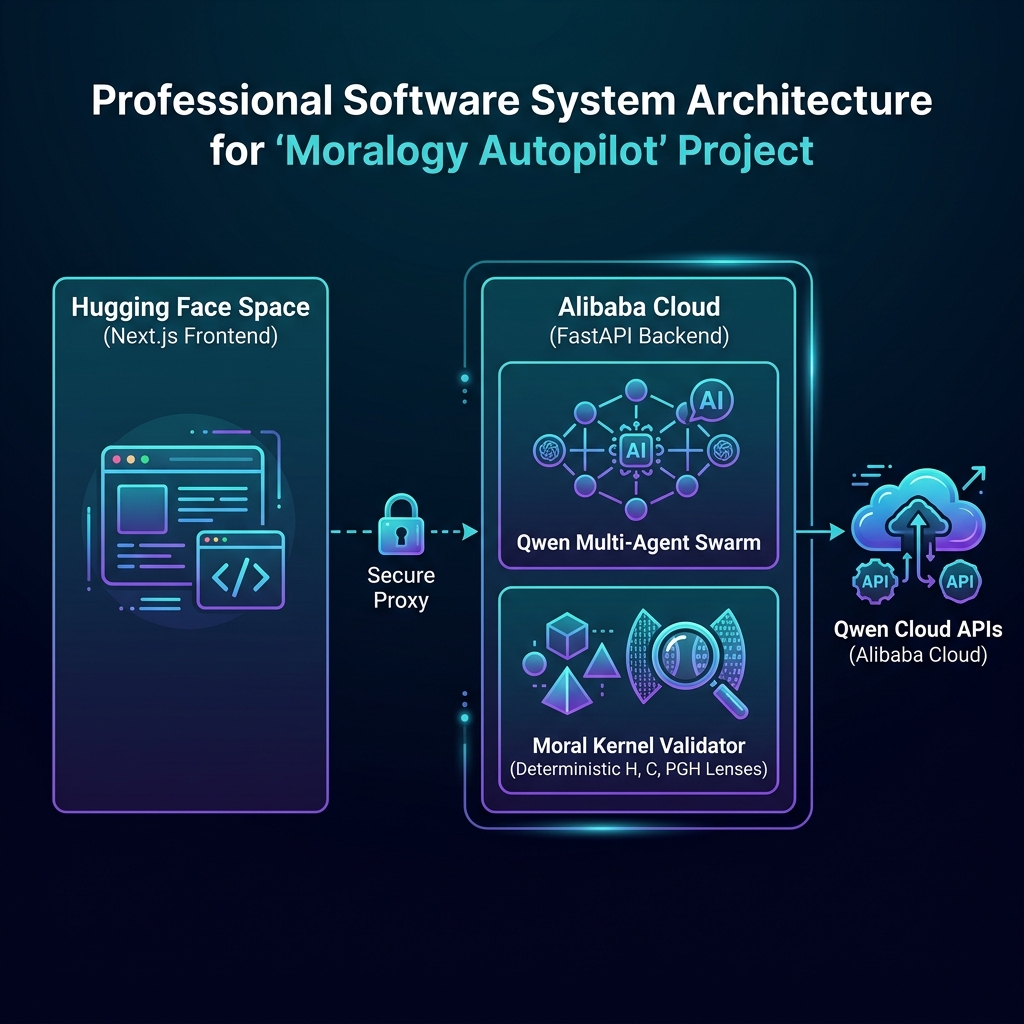
Macro-architecture
-
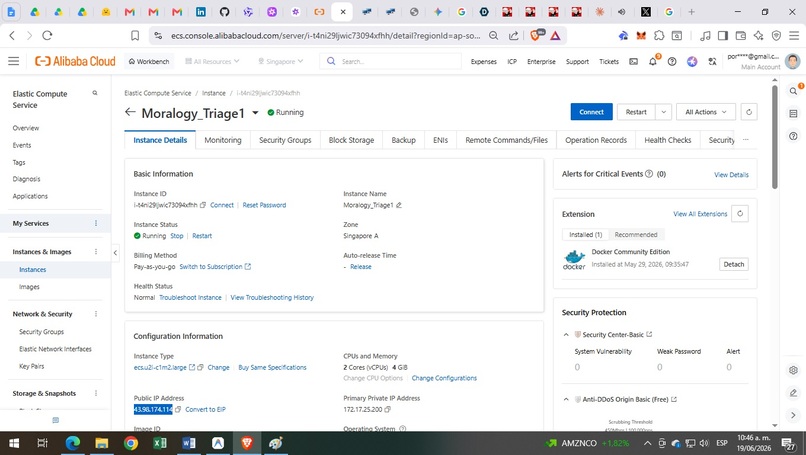
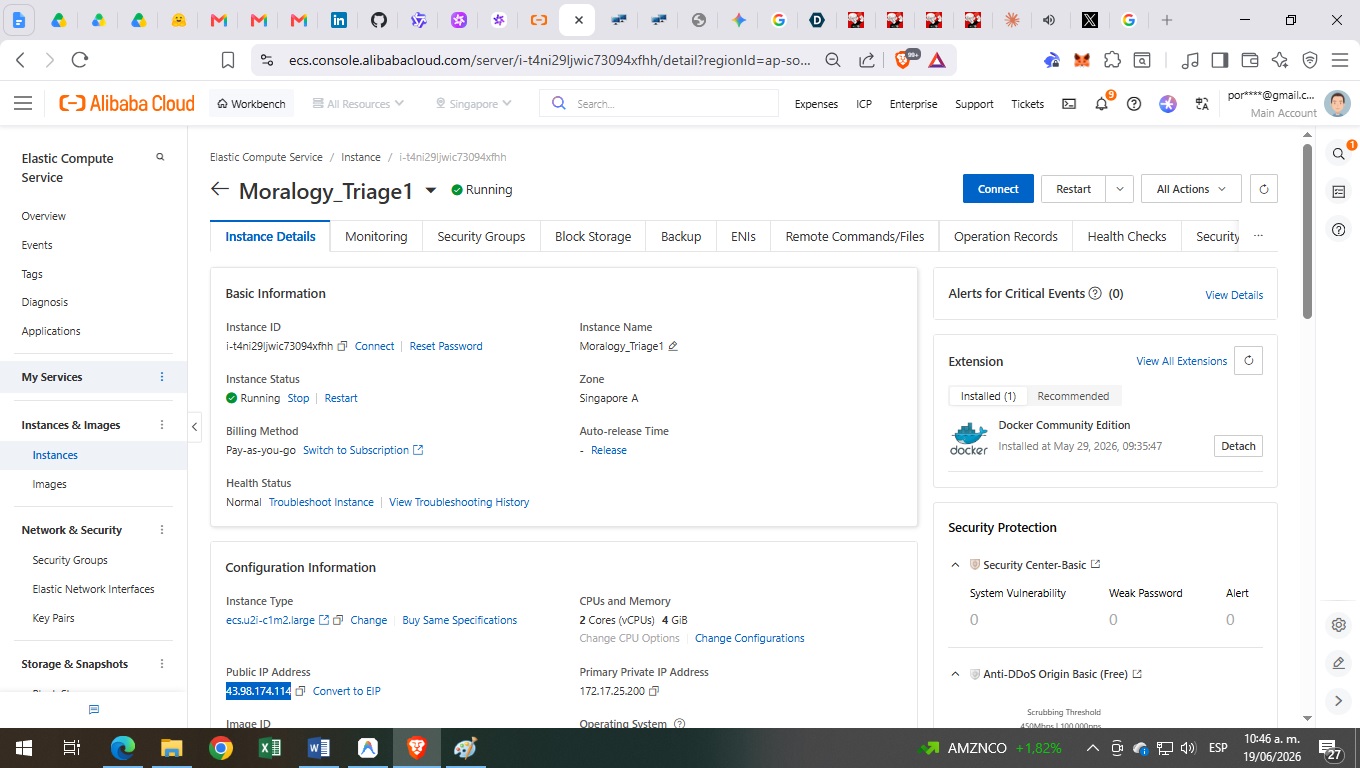
Server proof 1
-
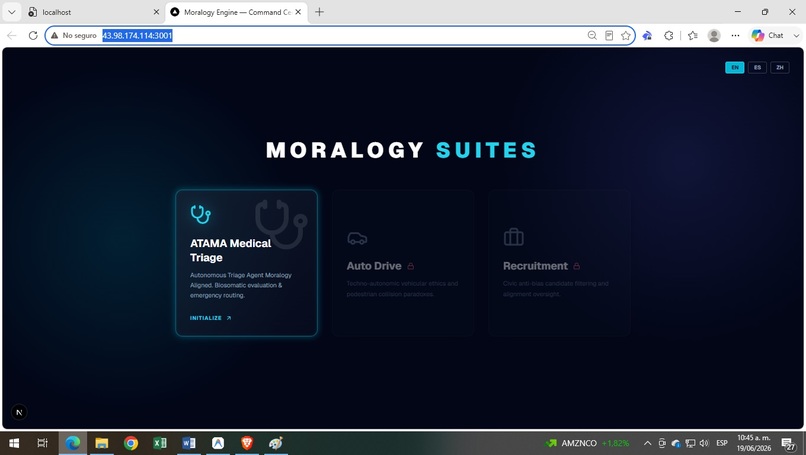
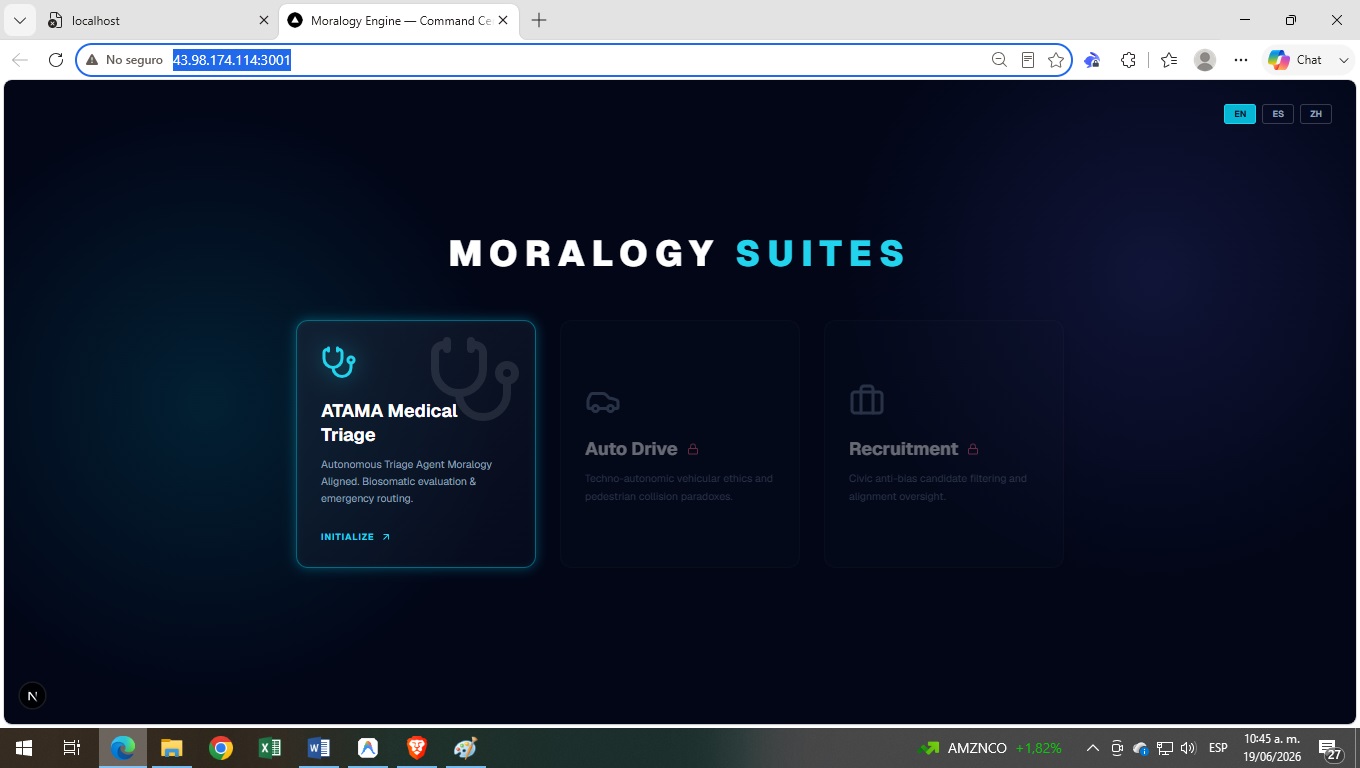
Server proof 2
Inspiration
Standard artificial intelligence in healthcare treats triage as a linear classification problem. It maps symptoms to labels. But in emergency medicine, linear thinking is dangerous. A patient with chronic asthma presenting with low oxygen can easily be misclassified as experiencing a standard exacerbation, when in reality, they might be suffering from bacterial pneumonia (true case).
When linear AI models miss these nuances, patients suffer preventable harm, and hospitals face massive liability. We were inspired by the need to build an AI that doesn't just classify but actually reasons, with a goal hardcoded into its algorithms: recognizing the weight of its decisions. We needed an AI that understands irreversible harm and has the ethical alignment to intervene.
What it does
Moralogy ATAMA (Autonomous Triage Agent Moralogy Aligned) is a regulatory-grade autonomous triage system for medical departments.
Instead of relying on a single neural network output, ATAMA processes multimodal intake data (EHR text, physician audio dictation, diagnostic images) through a "6-Lens Swarm". This swarm simultaneously evaluates the patient across multiple dimensions of possible harm, assessing a queue that prevents cases like PAT001 and many others that have already occurred under AI's medical triage watch.
How we built it
We architected ATAMA around Qwen Cloud models, leveraging their advanced reasoning capabilities to power our multi-agent swarm.
The core of the system is not a single prompt, but an orchestration of specialized sub-agents that evolved. First, the formula that encoded morality was discovered. Then, it was made into code. Then, it was dedicated to solve dilemmas. Then, it was used to create 25k moral vectors to train Qwen. Finally, the swarm came along and bound the resulting weights of the training. Furthermore, we built a custom "Humility Engine" which actively calculates epistemic uncertainty, meaning the system is specifically engineered to detect what it does not know (e.g., missing lab cultures, missing allergy histories), avoiding hallucinations almost entirely. Finally, we used dfifierent models for the data flow and kept the reasoning for the fine-tuned model.
The backend processes these multi-dimensional vectors in real-time, requiring independent consensus from the 6-Lens Swarm before executing an autonomous escalation. The frontend was designed as a high-stakes command center, providing physicians with instant, readable access to the AI's step-by-step logical predicates, saving precious time and cognitive effort for the doctors and nurses on guard.
Challenges we ran into
Our primary challenge was solving for "AI overconfidence". LLMs are inherently designed to provide an answer, even when data is missing. Engineering the "Humility Engine" to forcefully halt linear assumptions and flag missing data as a critical risk vector required rigorous prompt constraints and custom validation layers.
Then, it was the certainty. We needed to come up wth an argument so logical no AI could weasle off around it, in order to assert moral liability in triage environment.
Additionally, ensuring that a multi-agent swarm could reach consensus and execute a decision within the strict time constraints of an emergency room setting required significant optimization of our API calls and reasoning pipelines.
Accomplishments that we're proud of
The successful encoding of axiomatic morality and its intentional resulting alignment in an LLM after training. We successfully moved beyond linear AI classification to create a true multi-dimensional auditing system for medical triage, beyond hallucinations or bias. We are immensely proud of the Humility Engine; it represents a tangible implementation of AI safety and ethical alignment in a high-stakes environment.
Furthermore, we achieved a 100% transparent audit trail. ATAMA doesn't just make a decision; it mathematically maps its reasoning, making it fully accountable and regulatory-compliant.
What we learned
We learned that true AI alignment in healthcare cannot be achieved through simple prompt engineering. Safety requires architectural constraints. We realized that an AI's ability to recognize its own epistemic gaps —its capacity for "humility"— is just as important as its diagnostic accuracy.
What's next for ATAMA Autonomous Triage Agent Moralogy Aligned
The next phase for ATAMA involves rigorous clinical simulation testing and integration with standard HL7/FHIR protocols for seamless deployment into existing hospital EHR networks.
Beyond triage, the Moralogy framework (our core architecture of dimensional swarms and humility engines) will be expanded to audit AI decisions in other high-stakes, high-liability sectors such as autonomous driving and financial risk management. We are building the foundational safety net for autonomous systems
Built With
- alibaba
- moralogy25k
- python
- qwen


Log in or sign up for Devpost to join the conversation.