Inspiration
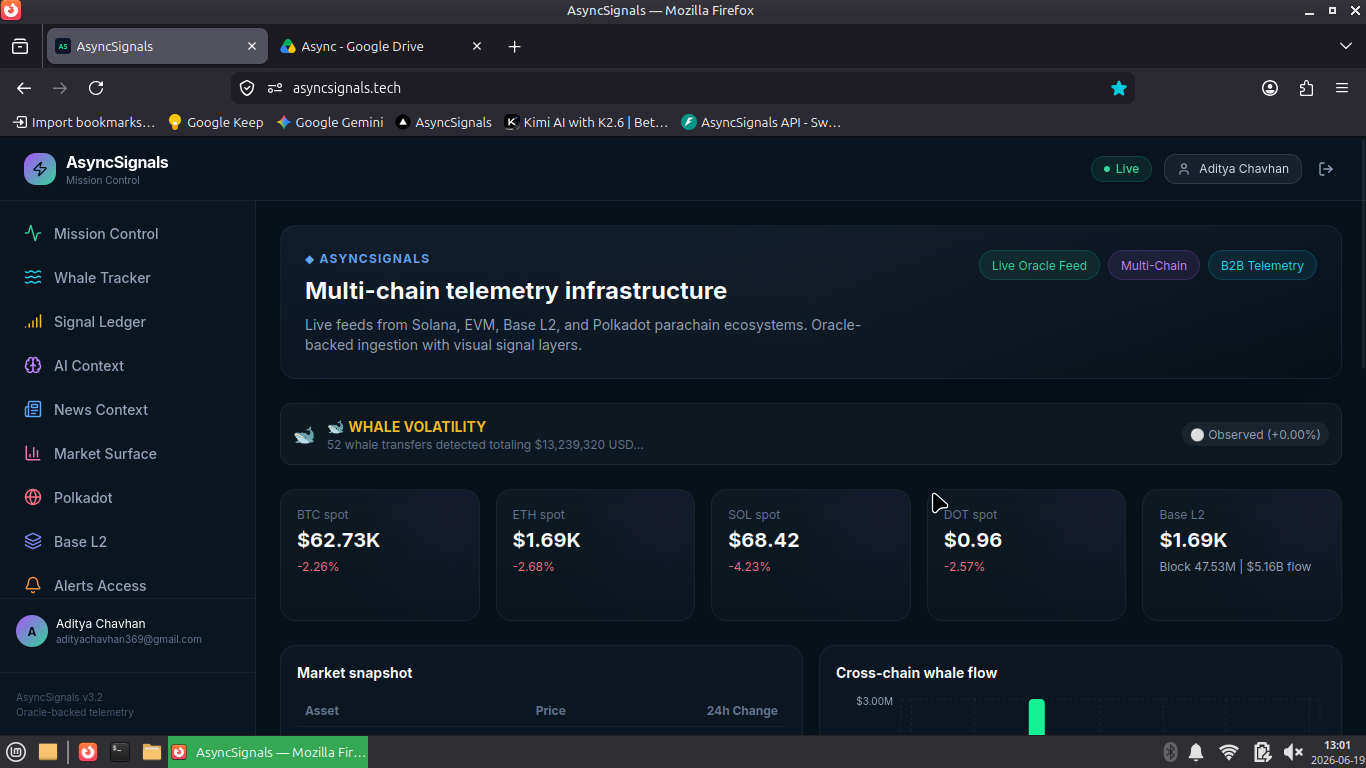
AsyncSignals started from a simple frustration: there is a huge amount of onchain data, but most of it is noisy, fragmented, and difficult to turn into useful decisions quickly. I wanted to build something that feels less like a basic dashboard and more like a mission-control layer for tracking whale activity, market context, and actionable signals in one place.
What it does
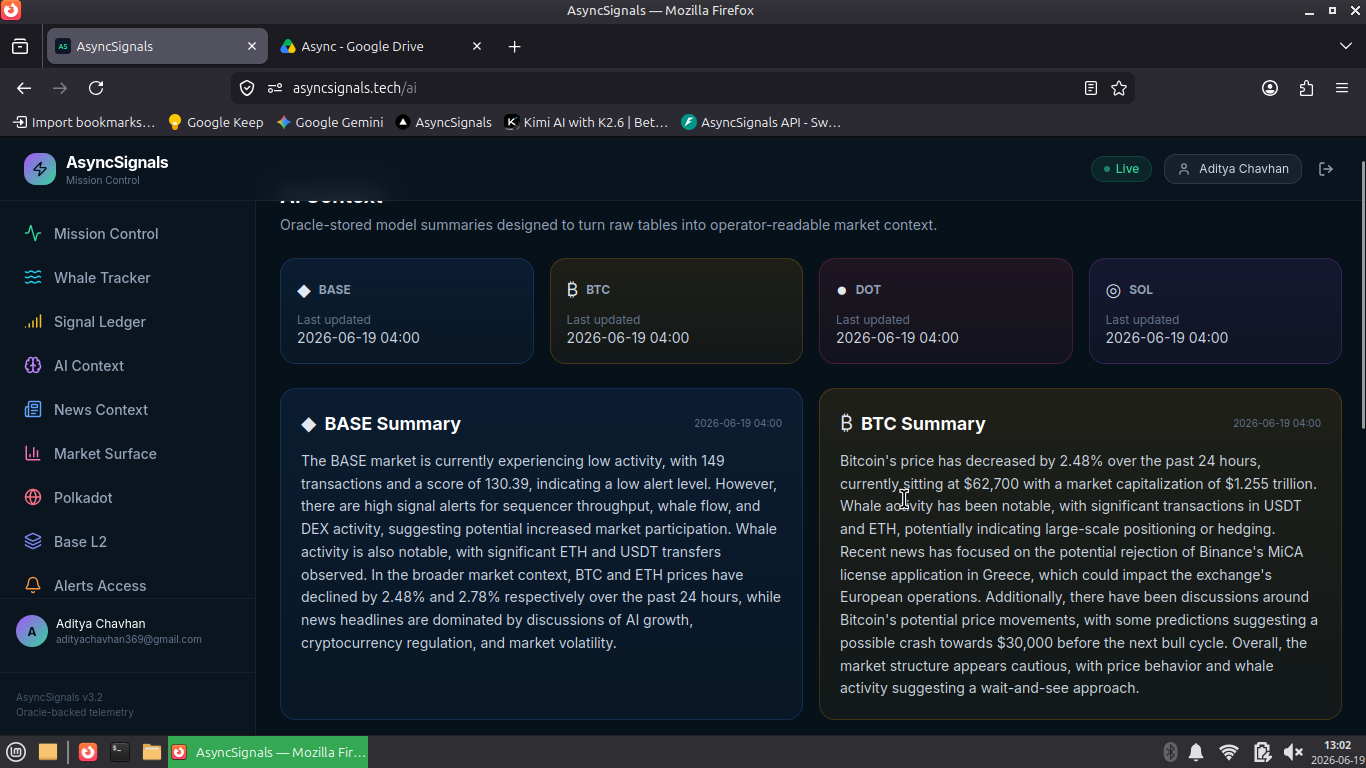
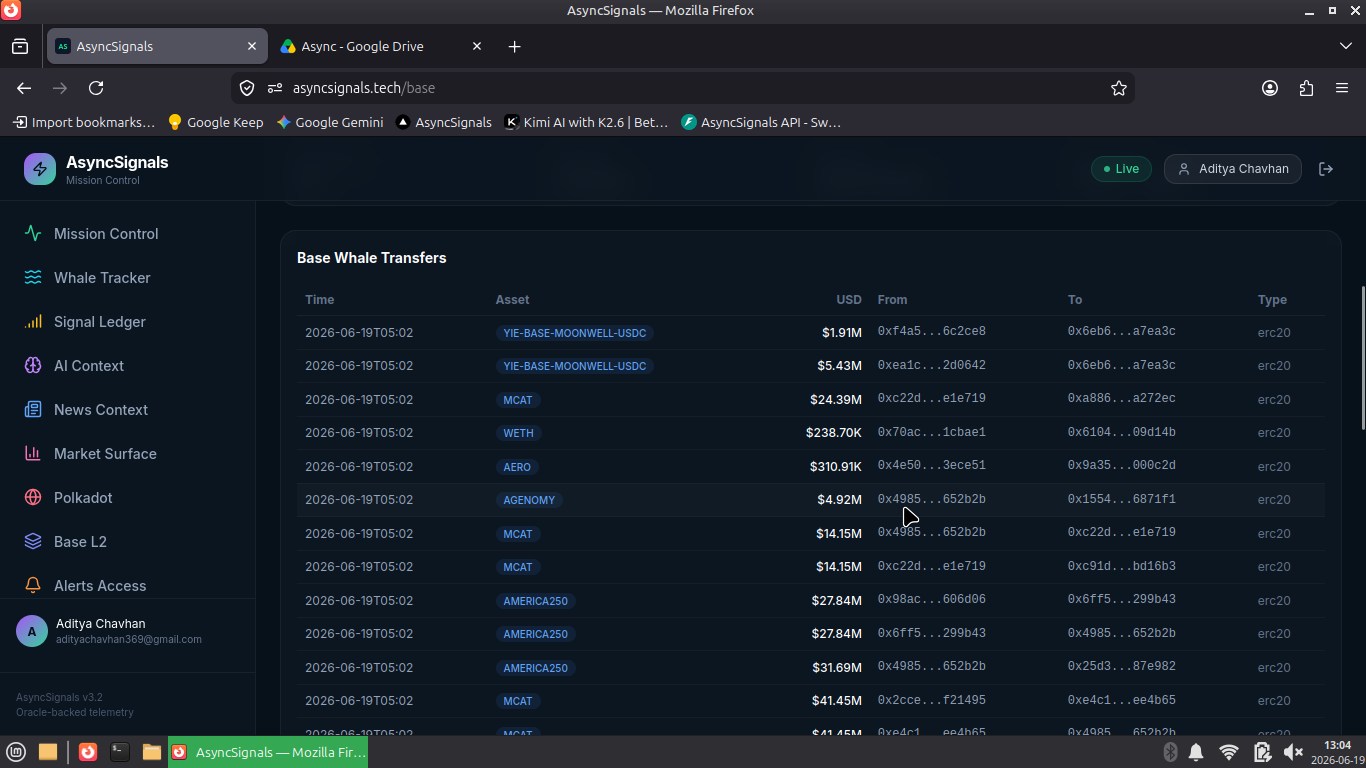
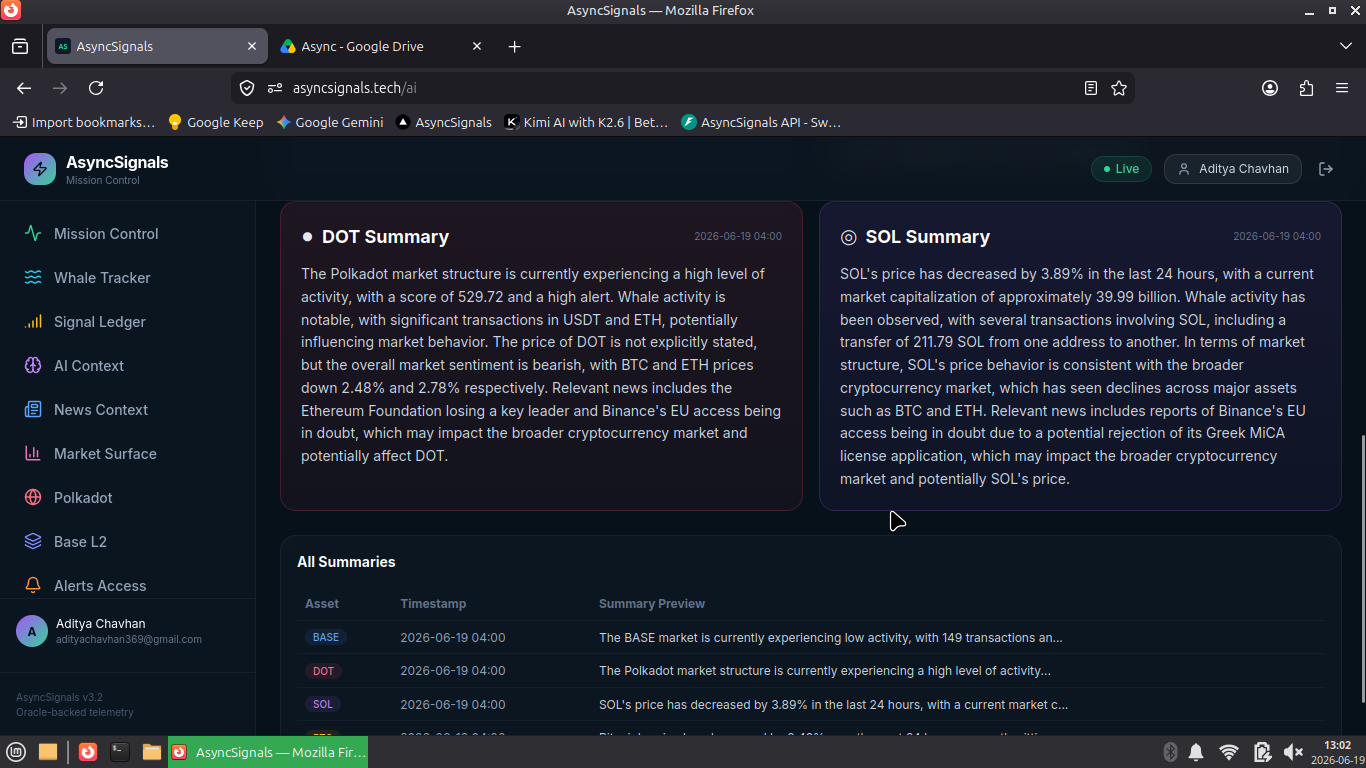
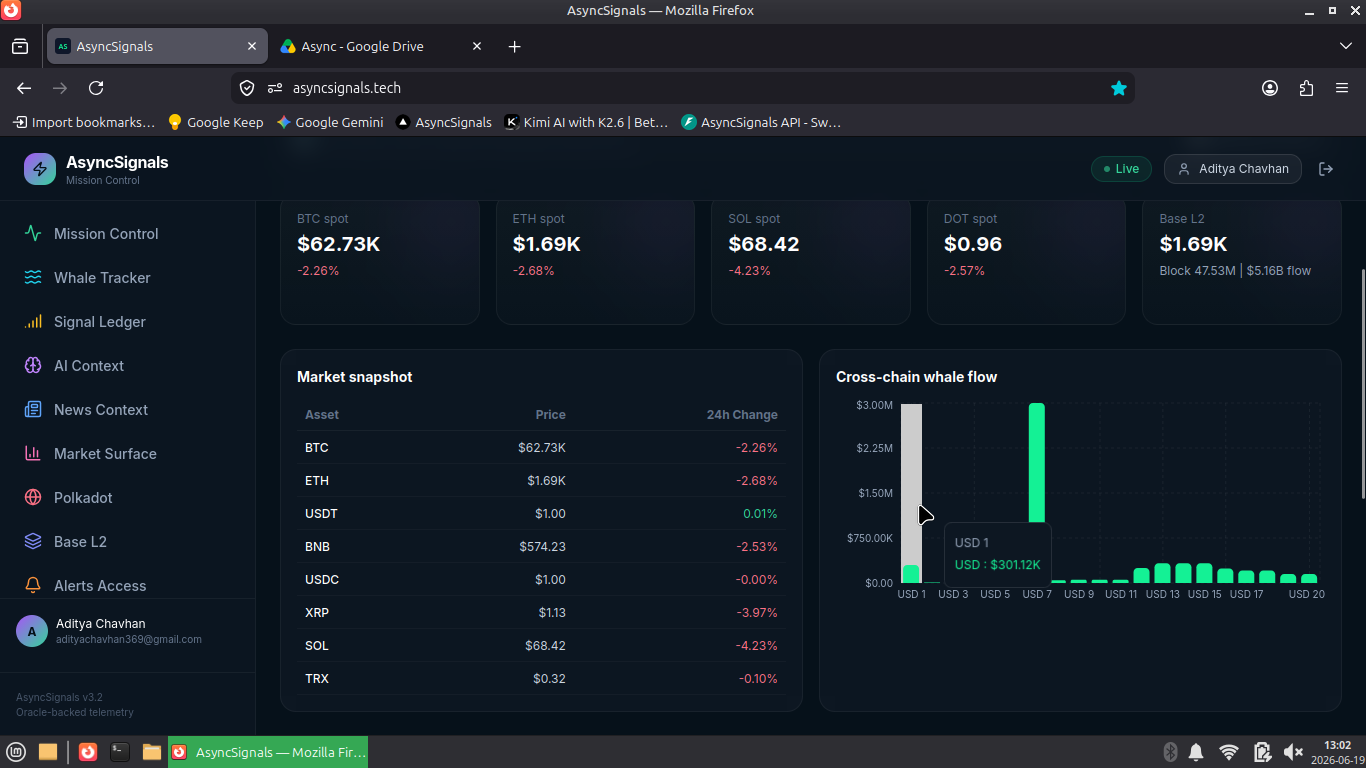
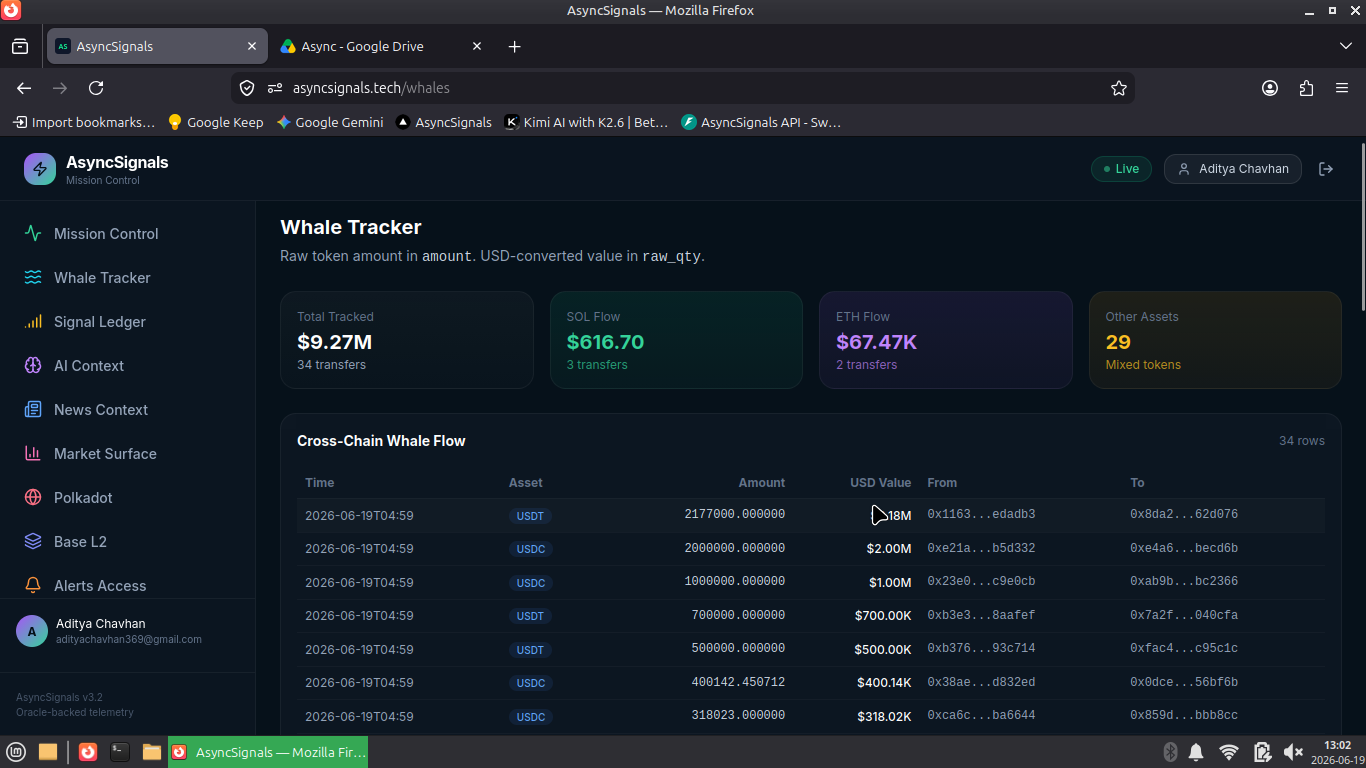
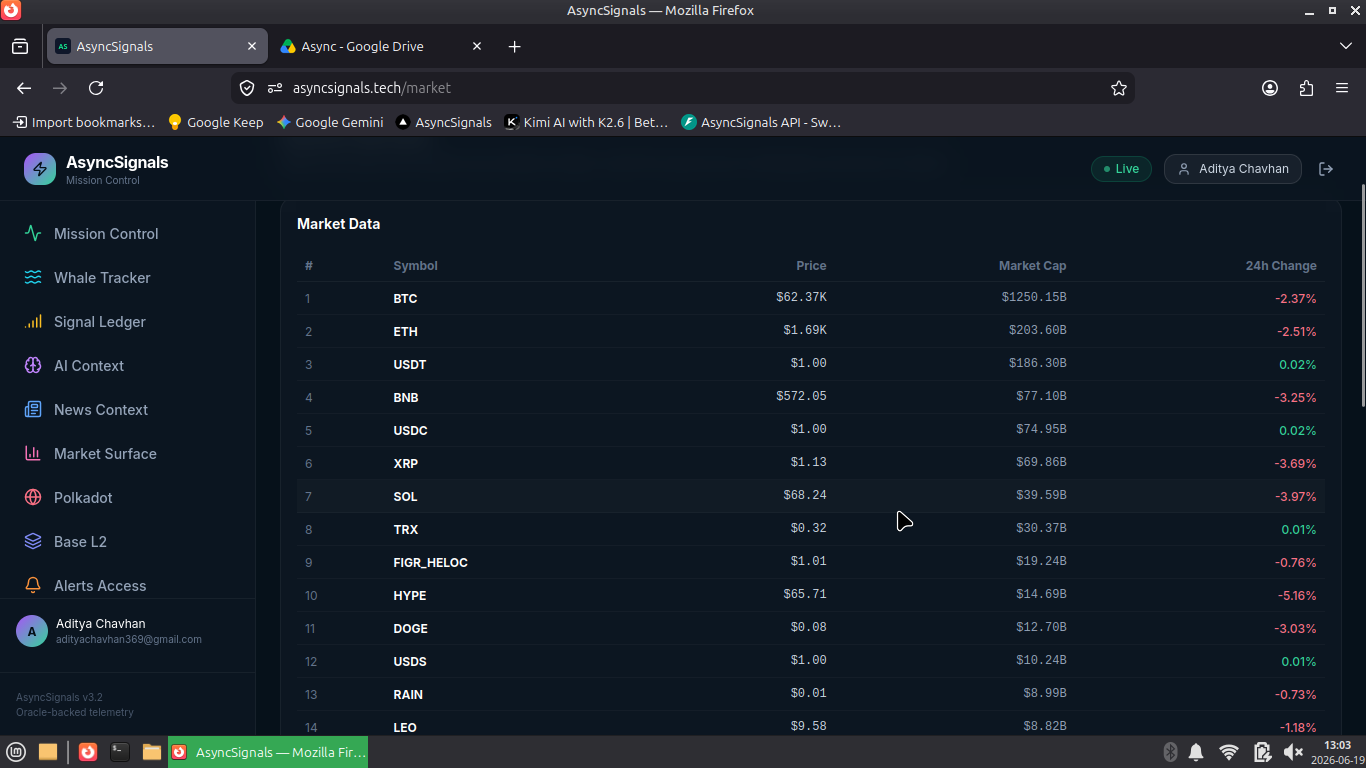
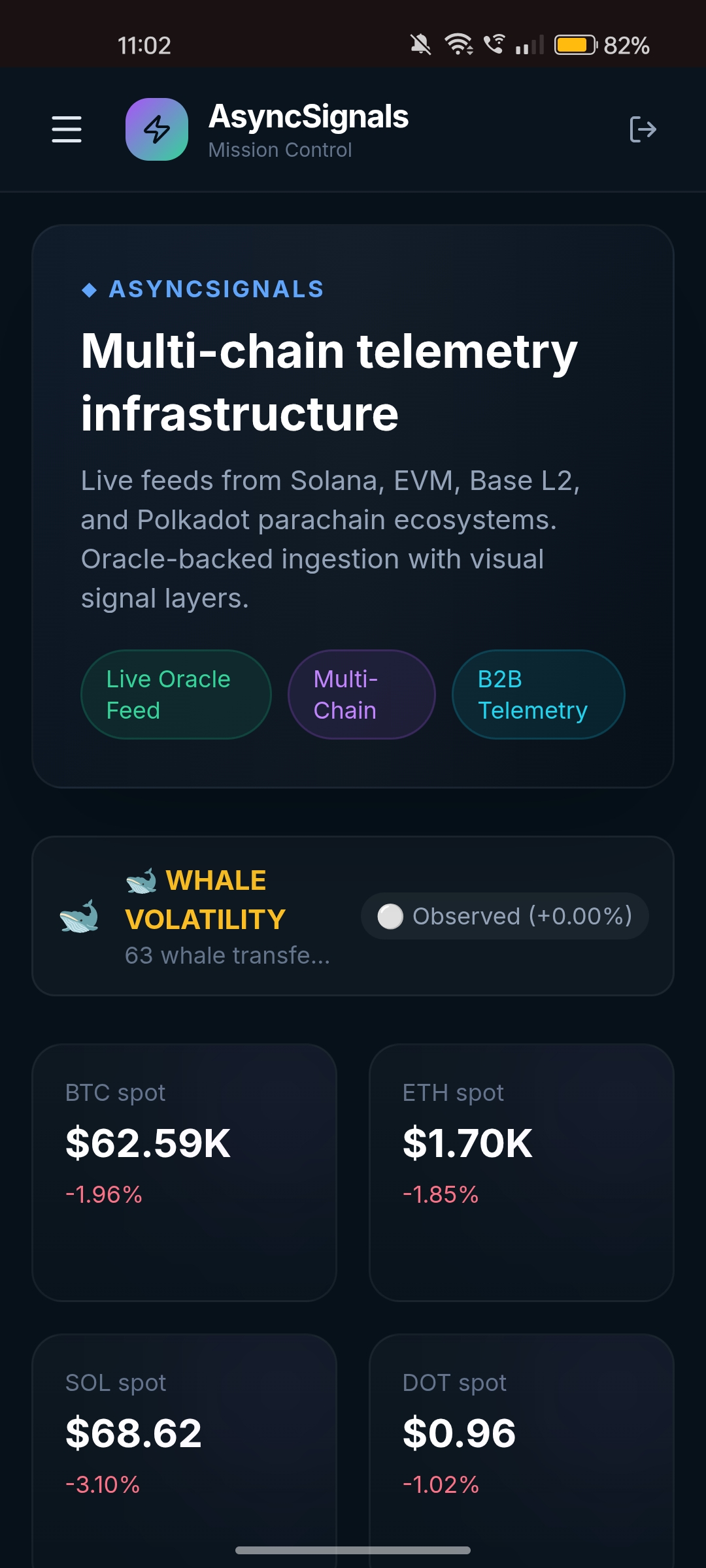
AsyncSignals is a Solana-first telemetry and intelligence platform that surfaces whale transfers, price context, news, AI-generated summaries, and signal history through a single operator-focused interface. The goal is to help traders, researchers, and ecosystem teams move from raw blockchain activity to readable, decision-ready context.
How we built it
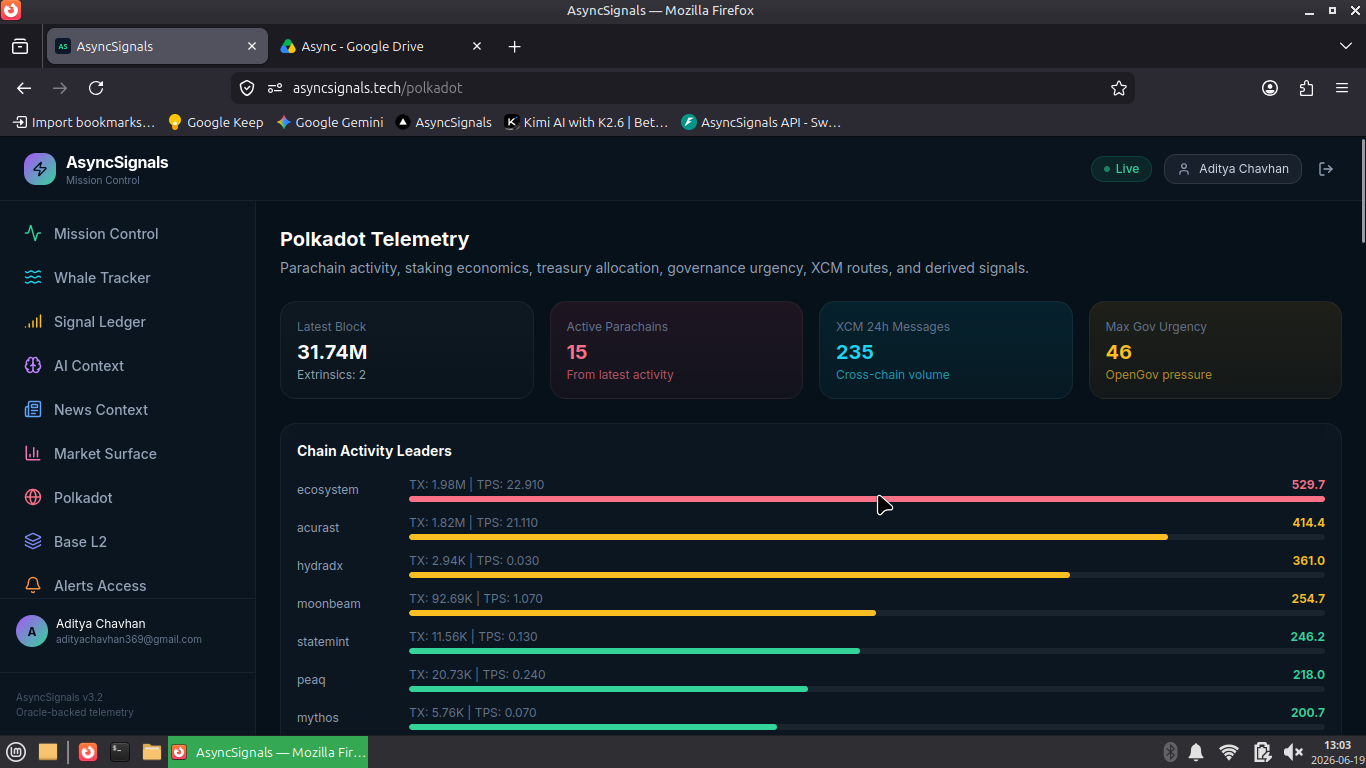
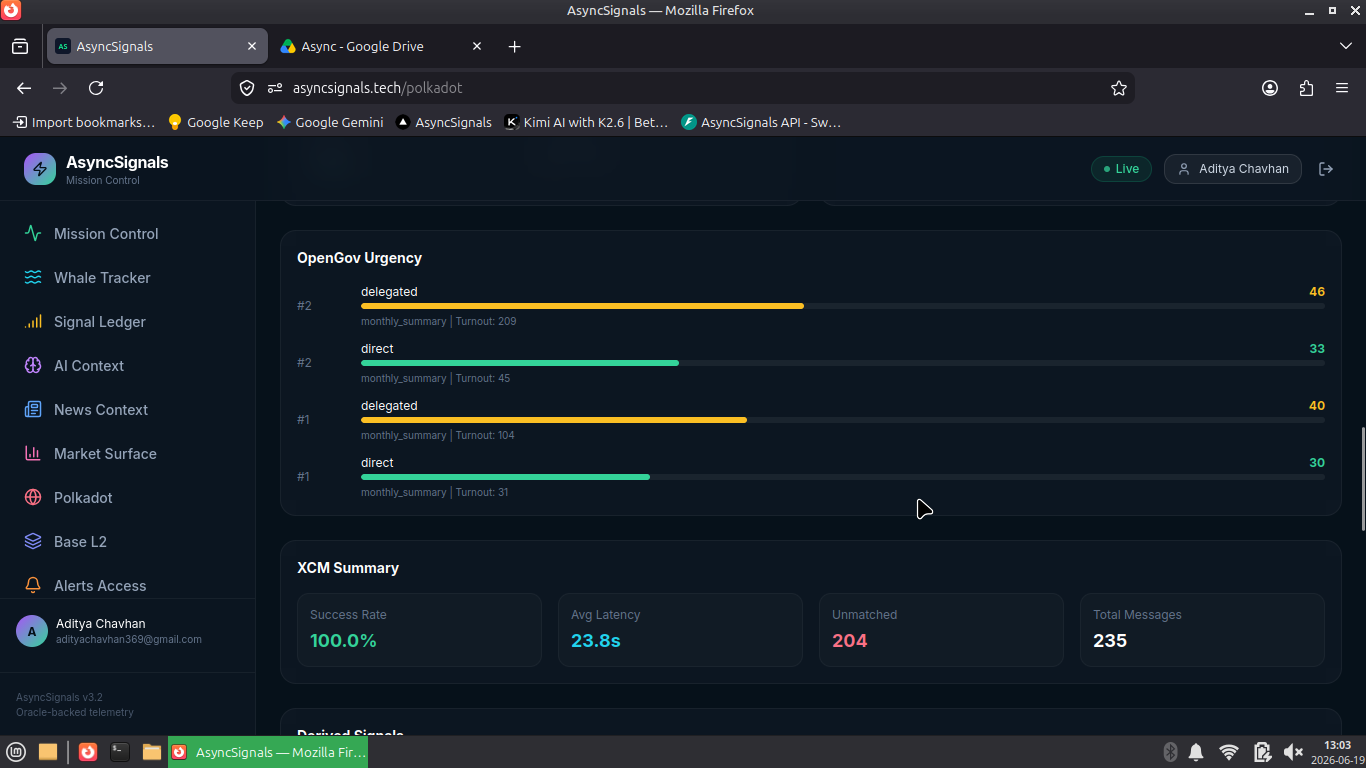
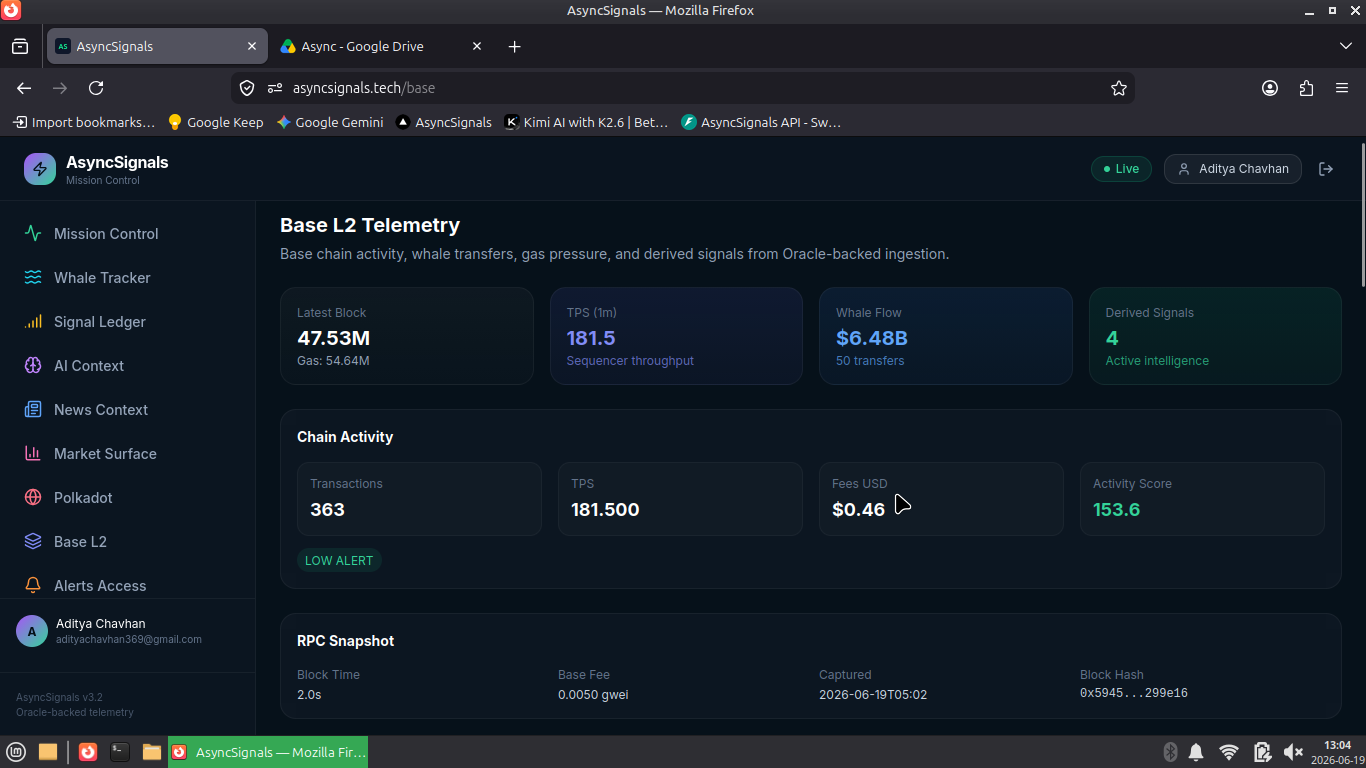
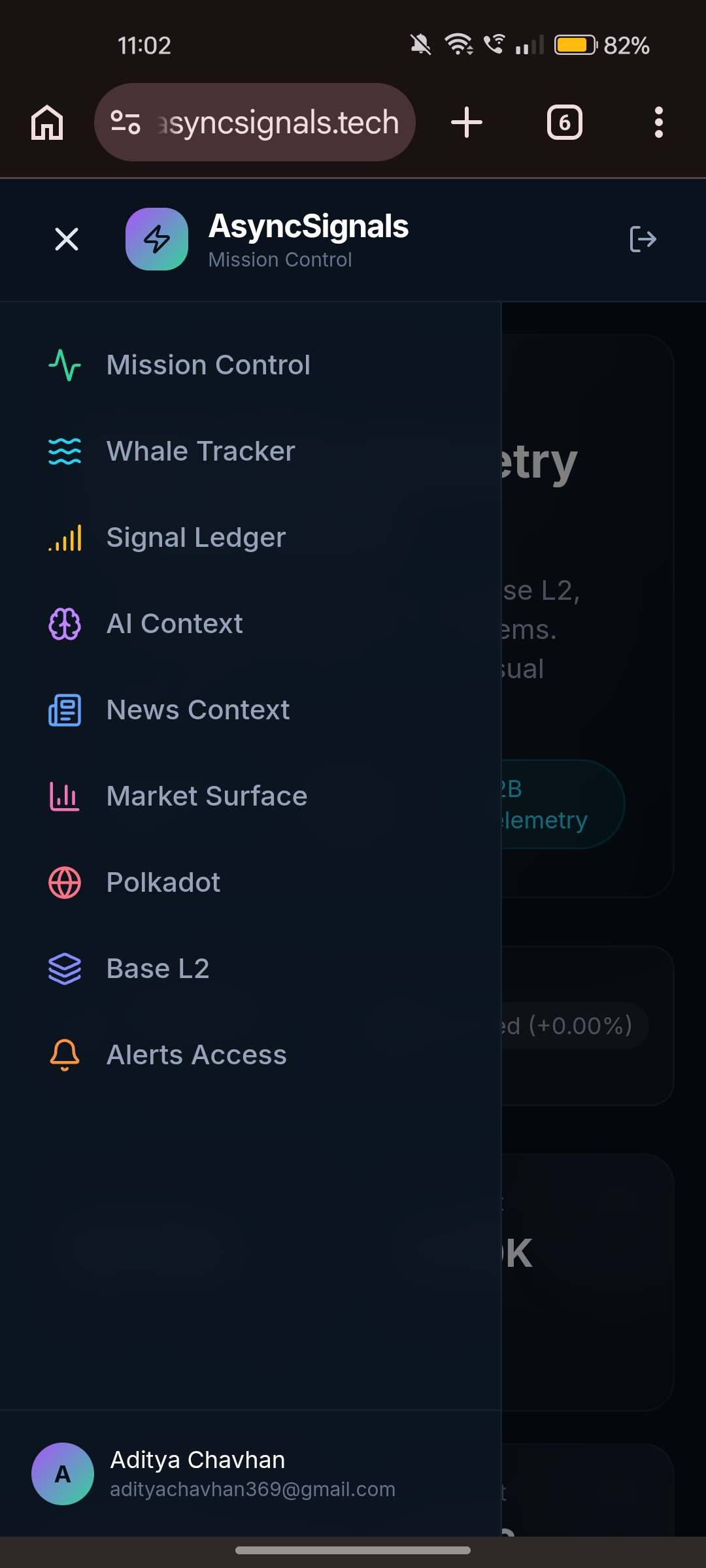
I built AsyncSignals as a data-driven web app with a custom dashboard experience focused on clarity and speed. The system pulls together multiple data streams, stores structured information for reuse, and presents it through a streamlined UI with sections for market data, whale activity, signals, summaries, and alerts.
Challenges we ran into
One of the biggest challenges was reducing noise without removing useful context. Onchain data is abundant, but not all of it is relevant, so a lot of the work was deciding what deserves to be surfaced and how to present it in a way that stays readable.
Another major challenge was infrastructure and deployment. Getting the app live, configuring the server environment, handling domain and SSL issues, and making the project stable enough to present publicly took real effort. Beyond that, shaping the product into something coherent instead of “just another dashboard” was an important design challenge.
Accomplishments that we're proud of
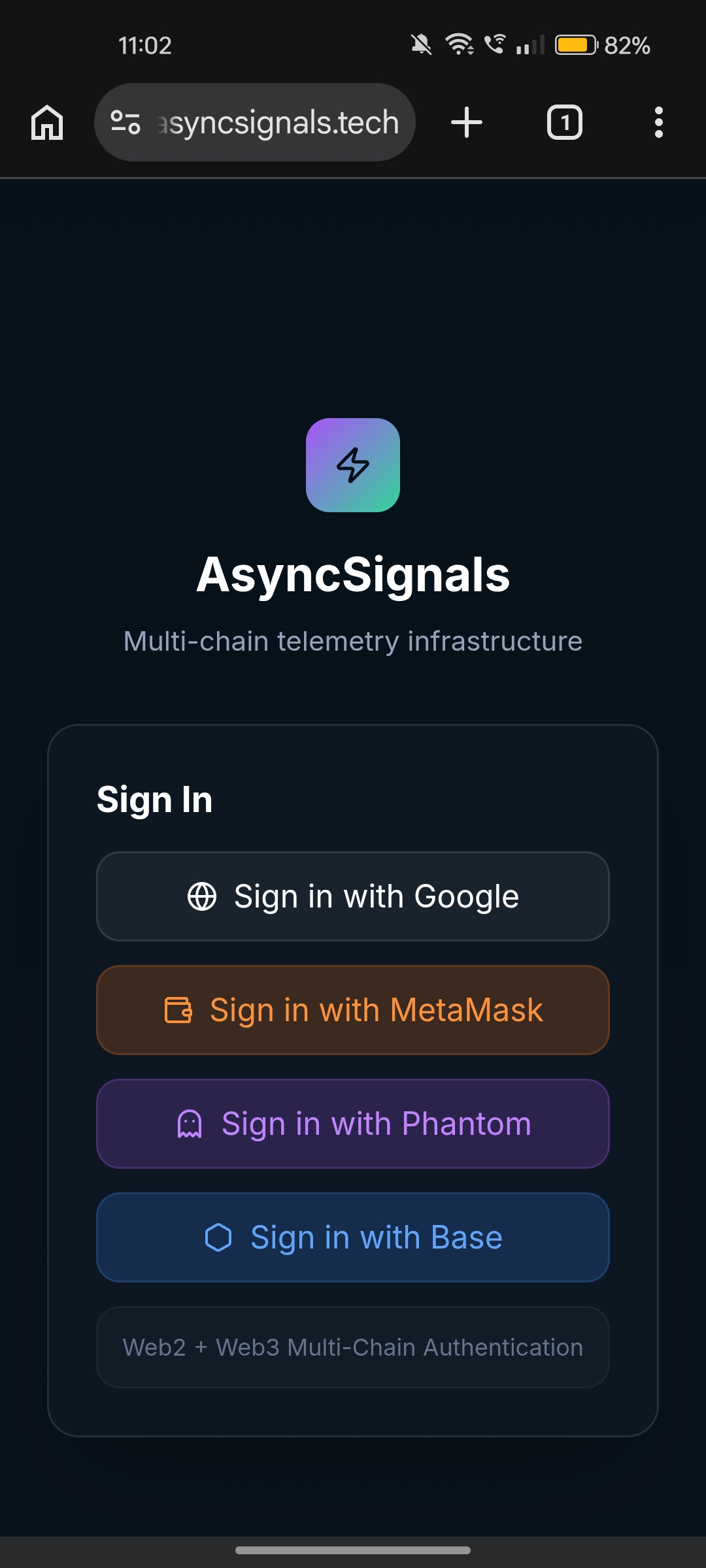
We’re proud that AsyncSignals has already grown from an idea into a live, working product with a clear operator-focused interface for onchain intelligence. We built a system that brings together whale tracking, market context, signal history, AI summaries, and alerts into one mission-control style experience instead of leaving users to piece everything together from scattered sources.
We’re also proud of the speed at which we moved from concept to public build. Along the way, we handled product design, backend logic, deployment, domain setup, and infrastructure issues while continuing to refine the experience into something usable and coherent.
A major milestone for us was getting approved for the Alchemy Solana Fund, which gave us strong validation that AsyncSignals has real potential as Solana-native infrastructure. That support gave us both practical resources and a huge confidence boost as we keep building.
What we learned
I learned that building a useful data product is not just about collecting information — it is about deciding what matters, what should be ignored, and how to present the important parts clearly. I also learned a lot about shipping quickly, working through deployment problems, and turning an idea into something public and usable.
What's next for AsyncSignals
The next step for AsyncSignals is to expand beyond the current telemetry foundation, improve alerting and signal quality, and support more chains and deeper risk context over time. The long-term vision is to build a serious intelligence layer for onchain users who want better decision support, not just more data.
Built With
- alchemyapi
- blockchain
- cerebras-api
- coingecko-api
- coinpaprika-api
- crypto-trade
- gemini-api
- groq
- heliusapi
- openrouter-api
- oracle-a1-amper-instance
- oracle-autonomous-26ai-database
- python
- python's-asyncio
- streamlit


Log in or sign up for Devpost to join the conversation.