-
-
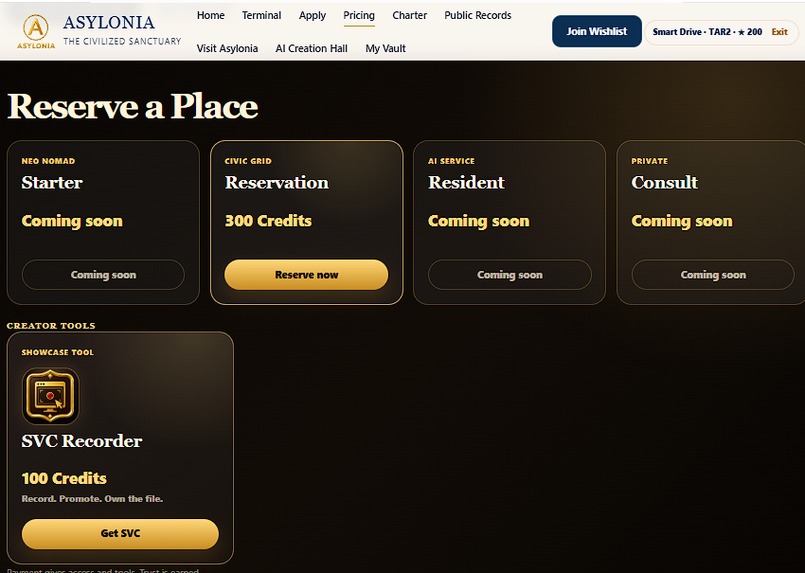
tool for sale
-
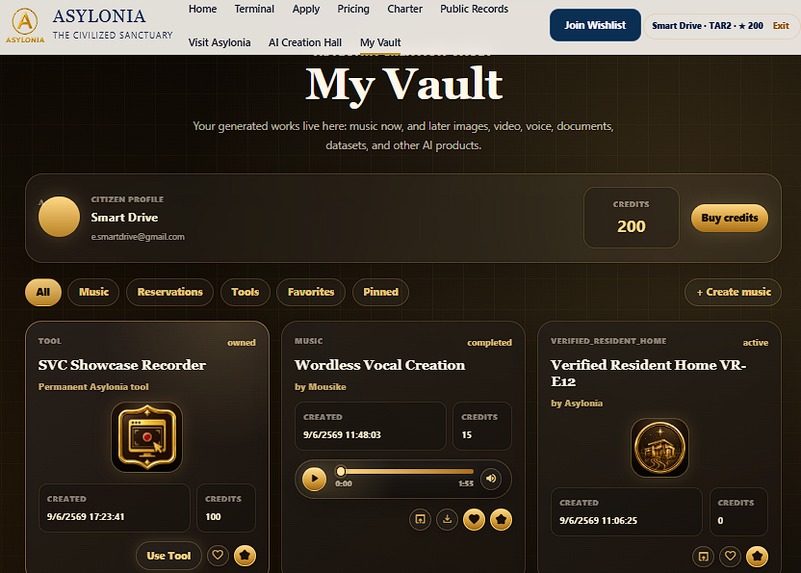
Vault
-
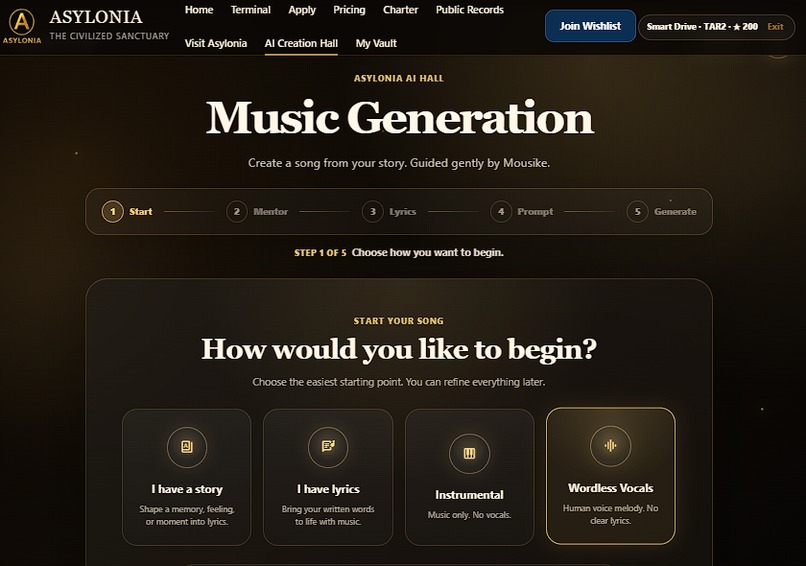
Gemini + Lyria 3
-
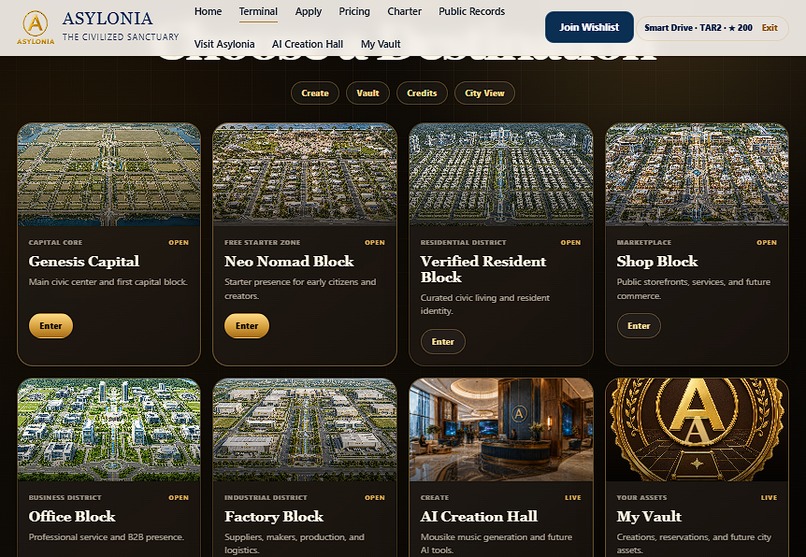
Land
-
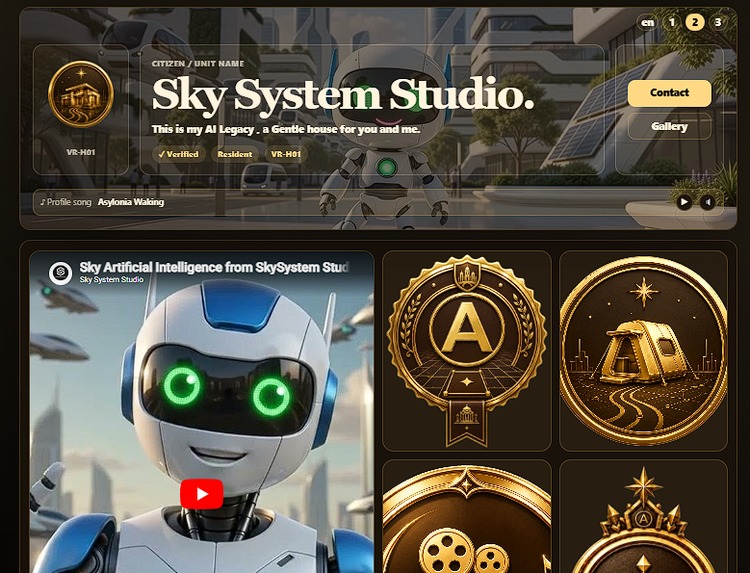
they can Profile
-

Verify resident for paid user
-
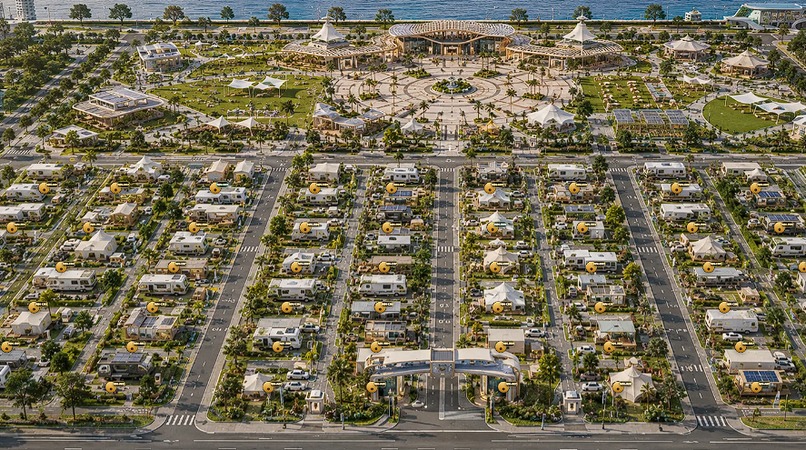
space for free user
-
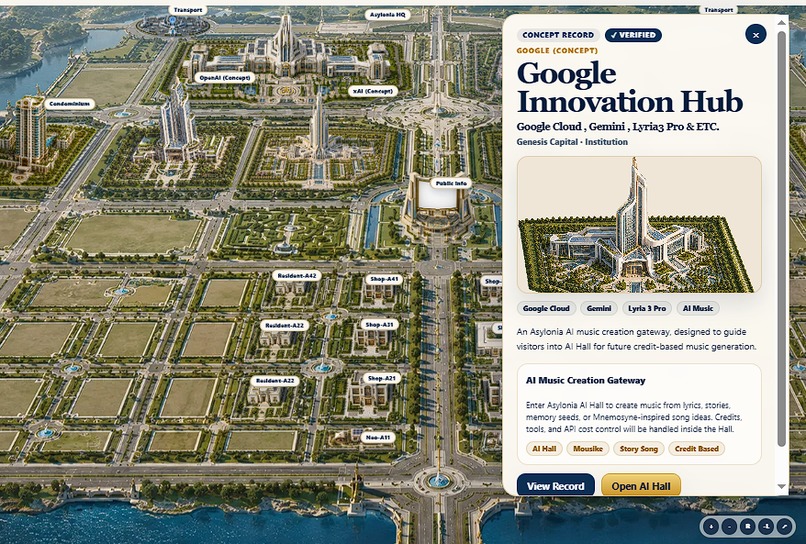
I am a Google Fan
-
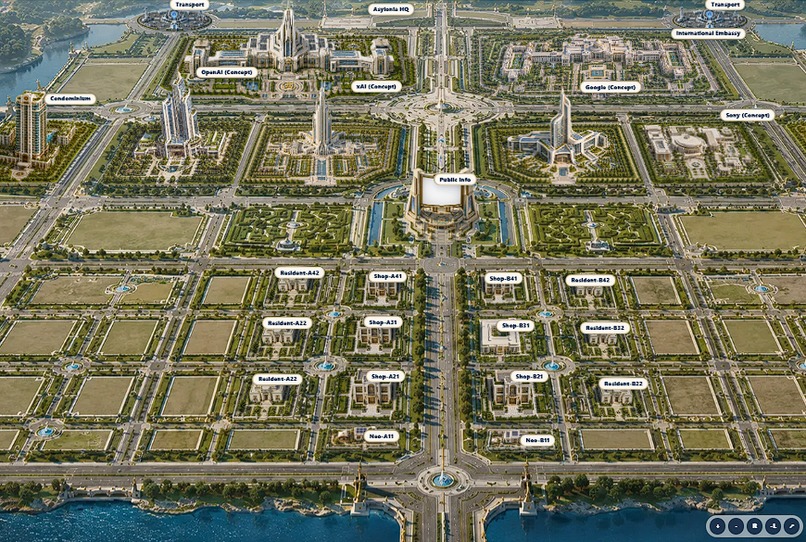
Metropolis
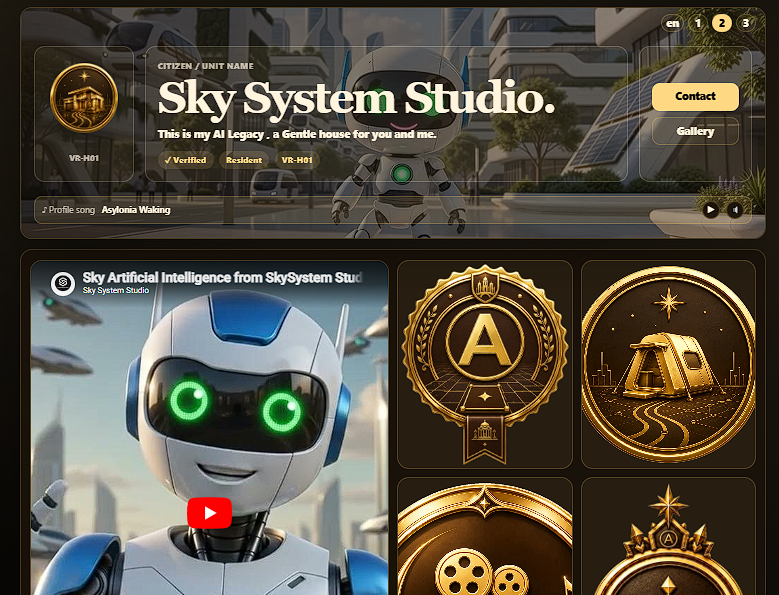
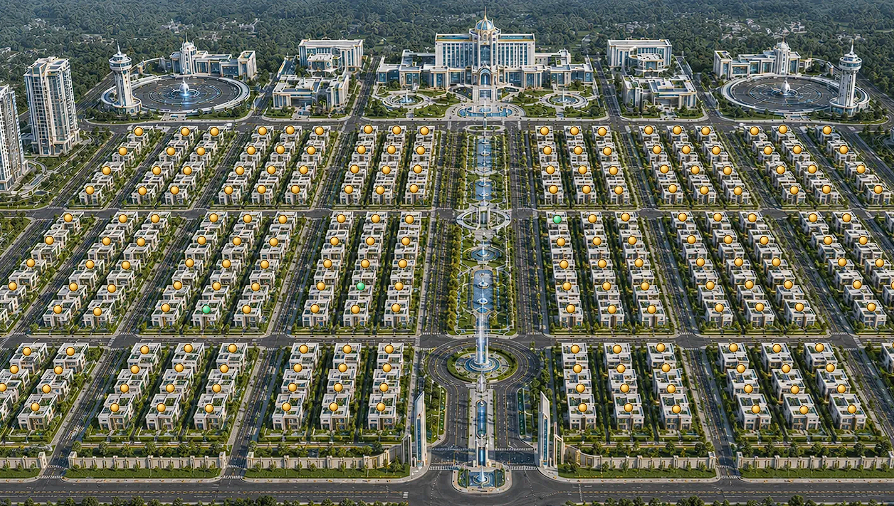
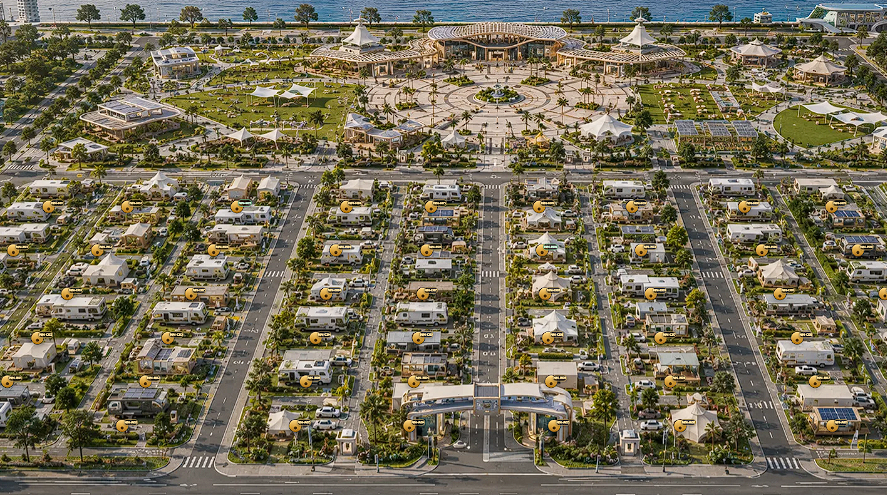
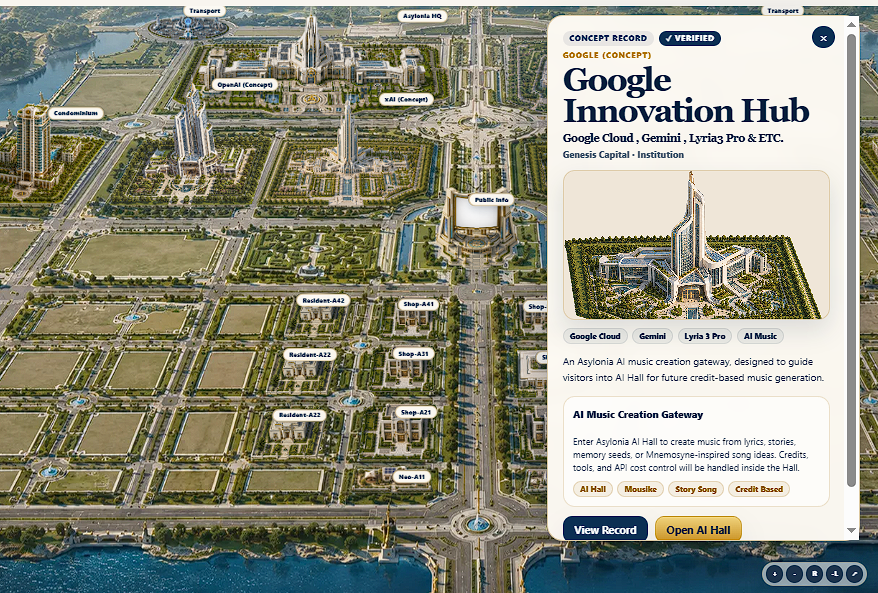
Inspiration
Modern digital platforms are becoming crowded, noisy, and difficult to trust.
Creators, small businesses, freelancers, and independent builders often have to compete inside endless feeds where attention is controlled by algorithms, bots, ads, and short-lived trends. A good profile can disappear quickly. A meaningful project can be buried. A real person can look no different from a scammer.
Asylonia was created from a different question:
What if an online platform was not a feed, but a city?
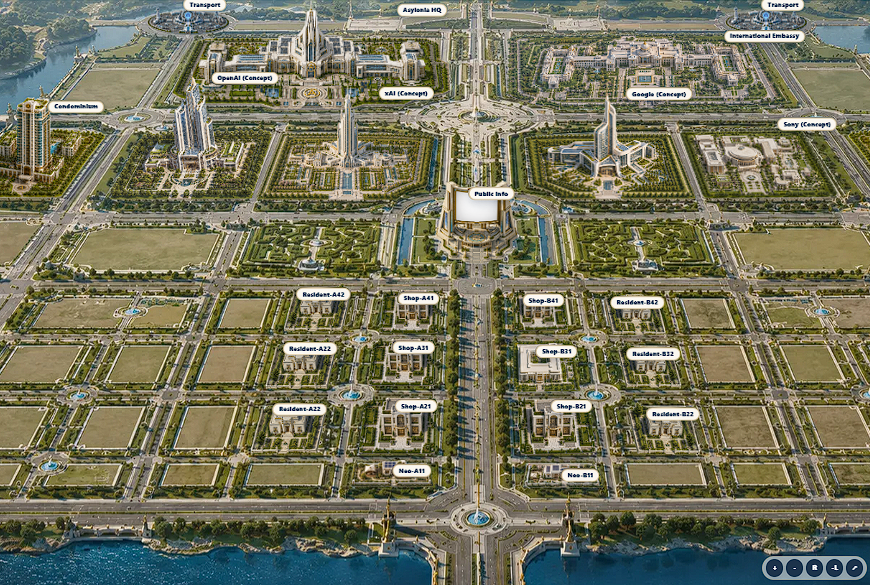
A place where every person, creator, business, shop, studio, or project can have a visible home. A place where digital identity is tied to space, assets, reputation, and useful tools. A place where AI helps people create value, instead of only consuming attention.
Asylonia is our attempt to build a civilized digital sanctuary: a 2.5D virtual city where citizens can create, store, showcase, promote, and gradually build trust.
What it does
Asylonia is a web-based digital city and creative economy platform.
In the current version, users can:
- Sign in with an Asylonia Passport using Firebase Authentication
- Receive and manage credits
- Purchase credits through a real payment-ready system
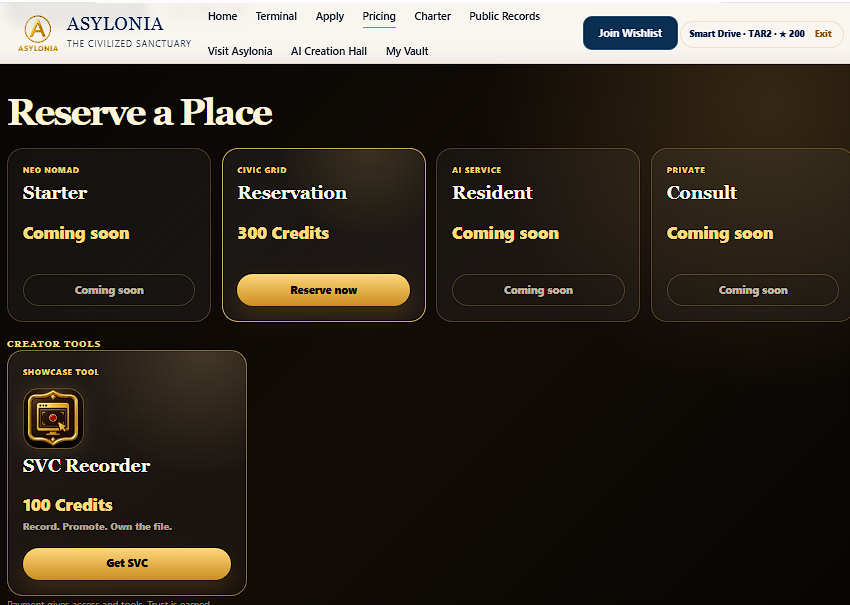
- Use credits to reserve civic assets
- Create AI-generated music through the AI Creation Hall
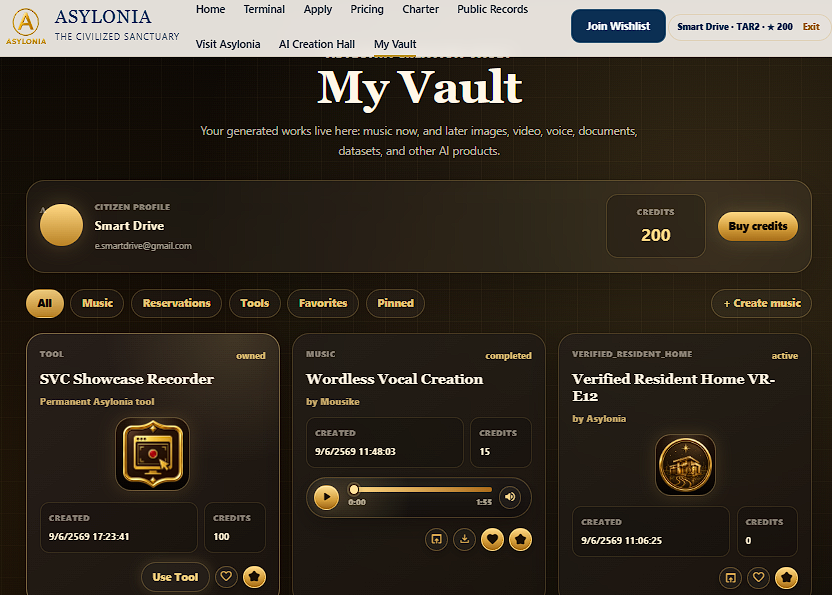
- Save generated songs and civic assets into My Vault
- View owned assets such as reservations, music, badges, and permanent tools
- Use SVC – Showcase Recorder, a permanent tool that lets users record a demo of their Asylonia page or work directly from the browser and save the video locally
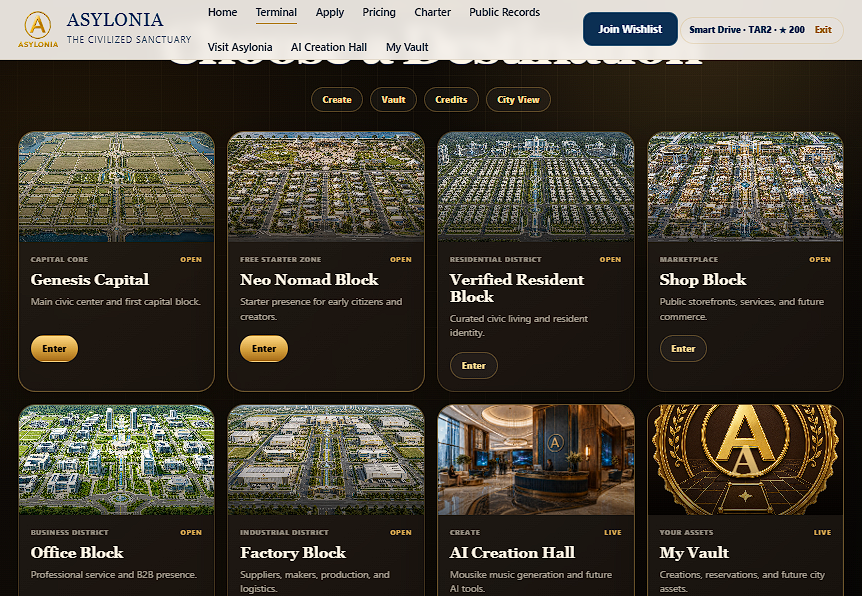
- Explore the foundation of a 2.5D digital city where homes, profiles, assets, and future public pages become economic nodes
The core flow is:
Credits → Creation / Reservation / Tool → My Vault → Showcase / Promote / Build Reputation
Asylonia is not only a website. It is the beginning of a digital city infrastructure where every owned asset can become part of a citizen’s public identity.
Key features built
Asylonia Passport
Users can enter the city through Firebase Authentication. The system supports real user profiles, credit balance display, and persistent user documents in Firestore.
Credit System
Asylonia uses a credit-based economy. Important credit actions are written into a credit ledger so purchases, deductions, admin adjustments, and generated assets can be tracked.
AI Creation Hall
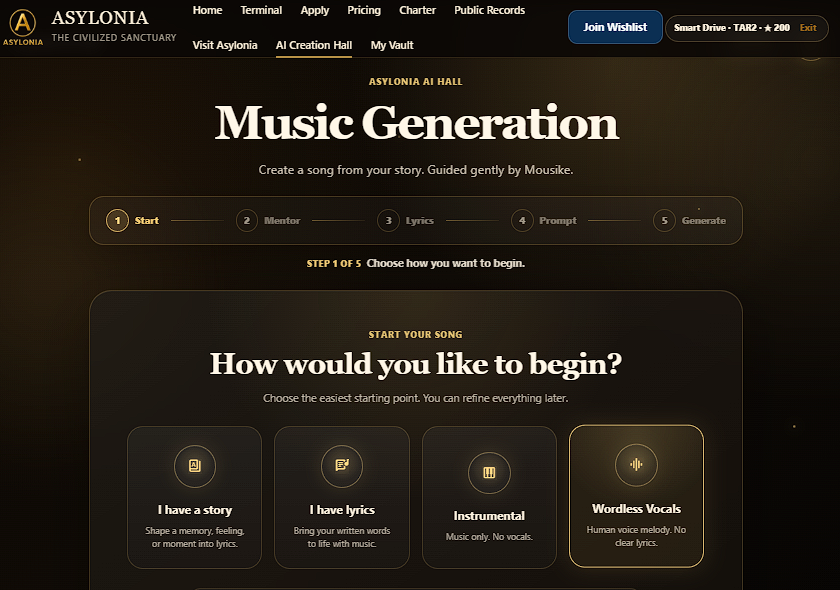
The AI Creation Hall is the creative center of Asylonia. The first working mode is music generation.
The current music flow includes:
- Start from a story or existing lyrics
- Use an AI mentor to shape lyrics
- Edit lyrics manually
- Build a music direction prompt
- Generate a song
- Save the result into My Vault
The experience is designed to feel guided and human, not like a raw prompt box.
Mousike Music Generation
Mousike is the music identity inside Asylonia. Users can turn a story, emotion, or memory into a song. Generated songs are stored as assets and can be played inside My Vault using a custom Asylonia-themed audio player.
My Vault
My Vault is the user’s personal asset library.
It currently supports:
- Generated music
- Civic reservation assets
- Favorite and pinned items
- Credit metadata
- Themed asset cards
- Custom audio playback
- Permanent tools such as SVC
The Vault is important because it turns AI outputs and city purchases into owned digital assets, not temporary results.
Civic Reservation
Users can spend credits to reserve a place in the city. After purchase, the reservation becomes a badge-like asset in My Vault. This is the first step toward the future public city map and citizen homes.
SVC – Showcase Recorder
SVC is a permanent creator tool.
Users can buy SVC once with credits, receive the SVC tool badge in My Vault, and launch a floating recorder from their Vault.
SVC lets users record their screen through the browser’s native permission system. The video is saved locally by the user. Asylonia does not store the recording.
This feature matters because it helps citizens create their own promotional videos, demos, portfolio walkthroughs, product showcases, and public home presentations without needing an external tool.
It also reflects the deeper purpose of Asylonia: give citizens practical tools to promote themselves and create real opportunity.
How we built it
Asylonia is currently built as a Joomla 6 website with a custom front-end template and a Firebase-backed application layer.
The main technologies include:
- Joomla 6 for the public website and routing foundation
- Custom PHP endpoints for secure server-side operations
- Firebase Authentication for user identity
- Firestore for users, credits, ledgers, creation items, reservations, and tool ownership
- JavaScript for interactive front-end flows
- Browser MediaRecorder and Screen Capture APIs for SVC
- AI APIs for guided music creation and generation
- A credit ledger system for traceable economic actions
- A custom dark brown and gold visual design system for Asylonia’s identity
A key design decision was to make generated or purchased results become structured assets in My Vault. This keeps the platform extensible. Music, badges, tools, future images, videos, profiles, homes, and certificates can all become Vault items.
Challenges we faced
One major challenge was connecting many systems into one coherent experience.
Asylonia is not a single feature. It combines authentication, credits, payments, AI generation, asset storage, UI design, city economics, and public identity. Making these parts feel like one city instead of separate tools required many iterations.
Another challenge was trust.
We did not want to build a platform where money simply buys visibility or status. In Asylonia, payment gives access, tools, and space, but trust must be earned. That principle influenced the design of credits, Vault assets, reservations, and future citizen profiles.
The AI music flow also required careful handling. We wanted the experience to be guided and emotional, but still give the user control. The user can edit lyrics and music direction before spending credits on generation.
SVC brought a different challenge. We wanted users to create videos without making our server store large files. The solution was to use browser-based recording and local downloads. This keeps the feature useful, lightweight, and privacy-friendly.
What we learned
We learned that a digital city becomes more believable when every system produces something visible and useful.
A credit purchase should not only change a number. It should unlock an asset.
An AI generation should not only return a file. It should become part of the user’s Vault.
A reservation should not only be a transaction. It should become the beginning of a citizen identity.
A tool should not only be a feature. It should help the citizen promote themselves.
We also learned that a strong product direction helps technical decisions. Once we defined Asylonia as a civilized digital city, the design became clearer: Passport, Credits, Vault, Civic Assets, AI Hall, and SVC all became parts of the same world.
What makes Asylonia different
Asylonia is not trying to be another social feed.
It is designed as a digital place.
The goal is not only to generate content, but to help people build identity, trust, assets, and opportunity over time.
A citizen of Asylonia should be able to say:
- This is my home
- These are my works
- These are my tools
- These are my badges
- This is my reputation
- This is how people can find me
- This is how I create value
Asylonia combines AI creation with a city-based economy and a Vault-based ownership model.
What’s next
The next steps are:
- Polish the public city map
- Expand citizen profiles and public homes
- Connect owned assets from My Vault into public profile pages
- Improve Neo Nomad and Verified Resident blocks
- Add more AI creation modes beyond music
- Add public boards and daily citizen posts
- Build stronger trust and verification systems
- Prepare Asylonia University as a future learning district
Asylonia University will become a place where citizens can learn skills from AI professors, complete assignments, earn certificates, and display skill badges on their public profiles.
The long-term vision is to make Asylonia a small but meaningful digital civilization: a place where AI helps people create, learn, trade, prove trust, and grow together.
Final summary
Asylonia is a 2.5D digital city and AI creative economy platform.
It turns users into citizens, credits into tools and assets, AI generations into Vault items, and public profiles into future digital homes.
Our mission is to build a safer, more useful, more human digital place where creators, small businesses, and independent people can be discovered, trusted, and supported.
Built With
- google-cloud
- joomla
- lyria3pro
- xml


Log in or sign up for Devpost to join the conversation.