


Inspiration:
As local ASU students, we used very precise measurements and data analytics to find spots to relieve personal disasters.
What it does:
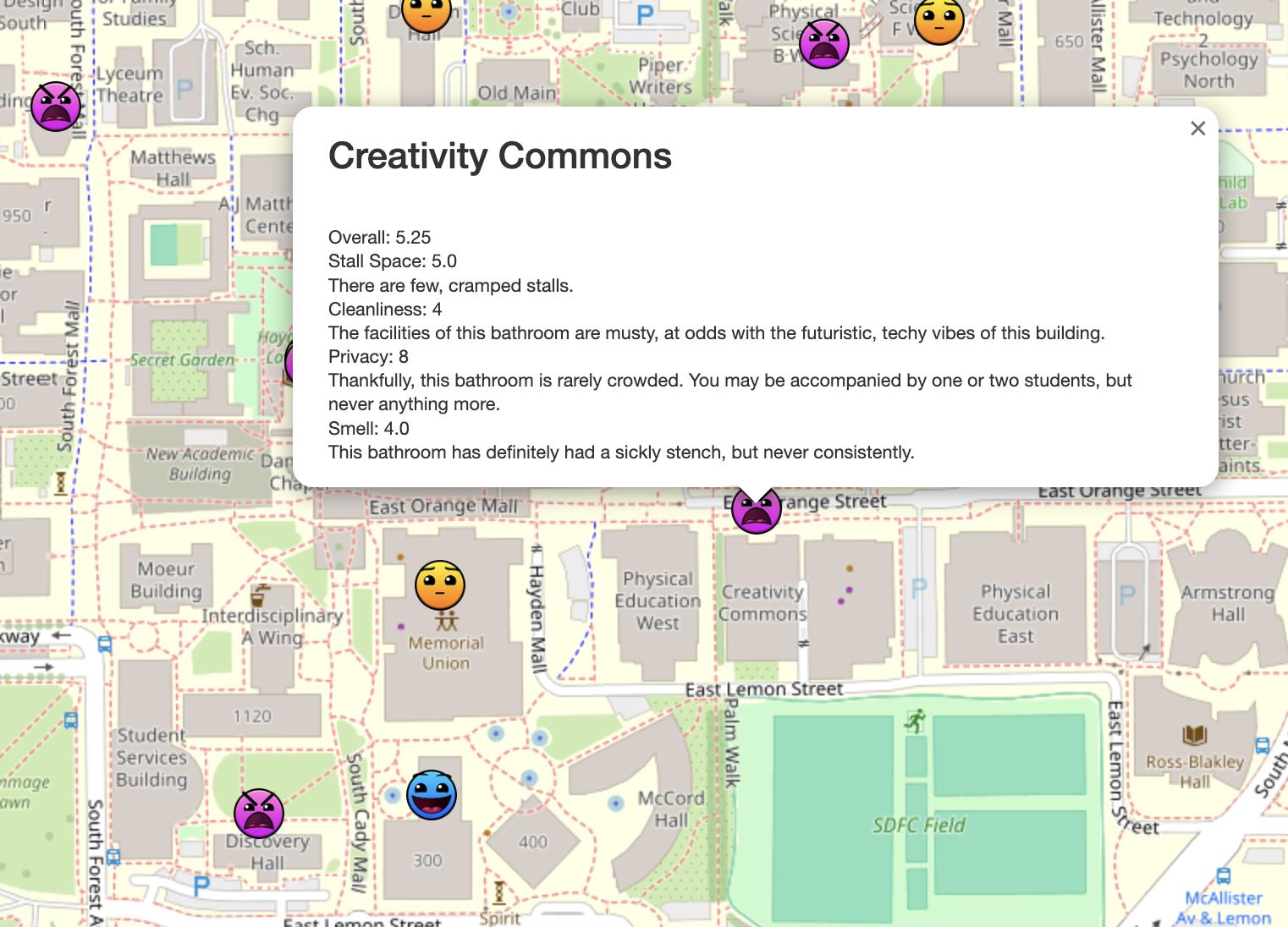
Our student team tested and tried multiple locations and thrones to rate based off of four criteria: nasal sensitivity, cleanliness, space, privacy.
How we built it:
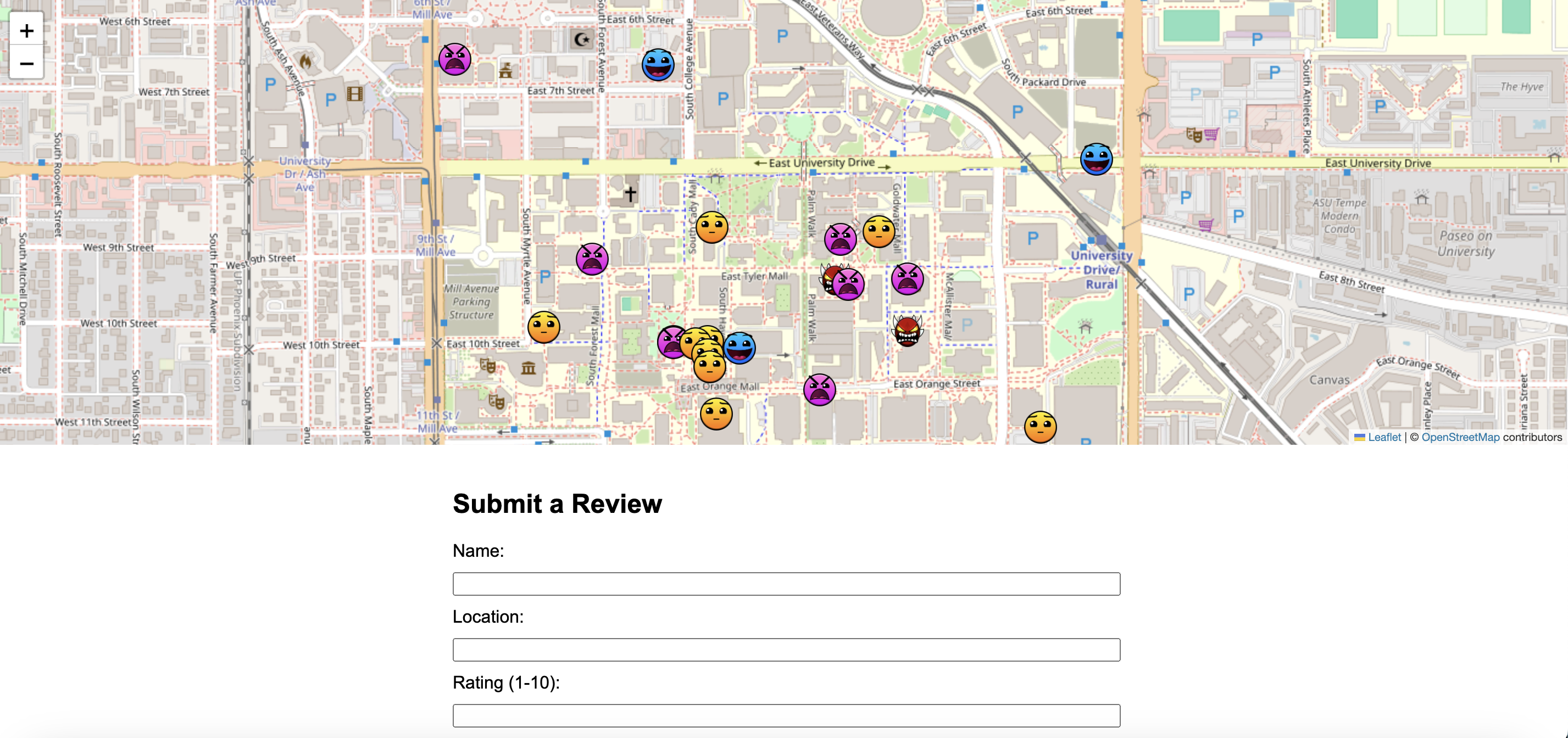
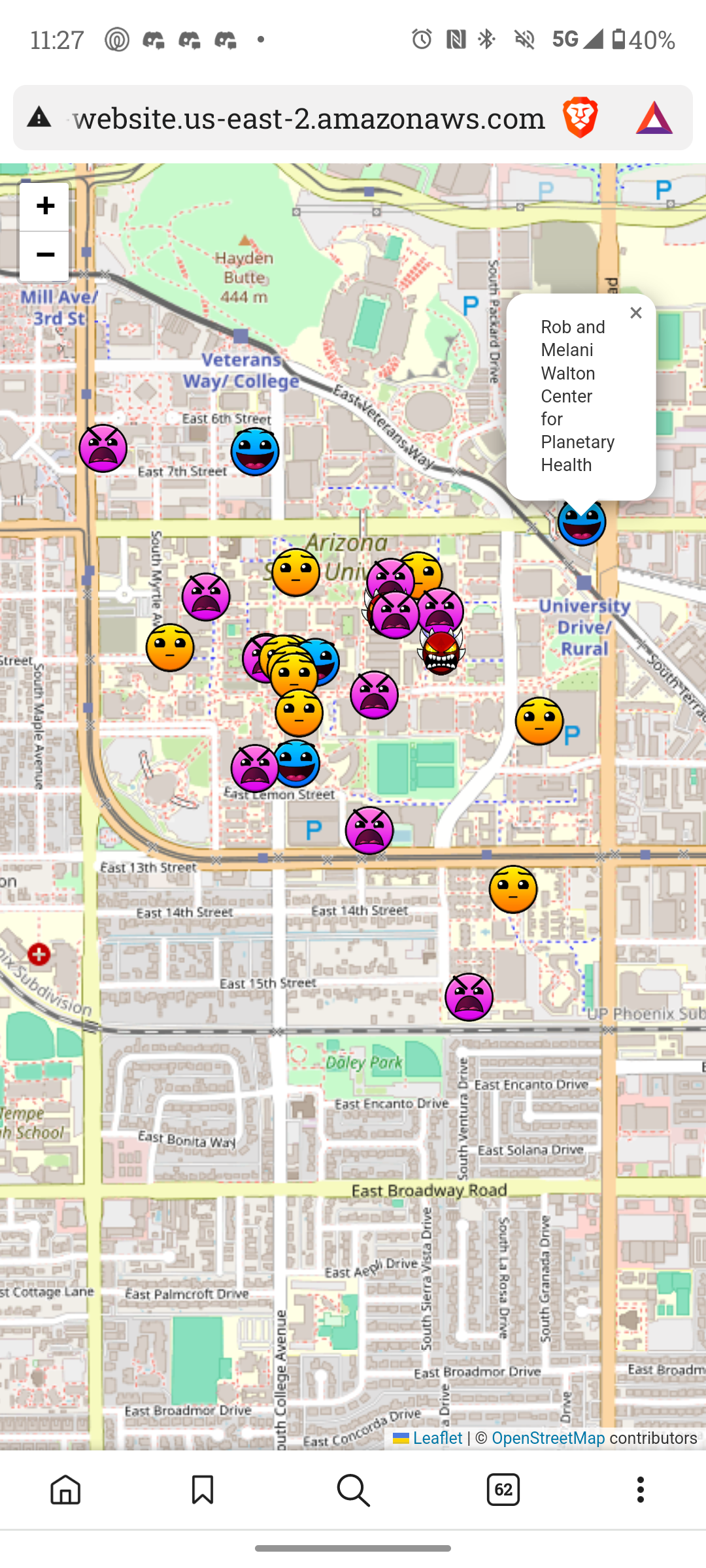
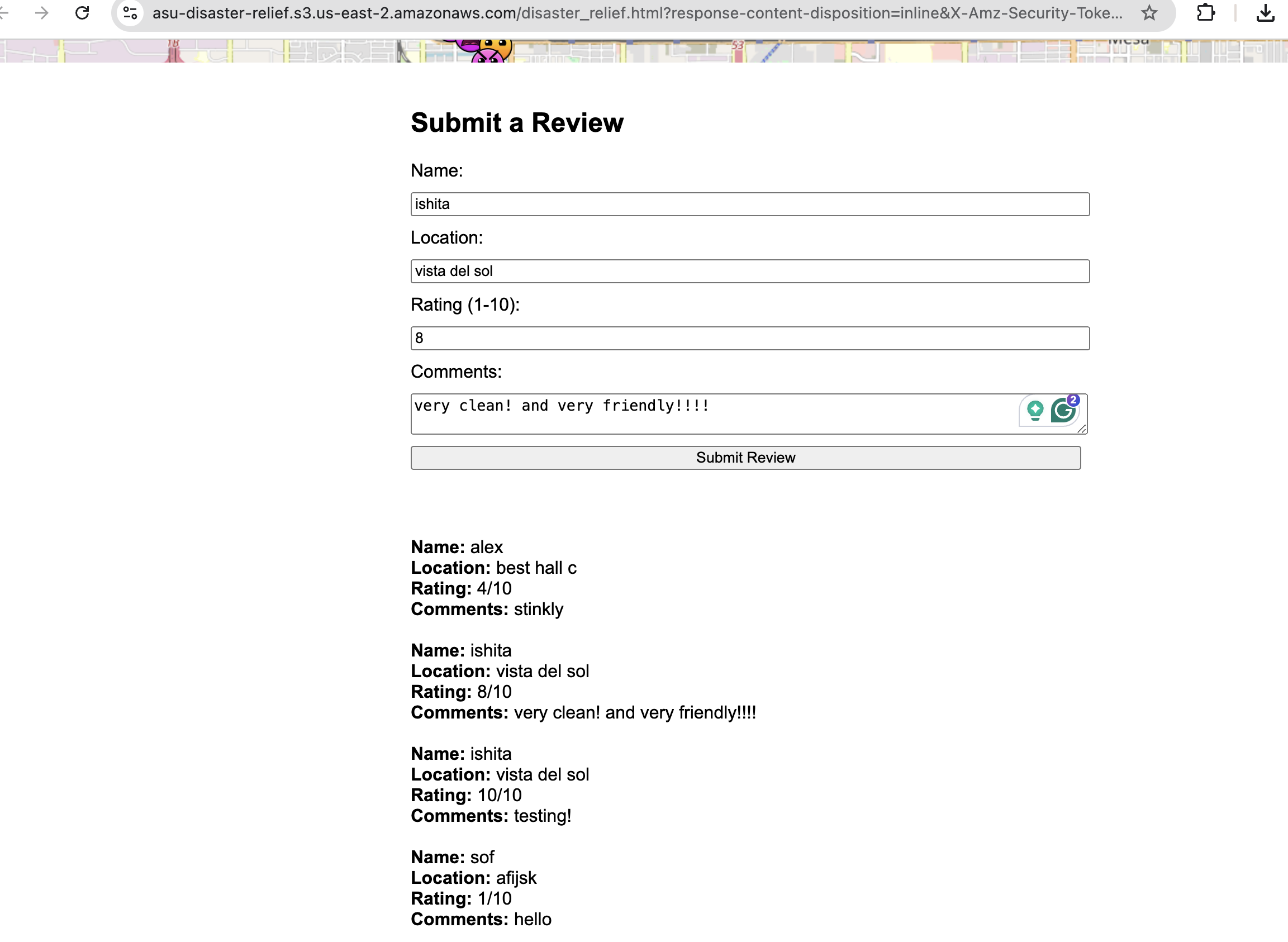
We integrated a review submission form with a map using Python's Folium library for rendering the map and adding markers based on reviews we made in a CSV file through google sheets. Then we built the front end with HTML and JavaScript, allowing users to submit and fetch reviews. The back end was implemented using two AWS Lambda functions, which interact with a DynamoDB table to store and retrieve reviews. API Gateway endpoints were set up for POST (submitting reviews) and GET (fetching reviews), with CORS handling enabled for cross-origin requests from the S3-hosted front end.
Challenges we ran into:
We could not test all the bathrooms. We also wanted to include a feature that automatically created a pointer to every single review but had to settle for a forum-type website instead.
Accomplishments that we're proud of:
We are proud to serve local citizens and give them relief from their disasters.
What we learned:
How to make CSV files look pretty, AWS Lambda functions, and Folium maps!
What's next for ASU: Disaster Relief ™:
Adding more filters and many more locations! Also, hopefully giving each user their own cute little marker for each review they submit.
Resources: AWS, Folium, Geometry Dash Emojis
Built With
- amazon-web-services
- api
- dynamodb
- html
- javascript
- lamda
- python
- rest


Log in or sign up for Devpost to join the conversation.