-
-
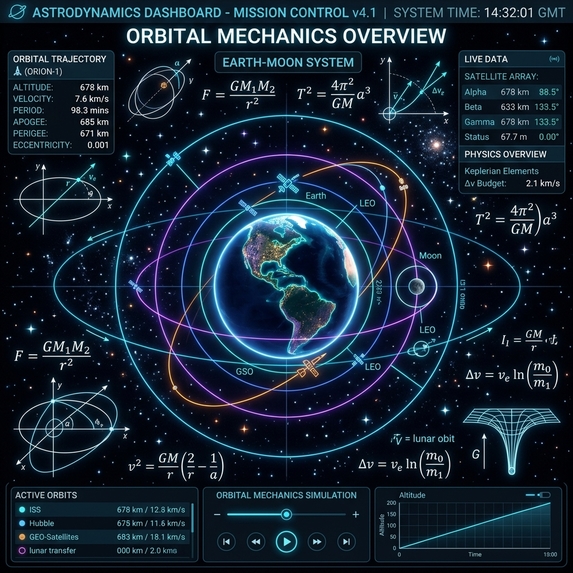
AstroSim AI - Interactive Physics Sandbox & AI STEM Tutor Project Banner
-
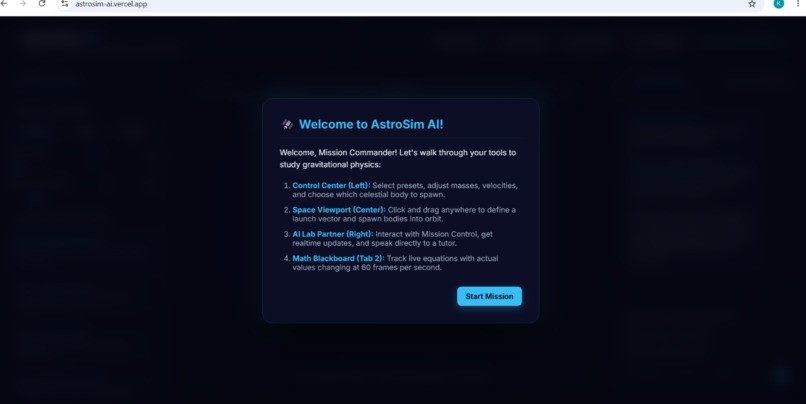
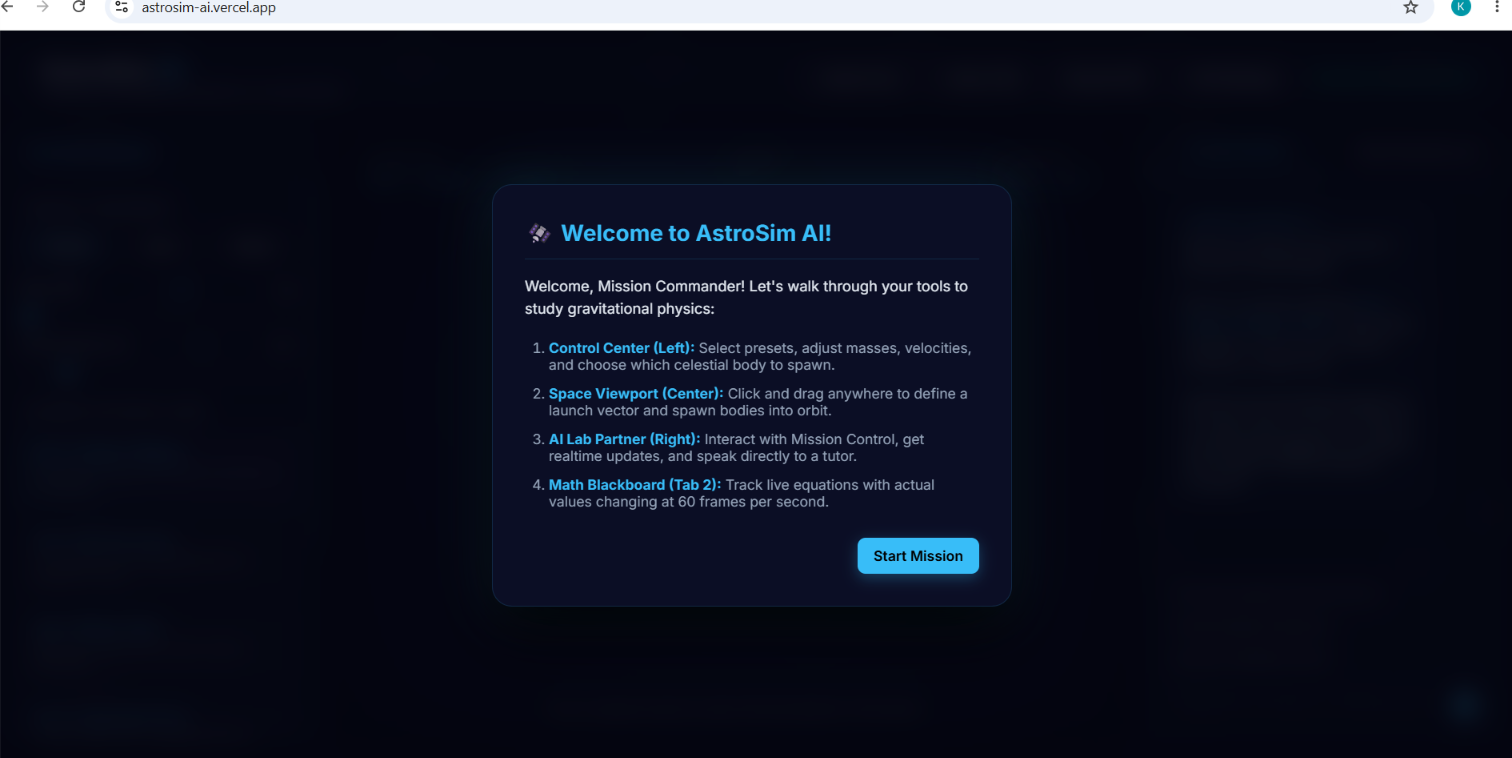
Mission Control Onboarding Tour guiding students through the simulator layout
-
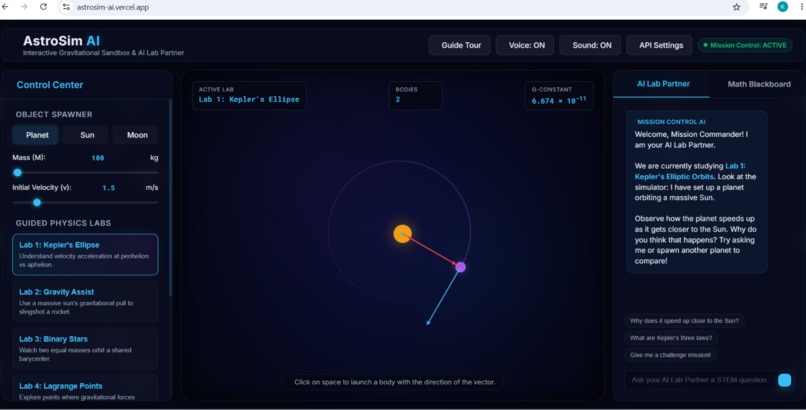
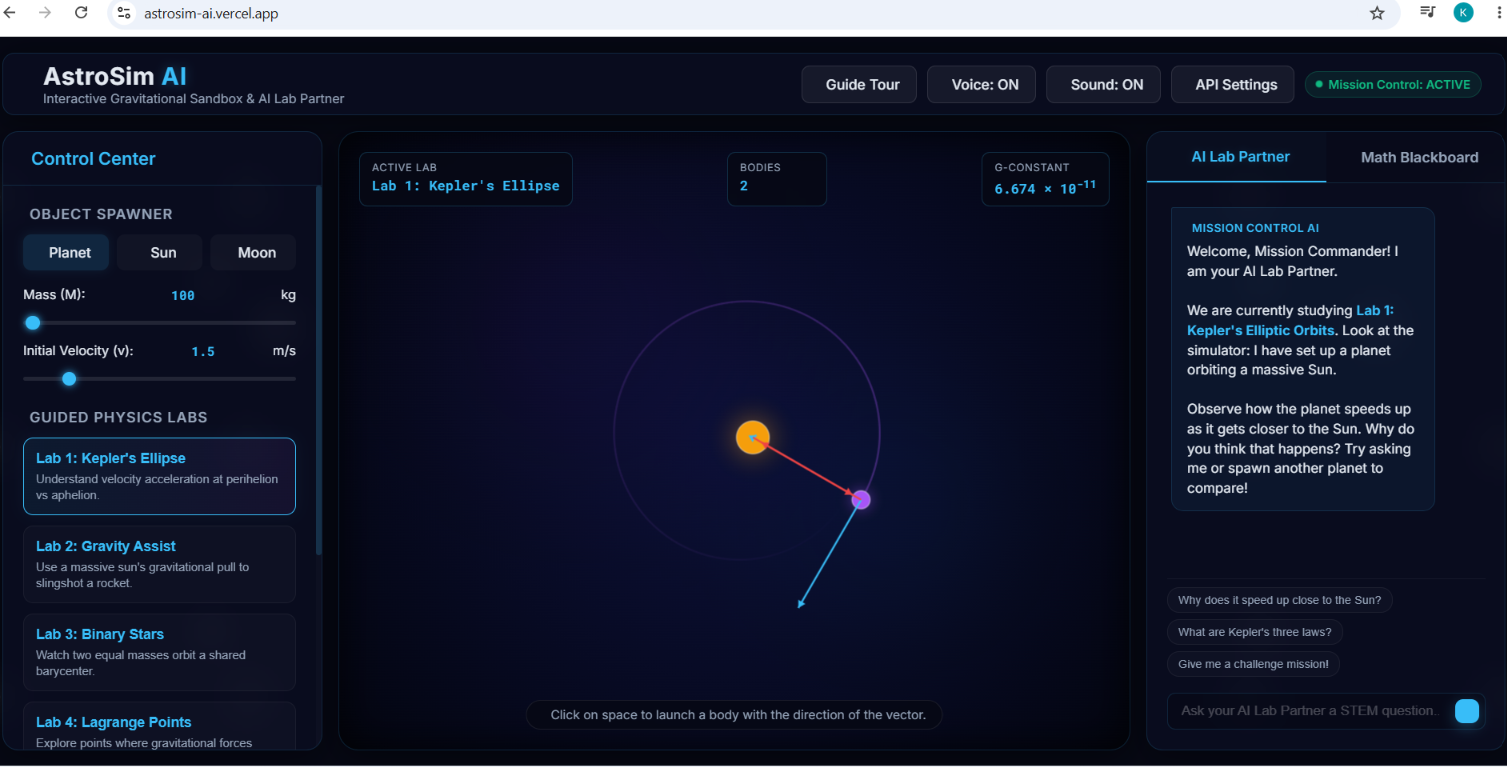
Real-time Kepler's Ellipse simulation with active force vectors and math board calculations
🌌 Inspiration
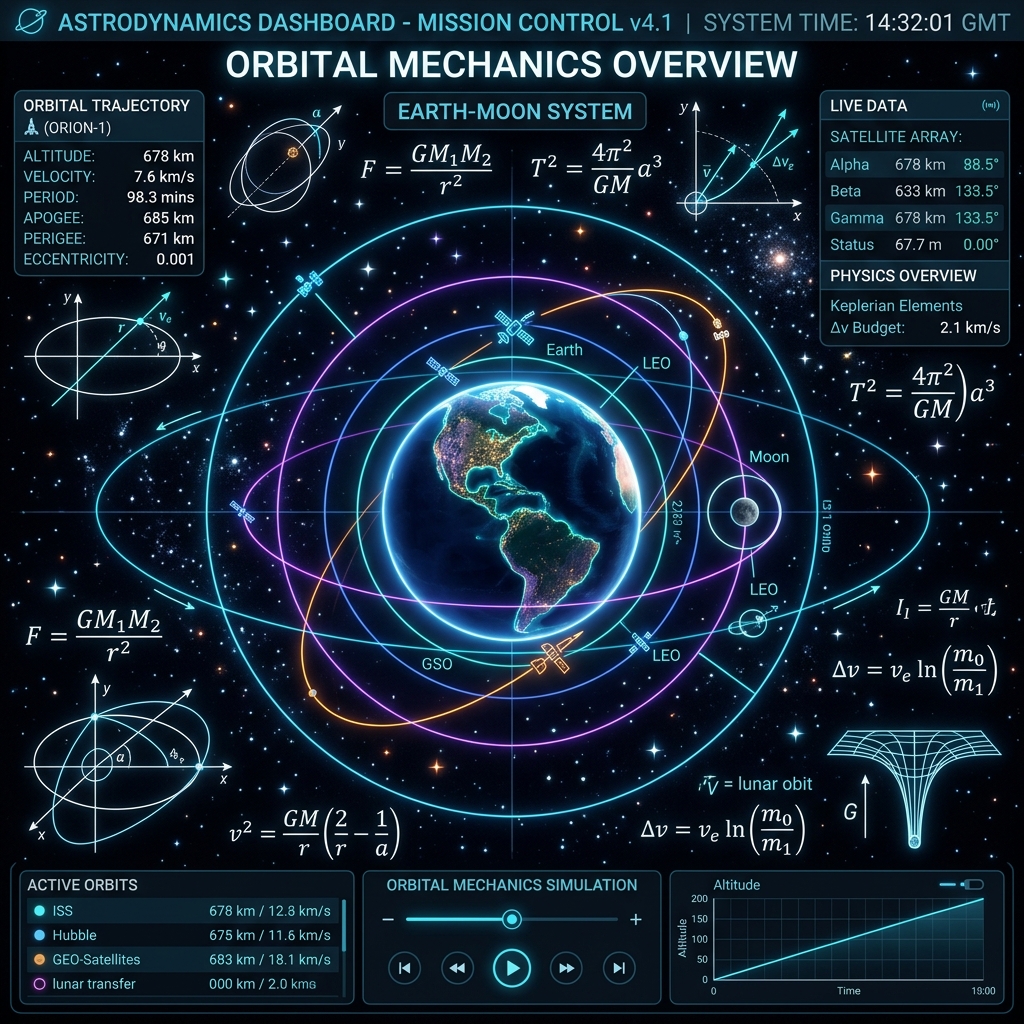
Physics education often suffers from a "visualization gap." Abstract formulas like Newton’s Law of Universal Gravitation (\(F_g = G \frac{M_1 \cdot M_2}{r^2}\)) and Kepler's Laws are memorized by students without true physical intuition. We wanted to build a specialized system that bridges this gap—translating static textbook equations into a dynamic, beautiful orbital sandbox where students can experiment, see the math update live at 60 FPS, and learn directly from an AI tutor.
🛰️ What it does
AstroSim AI is an interactive gravitational simulation laboratory designed for STEM students.
- Interactive Gravity Sandbox: Students can click and drag to launch planets, moons, or stars, observing orbit trails and real-time gravity and velocity vector lines.
- Dynamic Math Blackboard: As planets orbit, this panel calculates and displays formulas with live simulation values dynamically substituted in at 60 FPS.
- AI Lab Partner (Tutor): A voice-narrated assistant (powered by Google Gemini / local rules) that tracks the sandbox state, explains orbital physics, reacts to collisions, and assigns interactive missions.
- Accretion & Collisions: Colliding bodies merge using conservation of momentum, generating shockwaves and synthesized audio crunch.
- Guided Labs: Structured scenarios for Elliptical Orbits, Slingshots, Binary Stars, and Lagrange L1 balance points.
🛠️ How we built it
AstroSim AI is built using a zero-dependency vanilla architecture to ensure maximum compatibility and zero load errors:
- HTML5 Canvas & JavaScript: Powering the custom 60 FPS vector physics engine.
- CSS Glassmorphism: Creating a futuristic space dashboard layout, fully responsive on mobile/tablets.
- Web Audio API: Programmatically synthesizing sound waves (whooshes, collision crunches, clicks) using oscillator nodes.
- Web Speech Synthesis API: Giving the AI assistant a voice to read explanations out loud.
- MathJax Library: Compiling and rendering gorgeous LaTeX math equations in-browser.
- Gemini 1.5 Flash API: Enabling dynamic, context-aware AI tutoring responses.
🚧 Challenges we faced
- Performance Balance: Calculating gravity vectors ($O(N^2)$ complexity) and updating trails at 60 FPS while keeping canvas rendering smooth. We optimized this by caching vector math and using efficient path rendering.
- Browser Audio Policies: Browsers block text-to-speech before user interaction. We resolved this by building an interactive welcome card so the user activation initializes audio context seamlessly.
- Responsive Canvas Grid: Making the canvas auto-scale for High-DPI (Retina) screens and collapse vertically on small screens without stretching the rendering coordinate grid.
🎉 Accomplishments we're proud of
- Creating a fully functional, zero-dependency educational laboratory that runs instantly on any device by double-clicking a single file.
- Designing a code-based synthesizer to generate sound effects without loading heavy audio assets.
- Synchronizing live math calculations side-by-side with visual physics.
📚 What we learned
We learned advanced techniques in Web Audio synthesis, MathJax LaTeX typography, high-DPI canvas handling, and the pedagogy of making complex STEM subjects engaging for students.
🔮 What's next for AstroSim AI
We plan to expand AstroSim AI into a full virtual STEM kit, adding 3D gravity simulations, multiplayer collaborative space rooms, and extending the model to simulate electrostatics and chemistry particle labs.
Built With
- css3
- gemini-api
- github
- html5
- javascript
- mathjax
- web-audio-api
- web-speech-synthesis

Log in or sign up for Devpost to join the conversation.