Inspiration
Building AI agents has gotten pretty easy, but actually managing them is a different story. Once you have multiple agents working together, it's hard to keep track of what they're doing, what tools they have access to, what tools they use, and whether or not they behave as they should. We were especially interested in what happens when something goes wrong. If an agent falls for a prompt injection or does something it shouldn't, how do you feasibly figure out what happened, and once you do, prevent it from happening again? That's why we built Astronom. We wanted one place where you could build AI agents, manage how they work together, and test and improve them without having to jump between a bunch of different tools.
What it does
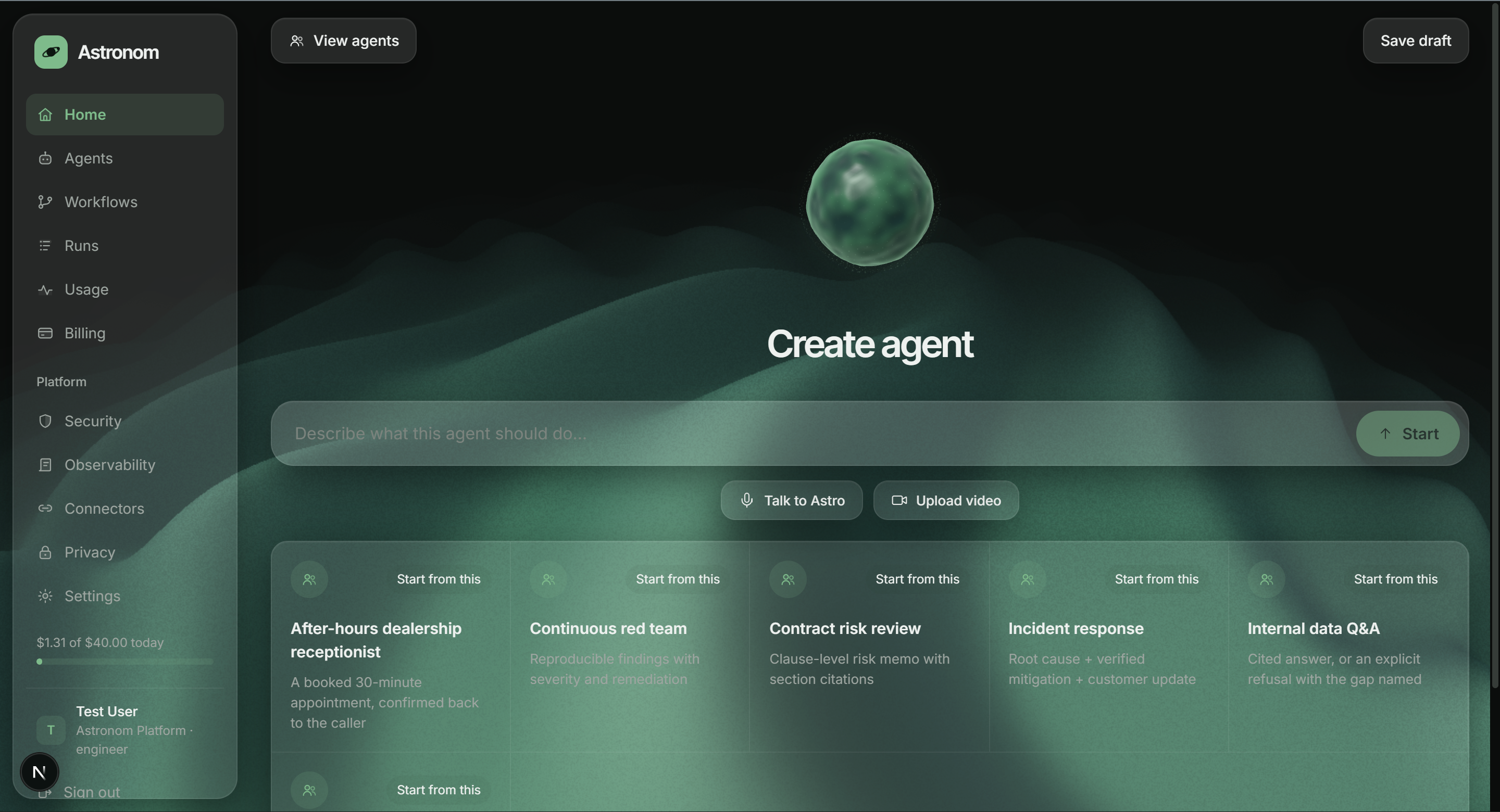
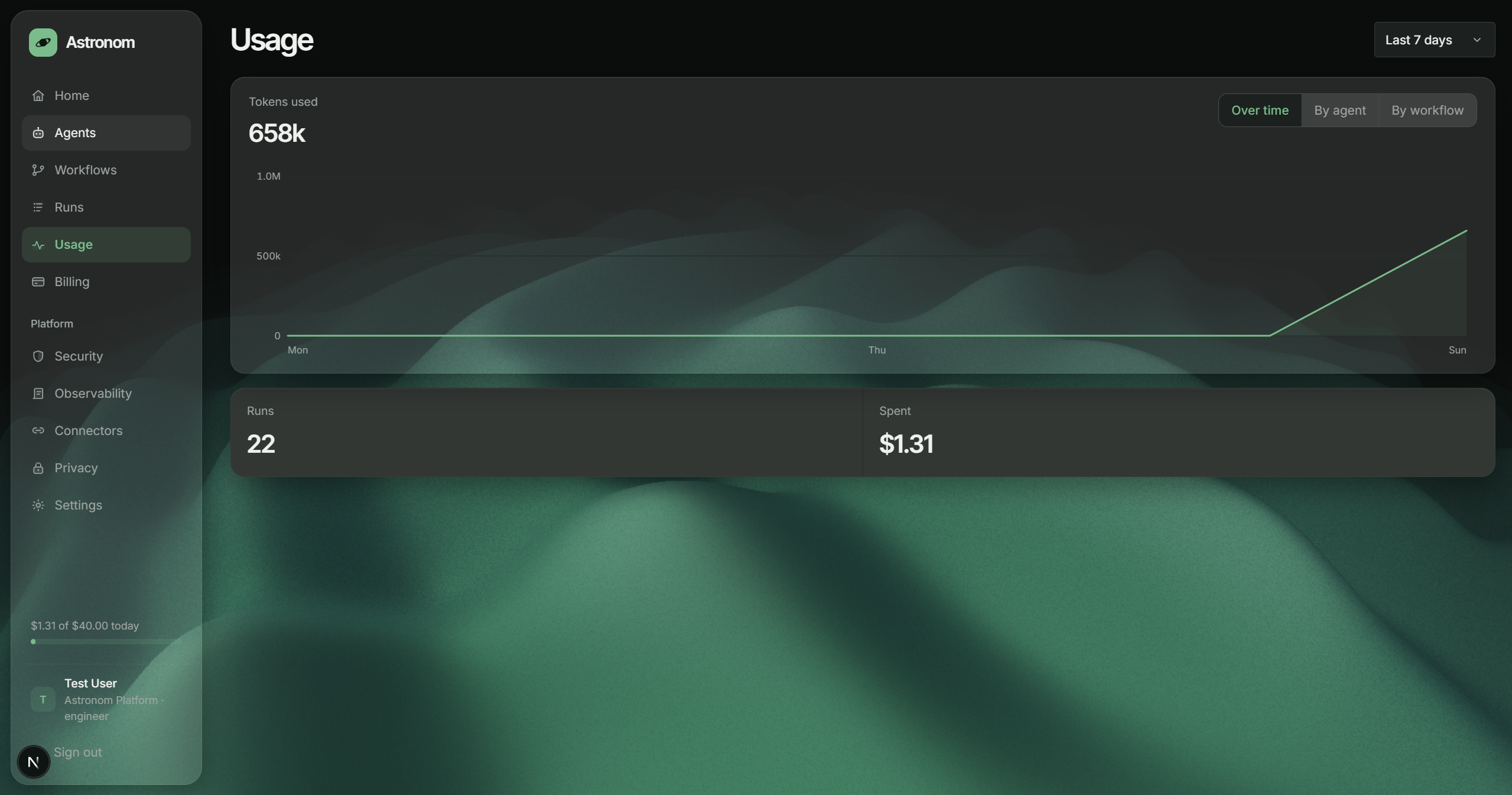
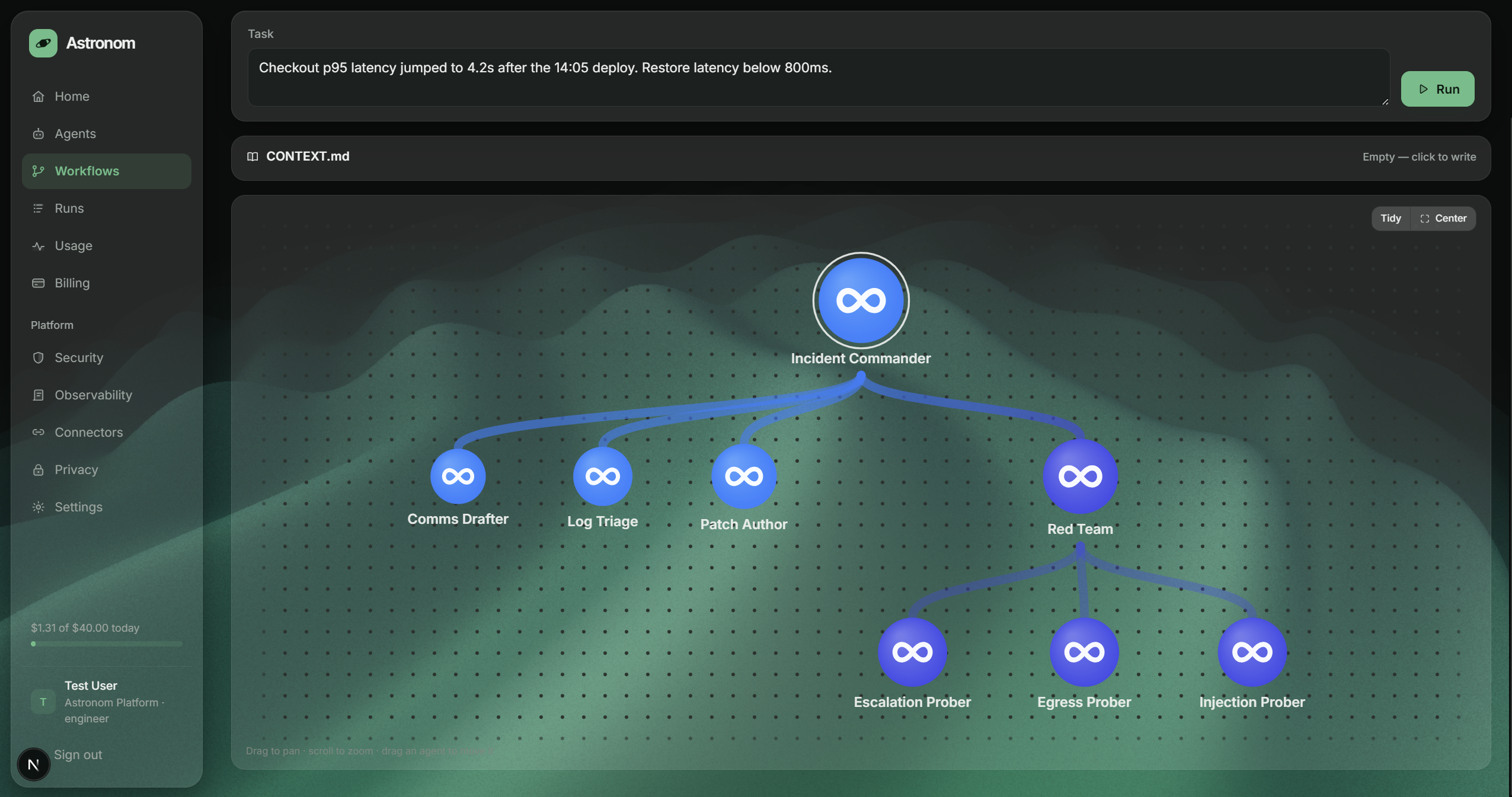
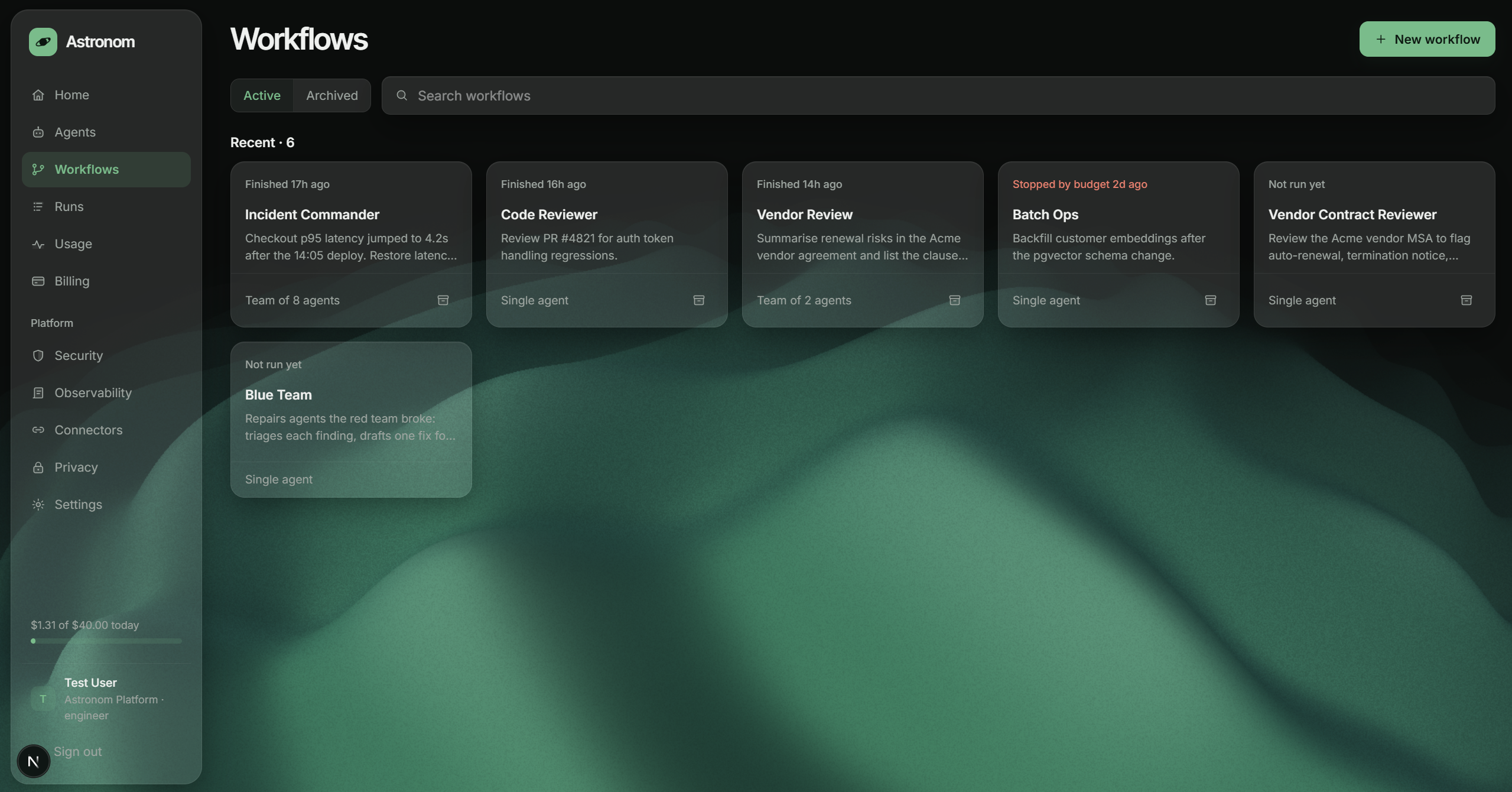
Astronom is a platform for creating and managing teams of AI agents. You can describe what you want an agent to do in plain English. Then, you're able to connect it to tools and apps, and set up workflows with multiple agents working together. While the agents run, you have access to see exactly what they do (which includes tool calls, files, costs, etc) and then require approval for certain actions so agents don't do everything autonomously. Our largest implementation goes to the Red Team system. It lets you test your agents against adversarial inputs to see where they might fail: if a test finds an issue, Astronom suggests a fix for you and shows you exactly what can be changed. You can review and approve that change before it's applied, then run the tests again to see whether it worked. You shouldn't have to use one tool to build an agent, another to monitor it, and another to figure out why it failed.
How we built it
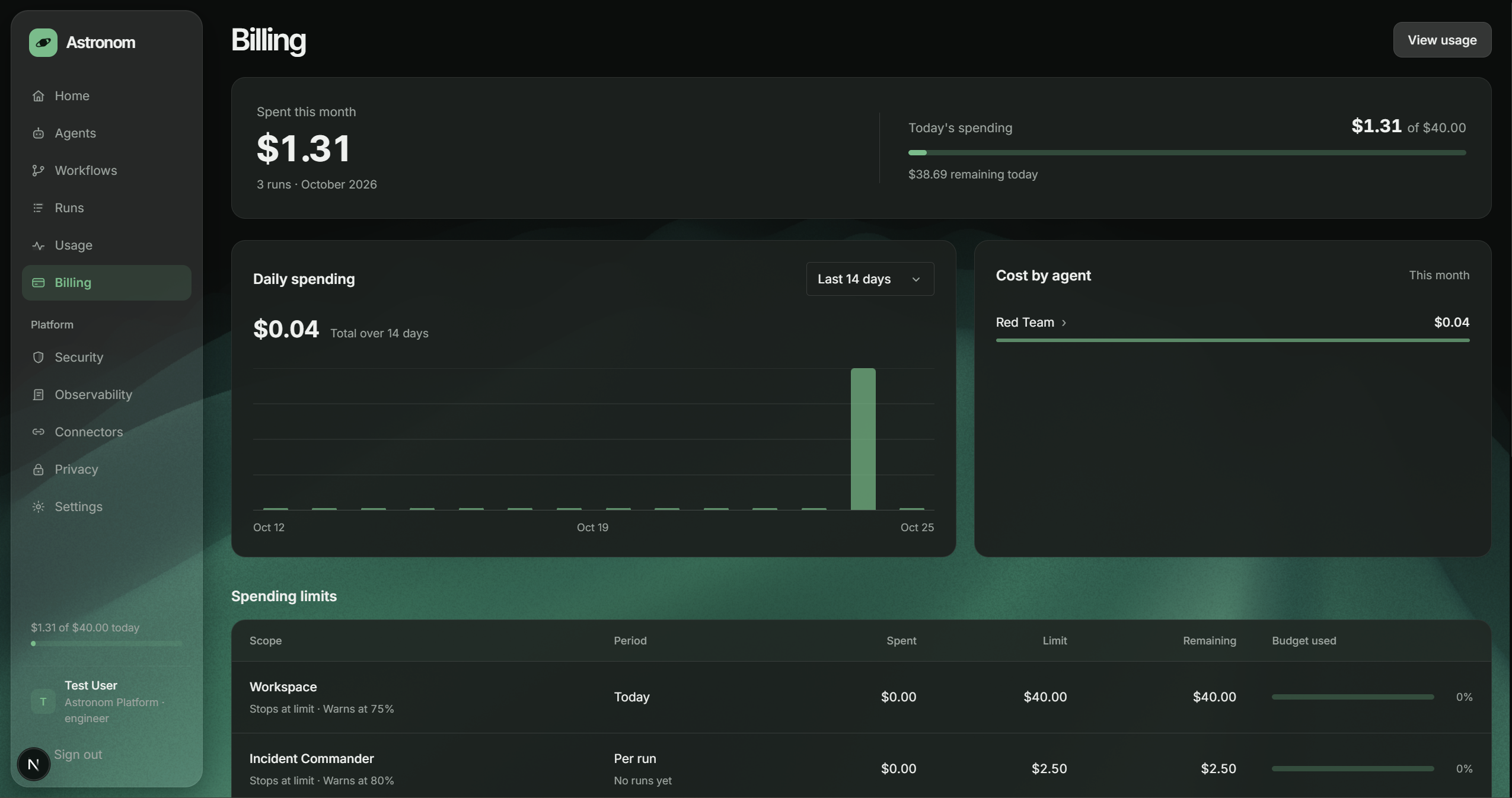
We used Next.js, React, and TypeScript for the platform, with SQLite and Drizzle for storing agents, runs, and other data. For the AI side, we integrated Meta's Muse Spark 1.3 through a configurable model gateway to help users create agents and plan workflows through conversation. We used Composio to connect agents to external apps and SerpApi for web search. A large chunk the backend had was building a system that records what agents do as they run. We store execution events and stream updates to the frontend so users can follow individual agents and their tool calls, and approval requests. We also connected this execution history to our Red Team system. When a test finds an issue, we can keep track of the finding, the proposed fix, who approved it, and the results of testing the updated agent. Each approved change creates a new version, so it's very easy to verify what changed between sequential tests.
Challenges we ran into
One of our biggest challenges was getting the agent filesystem to work with repositories. Agents needed to be able to access and edit files, and we had to figure out how we could display those changes on our site. Since the agents would delegate tasks to each other, it was especially challenging to do so since their files were meant to be accessible across different runs. Setting up the Red Team system also proved to be difficult, namely when it came to testing fixes. We had to figure out how to reproduce attacks and check whether changes to an agent actually addressed the issue. We eventually added repeated tests and regression checks to help verify the results.
Accomplishments that we're proud of
We're most proud of getting the Red Team workflow working from start to finish. Instead of just showing that an agent failed a test, Astronom can suggest a change, let a user approve it, save a new version, and test it again. We also built multi-agent workflows. This includes the delegation tasks and live execution tracking we've mentioned. Getting these systems to work synergistically is something we're very proud of, since we made sure users could still see what was happening when one agent handed work off to another.
What we learned
One thing we learned is that getting an agent to complete a task is only part of the problem. You also need to understand how it got there. When it uses external tools or works with other agents, this becomes extremely apparent. We also learned that testing AI agents is more complicated than just checking whether a prompt produces the right response. A fix might stop one attack but cause other problems, which is why we put so much emphasis on retesting and keeping track of changes.
What's next for Astronom
We want to expand the Red Team system to test more types of attacks and check whether security fixes affect an agent's ability to complete normal tasks. We'd also like to improve how agents are deployed and run over longer periods of time, with better resource limits, cost tracking, and support for larger teams of agents. Our goal is to make Astronom useful beyond "making an agent." We want people to be able to keep using, managing, and improving their agents as their projects grow.
SpaceXSI
We used Grok and Cursor mainly to help with writing the code and debugging. It was heavily used to quality test throughout our implementations.
Built With
- composio
- drizzle-orm
- meta-muse-spark-1.3
- muse
- next.js
- react
- serpapi
- sqlite
- supabase
- tailwind-css
- typescript


Log in or sign up for Devpost to join the conversation.