-
-
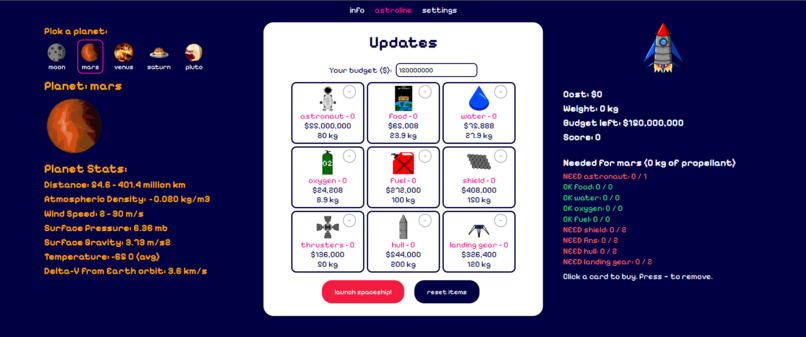
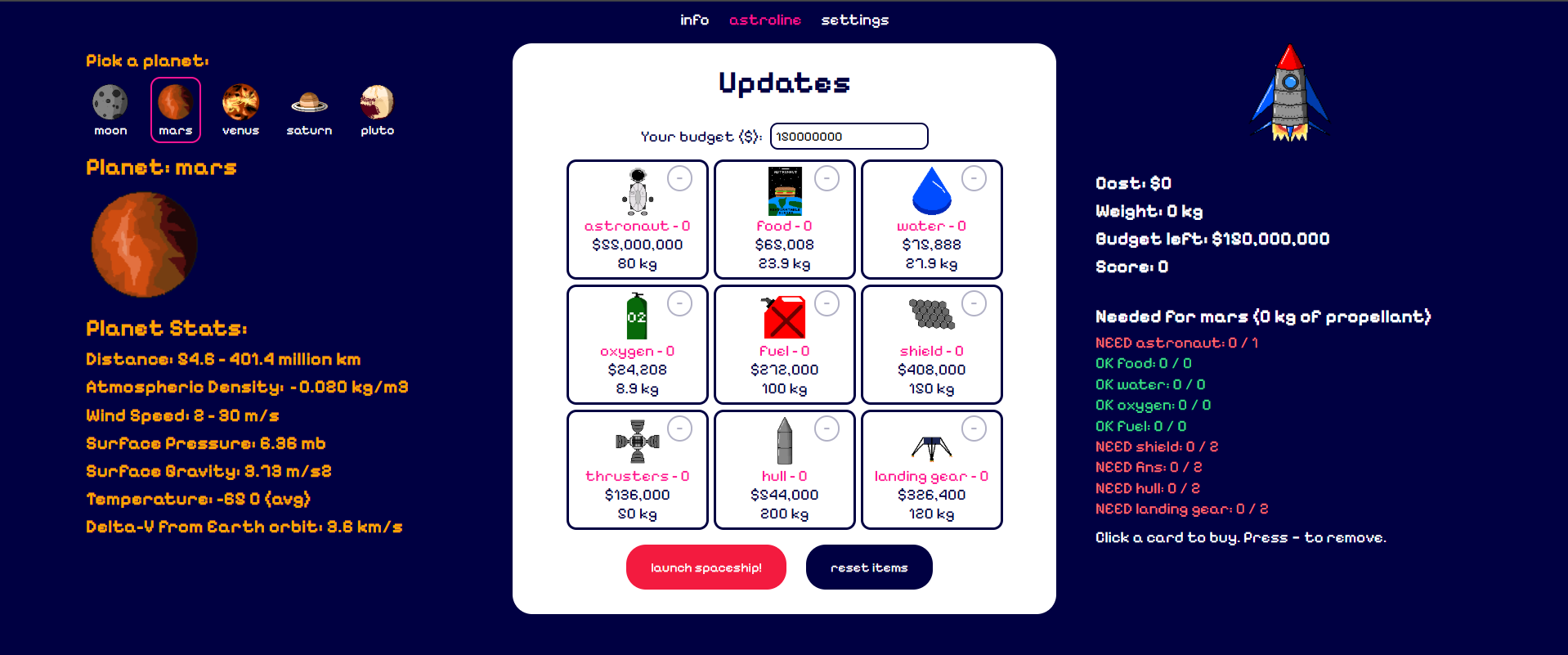
The trip planner
-
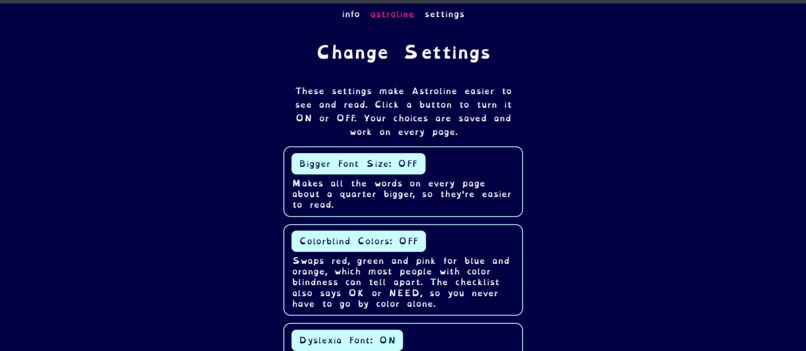
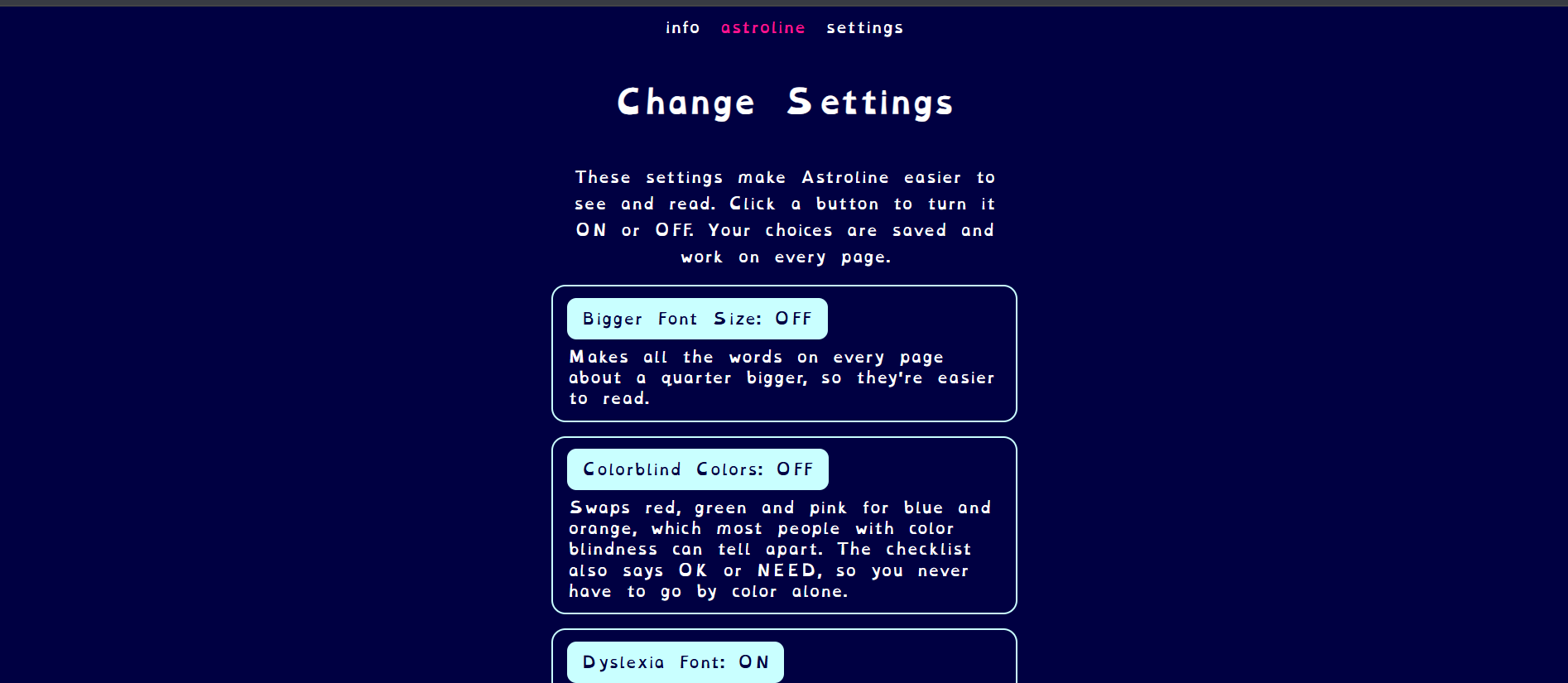
The OpenDyslexic font
-
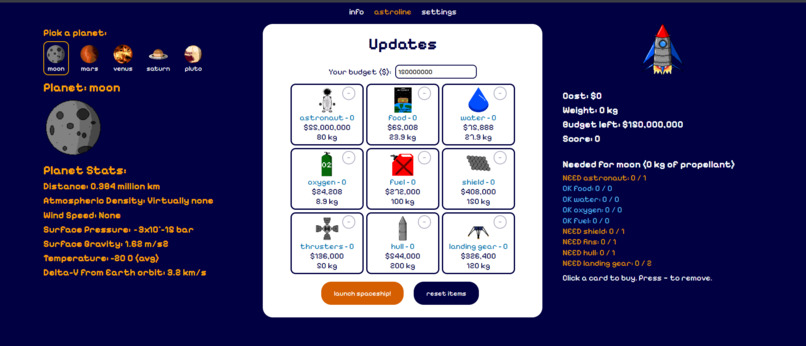
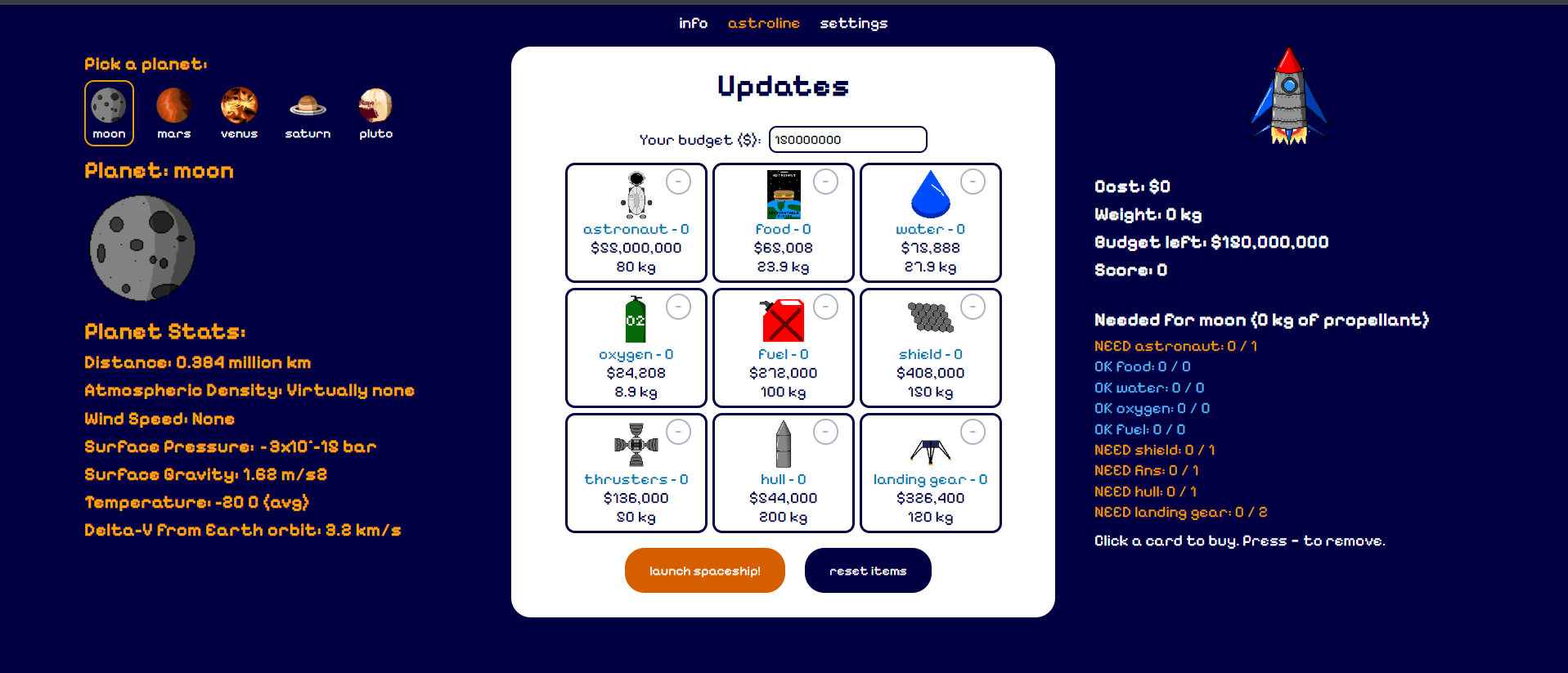
Effect of the colorblind accessiblity feature
-

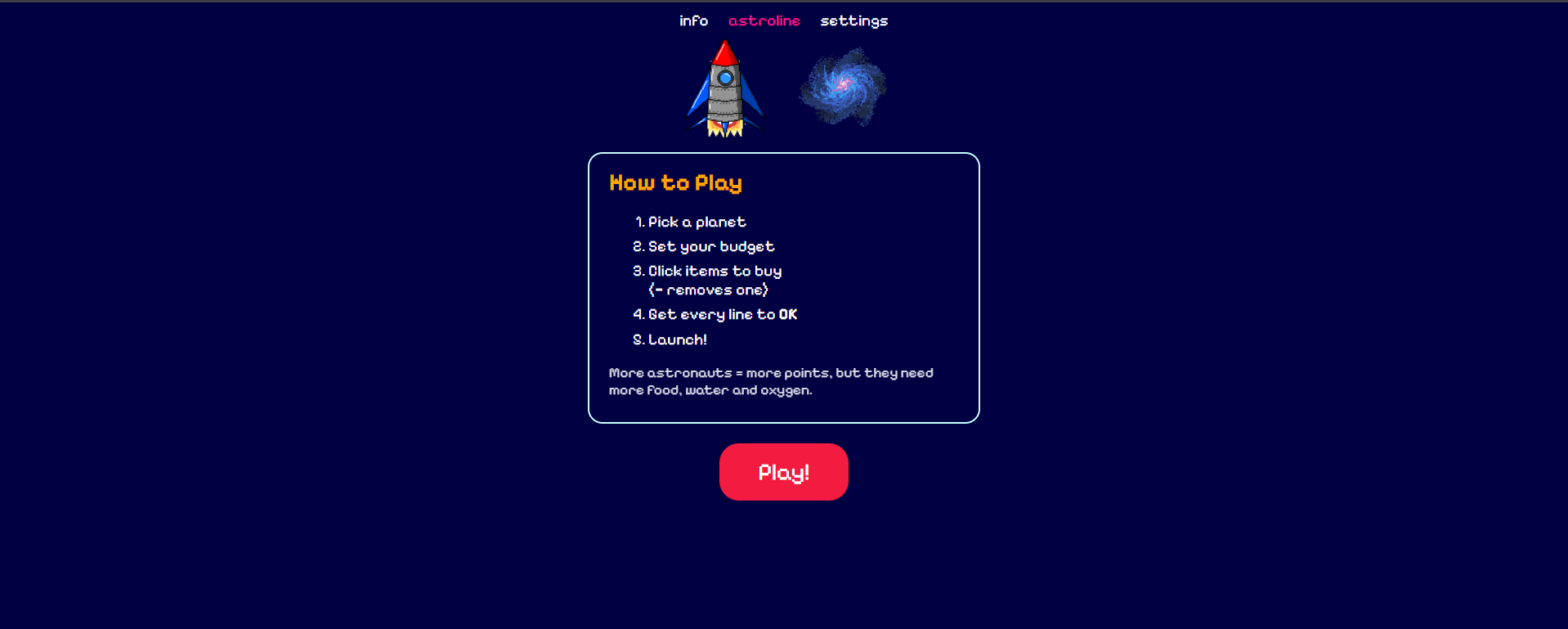
Instructions on how to play
-
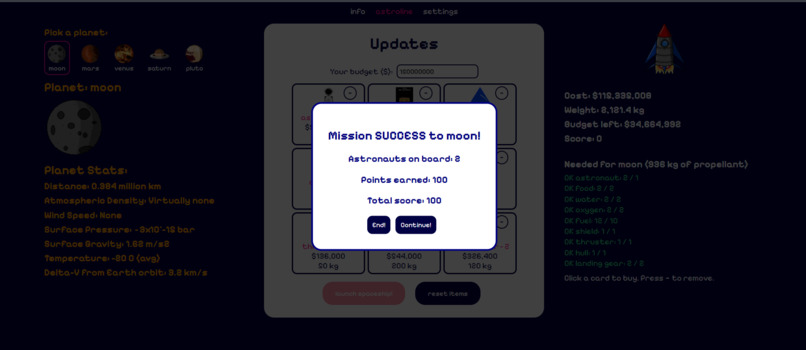
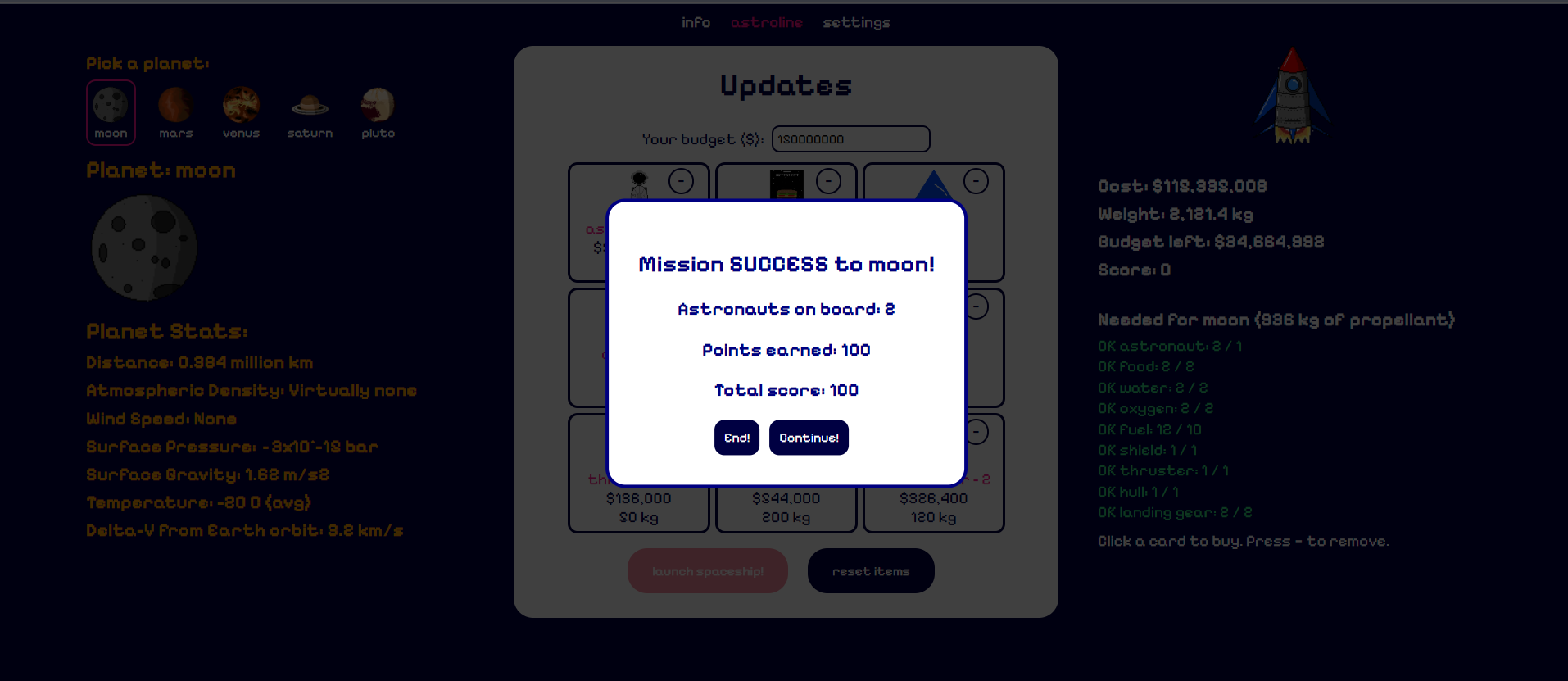
Successful mission
-
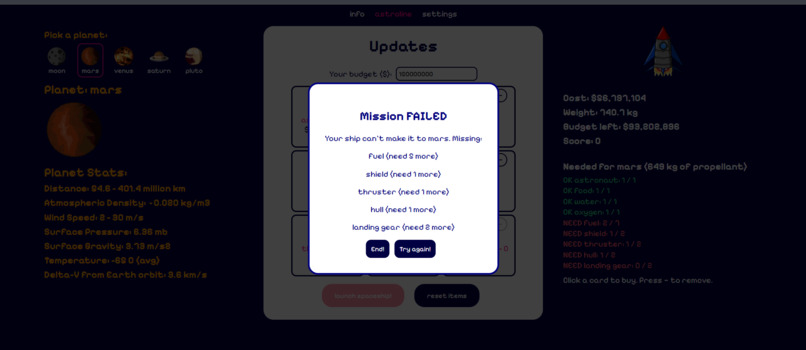
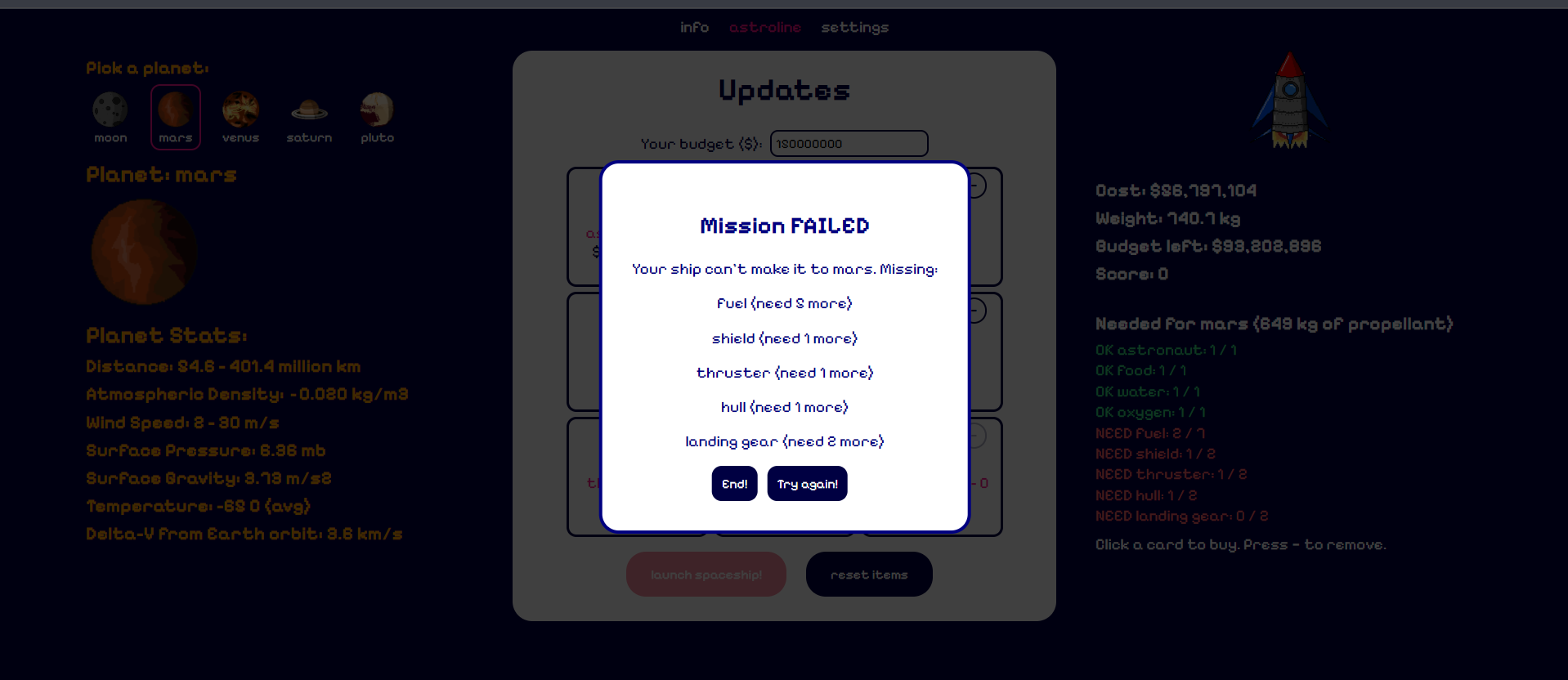
Mission faliure
Inspiration
We were inspired by the airlines and trip planners we use on Earth and wanted to bring that same concept into space. As space tourism and exploration continue to grow, planning becomes very important. Unlike traveling on Earth, space travelers can’t easily stop for supplies or recover from mistakes. We wanted to create a tool that helps make space travel safer and more accessible by helping travelers prepare for their journeys and manage their budgets.
What it does
Astroline is a space travel planning tool that helps users estimate the supplies, equipment, and budget needed for their journey. By customizing their trip and trying different selections, users can explore different outcomes and choose the best decision. We offer a selection of planets for travelers to choose from, and the amount of equipment is dependent on the planet and the number of travelers.
How we built it
We began planning by using Canva to create a storyboard so we could come up with ideas of features we wanted to create and execute. From there, we began creating and designing our own pixel art while working on the HTML page layouts and designs. We also wrote pseudocode and JavaScript code for the functions we wanted implemented. We then used Claude as a support tool to help finish the logic, add some stylistic changes to our layout, apply NASA data to our game, and fix bugs. Throughout the process, we reviewed and tested the game and code to ensure its functionality. By combining planning, visual design, and programming, we created Astroline!
Challenges we ran into
One of the biggest challenges we ran into was that, since we were beginners, we wanted to make sure that our use of AI wouldn’t stop our understanding of the code. We wanted to create something more advanced without relying on features we couldn’t fully explain. The use of pseudocode and setting up the format of our functions and their purposes really helped prevent the code from getting more advanced than our level. Another challenge was making Astroline as realistic as possible. Each destination has different environmental conditions, such as gravity and temperature, which affect the equipment and protection the spacecraft needs. For example, traveling to the Moon has different preparations than exploring Saturn. We also had to figure out the math behind resource requirements, equipment costs, and how different planetary conditions would affect a mission.
Accomplishments that we're proud of
One of our biggest accomplishments is the pixel art created by our own team. Every planet, background, and visual element was designed by us, which gives Astroline a unique element. We were really proud of the effort that went into making our site visually engaging. We also incorporated accessibility features, including a dyslexia friendly font, color-blind friendly text colors, and a bigger font size that users can enable in the settings. Finally, we incorporated real data to make our game more realistic and educational.
What we learned
Throughout this project, we learned the importance of brainstorming with storyboards, teamwork, and breaking our big project into smaller parts and setting priorities. We gained experience connecting visual design with programming, planning features through pseudocode, and thinking through the logic behind our calculations. We also learned that building a useful tool needs to have a purpose and be backed by real data.
What's next for Astroline
In the future, we want to expand our database with more space destinations, introduce additional supplies and equipment upgrades, and implement dynamic markets where prices change over time. We also want to improve our pixel art to be more detailed and also have animations. Ultimately, we want to make Astroline more realistic to adapt to changing conditions and unexpected events that could happen during travel.


Log in or sign up for Devpost to join the conversation.