-
-
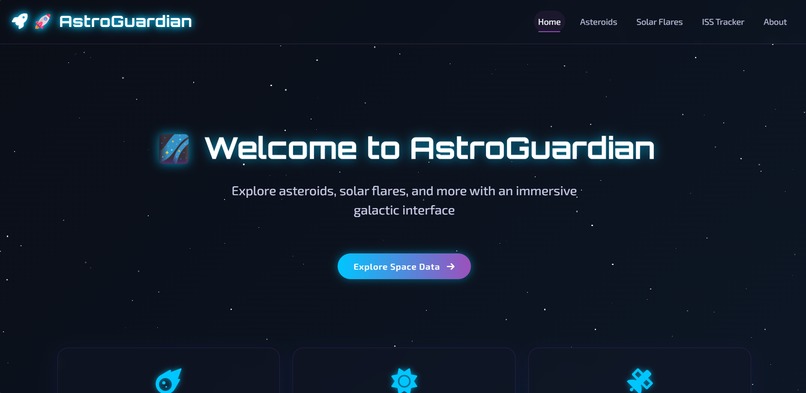
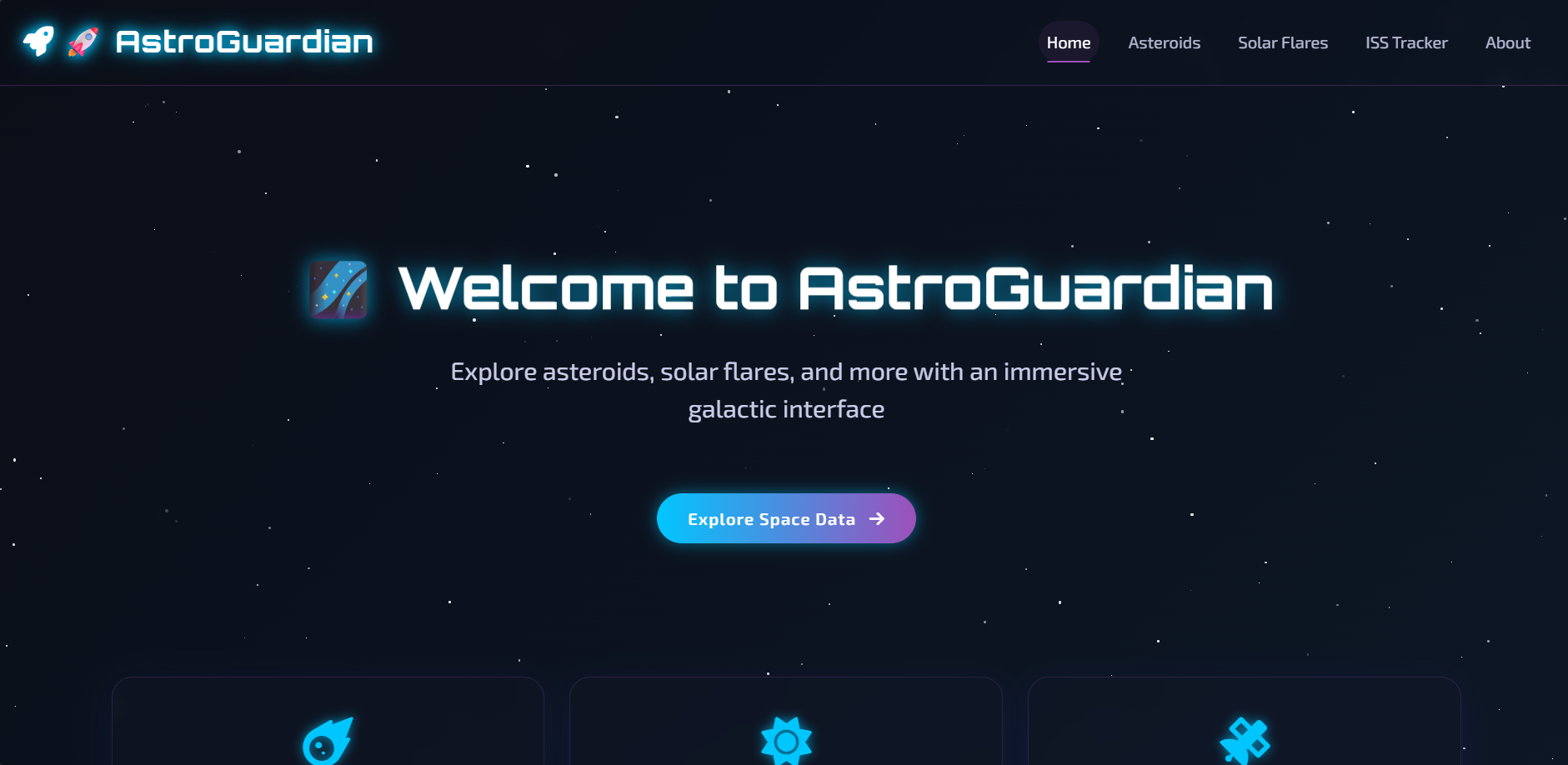
Main Page
-
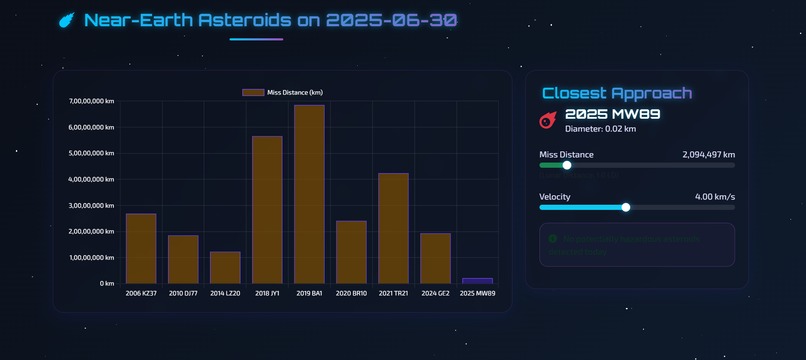
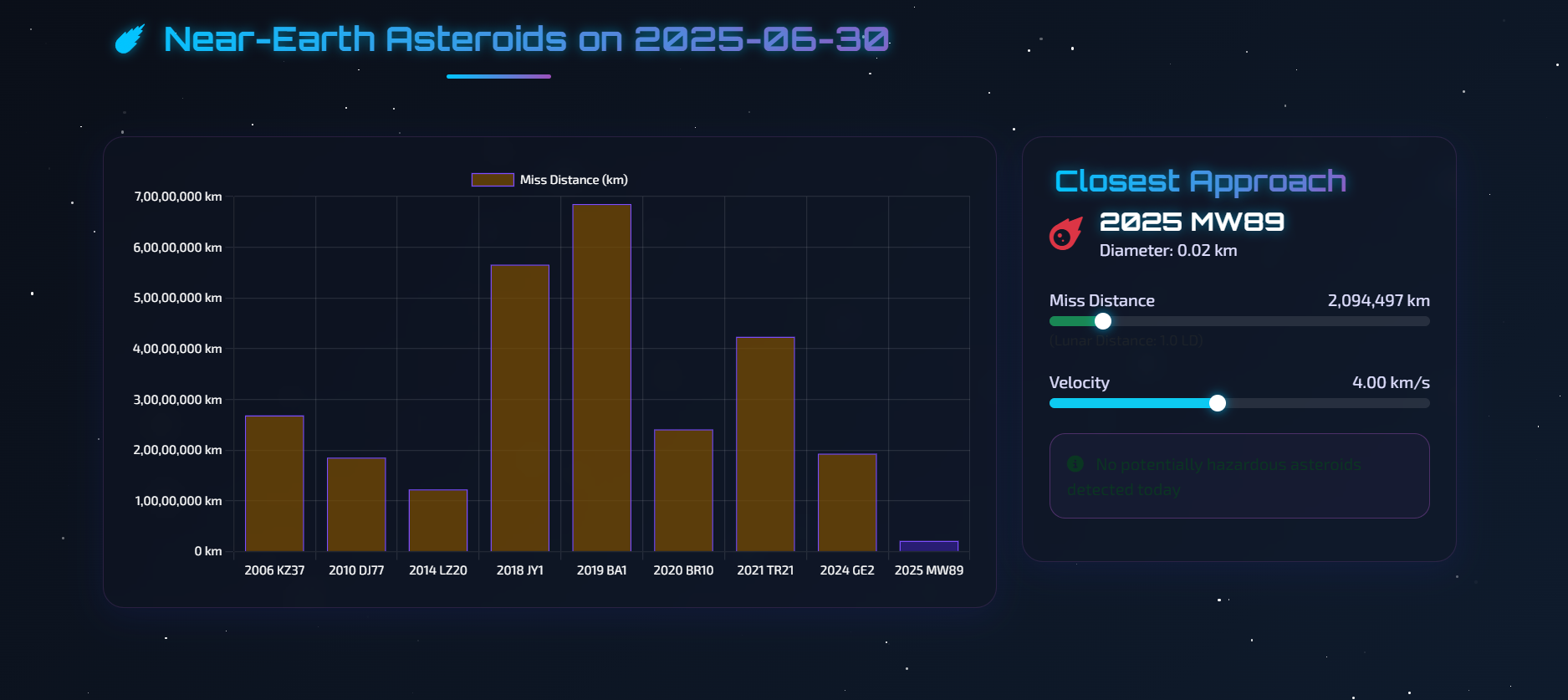
Near Earth Aestroids
-
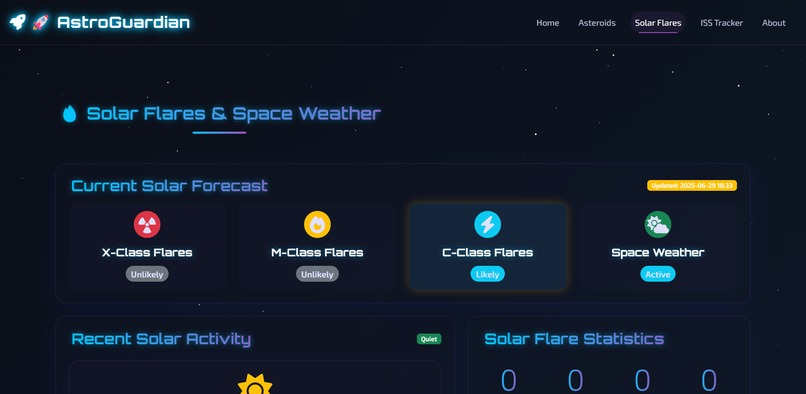
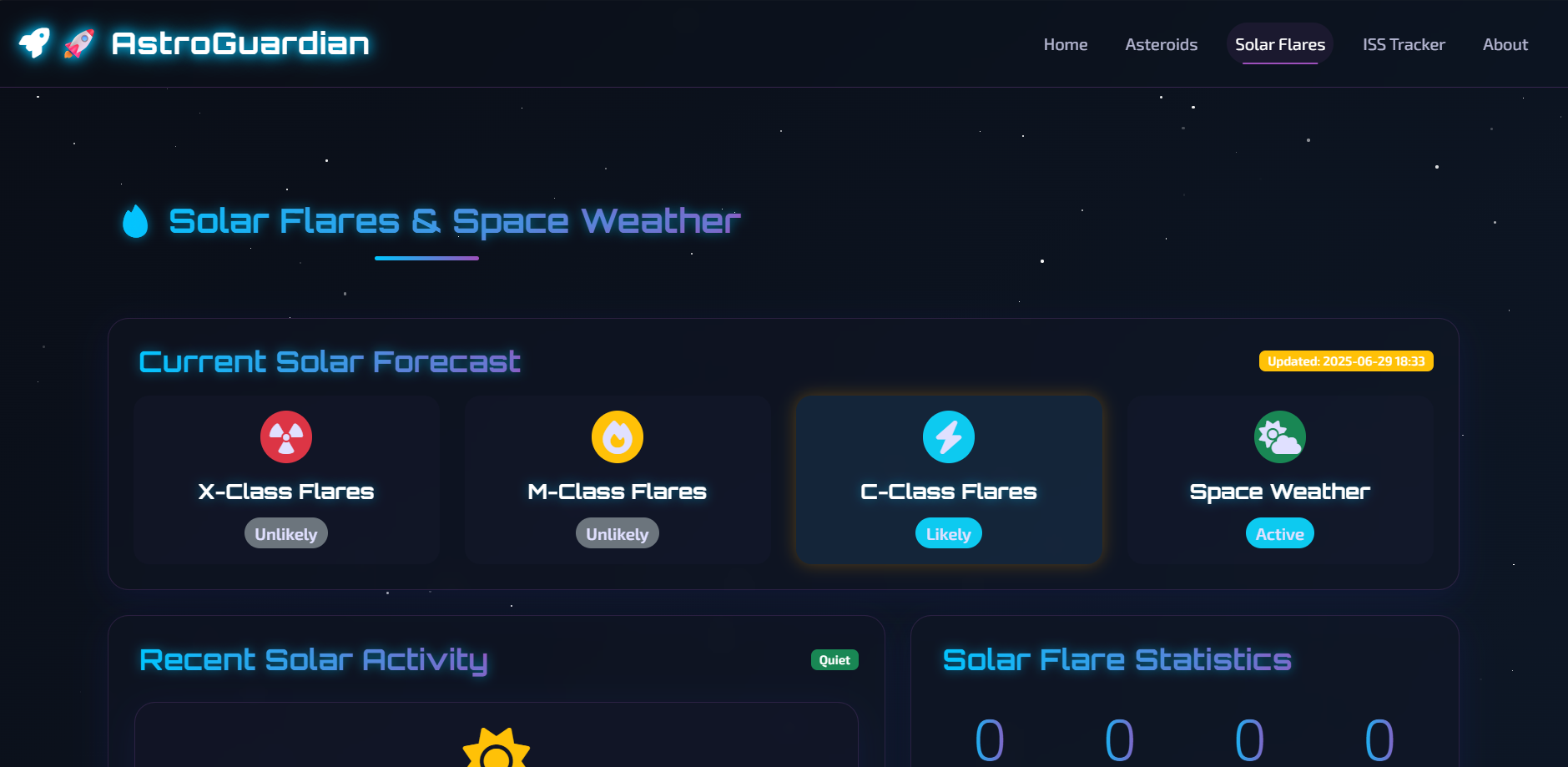
Solar Flare Page
-
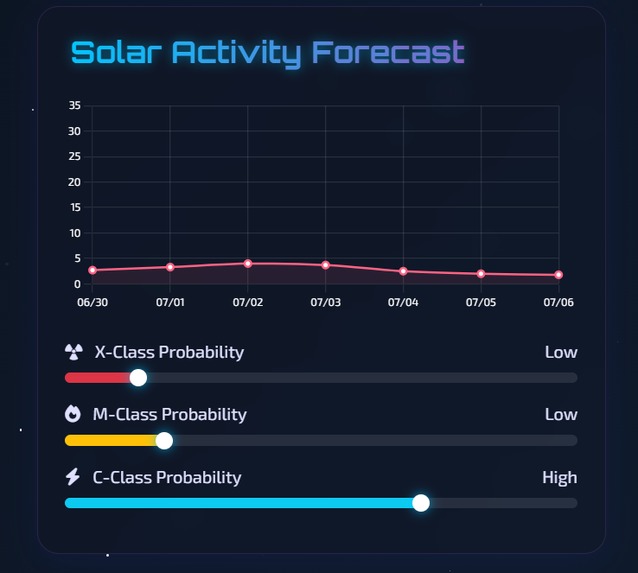
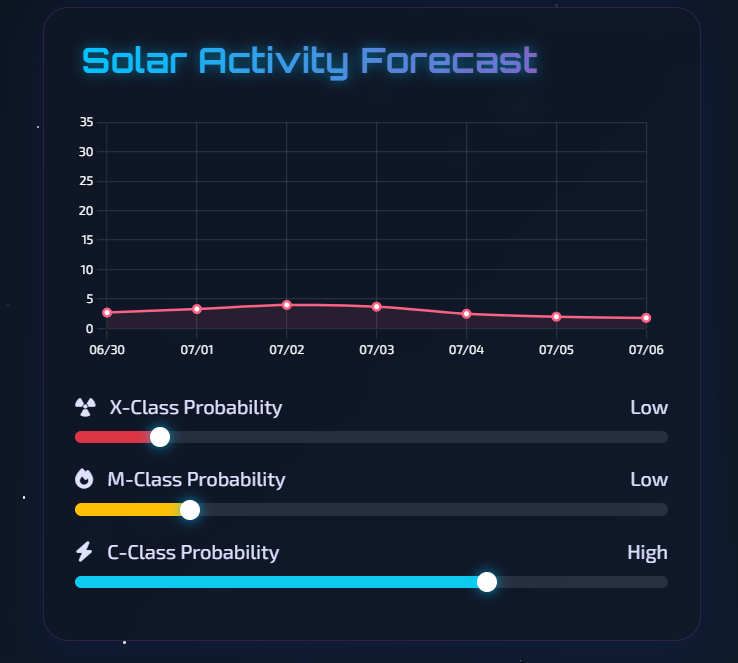
Solar Activity Forecast
-
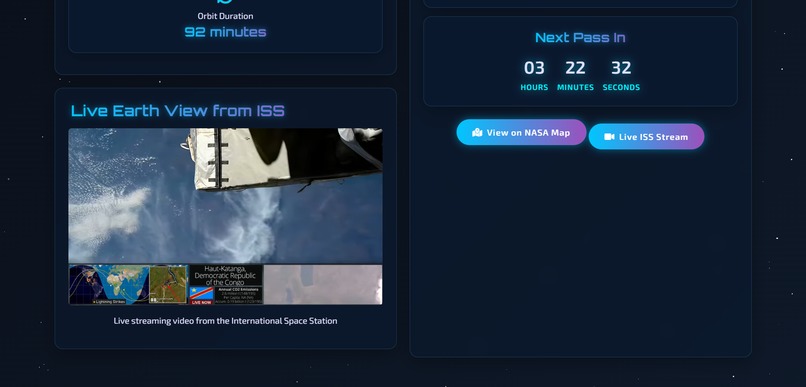
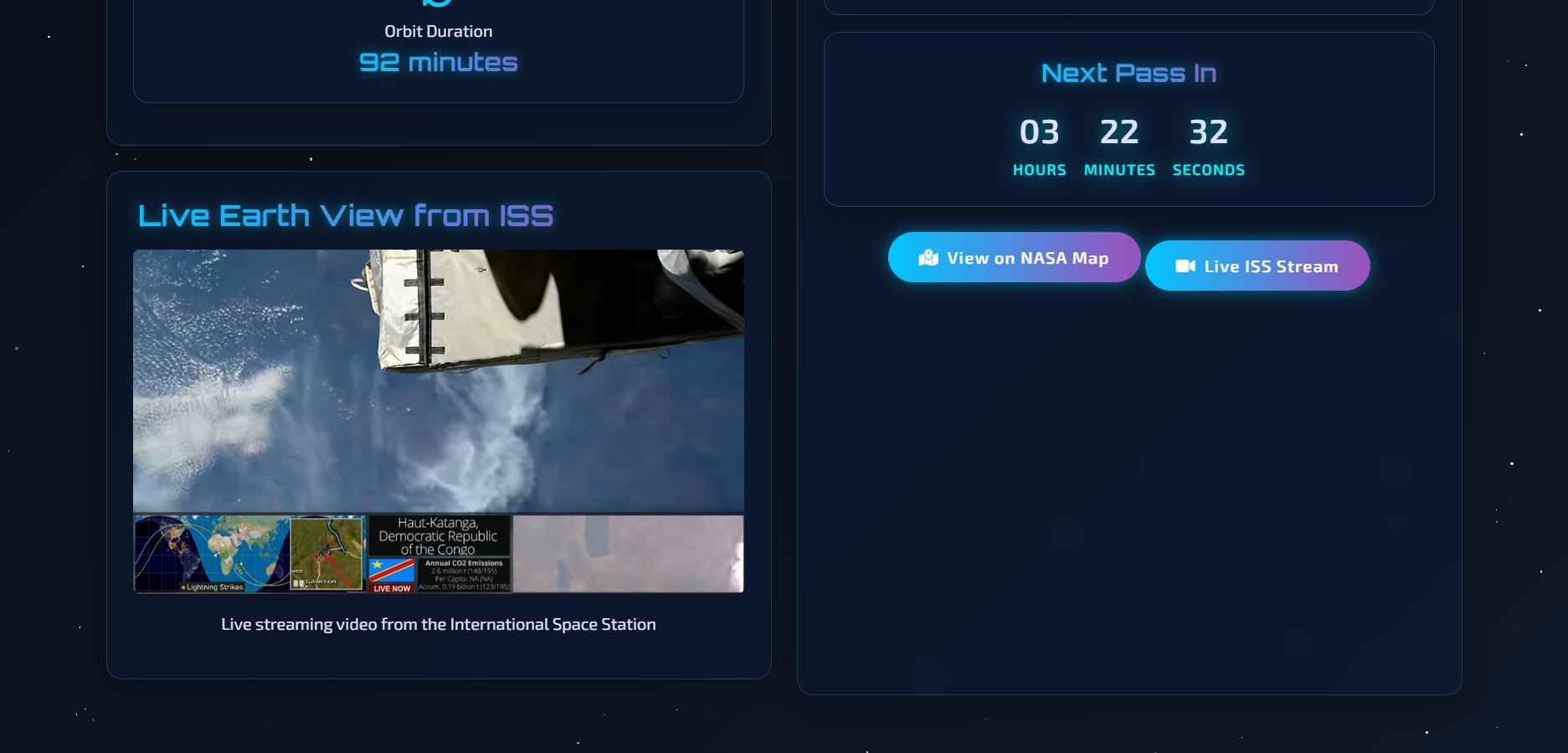
Live ISS View
-
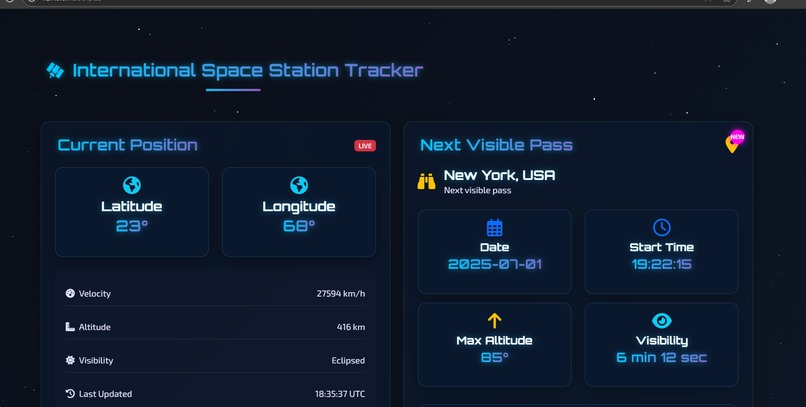
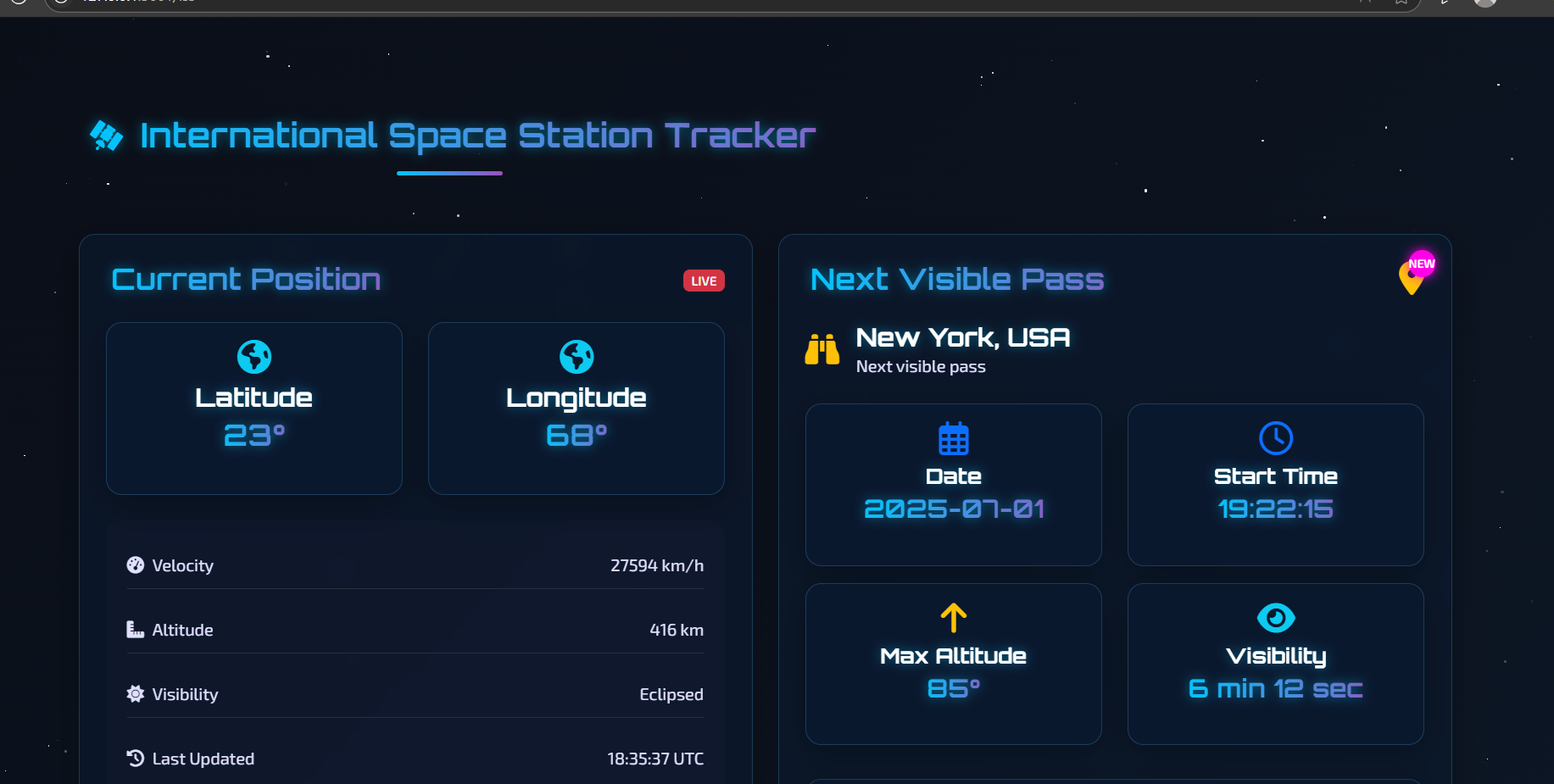
ISS Tracker Page
-
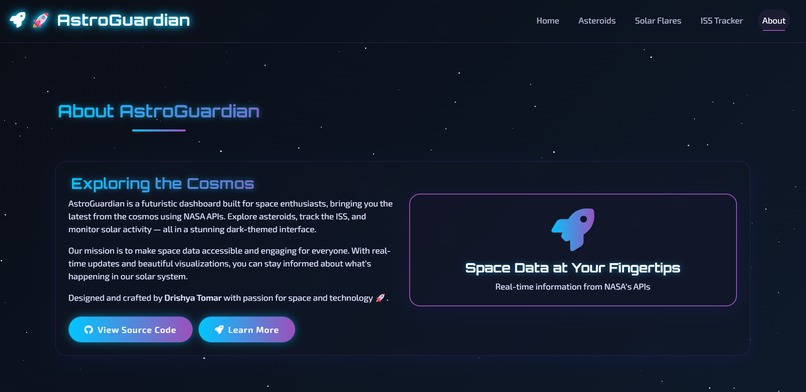
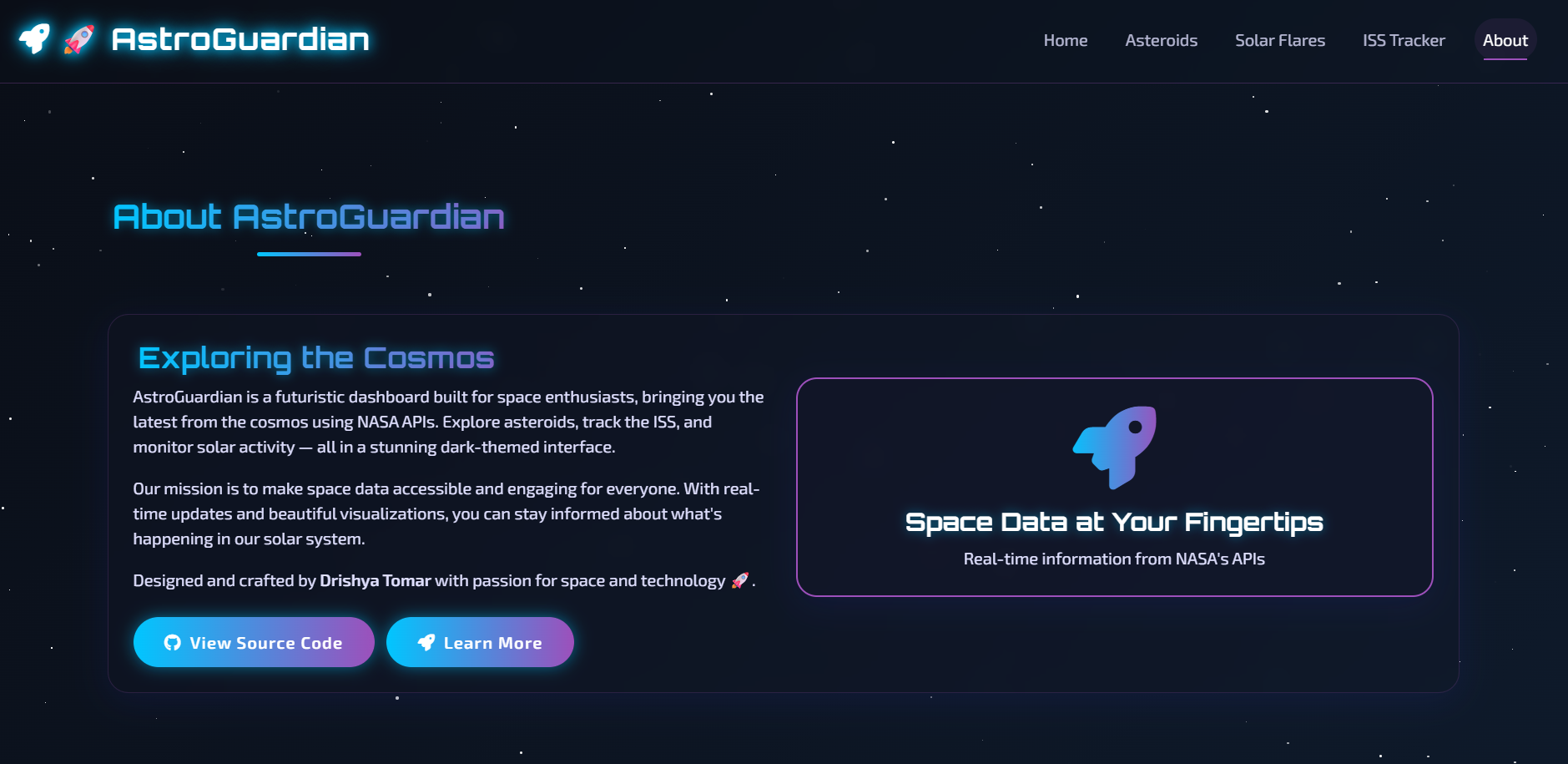
About Page
-
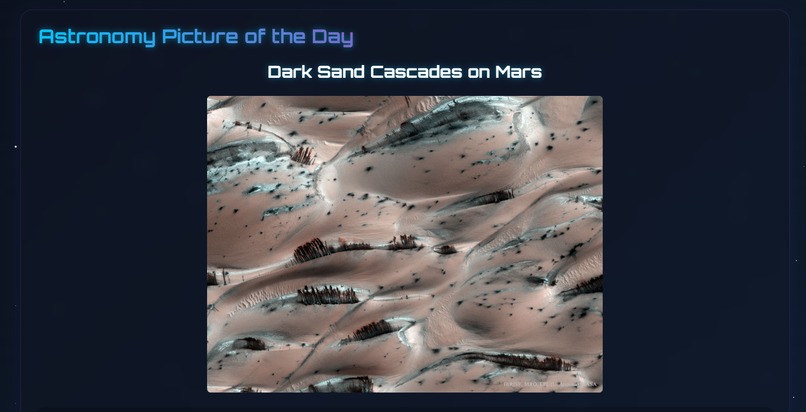
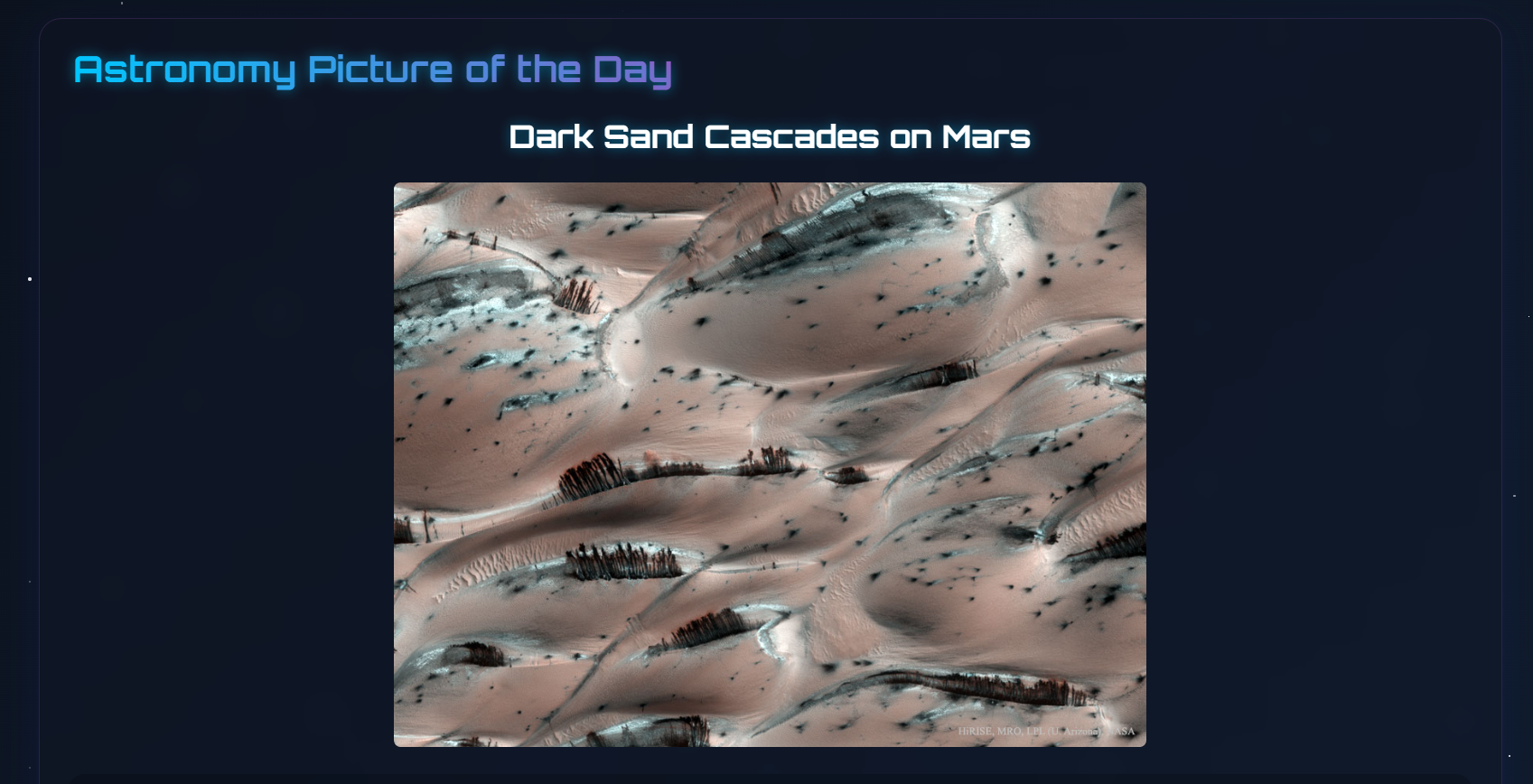
Astronomy Picture Of the Day Shower Section
Inspiration
The silent motion of the International Space Station, the unexpected flash of a solar flare, and the close calls with asteroids speeding past Earth are all examples of how the universe has always captivated me. I wanted everyone, not just scientists, to have access to this exciting space data. My objective was to pique everyone's interest and awareness by making real-time space phenomena interactive, educational, and accessible.
What it does
A real-time space data system called AstroGuardian aggregates real-time updates from several space agencies, including NASA, NOAA, ESA, and others, to provide:
Live ISS Monitoring Monitoring of Near-Earth Asteroids Space Weather & Solar Flare Alerts NASA's Astronomy Image of the Day Location-based tools and interactive visualizations
How we built it
Front-end Glassmorphism and starry animated backgrounds in HTML/CSS Using Bootstrap 5 for responsive design Chart.js real-time charts
Backend Python Flask server for formatting, data caching, and API calls Parallel data retrieval using multi-threaded API handlers Fallback APIs are used in smart failover logic to support offline and demo environments.
Integrated APIs NASA APIs APOD (Astronomy Picture of the Day) DONKI (Space Weather Events) NEO Feed (Near-Earth Object Data) EPIC (Earth Polychromatic Imaging Camera) NOAA SWPC APIs – Solar Weather & Flare Data WhereTheISS.at API – Real-time ISS Position Tracking Satellites.fly.dev API – ISS Pass Predictions Open-Notify API – ISS Fallback Data Source
Challenges we ran into
Managing rate restrictions and API outages from open data sources Maintaining availability by synchronizing live and fallback data Creating a user interface that is both aesthetically pleasing and functional, with seamless real-time refreshes Overseeing the combination of daily and real-time data types across modules
Accomplishments that we're proud of
Accurate and seamless live ISS tracking with fallback handling was accomplished. Created a futuristic, space-themed user interface that is intuitive and immersive. Constructed a solid multi-API system with caching and visualizations**
What I learned
How to organize and integrate several open APIs into a single system Scientific and technical understanding of space weather, NEOs, and solar activity Improved my knowledge of frontend design, asynchronous programming, and Flask The benefits of using interactive user interfaces to tell educational stories
What's next for AstroGuardian
Putting WebSocket-based ISS tracking into practice Including features for user accounts to store preferences and favorite places Notifying recipients via email of noteworthy asteroid or solar events Developing tools for graphing and historical analytics Adding multilingual support for users worldwide


Log in or sign up for Devpost to join the conversation.