-
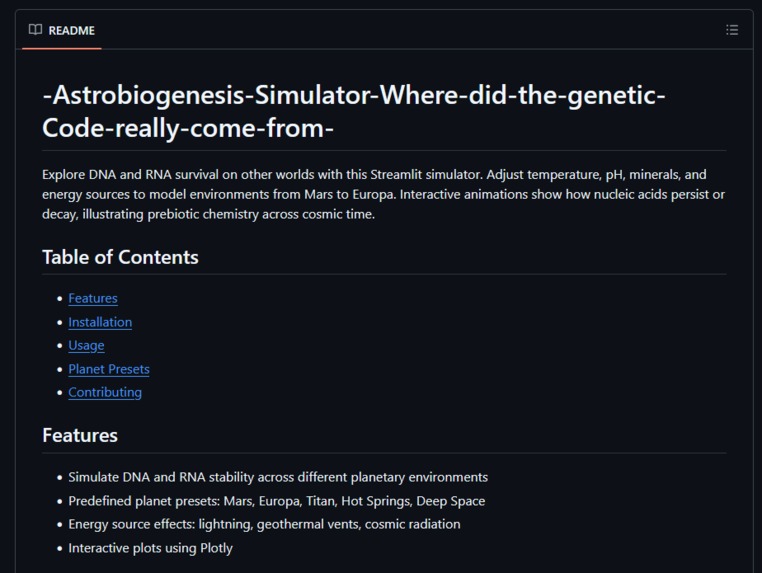
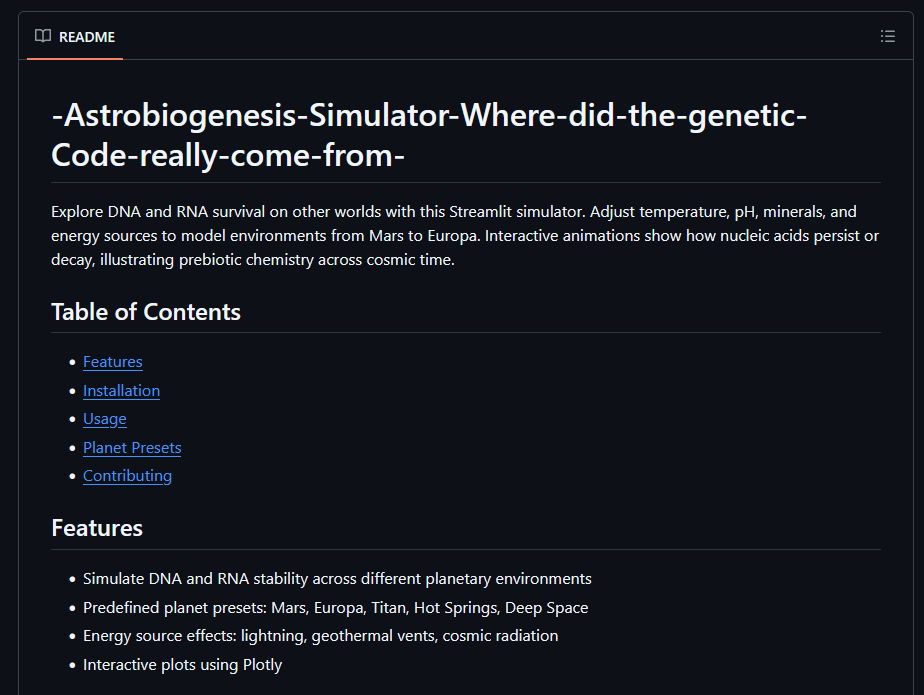
Project Git Repo Page
-
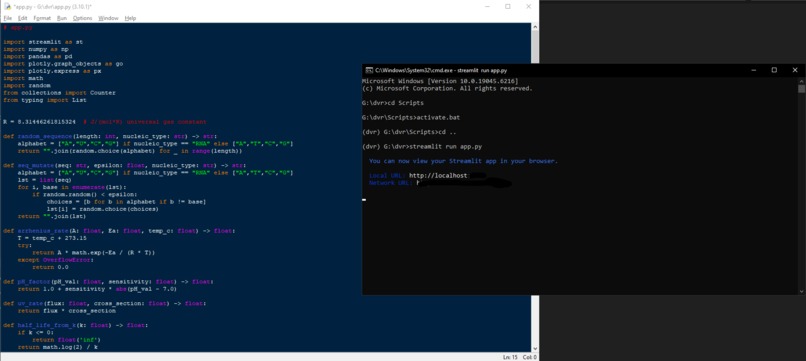
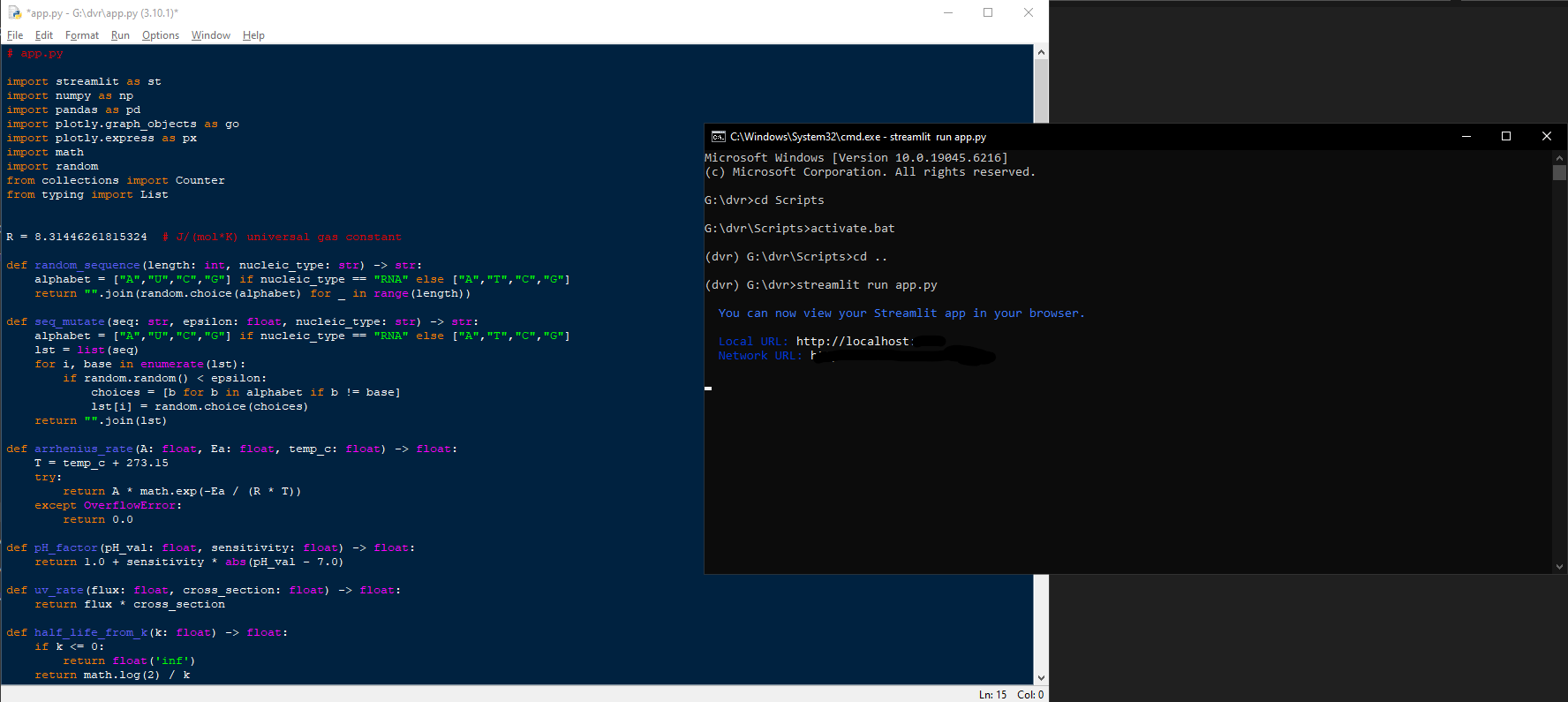
Execution of program
Inspiration
From the first spark of curiosity about how life began on Earth, we’ve been captivated by a bigger question: Could life exist beyond our planet? Observing how organisms adapt to extreme environments—boiling hot springs, freezing oceans, and deep-sea vents—showed us that life is astonishingly resilient. This led us to wonder: if DNA and RNA evolved under Earth’s harsh conditions, what might happen on alien worlds? We wanted to create a tool to explore these possibilities and inspire curiosity about the origins of life and the future of astrobiology.
What it does
The Astrobiogenesis Simulator: Our Genetic Code’s Origin allows users to model the survival and evolution of DNA and RNA under extreme planetary conditions. From Mars’ dry surface to Europa’s icy oceans, users can select planetary presets, adjust temperature, pH, minerals, and even add energy sources like lightning, geothermal vents, or cosmic radiation. Real-time visualizations show how nucleic acids might thrive—or break down—giving users a tangible way to explore life’s adaptability and the principles of prebiotic chemistry.
How we built it
We built the simulator using Python, Streamlit, Pandas, and Plotly. Data on planetary conditions, DNA/RNA stability, and energy interactions were compiled into CSV files for easy adjustment. Users interact with sliders and buttons for planetary presets and energy sources, while Plotly generates dynamic, interactive plots of molecular survival. The modular architecture allows us to easily expand the simulator with new environments or energy types in the future.
Challenges we ran into
One of our biggest challenges was accurately modeling molecular stability under extreme, alien conditions. Data on nucleic acid behavior outside Earth is sparse, so we had to rely on a mix of experimental results, theoretical calculations, and careful extrapolation. Integrating these calculations with an interactive, user-friendly interface while keeping the app responsive was another hurdle—but overcoming it taught us a lot about both programming and biochemistry.
Accomplishments that we're proud of
We successfully created a fully interactive, educational, and scientifically grounded simulator that can visualize DNA and RNA survival across a variety of planetary environments. Beyond the coding achievement, we’re proud that the simulator bridges Earth’s evolutionary lessons with the mysteries of outer space, making astrobiology accessible to students, researchers, and enthusiasts alike.
What we learned
Through this project, we learned how DNA and RNA evolved under diverse Earth conditions, how energy sources can accelerate or hinder molecular reactions, and how to translate complex biochemical models into interactive simulations. We also deepened our understanding of programming, data visualization, and scientific communication, learning how to make challenging concepts engaging and intuitive.
What's next for Astrobiogenesis Simulator: Our Genetic Code's Origin
We aim to expand the simulator to include more detailed chemical reactions, prebiotic molecule interactions, and potential synthetic biology applications. We also want to add user-defined planetary conditions, letting people explore entirely hypothetical worlds. Ultimately, our vision is to create a platform that inspires the next generation of astrobiologists, helping users understand how life evolved on Earth and imagining how it could evolve elsewhere in the cosmos.


Log in or sign up for Devpost to join the conversation.