Inspiration
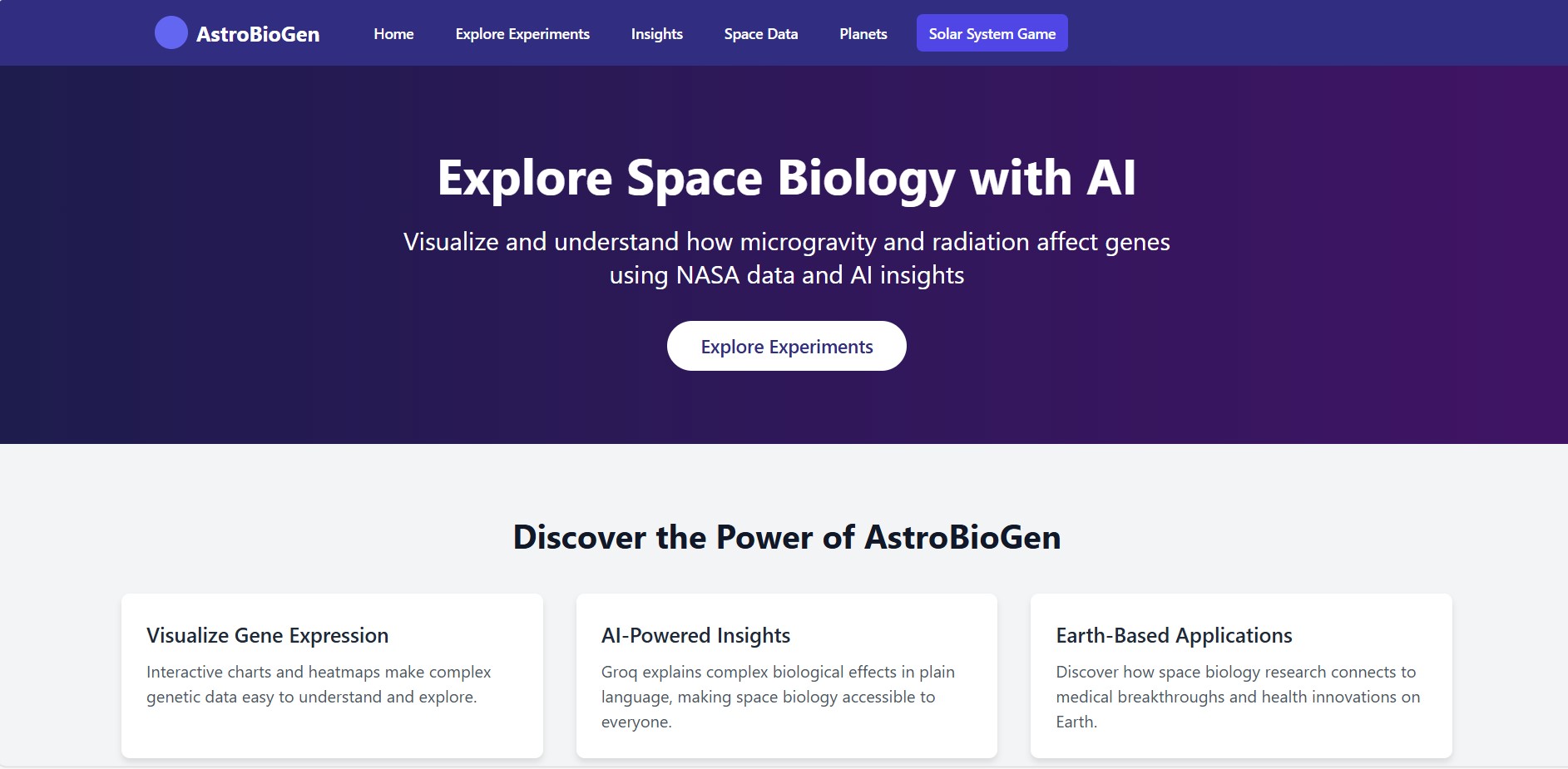
As someone deeply interested in both space exploration and biotechnology, I was fascinated by NASA’s GeneLab — a treasure trove of biological data collected in space. However, I quickly realized that much of this data is locked away in complex CSV files and scientific jargon. I wanted to build something that could bring this incredible information to life for students, researchers, and enthusiasts. That’s how AstroBioGen was born — to make space biology accessible and engaging with the help of AI.
What it does
AstroBioGen is an AI-powered platform that transforms raw genetic experiment data from NASA’s GeneLab into visual insights and plain-language explanations. Users can:
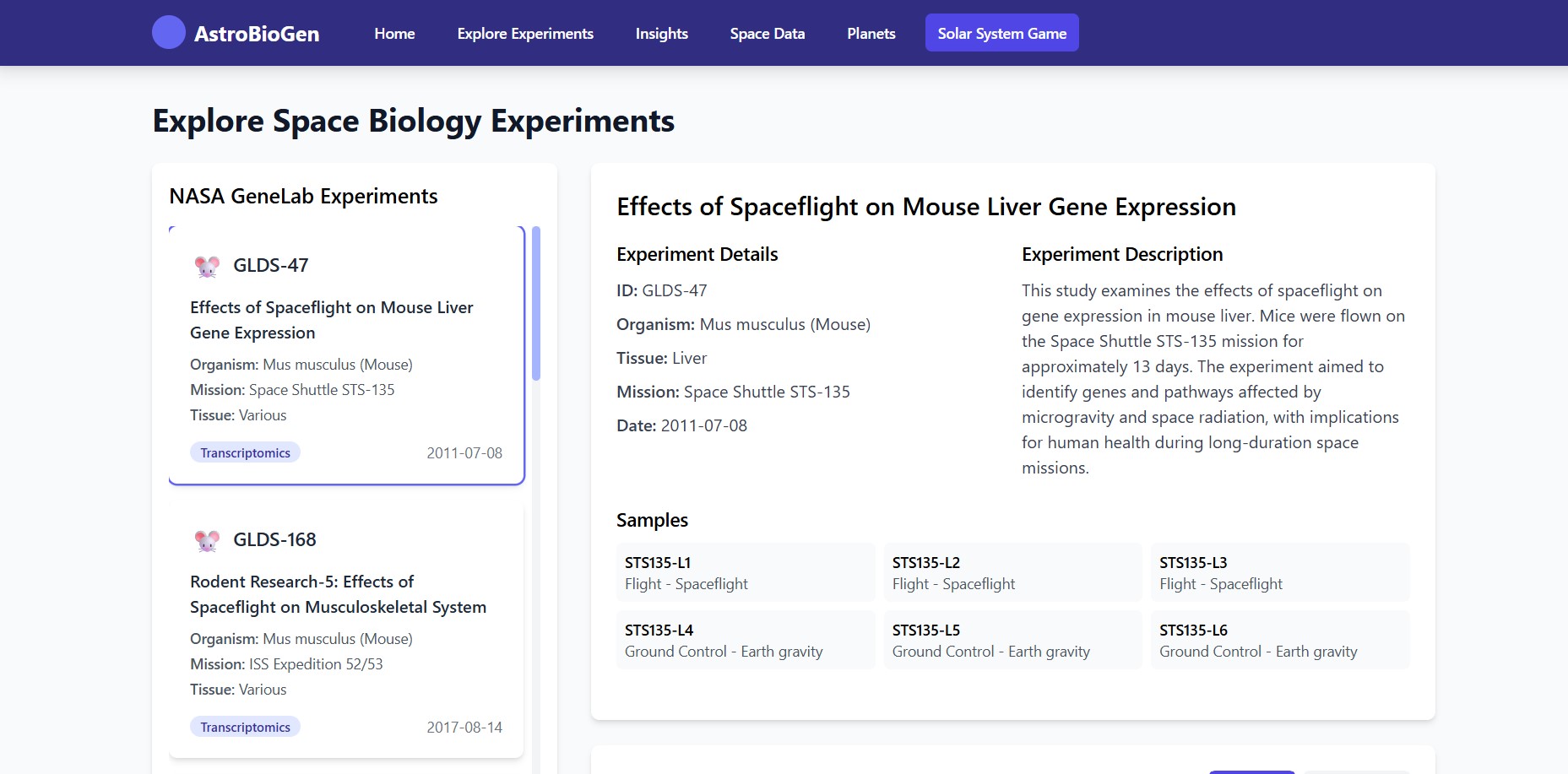
- Explore real experiments flown on the ISS
- Visualize gene expression changes due to microgravity and radiation
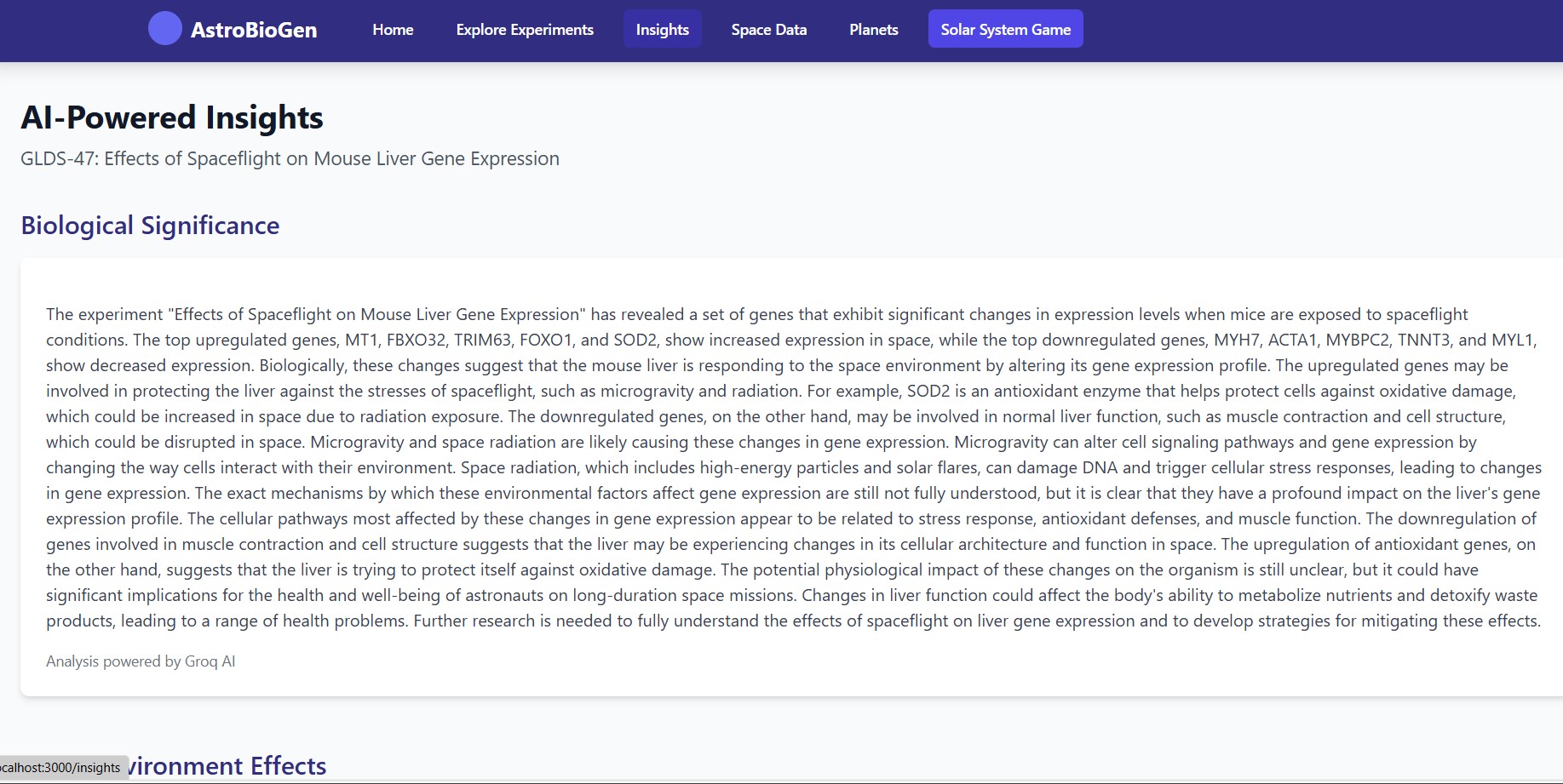
- Use Groq AI to understand what affected genes do
- Use Tavily AI to discover how these genes relate to human diseases or Earth-based applications
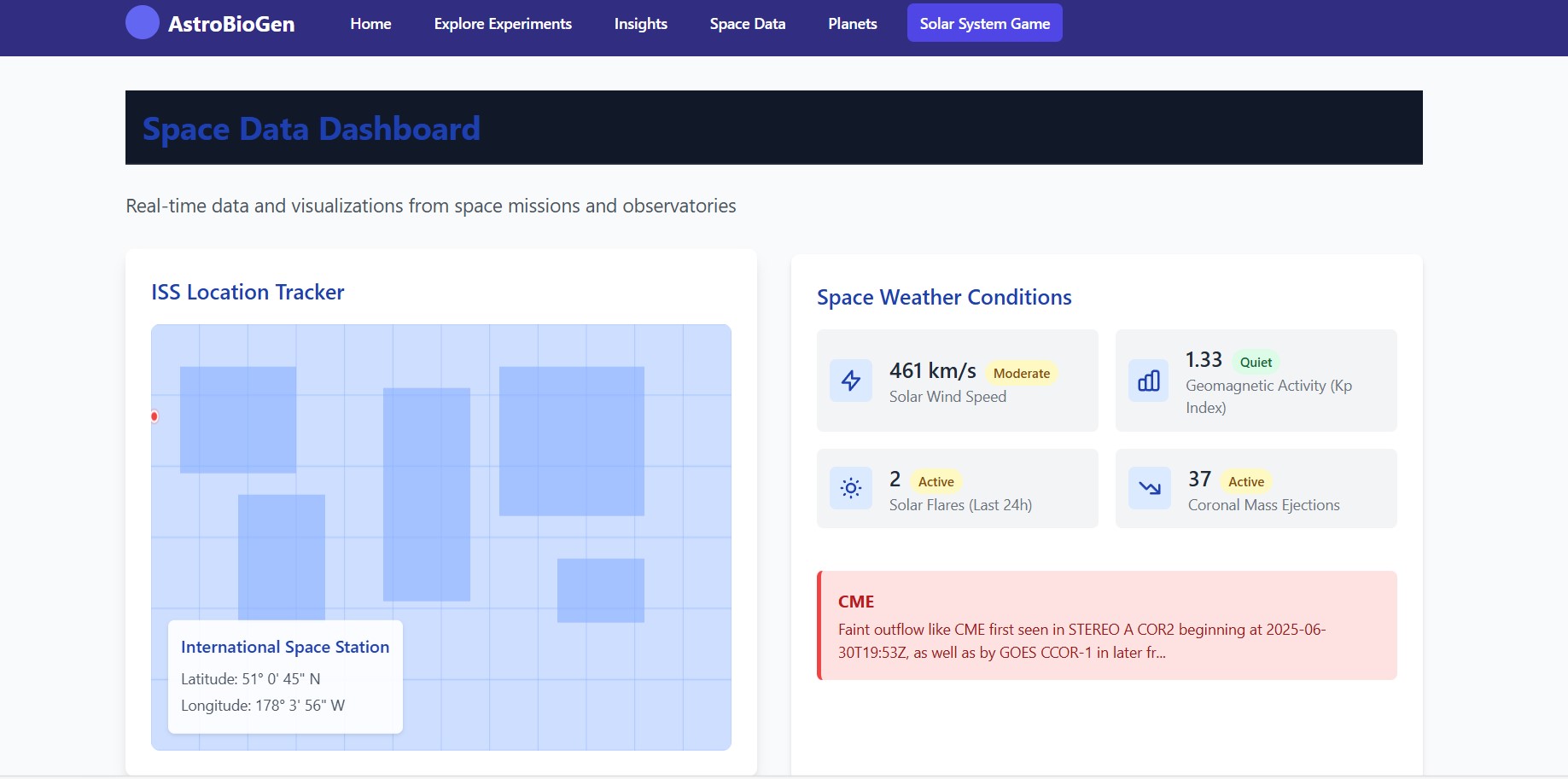
- View the real-time ISS location, mission timeline, and space weather
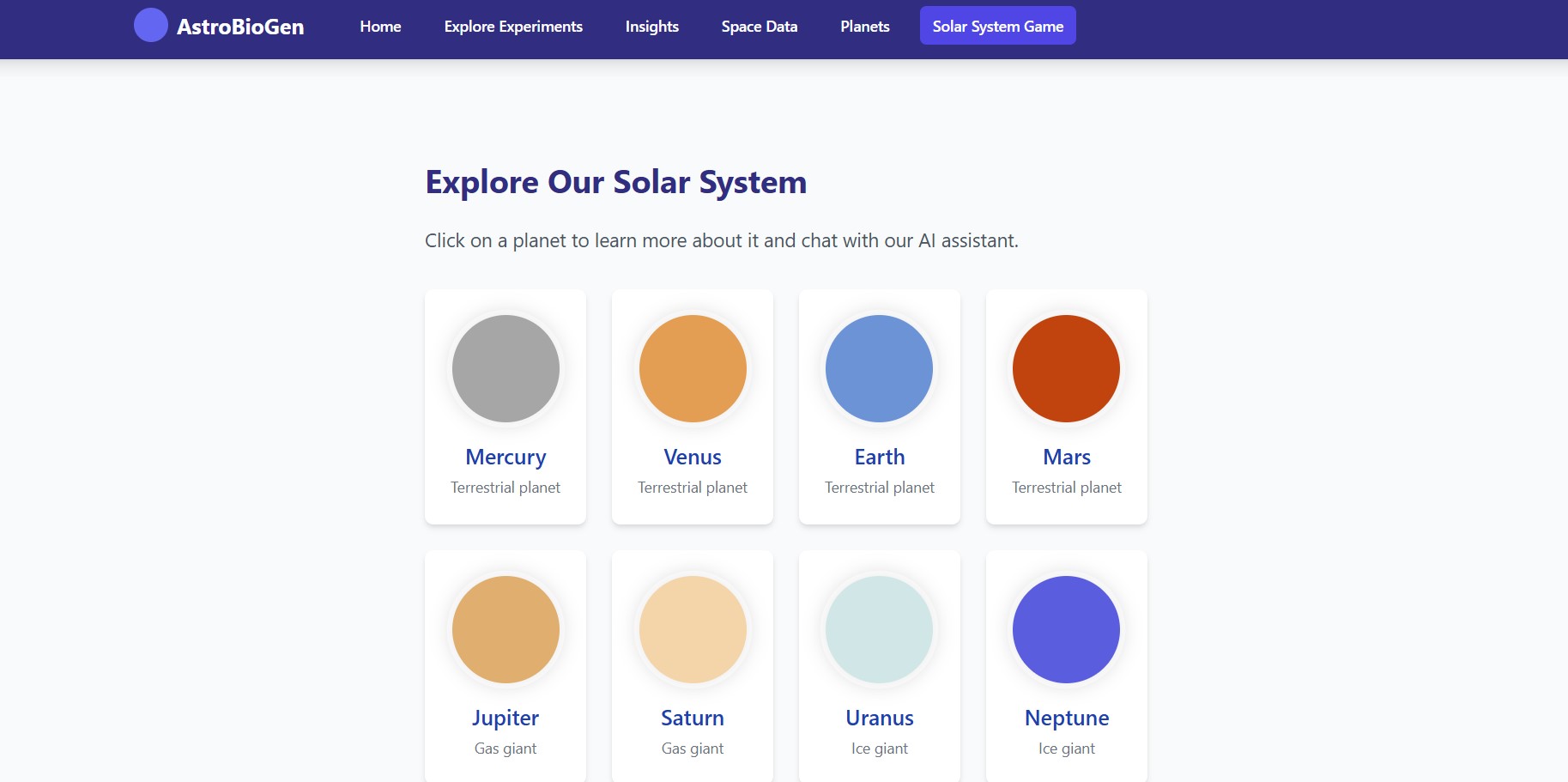
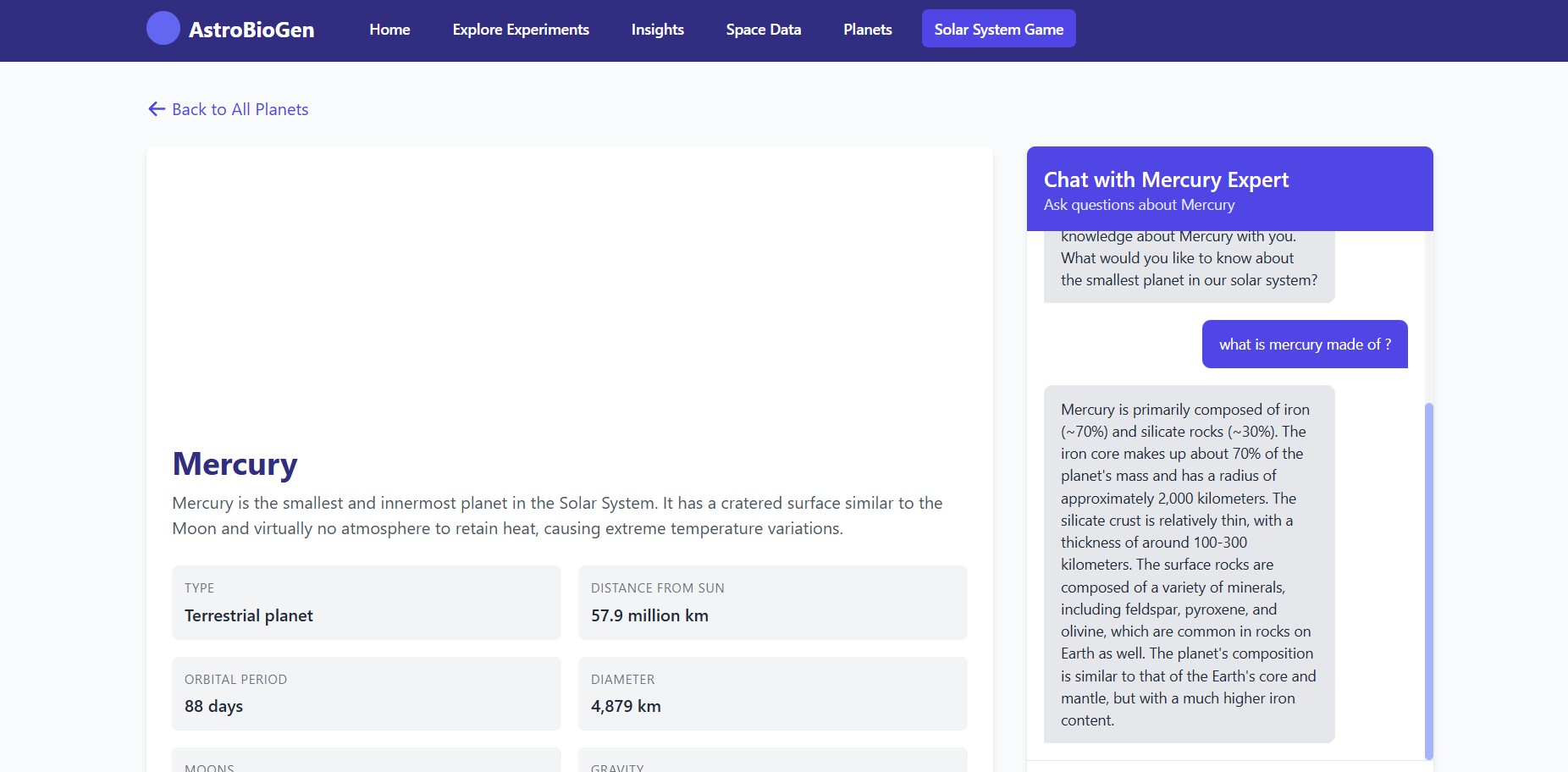
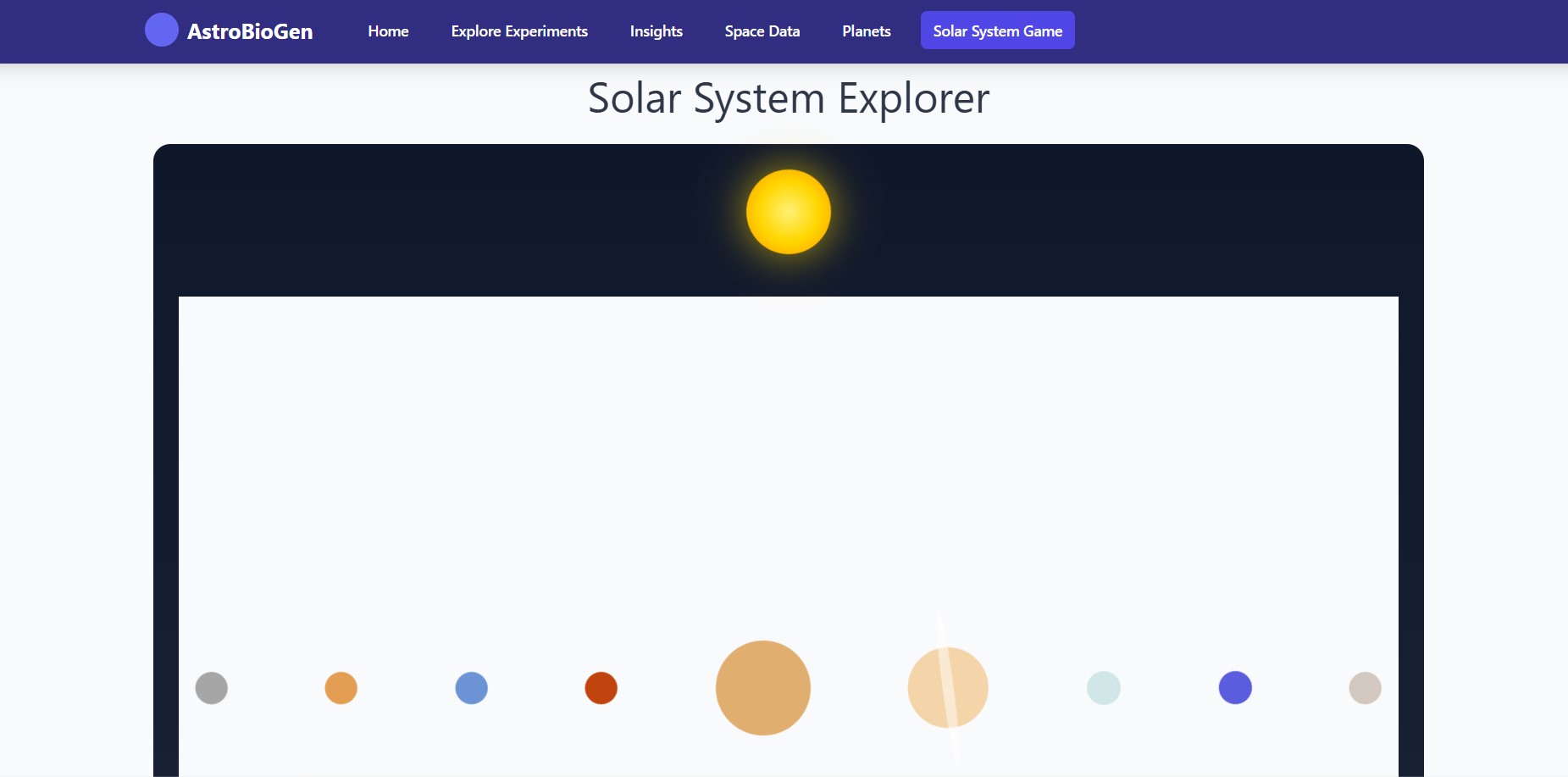
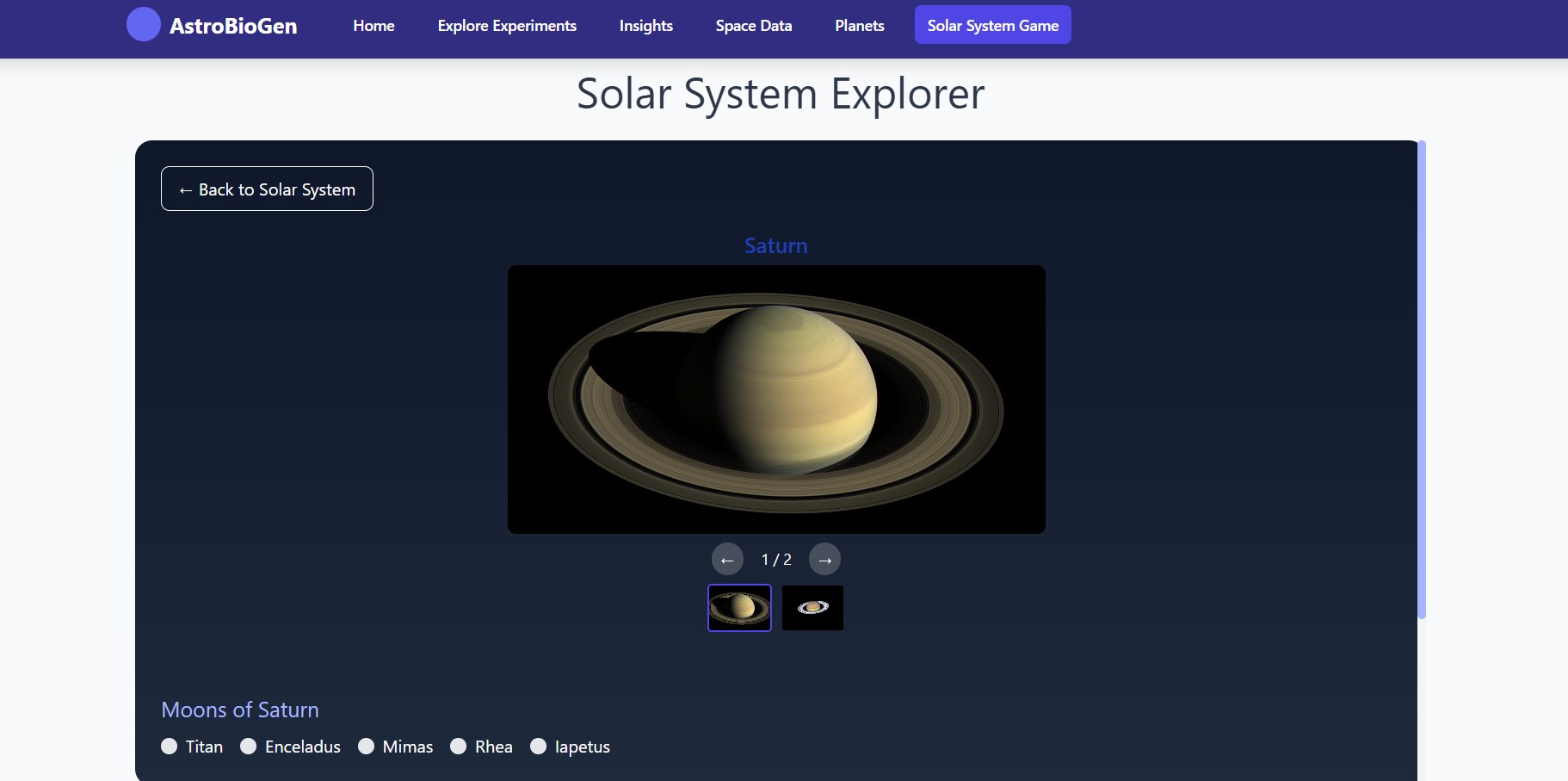
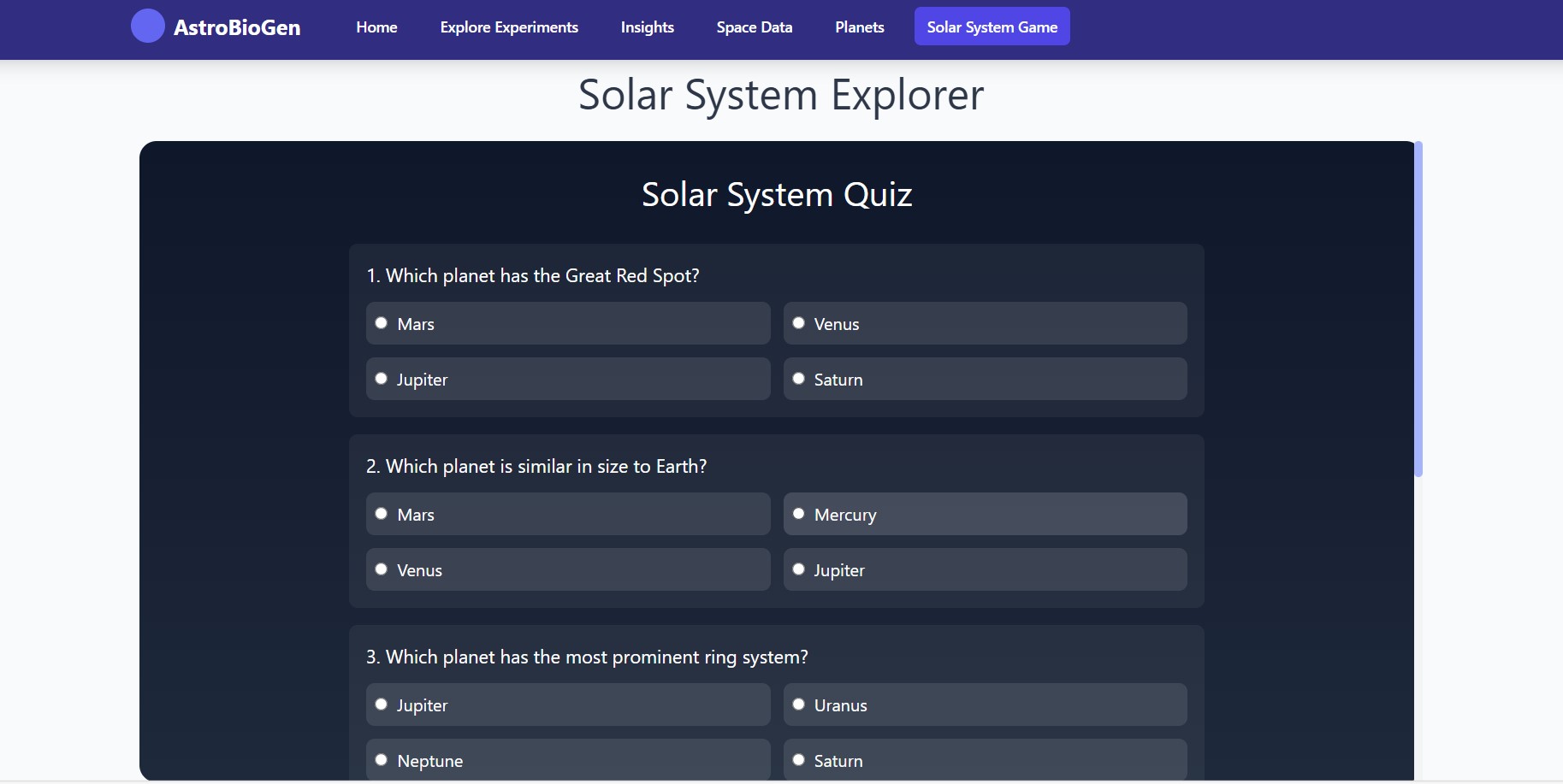
- Play an interactive educational game about space biology
How I built it
The frontend was built with React.js, Tailwind CSS, and GSAP for smooth animations and responsive design. The backend uses Node.js and Express to handle API calls and data processing. I integrated the following APIs:
- NASA GeneLab for experiment metadata and gene expression CSVs
- Groq for AI-powered gene function explanations
- Tavily for retrieving research related to gene relevance on Earth
- SpaceX, Skyfield, and Celestrak for mission and orbital data
- Open Meteo API to simulate space weather effects
Gene expression data is parsed and visualized using Chart.js and D3.js, making complex omics data understandable.
Challenges I ran into
- Parsing large CSV files from GeneLab into usable JSON formats
- Creating meaningful AI prompts for biological data interpretation
- Ensuring the visualizations remained clear and responsive on all devices
- Rate limits and occasional downtime on external APIs
- Making complex biological concepts both accurate and accessible
Accomplishments that I'm proud of
- Successfully visualized real space biology data in a user-friendly way
- Integrated two powerful AI tools (Groq & Tavily) to generate valuable insights
- Created a smooth, animated interface that makes exploration fun
- Built a working prototype that bridges the gap between space data and public understanding
- Developed an educational game that simplifies scientific learning
What I learned
- How to work with biological omics data and interpret metadata from NASA repositories
- The importance of crafting clear, structured AI prompts for domain-specific tasks
- Deepened my understanding of space missions, gene expression, and public APIs
- Improved my frontend and backend development workflow
- Gained experience with combining scientific data, design, and AI in one cohesive application
What's next for AstroBioGen
- Add deeper biological context using other omics datasets (e.g., proteomics, transcriptomics)
- Integrate more advanced machine learning models to predict gene behavior in space
- Create collaborative features for researchers to annotate, save, and discuss experiments
- Improve accessibility and mobile responsiveness for broader reach
- Partner with educators and outreach programs to use AstroBioGen as a learning tool in classrooms
Built With
- celestrak
- express.js
- genelab
- groq
- gsap
- node.js
- react
- skyfield
- spacex
- tailwind
- tavily

Log in or sign up for Devpost to join the conversation.