-
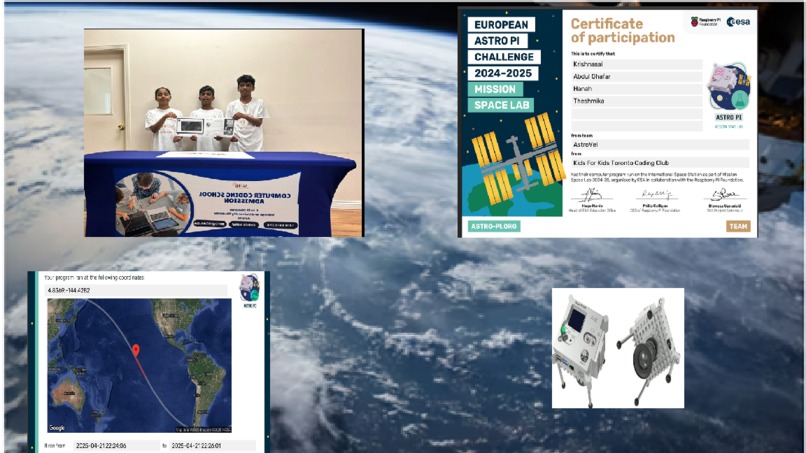
Astro pi challenge
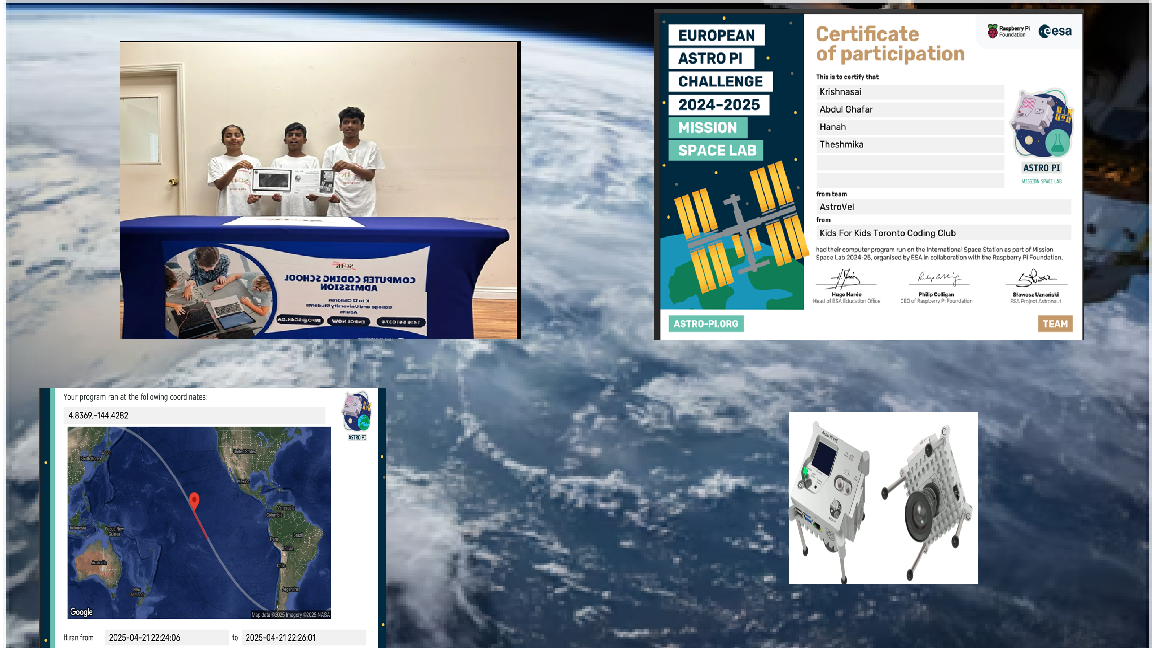
What it does I created a program designed to be run on a special computer called an Astro Pi, which is a Raspberry Pi computer hardened for space. My program's purpose was to perform a specific function or experiment, which, after being validated by the European Space Agency (ESA), was deployed and executed on the ISS. The program had to be both robust and precise to operate correctly in the microgravity environment.
How I built it I built my program in Python, the primary language used for the Astro Pi Challenge. With the guidance of a mentor, I went through the entire development process, from writing the initial lines of code to testing and debugging. I used the official Astro Pi emulator to test my program before submitting it, ensuring it met all the strict requirements set by the ESA. This step-by-step process with my mentor was crucial to getting the code ready for spaceflight.
Challenges I ran into One of the biggest challenges I ran into was ensuring the code was robust enough to handle the unpredictable conditions of space. On Earth, a simple program might work perfectly, but in space, any small bug or error could cause problems. I had to focus heavily on error handling and making sure every part of the program was optimized. It was also a challenge to learn all the specific libraries and commands required to interact with the Astro Pi hardware, such as its sensors and cameras.
Accomplishments that I'm proud of The accomplishment I am most proud of is having my code achieve "flight status." This meant that the ESA reviewed and approved my program, certifying it was safe and ready to be uploaded to the ISS. It was an amazing feeling to know that my hard work paid off and that my code was actually running in space, fulfilling a dream I had to be a part of something so incredible. I am also proud of the knowledge and skills I gained, as well as the discipline I developed throughout this project.
What I learned Through this experience, I learned a great deal about programming, specifically with Python, and how to write clean, efficient, and well-documented code. I also learned about the complexities of space exploration and the incredible effort that goes into making even a small experiment successful. The challenge taught me the importance of teamwork, as my mentor and I worked together to troubleshoot issues and refine the program. Ultimately, I learned that with dedication and a passion for STEM, anyone can achieve remarkable things.
What's next for Astro Pi The Astro Pi program continues to inspire young people around the world. The challenges are constantly being updated with new missions and tasks. For me, as Krishnasai, the next step is to continue building on what I've learned. I plan to use these skills in future coding projects and possibly pursue a career in computer science or aerospace engineering. I want to keep pushing my limits, solving complex problems, and using my passion for technology to create something that can make a real-world impact.
Built With
- python
- raspberry-pi
- thony


Log in or sign up for Devpost to join the conversation.