-
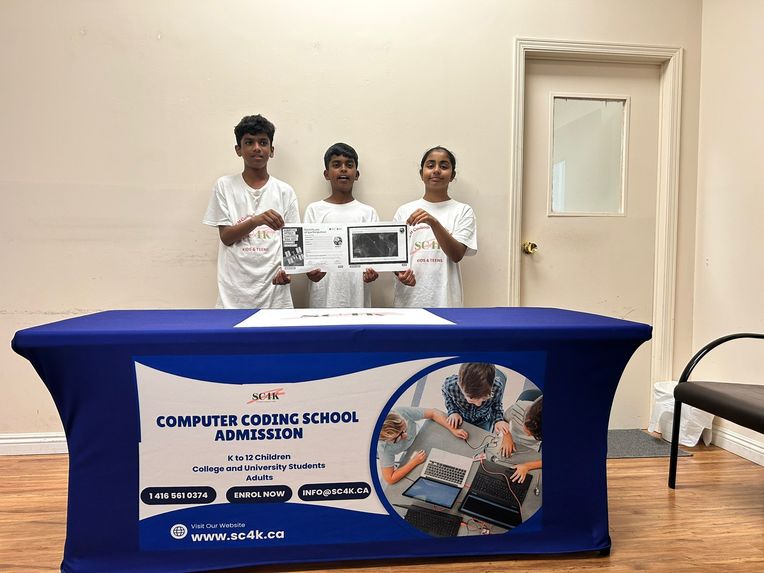
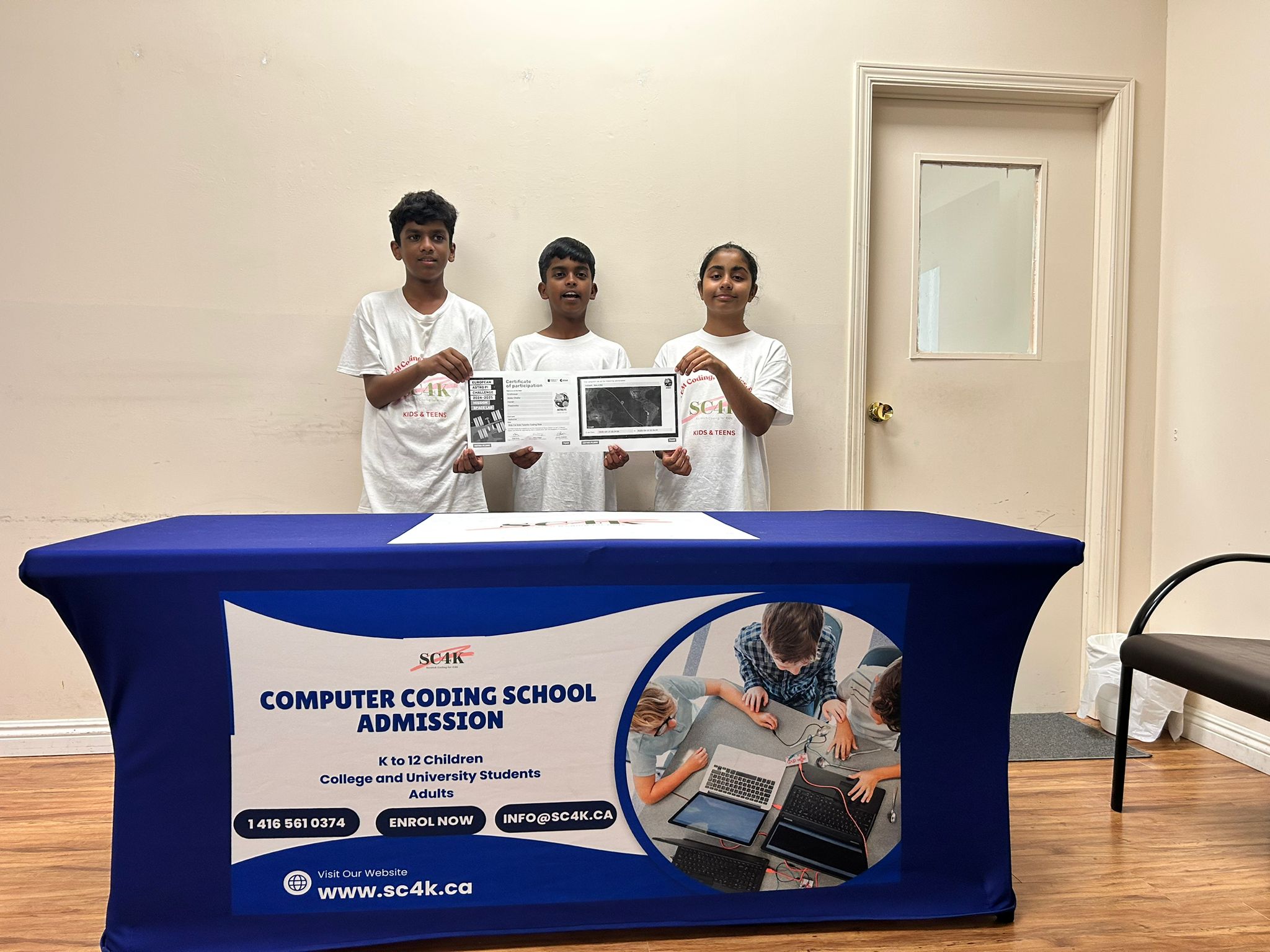
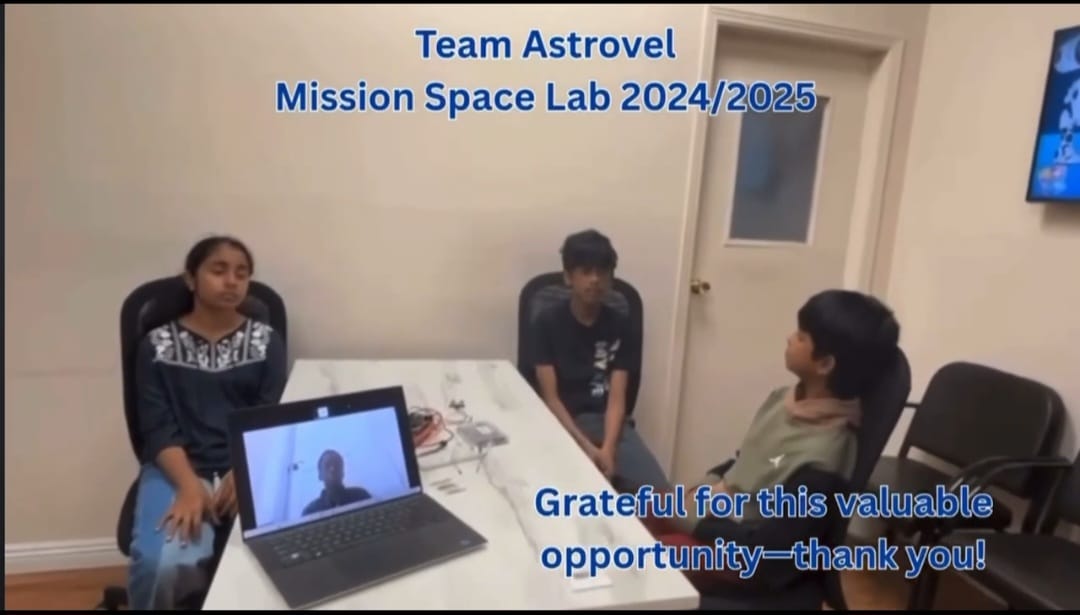
Team Astrovel (From left Theshmika, Krishna, Hanah)
-
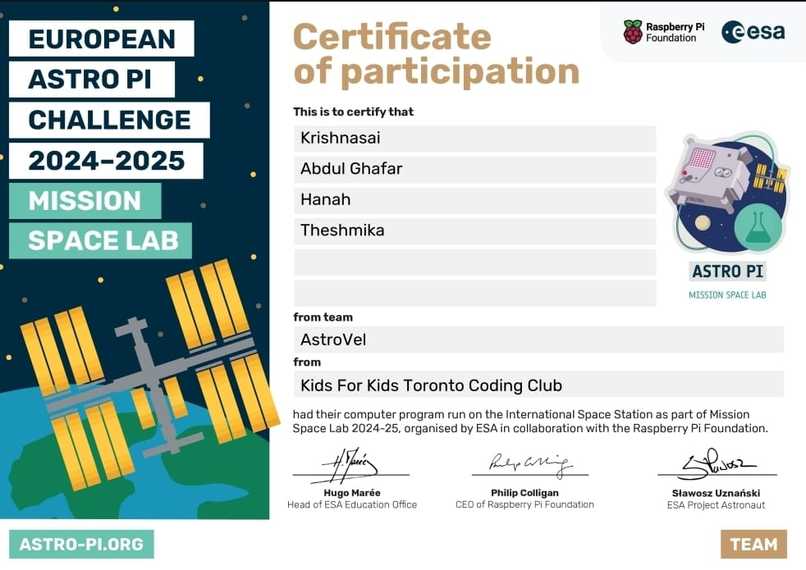
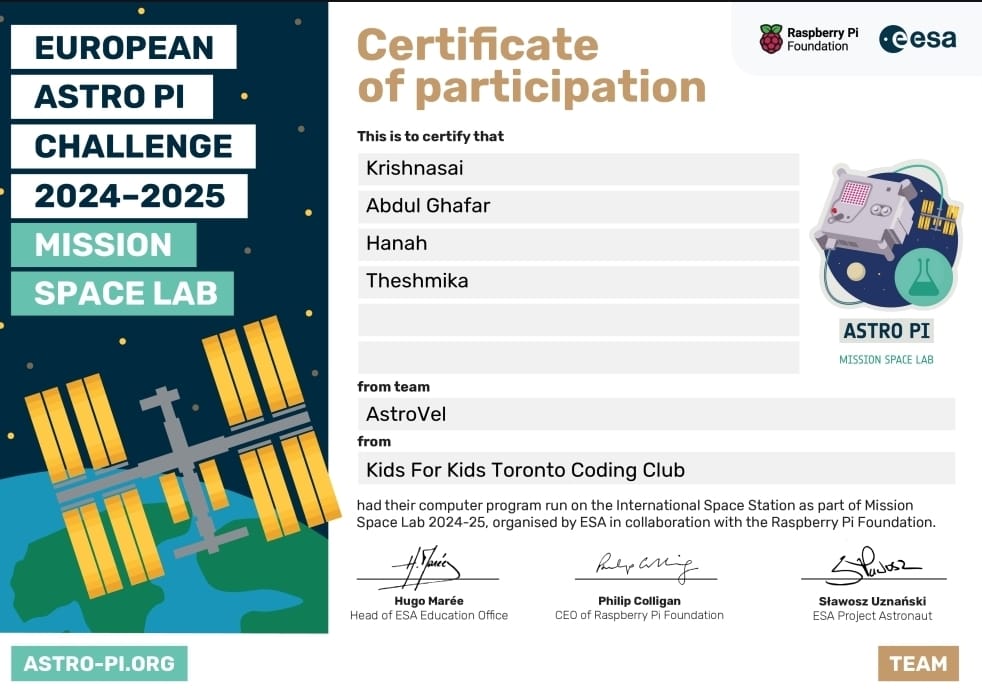
Certificate of Participation
-
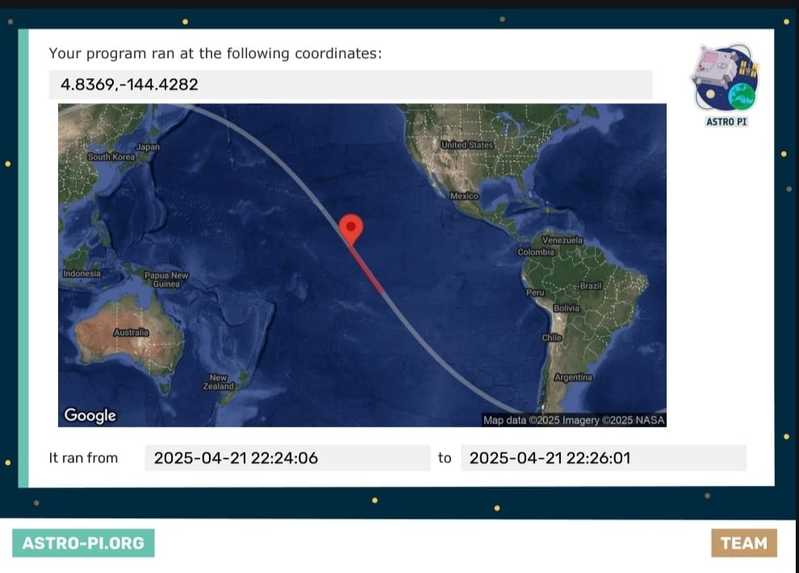
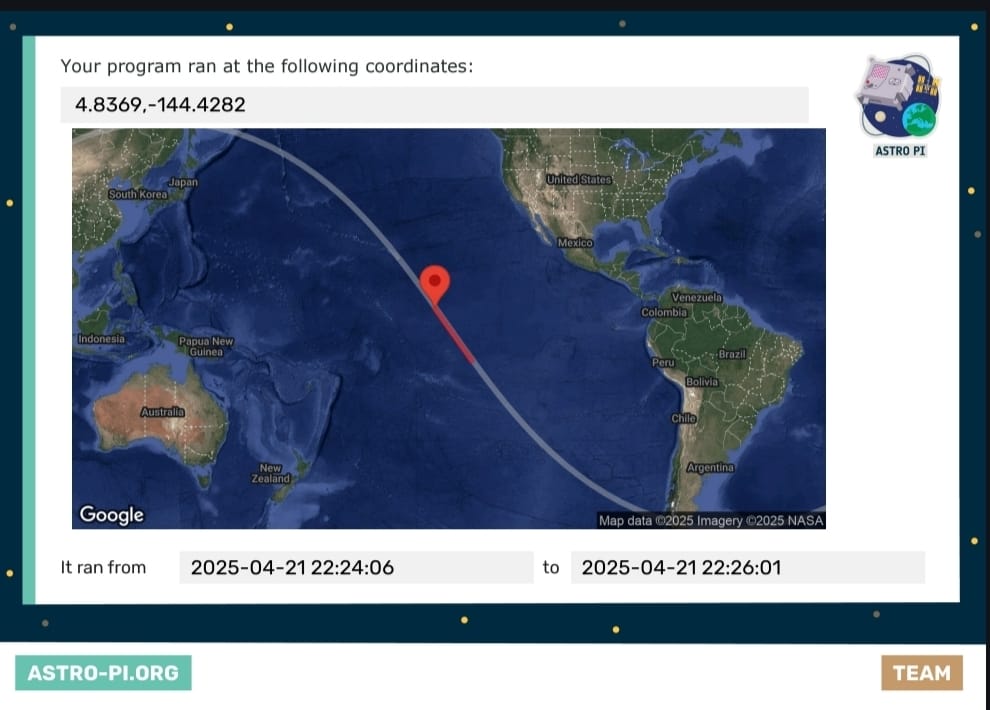
Our program ran at this coordinates
-
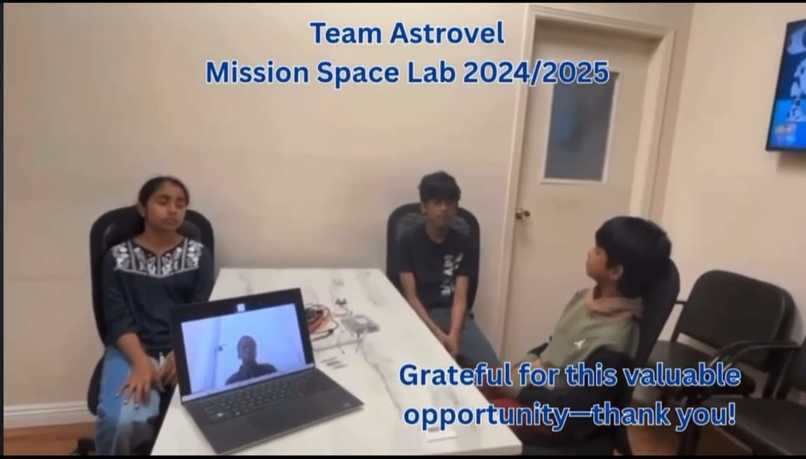
During virtual interview with Astronaut Luca Parmitano
-
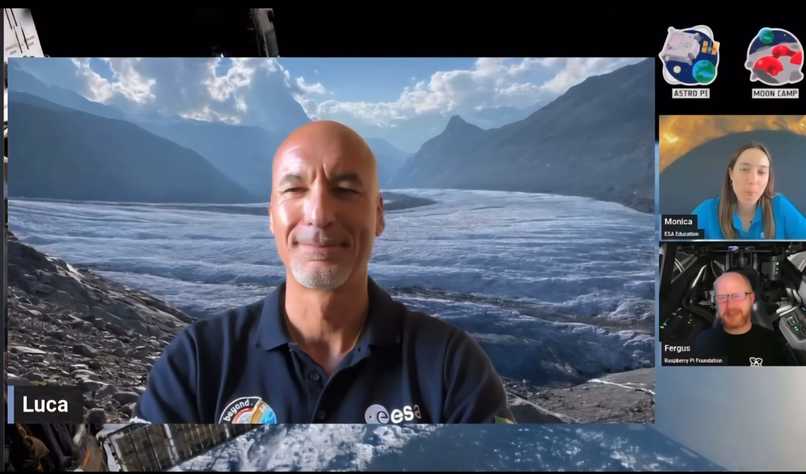
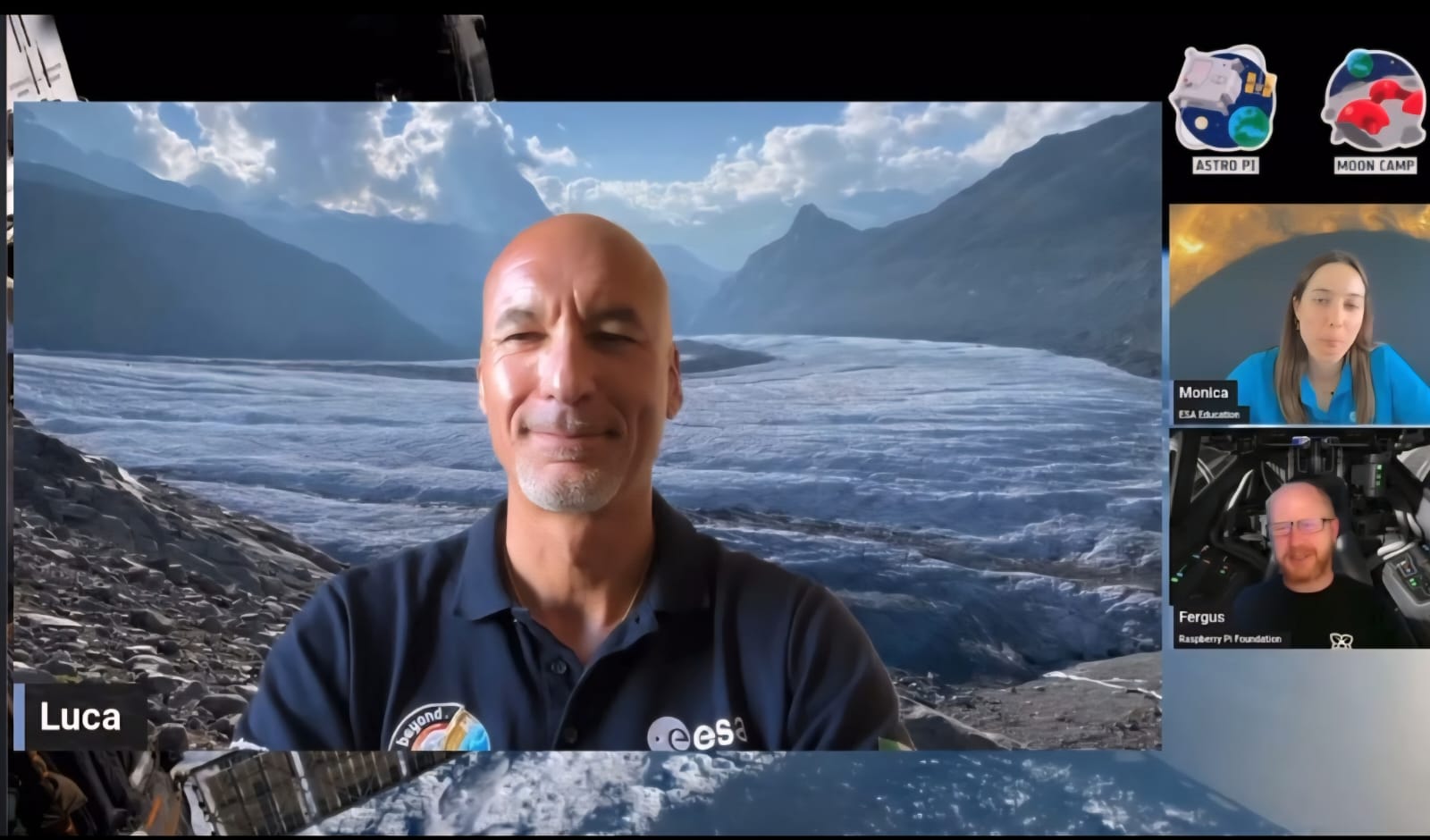
During virtual interview with Astronaut Luca Parmitano
Project Title: Astro Pi Mission: Calculating the ISS's Speed
Team Astrovel
This project was a collaborative effort by our team, Astrovel, made up of four dedicated members. We took on the European Astro Pi Mission Space Lab challenge, which gave us the incredible opportunity to run our own code on the International Space Station (ISS). Our mission was to use the Astro Pi's sensors to calculate the orbital speed of the ISS.
Inspiration
Our inspiration came from the incredible Astro Pi mission. We were fascinated by the idea of using accessible hardware to conduct a real scientific experiment in space. We wanted to apply the principles of physics and programming to a high-stakes problem: calculating the speed of a spacecraft in orbit. What the Project Does - Our team's program calculates the orbital speed of the ISS. It uses the Astro Pi's onboard accelerometer to measure the forces acting on the station. The program reads this acceleration data and, using a physics formula, computes the speed. This gave us a direct, measurable way to understand the dynamic environment of a spacecraft in low Earth orbit.
How We Built It
We built the project on Astro Pi hardware, which includes a Raspberry Pi and a Sense HAT sensor board. Our process involved: • Python Scripting: We wrote a Python script that continuously reads acceleration values in three axes. • Physics Formulas: We used the vector magnitude formula to find the total acceleration and numerical integration to calculate the final speed.
Challenges
The main challenge was interpreting the data. Since the ISS is in a continuous state of free-fall, the accelerometer measured acceleration very close to zero. We had to account for this and focus on the small, high-frequency changes caused by tiny orbital adjustments and vibrations. Another challenge was optimizing our code to run efficiently on the Raspberry Pi's limited processing power.
Accomplishments & What We Learned
• Flight Status: We are proud that our program was selected to run on the ISS. • Successful Mission: We successfully received the data and certificates, confirming our team’s program were a success. • Direct Interaction with an Astronaut: As a highlight of the experience, we had a virtual interview with ESA astronaut Luca Parmitano, who answered our questions about life in space and his experiences on the ISS. This was a truly inspiring and unforgettable part of our journey. • Skill Development: As a team, we gained a deeper understanding of orbital mechanics and the unique effects of microgravity. We also improved our Python programming skills, especially in sensor data acquisition and signal processing. • Collaboration: This project taught us the importance of teamwork and how to work together to solve complex problems.
What's Next for Astrovel
Our team would like to enhance the program to calculate not only the speed but also the ISS's orbital period and altitude. This would require integrating data from other sensors, like the magnetometer and gyroscope, to refine our calculations and create a more comprehensive experiment.
Built With
- python
- raspberrypi
- thony

Log in or sign up for Devpost to join the conversation.