-
-
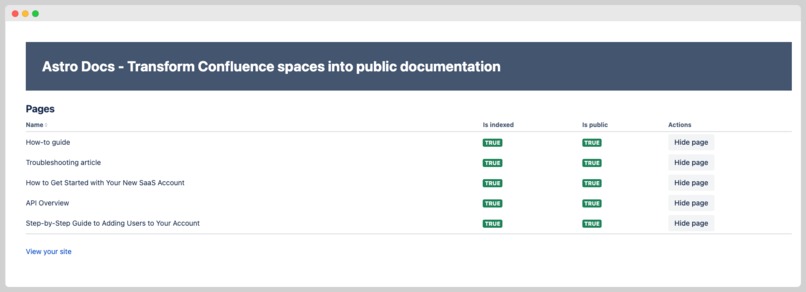
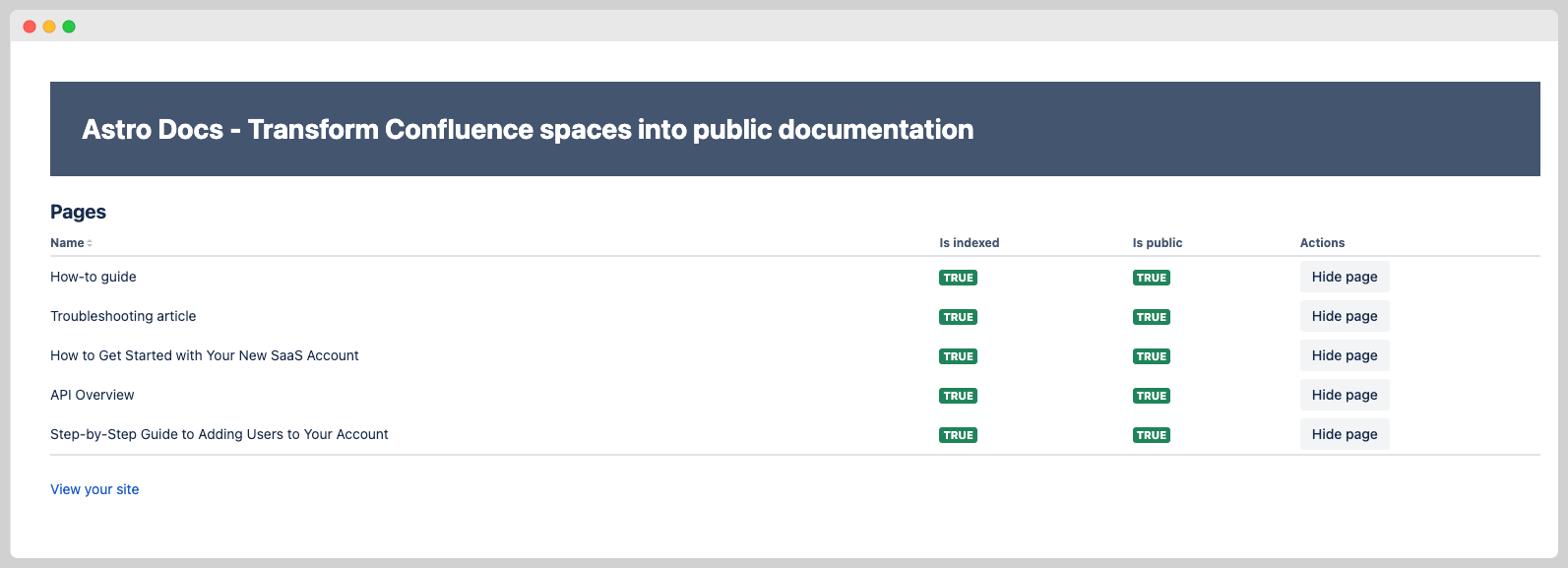
Manage page visibility in Confluence
-
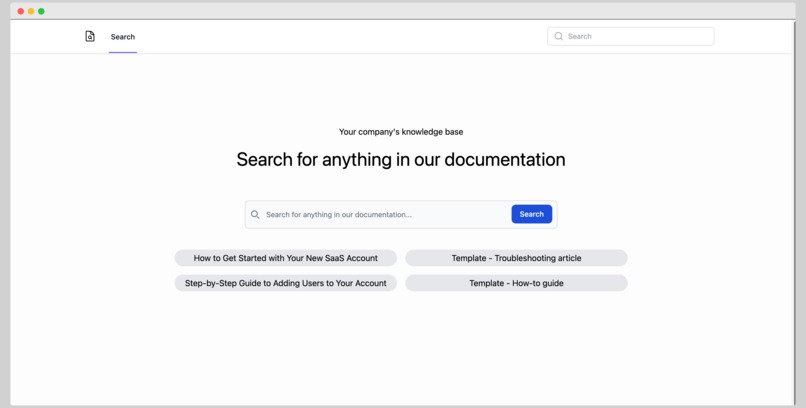
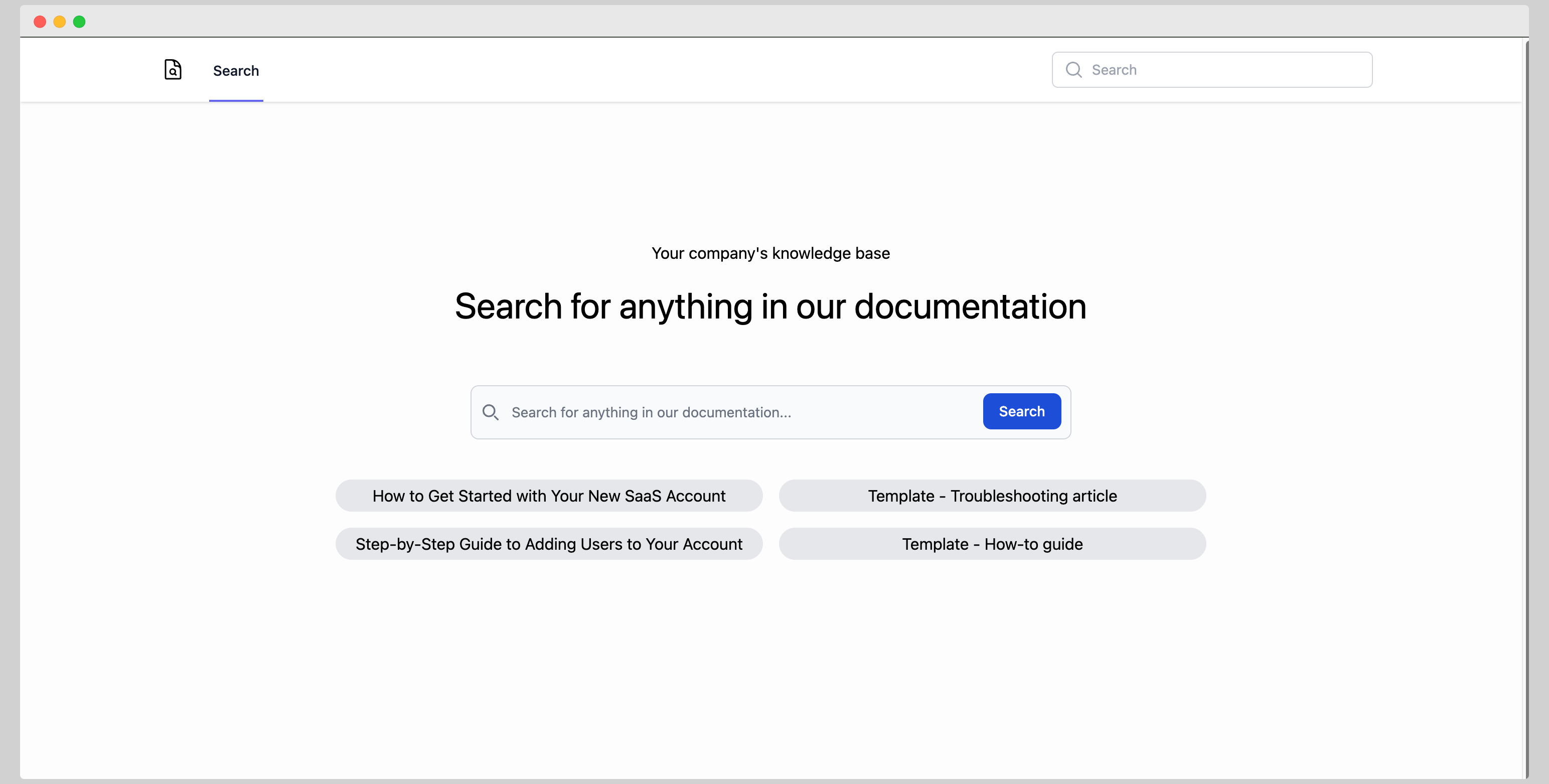
Search for anything in the confluence space
-
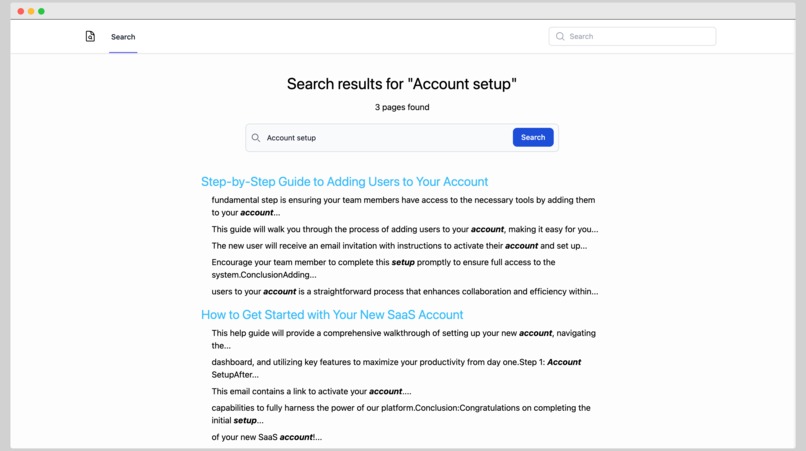
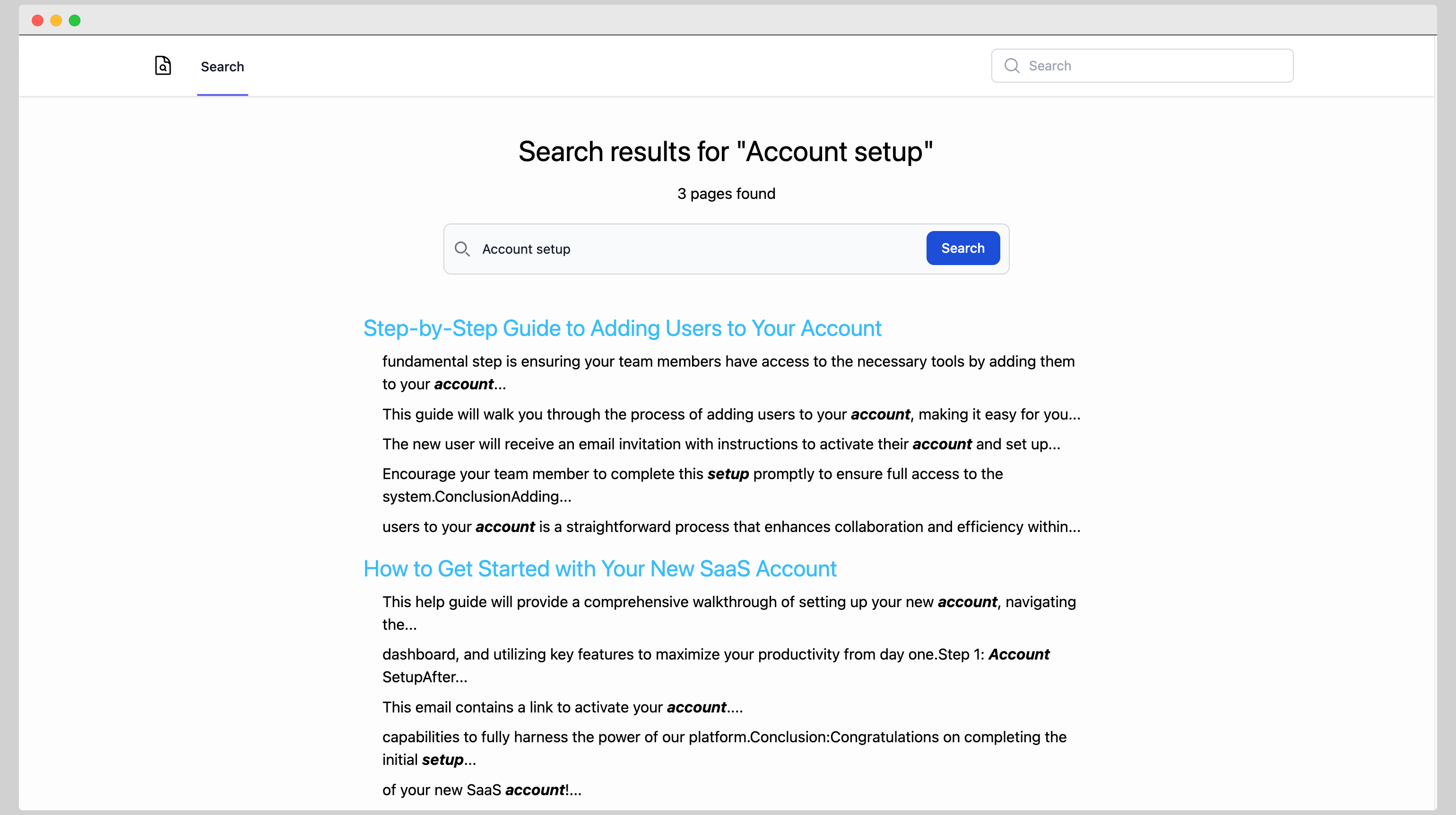
View the search results
-
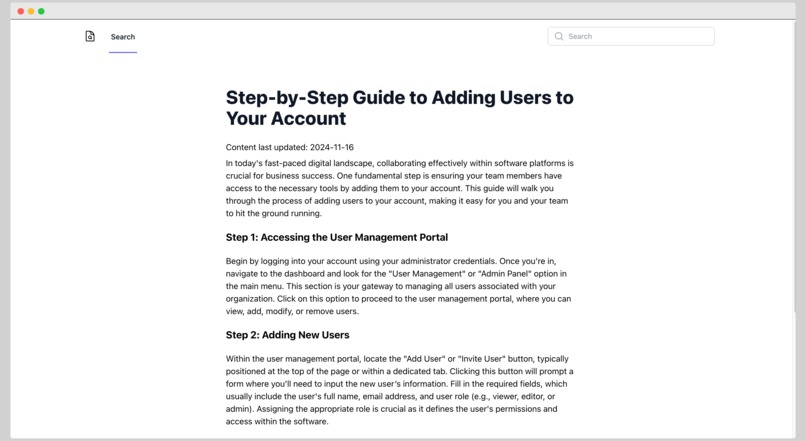
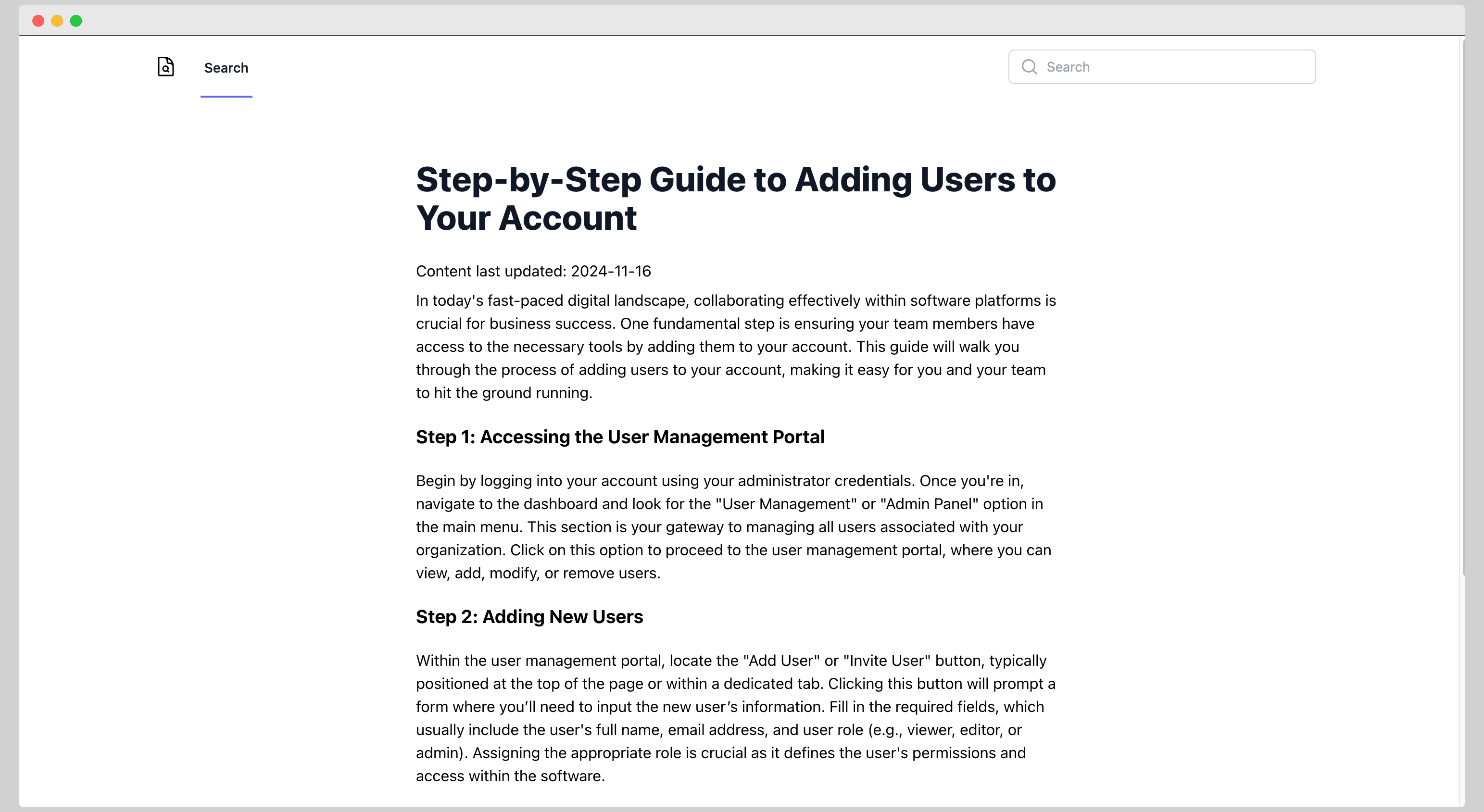
View the specific pages
Inspiration
Original thought
SaaS sprawl is real, and I've noticed that its easier to upgrade an existing tool in your tech stack then to onboard another. For that reason, I always look for 3rd party apps to enhance the use of an existing tool before looking to purchase/use a new one.
Astro Docs idea
For internal documentation, every company I've worked at has used Confluence, and some other tool for external documentation. This didn't make sense to me. The information your users need is already in Confluence. Your coworkers are already familiar with its functionality. So why not have a Confluence space be responsible for maintaining your customer facing knowledge base?
What it does
Main functionality
Astro Docs crawls your Confluence space for all pages and indexes them like a search engine. We then provide you with a search page where your users can type in a text query to search for relevant documents they are looking for.
What else?
Astro Docs also tracks page views and search query analytics to surface important information such as:
- What are your users searching for? Astro Docs saves every query your users are searching for so you can understand where the gaps in your knowledge base are.
- How many results are appearing for each query? For each query, we will save how many "hits" the query received so you can understand how much relevant documentation your knowledge base has based on user queries.
- Page views. Astro Docs keeps track of page views so you know what documentation your users are landing on. This allows you to increase the content around certain subjects that you are seeing high traffic for.
How we built it
Using Forge, Laravel, MySQL and OpenSearch.
Details
- Forge provides the admin interface in Confluence where users can manage what space is being indexed, what pages need to be kept hidden, analytics, etc.
- Forge Remote allows us to make API calls to our back-end server
- Forge triggers allow us to react to real-time events happening in Confluence such as page updates/page archives so that we can re-index the content and provide the most up to date content as possible.
- Laravel and PHP provide the back-end functionality
- MySQL is the database
- OpenSearch is the indexing technology that powers search
Challenges we ran into
- How to separate data and give each user their own website. We achieved this through subdomains and provide each space its own site.
- Surface relevant data. Search is hard and building a reliable search functionality for potentially large number of page data is hard. OpenSearch helps by providing tons of indexing and search features out of the box.
- Learning Forge. The new platform comes with tons of useful built-in technology that lets feature work be done fast. Learning to use those features wasn't a hard challenge, but a challenge as with any new technology.
Accomplishments that we're proud of
- Astro Docs is able to provide companies of any size with a full public searchable knowledge base with very little effort to setup. In fact, it takes about 2 clicks to have your site indexed and ready to be used by your customers. Building functionality isn't the accomplishment, but building something that is easy to use that is also useful is our biggest accomplishment.
What we learned
- The Forge paradigm is super interesting. Having the platform to build on and a set of APIs increased development speed. We were able to focus on building features instead of infrastructure. We were able to get much more functionality done this way than we would have otherwise since infrastructure is a huge burden for most projects.
What's next for Astro-Docs
- More customizability. We are experimenting with a page builder feature that will allow users to build their own knowledge base site with pre-built components but customizable styling.
- Open-source page builder components. Allow users to either high developers or code their own web components that can be used in the drag and drop editor
- More analytics. Understand the path users are taking in your knowledge base. How much time they are spending on each page. Heatmaps of where their cursors are spending the most time to understand the important areas of your pages.


Log in or sign up for Devpost to join the conversation.