Inspiration
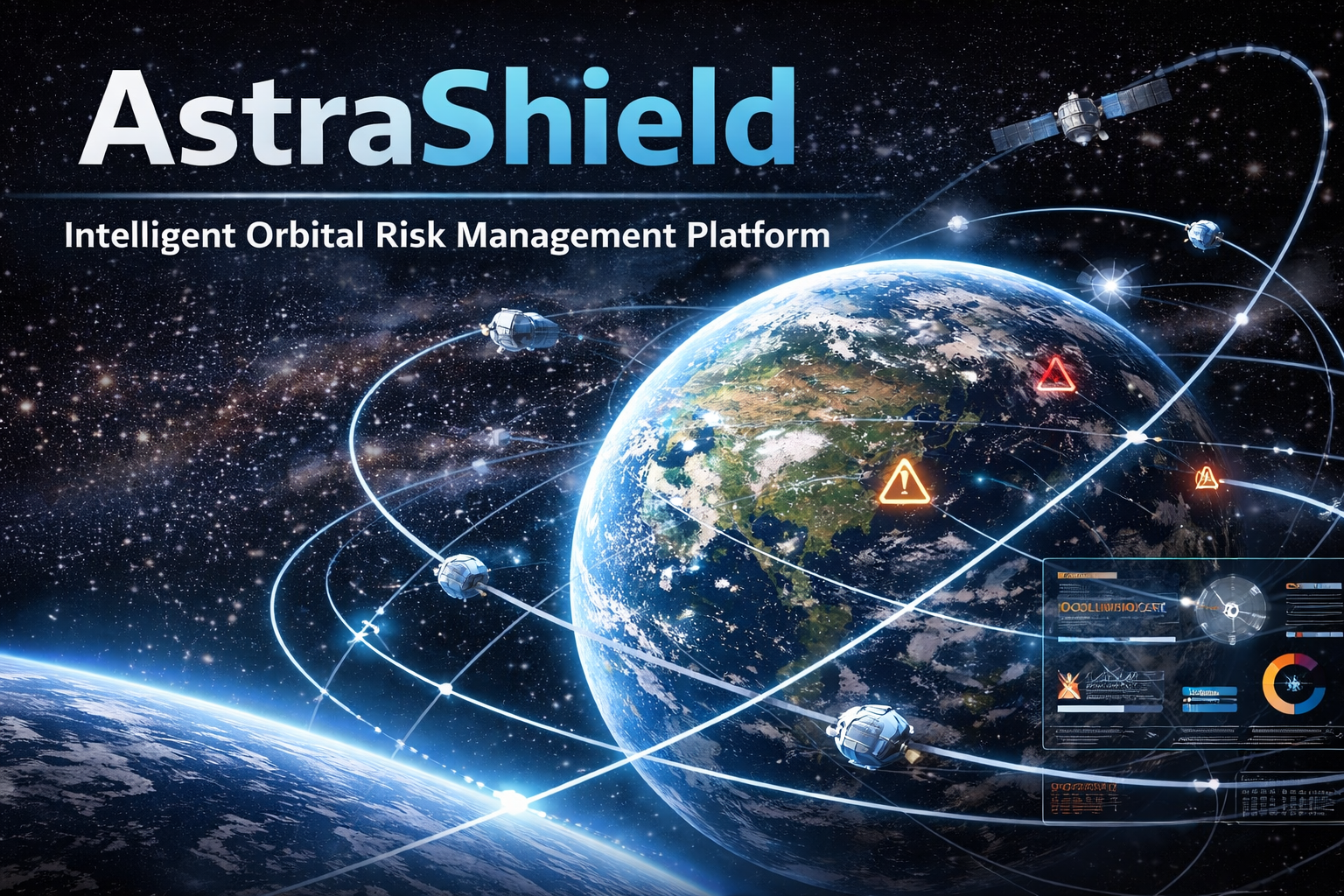
The increasing number of satellites and orbital debris has made Earth’s orbit more congested and unpredictable. Even small fragments can cause catastrophic damage due to high orbital velocities, and collisions can lead to cascading debris events that threaten long-term space sustainability. I was motivated by the need for a system that not only visualizes orbital activity but also provides structured risk analysis and predictive insights. AstraShield was built to address this gap by combining real-time data, analytical models, and simulation tools into a unified platform.
What it does
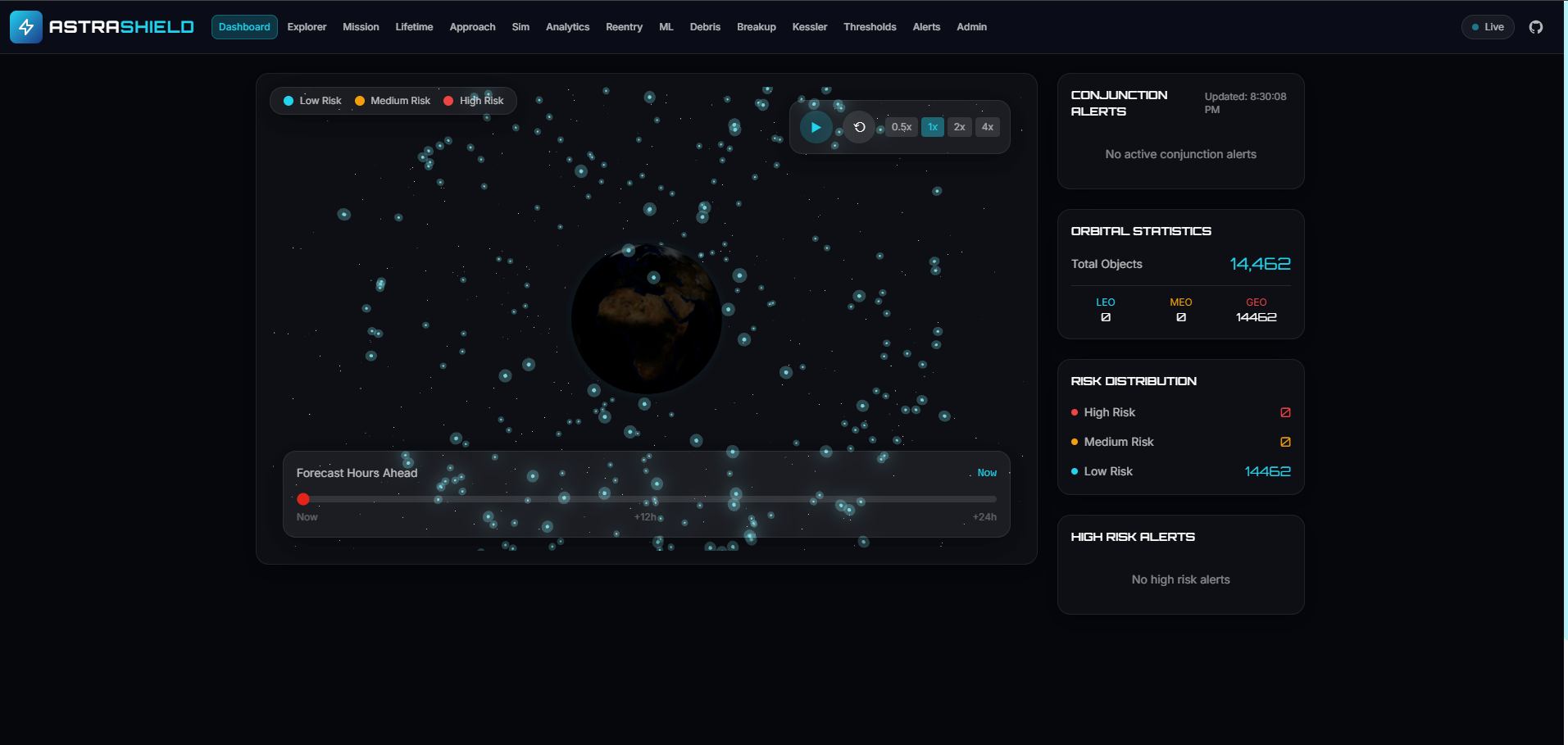
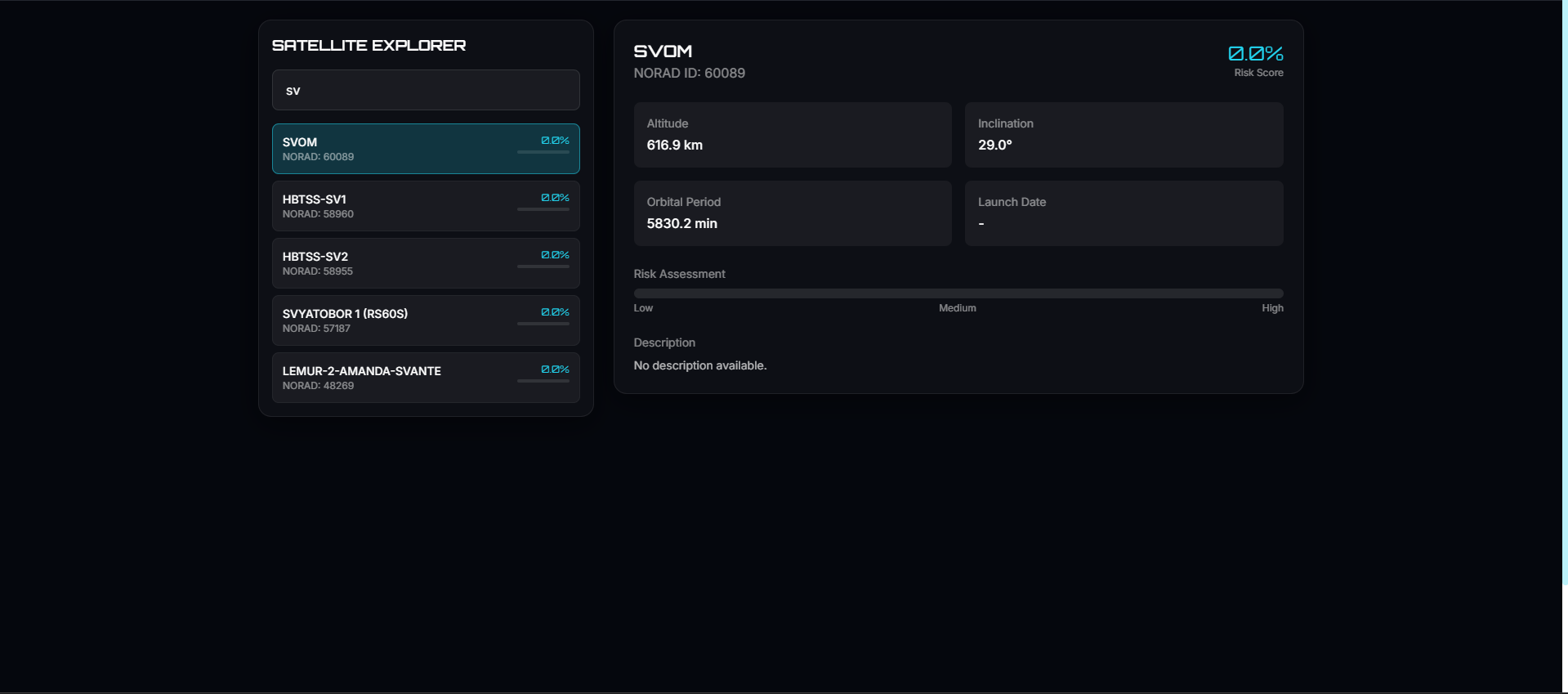
AstraShield is a full-stack platform for monitoring, analyzing, and predicting orbital risks. It provides:
- Real-time visualization of satellites and debris in a 3D environment
- Detection of conjunction events and closest approaches
- Collision probability calculations and risk scoring
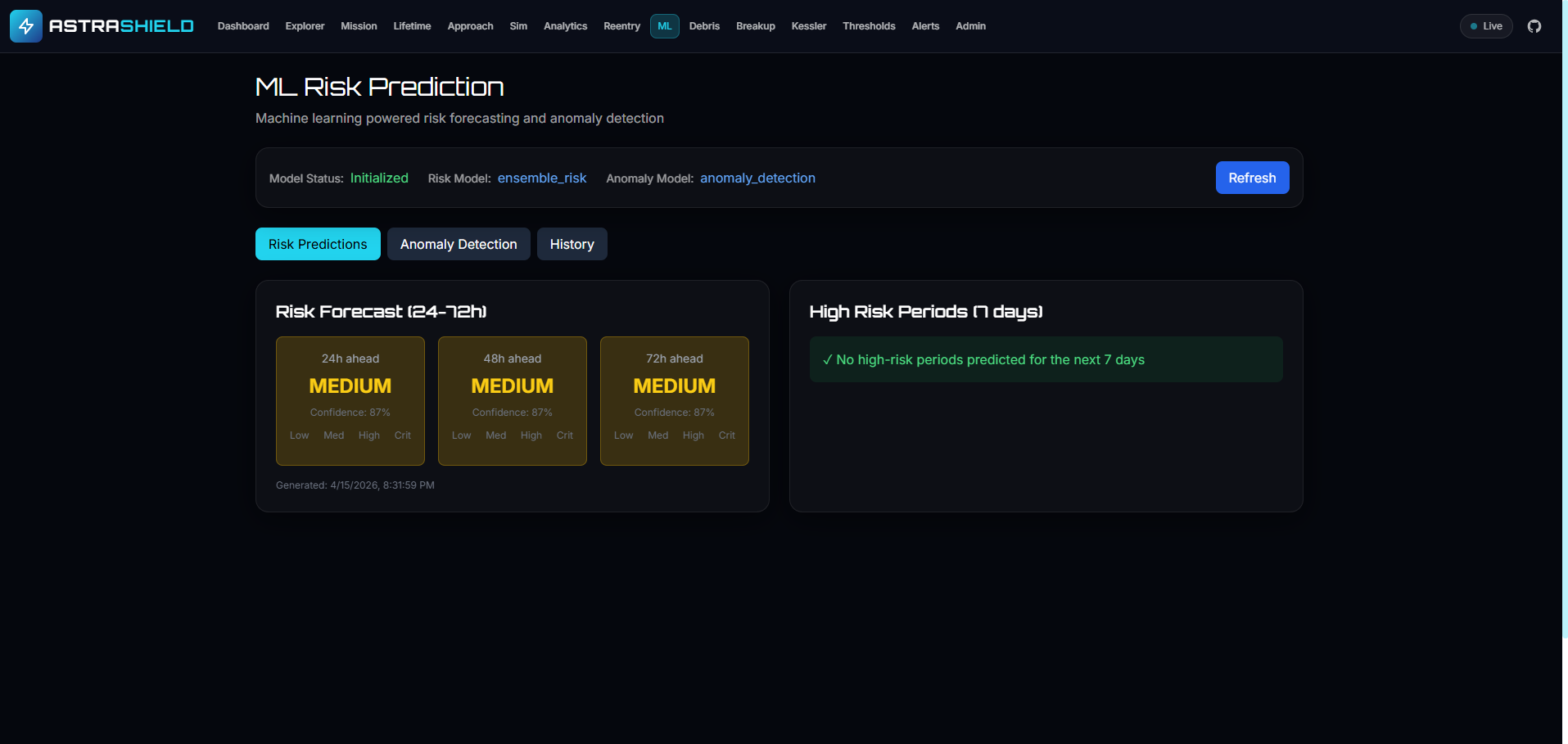
- Machine learning-based prediction of future risks
- Simulation tools for breakup events, reentry, and mission planning
- Real-time alerts for high-risk scenarios The system enables users to better understand orbital conditions and make informed decisions.
How I built it
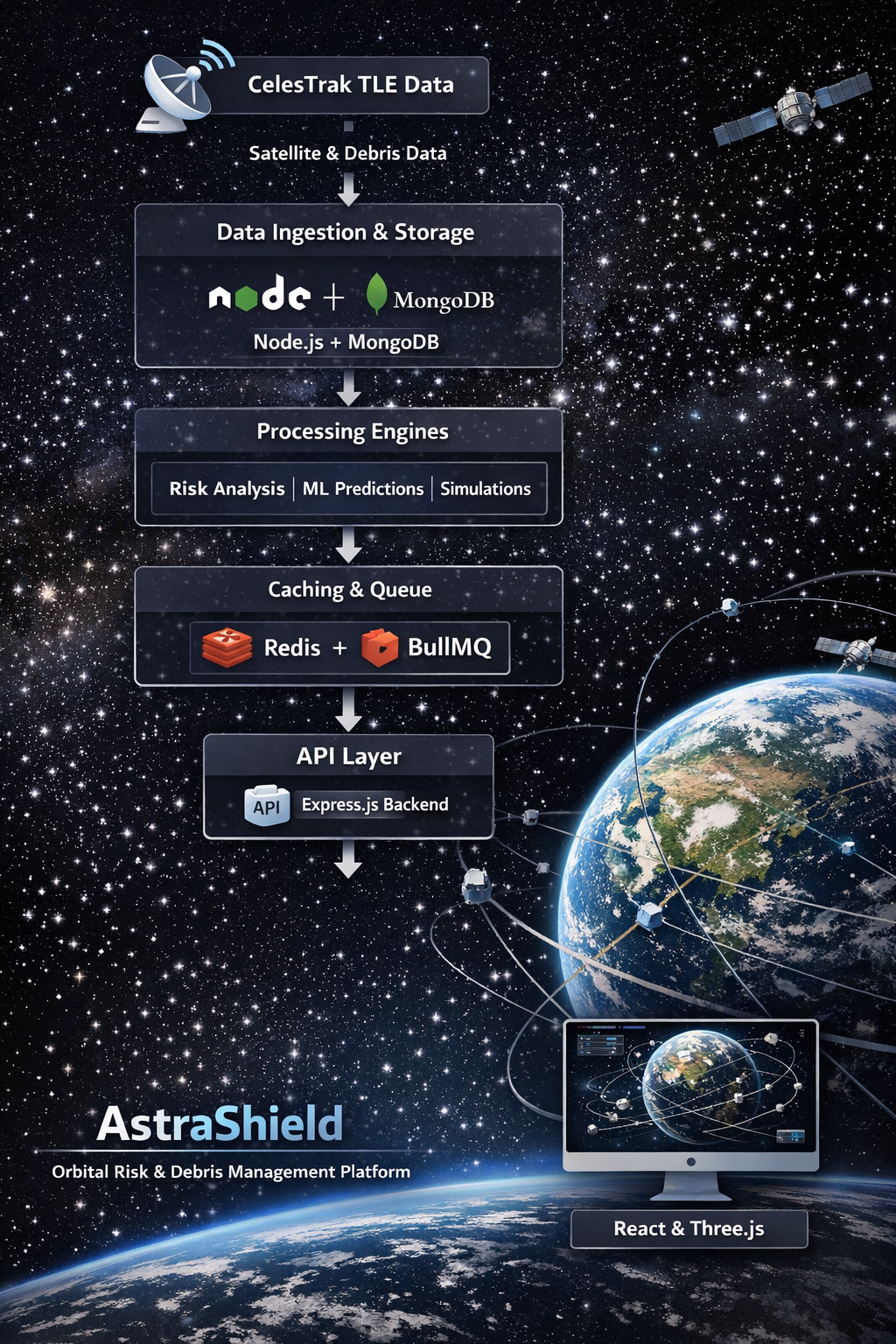
AstraShield is designed as a modular and scalable system:
- Frontend: React with Three.js (React Three Fiber) for interactive 3D visualization
- Backend: Node.js and Express for API and system logic
- Database: MongoDB for storing satellite and risk data
- Caching & Processing: Redis and BullMQ for performance and asynchronous task handling
- Machine Learning: TensorFlow.js for predictive risk modeling
- Data Source: CelesTrak TLE data for real-time satellite tracking The architecture separates data ingestion, processing engines, and presentation layers to ensure maintainability and scalability.
Challenges I ran into
- Managing performance when processing large orbital datasets
- Designing reliable collision probability calculations with limited public data
- Synchronizing real-time updates across the system
- Rendering complex 3D visualizations efficiently
- Integrating machine learning predictions into a real-time pipeline
- Maintaining a clean and modular architecture while adding multiple features
Accomplishments that I am proud of
- Built a complete end-to-end system with real-time capabilities
- Integrated live satellite data into a functional platform
- Developed multiple processing engines (risk, simulation, prediction)
- Created an interactive 3D visualization for complex data
- Designed a modular architecture that supports scalability and future extensions
What I learned
- How to design and implement scalable full-stack systems
- Working with real-time data pipelines and asynchronous processing
- Applying concepts from orbital mechanics in software
- Integrating machine learning into production workflows
- Structuring complex systems into maintainable components
What's next for AstraShield
- Enhance prediction accuracy with larger and more diverse datasets
- Add automated collision avoidance recommendations
- Integrate with external satellite operator systems
- Expand simulation capabilities for mission planning
- Deploy AstraShield as a scalable platform for real-world use
Built With
- docker
- express.js
- javascript
- mongodb
- nginx
- node.js
- react
- tailwindcss
- tenserflow.js
- three.js

Log in or sign up for Devpost to join the conversation.