Inspiration
The rapid growth of satellites and orbital debris has created an increasingly congested and hazardous environment in Earth’s orbit. With thousands of active satellites and millions of debris fragments traveling at extreme velocities, even a small collision can trigger cascading effects known as Kessler Syndrome. I was inspired by the lack of unified, accessible tools that combine real-time visualization, risk analysis, and predictive intelligence. Existing solutions are often fragmented, complex, or inaccessible to smaller organizations. AstraShield was built to bridge this gap: transforming raw orbital data into actionable insights that help prevent collisions and support sustainable space operations.
What it does
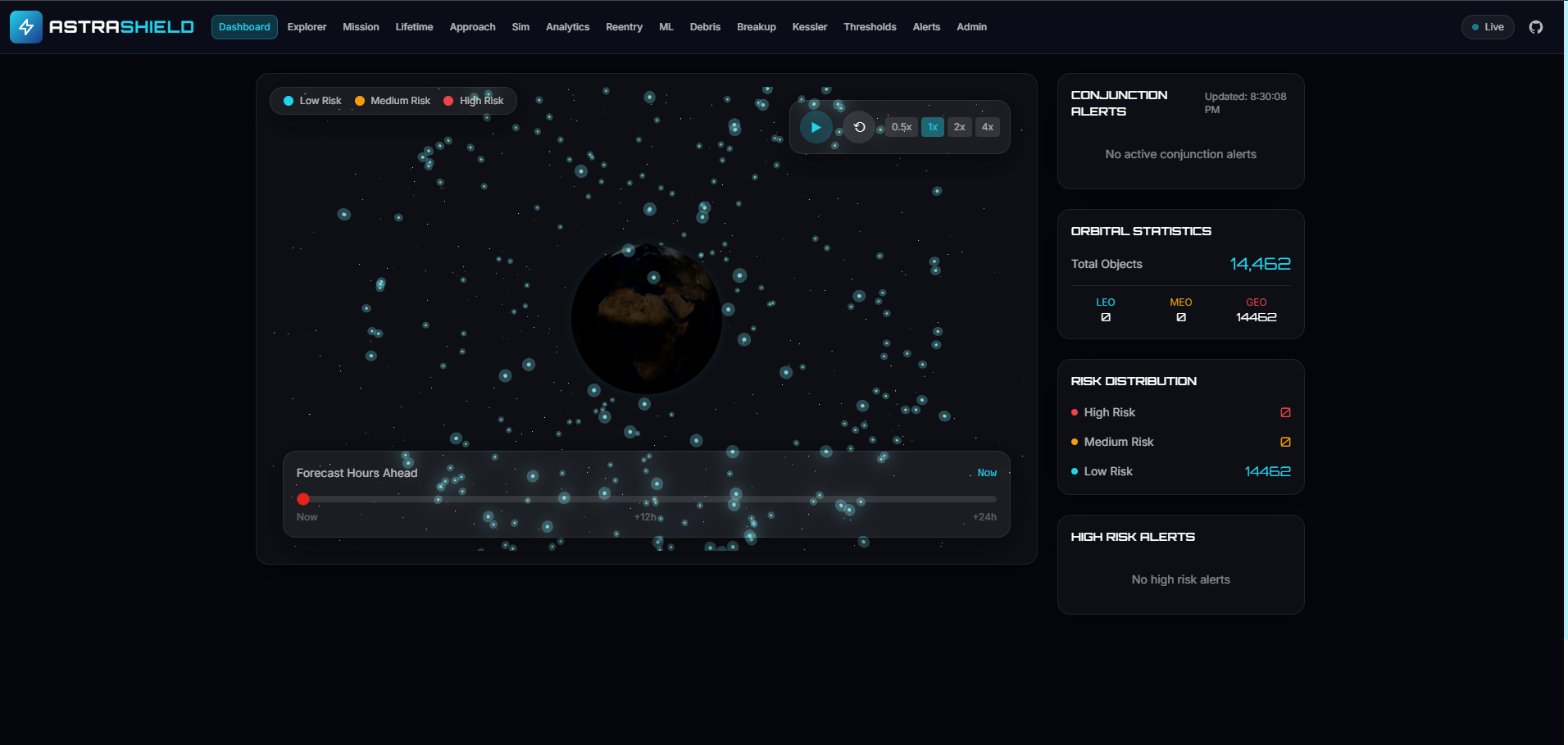
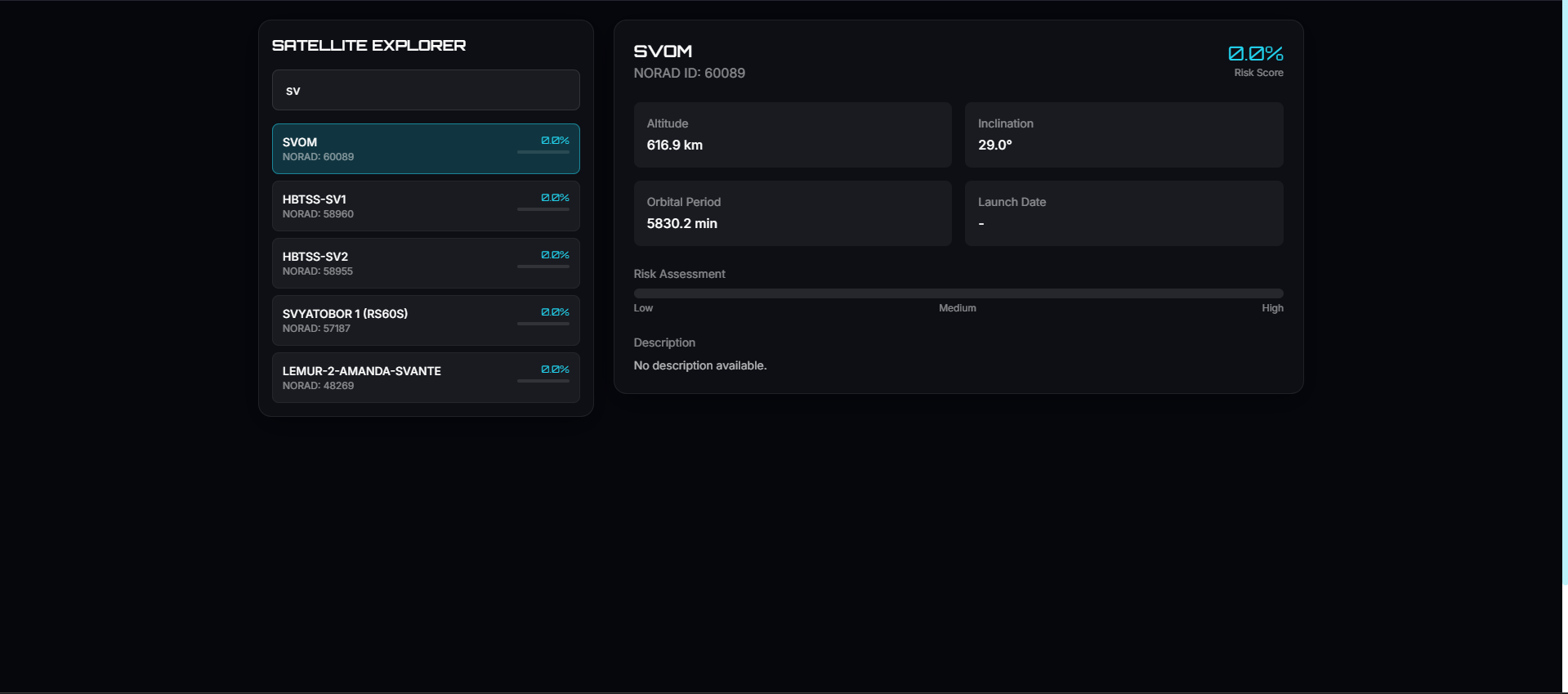
AstraShield is an AI-powered platform for monitoring, analyzing, and predicting orbital risks in real time. It enables users to:
- Visualize satellites and debris in an interactive 3D environment
- Detect conjunction events and calculate collision probabilities
- Receive real-time alerts for high-risk scenarios
- Run simulations for breakup events, reentry, and mission planning
- Analyze orbital congestion and debris distribution
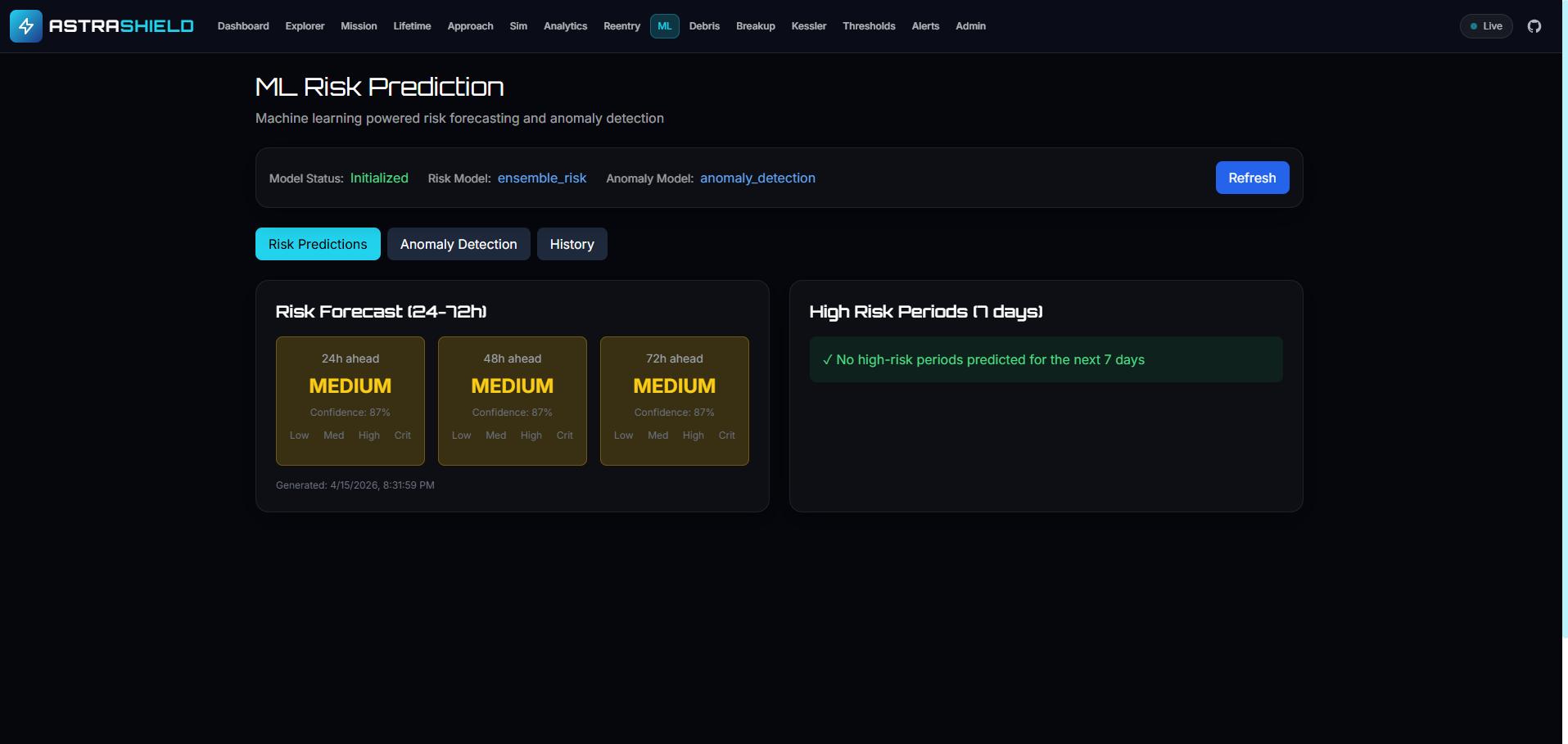
- Use machine learning models to predict future risks The platform turns complex orbital mechanics into an intuitive, decision-support system for safer space operations.
How I built it
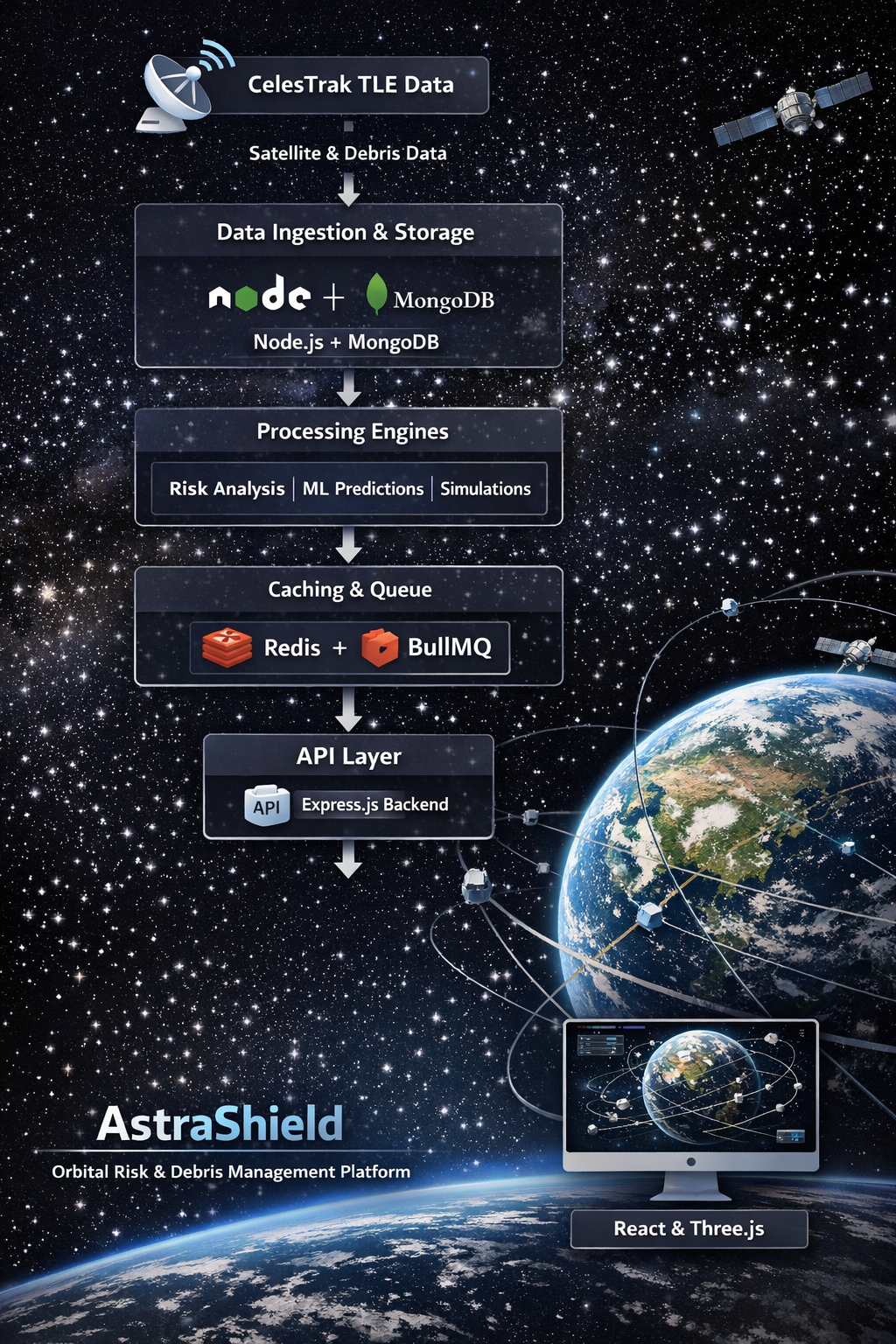
AstraShield is built as a full-stack, scalable system:
- Frontend: React + Three.js (React Three Fiber) for real-time 3D visualization
- Backend: Node.js + Express for API and processing logic
- Database: MongoDB for storing satellite, risk, and simulation data
- Caching & Queues: Redis + BullMQ for performance and real-time processing
- Machine Learning: TensorFlow.js for predictive collision risk modeling
- Data Source: CelesTrak TLE data for live satellite tracking The system ingests real-world orbital data, processes it through multiple engines (risk, simulation, ML), and delivers results through an interactive interface.
Challenges I ran into
- Handling large-scale orbital datasets while maintaining performance
- Designing accurate collision probability calculations using limited public data
- Integrating real-time updates without overloading the system
- Building smooth 3D visualizations for thousands of objects
- Combining physics-based models with machine learning in a coherent pipeline
- Ensuring the system remains scalable and modular
Accomplishments that I am proud of
- Built a production-ready full-stack platform within a short timeframe
- Successfully integrated real satellite data into a live system
- Developed multiple simulation engines (breakup, reentry, mission planning)
- Created an intuitive 3D interface for complex orbital data
- Combined real-time processing, analytics, and machine learning in one platform
What I learned
- How to work with real-time scientific datasets and orbital data
- Applying physics concepts (orbital mechanics, collision dynamics) in software
- Integrating machine learning into a real-time system
- Designing scalable architectures with queues and caching
- Balancing technical complexity with usability and visualization
What's next for AstraShield
- Integrate with real satellite operator and space agency systems
- Improve machine learning models with larger and more diverse datasets
- Add automated collision avoidance recommendations
- Expand real-time global space traffic monitoring capabilities
- Deploy AstraShield as an enterprise-grade platform for aerospace organizations
Built With
- docker
- express.js
- javascript
- mongodb
- nginx
- node.js
- react
- tailwindcss
- tenserflow.js
- three.js

Log in or sign up for Devpost to join the conversation.