-
-
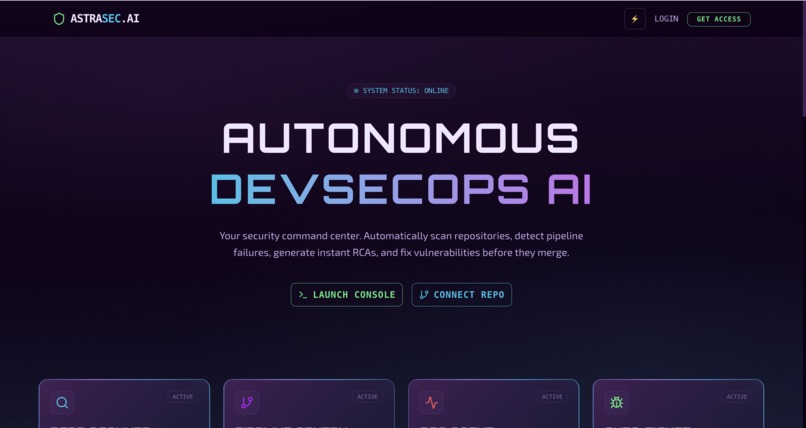
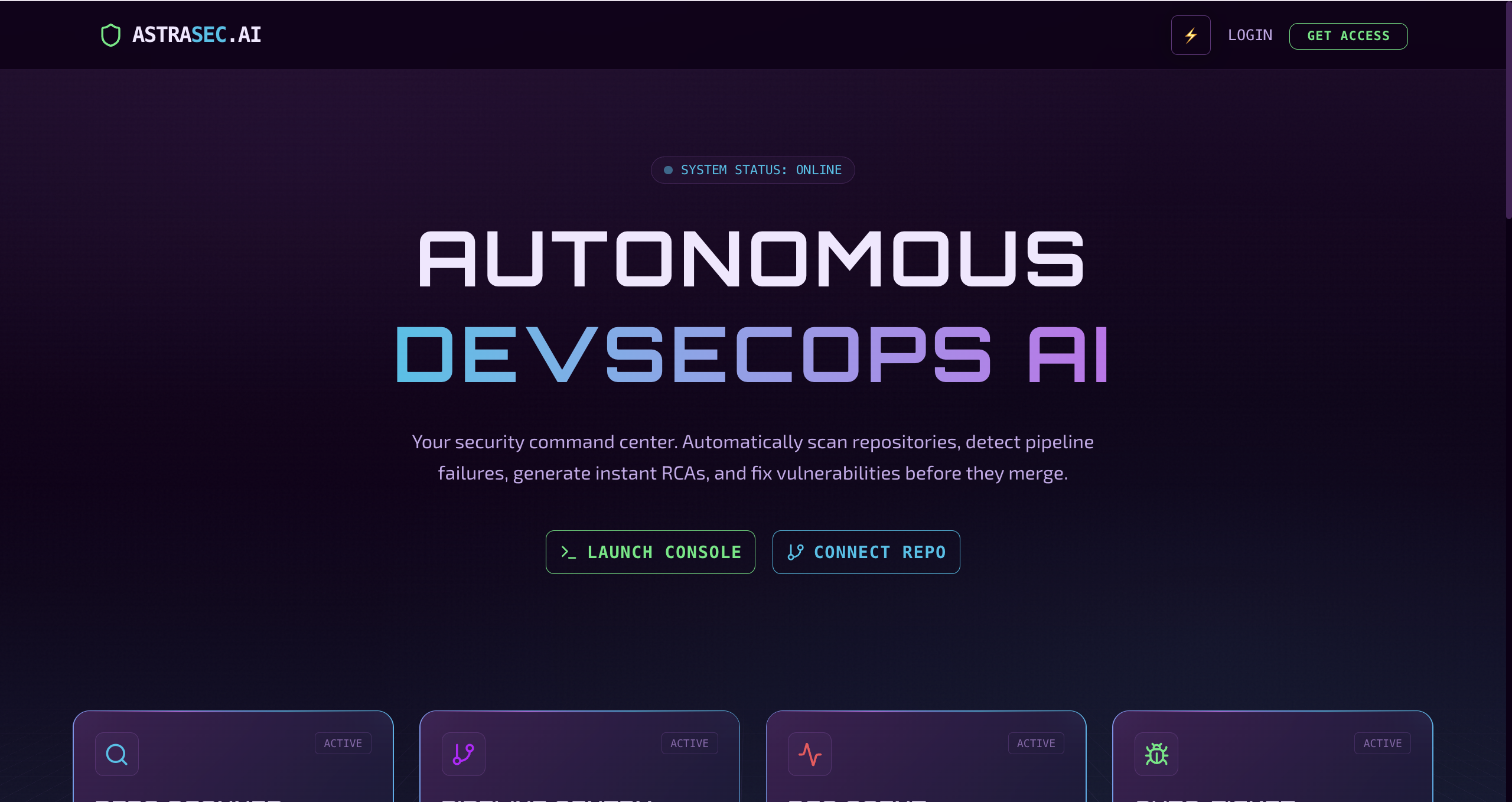
Landing Page - Cyberpunk theme
-
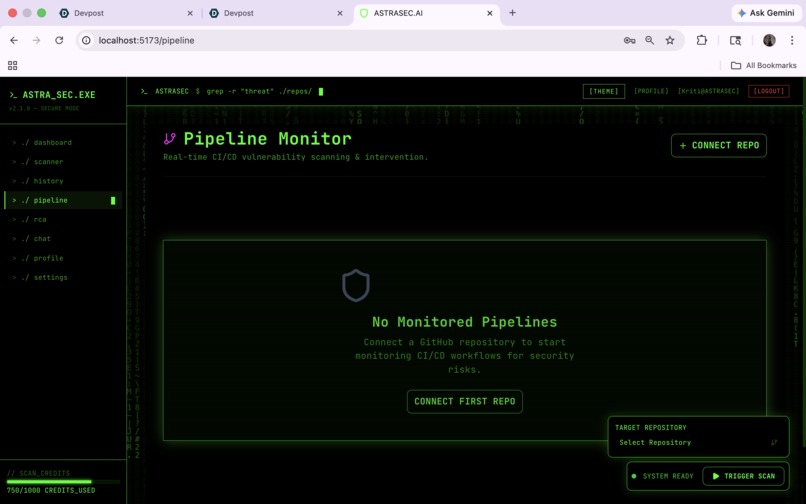
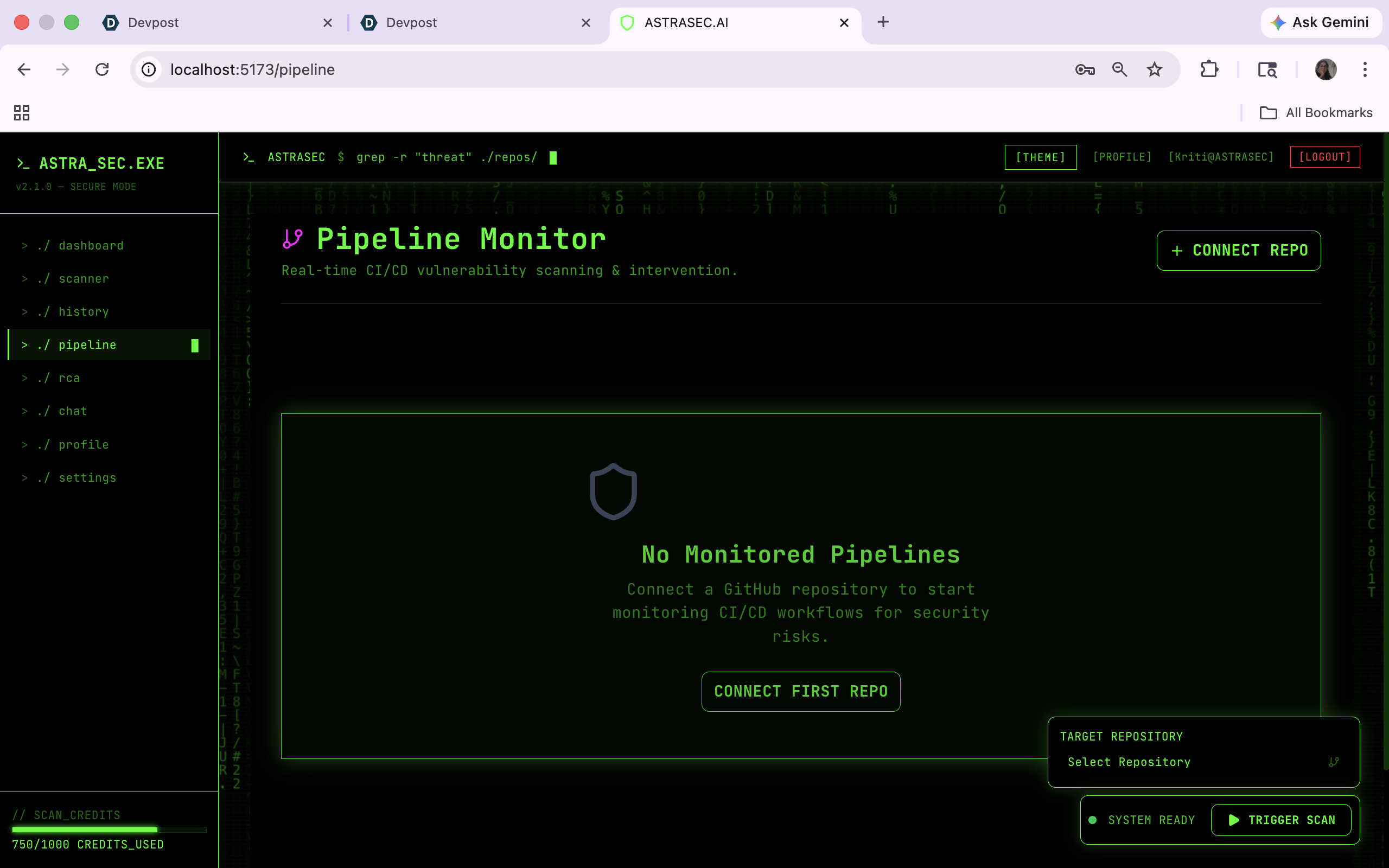
Pipeline Moniter - terminal theme
-
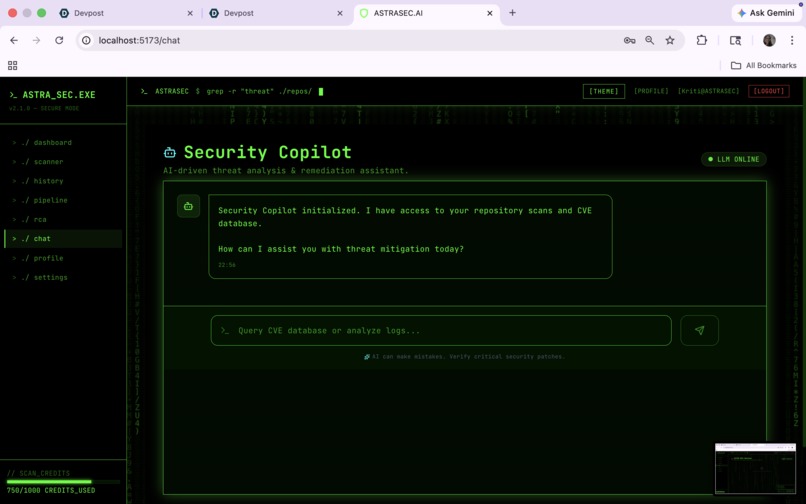
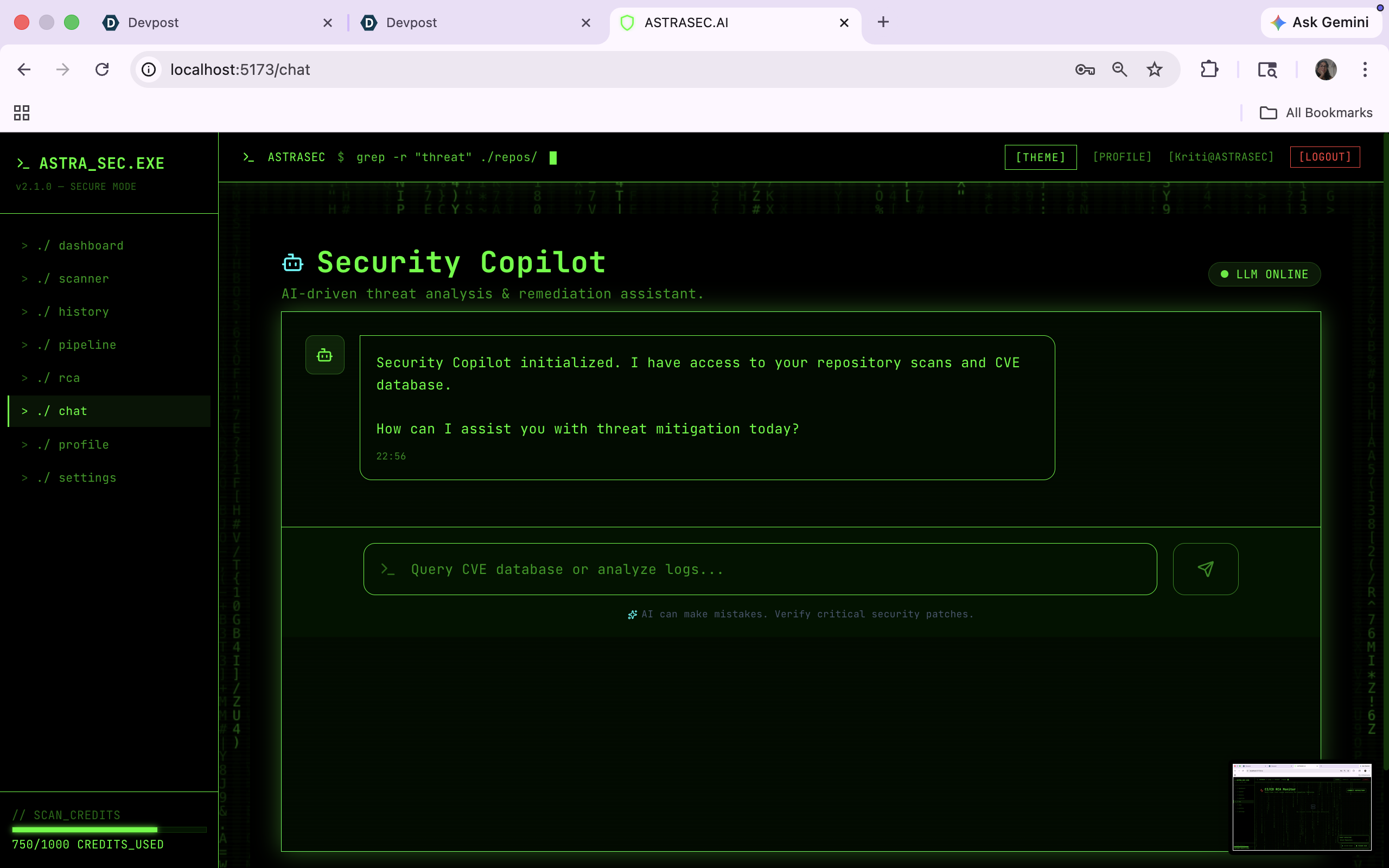
Security chat - Terminal theme
-
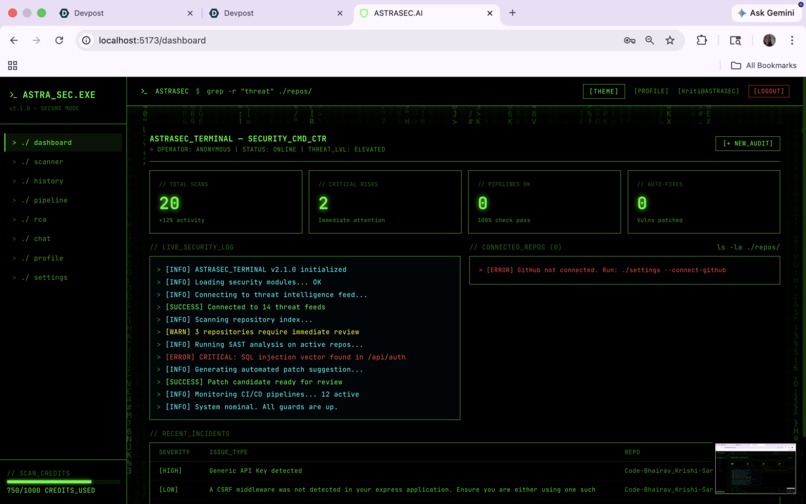
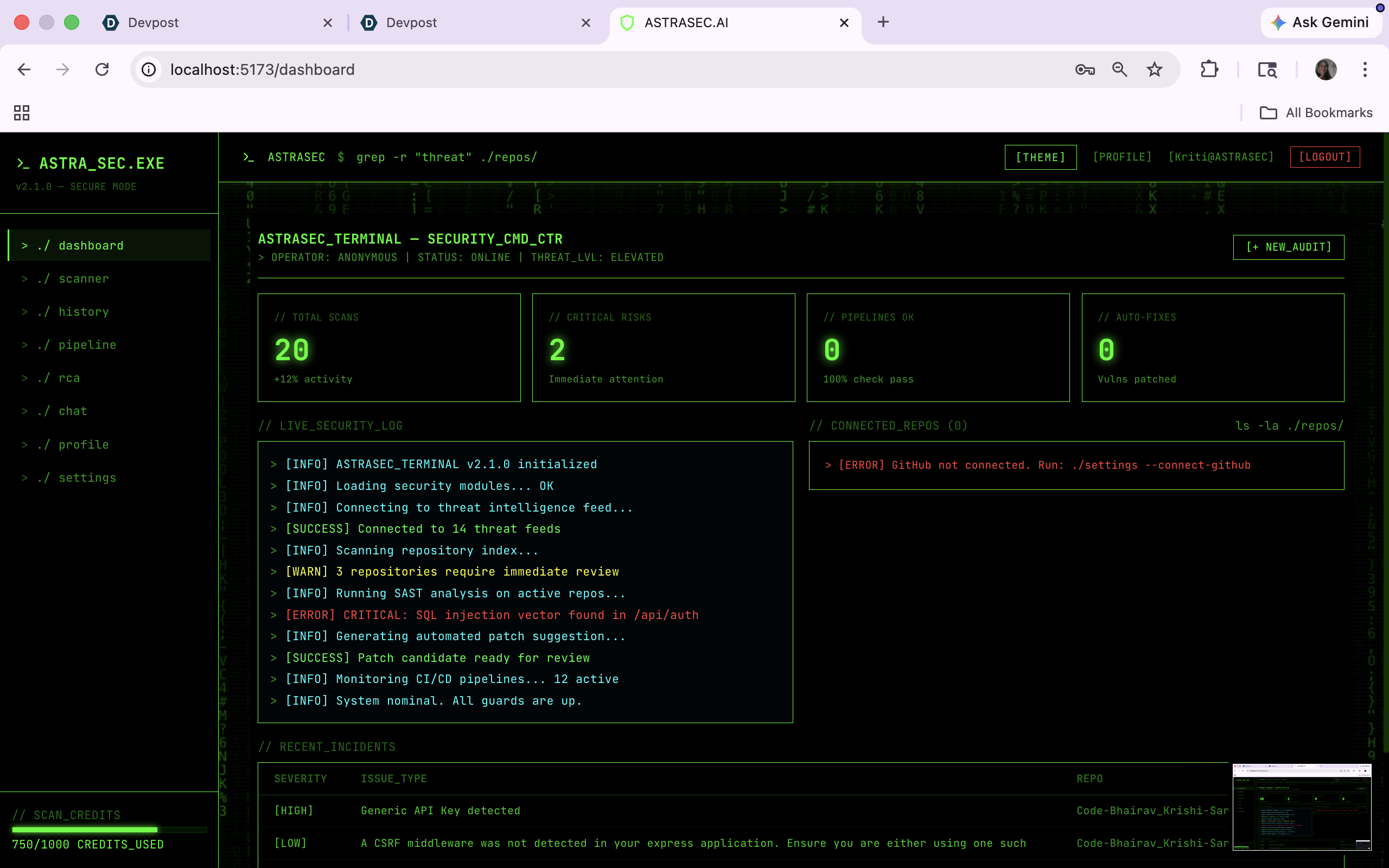
Dasboard - terminal theme
-
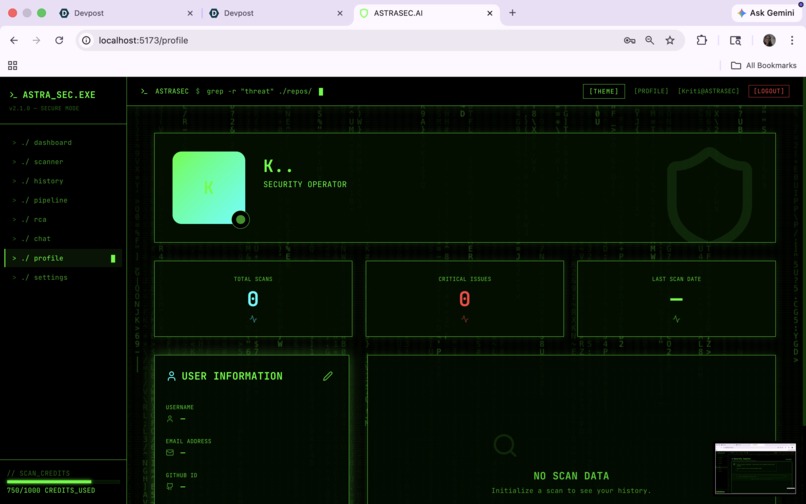
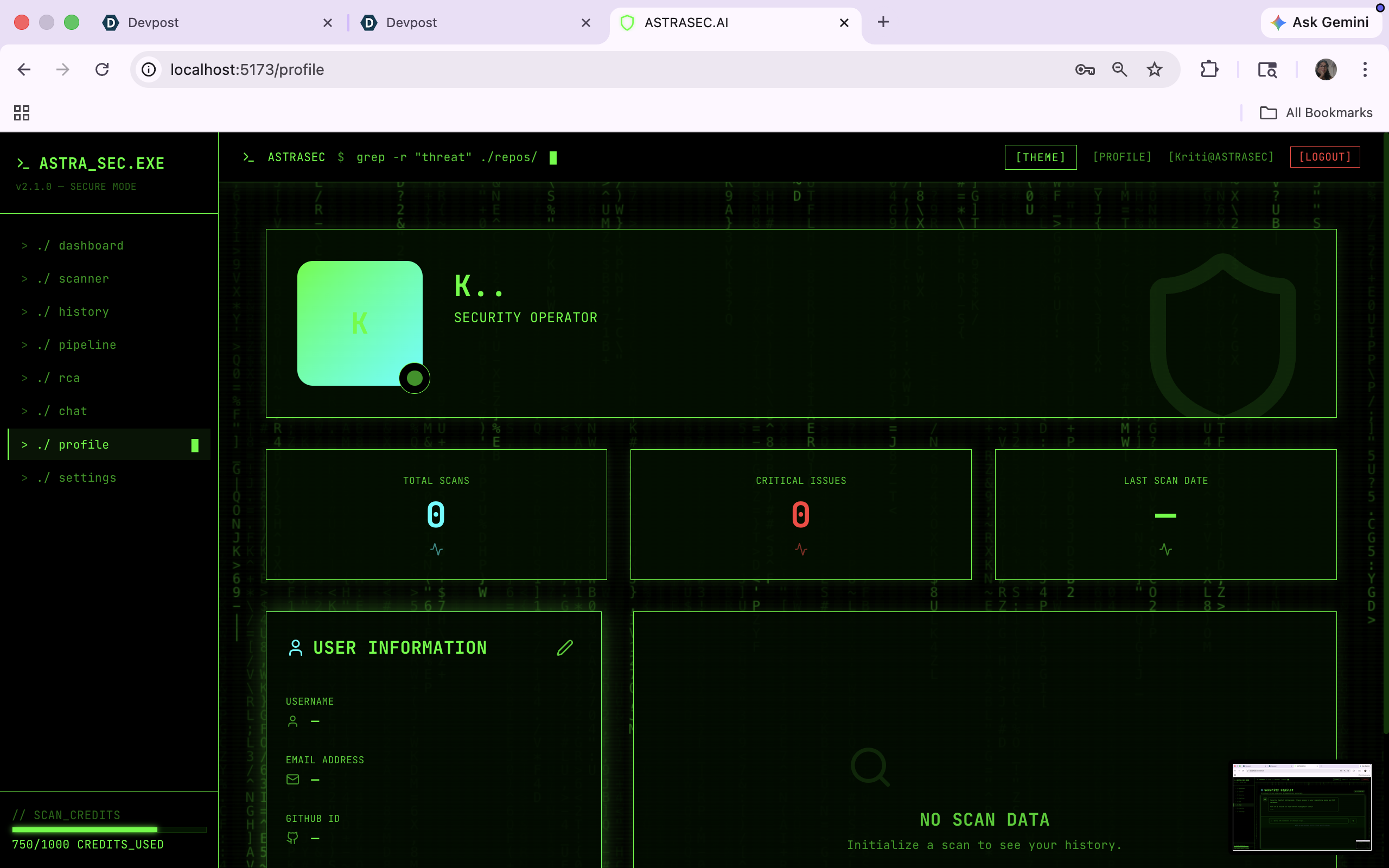
profile page- terminal theme
-
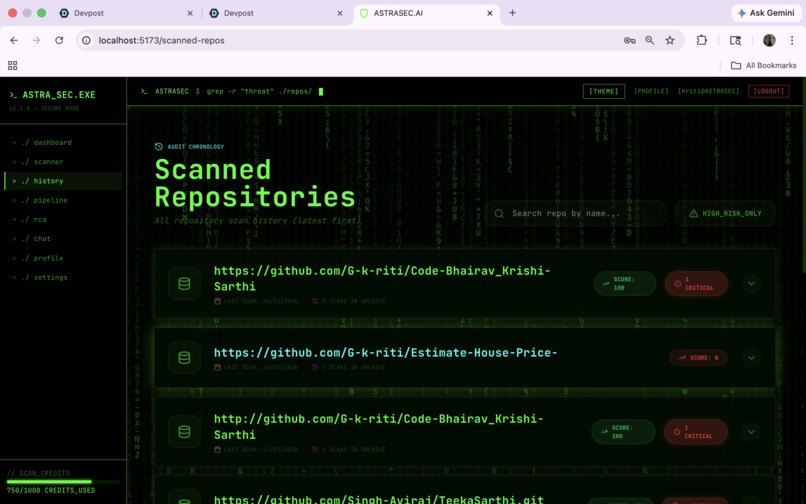
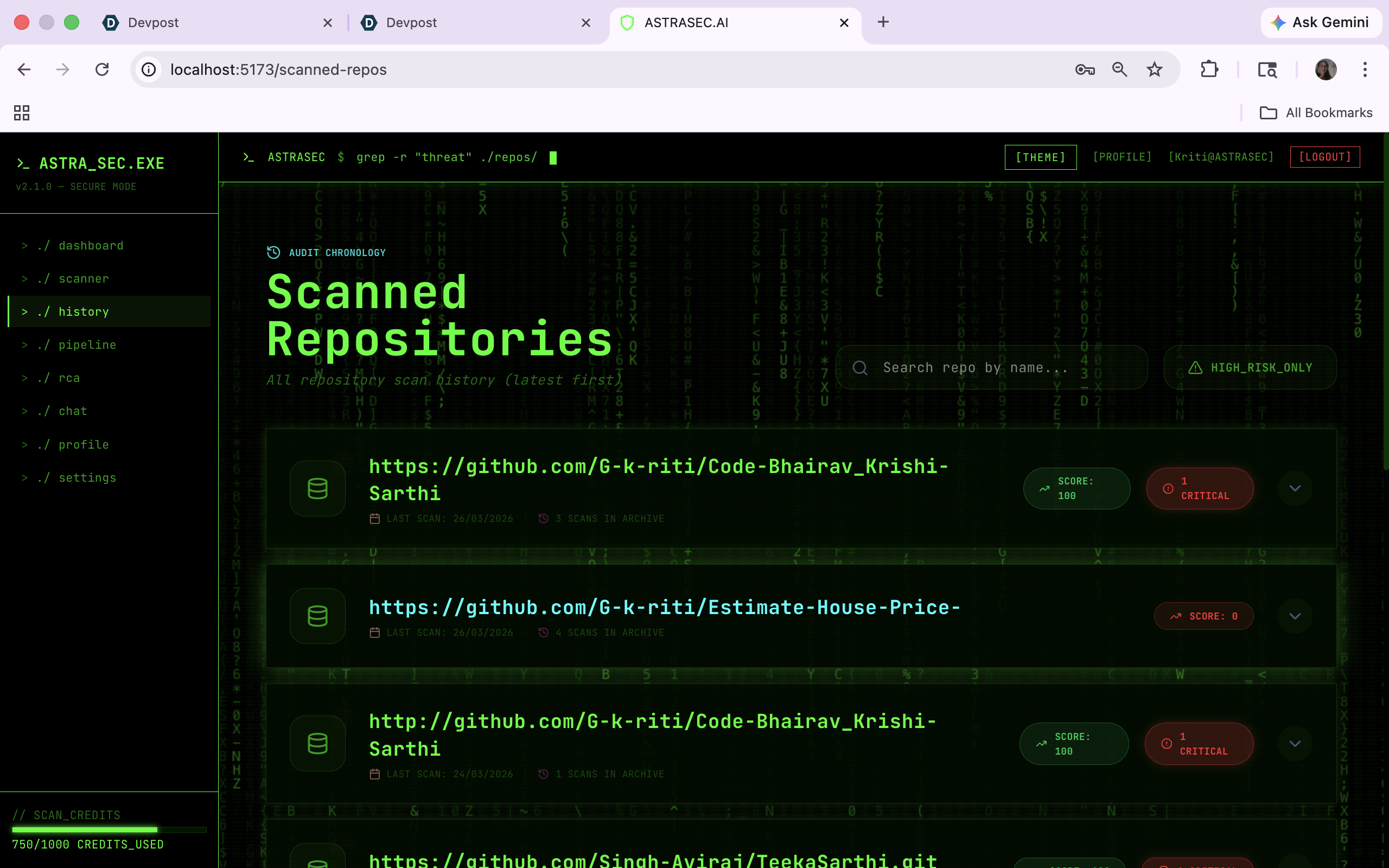
Scanned Repos- terminal theme
-
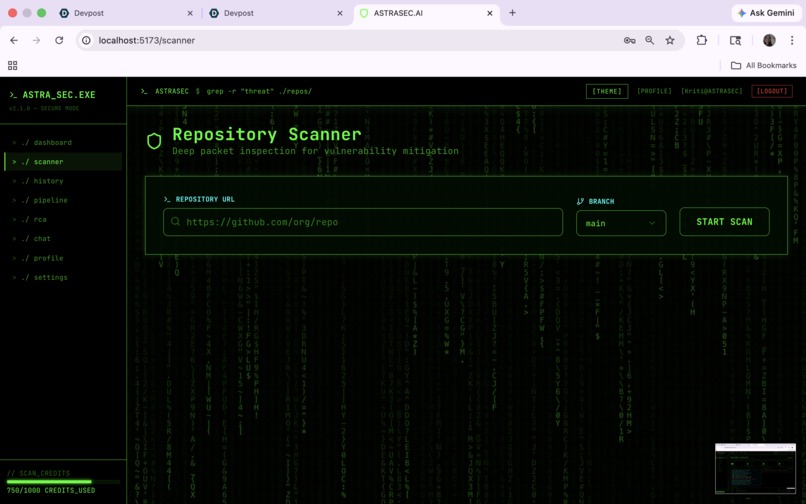
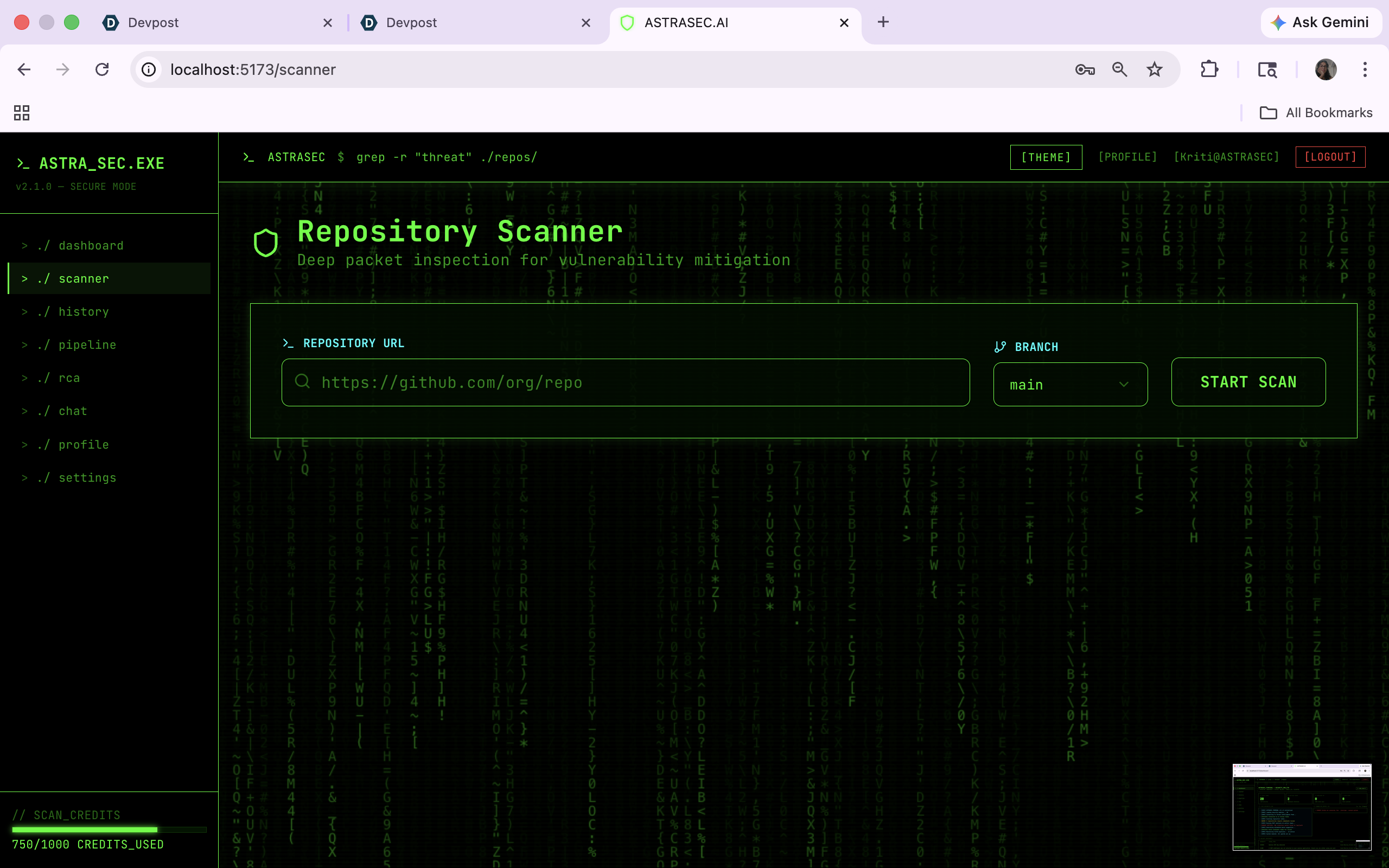
Repo scanner- terminal theme
-
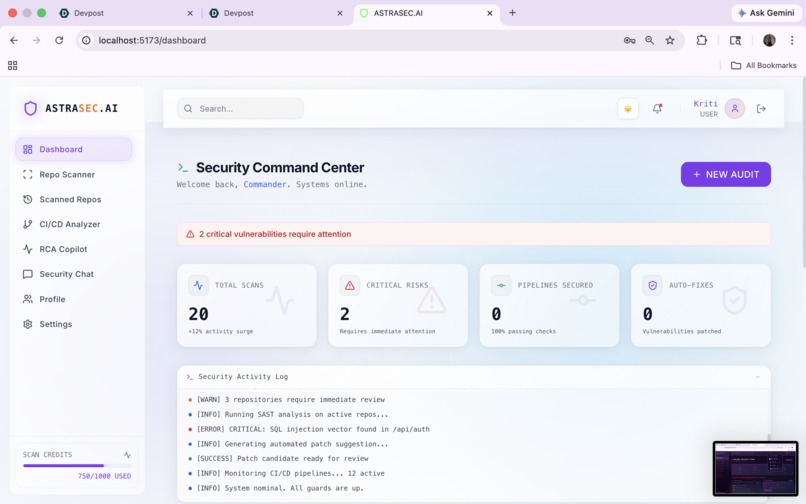
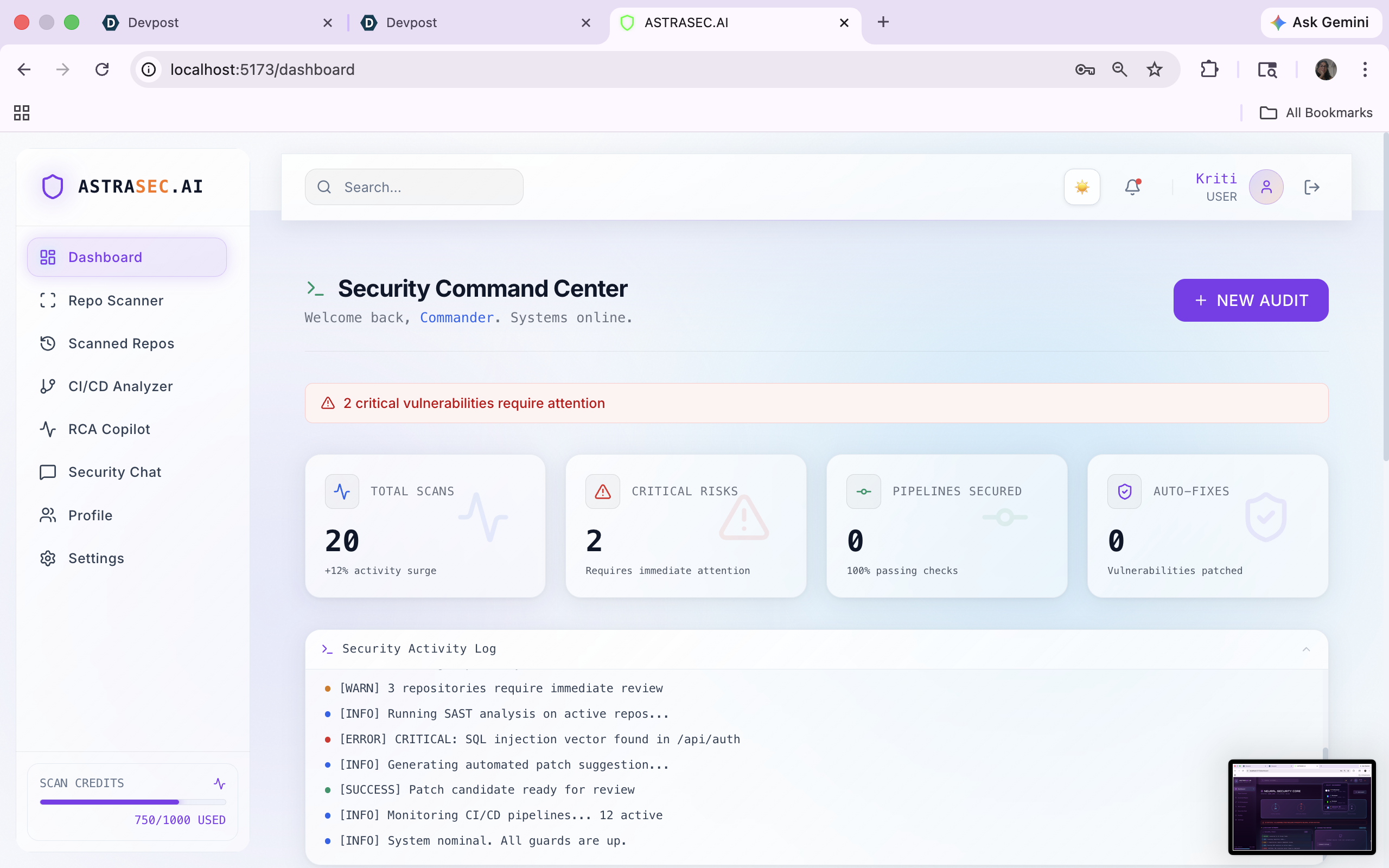
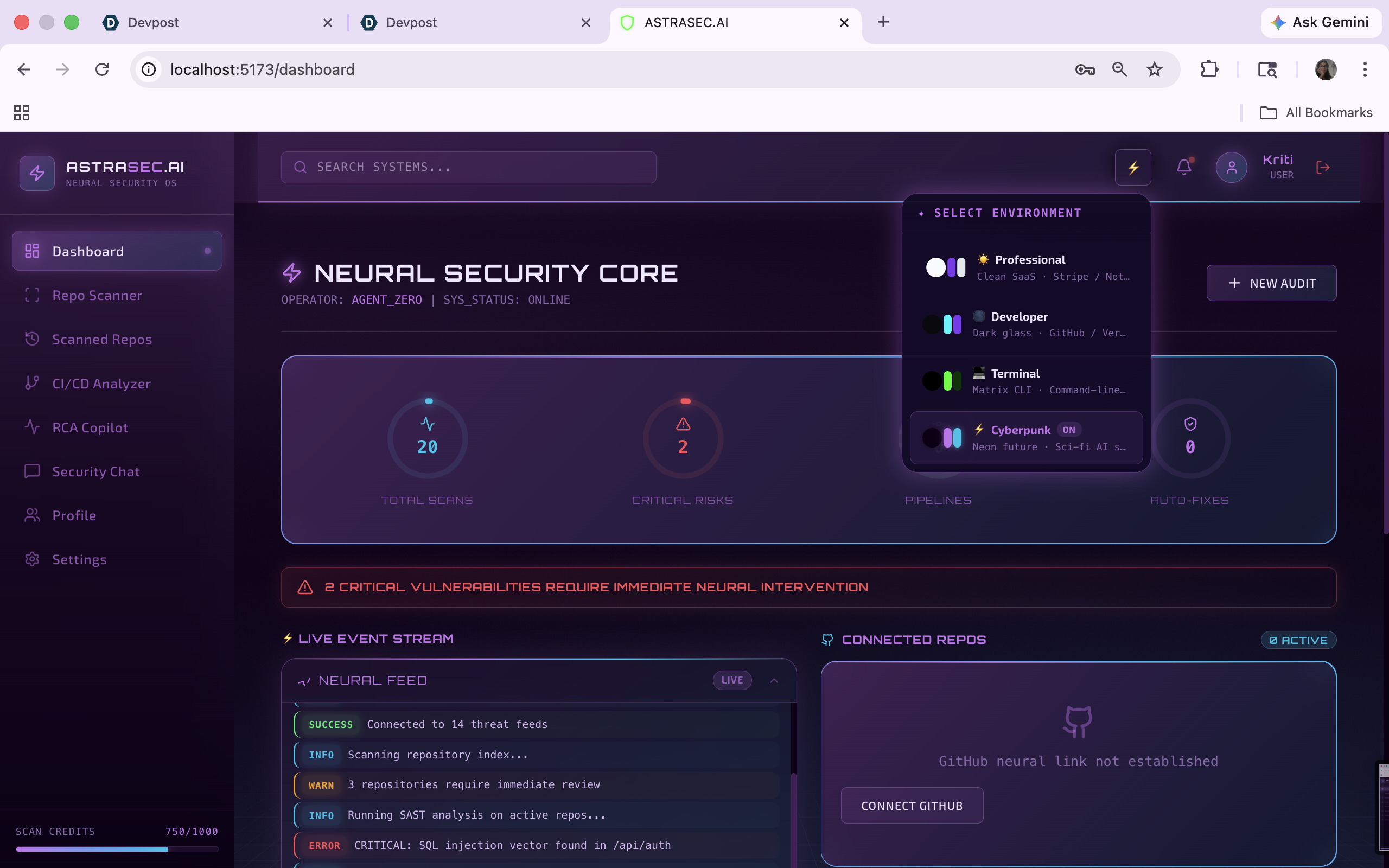
Dashboard- Professional
-
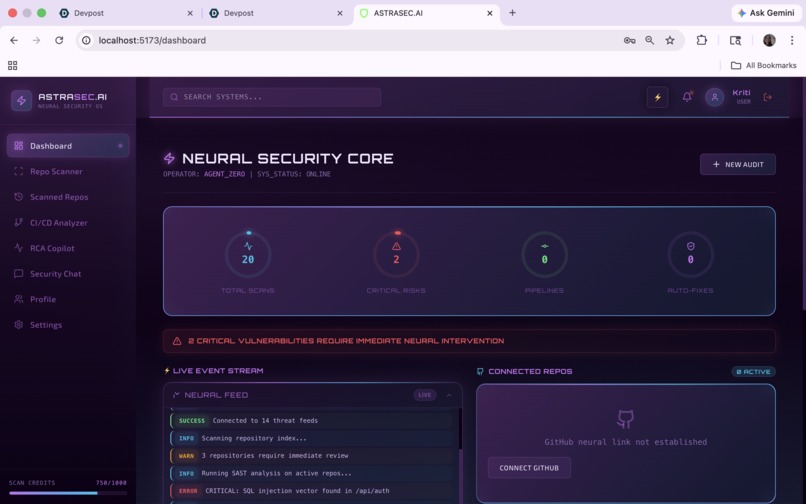
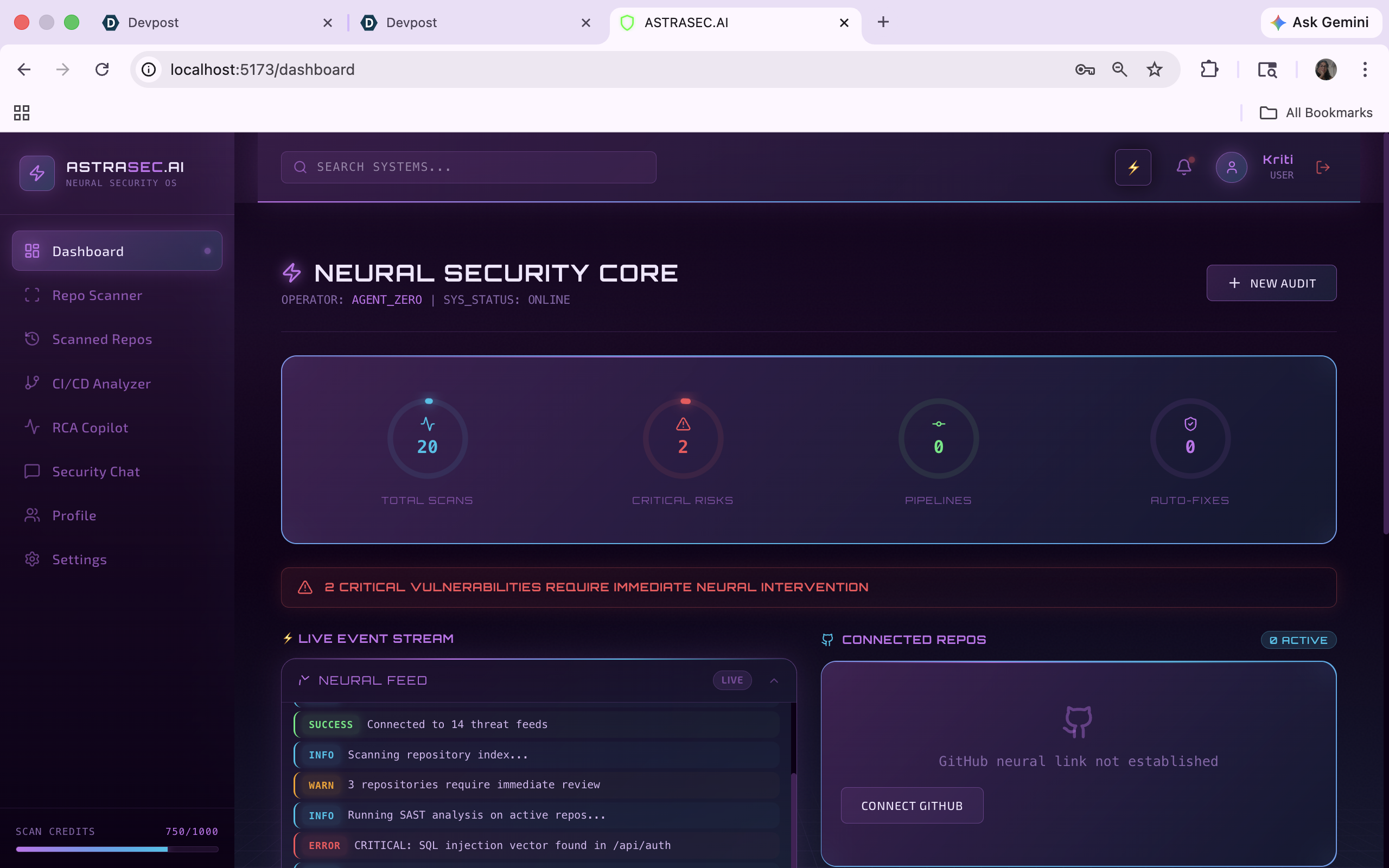
Dashboard - Cyberpunk theme
-
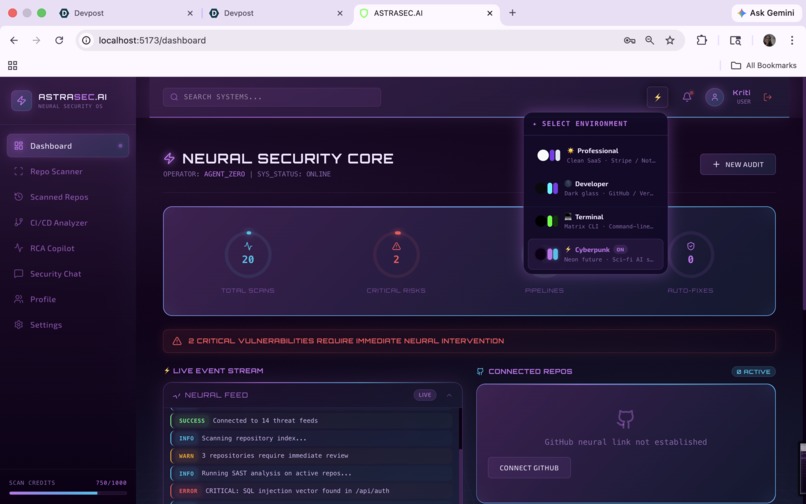
Theme Switcher
-
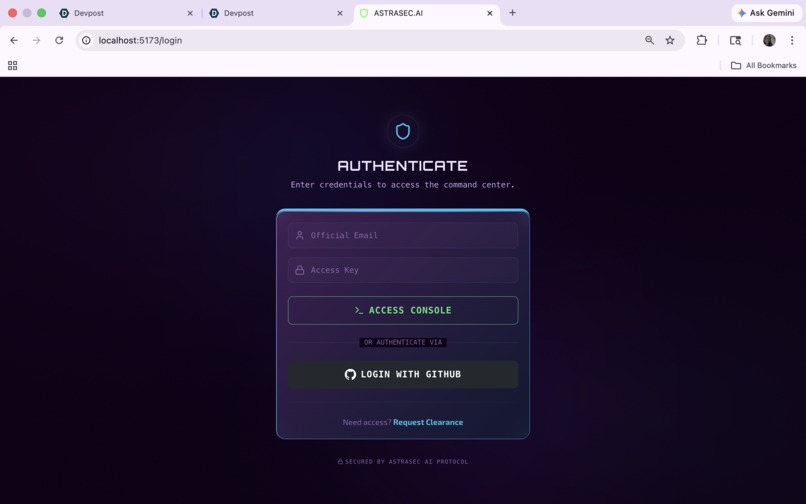
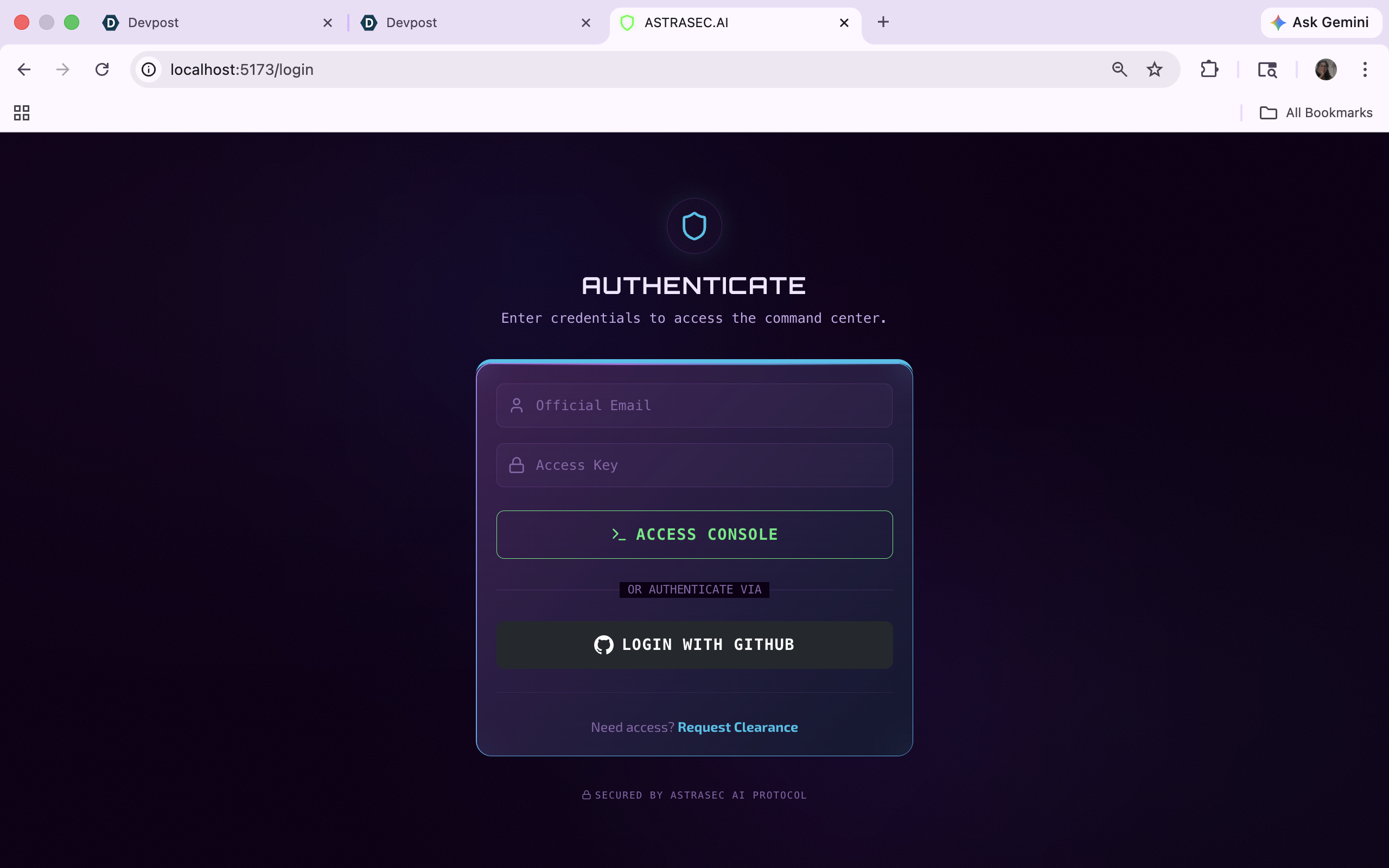
Log in page - Cyberpunk Theme
Inspiration
While building projects, we noticed a recurring problem: developers are overwhelmed by too many security alerts, most of which are either low priority or hard to understand.
Instead of helping, security tools often slow developers down. We asked a simple question:
What if security tools could think like a developer and tell us what actually matters? That idea led to AstraSec AI.
What it does
AstraSec AI is an AI-powered security co-pilot designed to integrate seamlessly into the developer workflow.
Astrasec AI integrates directly into GitHub and CI/CD workflows to automate security processes during development.
- Automatically scans repositories on push and pull requests
- Detects and classifies vulnerabilities
- Uses AI to summarize findings
- Analyzes CI failures to generate root cause insights
- Automatically creates actionable security tickets
- Prevents duplicate ticket creation Tracks vulnerability status (OPEN, FIXED, IGNORED)
The system runs asynchronously and does not block developer workflows.
How we built it
System Architecture
Core Components
LLM Provider: Databricks (Meta Llama 3.1 8B)
- Primary AI model powering all agents
- Primary AI model powering all agents
Local LLM Fallback: Ollama (Llama 3)
- Ensures offline capability when cloud APIs are unavailable
- Ensures offline capability when cloud APIs are unavailable
AI Copilot: OpenAI-compatible API + MCP Tools
- Chat-based security assistant
- Chat-based security assistant
Multi-Agent Architecture: 4 Specialized AI Agents
- Repo Scan Agent
- Pipeline CI/CD Agent
- RCA Agent
- Auto-Ticket Agent
- Each agent operates with its own role and API key
- Repo Scan Agent
Protocol: MCP (Model Context Protocol)
- Standardized interface between LLM and backend services
- Enables seamless tool-calling and integration
- Standardized interface between LLM and backend services
Security Tools Integrated
Semgrep
- Performs SAST (Static Application Security Testing)
- Scans repositories for OWASP Top 10 vulnerabilities
- Performs SAST (Static Application Security Testing)
Trivy
- Misconfiguration scanner
- Audits CI/CD pipeline YAML files for security issues
- Misconfiguration scanner
Custom Heuristic Rules
- Detects hardcoded secrets
- Identifies insecure patterns like
curl | bash - Flags missing SAST stages in pipelines
- Detects hardcoded secrets
Challenges we ran into
LLM Fine-Tuning Limitations
We initially planned to fine-tune Phi-3 models for improved vulnerability understanding and domain-specific reasoning.Accurate Root Cause Analysis (RCA)
Interpreting logs and identifying meaningful root causes demanded contextual understanding beyond simple parsing.High Volume of Security Alerts
Managing and filtering large volumes of vulnerabilities from multiple tools was challenging.Model Constraints & Performance
Running AI models efficiently within limited resources was a key challenge.Multi-Tool Integration
Integrating tools like Semgrep and Trivy into a unified pipeline was complex due to differing output formats and workflows.
Accomplishments that we're proud of
Robust Root Cause Analysis (RCA)
Successfully implemented AI-driven RCA that analyzes logs and identifies the underlying cause of failures, providing clear and actionable explanations to developers.Dependency & Misconfiguration Scanning (Trivy)
Integrated Trivy to effectively detect vulnerabilities in dependencies and identify misconfigurations within CI/CD pipelines, improving overall security coverage.AI-Powered Vulnerability Prioritization
Reduced alert fatigue by intelligently ranking vulnerabilities based on severity, impact, and exploitability.Seamless CI/CD Integration
Integrated the system directly into the development pipeline, enabling real-time security feedback during code pushes and pull requests.
What we learned
Multi-Agent Systems Improve Modularity
Breaking down responsibilities across specialized AI agents made the system more scalable, maintainable, and easier to extend.Bridging the Gap Between Security and Developers
Translating complex security findings into simple, actionable insights is key to making security tools actually usable.
What's next for AstraSec AI
Version Control System (VCS) Integrations
Extend support beyond GitHub to platforms like GitLab and other VCS providers for broader adoption and seamless workflow integration.Expanded Ticketing Integrations
Currently integrated with Jira, with plans to support additional platforms like Asana for more flexible issue tracking and team collaboration.
Built With
- databricks
- flask
- llm
- postgresql
- python
- react
- semgrep
- trivy

Log in or sign up for Devpost to join the conversation.