Inspiration Astralis was built around a simple idea: learning about space should feel like exploring it.
Many space applications are either too basic or too technical. We wanted to create an experience where anyone can explore the Solar System, interact with celestial objects, and learn naturally through discovery.
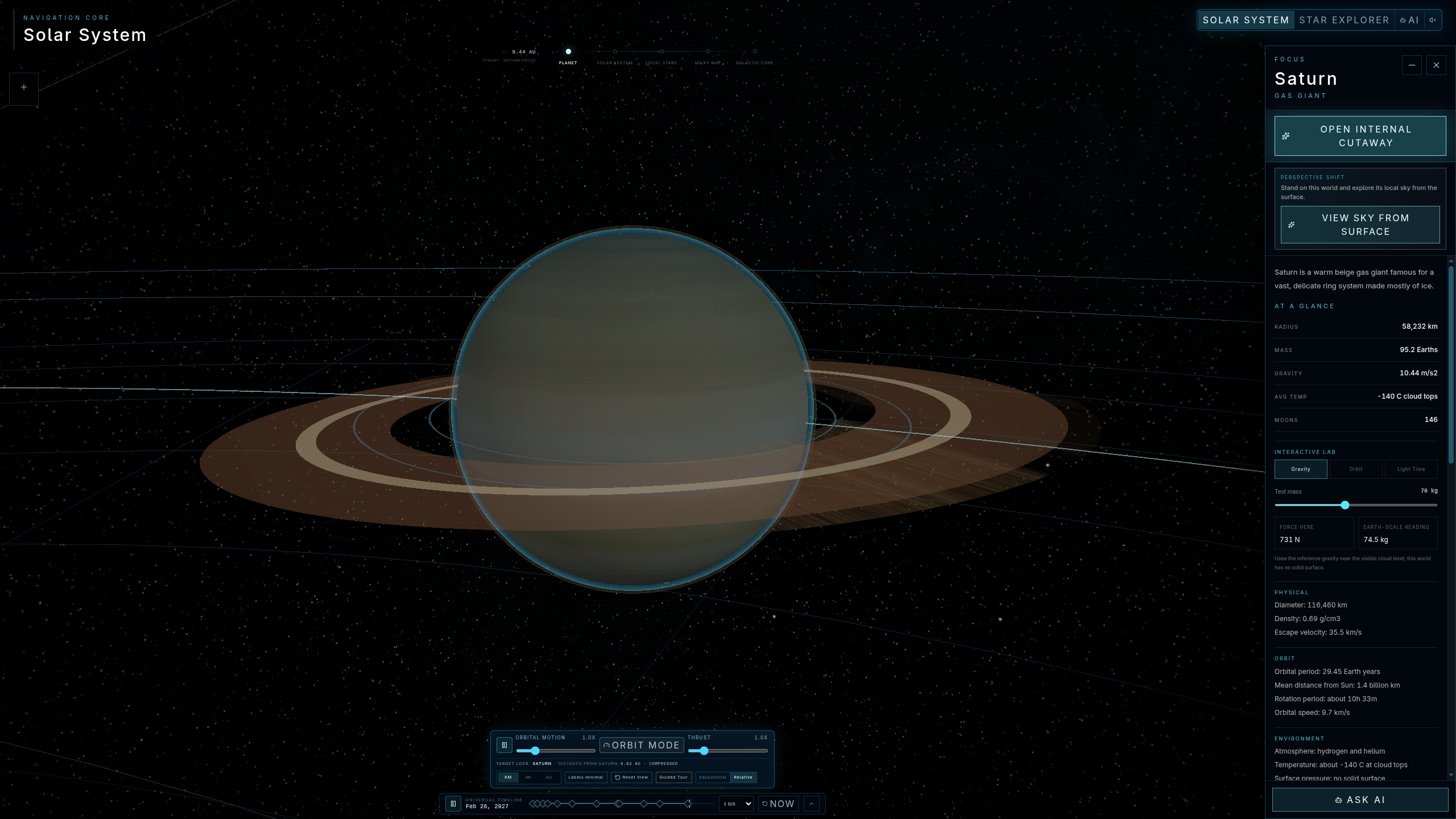
What it does Astralis is an interactive 3D space learning platform that lets users explore the Solar System and beyond.
Users can:
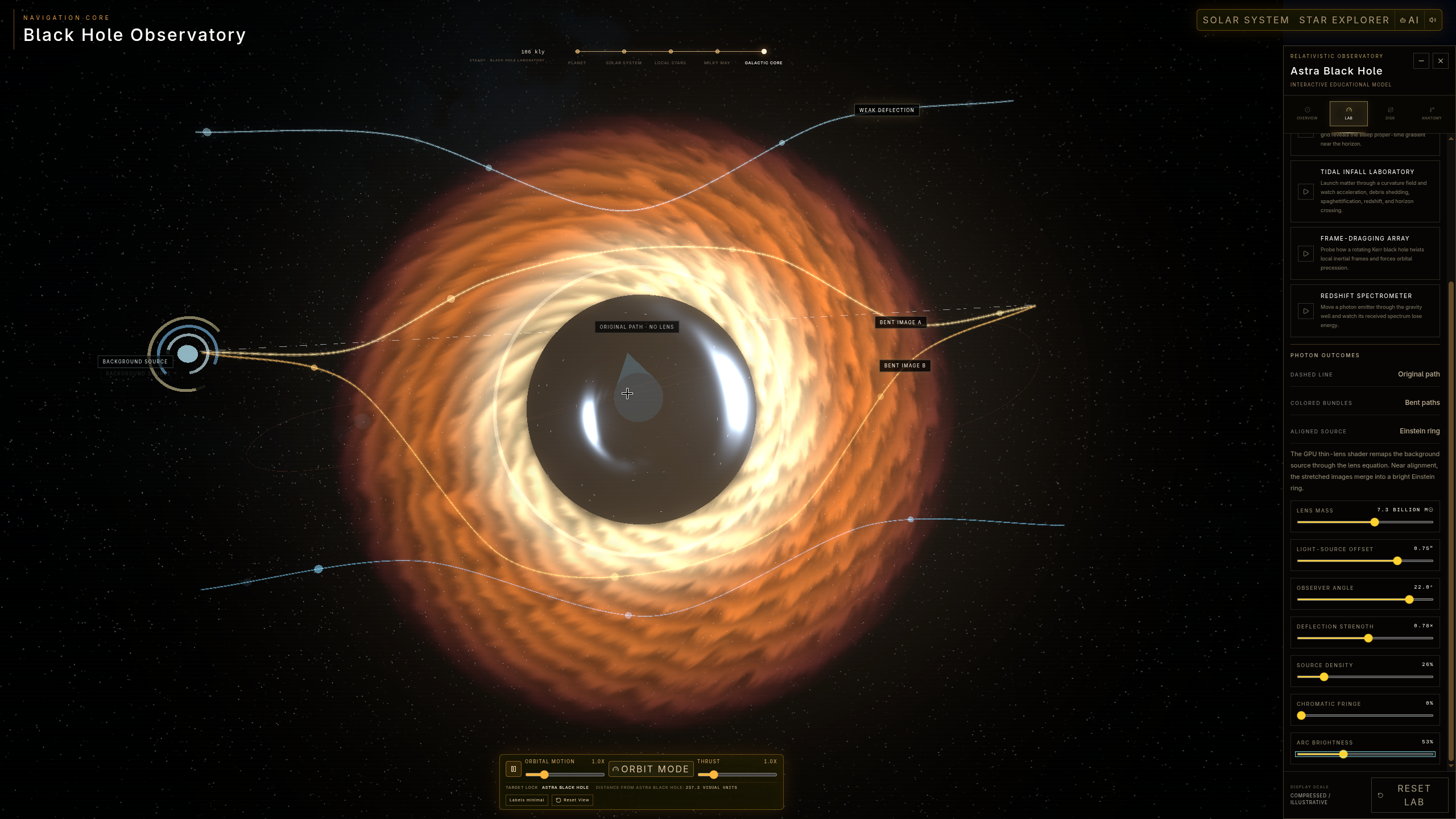
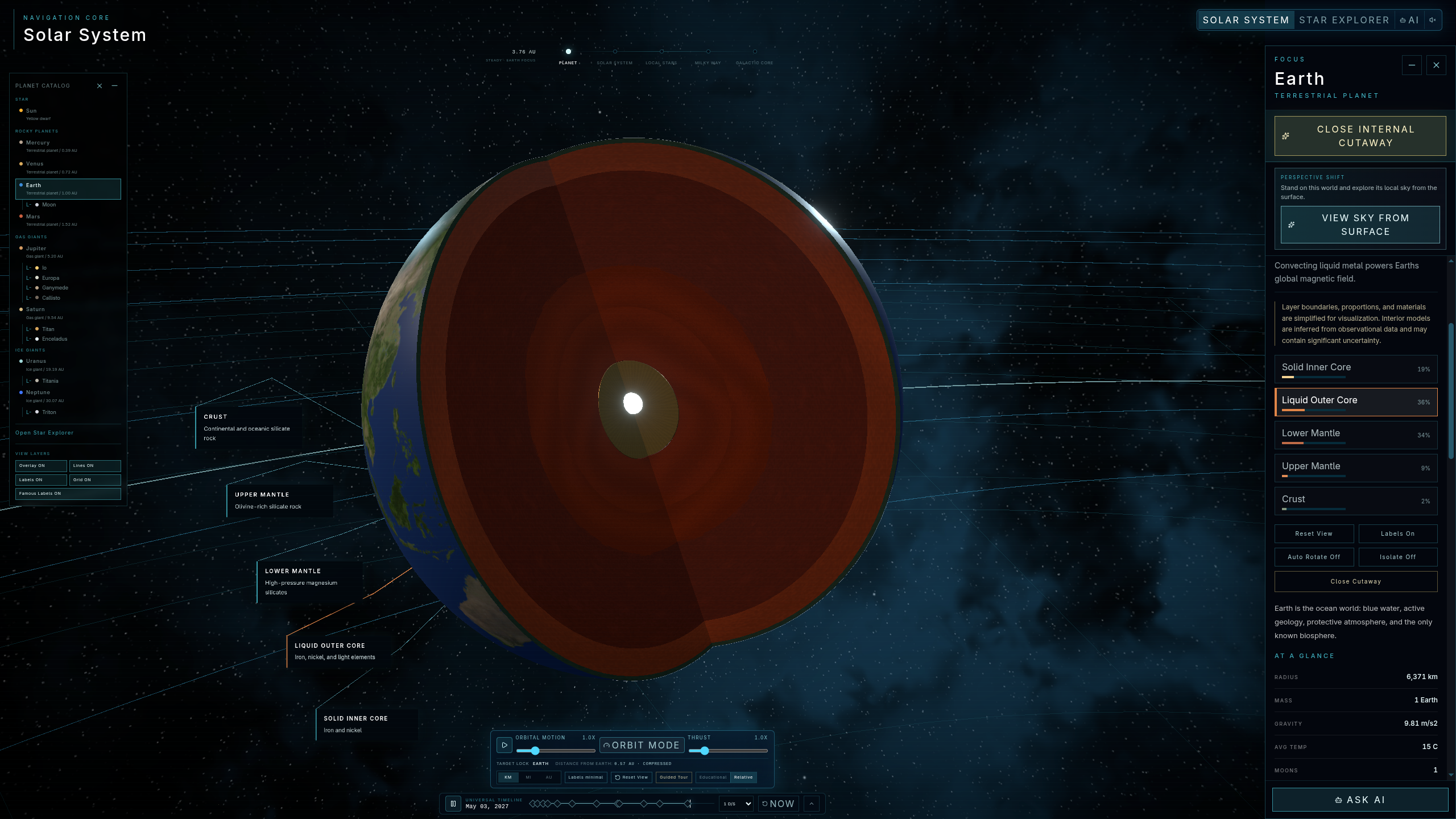
Explore planets and their orbits in 3D Control time and watch celestial motion Explore real and historical space missions Inspect planetary interiors through interactive cutaways Explore stars and constellations in Sky Mode Learn about black holes through a dedicated interactive mode Ask an AI guide questions about what they are seeing The goal is to turn astronomy from something you simply read about into something you experience and explore.
How we built it Astralis was built with React, TypeScript, Three.js, React Three Fiber, Zustand, and Tailwind CSS.
A major part of the development went into building the 3D environments, camera systems, orbital simulations, interactive objects, planetary data, timelines, and transitions between different exploration modes.
Challenges we ran into The biggest challenge was scale.
Real distances in space are far too large to represent directly in an interactive educational environment. We had to design a compressed representation that remained visually intuitive while preserving the relationships between celestial objects.
We also had to solve challenges around camera movement, rendering performance, object labels, animations, and smoothly transitioning between completely different modes of exploration.
Accomplishments we're proud of We're most proud that Astralis feels like one cohesive experience rather than a collection of separate demos.
A user can move from exploring planets and missions to studying stars, black holes, or planetary interiors while maintaining the same sense of exploration and discovery.
We also focused heavily on making complex astronomical concepts approachable through visual interaction rather than relying entirely on text.
What we learned We learned that effective educational technology requires more than accurate information.
The way information is presented matters just as much. Strong visualizations, intuitive interactions, and clear explanations can make complex concepts much easier to understand.
Building Astralis also taught us a great deal about 3D rendering, camera systems, shaders, performance optimization, scene composition, and interactive visualization.
What's next We want to expand Astralis with more missions, moons, stars, astronomical events, guided lessons, and interactive challenges.
Our long-term goal is to turn Astralis into a full interactive astronomy learning platform, where students can learn by exploring, experimenting, and asking questions rather than simply reading about the universe.

Log in or sign up for Devpost to join the conversation.