-
-
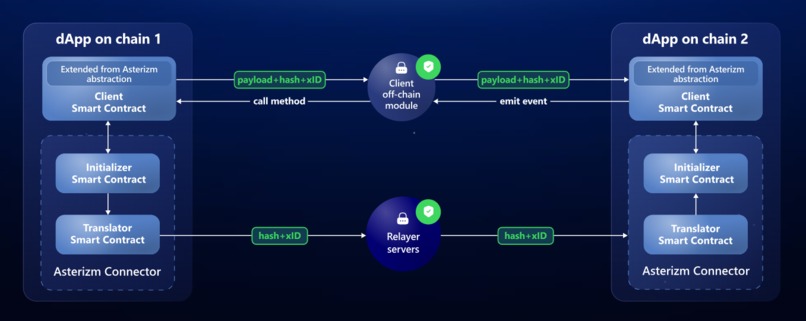
Asterizm infrastructure
-
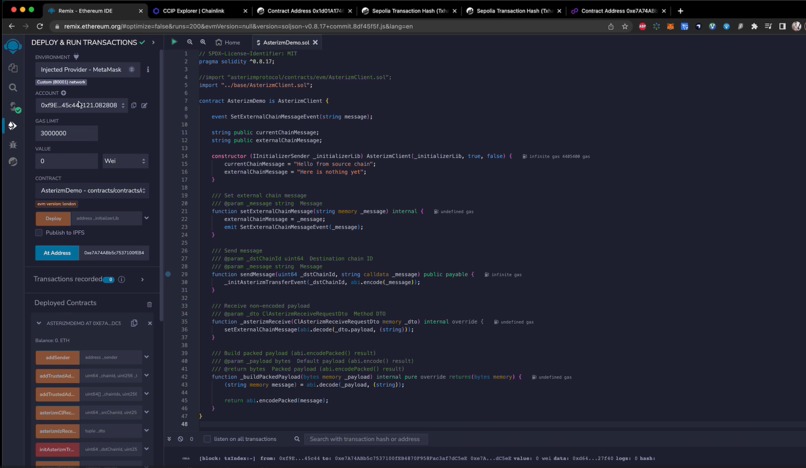
Run test cross-chain transaction using CCIP as a relay
-
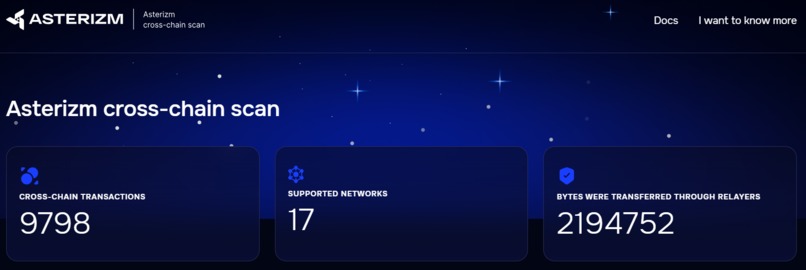
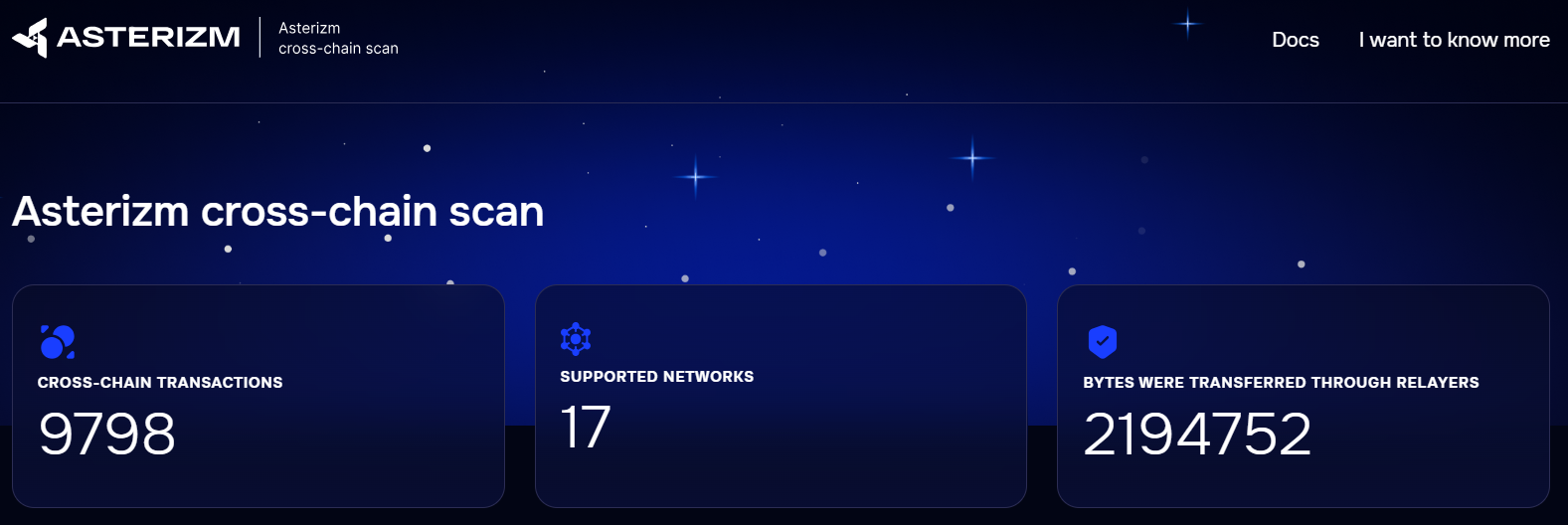
Asterizm runs on 17 EVM and TVM networks, seeking to support Cosmos and other chains soon!
Inspiration
We believe that the next leap in the development of the blockchain industry will be solutions aimed at the compatibility and interoperability of various blockchain ecosystems. This will enable the creation of products for the entire crypto audience, combining all the advantages of existing blockchain technologies.
In developing the Asterizm protocol, we aimed not only for interoperability with public networks but also paid special attention to private networks and the needs of web2 companies launching pilot projects in the blockchain industry. We believe that the next billion users can be brought not only through the quality marketing of existing web3 projects but also by adapting the business processes of large companies to the web3 market. This transition can move the web2 audience of major enterprise companies into the web3 space, bringing liquidity and new types of products.
Asterizm is designed for projects that want to create interoperable and chain-agnostic web3 products not only on public networks but also launch pilot projects with enterprises and governments using private blockchains. The Asterizm solution complies with data protection requirements and provides a flexible infrastructure that integrates into any security framework without compromising decentralization principles and the security of transmitted data between networks.
As part of this hackathon, we implemented the ability to use Chainlink CCIP as a relay module for transferring proofs of cross-chain transactions between public blockchains. This enables clients of the Asterizm protocol to enhance the decentralization and security of cross-chain operations.
What it does
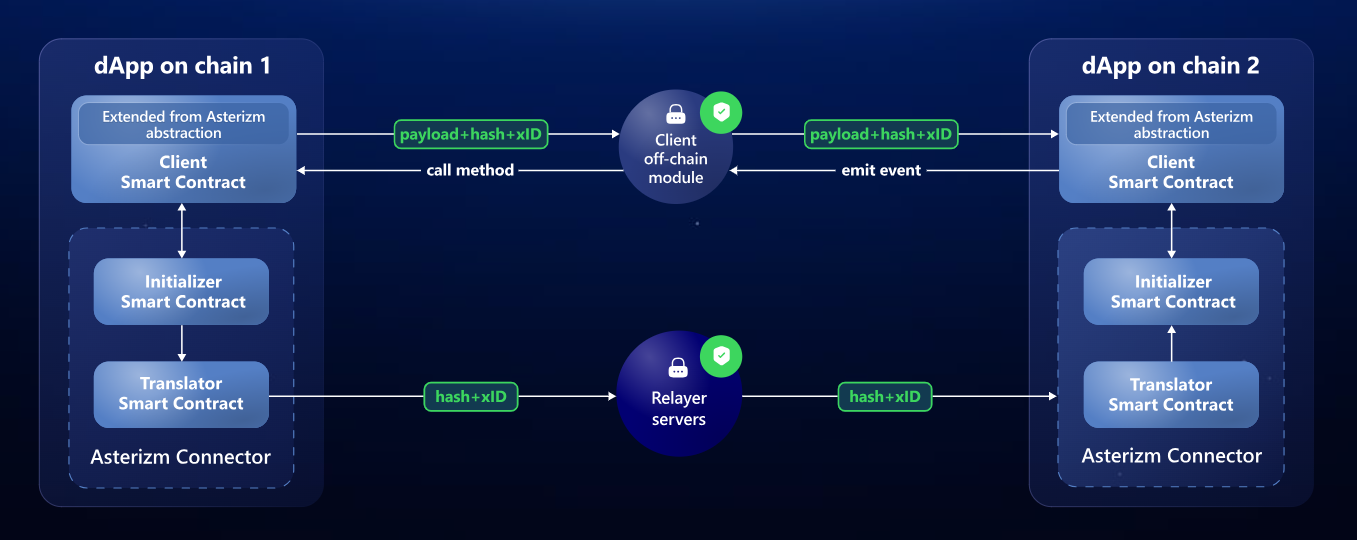
Asterizm is a plug-and-play blockchain interoperability solution for FinTech, enterprises, and Web3 protocols, allowing the creation of cross-chain dApps across public and private VM-based blockchains with an unprecedented level of privacy. Asterizm secures cross-chain transactions with an on-chain module called Asterizm Connector and two independent off-chain entities: Asterizm Relayers and a Client off-chain module.
As a developer or enterprise, you can create interoperable web3 products on public and private networks using ready-made cross-chain modules (such as bridge for asset and NFT transfers, standards for cross-chain tokenized assets) from Asterizm to accelerate the launch of your products/solutions and reduce development costs.
In essence, the Asterizm Protocol is a low-level primitive with a set of ready-to-use modules, providing a cross-chain communication channel between different blockchains and enabling the transfer of payloads while verifying the validity and integrity of cross-chain transactions through cryptographic hashing.
The protocol's uniqueness lies in its modular infrastructure and the privacy of transmitted data, allowing both web3 projects and corporate clients to tailor the protocol to their needs. This customization ensures compliance with security standards and legal regulations, managing the balance between decentralization, legal compliance, and corporate security protocols.
How we built it
Initially, the Asterizm Protocol proposed using as relays the servers which are not connected by a consensus mechanism and solely perform the transmission function, moving transaction proofs from the source network to the destination network for further verification of the integrity and validity of cross-chain transactions. This approach is ideal for communication between private networks, allowing for the quick and secure setup of infrastructure without sacrificing transaction speed, while consistently maintaining the cost of cross-chain operations at a certain value.
In the case of communication between public networks or between private and public networks, we decided to add the option for the client to introduce more decentralization into the cross-chain transaction validation mechanism. We achieved this by integrating Chainlink CCIP as a relay module for transmitting transaction proofs.
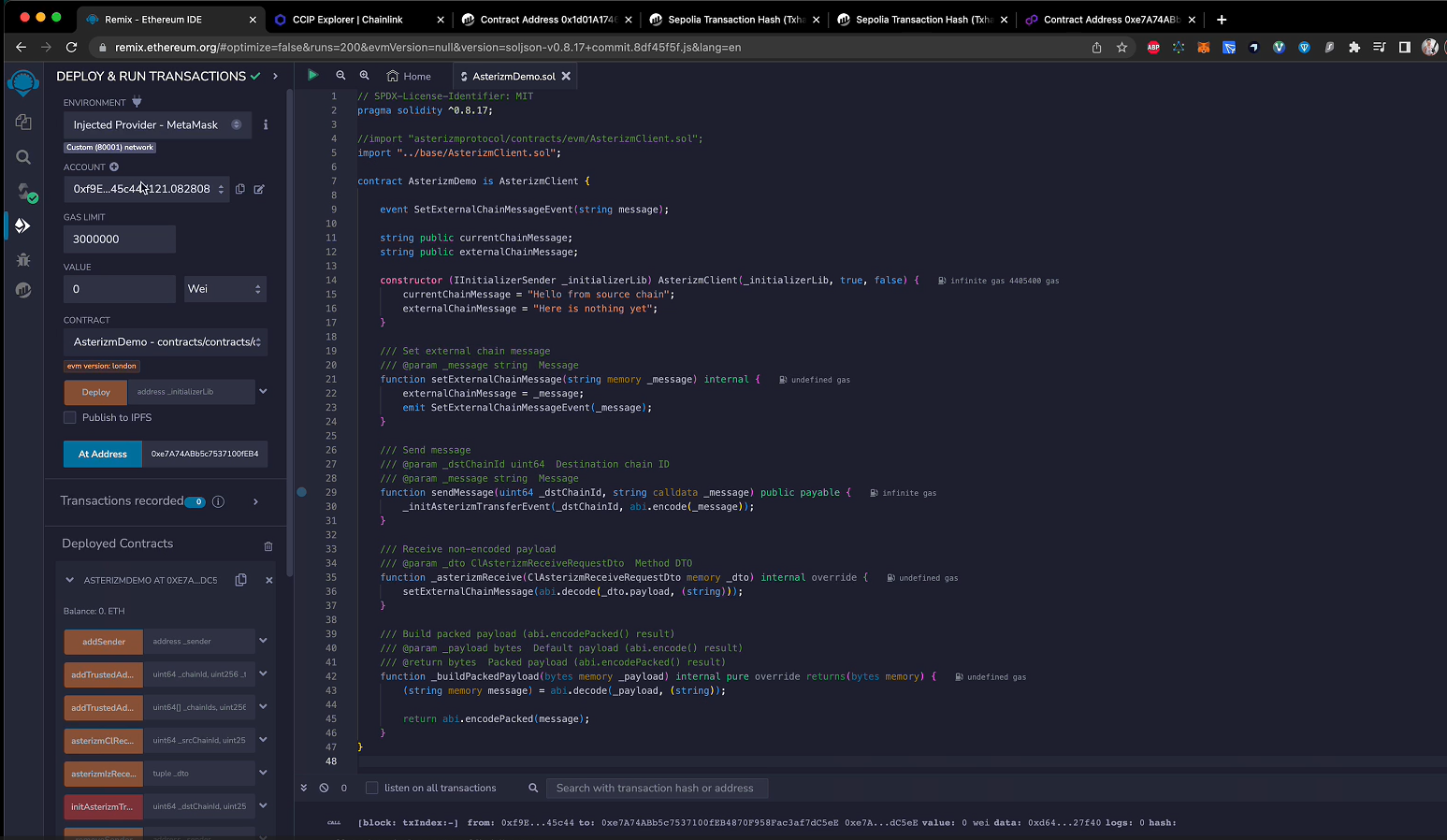
The implementation is designed as follows - during the deployment of the client's smart contract defining the functions for sending and receiving cross-chain messages, the client (developer) can choose whether to use regular servers or CCIP as a relay. If CCIP is chosen, the client is obliged to pay for the transmission of transaction proofs through CCIP in LINK tokens.
Essentially, we modified the on-chain module (Asterizm Connector), adding functionality for message transmission via CCIP according to the documentation. We also considered the new method of delivering proofs at the contract abstraction level, which is provided to our clients.
For more technical details, please refer to the Asterizm documentation section on CCIP integration: link
Challenges we ran into
We had to rewrite part of the logic of the Asterizm Connector module to incorporate interaction with Chainlink CCIP. This led to changes in the financial aspect of the protocol, as payment for CCIP calls had to be made in LINK tokens. Previously, we used payment exclusively in the native coin of the source network for all third-party relays (the price was determined by the relay), including covering gas fees in the destination network. These changes in financial logic posed a challenging task for us, which we successfully addressed.
Accomplishments that we're proud of
We are proud to have made our protocol even more flexible and secure by seamlessly integrating the Chainlink CCIP solution into the on-chain Asterizm Connector module as the most decentralized relay for transmitting transaction proofs between public networks.
By enhancing the architecture of the Asterizm Protocol, we were able to improve the robustness of our solution, making it more attractive and useful for a wider range of web3 projects aiming to create chain-agnostic products relying on the decentralization and security of used cross-chain providers.
What we learned
We delved deep into the principles of Chainlink CCIP and successfully integrated this solution into Asterizm. Thanks to Chainlink's uncompromising approach to the security of cross-chain transactions, we discovered some aspects of a decentralized approach to the validation of cross-chain operations in a new light.
We also explored the possibility of integrating Chainlink Functions for a variety of tasks in the Asterizm Protocol, although we did not finalize the solution within the scope of this hackathon. Nevertheless, we gained a profound understanding of the documentation and implementation of the Chainlink Function product.
What's next for Asterizm Protocol
We continue to develop our product, aiming to provide the market with the most efficient solution for creating chain-agnostic web3 projects. In particular, we strive to introduce pilot projects with enterprises to demonstrate the potential of the blockchain industry to major players. Additionally, we are looking for the most suitable solution to migrate a range of business processes of large companies into the web3 industry at the intersection of private and public blockchains.
Our plans include implementing:
- New modules for the rapid launch of cross-chain products based on Asterizm,
- A proprietary bridge that operates with private chains, allowing to bring web3 fintech liquidity to the market,
- Functionality for dynamically selecting a relay for each transaction based on an AI agent analyzing the state of each relay,
- Adding a "data hiding" feature in public blockchains to privately transmit and execute payloads even in public networks,
- Several other product updates and technical optimizations.


Log in or sign up for Devpost to join the conversation.