-
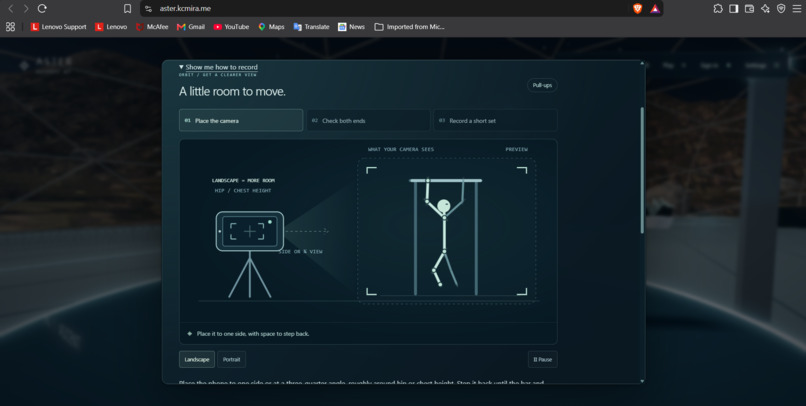
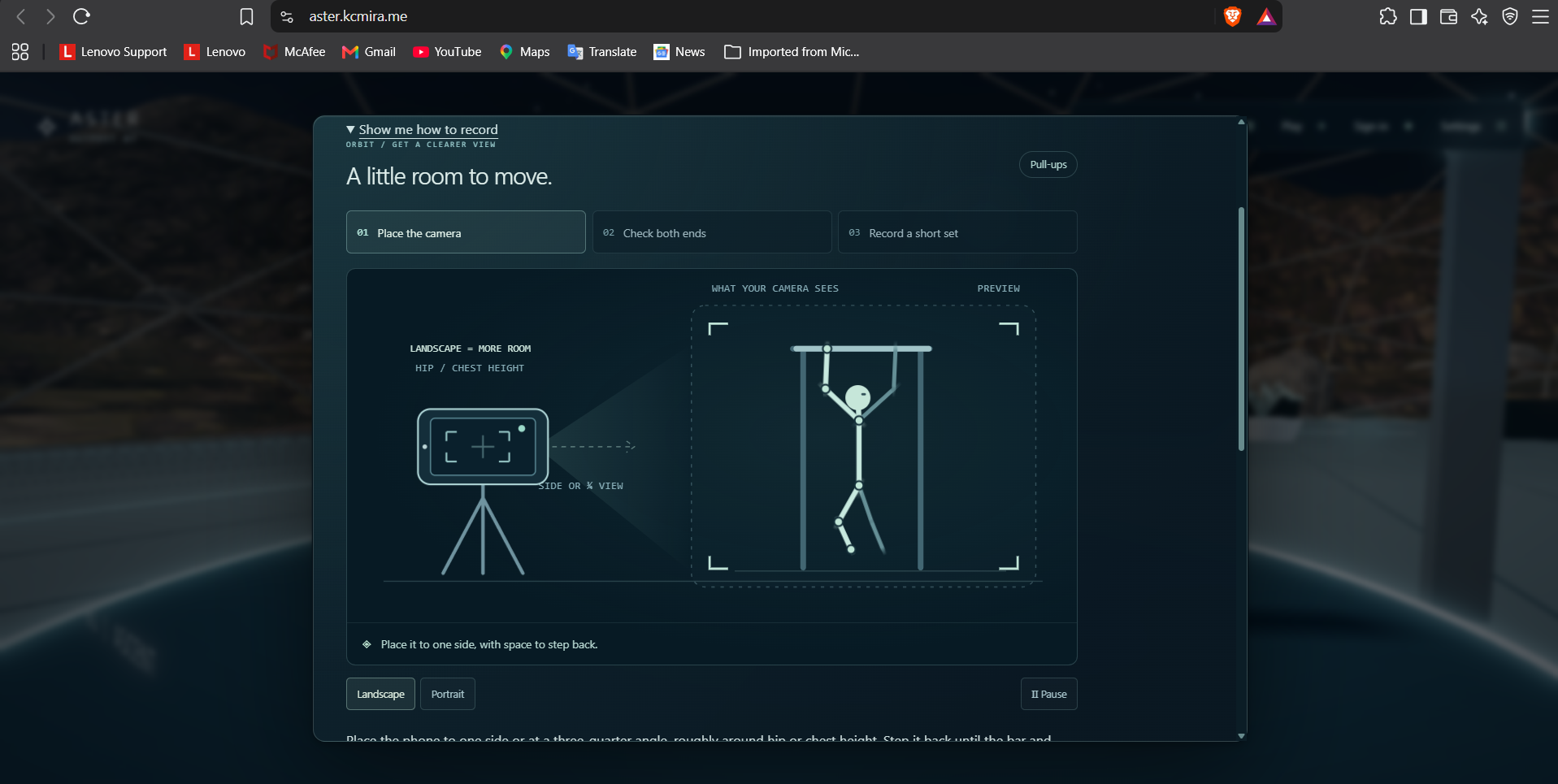
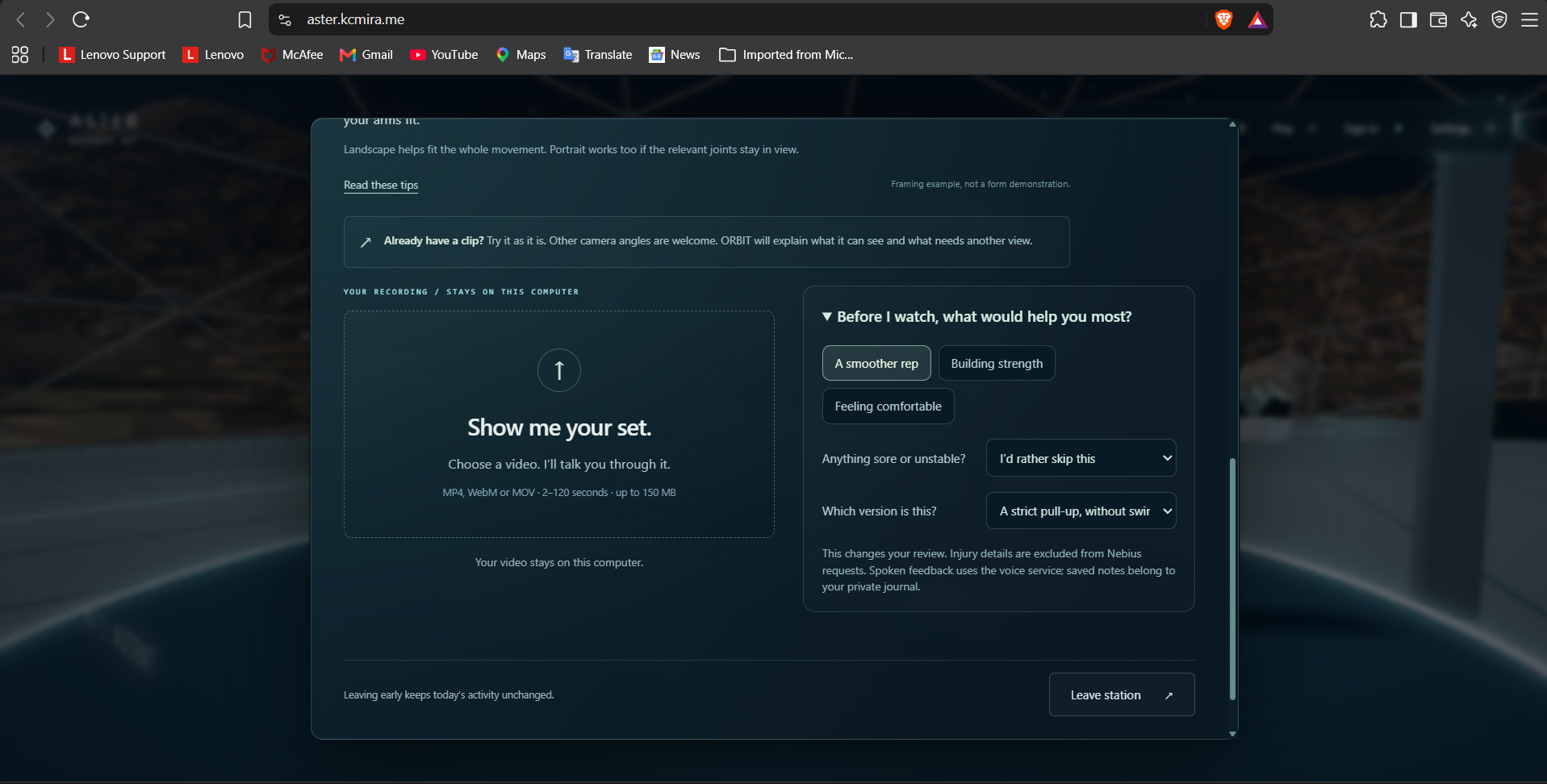
Guide on how to record videos
-
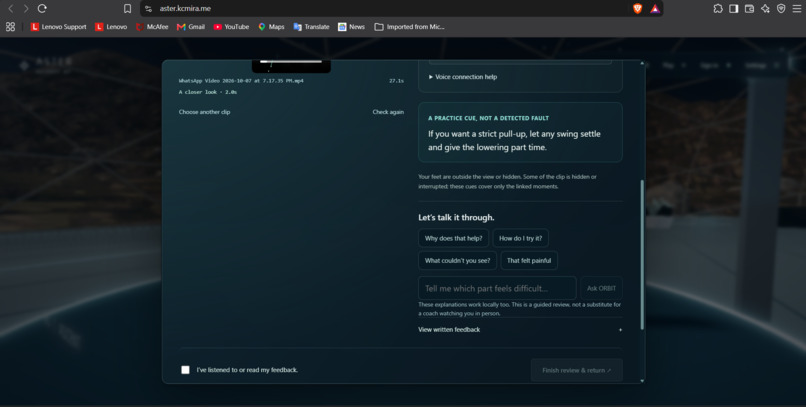
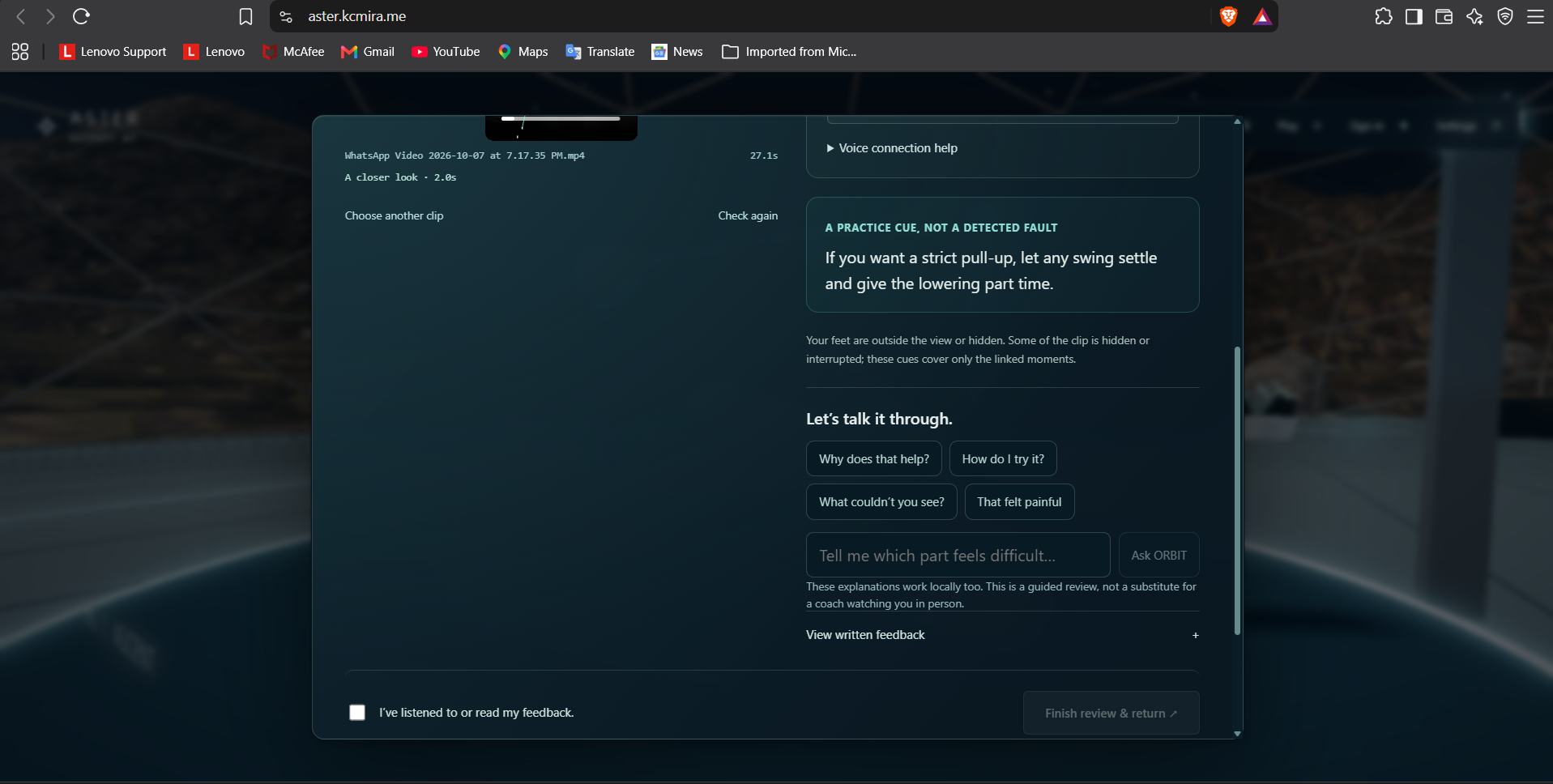
Feedback with voice
-
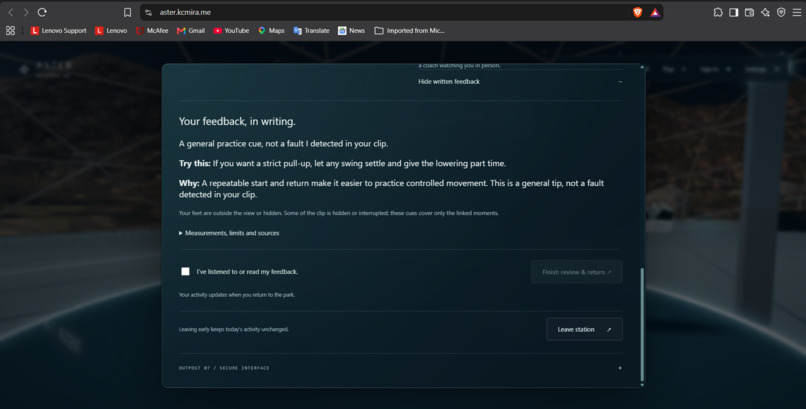
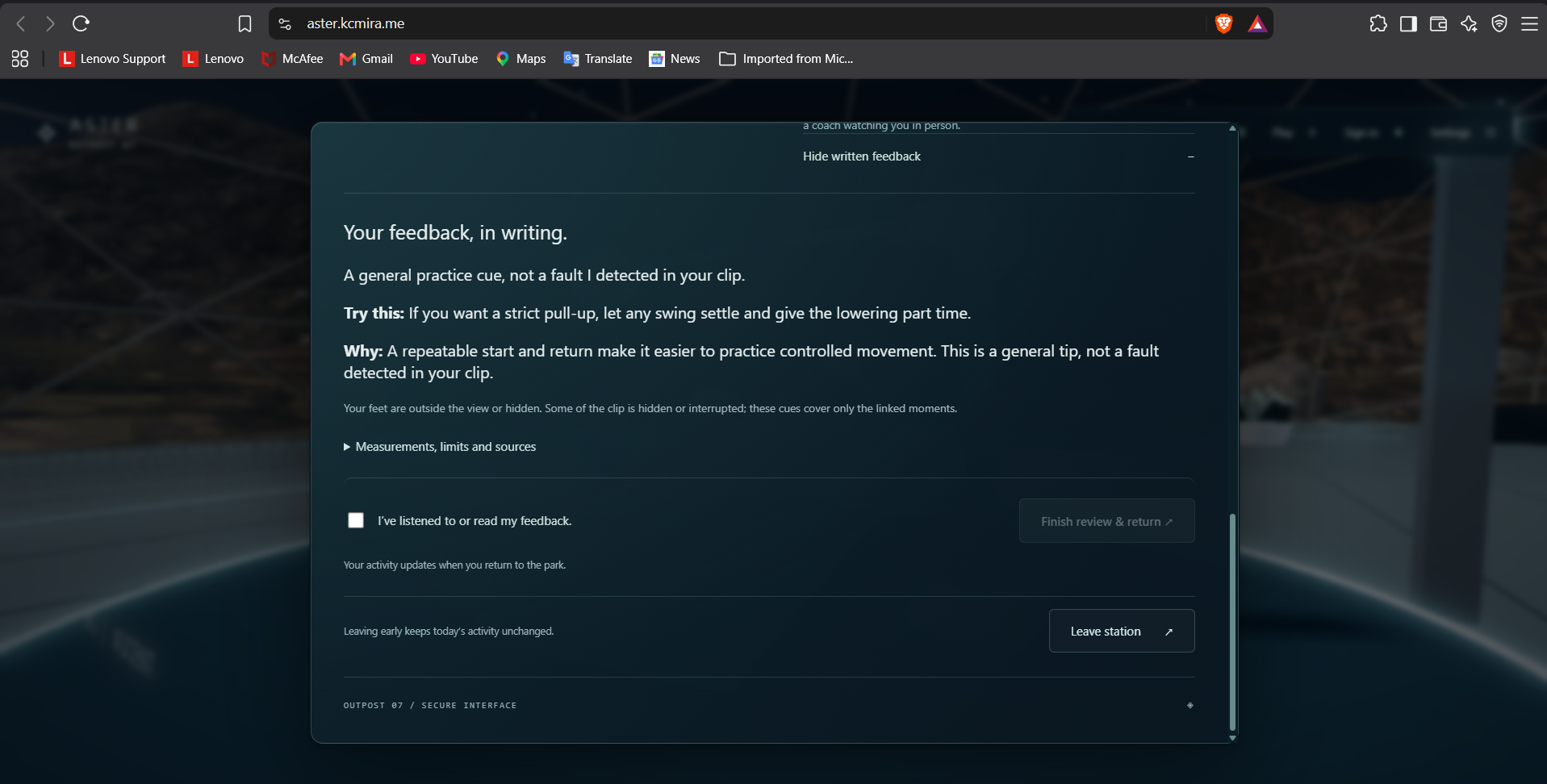
Written feedback
-
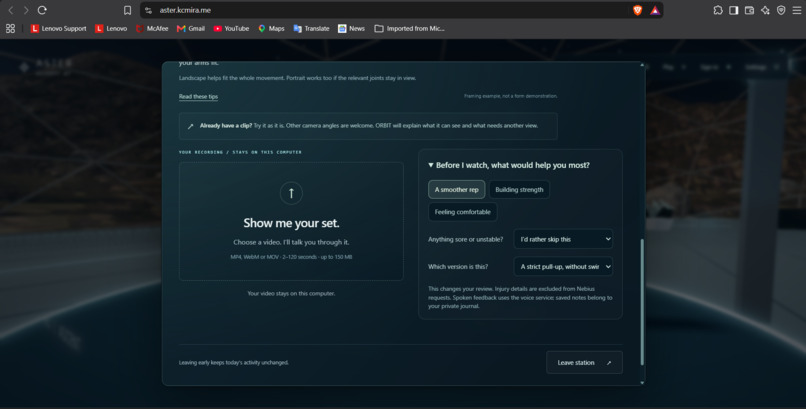
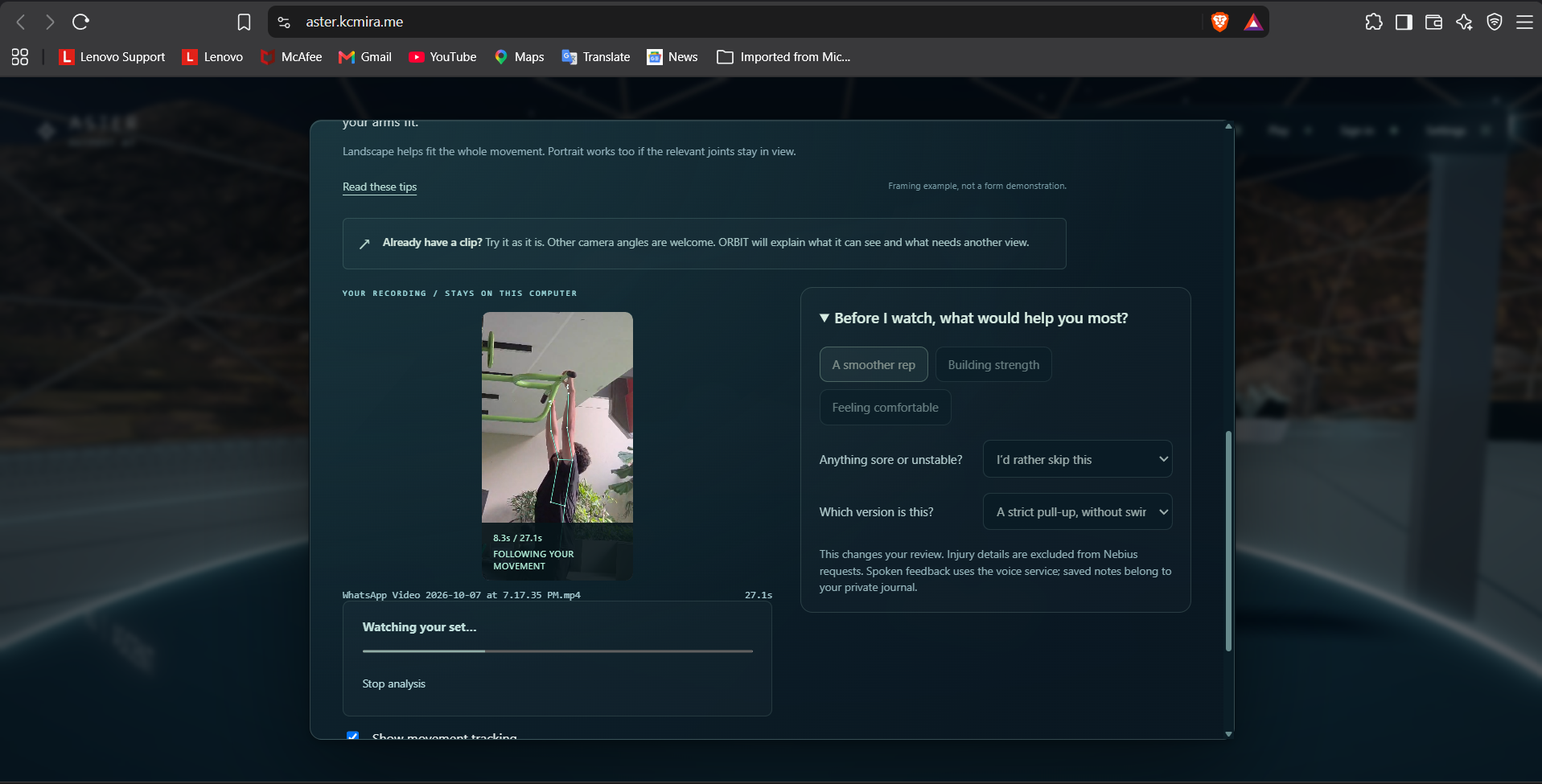
Window to upload videos and receive feedback
-
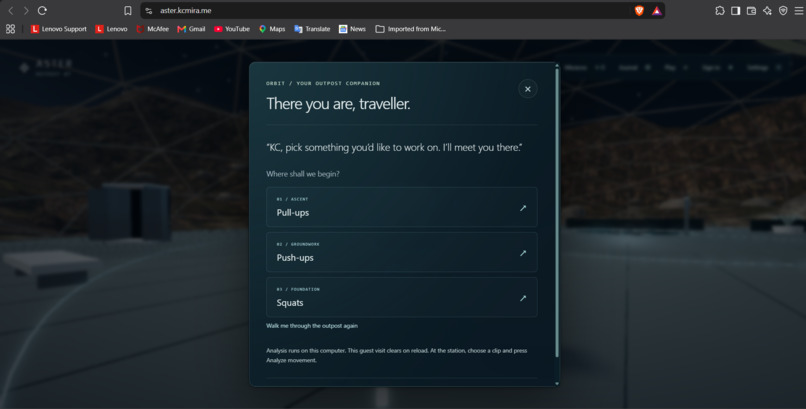
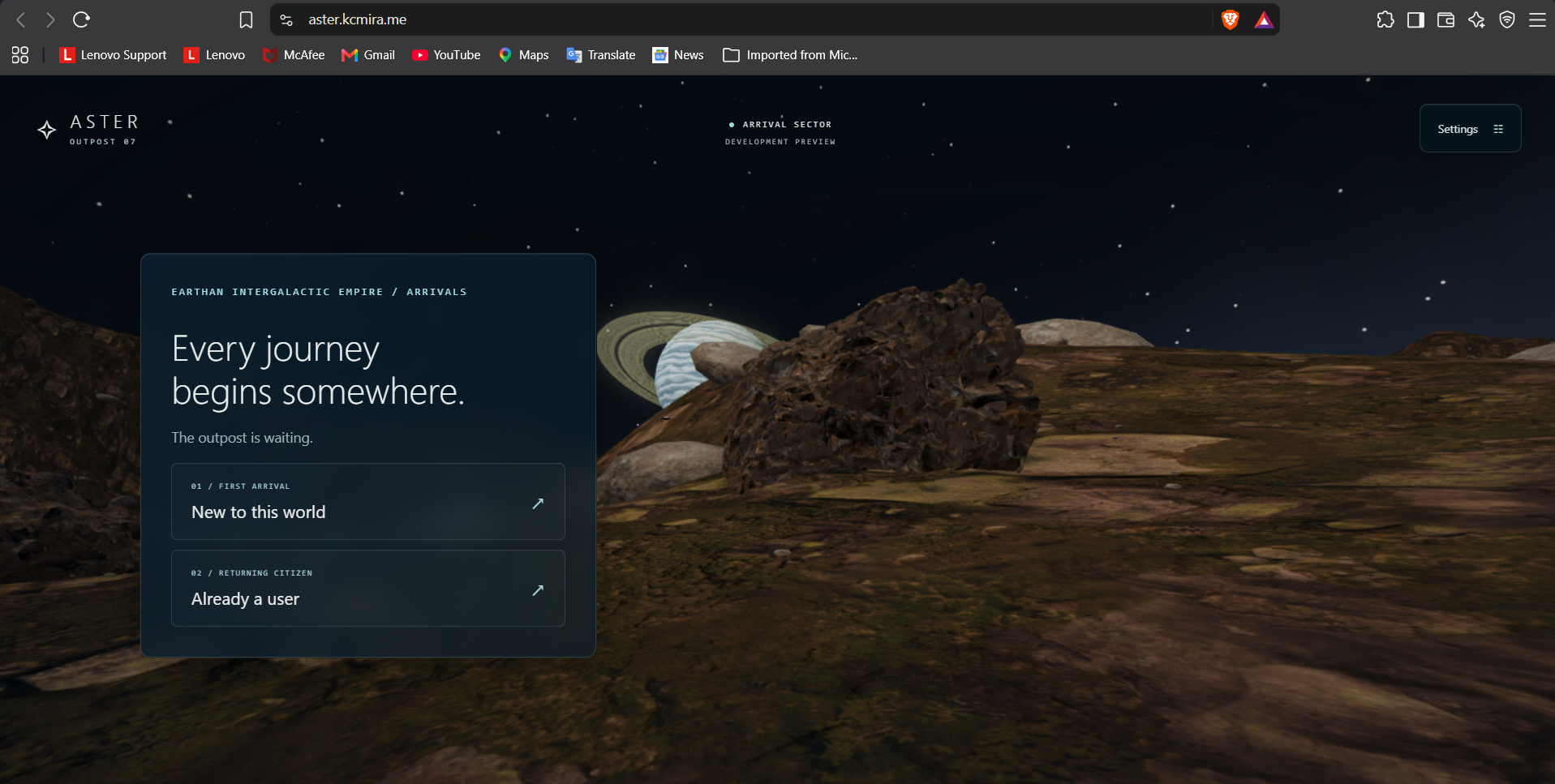
User setup and onboarding
-
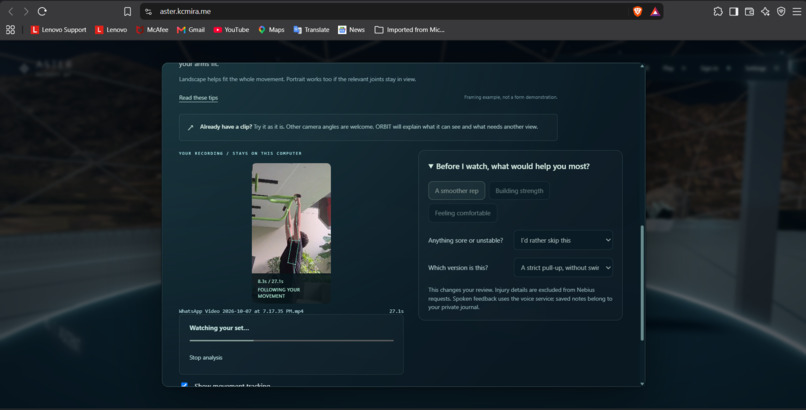
Video analysis
-
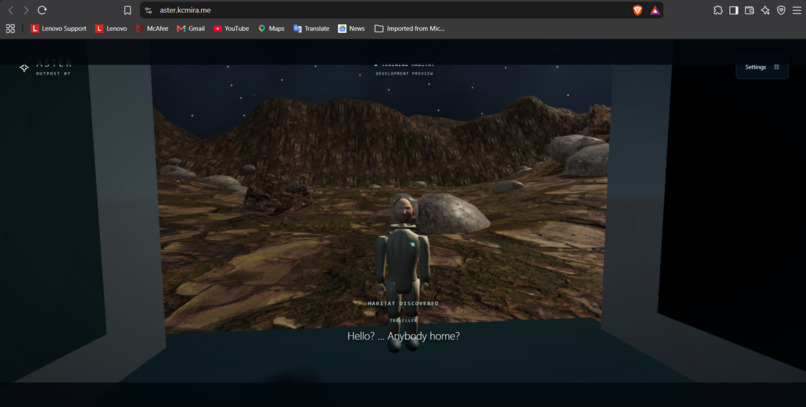
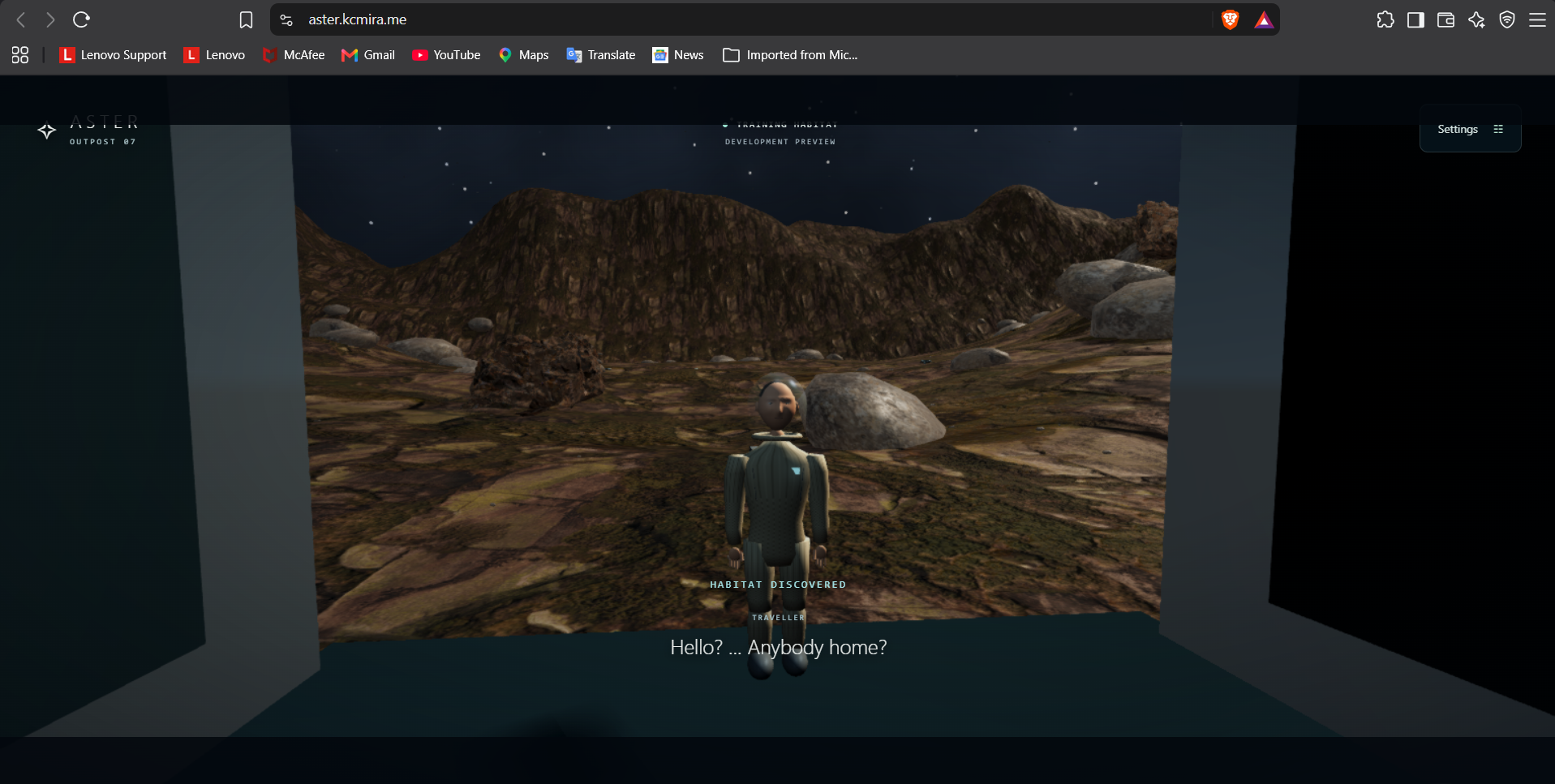
Entry cutscene
-
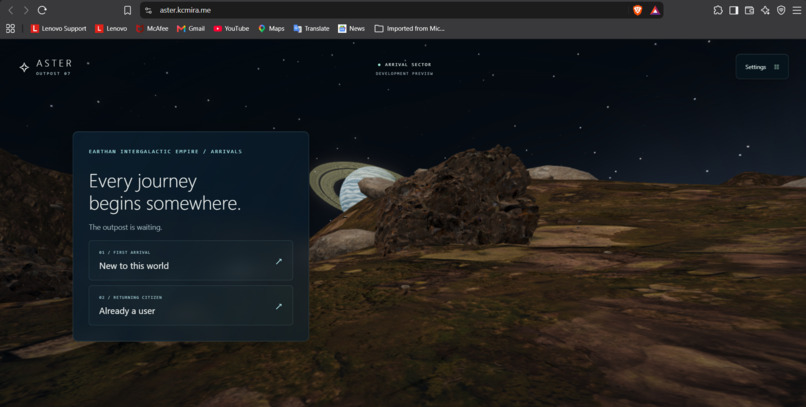
Chose which user you are
-
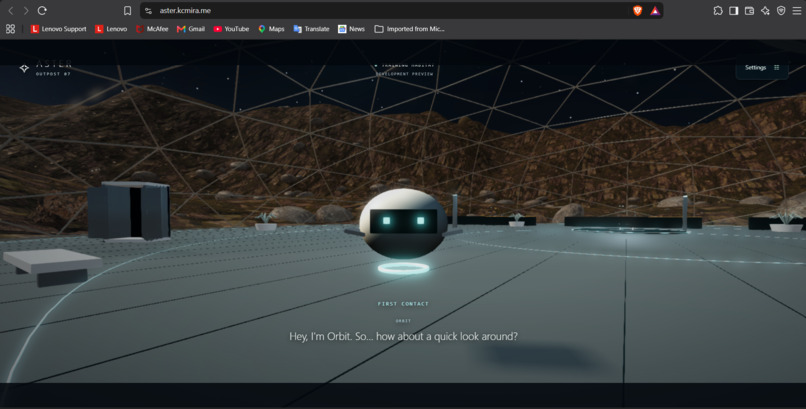
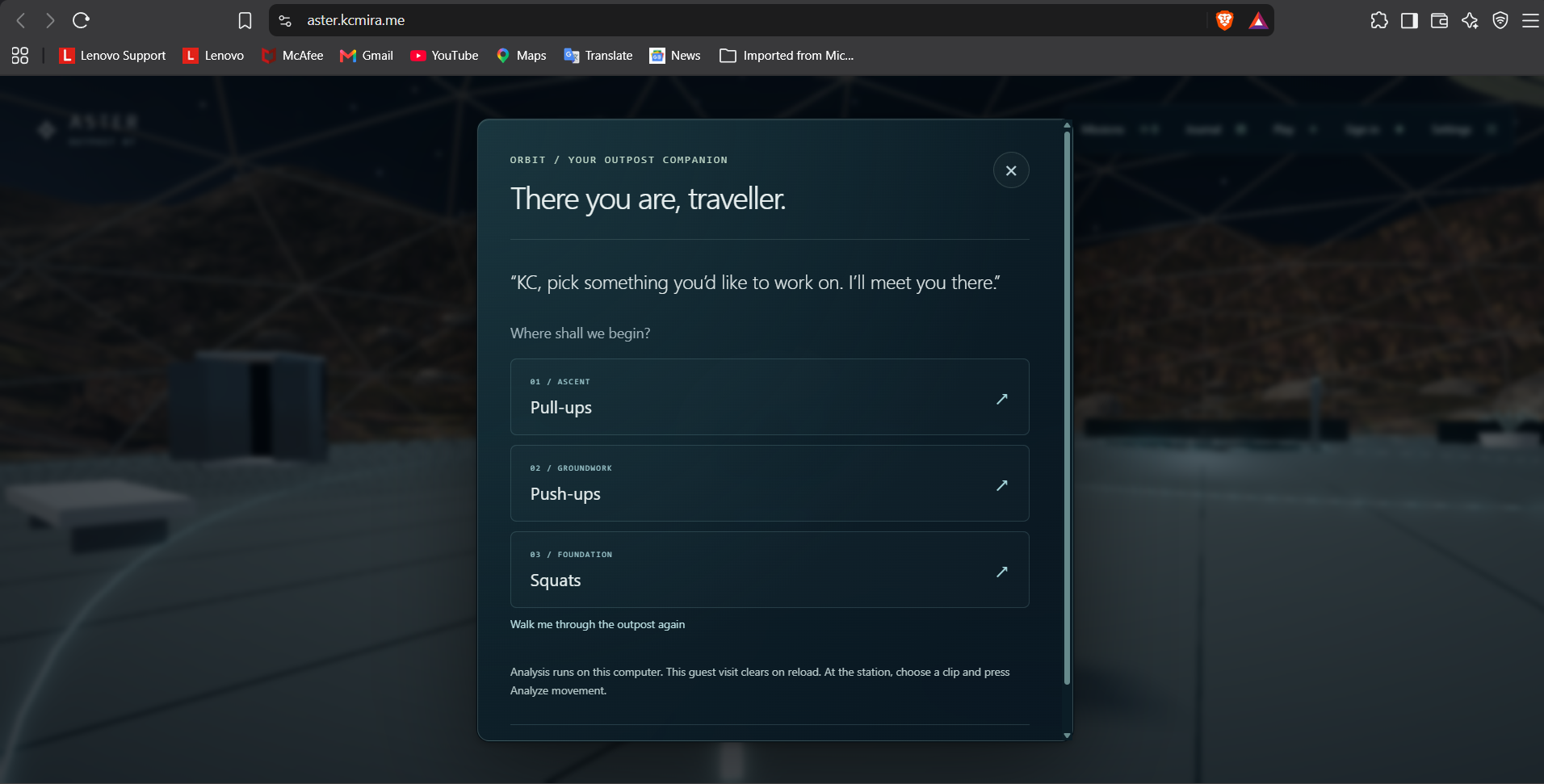
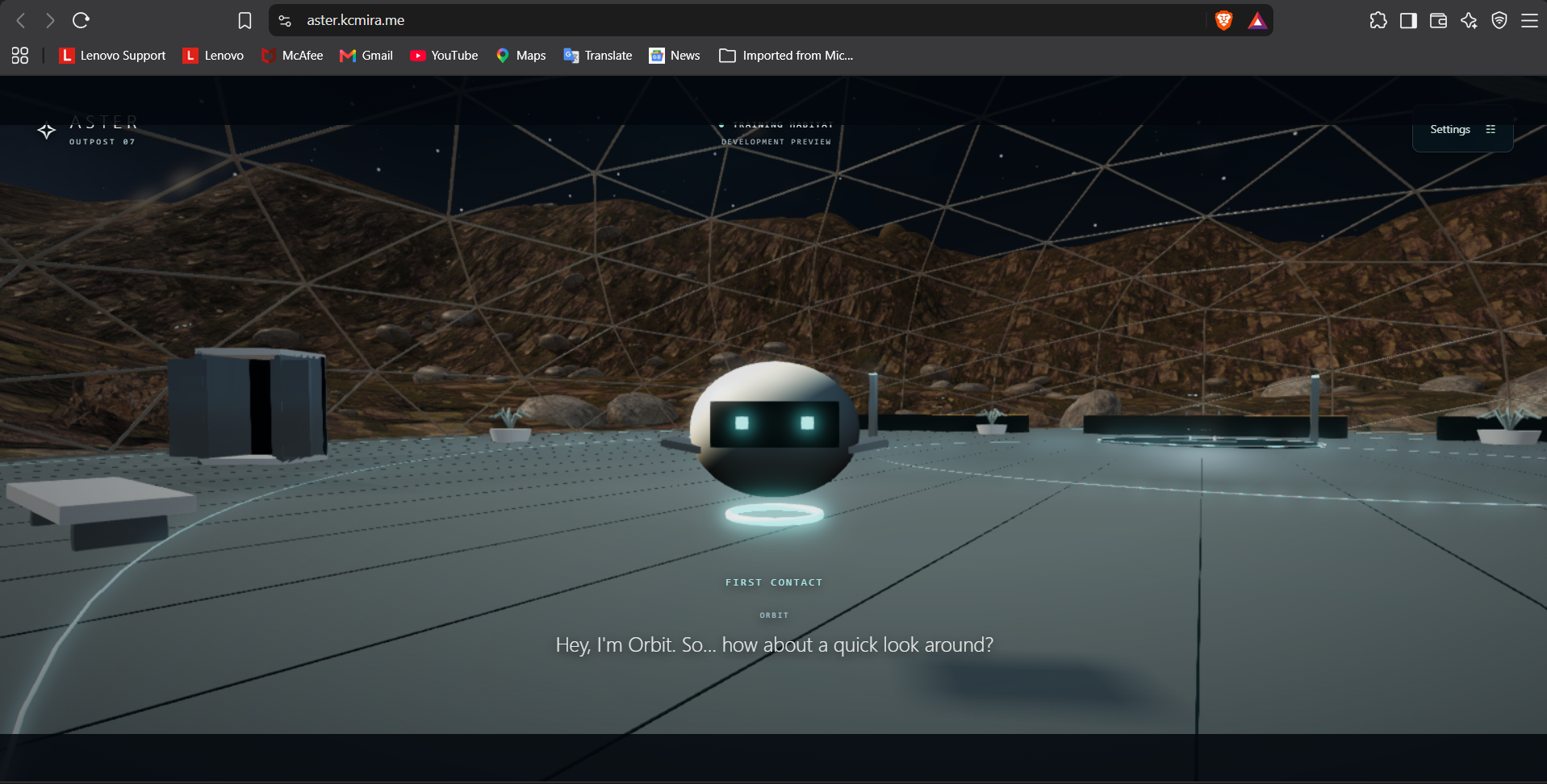
ORBIT Awakening
-
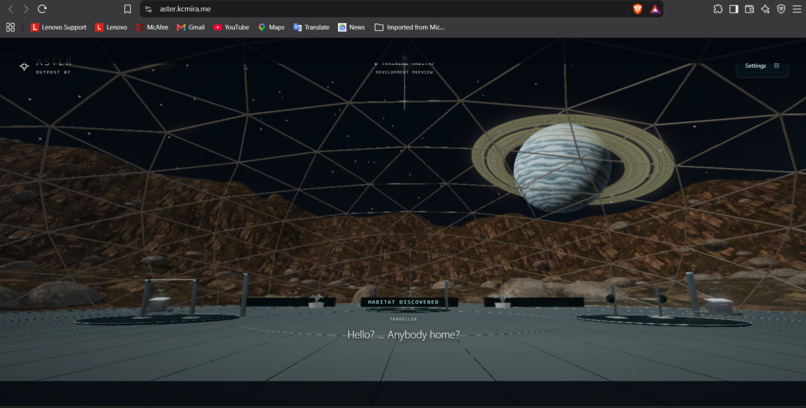
Entry cutscene
-
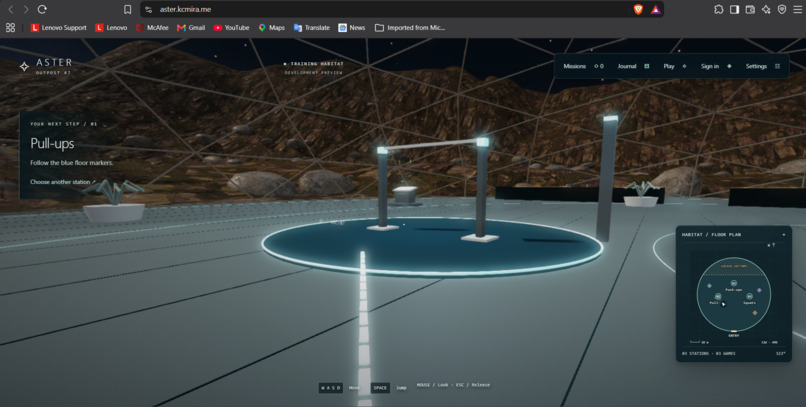
First task and analysis
-
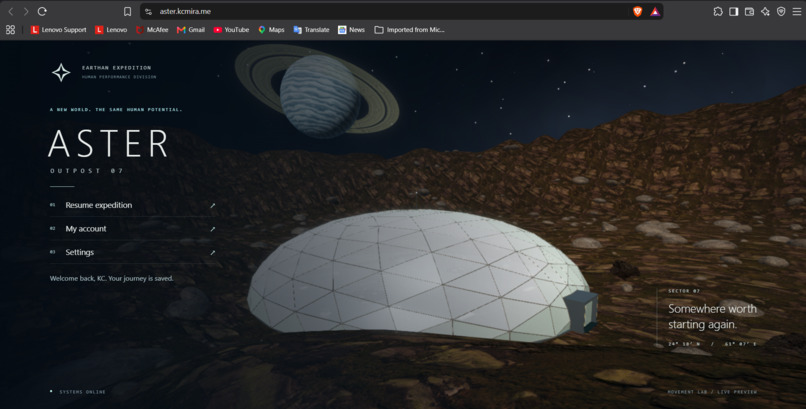
Sign in if already a use
-
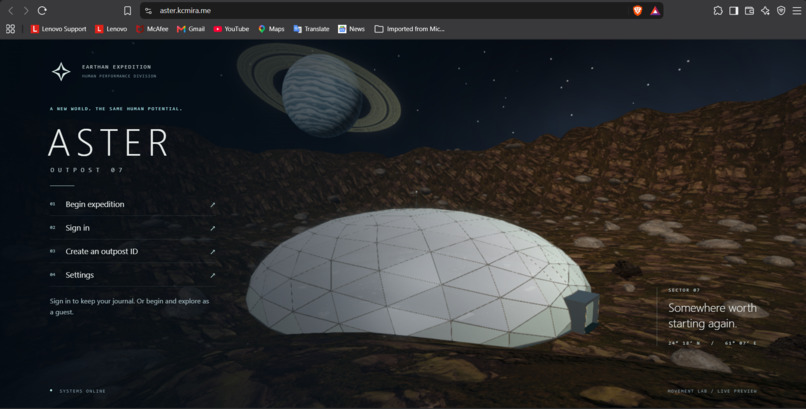
Enter the app
-
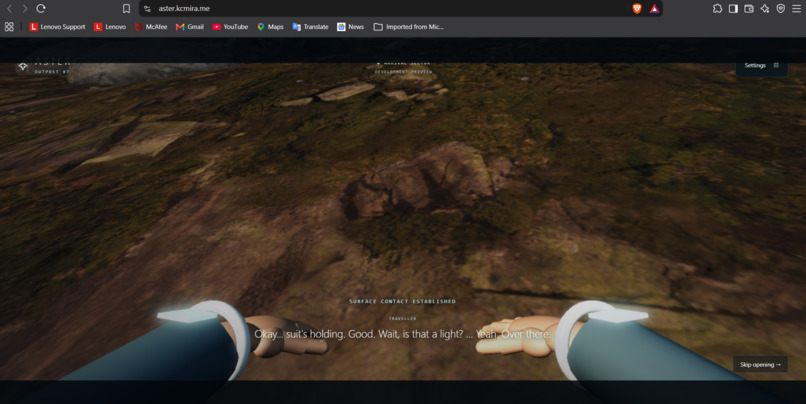
Intial cutscene
-
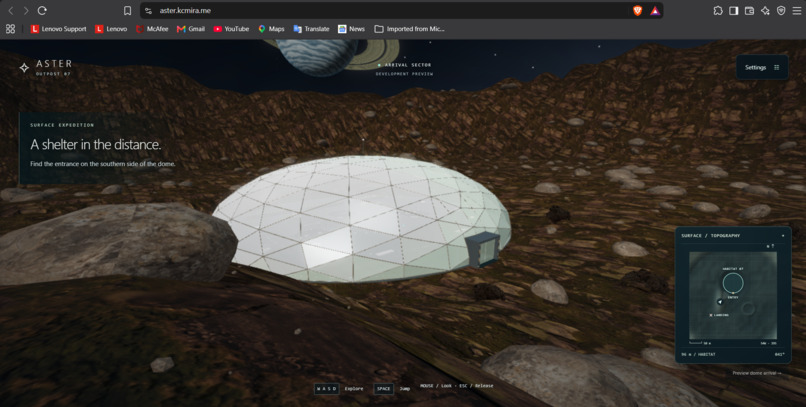
Exploring the moon and finding the gym
Inspiration and the problem
I was alternating pull-up sets with someone when I noticed how deliberately he moved. I asked him to watch my form. That led to a conversation where I could ask questions, try something, and learn from someone who was paying attention.
That feeling stayed with me. When you exercise alone in a gym or a park, there is not always someone you can ask. Recording yourself gives you something to look at, but understanding what to notice is another problem.
I started Aster to explore how technology could offer some of that attention to people training on their own.
What Aster is
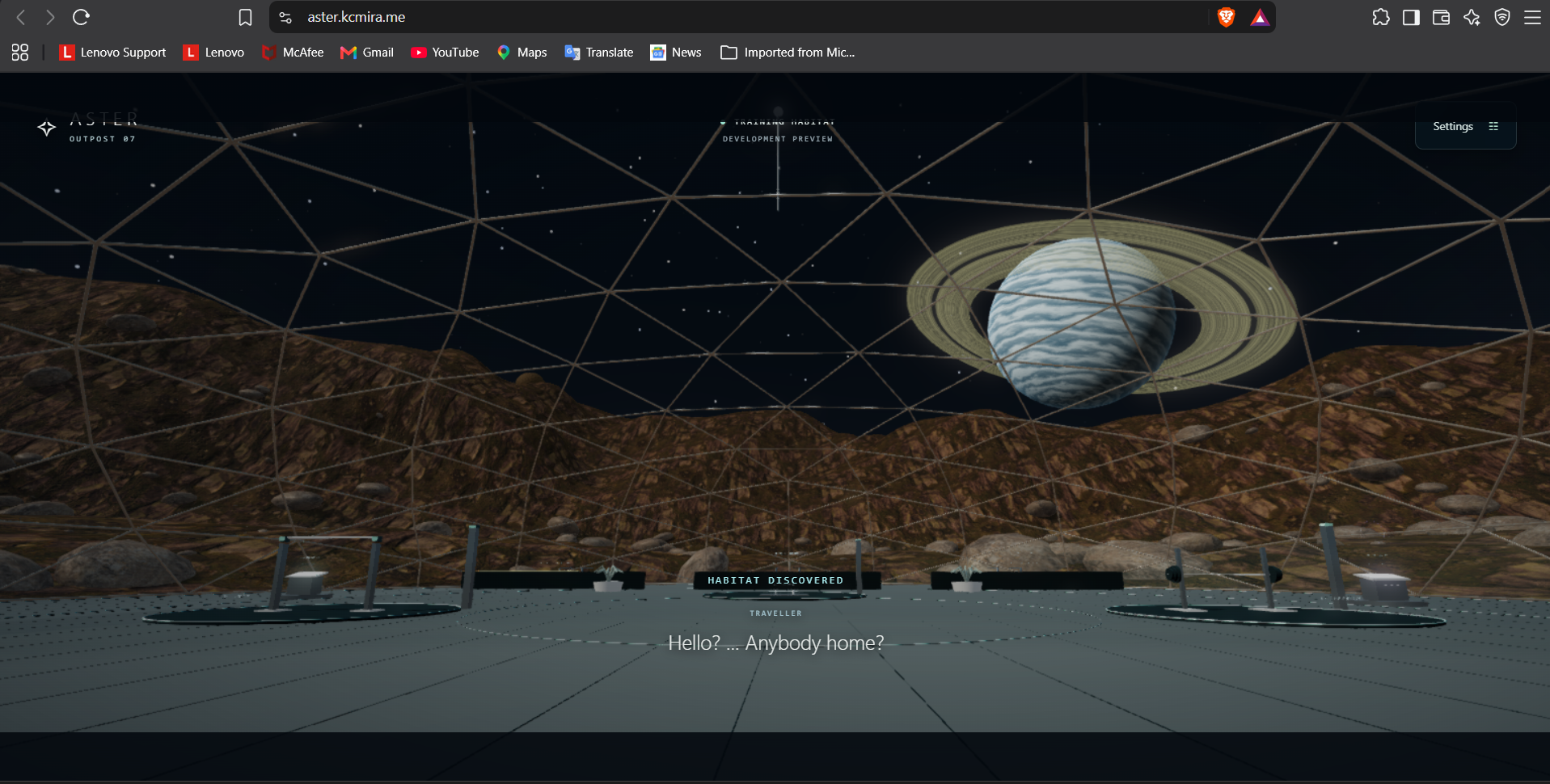
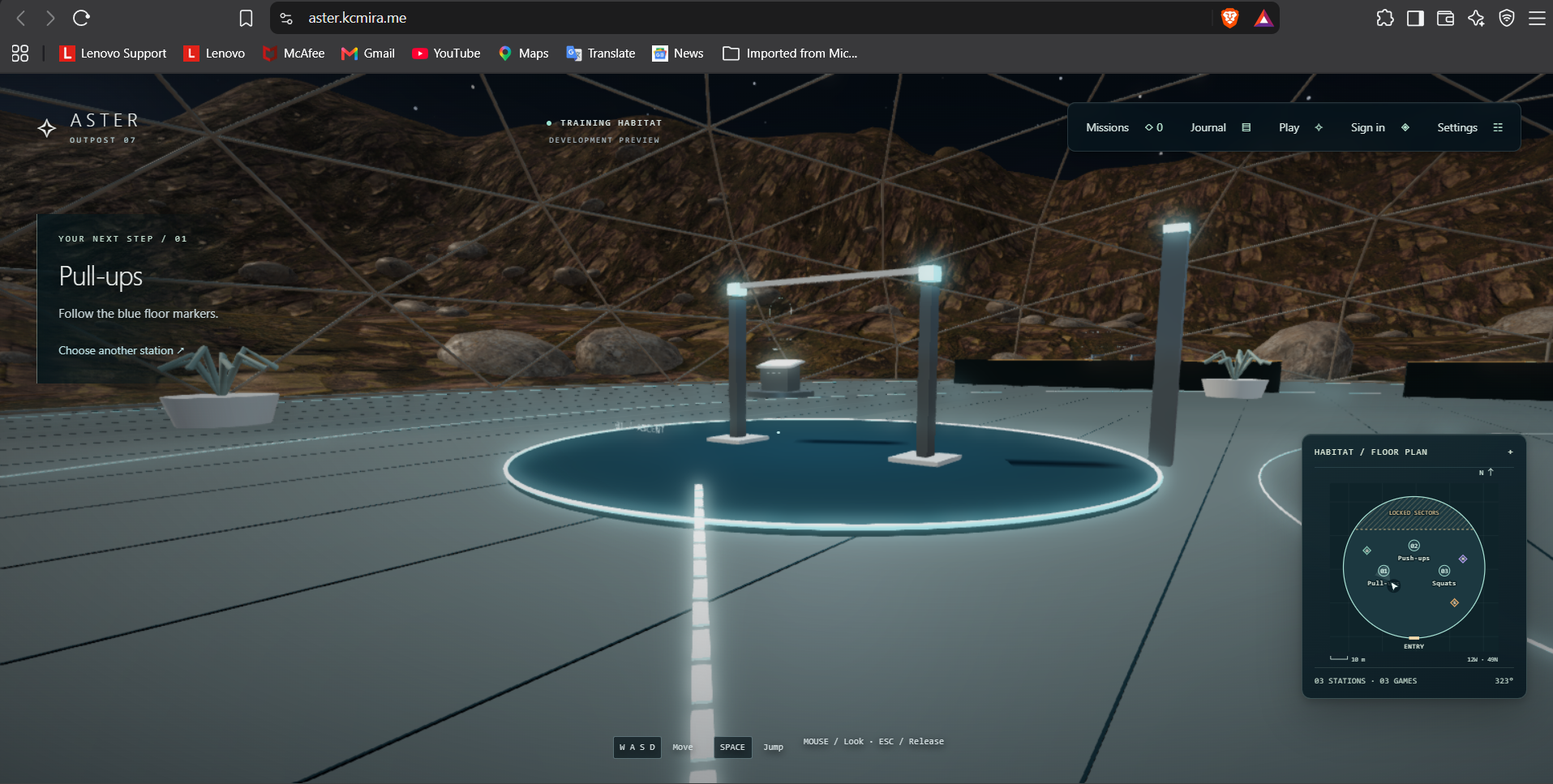
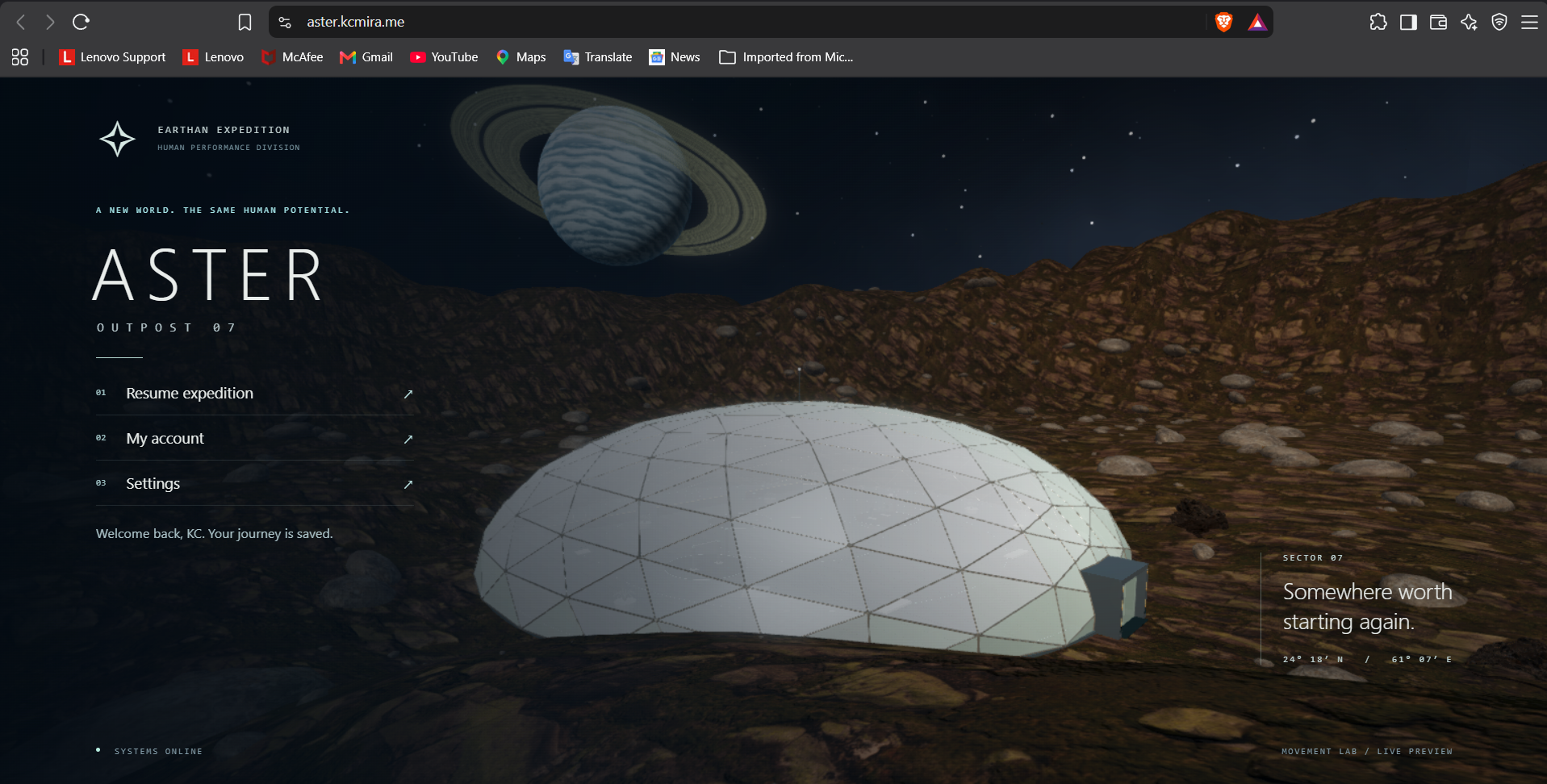
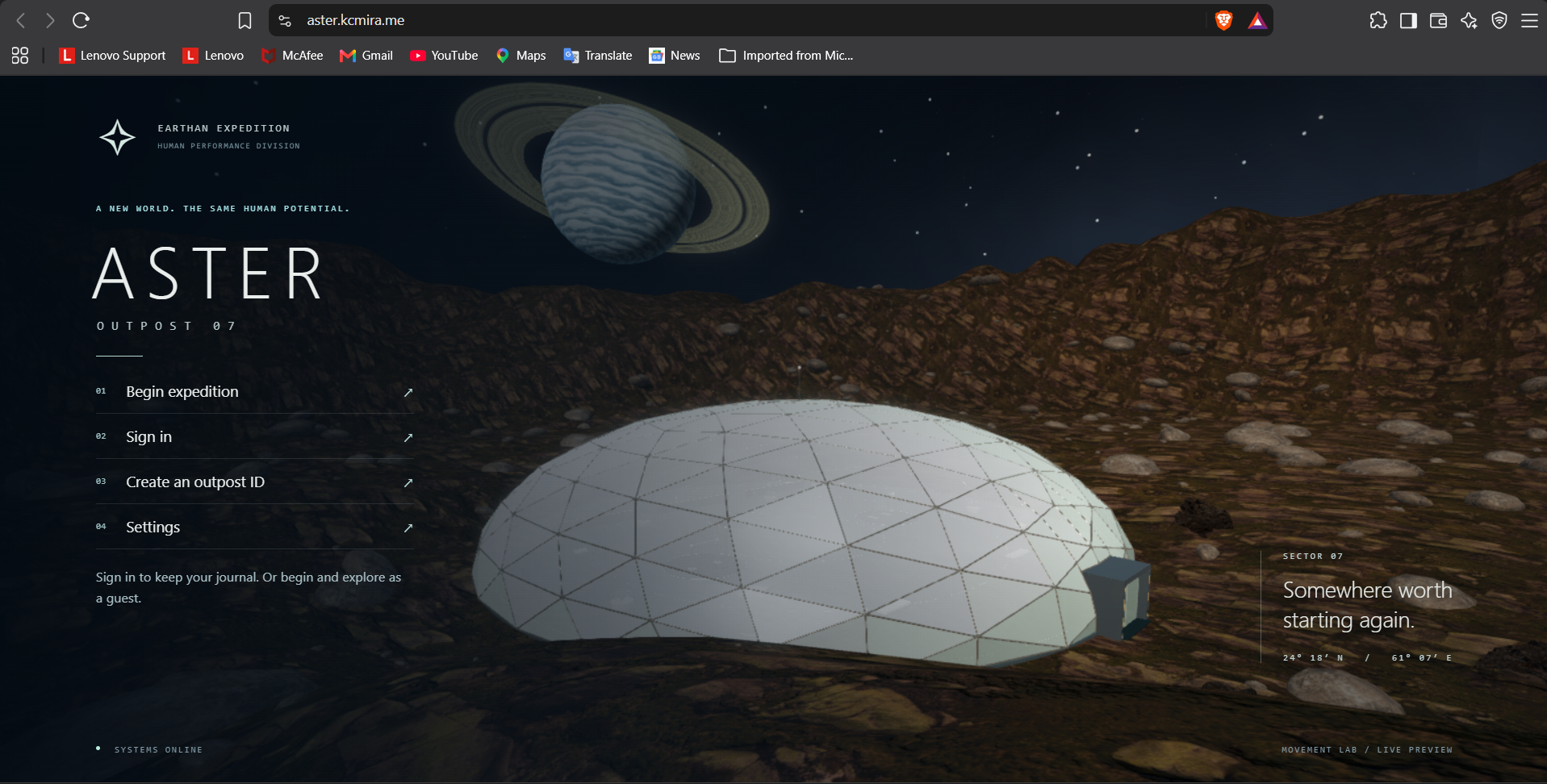
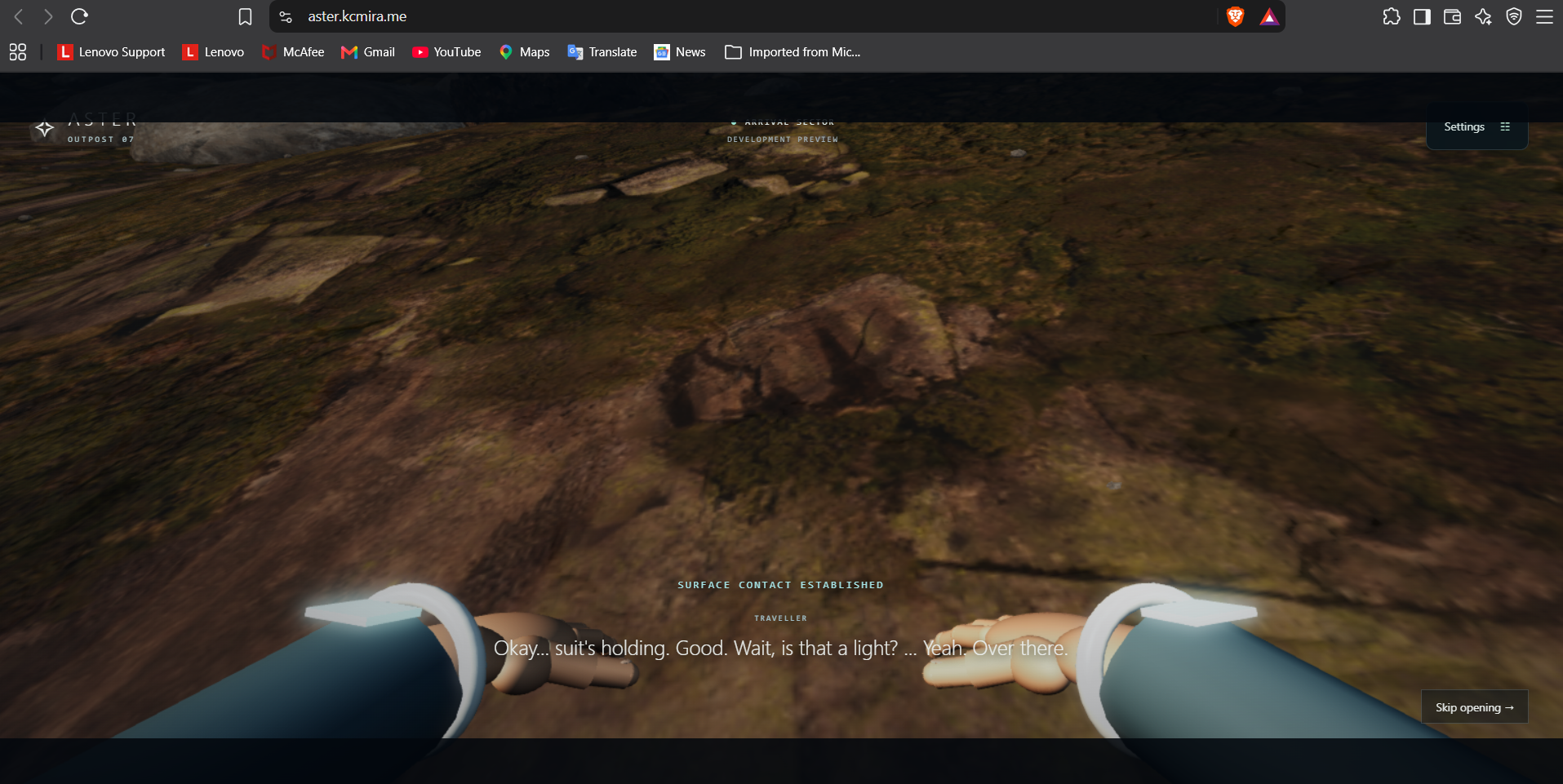
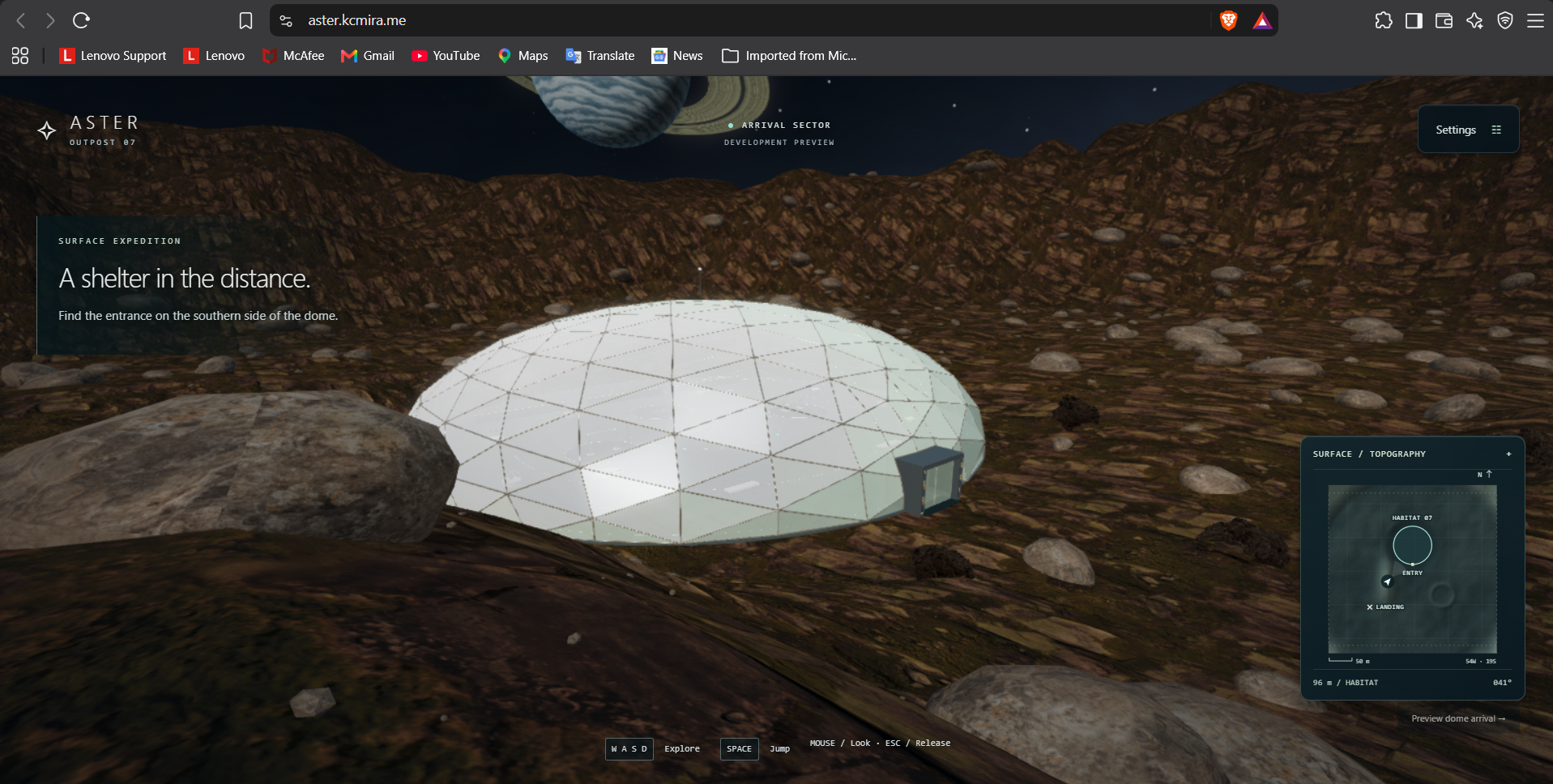
Aster is a desktop-browser exercise prototype set inside a first-person world on a distant moon. You explore the landscape, discover an exercise park, and meet ORBIT, a robot guide.
Space has fascinated me since childhood. I love the curiosity, perspective, and sense of discovery it brings. Learning how to exercise feels like exploration too: you try things, ask questions, and gradually find your direction. I wanted those two experiences to belong in the same world.
My intended users are people exercising independently who want to understand their own movement and feel encouraged to keep learning.
What the prototype currently does
The exercise-review component accepts recorded pull-up, push-up, and squat videos. It uses MediaPipe to track visible body landmarks and derive movement observations. The review interface can display tracked joints over the recording and show relevant moments.
ORBIT presents spoken feedback, with written details available for closer inspection. The current output mainly describes visible movement. Making the complete journey reliable and turning observations into consistently useful, specific guidance are the next development priorities.
How I built it
I used TypeScript, React, Vite, and Babylon.js for the browser interface and three-dimensional world. A pretrained MediaPipe pose model analyses video locally. Application rules turn measurements into observations, Deepgram turns the resulting feedback text into speech while Nebius Tokenfactory API with OpenAI model calls allows real time queries and personalized understanding of feedback. The exercise video stays in the browser; feedback text is sent to the speech service.
I worked solo with extensive coding and implementation assistance from Codex. I developed the idea, imagined the world, directed the experience, made product decisions, tested builds, and kept revising what did not feel right.
Challenges and what I learned
One of my biggest lessons was that finding body landmarks, describing movement, and giving dependable exercise advice are different problems. A report full of angles does not automatically help someone understand what to do.
I am proud of turning a very personal imagined world into something I can enter and test with my own recordings. Connecting that world to useful exercise guidance is the work I want to keep improving.
What comes next
My immediate focus is a dependable review experience and better-supported, actionable feedback. Longer term, I want saved practice history, meaningful progress comparisons, and a richer world to explore. The current guest prototype does not preserve workout history across reloads.
For me, success would mean someone understands one useful thing about their movement, feels supported, and wants to come back and practise again.
Built With
- babylon.js
- codex
- deepgram
- mediapipe
- nebiustokenfactory
- node.js
- react
- typescript
- vite

Log in or sign up for Devpost to join the conversation.