-
-
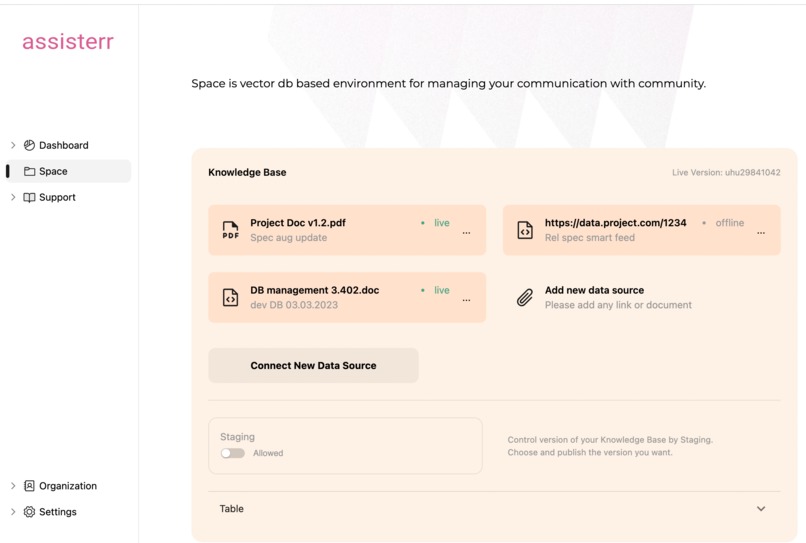
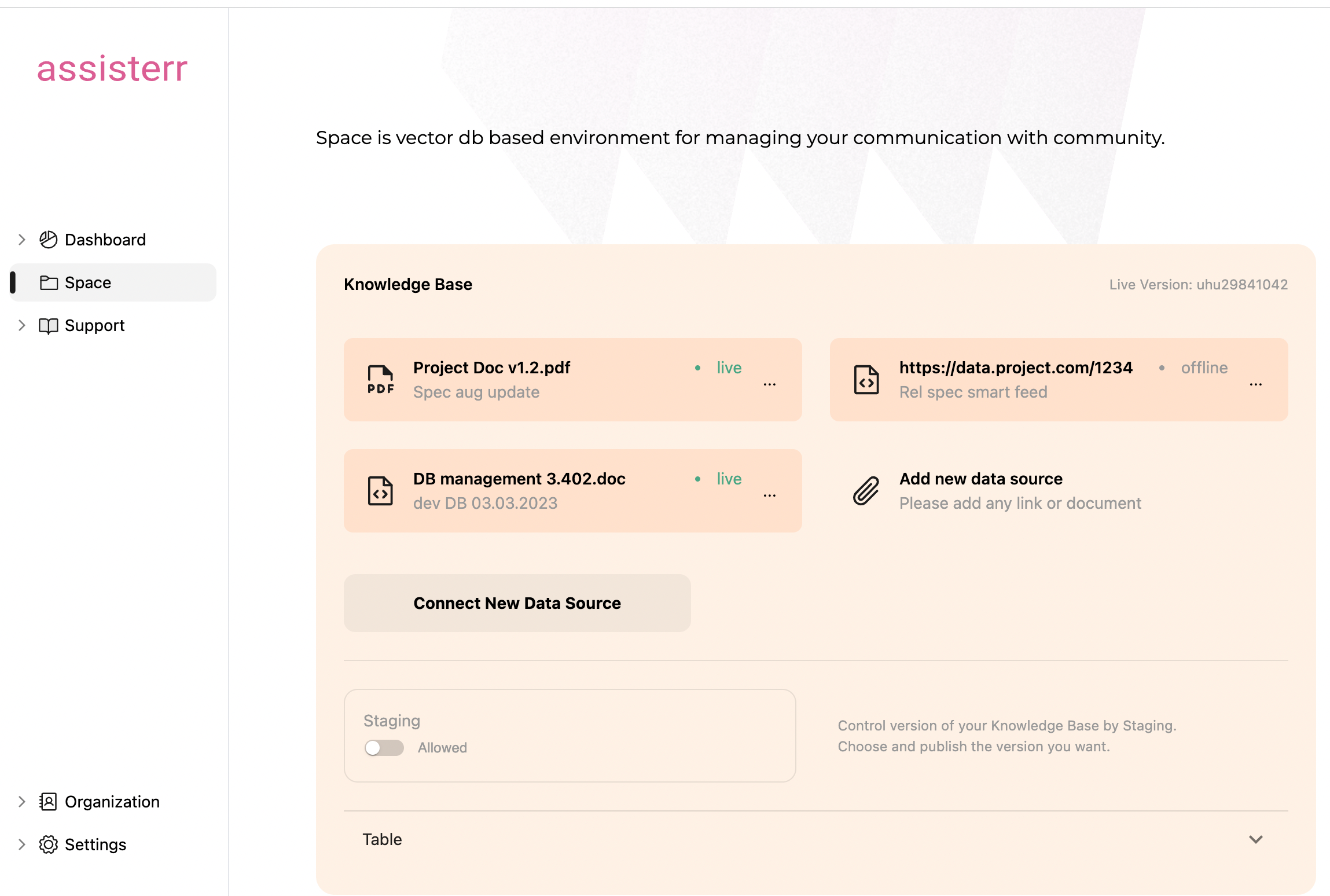
Data collecting/uploading/editing = infra page
-
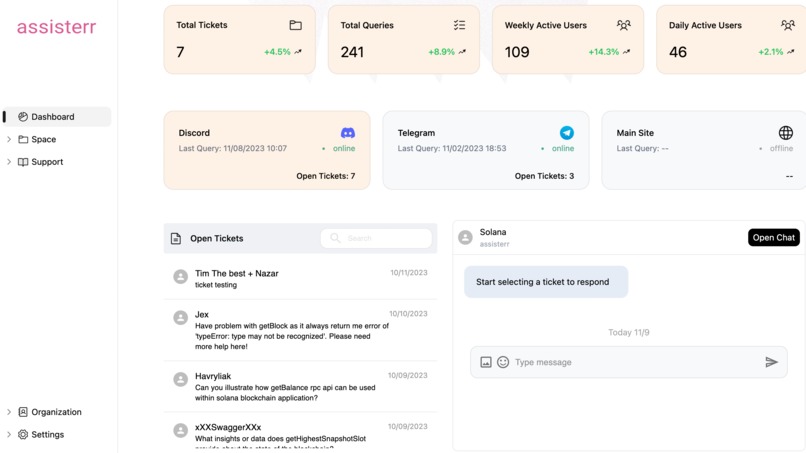
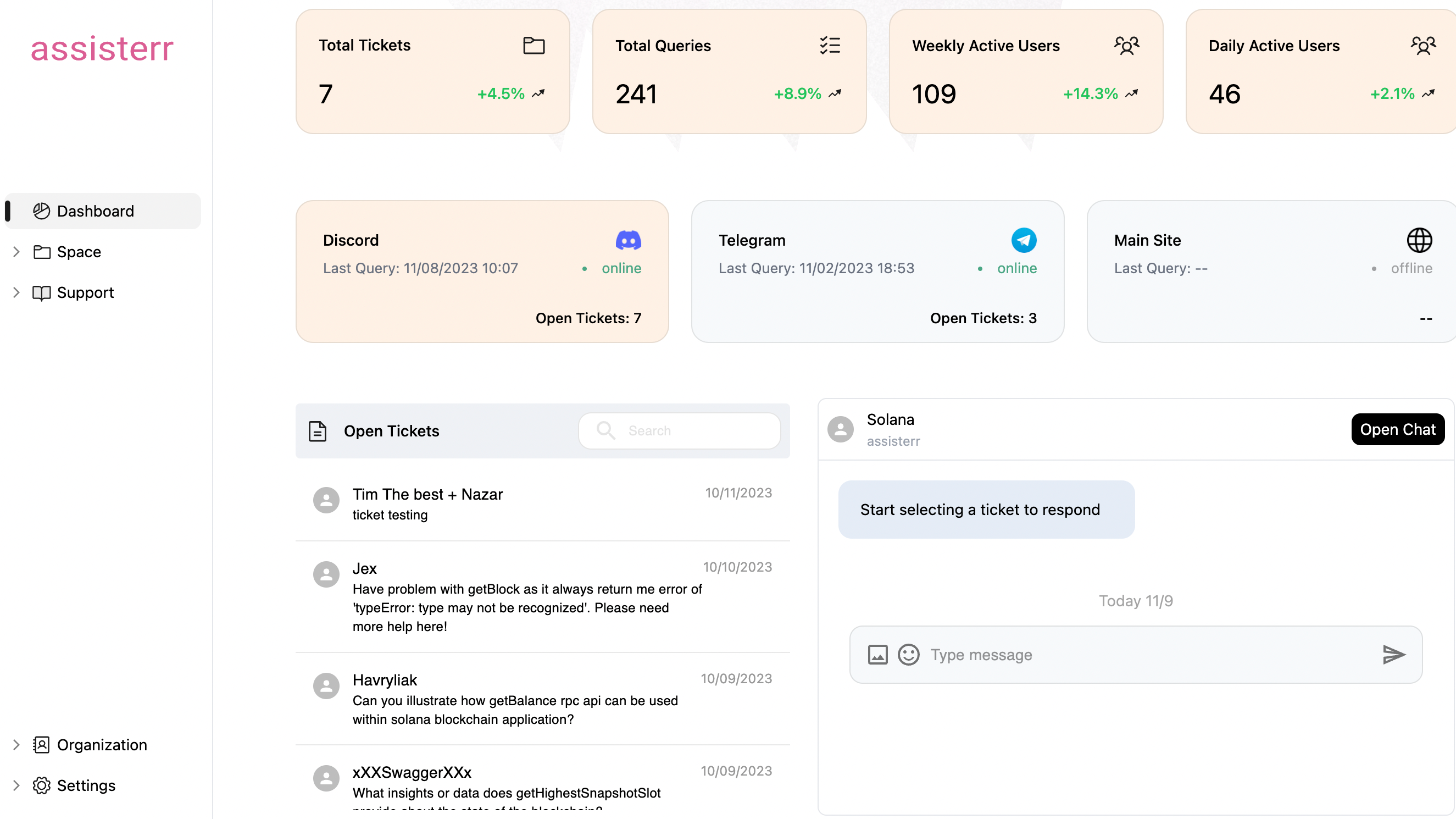
Dev rel portal = Main page
-
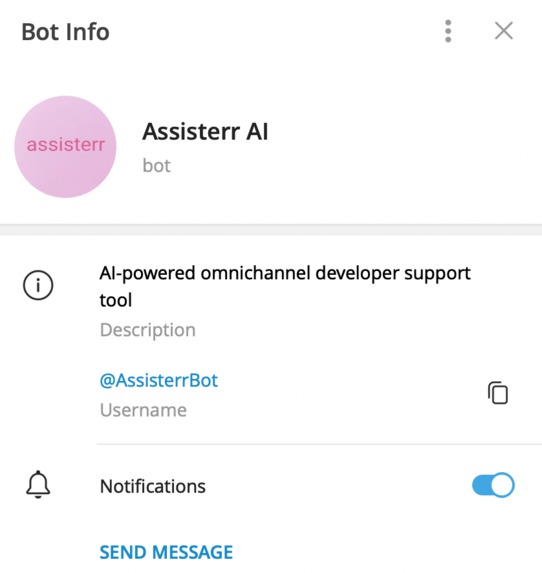
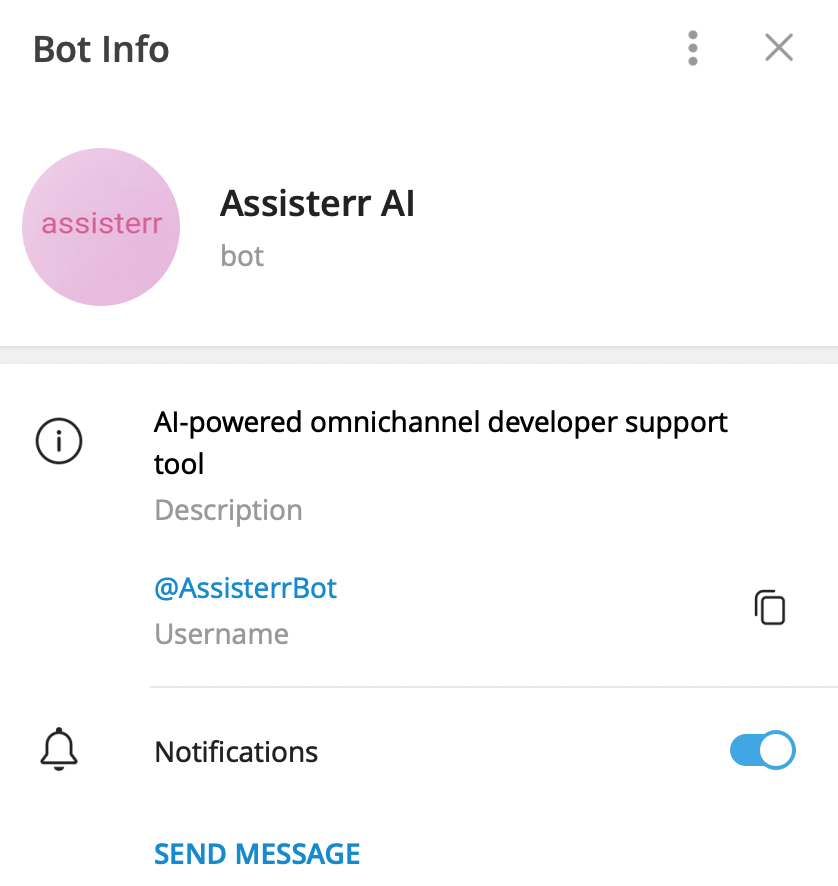
TG bot
Inspiration
We've experienced the problem firsthand, both from the ecosystem (endless tech docs updates, costly manual support) and developer perspectives (frustrated learning curve and gaps in docs while switching from we2 to web3 architecture, release delays due to missed docs and unimplemented features);
What it does
Assisterr automates developer support function with the power of Generative AI and crowd in a loop;
Omni channel AI-powered Developer Support Platform reducing the need for manual labor and improving developer-protocol experience;
How we built it
We started working on the Dev Rel platform earlier, but it was trained on a dataset from the Solana ecosystem and successfully integrated into the Discord bot; For the NEAR hackathon, we: 1- collected and labeled our dataset based on RPC tech docs 2 - created a Vector DB and linked it to the TG bot; 3 - connected analytics; 4- launched a bounty program with Heroes team;
Challenges we ran into:
Key challenges we faced were on a business level:
- who are the existing stakeholders and knowledge holders;
- how to integrate our en-to-end solution with projects that are already in the ecosystem;
- how to aggregate data;
- how to ensure regular data updates;
- how do we involve the developer community in resolving tasks, and how do we incentivize them to do it?
Accomplishments that we're proud of
- we've co-hosted an event https://lu.ma/saiiuubn for founders building on NEAR at the intersection of AI and WEB3 to present Assisterr, get feedback, and discuss cross-integrations;
- we labeled, structured, and organized in Vector DB NEAR docs for our solution;
- we deployed a TG bot that supports end-to-end logic and connected to the Vector DB API we created for NEAR;
- Discussed with Illia Polosuhin the potential of using Assisterr with NEAR tasks;
- Discussed with Jordan from Heroes team potential integration;
- Discussed with the Mintbase team potential ways to integrate their SDK to Assisterr;
What we learned
- The developer support function at the NEAR ecosystem is highly fragmented and not clearly defined at this moment;
- too many incentives are run as tools or "pet projects", but there is a lack of a "startup approach" with KPIs and measuring success rate;
- there is no analytics on # the devs, #queries, and its types that might be used as insights for tutorial creation or tech docs improvements as well as contributing to Developer experience in general;
- AI is capable of providing initial support, optimize costs, and providing data, but there is a clear need to have humans or crowd in a loop to ensure the whole support function is working correctly;
What's next for Assisterr
After the hackathon, our goals will be: 1 - To expand collaboration with the NEAR tasks team; 2 - Automate reinforcement learning based on responses from Stackoverflow provided by the community; 3 - Popularise the solution in the NEAR community;
Built With
- express.js
- langchain
- node.js
- pinecone
- react
- service
- tg


Log in or sign up for Devpost to join the conversation.