-
-
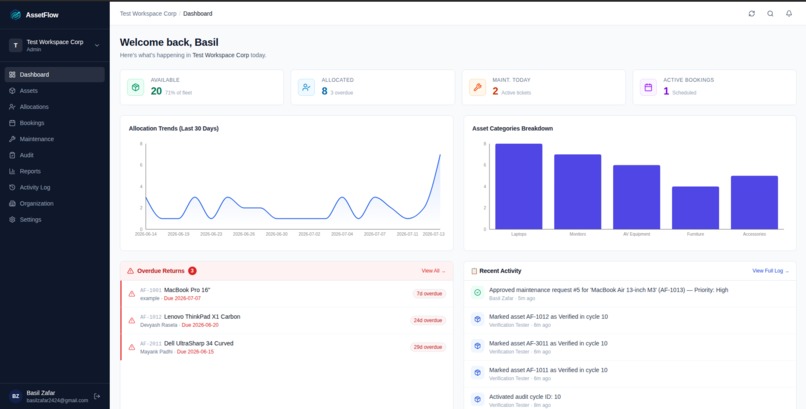
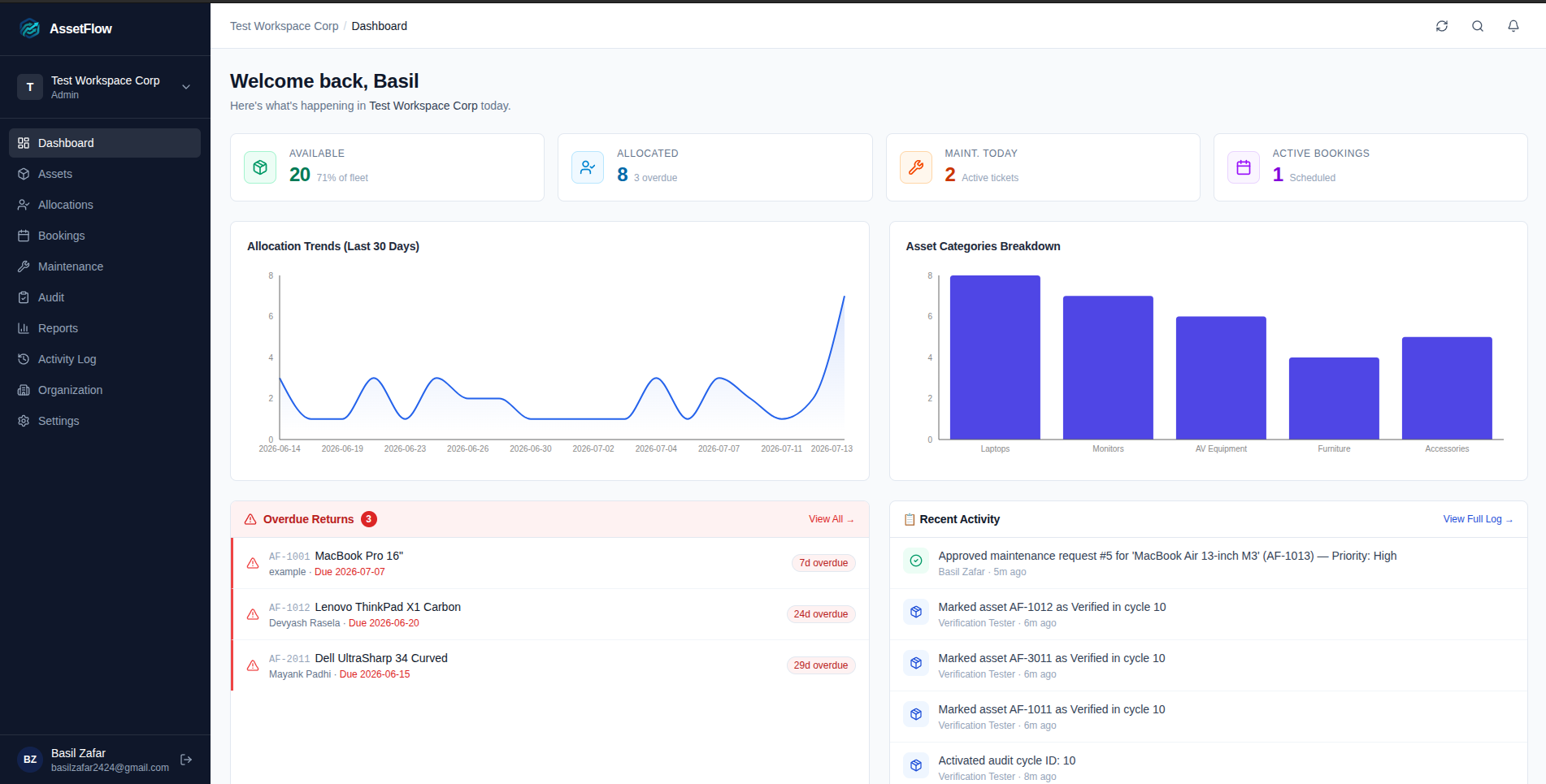
AssetFlow Admin Dashboard: Live view of fleet statistics, overdue hardware trackings, category distributions, and real-time audit logs.
-
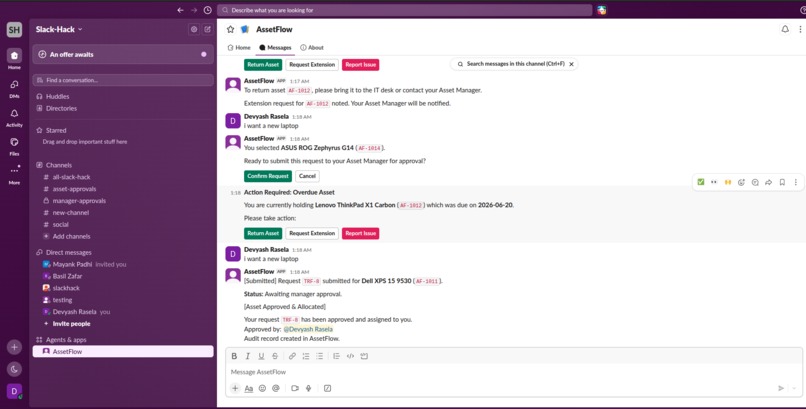
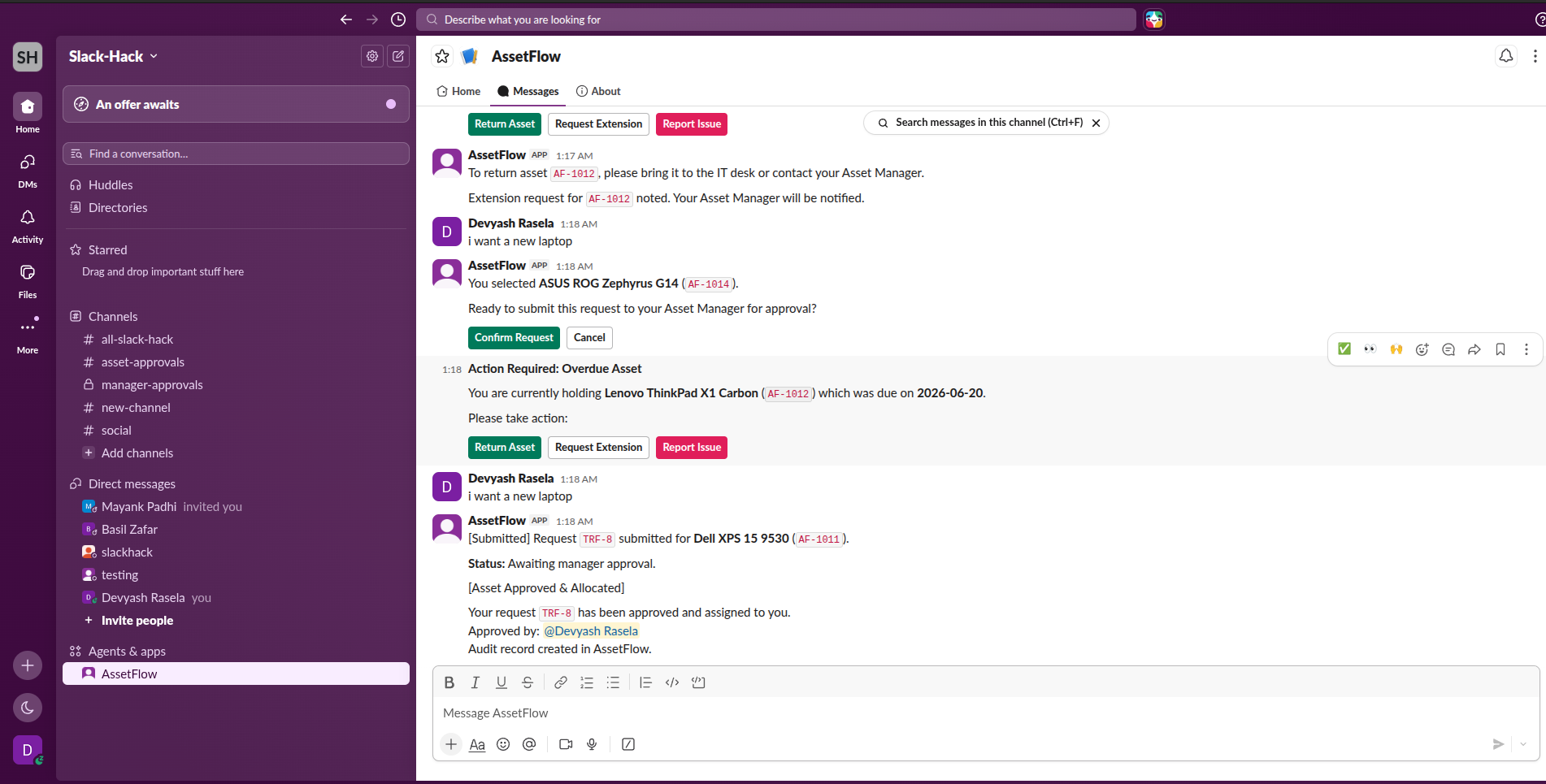
Conversational Hardware Requests: Employees can request available devices, review options, and trigger checkouts instantly in Slack.
-
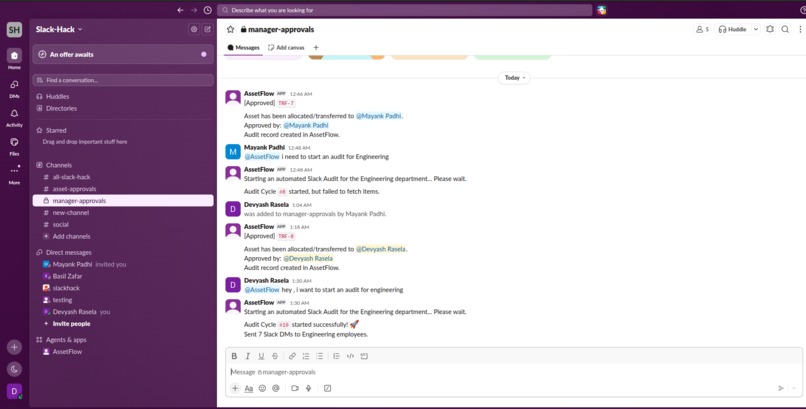
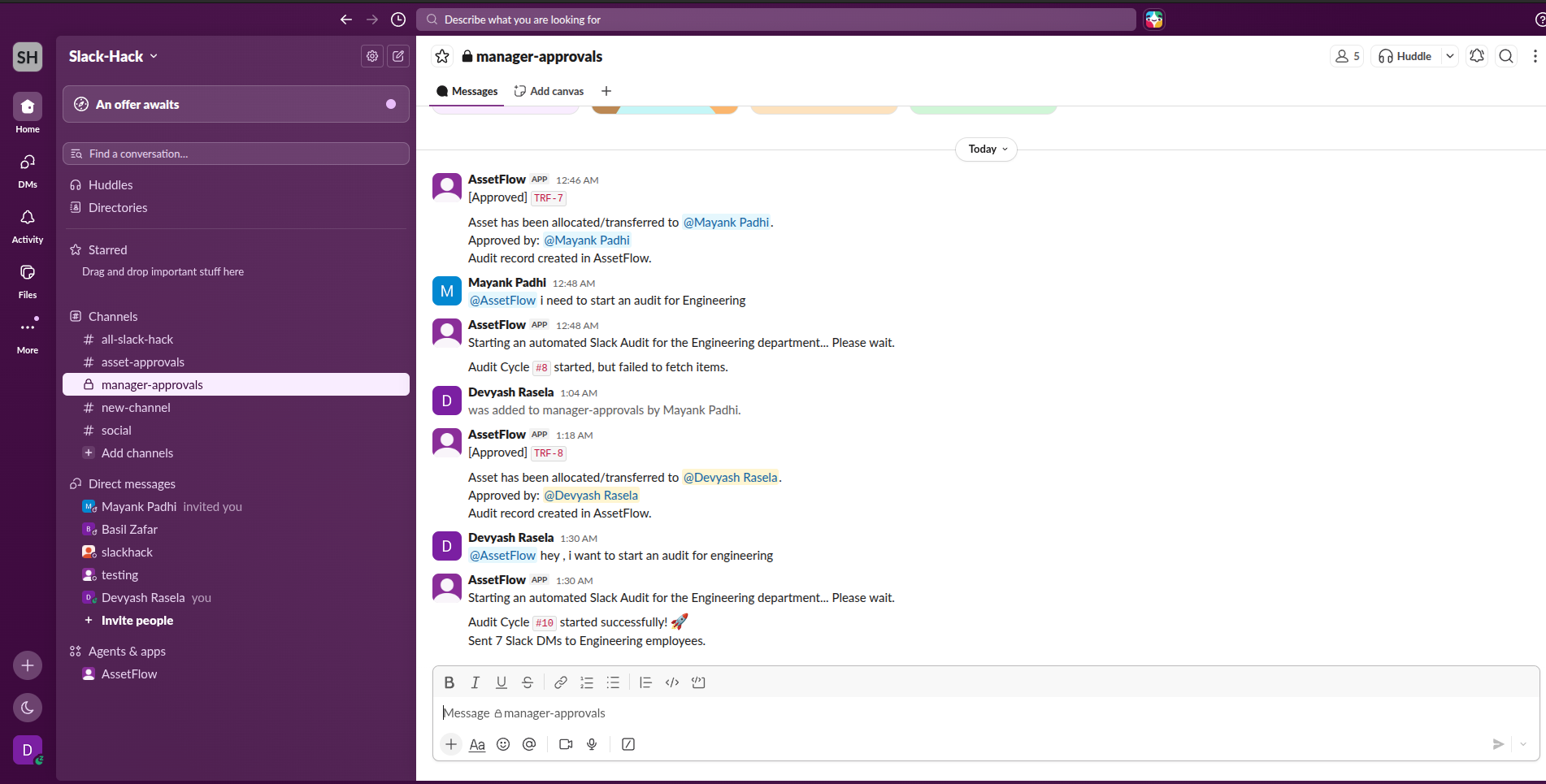
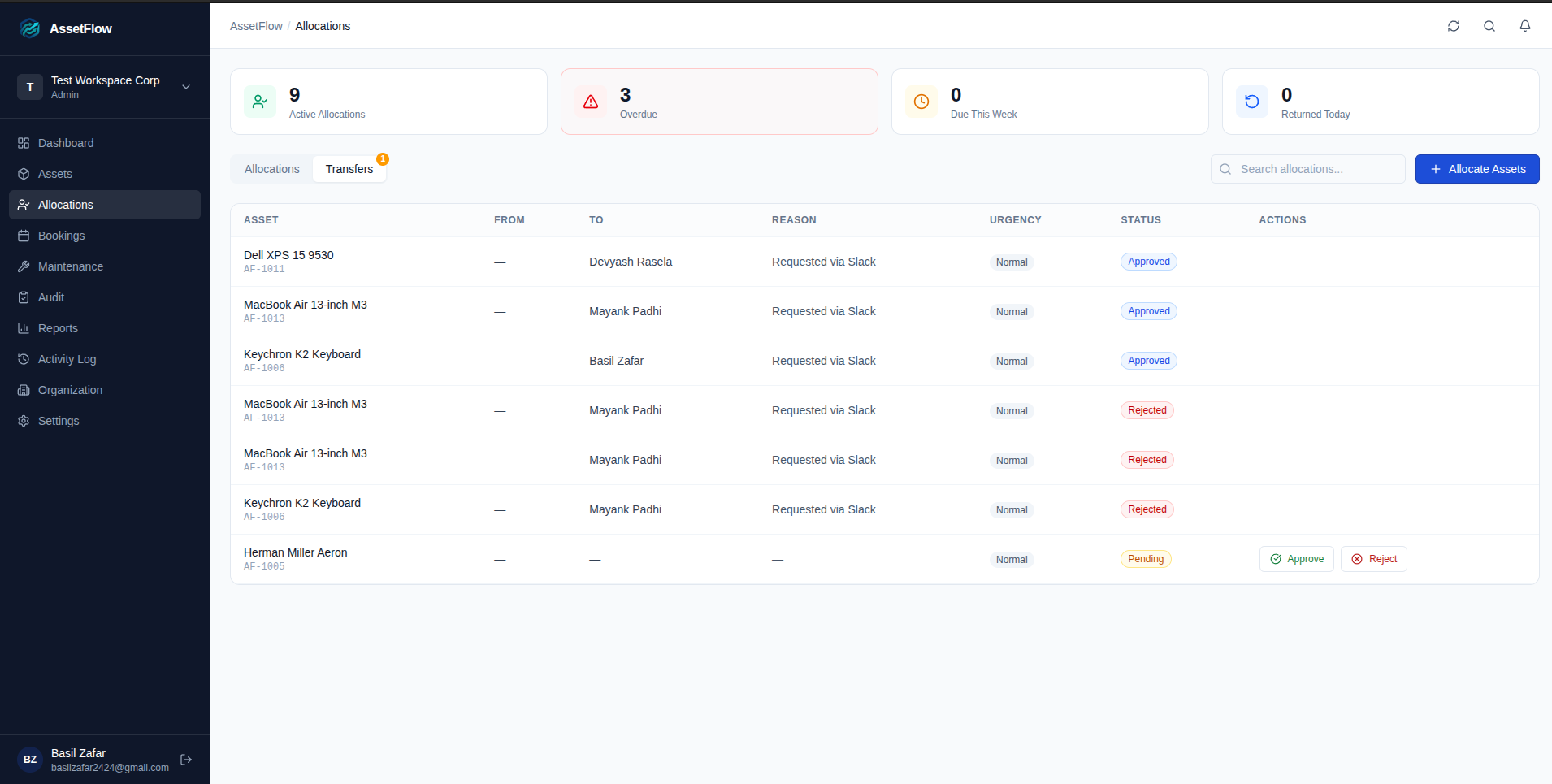
Interactive Manager Approvals & Audit Initialization: Approvals route to dedicated manager channels where admins approve checkouts click.
-
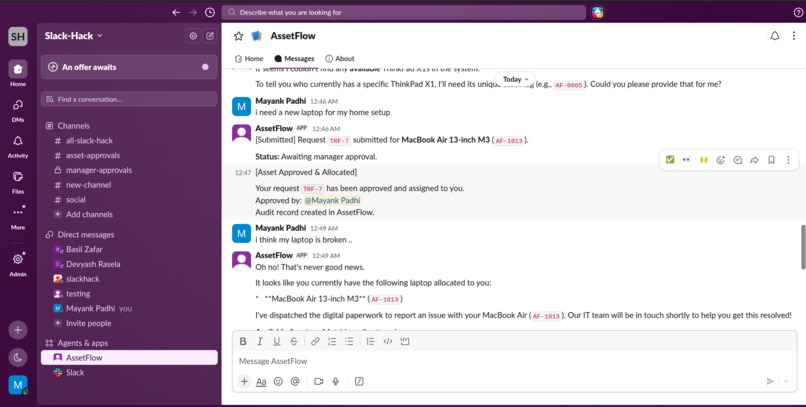
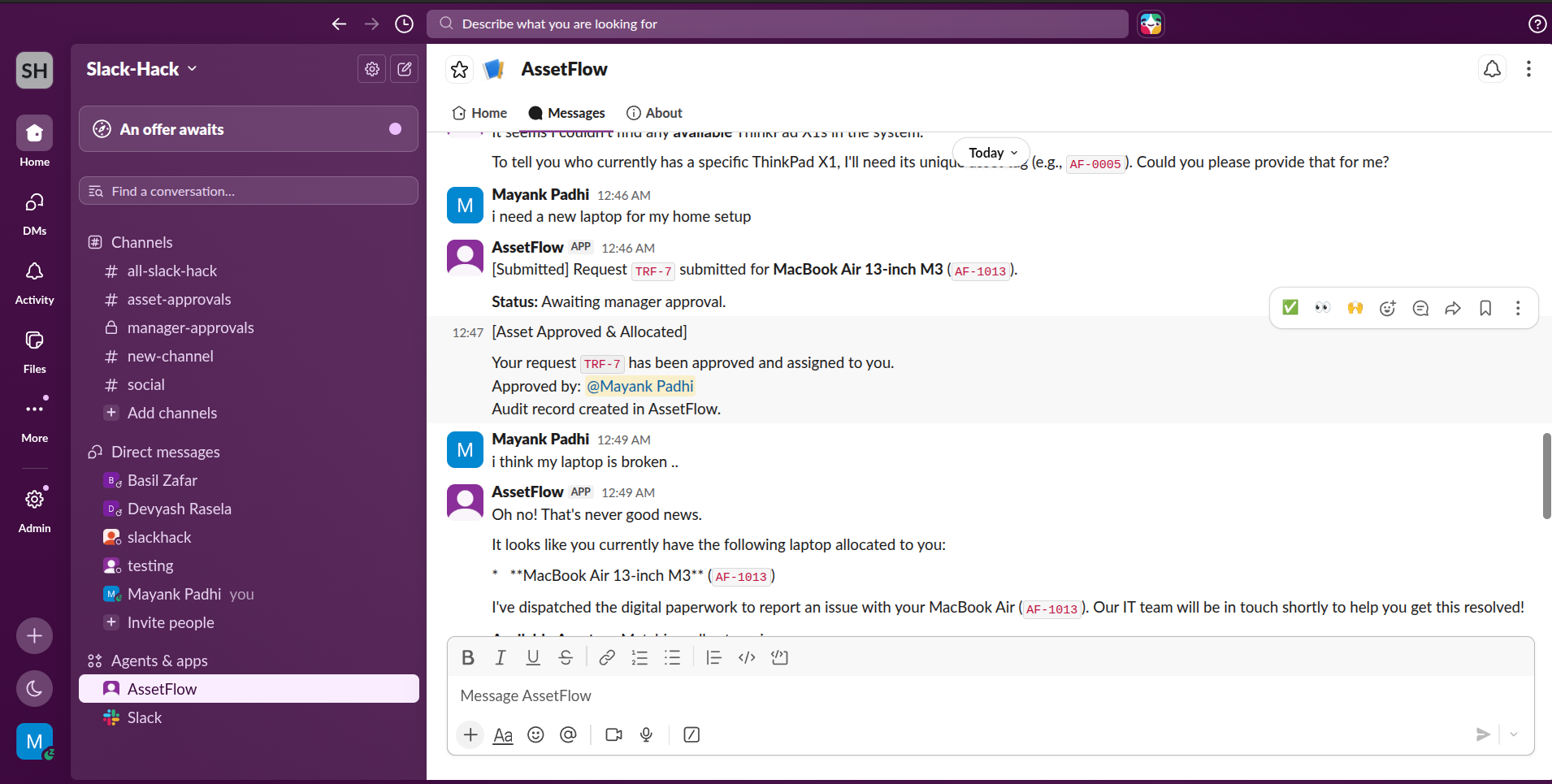
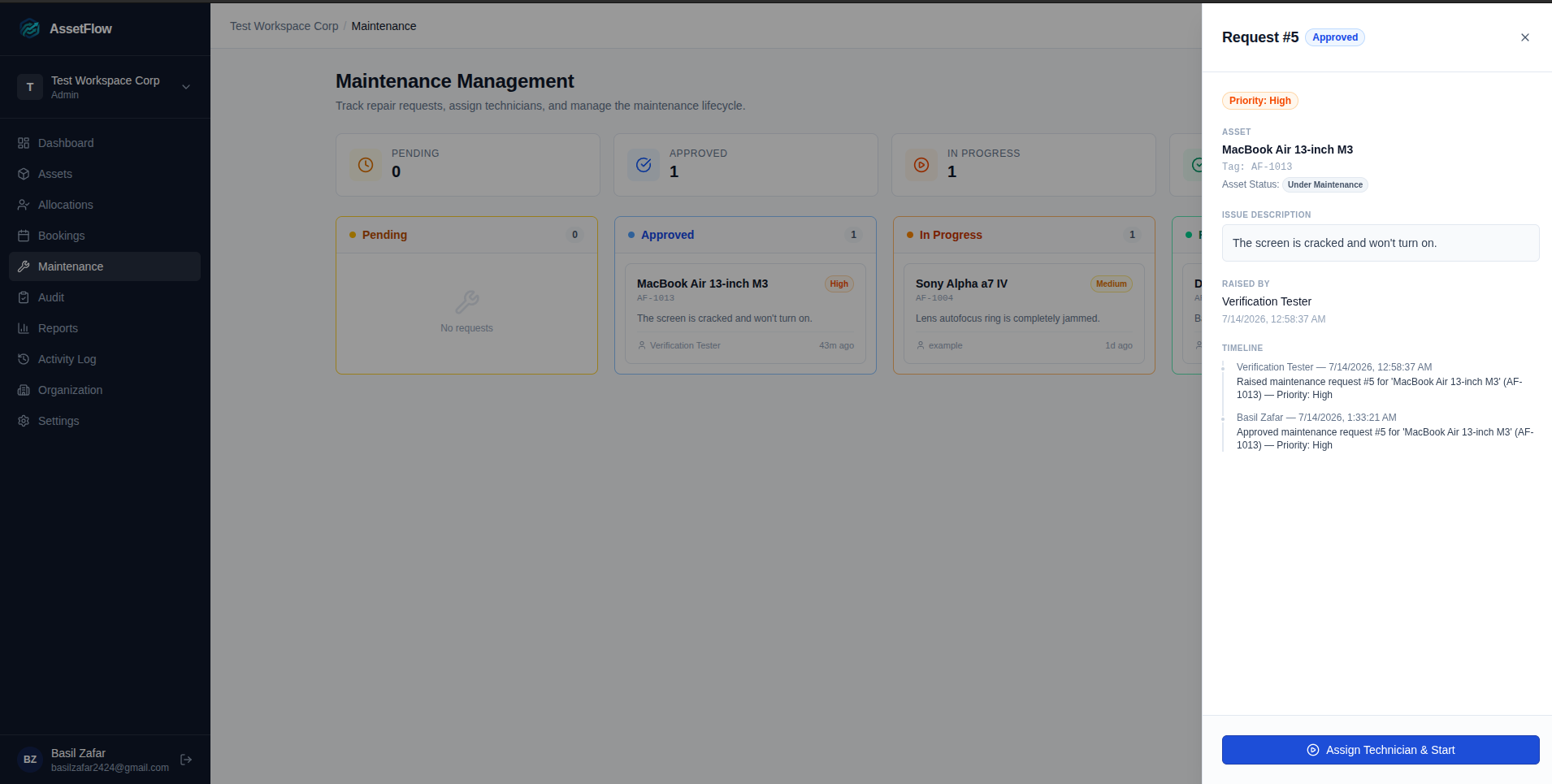
onversational AI Diagnostics: Copilot automatically detects user allocations, infers the asset tag, and requests maintenance detail.
-
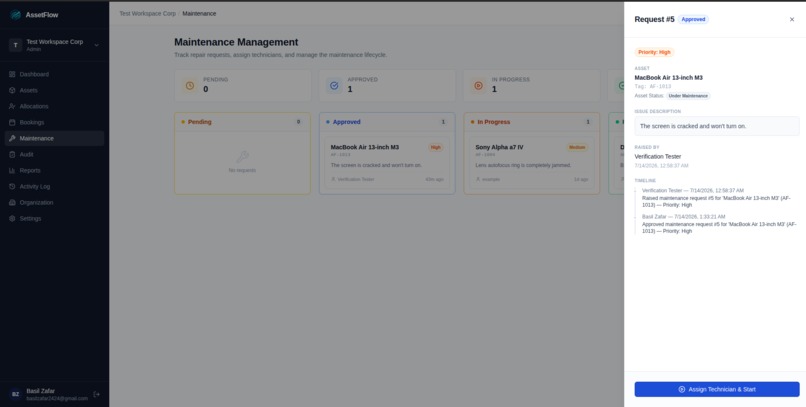
Self-Service Support Tickets: Instantly registers hardware damage tickets directly to the central IT database from Slack.
-
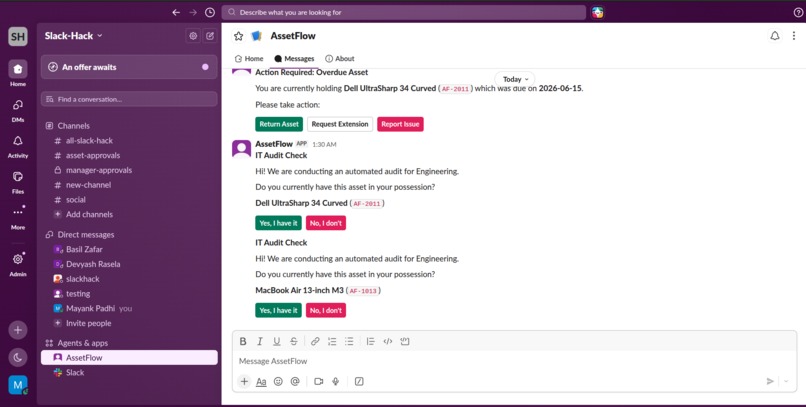
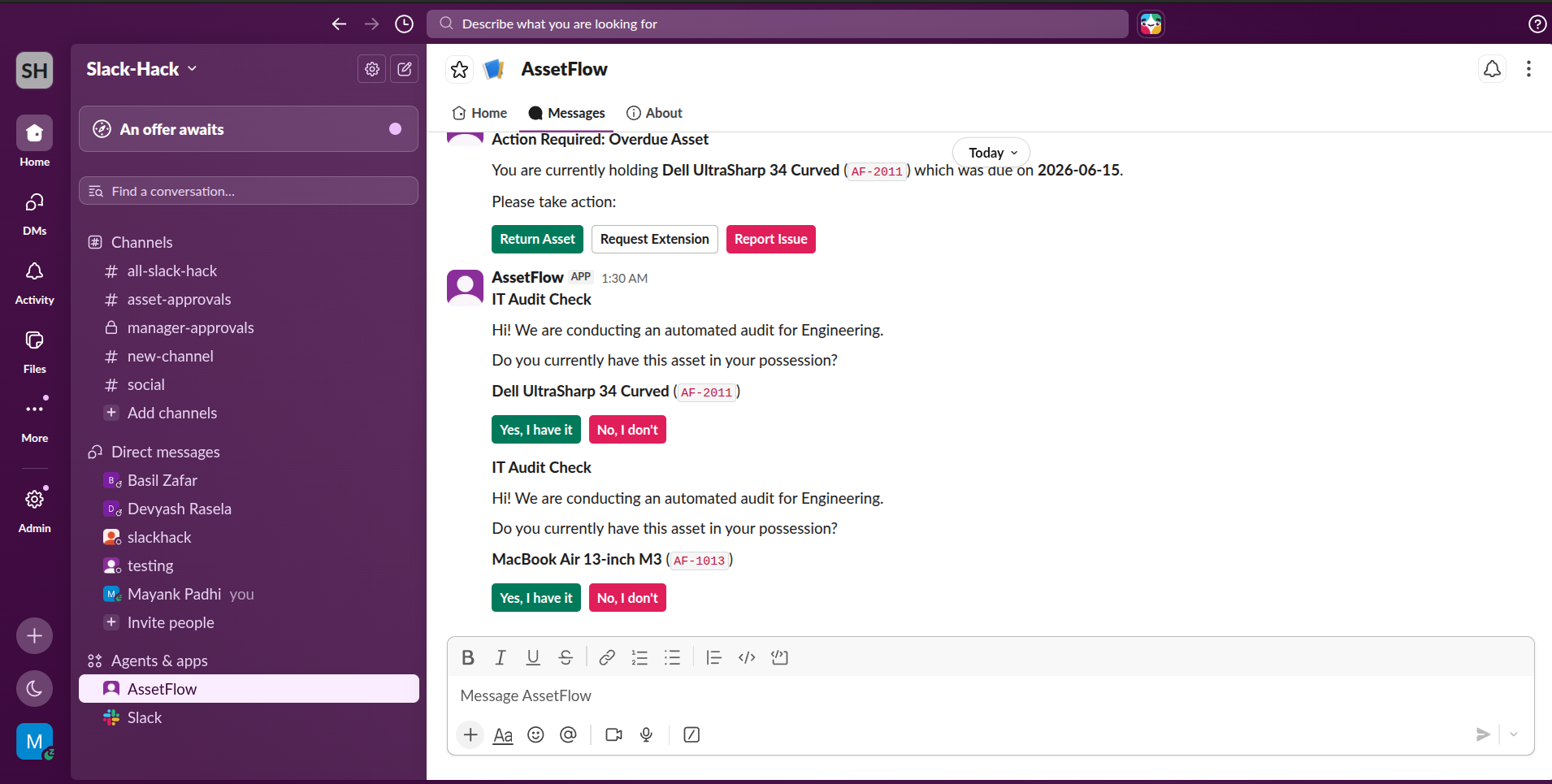
Compliance Auditing:Managers can trigger physical department audits over Slack, which queries active checkouts and maps employee profiles.
-
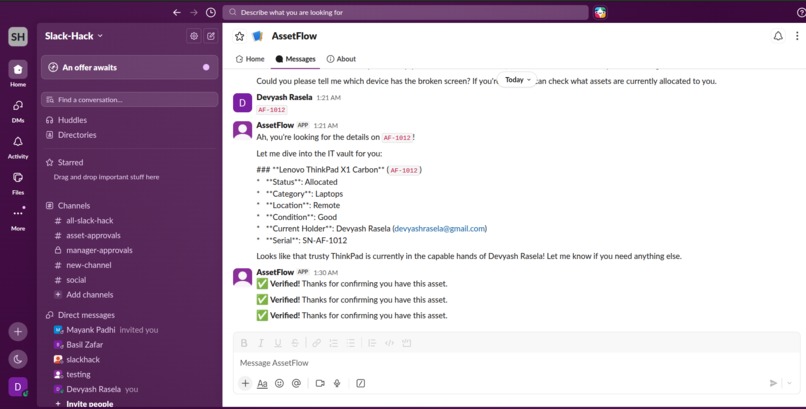
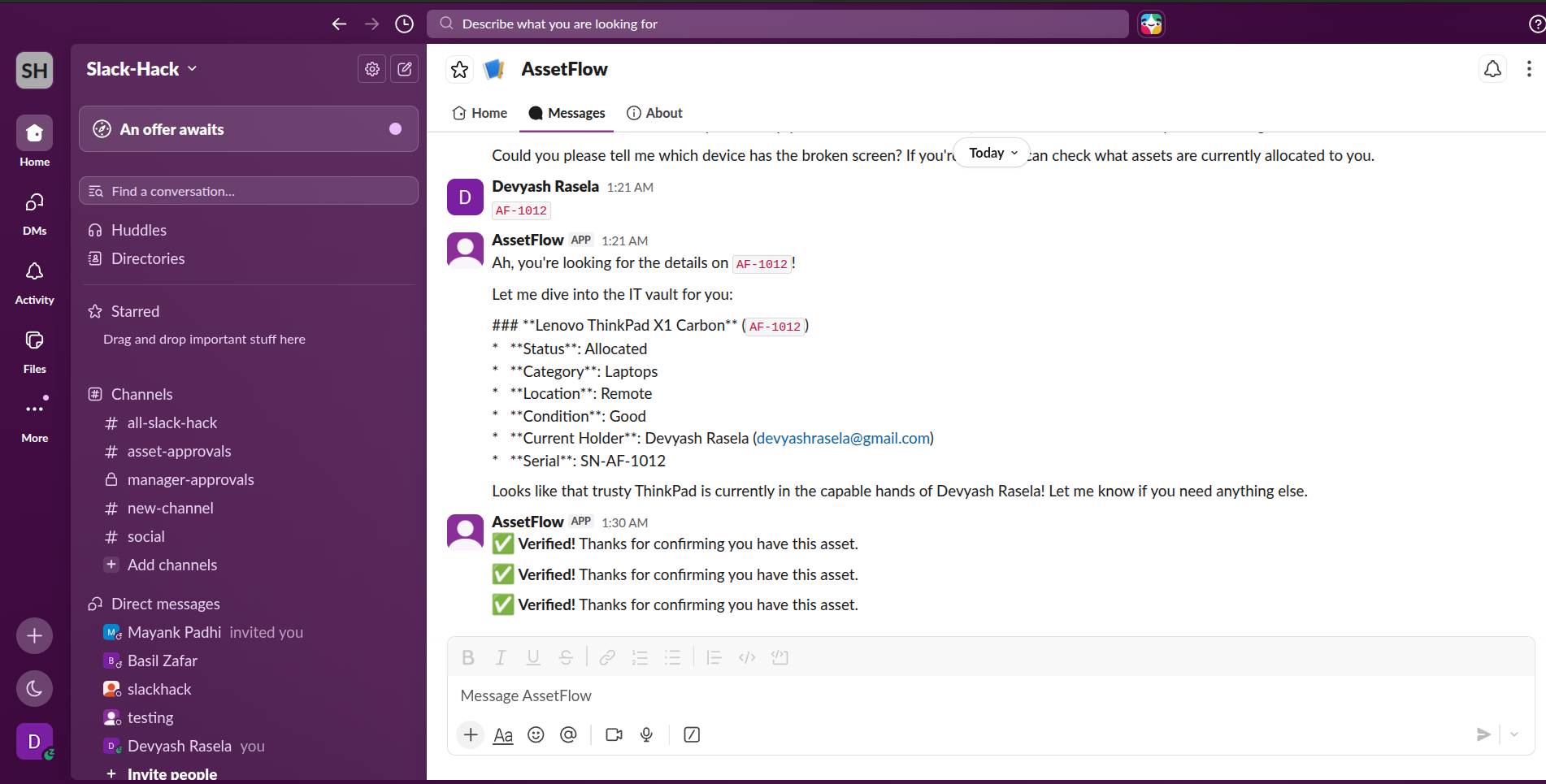
Interactive Asset Verification: Employees receive direct message cards to verify possession of hardware, updating database states live.
-
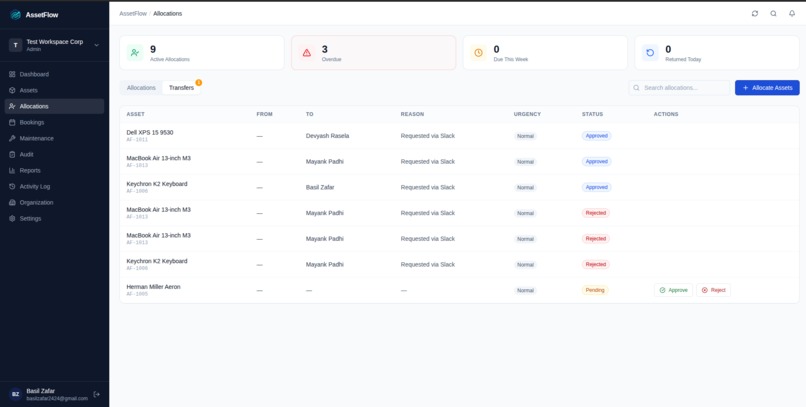
Audit Logs & Asset History: Tracks complete asset histories, status transitions, and ownership chains to ensure strict accountability.
AssetFlow Co-Pilot



AssetFlow Co-Pilot: Stop fighting spreadsheets. A Slack-native AI assistant that actually tracks, allocates, and manages your business inventory, simplifying your day to day operations.
Inspiration
Teams still lose hours to spreadsheet-driven asset tracking, scattered approvals, and “who has this laptop?” messages that never get fully resolved. We wanted to replace that friction with a workflow that feels natural inside Slack, but still respects the realities of enterprise data, permissions, and auditability.
AssetFlow Co-Pilot turns asset management into a live, controlled system instead of a passive document. The goal was simple: let employees ask for what they need in plain language, while giving managers a clean way to approve, audit, and monitor everything in one place.
What It Does
AssetFlow Co-Pilot offers two parallel interaction models available to everyone. Any person in the company can drive operations through our complete web frontend, or utilize the AI agent layer to run complex inventory workflows natively via Slack.
Managers get a tighter operating loop: one-click approvals, audit support, alerts for risky or overdue actions, and a centralized view of allocations and asset state. Under the hood, the system ties together the frontend, backend, database, and AI layer so the assistant can act on live data instead of generating vague responses.
Feature Breakdown
| Capability | Employees | Managers |
|---|---|---|
| Natural language requests | Ask for laptops, monitors, or other assets directly in Slack | Review requests in a structured workflow |
| Availability checks | See whether an asset is free before requesting it | View current allocation state across the workspace |
| Approvals | Submit requests and wait for status updates | Approve or reject with one click |
| Operational visibility | Receive confirmations and progress updates | Monitor allocations, audits, and alerts |
The Hard Part: Concurrency & Race Conditions
The hardest problem was making sure two people could not claim the same asset at the same time. If User A and User B request the same device simultaneously, the system must choose one winner and keep the database consistent.
We solved this with transactional locking in MySQL. The backend locks the relevant asset row before completing the allocation, so the second request waits, re-checks state, and fails safely if the asset is already reserved.
Future Roadmap
- Add deeper automation for recurring asset workflows
- Improve AI recommendations for approvals and assignments such that it's good
Built With
- aiven
- express.js
- git
- github
- javascript
- langgraph
- mcp
- mysql
- node.js
- python
- react
- render
- sequlize
- slack
- sql
- tailwind
- tanstack
- vercel
- zustand


Log in or sign up for Devpost to join the conversation.