-
-
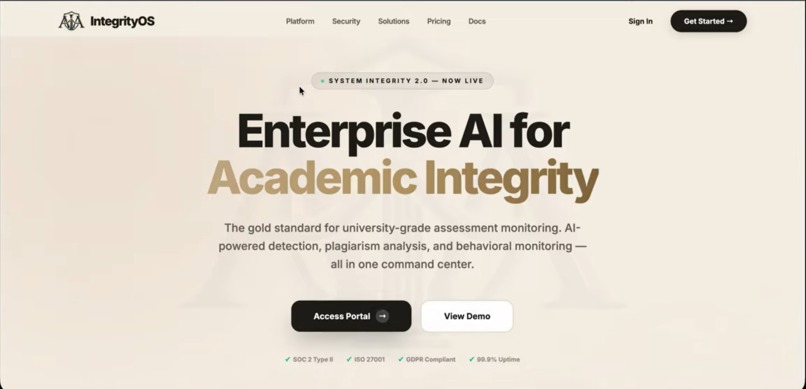
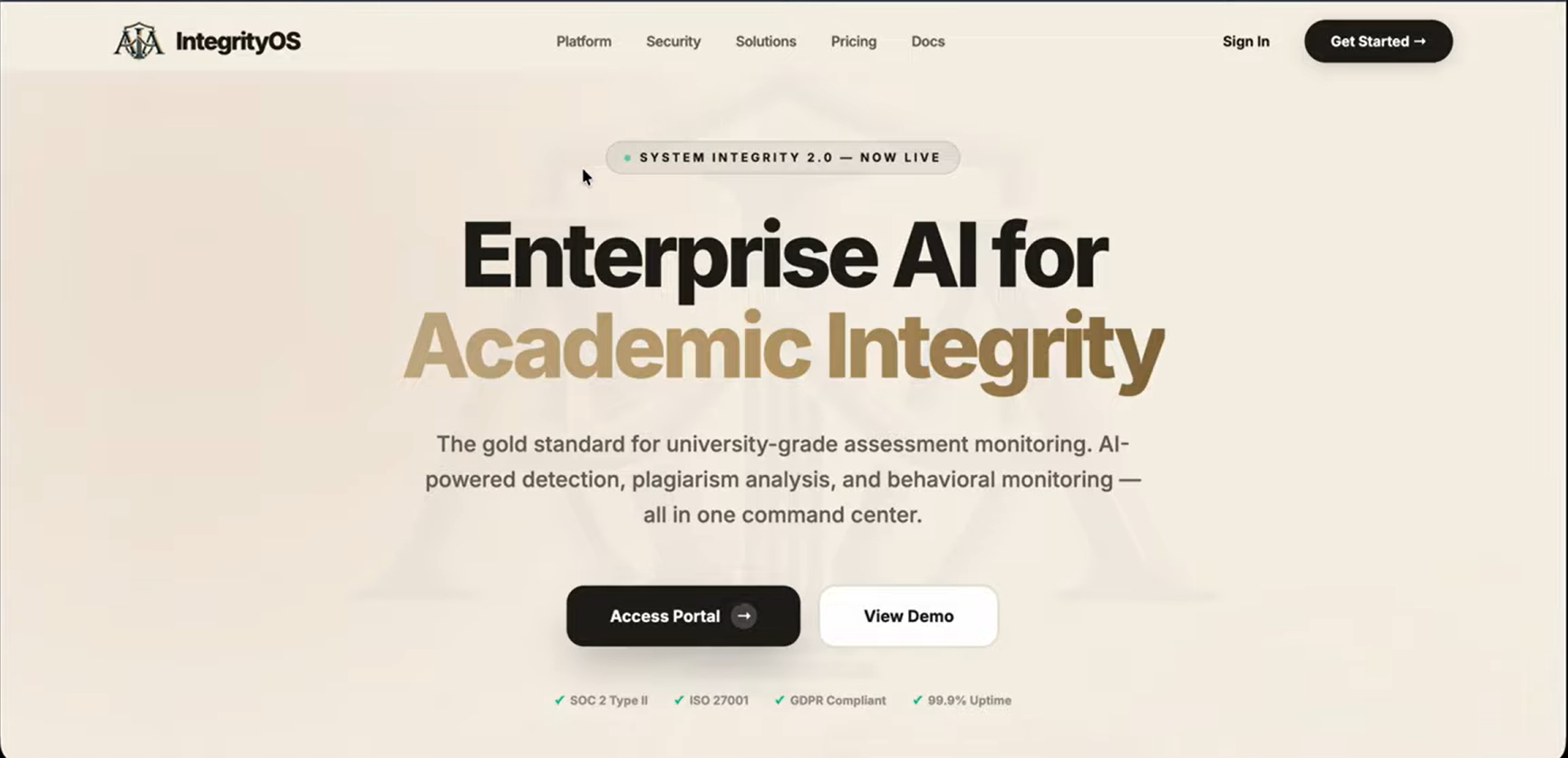
Landing Page IntegrityOS — AI-Powered Academic Integrity Platform
-
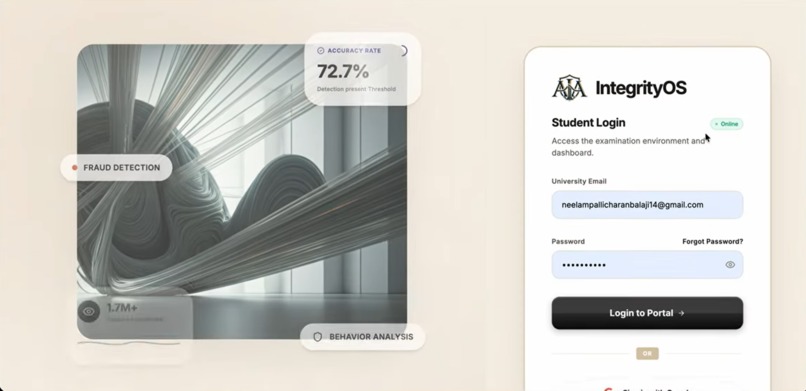
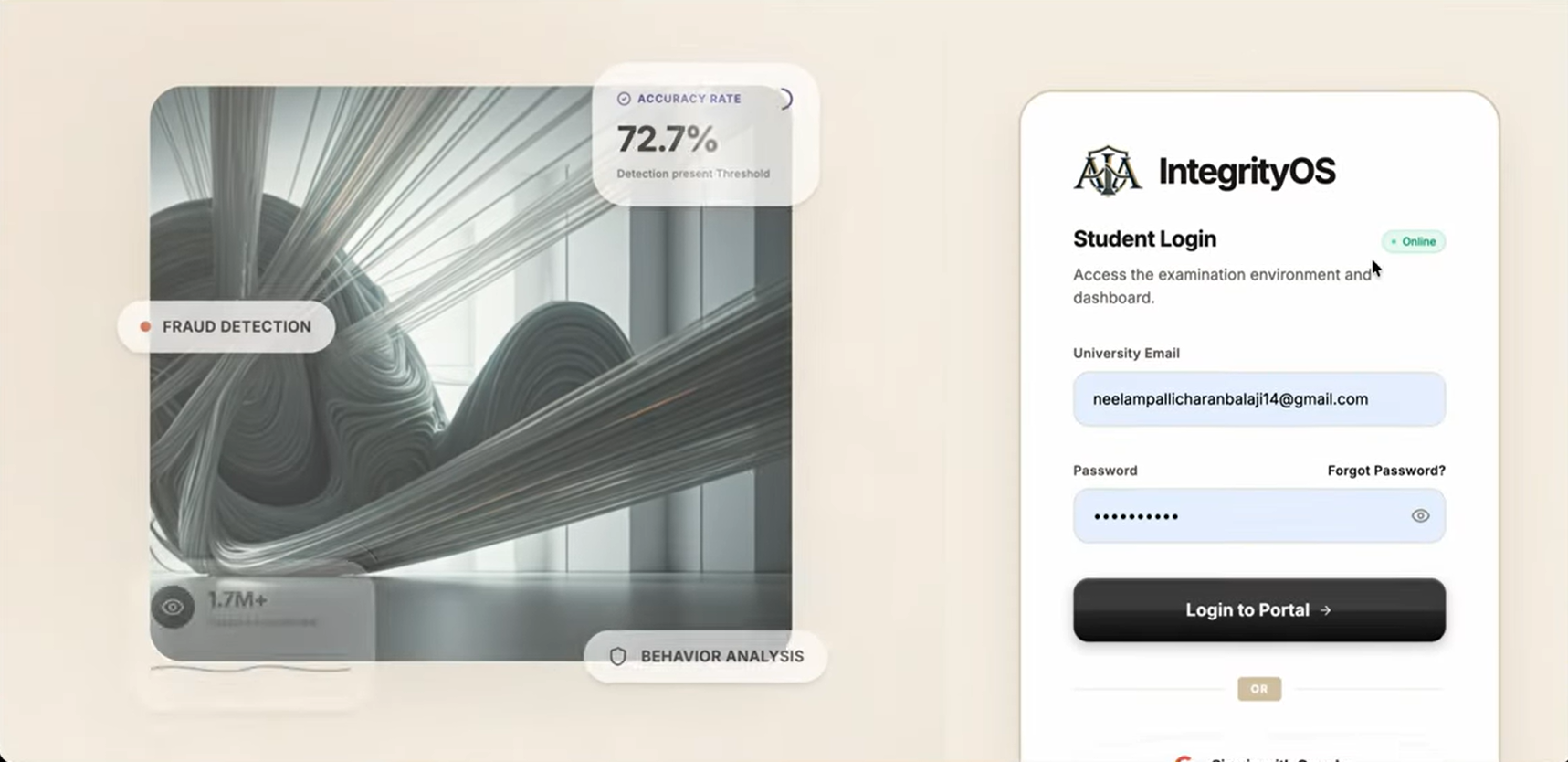
Student Login Secure Student Portal for Assessment Access and Integrity Monitoring
-
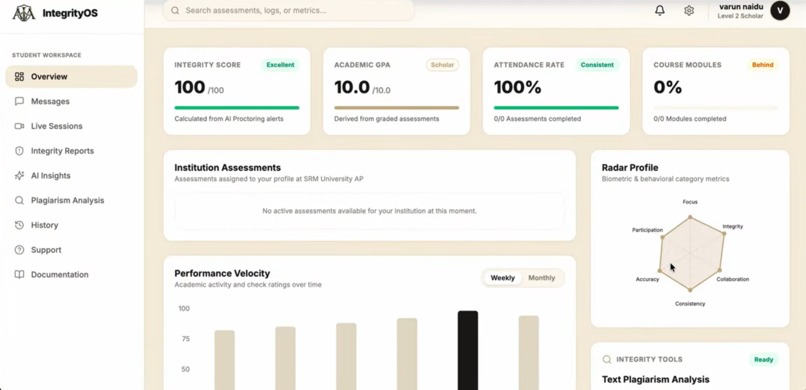
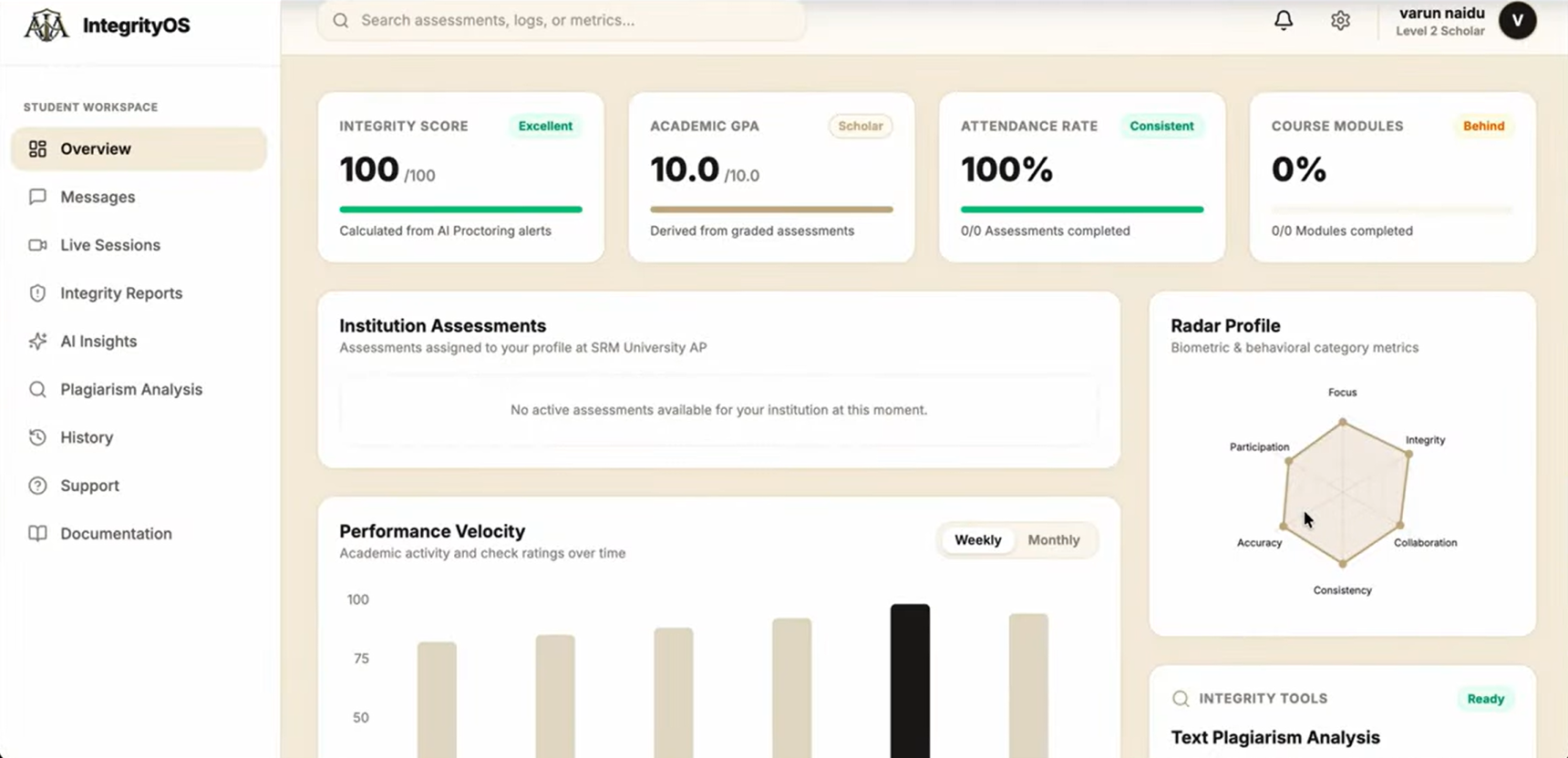
Student Dashboard Unified Student Dashboard for Academic and Integrity Insights
-
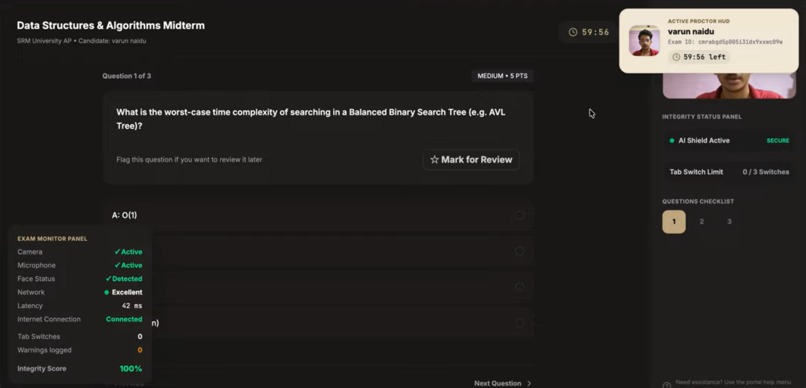
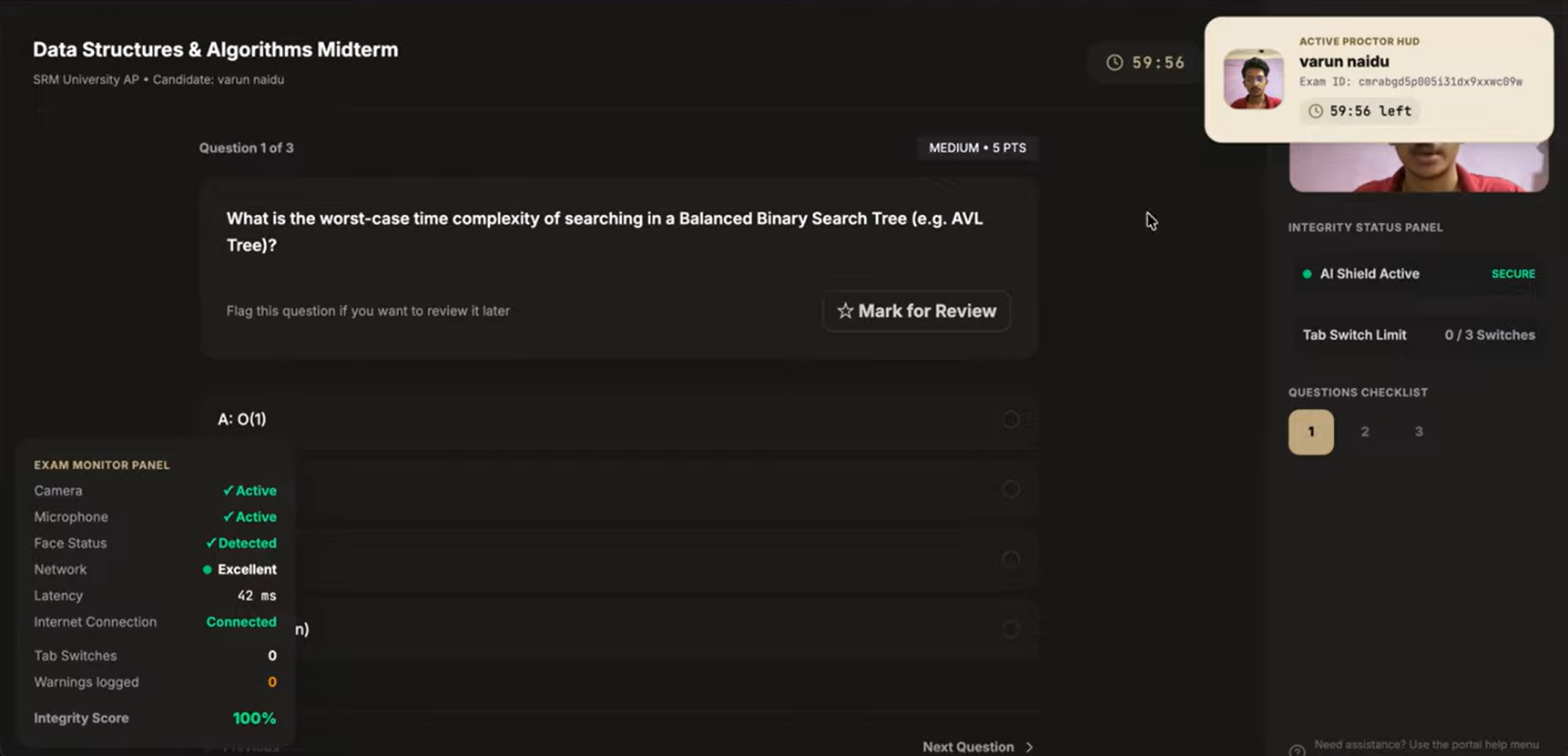
Live Examination Interface AI-Powered Proctored Examination with Real-Time Integrity Monitoring
-
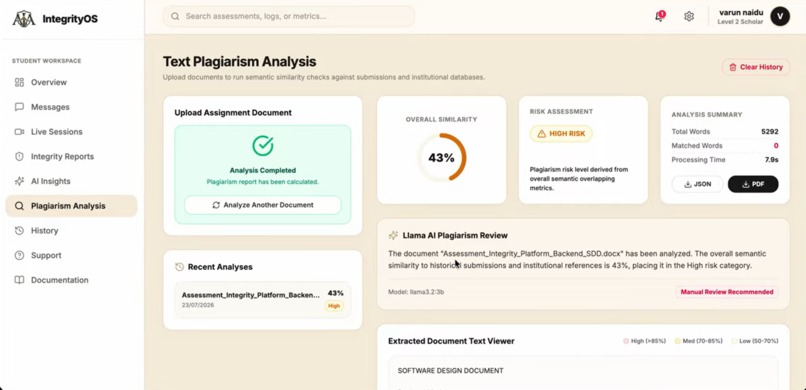
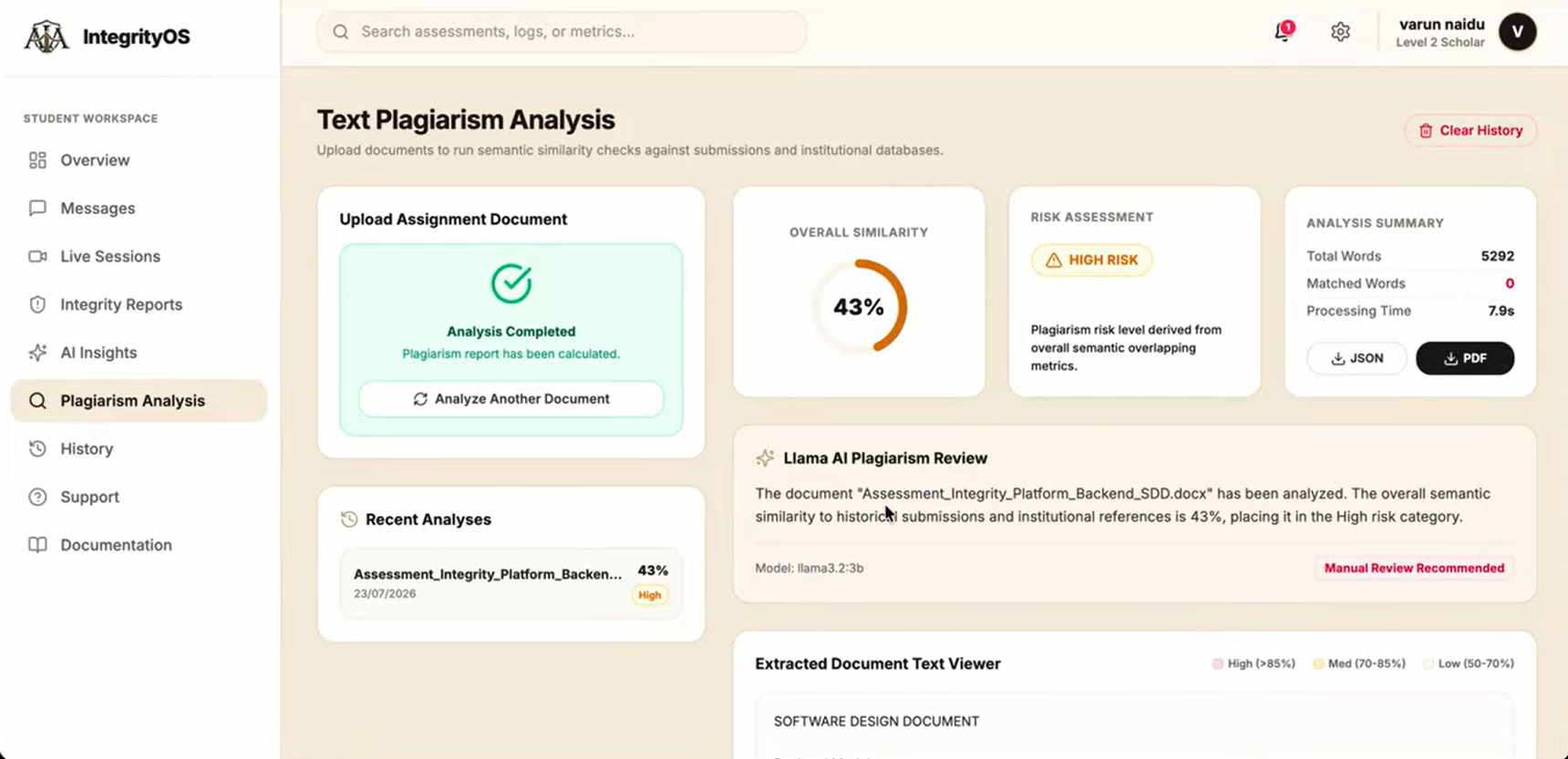
Plagiarism Analysis AI-Driven Semantic Plagiarism Detection and Risk Assessment
-
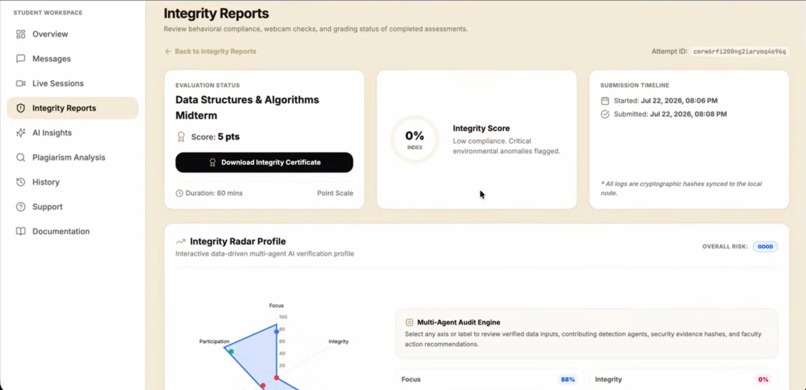
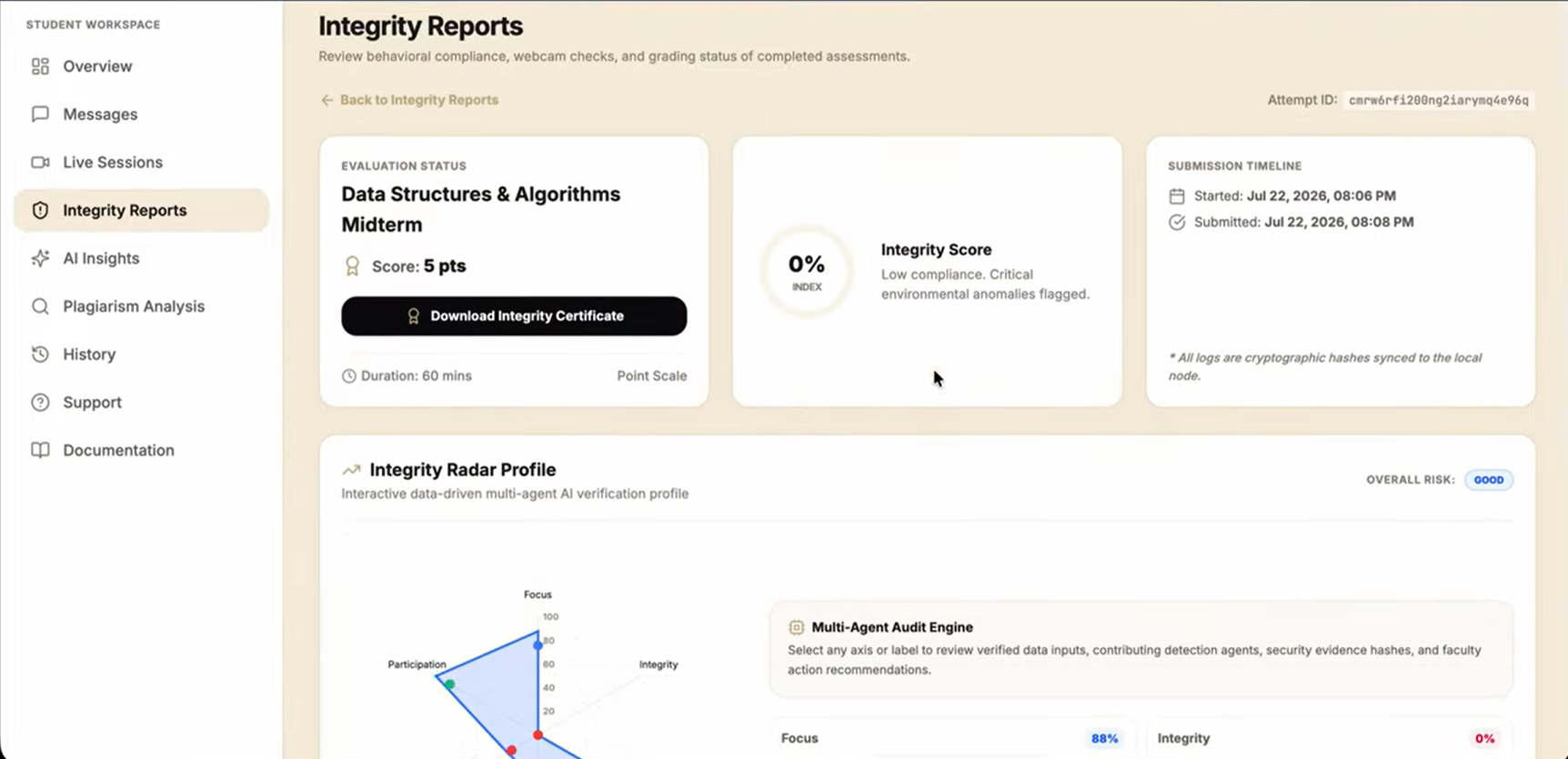
Integrity Report Multi-Agent Integrity Report with Evidence-Based Risk Analysis
-
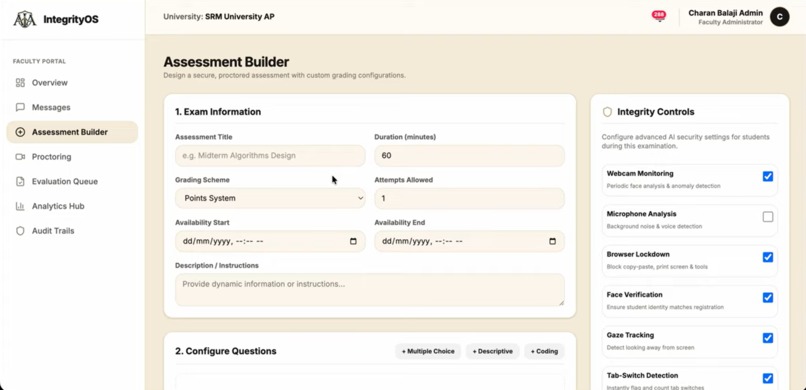
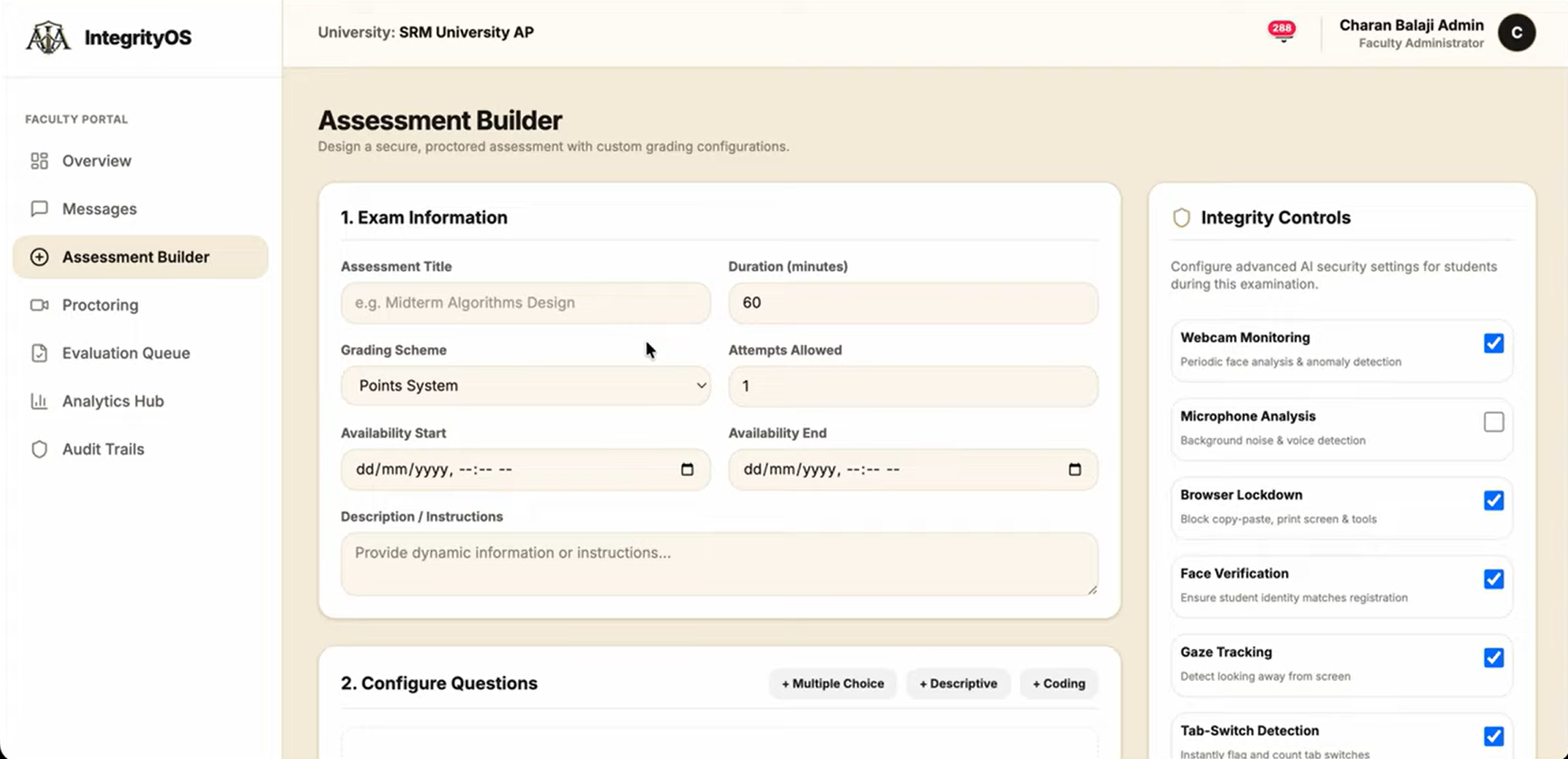
Assessment Builder Secure Assessment Builder with Configurable AI Integrity Controls
-
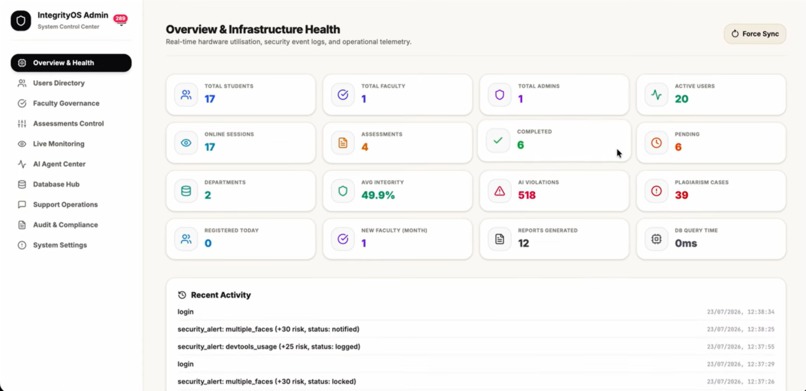
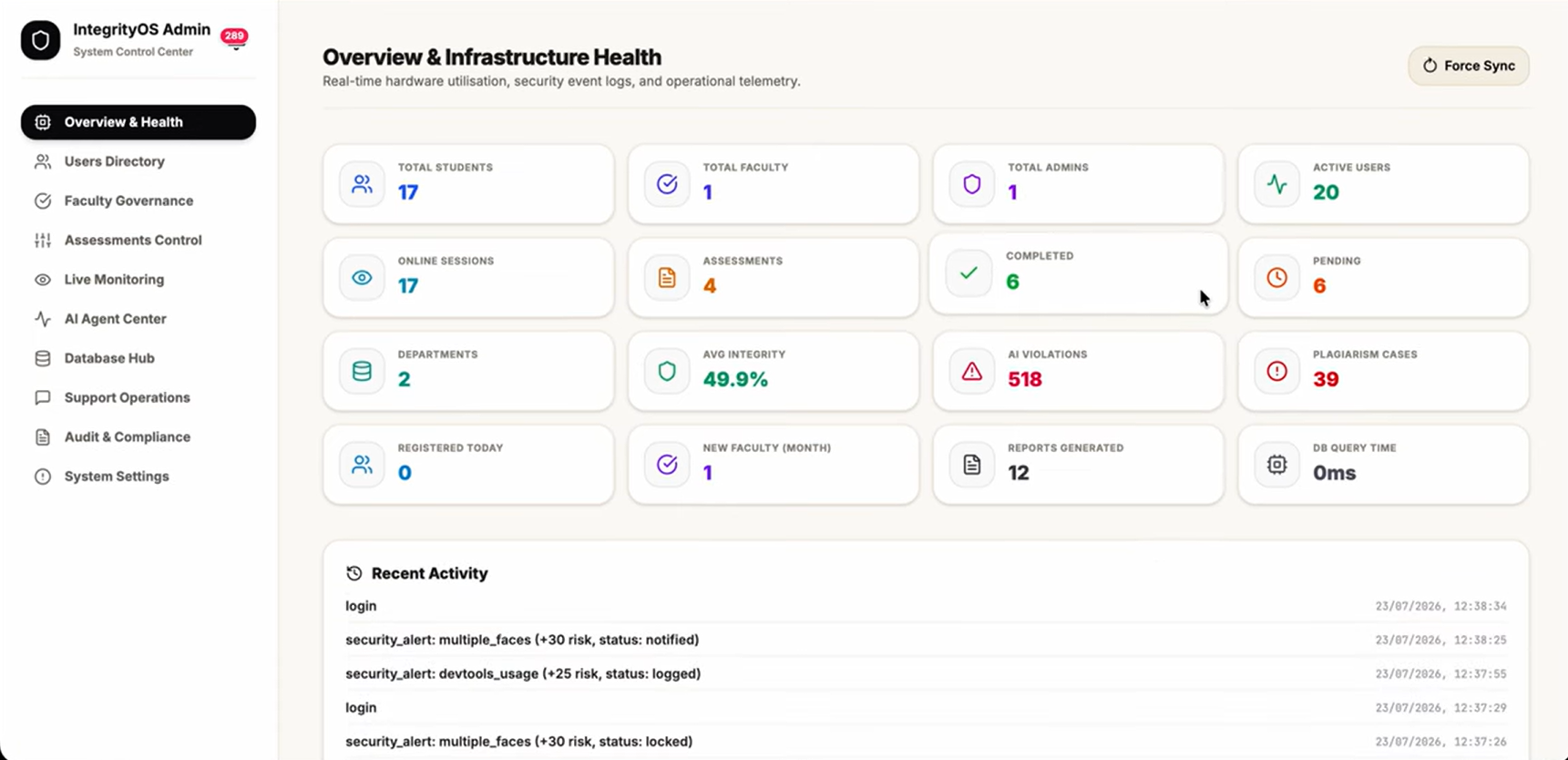
Admin Overview Enterprise Integrity Command Center with Real-Time Platform Analytics
-
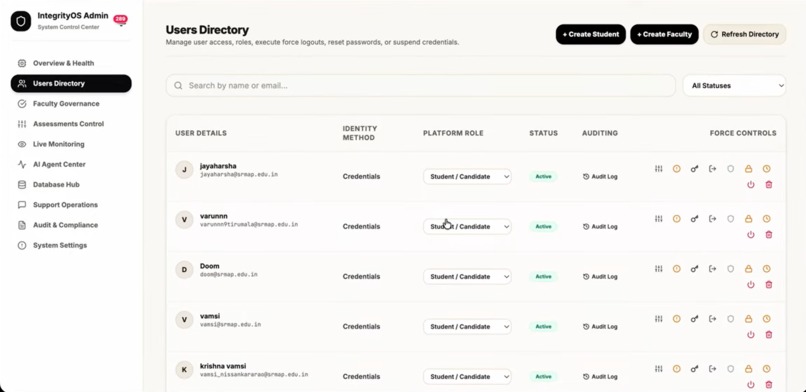
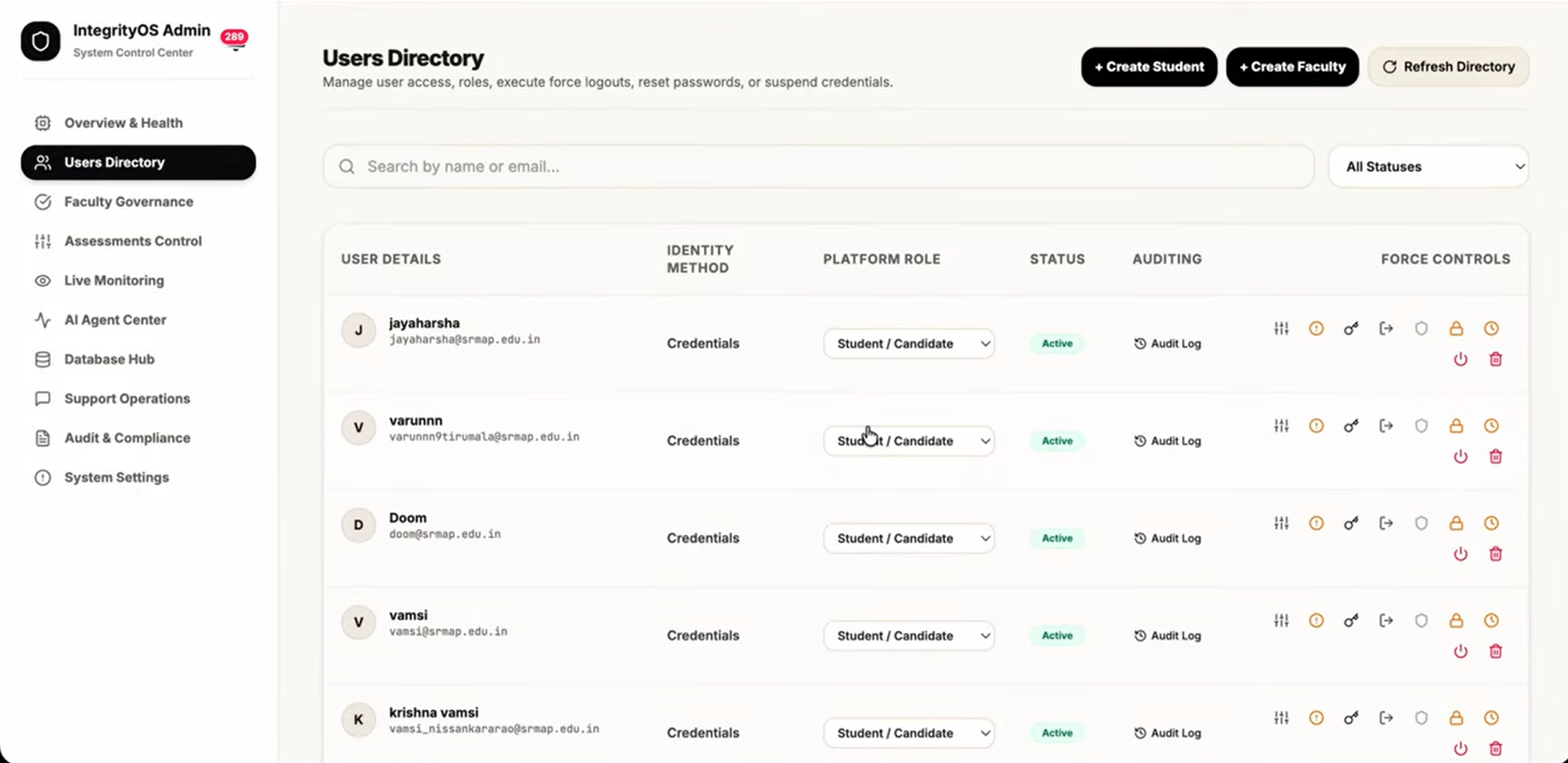
User Directory Centralized User Management and Role-Based Access Control
-
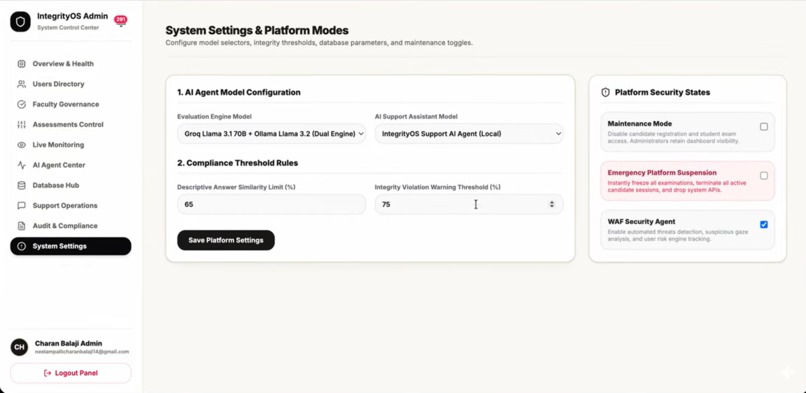
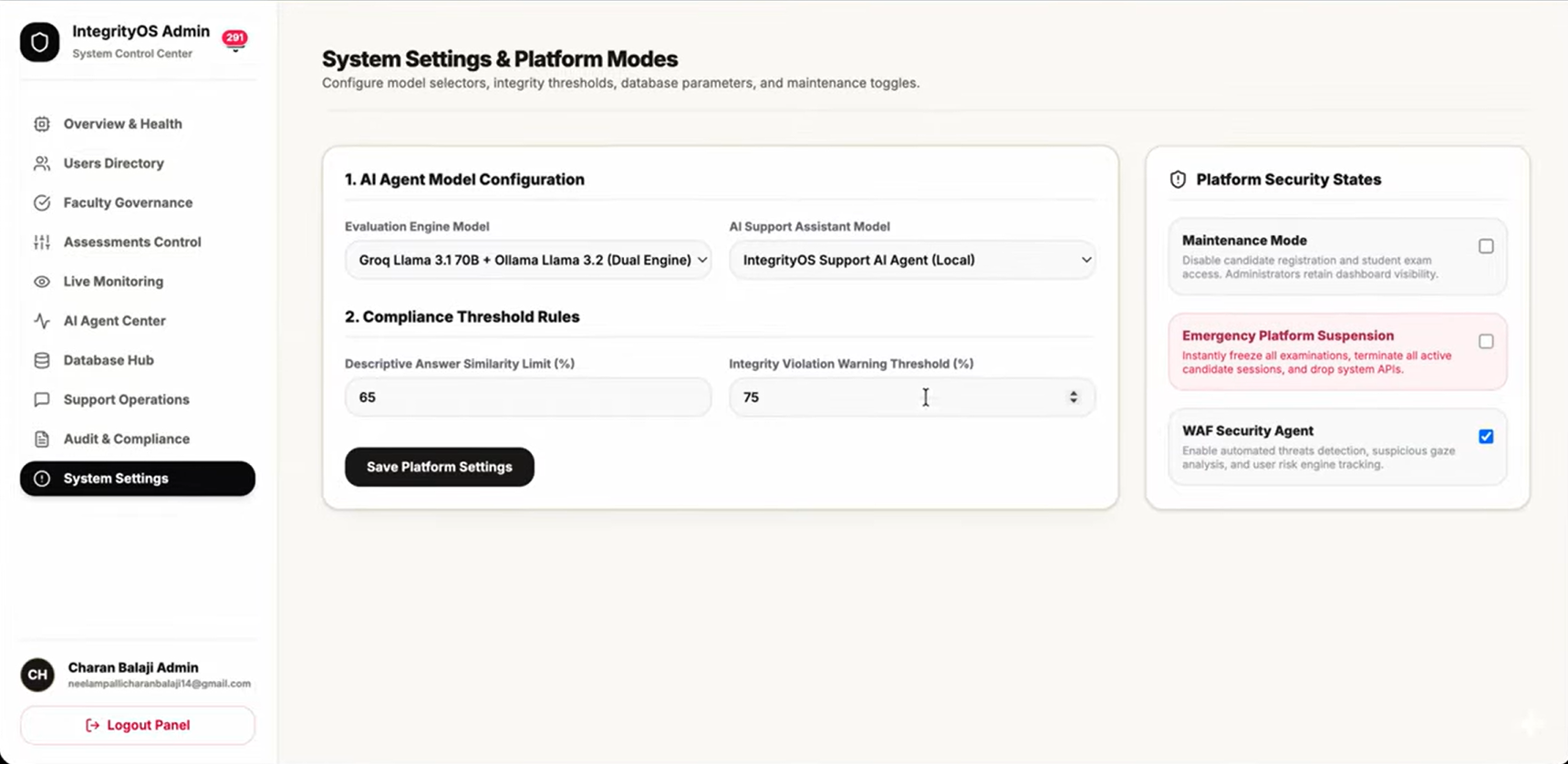
System Settings AI Agent Configuration and Enterprise Integrity Policy Controls
Inspiration
About the Project
Inspiration
Assessment integrity is becoming increasingly difficult as students can use AI tools, copy content from online sources, or submit work that is highly similar to someone else's. Traditional plagiarism checkers often focus on text similarity alone, which is not enough to understand the full context of a submission.
This inspired us to build Assessment Integrity Agent — an AI-powered platform that helps educators analyze submissions from multiple perspectives and generate a clear integrity report.
The goal was not simply to build another plagiarism checker, but to create an AI-native enterprise system where intelligent agents can investigate submissions, combine different signals, and help faculty make faster and better-informed decisions.
What We Built
Our platform analyzes assessment submissions for:
- Plagiarism and content similarity
- Potential AI-generated content
- Suspicious patterns across submissions
- Source and document relationships
- Overall assessment integrity
The system brings these signals together and produces an understandable integrity report instead of forcing faculty to manually inspect multiple tools.
We designed the system around an agentic workflow so that different stages of the analysis can work together rather than operating as isolated features.
How We Built It
The platform was developed using a modern AI and web stack.
AI & Agent Layer
- LangChain
- LangGraph
- Ollama
- Llama 3.2
- RAG pipelines
- Embedding models
- Vector search with
pgvector
Backend
- Node.js
- Express.js
- PostgreSQL
Frontend
- React
- Vite
- TypeScript
- Tailwind CSS
- shadcn/ui
- TanStack Query
- Zustand
- Recharts
The agent workflow processes assessment data, retrieves relevant information from the knowledge base, performs analysis, and combines the results into an integrity report.
What We Learned
One of the biggest lessons was that building an AI application is not just about selecting a powerful model.
We learned how important it is to design the entire reasoning workflow around the model. RAG, embeddings, structured outputs, state management, agent orchestration, and reliable backend APIs all need to work together.
We also learned how to:
- Build RAG-based AI workflows
- Use LangGraph for agent orchestration
- Work with embeddings and vector databases
- Connect AI services with a production-style backend
- Design AI-assisted enterprise interfaces
- Handle uncertainty instead of presenting AI predictions as absolute facts
- Turn complex AI analysis into simple reports that users can understand
Challenges
One of our biggest challenges was making the system useful beyond simple text matching. A submission can be original even when it shares common phrases with another submission, while a highly suspicious submission may not contain obvious copied text.
Another challenge was combining multiple AI signals without overwhelming the user. We needed the final output to be understandable to faculty while still preserving the evidence behind the analysis.
We also faced technical challenges while integrating the AI layer, RAG pipeline, embeddings, database, backend APIs, and frontend into one consistent workflow.
These challenges pushed us to think beyond individual AI features and focus on building a complete agentic enterprise product.
The Bigger Vision
Assessment Integrity Agent is designed as more than a detection tool. Our vision is to create an intelligent assessment integrity platform where AI agents can continuously analyze evidence, identify suspicious patterns, explain their findings, and support educators in making informed decisions.
The system is intended to assist human judgment, not replace it. Instead of simply saying that a submission is "cheating" or "not cheating," the platform provides evidence and signals that help educators investigate further.
For us, this project represents how AI agents can be applied to a real enterprise problem and turned into a practical workflow that people can actually use.
Built With
- agents
- ai
- css
- database
- embeddings
- express.js
- langchain
- langgraph
- learning
- llama
- llm
- machine
- node.js
- ollama
- pgvector
- plagiarism
- postgresql
- rag
- react
- shadcn/ui
- tailwind
- typescript
- vector

Log in or sign up for Devpost to join the conversation.