ASLYF
Problem
According to WHO, an estimated 5% people around the world suffer from significant auditory impairment. Whereas the number of certified ASL interpreters is in extremely low numbers. This causes problems in every day life, due to inability of being able to communicate freely, and even if someone wants to help them not many people know sign languages or think themselves ready to learn the language. This creates the problem of not letting the people genuinly wanting to help, and communicate with them naturally.
Solution
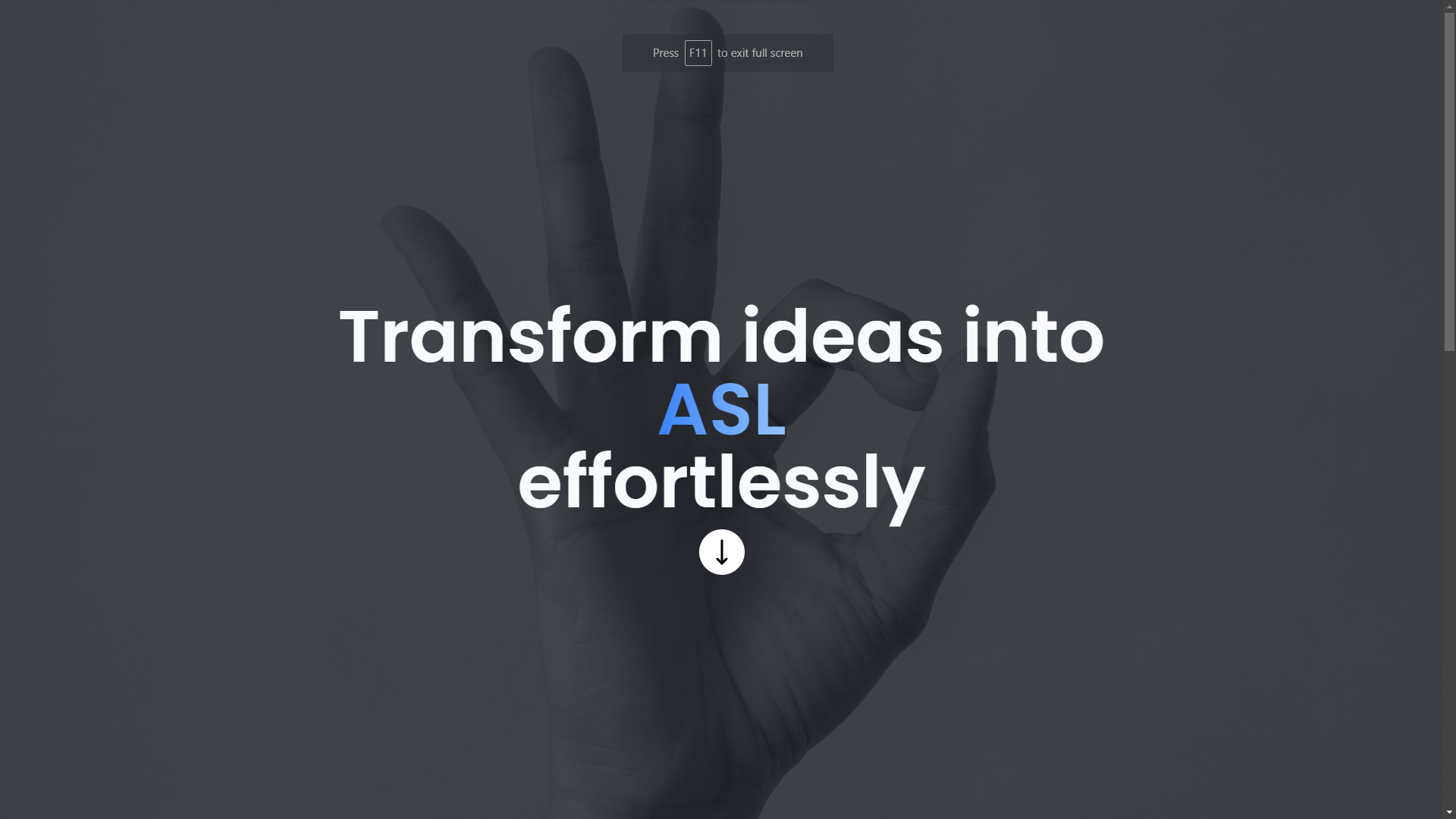
To tackle this problem, we came up with a solution which may help making the process of communication a bit more natural. We built a user centric platform called ASLYF which includes web application. Our product consists of features such as- I. ASL- Friendly Content Conversion II. Real time ASL Finger spelling conversion III. Breaking communication barriers IV. Equal access to information and services.
Key Features:
1. Text to Speech (TTS):
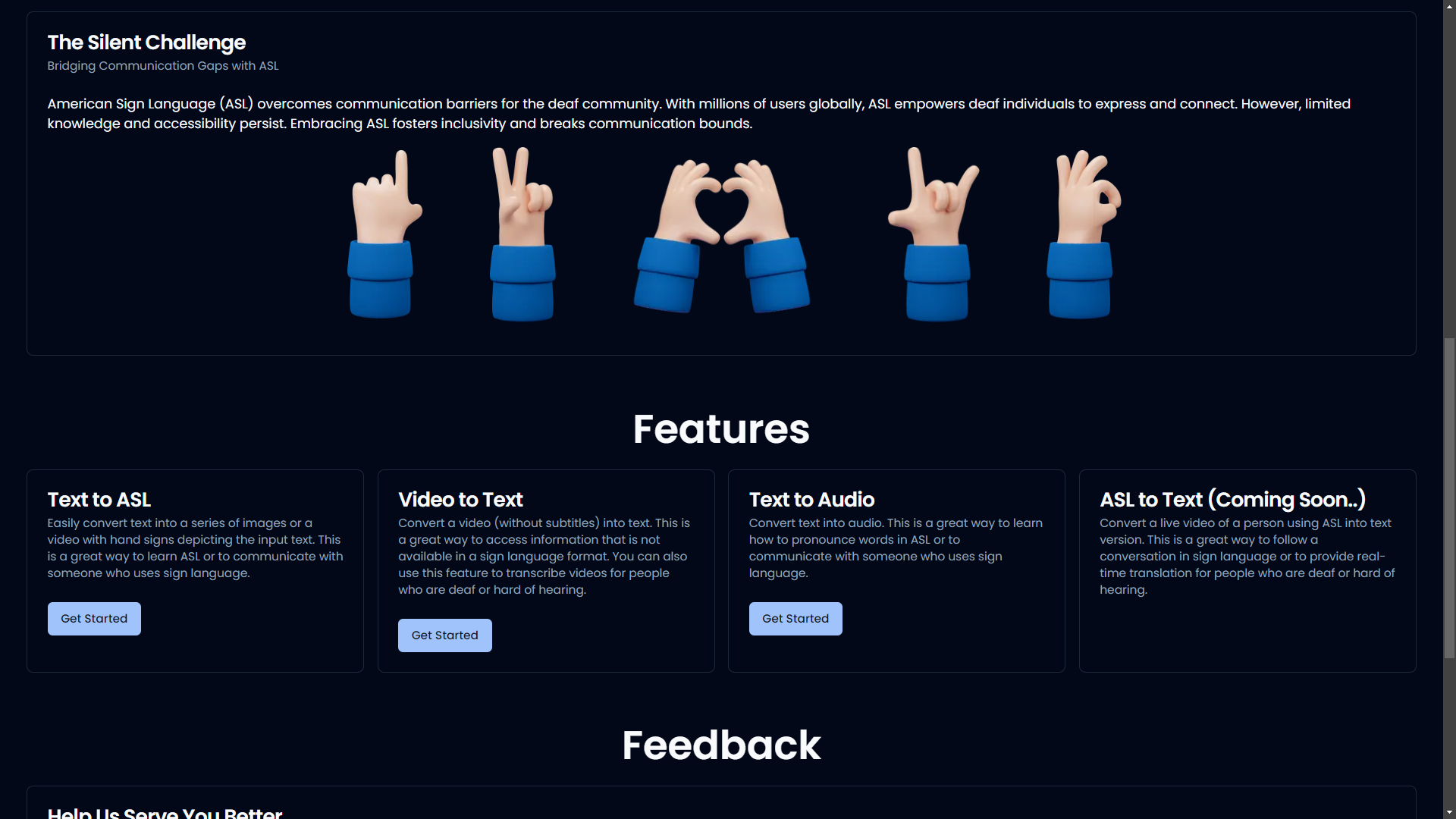
One of the core features of the ASLYF has the Text to Speech (TTS) functionality. This technology allows users to input written text, which is then converted into clear and natural-sounding speech. This feature facilitates effective communication between individuals who are proficient in spoken language and those who rely on ASL for communication.
2. Video to Text:
This can also incorporates cutting-edge Youtube Video to Text capabilities. By analyzing video content, the system can transcribe spoken words into written text. This transcription can be immensely valuable for individuals who are Deaf or Hard of Hearing, as it ensures they don't miss out on verbal communication, making various forms of multimedia content accessible to a wider audience.
3. Text to ASL:
Perhaps the most innovative component of the ASLYF is to the Text to ASL feature. With this technology, written text can be transformed into ASL gestures and expressions. This capability promotes effective communication between ASL users and those who primarily communicate in written language. It also has the potential to aid in educational settings, making ASL instruction more engaging and interactive.
4. Accessibility and Inclusivity:
ASLYF is driven by a deep commitment to accessibility and inclusivity. We recognize the importance of ensuring that all individuals, regardless of their communication preferences, can interact and engage with each other effortlessly. Our project empowers the Deaf and Hard of Hearing community by providing them with tools to engage in real-time conversations, consume multimedia content, and access information without barriers.
5. Future Directions:
As the ASLYF continues to evolve, we are dedicated to exploring additional features and improvements. Our ongoing research aims to enhance the accuracy of ASL translations, expand language support, and explore the integration of haptic feedback to further enrich the communication experience for all users.
Tech Used
- Next.js
- Tailwind CSS for styling
Conclusion
In conclusion, the ASLYF stands at the forefront of technological innovation, striving to break down communication barriers and foster inclusivity. By harnessing the power of AI and machine learning, we are excited to contribute to a world where communication knows no bounds, enabling meaningful interactions between diverse linguistic communities.
Built With
- nextjs
- tailwindcss


Log in or sign up for Devpost to join the conversation.