-
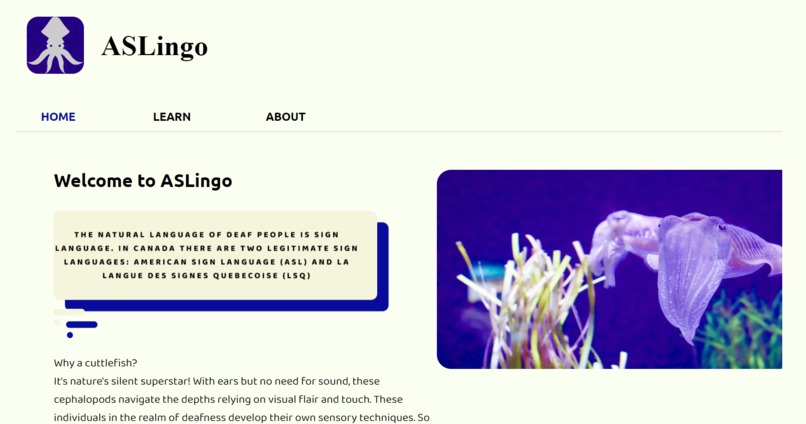
Main homepage for ASLingo.
-
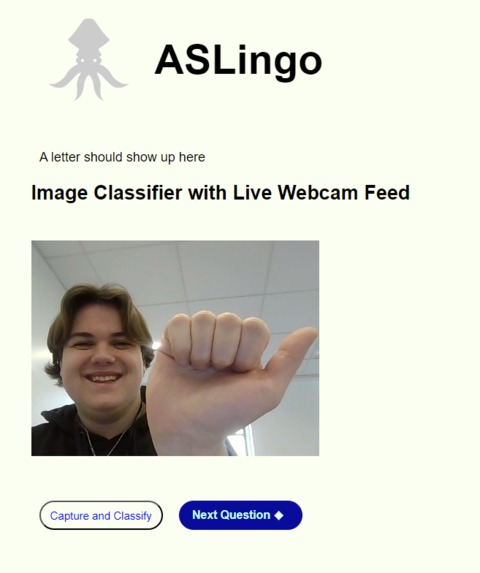
Learning at it's finest.
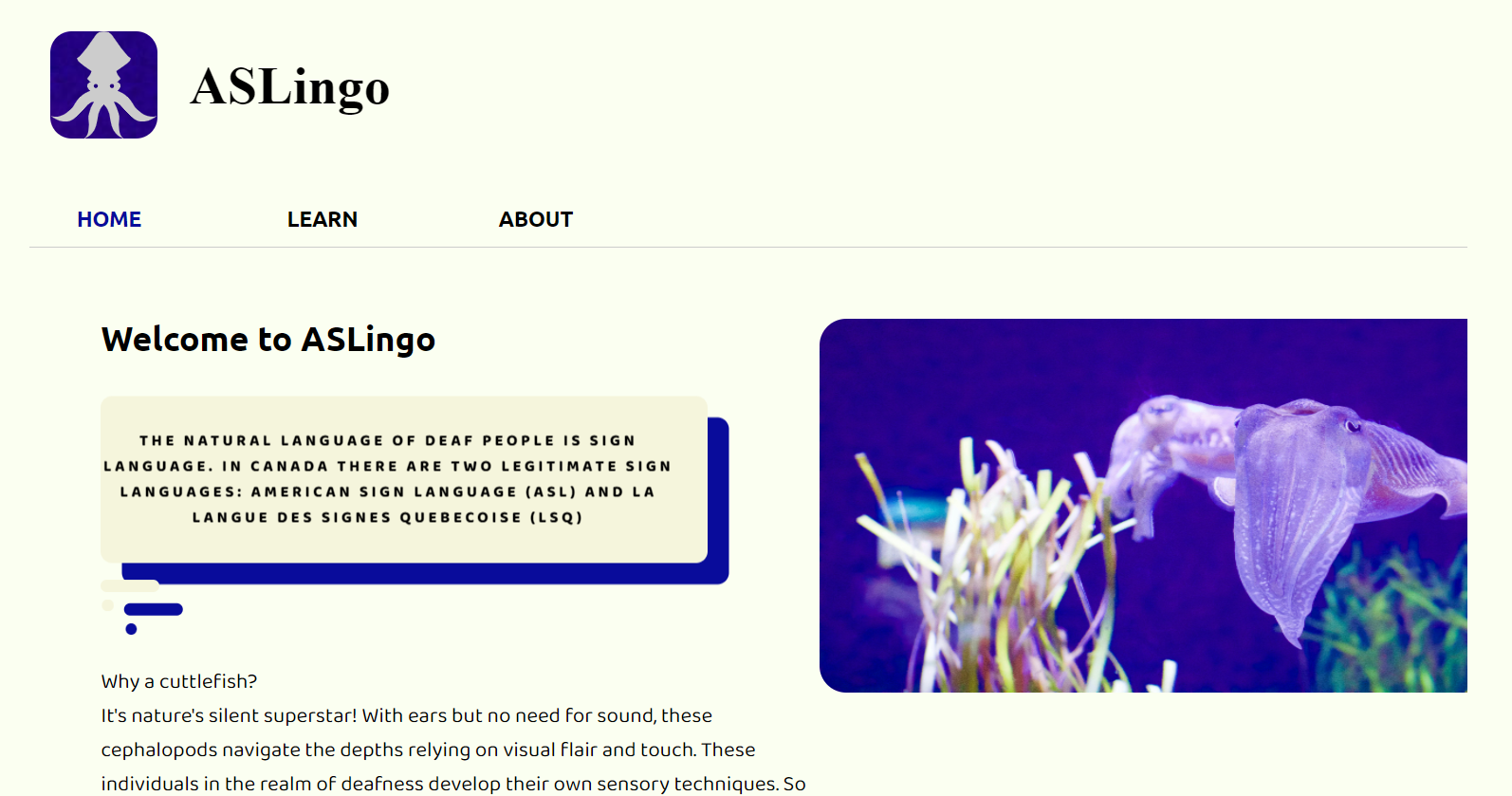
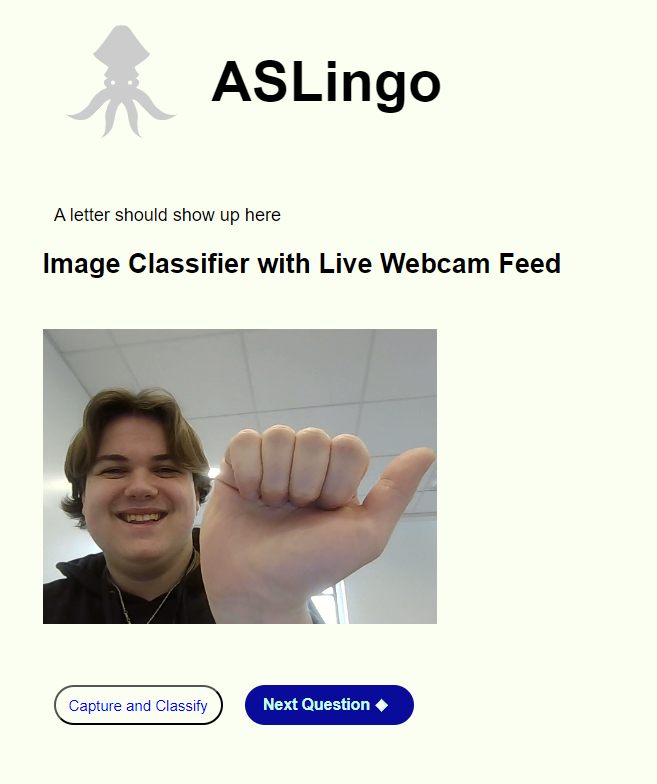
Inspiration
ASLingo, a platform designed to dismantle communication barriers through the power of American Sign Language (ASL). Our idea was simple yet challenging: to make ASL accessible, engaging, and enjoyable for everyone.
What it does
ASLingo broadcasts a webcam of the user and quizzes them on various signs by sending webcam data to the Flask/TensorFlow backend
How we built it
Our techstack primarily consists of TensorFlow, Flask, Vanilla JS, HTML/CSS. To be more specific, we started at some documentation, and after a caffeine-fueled night, the code seemed to magically write.
Challenges we ran into
Web servers are tough, especially when using a new framework like Flask. TensorFlow was hard to get a grasp on, which led to a hard crunch overnight and getting it to interact with the rest of our web app.
Accomplishments that we're proud of
Learning TensorFlow and Flask all in 1 night, and this being the first project we made in Python this was already a challenge we put up to ourselves. Training LLMs and getting it to communicate a JavaScript frontend was particularly challenging.
What we learned
How to create a web server using Flask, how to train LLMs in TensorFlow, how to read webcam data from a JS, and also managing dependencies with VENV in Python. Needless to say, we learned a lot, and it all came from purposely choosing a techstack we weren't at all familiar with.
What's next for ASLingo
We want to regularly get the snapshots to be processed in under 10 seconds regularly, and also train the model on a more diverse set of people.
Built With
- flask
- htmlcss
- javascript
- numpy
- python
- tensorflow

Log in or sign up for Devpost to join the conversation.