-
-
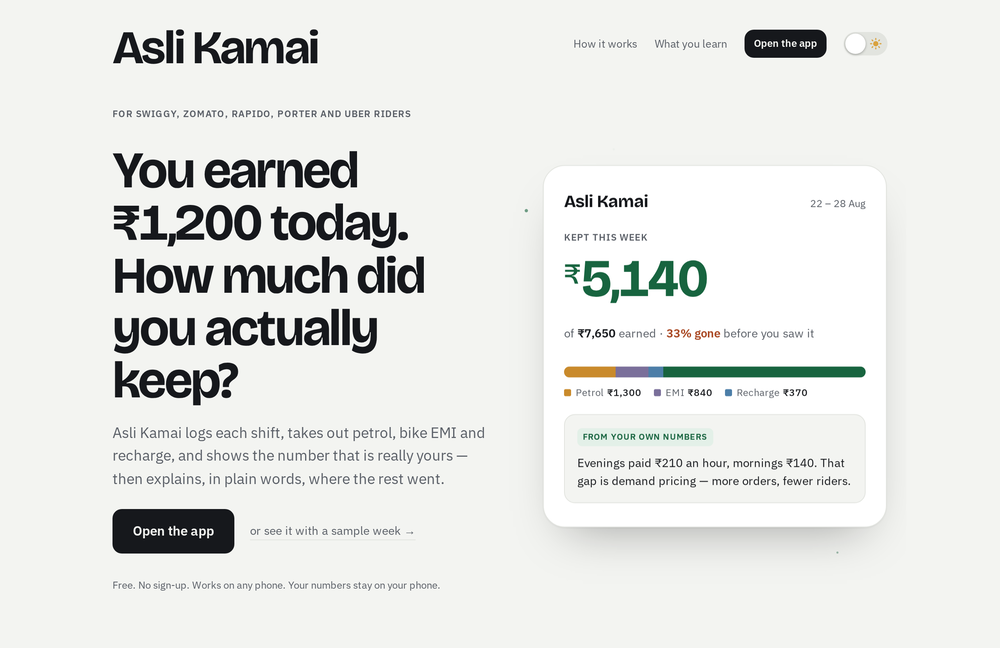
Web Landing Page
-
Demo
-
Coach
-
mobile app - Goals
-
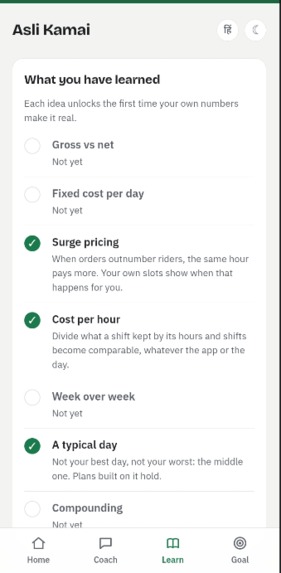
Learn page in mobile app
-
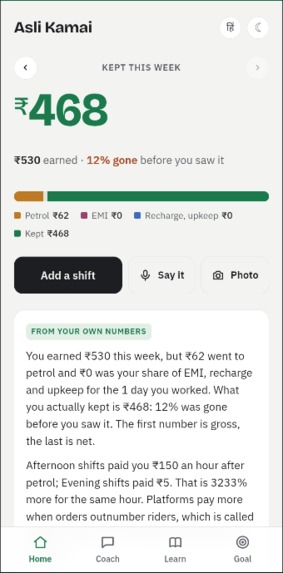
Home page in mobile app
Inspiration
A delivery rider sees the payout on every app they ride for, but they know the harsh truth. They're not dumb. They know they aren't really earning that much, and when someone asks their salary, they fake the number. Their home runs on money they can't even track. The app says ₹500 today, but what did the petrol cost? What's their share of the bike EMI? Nobody adds it up for them.
Then I found the numbers. An IDinsight study of 2,547 delivery riders found they earn about ₹170 an hour, and about ₹115 is left after fuel and upkeep. One Swiggy rider told Fairwork: ₹1,000 from orders, ₹650 after fuel, ₹450 after food, "for 14 hours." A survey of more than 10,000 workers found the same story everywhere.
They should have the right to know that number. That's why I built Asli Kamai, which means "real earnings".
What it does
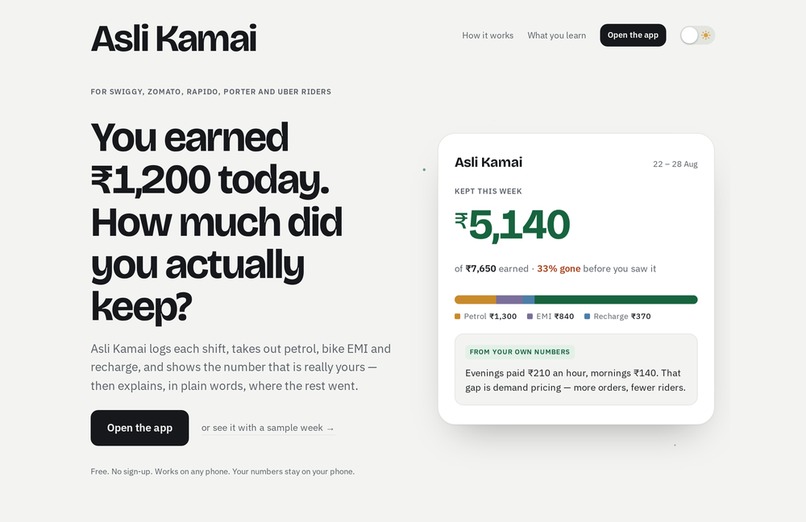
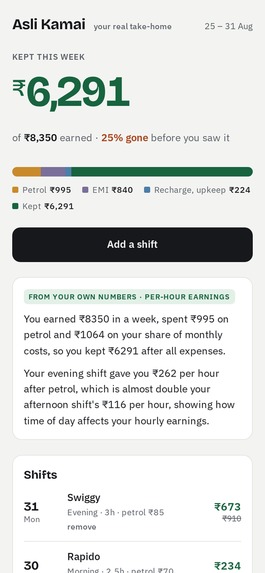
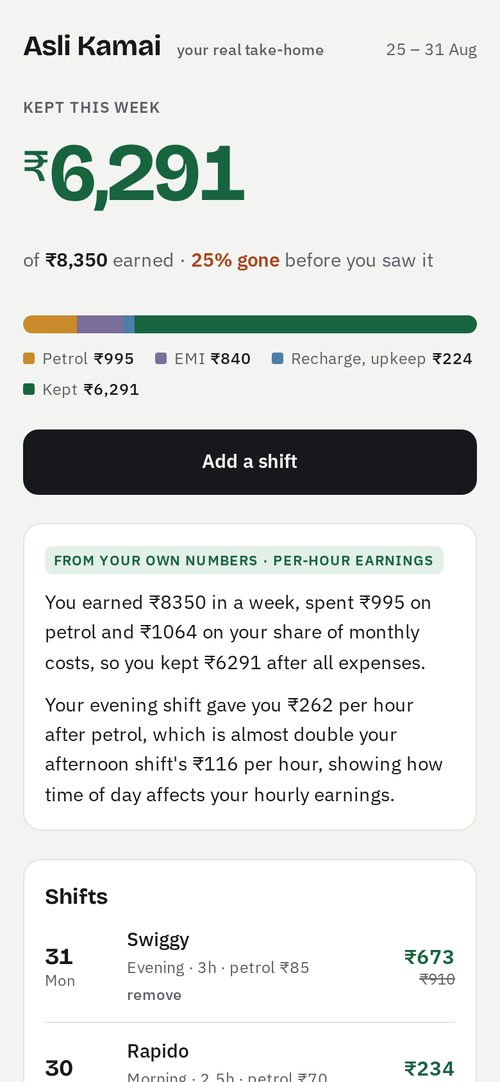
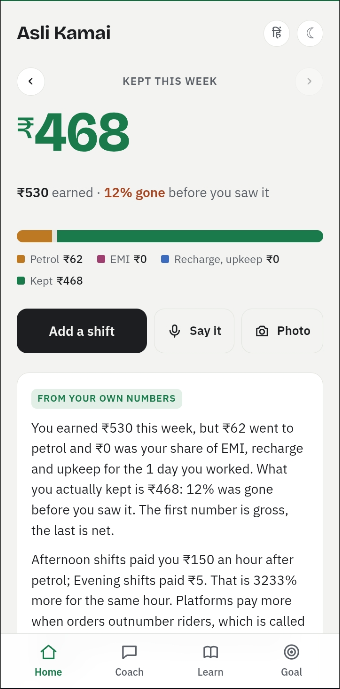
Asli Kamai shows a rider what they actually kept, not what the app paid.
- Log a shift three ways: type it, say it in Hindi or Hinglish, or show a screenshot of the earnings screen. The AI fills the form, and the rider checks every field before saving.
- Monthly costs are spread across working days, so every shift carries its share of the EMI, recharge and upkeep.
- One big number: kept this week. Below it, a bar showing where the rest went, day-by-day bars, and pay per hour by time of day.
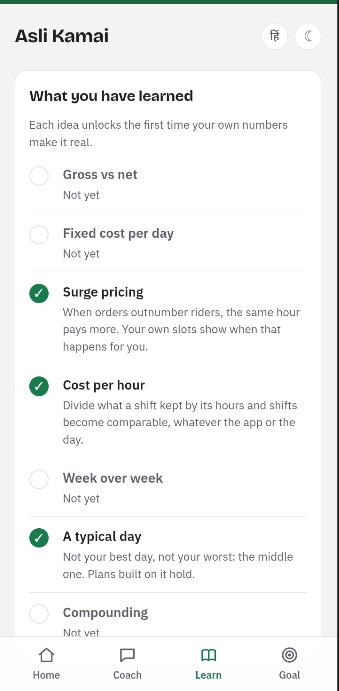
- Explain my pay: a short lesson written from the rider's own week, covering gross vs net, surge pricing, fixed cost per day and cost per hour.
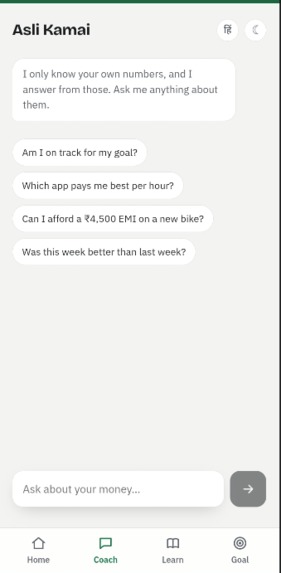
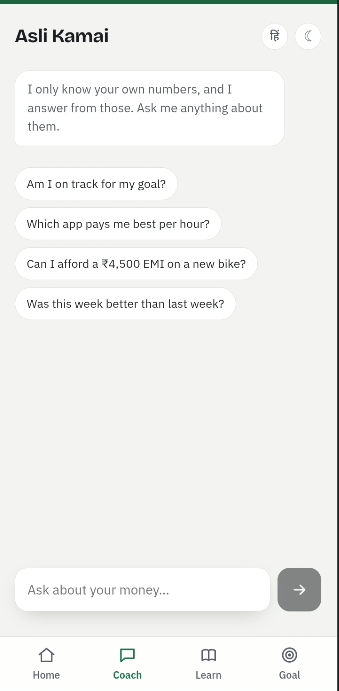
- Coach: ask "Which app pays me best per hour?" or "Can I afford a ₹4,500 EMI?" and it answers from the rider's own record, showing its working.
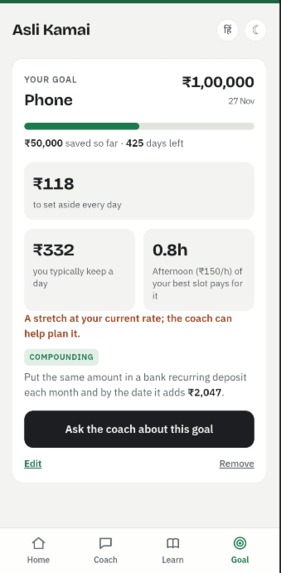
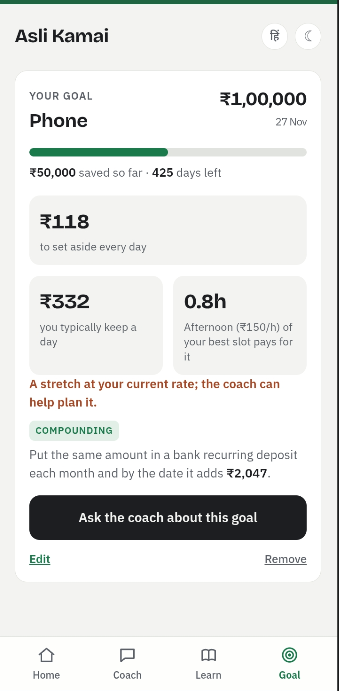
- Weekly quiz and goals: two questions on this week's numbers, and a goal like "a phone by Diwali" turned into a daily amount.
- Hindi or English in one tap. Works with no account; Google sign-in after ten shifts keeps the record safe on a new phone.
How I built it
- Frontend: React + Vite (TypeScript). An installable app that sits on the home screen like any other app.
- Backend: Vercel serverless functions, Postgres on Neon, Google sign-in.
- AI: Qwen3 writes the explanations, coach answers and quiz; Qwen3-VL reads earnings screenshots. Both run on Featherless.
- The rule I didn't break: the AI never does the maths. Every rupee, rate, average and quiz answer is calculated in plain code first. The model only gets the finished figures and puts them into words, so it can't invent a number. The rupees it says always match the app. -The AI did the building part i did the desgining,thinking,instructing,researching part. -I revised everything AI gave and had to prompt engineer and handle real hosting services and DB.
Challenges I ran into
- Language models are bad at arithmetic, and a wrong number here is worse than no number. Moving every calculation out of the model fixed it.
- Riders speak in Hinglish: "shaam ko chaar ghante, gyarah sau kamaya, nabbe ka petrol". Turning that into clean form fields took a lot of testing.
- Monthly costs don't fit a daily view. An EMI is paid once a month, but a rider thinks day by day. Spreading it across working days is what makes "kept today" honest.
Accomplishments that I'm proud of
-First time using mascot figures in the app.
- It's live, it's free, and it needs no sign-up to start.
- A rider can log a shift by just talking in their own language.
- The AI teaches money ideas from the rider's own numbers, not generic tips.
What I learned
- The most useful thing an AI can do here is explain, not calculate.
- Designing for someone on a cheap phone with a weak signal changes every decision. -The reality about GIG-workers behind what we see and their life stuggles. -How we can build applications that can help others.
What's next for Asli Kamai
- Put it in front of real riders and fix what they tell me is wrong.
- More Indian languages.
- Offline logging that syncs when the signal comes back.
Built With
- featherless
- google-oauth
- neon
- postgresql
- pwa
- qwen
- react
- typescript
- vercel
- vite
- web-speech-api


Log in or sign up for Devpost to join the conversation.