-
-
logo
-
figma-prototype
Inspiration
In the US alone, nearly 10 million people are hard of hearing, and close to 1 million are functionally deaf. By comparison, only about 250,000 American Sign Language speakers can facilitate communication for the hearing-impaired within American society, accounting for a regrettably small fraction of the population with the ability to do so. Aslapp was created with the intent to bridge that gap, in hopes of making strides towards one day eliminating it altogether.
What it does
Asign is a mobile application that allows users to translate American Sign Language into text through the means of machine learning and computer vision.
How we built it
- Android Studio w/ Java
- TensorFlow Lite
- OpenCV
- TensorFlow + Keras
- Google Firebase and Firebase Auth
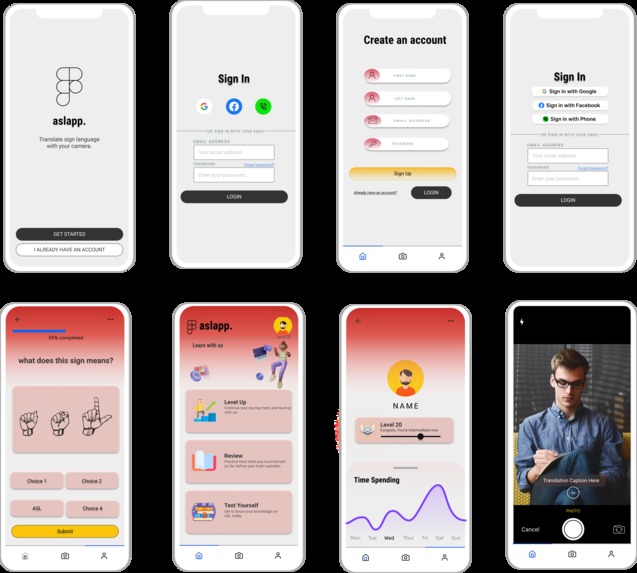
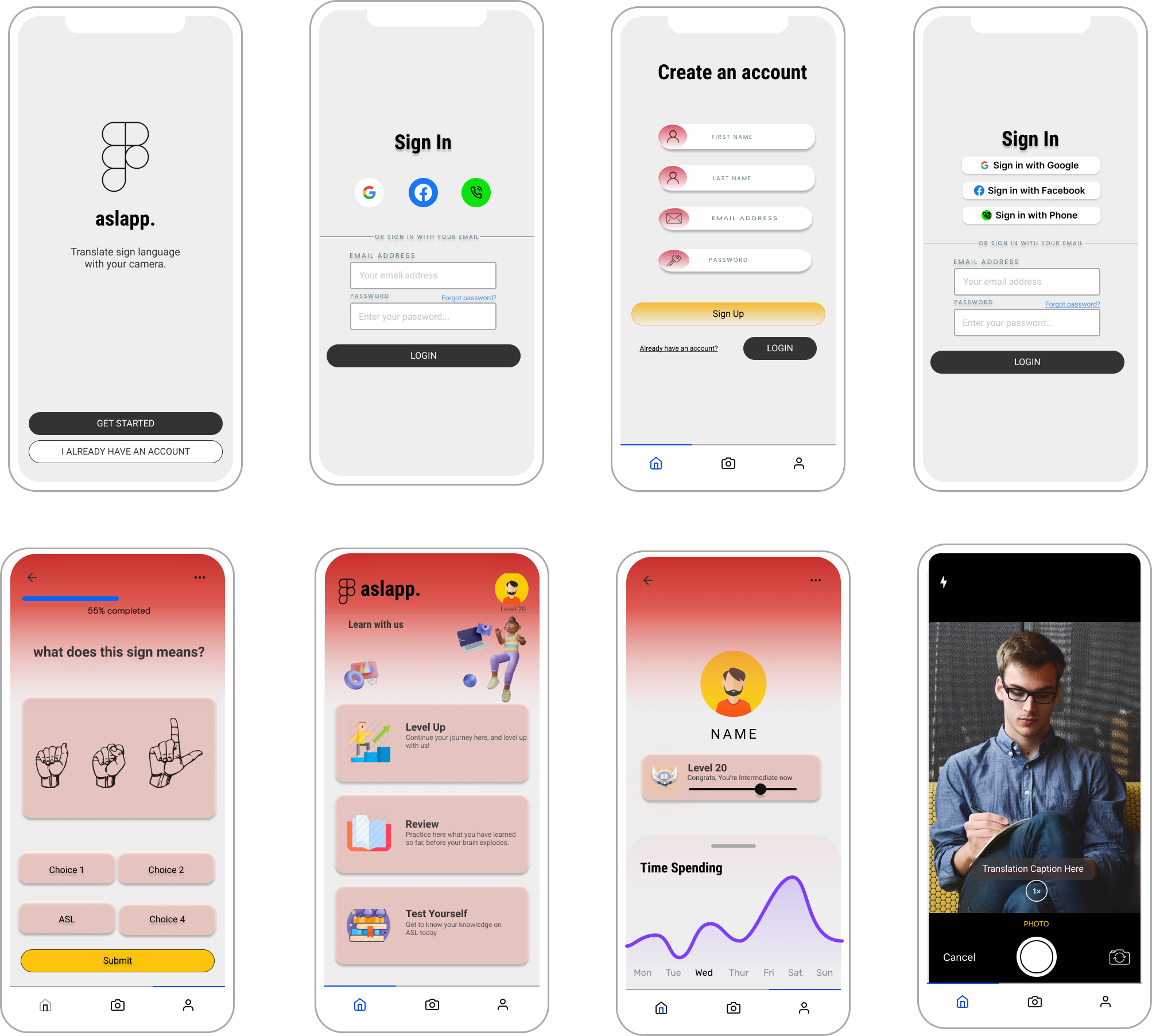
- Figma for Prototyping
Challenges we ran into
Challenging part of this project was definitely the time. This entire project was race against the time, our vision for this project and the time given was just working with each other. Apart from that, most challenging part to implement was definitely the machine learning using TensorFlow. While, we began our journey diving ourselves in the ML and in the initial stages when we were setting up the openCV, the camera wasn't really cooperating with how we wanted it, as it came in landscape mode by default.
Accomplishments that we're proud of
- Being able to implement machine learning and computer vision when no one on the team had any experience with either, especially as first-time hackers.
- Creating additional features regardless of time crunch.
- Getting to work with such AMAZING teammates.
What we learned
- Designing the app with tools like Figma made the development process a lot easier since it allowed us to focus on achieving a look.
- We are first-time hackers so we learned how to manage our time as well as collaborating with others.
- We had to learn how to quickly adapt to situations and resolve issues/bugs as soon as possible.
What's next for assign.
Initially, the app will be built around the necessity for accessibility of translation, but in a future state, we would like to cultivate a community for learning and immersive traveling experiences through the power of live translations. These are features we hope to implement in the future:
- Explore revenueIntegrating with businesses to better equip them to serve the hearing/speaking impaired by improving accessibility through technology. Kiosks/Android tablets with the software integrated to assist in retail locations.
- Improvements on our current machine learning model for better phrase accuracy
- A text-to-speech and speech-to-text feature
Built With
- android
- android-studio
- computer-vision
- eazegraph
- figma
- firebase
- firebase-auth
- keras
- machine-learning
- opencv
- tensorflow
- tensorflow-lite


Log in or sign up for Devpost to join the conversation.